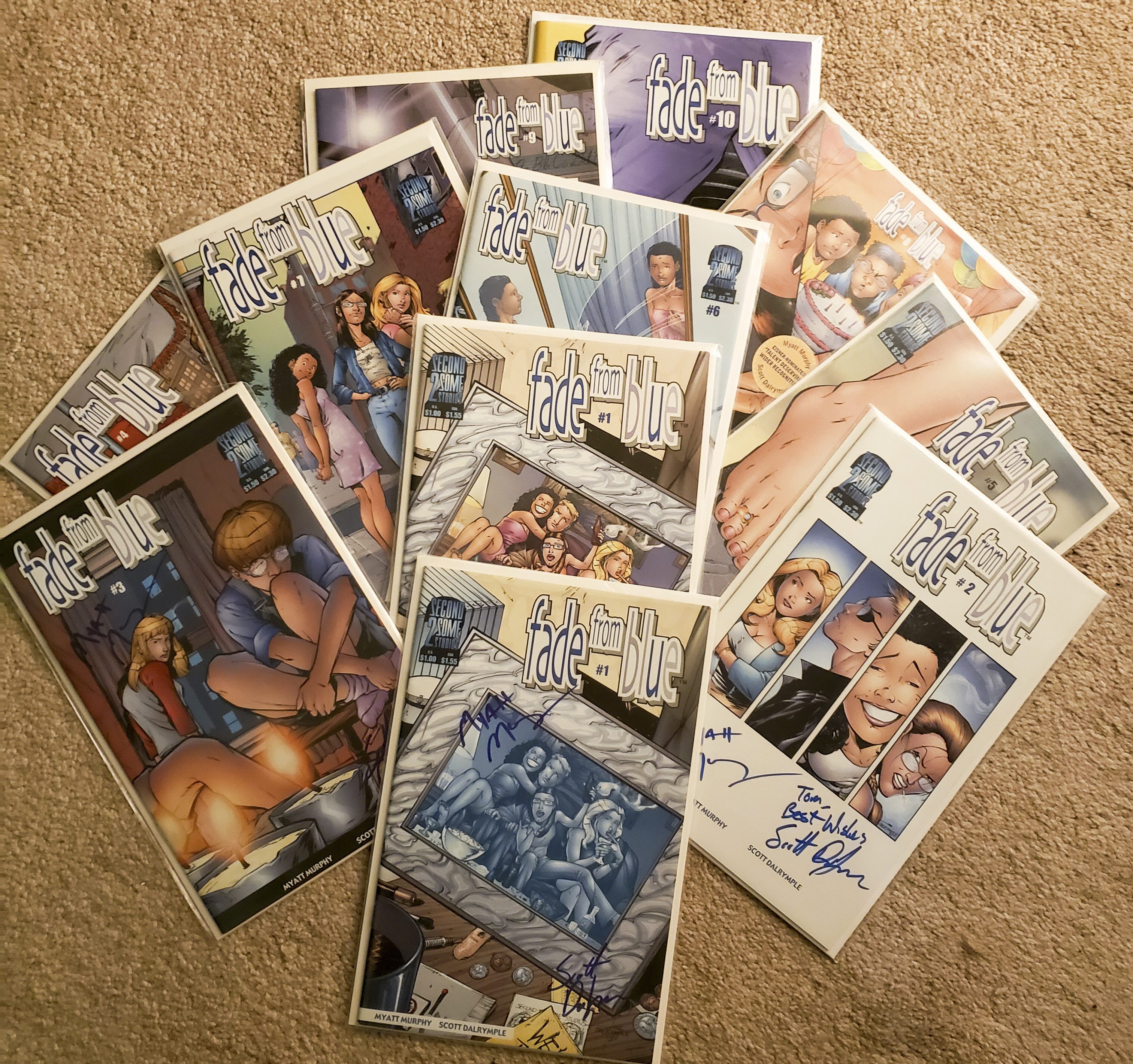
I was recently on an episode of FW Presents where Paul Kein, Rob Kelly, The Irredeemable Shag, and I riffed about independent comics. Much of my original exposure to indies was through tie-ins. Comico’s Robotech and Dark Horse’s Aliens books were some of my first steps out of the Big two, although with the exception of Image and the occasional Valiant comic, I didn’t start reading true independent comics until the late ’90s or early 2000s.
The formative event for me when it comes to independent comics was the 2002 Small Press Expo. I hadn’t been to a comics show since I went to a comic show at Nassau Coliseum in 1993. I’d been invited by my friend Paul, who’d become my “older cool comics geek friend” and honestly didn’t know what to expect. Frank Cho was the only signature I was looking for, and I had him sign some Liberty Meadows. Otherwise, my time at the Holiday Inn in Bethesda, Maryland was a lot of wandering around and trying to find something that might be remotely interesting. Among a lot of comics that ranged from the hand-made to the weird and the pretentious, there were a few books I found interesting enough to buy. One was Fade From Blue.
I happened upon the table of Second 2 Some Studios and stopped because the artwork on the covers of the three issues they were selling looked great. At the time, I was still reading a lot of superhero comics, and while this wasn’t one, I could see that the creators–Myatt Murphy and Scott Dalrymple–were influenced by a number of artists I was familiar with. So I talked to them for a while and bought issues #1-3, which they signed. After I read them, I immediately put the title on my pull list, which helped because publishing schedules for a series from such a small press were sporadic at best, and Kickstarter didn’t exist yet, so they were solely relying on sales at shows like the SPX and their listing deep in Previews to get the next issues out. Fade From Blue ran for ten issues and I still have all of them.
The series is about four sisters–Marat, Iya, Christa, and Elisha–all of whom have the same father but different mothers. Nine years earlier, all of their mothers will killed on the same day. Marat found all of them and helped them create new identities. They spent that time on the run and are now in New York City, where they have been for a few years. Christa writes a column for women’s magazines like Cosmopolitan, Iya has a scumbag boyfriend and can’t hold down a job, Elisha is a college student, and Marat works for the NYPD. And she’s become more and more obsessed with finding out who killed their mothers and what happened to their father, starting with a single clue: the word “Highball.” Over the course of the ten issues, Marat compromises a number of her principles as a cop as the answer to her question threatens to overshadow the lives her sisters are trying to lead.
Now at this point in 2002, Paul had loaned me all of Strangers in Paradise up to that point and Fade From Blue shares a lot of Strangers‘ personality. I mean that as a huge compliment, too, because I’m a big Terry Moore fan and he’s signed all 19 of my Strangers trades. The art in Fade From Blue owes a lot to Moore as well, although I can see the influences of artists like Alan Davis.
Like I said, I’d read the book as it came out, and all ten issues of Fade From Blue survived every move and comics purge since. I even found a first printing of issue #1 at my LCS and bought it–which is how I found out that the copy of issue #1 I’d bought from them and had signed at the SPX was a second printing. But I hadn’t read it in at least a decade, maybe even longer. My conversation on the FW Presents episode inspired me to dig it out.
I’ve done this before, reading independent comics from the late 1990s and early 2000s long after they were published, and the results have often been mixed. Thankfully, Fade From Blue hasn’t lost anything in the intervening years. Murphy and Dalrymple’s comedic drama has a solid central mystery, complicated protagonists, and a New York that feels lived in and real. Marat’s actions behind the scenes of everything and her ability to keep secrets from her sisters works because the rest of them are in disarray. Christa has the comedic subplot of having contracted an STD and getting flirted with by a guy in the clinic’s wait room. Elisha gets the romance subplot because her best friend is clearly in love with her. And Iya’s a mess. But not in a pathetic way; in a lost way. Each of them has had to compromise themselves in some way during the times they were on the run and it seems that she’s got the most emotional trauma (or at least sees it more than the others).
And credit to the creators for not only writing complicated women, but drawing different body types in a way that’s fairly accurate. Remember, this is coming out of a decade full of giant breasts on a skinny frame. Everything matches each character’s size and actions, and the only buxom character–Iya–is drawn proportionally, not as a “bad girl” stick figure. I guess that’s besides the point, but in a medium where even the most nerdy characters are made to look “sexy” in that 15-year-old sort of way, I appreciate when a genuinely gorgeous character looks like she’s drawn from real life.
Anyway, the book delivers in every issue. They’re not writing for the trade and give enough to keep you want to reading but leaving you fulfilled (and wanting to reread the comic). Plus, the back of each issue has hilariously written “Cosmo articles” by Christa that are a dead-on parody of what would appear in those magazines at the time. It’s not surprising that Myatt Murphy went on to a long career of writing for lifestyle publications like Men’s Health.
The only problem I have is that I want to recommend it and it’s hard to come by. The first part of the series was collected in one trade back in the 2000s but like many indie comics, you can only find it in back issue bins. Murphy and Dalrymple, to my knowledge, haven’t done much other work together since. Like I said, Murphy has been a journalist and writer. Dalrymple does still draw–I’m not sure if he’s done other comics work, but his Instagram is amazing. I almost hate to say that Fade From Blue is a hidden gem, but I love to see that it hasn’t lost anything since when I first saw it back in 2002.


Hi Tom, It’s Mark from the White Water mmMemories podcast. Just Wondering if it’s gotten many views. Still working on my book.. Thank you for the fun experience. Perhaps after I finished my book , we could do another one. Cheers