Author: Tom Panarese

Leave Yourself Behind

Tom Paris 1994A quick note:  This piece originally appeared on an old blog of mine in July 2004.  I’ve edited and updated it.

My only regret is that I did not stay longer. I would have loved to experience more, go deeper into some countries and learn more about other cultures. However, being a Student Ambassador has opened my mind even further, as I am forced to think on a global scale about my life, and the lives around me.

That is the final paragraph of the journal I kept during the summer of 1994, after I had spent 23 days touring France, Germany, Switzerland, and Spain as a People to People Student Ambassador. Written on a flight back from Paris after my fellow “ambassadors” and I had exhausted the plane’s supply of coffee and soda and had annoyed all of the other passengers, it’s a statement typical of a 17-year-old. At the time, I thought that the program changed my life. Of course, at 17, it had. Being on the verge of my senior year of high school, I was making earnest statements like that on a regular basis. Still, I cannot discount that those three weeks were a turning point in my adolescence, the result of a program whose educational experience was more well-rounded than intended.

Can You Really Get There From Here?

The mission of People to People International and its Student Ambassador program is: “to bridge cultural and political borders through education and exchange, creating global citizens and making the world a better place for future generations.” I received their brochure in the fall of my junior year, right around the time my guidance counselor was drilling into my head that I was in the most important year of my academic career, perhaps even my life. As a result, I went looking for the type of opportunities that would look good on what eventually became a rejected application to Dartmouth — Anchor Club historian, student journalist, and mock trial lawyer. “Student Ambassador to Europe” was something that college admissions officers were impressed with. Europe was where great art was born; where history took place; and where entire generations of disaffected young Americans fled to find themselves.

I convinced my parents that not only would I make it into the program, I would somehow come up with $1200 of the trip’s cost. Not that I knew how I was going to pull that off — this wasn’t exactly like the time I hoarded my $25/week from JillMatt Cards & Gifts so that I could save enough money to visit my friend Chris in Fort Lauderdale. But after some creative publicity, including a story in The Suffolk County News and a talk with the Kiwanis Club (where I made a never-fulfilled promise to come back and speak to them), I had my tuition. On June 24, I set off for Kennedy airport, where I met up with the rest of the Long Island delegation. We had our flight to Washington, D.C. canceled and were forced to cab it to LaGuardia where, in a move reminiscent of a bad Amazing Race moment, two of our group members were dropped off at the Delta terminal and not the Delta Shuttle terminal.

Don’t Smurf an International Incident

Ultimately, my People to People delegation arrived in Washington intact. The entire group of 28 hailed from Long Island, Connecticut, Virginia, Tennessee, and California, and was lorded over by three advisors — the LaMers of Connecticut and Mary Nolan, who had run the Long Island pre-trip meetings. They were all nearing senior citizenship (if they weren’t there already), and I have to admit that I admire anyone that age who is willing to travel for three weeks with a group of unruly teenagers. They had some help during those first few days while we stayed at George Washington University, where People to People’s representatives laid down all of the rules.  Essentially, they wanted to avoid three things: the “ugly American” syndrome, an international incident, and a babysit-the-rich-kids summer camp. I mean, that’s why the Student Ambassador program director stood on the stage in a university lecture hall and told us that we weren’t allowed to drink, smoke, do drugs, have sex, or even form cliques.

I honestly thought that last one was insane. Not that I wanted cliques to form, but it seemed that with 28 teenagers in close quarters, cliquing up was inevitable. In fact, small groups of friends formed on the very first day and would get even more defined as the trip went on. But when up against Papa & Mrs. Smurf (named so for Mr. LaMers’ beard) and Punky (Mary Nolan wore a spiked femullet), we were a single group of 28 students who annoyed everyone on the National Mall, the Metro and in the Crystal Underground. I guess all the things that annoyed me about D.C. when I was living and working there, then, were come-uppance for my acting like an asshat at 17. But anyway, I wrote about our initial camaraderie: “We started as … two groups of people from different states. We left as a group of Americans wearing stupid shirts and name tags.” (more…)

In Country: Marvel Comics’ “The ‘Nam” — Episode 27

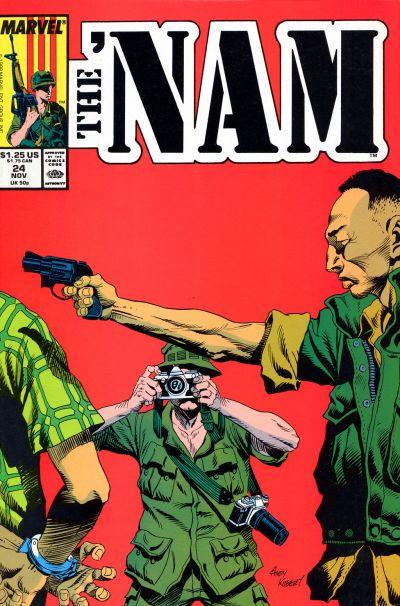
Nam 24It’s 1968 and the beginning of the Tet Offensive in “The Beginning of the End,” a story by Doug Murray, Wayne Vansant, and Geof Isherwood that sees the 23rd encountering events that have historical significance when it comes to the media’s coverage of the war.  That’s in The ‘Nam #24.  As always, in addition to the summary and review of the issue I’ll be talking about the story’s historical context as well as taking a look at the letters, ‘Nam Notes, and ads.

You can download the episode via iTunes or listen directly at the Two True Freaks website

In Country iTunes feed

In Country Episode 27 direct link

After the cut are some pictures and clips of real events that take place within the issue [WARNING: GRAPHIC CONTENT].

(more…)

Pop Culture Affidavit Episode 30: “Summer 1999”

Episode 30 coverFifteen years ago this summer, moviegoers were treated to one of the best and most consistent moviegoing experiences in history.  Walk with me through ten movies from the summer of 1999, from The Phantom Menace and its ultimate disappointment to The Blair Witch Project and its being the scariest surprise of the season!

You can listen here:

iTunes:  Pop Culture Affidavit

Direct Download 

Pop Culture Affidavit podcast page

Below are the ten movies I talk about and their trailers, which you’ll hear in the episode … (more…)

June 17, 1994: The Most Important Day of the Nineties

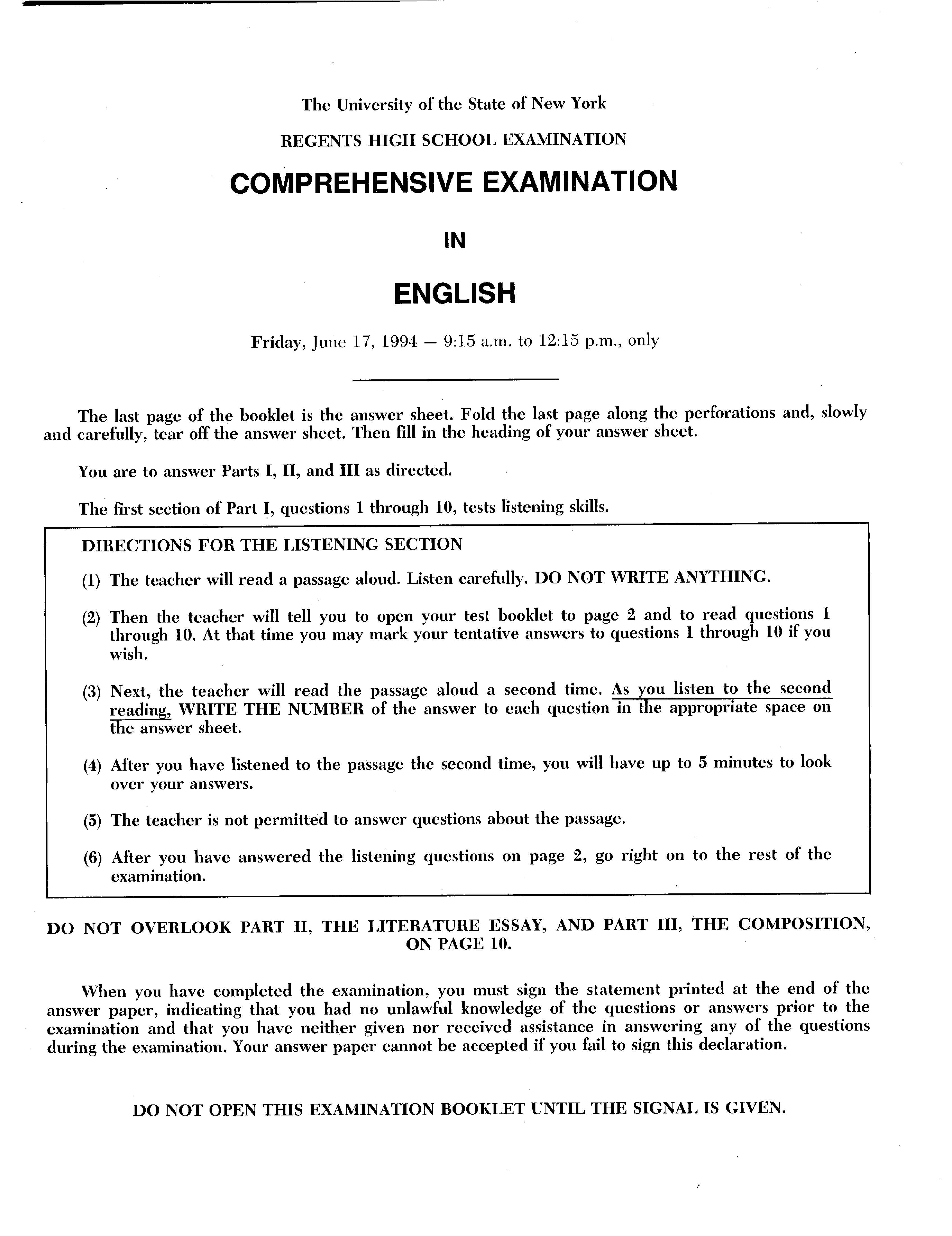
The cover to the 1994 Regents exam in English.

The cover to the 1994 Regents exam in English.

Had the events of the evening of June 17, 1994 not proceeded the way they did, i am sure that I would have remembered the day anyway.  It wouldn’t have had the national significance that it does; still, it’s not every year that the Rangers get a ticker tape parade because they won the Stanley Cup.  In fact, that day wound up marking the end of two significant periods of my life hours before O.J. and A.C. managed to take the Los Angeles Police Department and every television station in the country up the 405 for 50 miles and a few hours.

At 8:30 that morning in the Sayville High School gymnasium, I sat down to take my English Regents.  This was both the culmination of three years of novels, plays, literary essays, and compositions at the hands of my English teachers as well as the very last Regents I would have to take.  That may not seem like much, especially to people who did not grow up and attend public school in New York State, but those who did know exactly what I mean when I say that I considered the end of my Regents-taking career to be a cause for celebration, if however minor.

Regents were what kept us in school until late in June (well, that an starting after Labor Day and having a week off in February) and were a ritual for high school students since the New York State Department of Education started them way back in the 1930s (a quick look at the archives, shows tests on homemaking in the 1950s and 1960s).  Coming sealed in plastic and bearing titles like “The University of the State of New York Regents High School Examination Comprehensive Examination in English,” the tests were more than a rite of passage–they were one of the most important rituals of our academic careers.  Starting after Easter, our book bags were further weighed down with Red Barron’s books full of old tests, which we’d take and then pore over to see what we were doing right and what needed improvement.

A Barron's Regents review book, courtesy of Amazon.com

A Barron’s Regents review book, courtesy of Amazon.com

And English wasn’t particularly hard, although I’m sure my students would blanch at the sight of it.  Whereas current students in Virginia take SOL exams in reading and writing that are passage-based and have one simple five-paragraph prompt-based persuasive essay, my generation had to endure spelling,  definitions, two essays (a literary analysis piece and a composition), and a listening section.  That’s right–a portion of our test required us to sit and listen while our teachers read a passage and we had to answer multiple-choice questions based on what we heard.  I’m sure that such a concept would send today’s average anti-testing advocate/expert into a blood-vomiting rage.  Personally, I never thought twice about it, but then again I was one of those students they’d accuse of having Stockholm Syndrome or something because I dutifully took my Regents exams and did well in school.

Anyway, I remember chugging through the multiple choice, choosing one of the two literary essay prompts (which have both made their way onto my 10th grade advanced English final in recent years) and writing a composition that I think I titled “Notes From a Rest Stop on the Information Highway.”  It was my attempt at wit, I guess, and it seemed to work because I did well enough to continue on my path to graduating with honors a year later.

A page from the spelling section of the 1994 Regents English exam.

A page from the spelling section of the 1994 Regents English exam.

I wasn’t thinking of any of that while taking the test, of course, because the Rangers parade was going to be on television and the Regents exam was the only reason I hadn’t asked my parents if I could take the train to the city that morning (same could be said for my friends as well because we all had to take the Regents).  So like everyone else, I watched it on television.  To this day, the Rangers hoisting the Cup as they drove through the Canyon of Heroes followed by the presentations at City Hall seem surreal.  I wasn’t wearing my jersey–I had finally thrown that in the laundry after superstitiously refusing to wash it throughout the playoffs–but I was glued to my television set the way I was eight years earlier when my dad taped the 1986 Mets parade for me.

The Rangers hoist the cup on Broadway.

The Rangers hoist the cup on Broadway.

Of course, the television would be more important later that night.  But I didn’t know that; did anyone?

Stone Temple Pilots were supposed to appear on Letterman.  I don’t think that’s why I stayed home, but at some point in the afternoon, I made a mental note to stay up late and turn on The Late Show after I was done with whatever Friday night plans I had made–which, knowing my life in 1994 was probably renting videos and watching them in the basement–so I could see one of my favorite bands.  But of course, that didn’t happen.  Well, the STP performance actually did because Letterman taped his show in the afternoon, but it never aired.

At some point–I don’t remember when–I turned on the television and saw live footage of a white Ford Bronco speeding down a Los Angeles freeway followed by police.  The news reporters said that driving the Bronco was Al Cowlings and his passenger was O.J. Simpson. (more…)

In Country: Marvel Comics’ “The ‘Nam”– Episode 26

IC 26 CoverIt’s Christmas time in the ‘Nam and we see the boys of the 23rd treated to some genuine USO entertainment, even if it is a “Blue Christmas” for some of them. It’sThe ‘Nam #23, presented to you by Doug Murray, Wayne Vansant, and Frank Springer. As always, in addition to the summary and review of the issue Ill be talking about the storys historical context as well as taking a look at the letters, ‘Nam Notes, and ads.

You can download the episode via iTunes or listen directly at the Two True Freaks website

Two True Freaks Presents: In Country iTunes feed

In Country Episode 26 direct link

Pop Culture Affidavit, Episode 29 — Now I Can Die in Peace

Episode 29 CoverTwenty years ago, the New York Rangers won their first Stanley Cup since 1940.  Join me as I reminisce about that amazing run and talk about my life as a Rangers fan as well as share the memories of some of my friends.

You can listen here:

iTunes:  Pop Culture Affidavit

Direct Download 

Pop Culture Affidavit podcast page

And in case you’d like to relive the entire season, here is “OH BABY!” the Rangers highlight video from 1994:


Life’s End (My Life as a Teen Titan, Part Forty-One)

130 Last Page

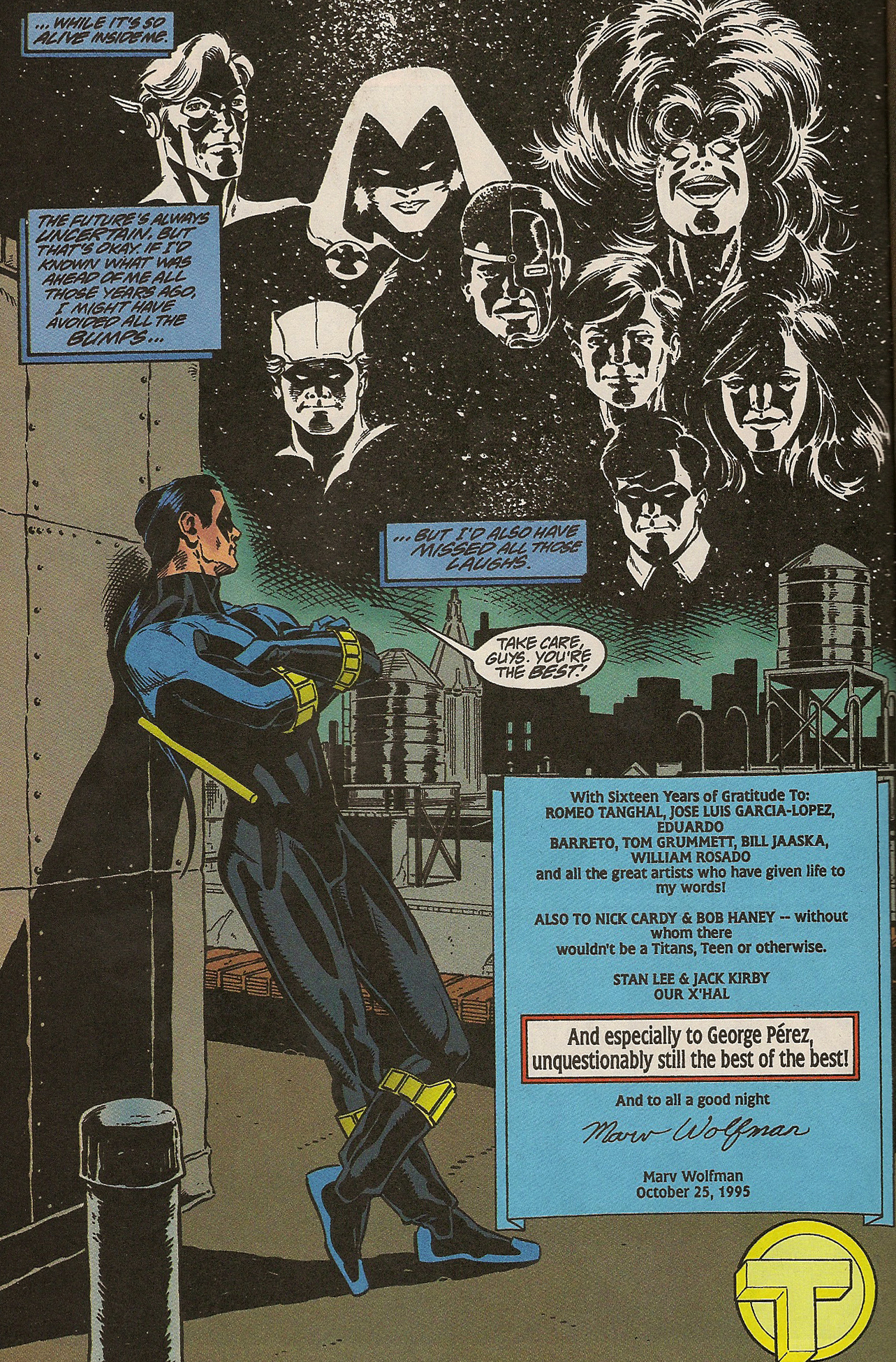
The last page of New Titans #130, which has a cameo by Nightwing.

I stopped reading Titans in 2011.  DC announced the New 52 and the new series looked so horrible (as did Red Hood and the Outlaws) that I finally declared that I’d had enough.  My life as a Teen Titan, however, really does end with New Titans #130.

I mentioned in the last entry that I saw the Previews solicit for the comic during parents weekend of my freshman year of college and was surprised that the series was coming to an end.  I wasn’t upset, though, because comics at the time were taking a back seat to everything else–movies, music, girls, beer–and while I still collected and read them, they became something to read on breaks and during the summer when I was on my own and wasn’t sifting through assigned reading.  The Titans during that time took an even further back seat, as I became more interested in other books as well as big events like Kingdom Come.

The Titans themselves would, of course, go on.  Arsenal had a special shortly following the end of the title, an international espionage story that did wrap up one loose end from the series–we find out that the Titans had disbanded at some point following the events of “Meltdown”–and even got a lettercolumn about New Titans #130.  About a year later, Dan Jurgens would write and pencil Teen Titans, a series that is a bit of an oddity but that I enjoyed and find to be underrated.  Then again, I haven’t read it in at least 10-15 years, so I’ll have to see if my opinion changes when I get around to it.  The Devin Grayson/Jay Faeber Titans series deserves much of the criticism it gets, and I have mixed feelings about the series that started in 2003, especially Geoff Johns’s run.  I intend to reread all of those comics all the way through, although I won’t be writing about them because they all feel like they are part of different times in my fandom and comic collecting life.

I started reading New Titans when I was thirteen and the final issue came out when I was eighteen.  By then, the comic store was no longer around the block and I was no longer a lonely, worried junior high school student.  Moreover, I had moved beyond the point where I was reading about the Titans because I was looking for characters with whom I could identify.  The 1980s books had been like watching a John Hughes movie or hanging out with my older cousins–these were people I might wind up being–and the 1990s comics had characters I wanted to get to know.  By the time that title left the world behind, I had stopped needing to have a personal investment in the people I was reading about.

And really, the timing of the end of the series was perfect because the subsequent relaunches did feel like going back to my old town or old high school and seeing that things weren’t ever going to be the same:  the Dan Jurgens title was the new class you didn’t know very well, The Titans was Wooderson period, and the 2003 Teen Titans was almost like coming back to teach (your dreams were your ticket out).

Closing out what wound up being an enormous blogging endeavour isn’t easy to do.  After all, this spawned a podcast that is still going and some of the posts I wrote have gotten quite a number of hits these last few years.  But I found a source of inspiration in the last pages of that very last issue.   Though he hasn’t been in the book since issue #0 (and even that was a cameo), “Where Nightmares End” concludes with the person with whom it started–Dick Grayson.  Standing on a rooftop, he thinks:

There have been so many moments to think about.  Moments good and bad.  Moments I’d love to live all over again … and others I’d pay anything to forget.  But I don’t think if I could I’d change any of them.  I move on, but I don’t leave my childhood behind as if it’s gone.  It can never be gone … while it’s so alive inside me.

The future’s always uncertain, but that’s okay.  If I’d know what was ahead of me all those years ago, I might have avoided all the bumps … but I’d also have missed all those laughs.

He then says,

Take care, guys.  You’re the best!

Marv Wolfman then gives a farewell to the audience and thanks everyone he’s worked with in the fifteen or sixteen years he’s been on the title and I’m glad that on some level, that he ended the series on his terms.  I’m also glad that even though it took a while, I had a chance to look back on comics that have been so important to my life as a comic collector.

In Country: Marvel Comics’ “The ‘Nam” — Episode 25

IC 25 CoverIt’s Thanksgiving and that means … well, humpin’ in in the boonies, unfortunately.  But the focus on this issue is not necessary the misery of our boys in the 23rd; rather it’s a look at the VC.  The ‘Nam issue #22, “Thanks for Thanksgiving,” is brought to you by Doug Murray, Wayne Vansant, and Geof Isherwood.  As always, in addition to the summary and review of the issue I’ll be talking about the story’s historical context as well as taking a look at the letters, ‘Nam Notes, and ads.

You can download the episode via iTunes or listen directly at the Two True Freaks website

In Country iTunes feed

In Country Episode 25 direct link

Pop Culture Affidavit, Episode 28 — Nothing is Trivial

Episode 28 Cover1994: The Most Important Year of the Nineties continues with a look at The Crow.  Over the course of this episode, I take a look at the comic book by James O’Barr as well as the 1994 film starring Brandon Lee.  Does this film hold up after twenty years?  Tune in and find out!

You can listen here:

iTunes:  Pop Culture Affidavit

Direct Download 

Pop Culture Affidavit podcast page

Meltdown (My Life as a Teen Titan, Part Forty)

New Titans 130For all of my devotion to The New Titans, it’s ironic that I almost missed the ending.  Okay, I wouldn’t have actually missed it because I had the book on my pull list, but the final issue came out during my freshman year of college, a time when I was incredibly disengaged as a comics fan.  In fact, I remember the day I discovered that the book had been canceled:  it was parents weekend and I was flipping through Previews while waiting for my mom and dad to show up.  The solicit for The New Titans #130 read FINAL ISSUE and featured a cover by George Perez that showed the current version of the team in the same exact pose as the original team did in the very first issue of The New Teen Titans back in 1980.  After sixteen years, Marv Wolfman’s nearly uninterrupted run on the title was about to come to a close.

The story behind this as told in The Titans Companion is basically that Wolfman had been fed up with editor Pat Garrahy’s mandates and manipulations for quite some time, and at a DC Christmas Party, asked to be taken off the book.  Being that the book was on the chopping block anyway, DC told Wolfman he could “have the book back” and he was given a few months to wrap things up.  He then set out to write a story that put every one of the original Titans who were still around back to some approximation of who they were.  The only restriction was that Wolfman could not use Nightwing, who was then well on his way to being entrenched in the Batman family.

What we got was “Meltdown,” a five-part story that is actually a four-parter with a first chapter that doesn’t really seem to make too much sense.  Then again, that issue is done as a fill-in by Dale Hrebik (whose only other credits are Deathstroke #50 and Annual #4) with art by Rik Mays with the other issues pencilled by then-regular artist William Rosado.  As far as storylines from this era go, it’s one of the stronger ones, although I suppose that’s not saying much.

Basically what happens is that while a fair amount of infighting happens among the team members, the Titans are summoned to Tamaran by Starfire and Cyberion–formerly Cyborg–because Raven has returned and is leading an entire legion of hostile aliens against Kory’s home planet.  After being attacked by a now-conscious Changeling, the group subdues their former teammate and Kory reveals that she has Raven’s soul self.  She is unable to heal Gar, but he is eventually cured when Raven draws all of the Trigon seeds into herself, basically revealing that Trigon himself is trying to use her as a vessel for his resurrection.

Her war reaches a critical point when she destroys Tamaran–and in one last act of bravery, Kory’s parents stay on the planet–and Starfire and Blackfire (two sisters who have had a reconciliation) lead their rebellion of sorts, finding their adversary and destroying Raven’s body as well as the evil contained within.  At the end, on a planet that will become known as New Tamaran (that is, until the Sun Eater destroys it in Final Night), Raven is good again and an ethereal/astral form; Gar and Cyberion go off to travel through space; Kory is pregnant with her new husband, Ph’yzzon’s child; and Donna Troy is still a Darkstar (and will remain a Darkstar until John Byrne gets a hold of her).  So status quo is sort of  reestablished.

Upon my reread, I realized that much like the rest of the post-Zero Hour Titans, this story is a bit of a mess.  I am not sure when Wolfman’s meeting took place in the creative process, but the first part feels like the start of an entirely different story than the one we got.  That could have been due to a different writer being on that issue, of course, but in New Titans #126, we have an Arsenal character piece that shows how the team has its problems.  For instance, at one point, the “kids” on the team play a bit of a “let’s catch you off guard with an ambush” prank and when Donna sees that Rose Wilson was involved, she goes off on them.  Rose responds with “You’re not my mother!”  It suggests that perhaps they were setting up some teen angst sort of storyline or something that would bond the kids on the team while fracturing the adults.

That never happens.  Instead, it provides a springboard for Wolfman, only taking the Titans he wants to take to Tamaran.  Mirage and Terra remain on Earth because it’s revealed that Mirage faked her miscarriage and is actually now in labor.  Supergirl is elsewhere.  Damage gets pissed off and quits, and Impulse literally misses the ride to space.  So we get the core group (with a couple of additions, like Green Lantern) and the final forced resolution of the Raven storyline.

Funny enough, I’d actually come to like some of the characters in this run.  Roy Harper’s crisis of confidence as a leader made him more interesting than he had been in the past.  I cared about Mirage and her very complex problems.  Even the mystery of Terra’s true identity was intriguing, as were character changes in people like Kory, who was becoming more of a warrior and less naive.  But in hindsight, it was time, and the bloom from the renaissance of five years earlier had faded long before.  It’s just sad that such a once-great book went out with a whimper.

Next Up:  The end of my life as a Teen Titan.