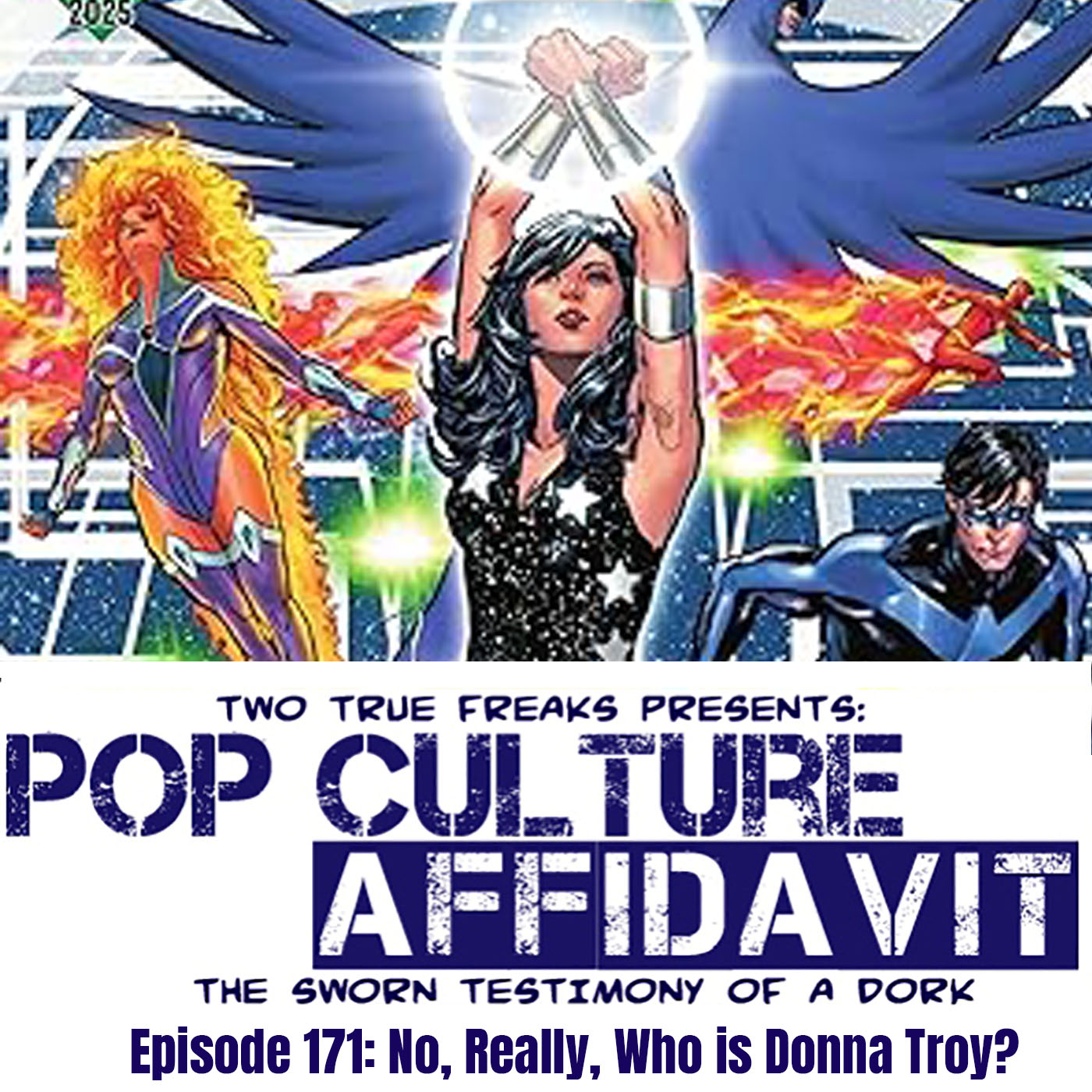
It’s the most rewritten and confusing backstory in the history of comics. No, not Hawkman. Not The Scarlet Witch and Quicksilver. Not even Jean Grey. It’s Donna Troy.
For this episode, I return to the topic of the Wonder Girl herself by taking a quick look at how her origin has been told and retold, and then do a deep dive into the 2025 Titans annual by Phil Jimenez, which reveals the identity of her father and lays to rest the question of who she really is.
In the 1990s and 2000s, VH-1 declared itself “Music First” and began airing original programming. It began with music-related shows and eventually went fully into reality television. But during that time, it was appointment television. For this episode, Amanda joins me to talk about those glory days of VH-1. From Pop Up Video to Behind the Music to Hindsight, we go through the shows we watched, what we remember, and why we miss true music television.
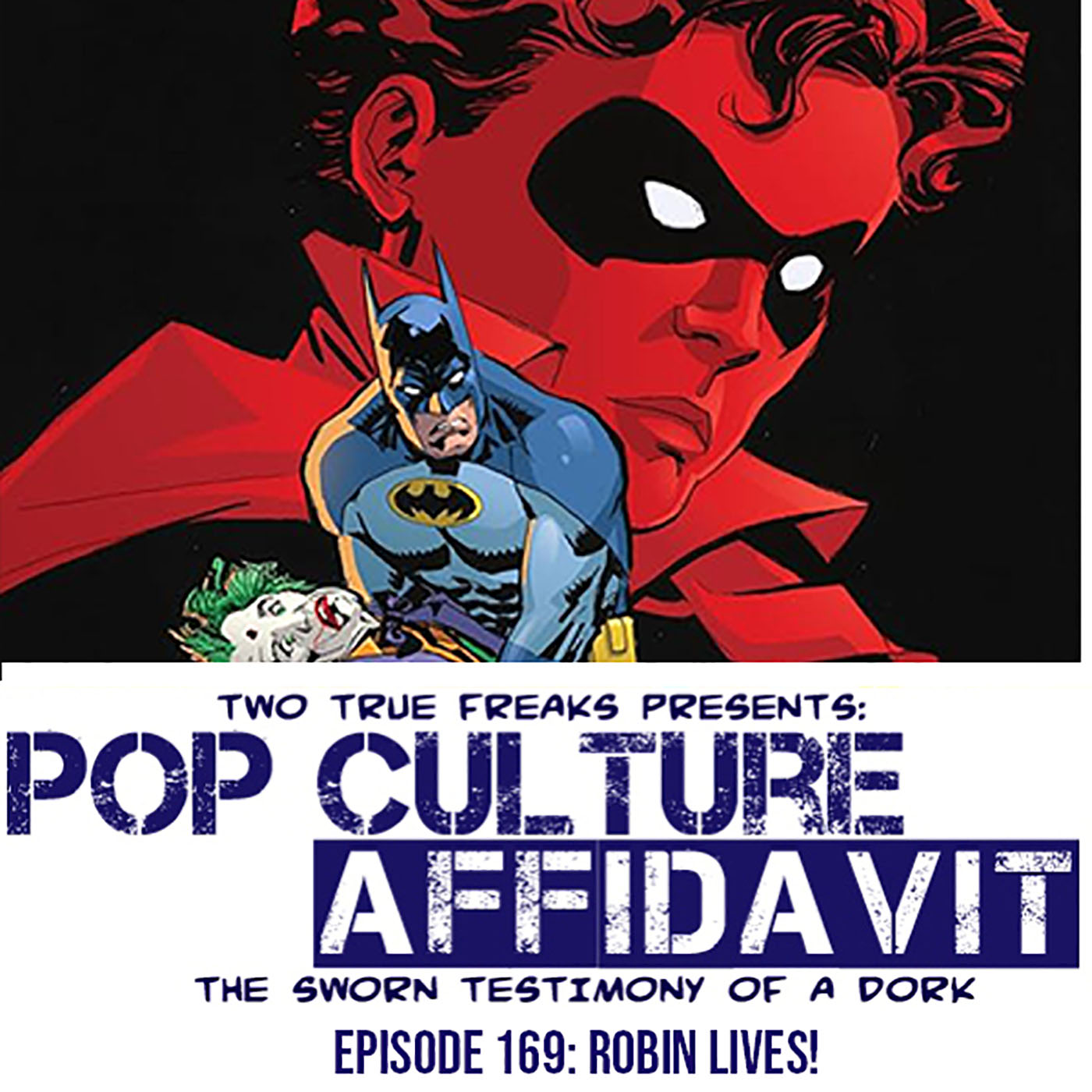
From the DC Vault, it’s the “What If” story that Batman fans had wondered about for years (even though What If is a Marvel book): What if Jason Todd had lived? Join me as I take a look at the alternate version of Batman #428 by Jim Starlin, Jim Aparo, and Mike DeCarlo, and then dive into the miniseries A Death in the Family: Robin Lives! by J.M. DeMatteis and Rick Leonardi.
So we all remember the Energizer Bunny ads from the mid-to-late-1980s, right? The first one were simply the bunny drumming and rolling and not stopping. Then, the commericals got creative; they’d start with ads for fake products and thent he bunny would interrupt (“Still going … nothing outlasts Energizer”). For its time, it was a pretty innovative idea for a commercial. I’m not going to say that it ushered in an era of humor or parody in commercials or anything; maybe it did. But there were definitely a few copycats.
The one I remember the most was, for, of all things, TV Guide.
It’s kind of weird to me that TV Guide had commercials. After all, it was one of those things that was always just … there. You know, that digest-sized magazine you threw around and sometimes read just beyond the listings (or in my case, always read the articles). But in the early Nineties, they launched their own ad campaign using fake commercials. I don’t know how many there were, but I do remember one, a music video named SKUM and the song “Screaming at the Top of Our Lungs.”
So in case you are wondering, the band in the commercial doesn’t exist. A comment from 11 years ago made by YouTube User @rhino6849 says:
This was written played and sung by Chuck Duran. We were in a band together called Loud and Clear which was quite a departure from this.Sorry to disappoint some of the metal heads but this was written with his tongue planted firmly in his cheek. I was on the floor laughing the first time he played it. Funny stuff!
p.s. That’s an actor, not Chuck.
Another user, @painebobby, adds, “Chuck sang and played guitar But did not write it.”
And even Chuck Duran himself, whom I found on the website “Demos That Rock”, has posted about it in some places. He is also a working voice-over artist who has a podcast about that work. One of his guests was E.G. Daily, which is pretty cool.
For me, the commercial still holds up, especially because of the over-the-top nature of the video. I’m not sure if GWAR was getting any rotation on MTV (this is about a year or two before Beavis and Butt-Head premiered), but that’s what it reminds me of. With a … tap … of Spinal Tap (I’ll show myself out).
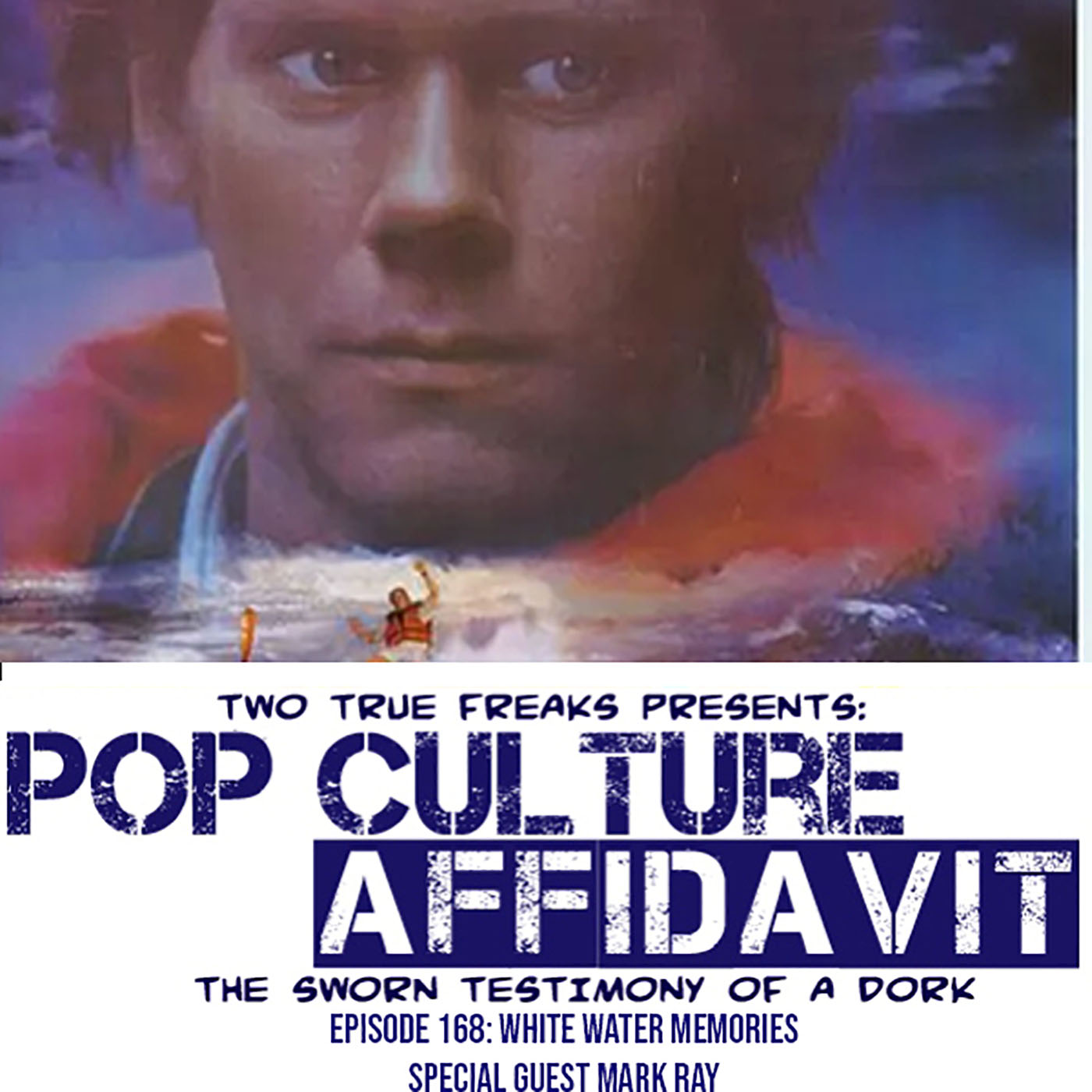
In 1987, White Water Summer, starring Kevin Bacon and Sean Astin, was released. The movie did poorly in theaters but gained a following on cable and video, becoming a coming-of-age cult classic. This episode, I’m joined by Mark Ray, one of the film’s stuntmen. He talks to me about the movie and his experience filming it.
It’s time for the fifth annual Uncollecting episode. This time around, I take a look at an episode of the A&E show Hoarders that features a couple named Claire and Vance, whose enormous book collection has taken over their house and their lives. Then, I look at the “Where are they now” update episode from 13 years later.
At long last, I’m back! And it’s time for the annual coverage of the Baltimore Comic-Con! Join me as I talk about the con experience, meeting up with a number of geek friends, getting signatures from comics creators and actors, and take a walk down artists alley. Plus: listener feedback!
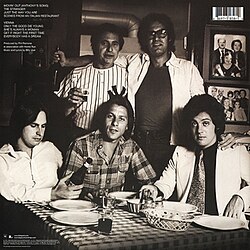
I was running errands this morning and listening to The Stranger (as one does) and as I wound through Charlottesville, I realized that the main characters inmy favorite song on the album, “Scenes from an Italian Restaurant” were married fifty years ago this month.
If you’re unfamiliar with the song, it’s seven minutes long and is a suite of sorts with a ballad at its center about two characters named Brenda and Eddie, who were the couple in high school, married at the end of July 1975, but the marriage crashed and burned quickly and they went their separate ways, though they remained friends. The premise of the song’s framing device is that Brenda and Eddie are meeting one another for dinner at an Italian restaurant, perhaps for the first time in years. While the “Ballad of Brenda and Eddie” section of the song is narrated in the third person, Eddie narrates the rest of the song, giving us one side of his conversation with Brenda (“Got a new wife, got a new life, and the family is fine”). As bittersweet as the song can be, it ends on a comfortable, warm tone with a return to a wine list from the opening (“bottle of red, bottle of white …”) and the sense that though the marriage never worked out, the friendship endures.
The sheet music as found in The Complete Billy Joel Volume 1. Note that I was playing it in September 1993.
I first encountered this song via sheet music, because I owned the book for Greatest Hits Vol 1 and II. Later, I’d buy The Complete Billy Joel books, which at the time covered everything from Piano Man to Storm Front in album order (and included songs from Cold Spring Harbor in the section devoted to Songs in the Attic). “Scenes from an Italian Restaurant” is in volume one of the two-book collection. My piano teacher, Mrs. Stein, would always let me pick a song to play every week or two in addition to whatever selection from the “course book” I was working through along with my scales and fingering exercises. For years, it was one-off sheet music for popular songs like “November Rain”, but I’d often go back to the Billy Joel books. At the time I got it, I had only heard three albums: An Innocent Man, Greatest Hits Vol. I & II, and Turnstiles. So my selections were mostly songs that were well known alongside tracks from Turnstiles like “Summer Highland Falls” (a song I never really mastered). But I’d often flip through the book to see what other songs were out there, which is how “Scenes from an Italian Restaurant” caught my eye.
How could it not? The title alone suggested something special. What it was and how it sounded, I had no idea, but I’d read through the lyrics look over the music whenever I was flipping through the book. I don’t know why I never decided to just try and play it; I either was worried I wasn’t going to play it right because I’d never heard of it, or that I would get in trouble for playing a song that hadn’t been assigned to me. Yes, that sounds ridiculous, but I have always been ridiculous.
Anyway, I didn’t have to wait too long after buying the sheet music book because I got a stereo for my fifteenth birthday and between my parents and my relatives, received six CDs, one of which was The Stranger (the others were Queen Live and Wembley ’86, Pocket Full of Kryptonite, … And Justice for All, Born to Run, and For Unlawful Carnal Knowlege). I already knew half of the album because those songs were on the Greatest Hits album, and while I can’t say if I went right for “Scenes from an Italian Restaurant” upon my first listen, I know I played it early and often. I think I may have made an attempt at it on the piano before Mrs. Stein assigned it to me, but I didn’t actually start playing it for real until September of 1993 (at least that’s what’s written in the book).
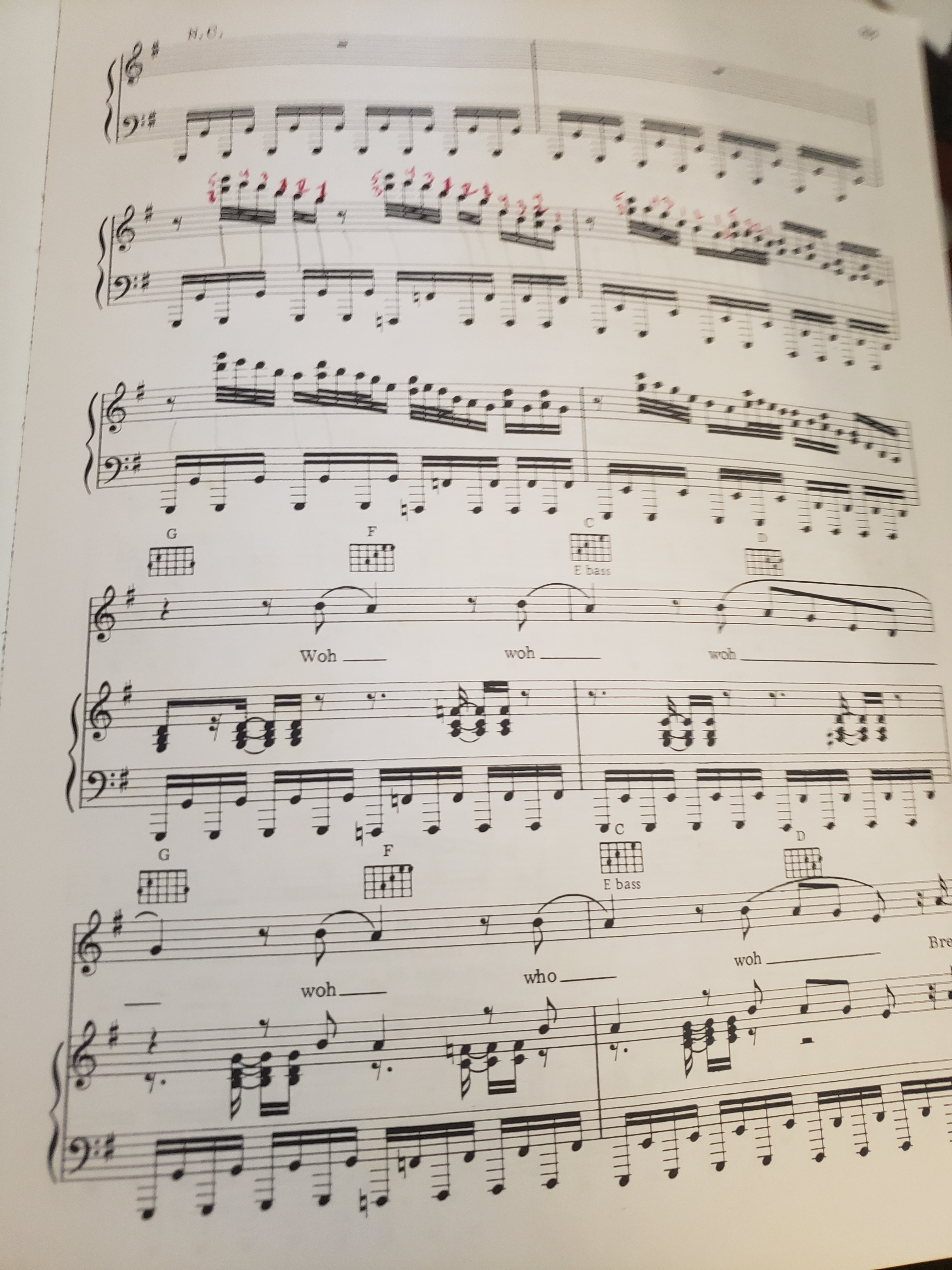
The intro to the “Ballad of Brenda and Eddie” section of the song. Note the continuous octaves in the bass and the fast movement in the treble.
I’ve mentioned this a couple of times on podcasts where I’ve discussed the song or The Stranger as a whole (Fire and Water Records, Long Play), but while the beginning and ending of the song are pretty easy to play, once you get to the beginning of the “Ballad of Brenda and Eddie” section, it becomes a bitch to play. The bass portion of the song, which you play with your left hand is a series of sixteenth notes, all of which are octaves. Now, that’s not hard to do in theory; it’s just that those sixteenth-note octaves go on for at least half the song, finally ending right before the final “bottle of red, bottle of white” lines. I’m neither left-handed nor did I ever master relaxing my wrists enough to have the endurance for those octaves, and that meant that at some point during the Brenda and Eddie verses, my left wrist would not only tense up, it would feel like it was burning. Add to that the way those verses open, where the right hand is playing four measures of what are mostly thirty-second notes before getting to the lyrics. I enjoyed playing the piano and got fairly good at it but despite my efforts, never mastered the song.
That didn’t stop it from becoming one of my favorite Billy Joel songs. I love it for its structure and how that changes throughout to fit the mood (see also: “Bohemian Rhapsody”), but moreover I love what it’s about. In my most recent podcast episode, I talked about his1980s output and I mentioned that while Springsteen wrote for the working class and Mellencamp wrote for the farmers, Billy Joel wrote for the middle-class suburbs. There are a number of songs that show this (the most on the nose being “The Great Suburban Showdown” off Streetlife Serenade), but this is one of the best because it encapsulates a certain feeling of suburban teenhood and is timeless in the way that movies like American Graffiti and Dazed and Confused are despite their very specific settings.
In fact, Brenda and Eddie come from American Graffiti, as they’re described as the “popular steadies and the king of the queen of the prom / ridin’ around with the car top down and the radio on.” I never ran with the Brenda and Eddie crowd, but in a town as small as Sayville, it wasn’t hard to spot the Brenda and Eddies of my high school. I knew the way people looked at the and referred to them, and definitely knew The Diner and how central that was (and to a degree still is) to Long Island culture, to the point where I’ve written stories that have diner scenes.
When Brenda and Eddie decide to get married toward the end of July 1975, Billy notes that “everyone said they were crazy / Brenda, you know that you’re much too lazy / and Eddie could never afford to live that kind of life.” But they go ahead with it anyway and while they find a place to live and buy a waterbed and paintings from Sears, they fight so much that they divorce quickly. It’s a pretty realistic picture and maybe even a caution tale about moving too fast when in love as a teenager (and thankfully, there’s no double suicide like some other stories about movie too fast when in love as a teenager). It’s also, as I realized many, many years after first hearing it, the flip side of a song that came out a decade earlier.
In 1964, Chuck Berry released “You Never Can Tell,” which most of my generation knows from the John Travolta/Uma Thurman dance scene in Pulp Fiction. The song is about two teenagers–Pierre and his girl, who is only referred to as “the Mademoiselle”–who get married as teenagers. In this song, Berry notes that “The old folks wished them well” and come to realize that it’s probably going to work, saying, “‘C’est la vie’ say the old folks / It goes to show you never can tell.”
The second verse is the most important to the context of “Scenes from an Italian Restaurant”:
They furnished off an apartment with a two room roebuck sale The coolerator was crammed with TV dinners and ginger ale But when Pierre found work, the little money comin’ worked out well “C’est la vie” say the old folks It goes to show you never can tell
Pierre and The Mademoiselle get an apartment and furnish it with things from Sears. Pierre gets a job and the money works out. And the old folks stand corrected because, you know, you never can tell.
As we know, Brenda and Eddie weren’t so lucky.
Maybe it was the optimism of the 1960s versus the harsh realities of the 1970s that are contrasted here; maybe it’s that Chuck Berry wrote upbeat rock and roll and Billy Joel wasn’t afraid to inject melancholy into a happy melody, but he’s telling us that the doubting old folks are probably right and it’s not going to work. But whereas Bruce Springsteen along with Jim Steinman and Meat Loaf would make their teen lovers feel trapped in “The River” and “Paradise by the Dashboard Light”, at least Brenda and Eddie are able to escape and get a second chance, even though they realize that their time as “The King and the Queen” has passed (“but you can never go back there again”).
That’s the most bittersweet moment of the whole song and a moment that I think most of us have had on some level as we’ve grown up and gotten older. I can’t tell you what my particular moment was, although it probably involved me going somewhere I used to go all the time and realizing that I wasn’t the center of anyone’s attention and I was just another customer or face in the crowd. Yes, I know how that sounds, but don’t forget that when you’re a teenager, you are often a walking ego and you often assume that everyone knows what’s going in your life and your world, as if they’ve been watching your movie this entire time. “Nobody cares who you were in high school” is truth because we all reach a point of emotional maturity where we understand that we are, yes, just going through life like everyone else. Some of us do it more quickly than others, and some don’t (read: influencer culture).
The sweetness with which Brenda and Eddie reunite years later is one of my favorite parts of “Scenes from an Italian Restaurant”, and one of the more optimistic parts of the song. Breakups don’t always go smoothly and relationships with exes are often fraught. By the time we’re in the Italian restaurant, they’re no longer “exes” in the sense that you or I would complain about our ex-girlfriends or ex-boyfriends. She’s an “old girlfriend” in the sense that the pain is behind him, and hopefully behind her as well. “Brenda and Eddie” survive in the sense that they can still be close and have something special between one another even though it’s much different than when they were eighteen.
As I get closer to fifty myself, I’ve come to realize how friendships that are fleeting or transient is just another part of life. There are people I was pretty close to in high school and college whom I only see via Instagram or Facebook posts; there are others whom I don’t talk to at all. And then there are the ones who are still there; maybe we take too long to get back to one another and aren’t embedded in one another’s lives like we were in our teens and twenties, but we’re still there and as cheesy as this concluding sentence is going to sound, will always save a seat at a bar, diner, or an Italian restaurant.
“You May Be Right,” “Allentown,” “Tell Her About It” … all of these are found on the seminal compilation album Billy Joel Greatest Hits Vol 1 and 2, which came out 40 years ago. Join me as I take a look at the Piano Man’s music throughout the decade of the Eighties.
For my 18th birthday, I got a $25 gift certificate to Tape World.
It was 1995 and I hadn’t bought a cassette in at least a few years. But in The Smith Haven Mall, there was still a store called Tape World. I’d never set foot inside of it and I don’t think anyone I knew had either. Sam Goody was right around the corner, sitting in prime position across from Aeropostale and The Gap, beckoning music lovers with its neon entrance and posters advertising the latest albums. Tape World was a blocky ‘80s-lettering sign above a thin store that was tucked between 5-7-9 and The Bombay Company. I actually had to check the mall directory to find it.
The Eighties didn’t so much end in 1990; rather, they slowly faded into obscurity, and that has me thinking about where they eventually went. Tape World, for instance, has its place in our cultural examination of the decade, as one of Michael Galinsky’s photos for The Decline of Mall Civilization shows a blonde girl with quintessential mall hair walking by the store and its wood paneling facade. A look through my memories of the malls near me (and yes, malls, plural–it was Long island) shows a number of places where time seemed to stand still well after the decade had changed over while simultaneously trying to keep up with the times. Gardiner Manor Mall had an ancient Sears, an Orange Julius, and a bridge to Stern’s. The South Shore Mall had Captree Corners, a late-1970s mini mart of small shops and a fountain I loved to throw pennies into when I was six. The Sun Vet Mall was where 1981 went to die.
Smith Haven, started out as a mid-century mall of the late 1960s with fountains, Alexander Calder sculptures, and the low-lit atmosphere that I associate with the era. It was a twenty-minute drive from Sayville and when I was little, I loved going to “the mall with the fountains.” However, it underwent a massive renovation in 1987 and emerged with a brighter neon-tinged and mauve-tiled palette that has come to typify the Eighties.
The renovation was hyped even as it was going on. When the mall was getting its makeover, there were radio commercials that sang “We’re building the place of your dreams … Smith Haven Mall!” Later, the commercials changed to “Your wildest dreams will come true … Smith Haven Mall!” I don’t know what “wildest dreams” can come true at Jean Country or Casual Corner, but I will take their word for it. The mall was also the home to a local news special on WLIG 55, “At the Mall With Drew Scott.” It remains one of the more amazing artifacts of 1980s Long Island as did the mall itself until it underwent another renovation in the mid-2000s.
That’s probably why it’s always stayed alive while so many shopping malls have died. A hot place in the Eighties, Smith Haven was also a destination for Nineties mall-ness because it had a Gap, Aeropostale, Structure, Express, Limited, Eddie Bauer, Bath and Body Works, Victoria’s Secret, Disney Store, and Warner Brothers Studio Store. But it was still Eighties building that held onto that part of its identity with stores like Tape World; Sssassy, which was a real-life version of Over Our Heads, the store from the last few seasons of The Facts of Life; and the cutlery store Hoffritz. Because honestly, nothing is more Eighties than a store devoted entirely to cutlery.
Sssassy in Smith Haven Mall, probably in the late 1980s or early 1990s. Photo was taken from siteride on Flickr.
The faded Eighties aesthetic in the era of grunge was simultaneously out of place and in line with those who have come to be known as “Xennials”. Stuck between our cool older Generation X and annoying little Millennial siblings, the Xennial microgeneration is the middle child–ignored because mom and dad had already done everything for those older siblings and the younger ones were showing much more promise. We were raised by people going through the motions, wearing hand-me-downs and finding ourselves too old for anything new. I don’t think it was spurred on by anything other than bad timing. We had our peak teenage mall years during the first Bush recession where the economy and the housing market both bottomed out, especially on Long Island, so that meant that development and progress were put on pause and we did our best to use our fading institutions of commerce.
Ironically–appropriate for the Nineties, I know–this made parts of Long Island feel like a museum exhibit. In recent years, there has been a ton of McMansioning and townhome development. But in the late 1990s, there was still a lot left over from decades past. My grandmother’s neighborhood in New Hyde Park had houses that had remained unchanged since the 1950s. Downtown spaces in Patchogue, Amityville, and Huntington still resembled their 1950s and 1960s selves. Sayville Pizza looked like it hadn’t been updated since 1975. Even as a kid, I wondered what ghosts were sending echoes through their halls and walls, and whatever patina or grime covered the Island led me to associate authentic with “worn.”
Of course, such things do not always last, especially when the economy improves and developers can give yet another facelift to a mall or neighborhood. The candy-colored late 90s and the housing boom of the 2000s meant knocking down the useless buildings to put up Target (as they did with the Gardiner Manor Mall) or turning a shopping center property into a housing development. In some cases, the limited space provided by an area in Queens or Nassau County meant a creative way to drop a Barnes & Noble into a strip mall. In other, like in Suffolk County, you could bulldoze acres of woods to create an outlet mall. I’m sure nobody really noticed when Rickel and Pergament gave way to Lowes and Home Depot unless someone prompted them. It’s such a suburban aesthetic to embrace whatever is new. “They’re putting in a Whole Foods.”
Yeah, they give us a lot.
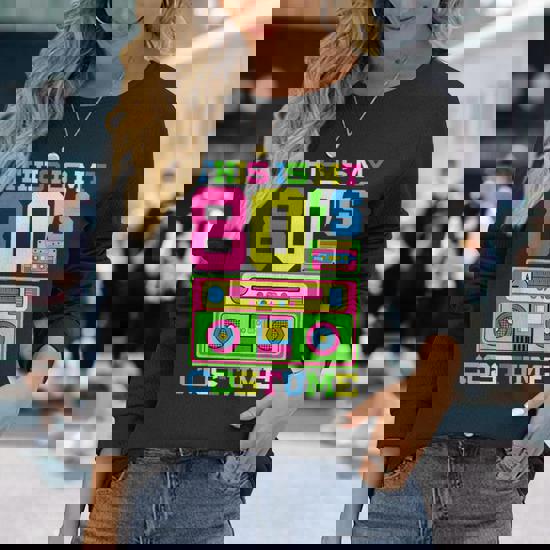
Image taken from one of those baitclick T-shirt ads that uses really bad photoshopping. You know the ones.
They’ve even given us the past, preserving the Eighties in places that are comfortable and happy–movies, marathon weekends on radio stations, your kids’ spirit week costumes. But it’s all cosplay and manufactured nostalgia put forward by those who stand to earn money or cache off of our memories: memes, influencers who pretend they “are Eighties”, bad TikToks of someone bobbing their head and pointing out that random items existed or making lists of cartoons “nobody heard of” yet every single commenter remembers. Yet, that’s the product of our culture, which is one that has been manufactured for generations.
Tons of ink has been spilled about suburbia, stripping down its vinyl siding to show the flaws underneath andI want to make some pretentious point about how because the Eighties were actually stripped of all substance and repackaged, we are stuck in a cultural Allegory of the Cave and the people who sold us the American Dream are making money off of that, but I’ll just look for where the past has receded and the decade truly remains. Because it’s not a place everyone goes. It’s in a paragraph of the last chapters of a U.S. history textbook. It’s documentaries buried underneath a pile of true crime exposés on second-tier streaming services. It’s in a bin in the attic, the back of a closet, or on the shelves and racks of thrift stores.
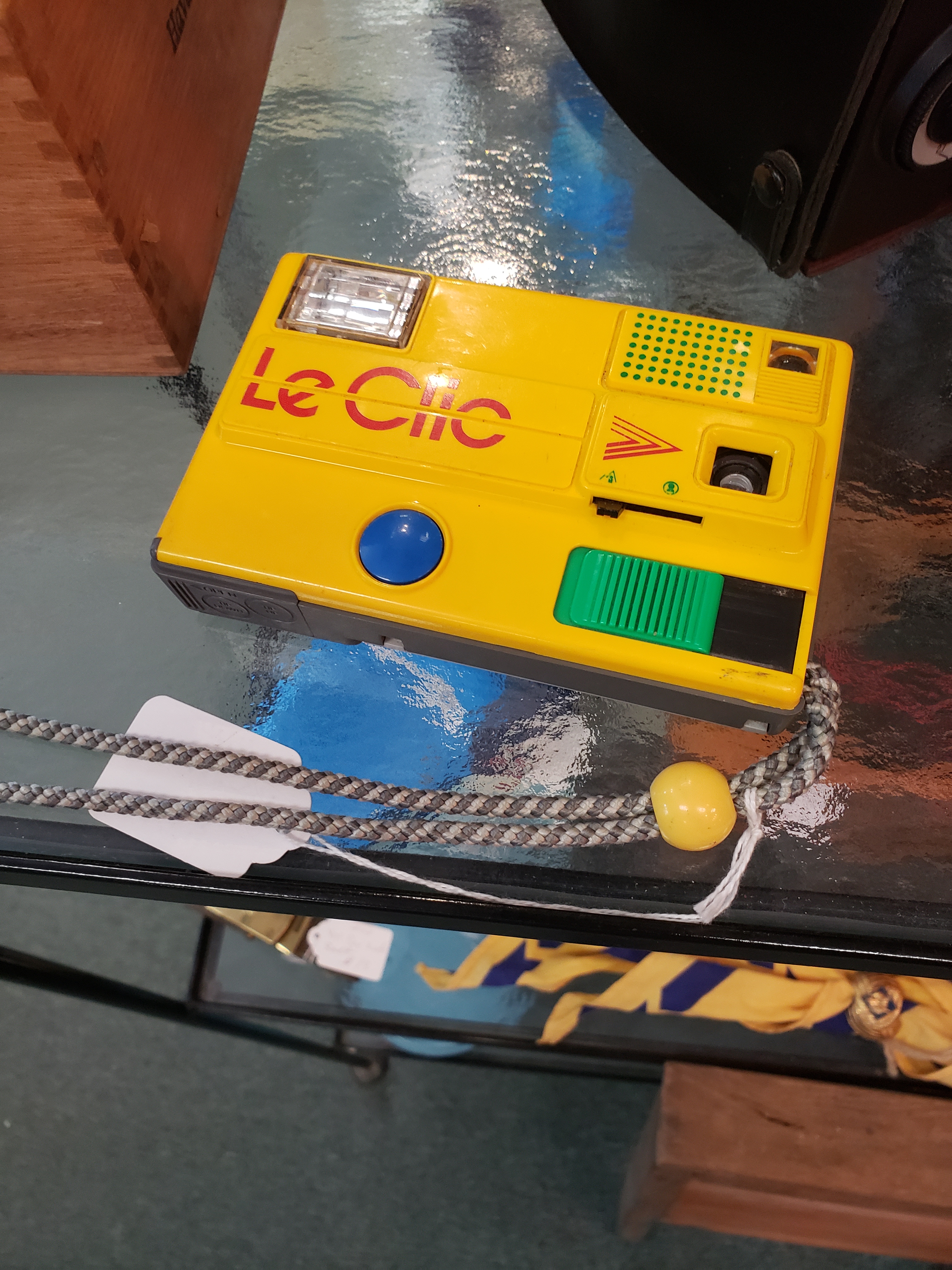
A few months ago, I was in one of those antique malls where people offload things that don’t qualify for an appearance on Antiques Roadshow but still think are worth more than a couple of bucks at a yard sale. Among stacks of old Corningware, old country albums, military ephemera, and old guitars were a number of video games, baseball cards, toys, and other things I recognized, like a Le Clic, a disk film camera that came in an assortment of colors, all of which screamed Eighties. These were more comforting than any meme or slapped-together neon wardrobe I’ve seen on a high schooler. They felt lived in and I could picture some kid with a questionable haircut wearing an Ocean Pacific T-shirt once collecting and playing with all of them.
picture taken from eBay.
In the ten or fifteen minutes I spent in Tape World thirty years ago, I stuck to Eighties music. I’d like to say that a store called Tape World demanded an Eighties music purchase, it was because CDs were expensive and I wanted to get the most out of my $25. The Fast Times at Ridgemont High soundtrack on CD was just enough to allow me to dive into a bargain bin and fish out The 80s Rock + On, a K-Tel produced 80s compilation cassette that would live in my Walkman or the tape deck of my Hyundai Excel until I offloaded my cassettes in the mid 2000s. So yes, I did buy a tape at Tape World.