Author: Tom Panarese

What an Institution!


This post is part of Forgotten Films’ 1984-a-Thon, a series of posts that celebrates the films of 1984. Check out more 1984-ness at The Forgotten Films Blog.

Whenever I sit down to review a movie, I inevitably find myself doing a mental, one-sentence review.  “It’s cute,” “Wow, this is really gory,” or “This could have been half an hour shorter” are common ones that come to mind.  When I finished watching Police Academy for the first time since the late 1980s, I thought, “This got six sequels?”

This got six sequels.

A comedy starring Steve Guttenberg, Eighties comedy hottie Kim Cattrall, and a cast of silly misfits, Police Academy actually made $81 million and was the sixth highest grossing film of 1984, which is amazing considering the top five were (in order): Beverly Hills Cop, Ghostbusters, Indiana Jones and the Temple of Doom, Gremlins, and The Karate Kid.  But unlike those other films, which all have a timelessness to them (even Beverly Hills Cop, which is clearly an Eighties movie), Police Academy has not aged well.  Or maybe that’s an inaccurate assessment and it simply hasn’t grown up with me.

For a movie that is rated R, Police Academy‘s humor seems to be more directed to the late elementary/middle school set, which makes sense because I loved this movie when I was about eleven or twelve years old (confession: I loved Police Academy 3: Back in Training because of the jetski chase at the end) and that was around the time when I discovered dirty jokes and sex humor but before the days where I really understood it.  The movie’s premise is simple:  the mayor of a large city (presumably Toronto Los Angeles) has opened up enrollment in the police academy to the average citizen, which means that every last klutz and moron now has the chance to become a cop.  Cary Mahoney (Guttenberg) is more or less sentenced to the academy after getting in trouble for the umpteenth time (a customer at the parking lot where he works insists on having his car parked despite the lot being full, so Mahoney turns it on its side and parks it that way) instead of going to jail because police captain Reed was friends with Mahoney’s father, who was also a cop.

We also meet our other potential defenders of the law:

  • Karen Thompson (Kim Cattrall):  Mahoney’s love interest and serious female police candidate.
  • Moses Hightower (Bubba Smith):  Exceptionally tall florist.
  • Leslie Barbara (Donovan Scott): Constantly bullied proprietor of a Fotomat-type store.
  • Doug Fackler (Bruce Mahler):  Complete klutz.
  • George Martín (Andrew Rubin): Resident lothario.
  • Laverne Hooks (Marion Ramsey):  Woman with soft, high, squeaky voice.
  • Larvell Jones (Michael Winslow):  Guy who can imitate any sound effect.
  • Eugene Tackleberry (David Graf):  Security guard and psychotic gun nut.
The theatrical release poster for Police Academy, which was drawn by famed poster artist Drew Struzman

The theatrical release poster for Police Academy, which was drawn by famed poster artist Drew Struzman

Oh, it’s a motley crew that’s destined to get into hijinks and that’s basically what happens, mainly because the police academy is run by Commandant Eric Lassard (George Gaynes), who is just about as absent minded as his recruits.  The conflict comes when the chief of police, who hates the mayor’s idea of open enrollment, asks Lieutenant Harris (F.W. Bailey) to ensure that none of the misfits actually graduate.  In order to do this, Harris recruits Copeland and Blankes (Scott Thomson and Brant van Hoffman) to sabotage Mahoney and his friends’ chances.

The rest of the film is more or less a series of gags until a final action/comedy sequence when the recruits are sent downtown to handle a riot and wind up saving the day.  Mahoney repeatedly tries to get himself kicked out of the academy until he falls for Karen and decides to stay.  Jones uses his sound effects mouth to fake everyone out.  George beds just about every woman until he finds his one true equal, the enormous-breasted Sgt. Callahan (Leslie Easterbrook).  Tackleberry wants to mow down everything in his path.  And we get the first appearance of one of the more famous gags from the Police Academy series:  Copeland and Blankes are given a fake address to the party that Mahoney is throwing and that address winds up being a gay bar named the Blue Oyster.  I didn’t find myself laughing very often, to be honest.  But I am not going to spend the next few paragraphs crapping all over the film because … well, that would be way too easy.  After all, Police Academy and its six sequels–Their First Assignment, which introduced series mainstay Bobcat Goldthwait; Back in Training; Citizens on Patrol, which was Guttenberg’s last film in the series and also starred Sharon Stone; Assignment Miami Beach, City Under Siege, and the direct-to-video Mission to Moscow–are kind of the standard-bearers of the badness found in Eighties comedies.  Instead, I’m going to give you five great things about Police Academy, even thirty years after its release …

1. The legacy of Steve Guttenberg.  This may be a stretch, but I have a feeling that without Carey Mahoney, we may not have gotten Zack Morris.  Okay, that’s just me projecting my Saved By the Bell fixation on a movie that came out a good four or five years earlier than the show and it’s clear that Ferris Bueller was more of a directly influence on the Zackster than Mahoney.  But Guttenberg’s portrayal of the smart-assed trickster is important because it proved the bankability of a relatable main character who was more attractive than some famous comedians out there but was not a matinee idol.  We’ve been getting those guys for years since.

2. F.W. Bailey as Captain Harris.  There’s so much about Police Academy that is derivative, with elements of National Lampoon’s Animal House and Private Benjamin, and Bailey’s Captain Harris character is definitely no exception.  I see a little bit of Dean Wormer in him and definitely bits of Ted Knight’s Judge Smails.  In fact, Bailey has the same sort of slow burn as Ted Knight, but brings a little bit more to it, with more of a pursed-lipped face than a descent into mania.  He plays the character as less of a villain and more of a comedic foil for someone like Mahoney and despite the film’s silliness and cheap jokes, they actually have some good chemistry.

3. Michael Winslow.  Now, the “Loud Mouth” Jones character gets real tired real quick but just like Bobcat Goldthwait in the sequels, I have to give Michael Winslow credit here because his character really is an icon of Eighties comedy.  He more or less is one of the main things anyone remembers about any of the Police Academy movies in the same way that most people will point to Curtis Armstrong’s Booger when they think of the Revenge of the Nerds films.  So even if you find his shtick annoying, props to him for making a career out of the character and his sound effects gags.

4. Eugene Tackleberry.  When I was a kid, Tackleberry was my favorite character.  Thirty years later, Tackleberry is still my favorite character.  The late David Graf plays the over-the-top gun nut with such sincerity that it’s one of the few things that still holds up (in fact, according to the film’s IMDb trivia page, “Tackleberry” is a term that private security firms often use to describe a person who is a little too enthusiastic about large firearms).  He’s perfectly intense and the other characters’ reactions to him (especially Harris, when Tackleberry produces what is quite possibly the largest handgun in the world on the firing range) are absolutely golden.  Dare I say, he makes this movie.

5. The Nostalgia Factor.  To this day, whenever I’m watching an old VHS tape and the Warner Home Video logo comes on the screen, I expect to hear the first few bars of the Police Academy theme song immediately afterwards.  This movie and its sequels hold a special place for me because they remind me of riding my bike to the video store on a regular basis and renting and re-renting all of my favorite flicks.  It was one of the first tastes of independence I had as a kid and really my first taste of comedy.  I’d eventually move on to Caddyshack, Airplane, and The Naked Gun movies, but this is where I started and I have to at least give it credit for that.

Police Academy is available on DVD and Blu-ray and can also be streamed on Amazon.

In Country: Marvel Comics’ “The ‘Nam” — Episode 31

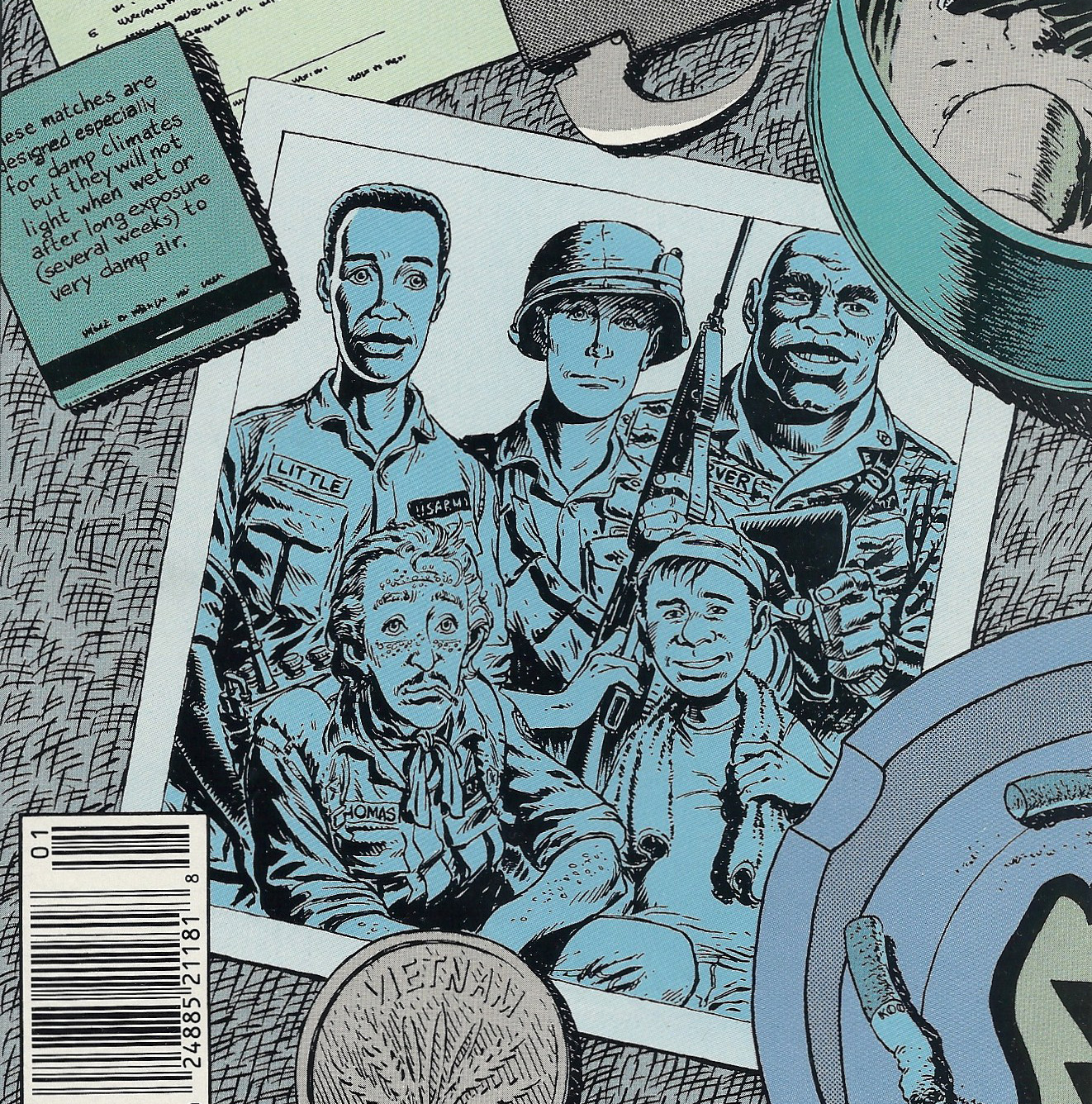
IC 31 Cover“Like A Candle in the Wind” is the title of issue #27 of The ‘Nam and is a “fill-in” story where Clark hears the story of a wounded soldier he is helping. It’s a harrowing, sad tale brought to us by Doug Murray and guest artist Sam Glanzman. As always, in addition to the summary and review of the issue Ill be taking a look at the letters, ‘Nam Notes, and ads.
You can download the episode via iTunes or listen directly at the Two True Freaks website

Two True Freaks Presents: In Country iTunes feed

In Country Episode 31 direct link

Boldy Went

Star_Trek_GenerationsEarlier this year, I sat down with Michael Bailey and talked about the comic books of 1994.  He talked about how this was a landmark year for him as a comic collector because it was the year that the greater DC Universe opened up to him.  I actually remember it as being a bit of the opposite.  I didn’t stop collecting comics or anything, but I did find myself becoming more discerning as a comic book reader and collector.  As I’ve thought about 1994 and its importance in the decade, I’ve come to realize that this also applies to Star Trek.

I was a pretty big Star Trek fan from the time I was about nine years old and saw Star Trek IV: The Voyage Home for the first time in the movie theater and through most of junior high and the first year or two of high school.  Being a fan of Trek wasn’t exactly popular at the time and I definitely took a fair amount of shit, but I seemed to take a fair amount of shit for simply breathing when I was in the eighth grade, so whatever.

Anyway, 1994 is a landmark year in Trek because it marked the end of Star Trek: The Next Generation, the show that really cemented the concept of Star Trek as a show with a legacy beyond a 1960s television show and a series of popular movies starring the same group of people.  I had been kind of cold to the show when it premiered in 1987 because I was huge fan of original series reruns and original series movies, but it grew on me.  I never found myself watching it on a regular basis, but I do remember streaks of several weeks in a row because one episode hooked me in (my all-time favorite is the two-part cliffhanger “The Best of Both Worlds”).

“All Good Things,” which was the final episode of ST:TNG, aired on May 23, 1994 and being in the New York area, that was on WPIX at either 7:00 or 8:00 on a Saturday night.  I missed the original airing because I had to go to some family party, so I programmed the ancient top-loading Panasonic VCR in our basement to tape it when I got home.  For whatever reason–probably user error–it didn’t tape.  I was bummed but apparently not bummed enough to try and find a rerun because I didn’t actually see “All Good Things” until about 2009 or 2010 when I found it randomly on cable one night.

But the Trek faithful didn’t have too much to be upset about that year when it came to losing their favorite show.  Star Trek: Deep Space Nine was still on the air (although I admittedly didn’t watch it) and that November, Star Trek: Generations hit theaters.  This was a movie that was set up to be a pretty big deal–Kirk and Picard were going to be on screen together.  There was time travel involved, of course, but it was going to be huge.

I missed this in the theater and when I eventually saw it on video, I was kind of glad I did.  Star Trek: Generations is not that great of a movie.  It’s not Star Trek V horrible by any means, but it definitely follows the pattern of odd-numbered Trek movies being “meh.”  Granted, I haven’t watched it in two decades so I may be wrong, and that’s why I’m not going in-depth with a review of it or offering up a podcast episode.

What strikes me, though, when thinking about this, was how it was one of the first times where I hit a point that I definitely could say that I was at the end of my fandom of something.  It’s not that I stopped liking Star Trek by any means–in fact, I went and saw First Contact in the theater (and thought it was pretty good)–it’s that I was no longer so attached to it.  And really, I wasn’t used to that.  Since then, it’s happened with several things from bands like Metallica to comics like Batman, but Trek was the first “living” thing that I could turn to and feel a specific nostalgia for (as opposed to long-dead cartoons like Voltron, for instance), as if it reminded me of a place, time, and attitude that was no longer there.

Oh, and I still think Kirk’s death was cheap.

In Country: Marvel Comics’ “The ‘Nam” — Episode 30

IC 30 CoverWe are back in The ‘Nam with a look at “Auld Acquaintance” from The ‘Nam #26, a story that takes a look at the current lives of characters from the original year of the issue: Ed, Sarge, Top, Rob, Thomas, and Frank.  Meanwhile, the 23rd moves from its current base of operations to Tay Ninh.  Brought to you by Doug Murray, Wayne Vansant, and Geof Isherwood.  As always, in addition to the summary and review of the issue I’ll be talking about the story’s historical context as well as taking a look at the letters, ‘Nam Notes, and ads.
You can download the episode via iTunes or listen directly at the Two True Freaks website

In Country iTunes feed

In Country Episode 30 direct link

Memories Can be Wafer-Thin

Necco Wafers

Image from Old Time Candy.

As I have gotten older, I have found that there are some things in my past that are actually better left there.  The quality of certain movies or television shows are the best examples of this, but it can apply to things like food.

From the time I was ten until I was sixteen, I spent a week every summer on Kezar Lake in the extremely small town of North Sutton, New Hampshire.  While it’s not too far away from the larger area of Lake Sunapee, North Sutton is basically comprised of the lake, a bed and breakfast, several homes, and a general store named the Vernondale Store.  When we weren’t swimming, riding our bikes around the lake, or being dragged to a glass factory by our parents, my sister and I as well as our friends would journey up to Vernondale with a couple of dollars to buy baseball cards, Mad Magazine, and candy.

Vernondale stocked a wide variety of candy, but one of our favorites was Necco Wafers.  Wrapped up like a roll of quarters, Necco Wafers are manufactured by the New England Candy Company, or Necco, and have been made sine 1847.  So it’s no wonder they were in such abundance in New Hampshire (another food item, Hires root beer, will definitely get its own post at some point as well).  I’d seen them outside of New Hampshire, but rarely south of the Mason-Dixon line.  There are eight flavors in a roll of Necco Wafers:  lemon (yellow), lime (green), orange (orange), clove (purple), cinnamon (white), wintergreen (pink), licorice (black), and chocolate (brown).

So I was recently at a convenience store and as I made my way from the soda cases to the front counter, I spotted Necco Wafers in the candy rack.  Usually, I would ignore such things, but I felt nostalgic and picked up a pack, then proceeded to write down my reaction to eating each of the eight flavors for the first time in twenty years.

Pink: Well, now I know why I’m able to tolerate the taste of Pepto Bismol.

White: Is this cinnamon?  I’m tasting a little heat here, and it kind of reminds me of when I was a kid and used to suck on cinnamon Certs until I torched the hell out of my tongue.

Black (which  looks more like dark blue): This is obviously licorice and I guess Necco was trying to get me ready for Jager shots later on in life.  It certainly has an aftertaste, so I was prepared for that effect of Jager.

Yellow: This was like alternately sucking on a wafer coated in lemon Pledge and like those old Archway lemon cookies that my dad used to buy in Waldbaum’s every weekend.

Green:  I’ve never eaten a fresh scent Clorox wipe, but I’m pretty sure this is what it tates like.

Brown:  This is obviously chocolate–in fact, they sell entire rolls of chocolate Necco Wafers–but at first it tastes like very little and the actual taste of chocolate sneaks up on you.

Orange: They did a good job here of replicating the flavor of a creamsicle.  In fact, this is probably the way creamsicles are eaten on The Jetsons.

Purple:  Did I just swallow potpourri?

They are, I guess, an acquired taste, and are truly made for a kid’s palate.  Still, my disgust at the flavor gauntlet I ran doesn’t take away from what are some fond memories of vacations gone by.

Pop Culture Affidavit, Episode 32 — Royale With Cheese

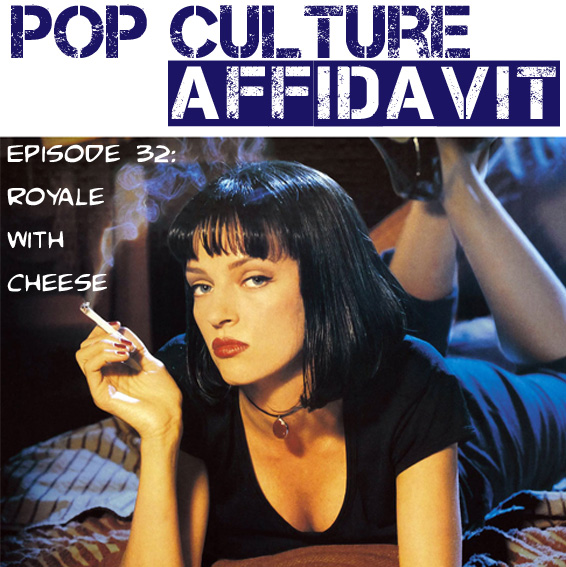
Episode 32 CoverSit back, relax, drink some of Jimmy’s coffee, give your girl a foot massage and make sure the gimp has a $5 milkshake, it’s time to take a look at the movie of 1994: Pulp Fiction.  I take a look at each section of the movie, talk a little bit about the film’s soundtrack and discuss its lasting influence as well as why it should have been Best Picture.

You can listen here:

iTunes:  Pop Culture Affidavit

Direct Download 

Pop Culture Affidavit podcast page

In Country: Marvel Comics’ “The ‘Nam” — Episode 29

IC 29 CoverOne hundred years ago, the world went to war.  After living through the war, a German soldier and writer named Erich Maria Remarque took his experiences and wrote them into a novel, All Quiet on the Western Front.  In this episode, I take a break from the Vietnam War and look back at Remarque’s World War I novel, giving it a full synopsis and review, then taking a look at two movie versions, and spending time on the poetry and songs of the First World War Era.

You can download the episode via iTunes or listen directly at the Two True Freaks website

In Country iTunes feed

In Country Episode 29 direct link


Here’s some of the media (videos, songs, poetry, etc.) that I use or mention in the episode. (more…)

5 Things to Love and 5 Things to Hate About Forrest Gump

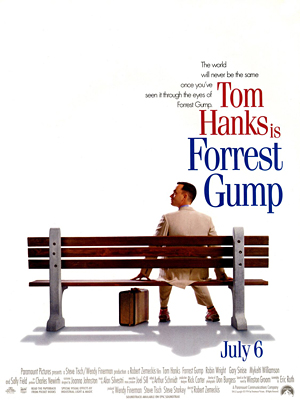
Forrest Gump PosterI could not spend a whole year talking about 1994 and calling it “the most important year of the Nineties” if I didn’t take the time to talk about the film from 1994 that would go on to win best picture: Forrest Gump.  Directed by Robert Zemeckis, it is the story of a simple-minded man (the un-PC term would be “mentally retarded”) who winds up living an extraordinary life.  Told through mostly flashbacks, the story concerns Forrest Gump (Tom Hanks), who is sitting on a bus stop bench in 1982 on his way to see Jenny, who as we learn over the course of the movie, is the love of his life.  He tells his life story to anyone who happens to be sitting next to him (as well as the audience):  born in Alabama, Forrest has a low I.Q. and had to wear braces on his legs as a kid until one day he learned how to run.  This served him well more than once, as he played for the University of Alabama football team, served in Vietnam, played diplomatic ping pong, opened a shrimping company, and started a running craze.  Along the way, we also see the life of his girl, Jenny (Robin Wright), who had a life that directly contrasts Hanks’s characcter: she was abused as a child, became a hippie, and spent much of her formative years in a drug- and alcohol-induced haze until finally coming home to Alabama and living with Forrest before leaving (which prompts Forrest to start running and the creation of his running craze).  When Forrest and Jenny meet up after he’s done telling his story, she tells him that she is dying and that she has a son named Forrest, who is the result of the one night that the two of them slept together.  By the end of the film Jenny has passed away and Forrest is now raising his son in his childhood home in Alabama.

That’s a gross simplification of the movie’s plot (after all, I didn’t mention Bubba or Lt. Dan), but most of the people reading this post are probably at least familiar enough with the film to follow along (and if you’re not, the film is available for streaming via Netflix).    Or you can check out the trailer:

So, with the plot out of the way, I thought I’d get to what I wanted to say about this movie, which has not been one of my favorites; in fact, I’ve long contended that with both The Shawshank Redemption and Pulp Fiction nominated for best picture that year, I can’t understand how this won best picture.  Okay, I can see why it was a popular choice for best picture, what with its sentimentality and emotional impact; I can’t understand how the Academy thought that this was more worthy of that particular honor than those two films, the latter of which had a major influence on filmmaking for at least the better part of the rest of the decade (and possibly beyond).

You know, never mind that I saw this three times in the theater, bought the soundtrack, and own a copy on VHS (although for the life of me I have no idea where that copy is).  In fact, I liked the movie when it came out.  It was beautifully shot, was pretty funny, and the music was great.  But it did not age well, especially after I saw Pulp Fiction and read Winston Groom’s novel upon which the film is based.  The novel turned me against the film in a big way, as Groom’s Forrest is a lot less likable than the buffoon with a heart of gold that Hanks plays on screen (and for which he won Best Actor).  Prior to writing this post, I hadn’t watched the film since 1996 and decided to give it a fair shake.  I didn’t hate it as much as I thought I would, although I still think it wasn’t worth the Best Picture honor (and I still maintain that it’s right up there with the oft-derided Ordinary People’s victory as Oscar larceny).  So what I did was do what any lazy good blogger does, and that’s made a list.  So here are the top five things I liked and the top five things I hated about Forrest Gump. (more…)

In Country: Marvel Comics’ “The ‘Nam” — Episode 28

IC 28 CoverThe Tet Offensive continues with “Hue: City of Death,” a story about Marines told via the 23rd’s own Andy Clark in The ‘Nam  #25, brought to us by Doug Murray, Wayne Vansant, and Geof Isherwood.  As always, in addition to the summary and review of the issue I’ll be talking about the story’s historical context as well as taking a look at the letters, ‘Nam Notes, and ads.

You can download the episode via iTunes or listen directly at the Two True Freaks website

In Country iTunes feed

In Country Episode 28 direct link

Below is a picture of the church depicted in the issue, located in the city of Hue, courtesy of the art museums at Harvard.

Pop Culture Affidavit, Episode 31 — The 1994 Grab Bag!

man reaching into grab bagWhat do Beverly Hills, 90210, the 1994 Baseball Strike, and Zima all have in common?  They’re all covered in the latest episode of Pop Culture Affidavit!  As part of my series of posts and episodes called 1994: The Most Important Year of the Nineties, I take a look at ten completely random things from 1994.  It’s movies, television, music, and current events all in one convenient episode!

You can listen here:

iTunes:  Pop Culture Affidavit

Direct Download 

Pop Culture Affidavit podcast page

(more…)