Author: Tom Panarese

The Last Time the World was Supposed to End

A Y2K bunker. Although it doesn’t look like this one was very well-supplied.

So we survived yet another supposed apocalypse.You know, I have never been able to take threats of the end of the world very seriously.  I suppose it’s due to the fact that in recent year, the talk of the end of days has come from the extreme type, those whose religious views are so out there that they may as well be something out of a bad movie about a cult.  I suppose our popular culture hasn’t helped either.  Turn on your average cable channel these days and while you surf through the low- class sideshow it has become (seriously, this is what I begged my parents for when I was a teenager?) you will more than likely come across a History Channel special where faux academics are interviewed about the vague statements made by someone before the flushable toilet was invented, or stuff like Doomsday Preppers.

I am not sure if the shows like these glorify these idiots or ridicule them.  It seems like the fringe is more in the spotlight than they ever were, but it is hard to consider them “legitimate” because there really aren’t any threats anymore.  It’s not like it’s 1962 anymore and we’re all building bombs shelters in our backyards because we are all scared of the bomb.  As advanced as I guess the Mayans seemed, it was an ancient prophecy that seemed as unlikely as the prediction made last year by some dipwad who claimed that The Rapture was upon us (although I always thought The Rapture was not really in the book of Revelation, and instead was manufactured by someone who wanted followers to give him money).  Besides, I had already become skeptical of apocalypse predictions years ago when Y2K didn’t happen.

Now, I’ m sure that most people who may read this remember what Y2K was, but its prominence as a threat to our society seems to have faded over time, becoming a footnote at least or the answer to a trivia question at best.  In fact, the sophomores I teach had no idea what I was talking about when we were talking about the Mayan Apocalypse during some down time on the last day of classes before Christmas break.  So, if you don’t know or don’t remember, Y2K was basically a widespread computer glitch that was going to destroy us all.  The problem, basically, was that most co.puters were programmed with internal clocks that only displayed years with two digits.  So, 1999 was simply 99.  And on January 1, 2000, these computers would all display “00,” and since they didn’t know the difference between centuries, the computers would think it was not 2000, but 1900, and would shut down or something.

I first learned about it in Time when I came  across the article “The End of the World As We Know It,” a title I suppose the magazine’s editors probably thought was hip but was really groan-worthy.  Anyway, I had come across the article when I was in the Honors Program study lounge at Loyola, intending to do what everyone who went to the lounge always did, which was nap on the couch.  Instead I got sucked into the story of the the Eckhart family of rural Ohio, who were among a population of very religious people who were convinced that it was the End of Days and had started to stockpile all sorts of supplies,including weapons, for the coming doom.  They had even gone as far as to make bunkers, just like it was the Cuban Missile Crisis all over again.  I was a typically self-absorbed college senior whose two major concerns were writing my weekly column in the student paper, and having the gas money to get to my girlfriend’s house on Friday night.  Besides, I was set to graduate in May and only pulling 12 credits that semester, so I really didn’t give a crap.

Okay, that’s not entirely true,because I did run a Y2K compliance check on my computer (because my PC was so decrepit at that point that I wouldn’t have been surprised if it had exploded that January 1), and I had seen enough science fiction to wonder if it could really happen.  But really, I just went about my business. (more…)

Pop Culture Affidavit Episode 5: Ho Ho Ho Yo Joe!

Pop Culture Affidavit Episode 5 CoverWait, didn’t we just have an episode of this MONTHLY podcast LAST WEEK?  Well, we survived the apocalypse so it’s time to celebrate Christmas!  And what am I doing to celebrate Christmas?  Well, I’m taking a look at one of my favorite toy lines ever, G.I. Joe!

While I am also a fan of the cartoon as well as the Marvel comic book series and do mention them a couple of times, I decided to stick to the toy line.  Over the course of this episode, I talk about the my five favorite action figures, my five favorite vehicles, and five action figures and vehicles I always wished I owned but didn’t.

You can listen here:

iTunes:  Pop Culture Affidavit

Direct Download 

Pop Culture Affidavit podcast page

If you want information about each of the figures and vehicles covered in the episode, go to Yojoe.com.

Below the cut are the videos for the sound clips that I played throughout the episode … (more…)

Pop Culture Affidavit Episode 4: A Soundtrack for the End of the World

Pop Culture Affidavit Episode 4 CoverHey everyone, it’s time for THE APOCALYPSE!!!  And while you’re sitting around wondering if a civilization that’s been dead for the better part of half of a millennium was right about the world ending, I thought I’d supply you with some music.

You can listen to the entire episode, which is basically one big playlist, here:

iTunes:  Pop Culture Affidavit

Direct Download 

Pop Culture Affidavit podcast page

Below is a list of songs with videos provided where available …

Intro music:  Great Big Sea, “End of the World” (Live)

1. MC5, “Kick Out the Jams”

2. Andrew W.K., “Ready to Die”

3. Billy Joel, “Miami 2017 (Seen the Lights Go Out on Broadway)” (Live)

4. Nena, “99 Luftballons”

(more…)

The Animator War

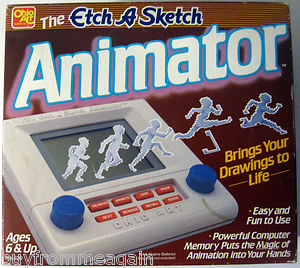
Animator boxSo in every kid’s life there is a moment where Christmas is ruined. Okay, that’s probably being dramatic, but I definitely can say that when you find out Santa Claus isn’t real, the holiday loses a bit of its magic. Coming in slightly behind that is the Christmas when you find the presents.

Now, when you’re a little kid, the idea of Christmas is something that flat-out blows your mind on an annual basis. You write a letter to Santa, maybe even sit on the lap of a parolee playing Santa at the local second-rate shopping mall, and on the morning of December 25, there is a bacchanal of toys. You never questioned where the presents came from, nor wondered about the hours of thought and labor your parents put into procuring said gifts (let alone the money involved)—Christmas just arrived and everything was awesome. Then, around the time you were eight or nine you start hearing from some kid in your class about how he knows everything he’s getting.

I was always perplexed by this kid. I had loved the surprise that came with Christmas morning, so I never understood why he was able to get his presents early. Moreover, he seemed to be bragging about it. Was there something wrong with this kid? Did his parents not love him enough, which is why they stole the magic of Christmas from him at an early age? What he an over-privileged little twerp whose parents gave him the presents so they didn’t have to deal with him? Or, was he onto something?

This last thought didn’t occur to me until I was about ten years old and my sister and I saw a commercial for the Etch-A-Sketch Animator, which was a toy that I swear only the 1980s was capable of producing. The original recipe Etch-A-Sketch had been out for decades, and we, just like every other kid in existence, owned one. It wasn’t a favorite toy of ours or anything, just one of those things you’d play with from time to time because you came across it while you were looking for something else or because it was the only thing available when you were bored out of your mind. But the commercials for the Animator made it seem like this was not only the next level of Etch-A-Sketch, but the next level of awesome. We were both sure that it wouldn’t suffer the same fate as its ancestor.

A device with a basic black and while pixilated display, the Animator had memory for several frames upon which you would draw image after image, which you would then have the Animator play back so it looked like you had drawn a cartoon. The commercial showed a girl animating a horse running and a boy animating a guy swinging a baseball bat. Since my sister rode horses and I played little league, that’s all we needed to know. Almost immediately, we put The Animator on our Christmas lists, which probably put our parents in a precarious situation because they were not the type who would buy each of us our own toy. No, they believe in sharing.

We hated sharing as kids. We didn’t like sharing with one another. We didn’t like sharing with friends. We didn’t like sharing with kids of family friends. We didn’t like sharing with kids who we didn’t even know but whom just happened to be at the same place we were. We weren’t total selfish jerks or anything, but when you’re a kid, morals can sometimes take a backseat to wanting all of a candy bar or wanting a particular toy all to yourself. And needless to say, when we both saw The Animator on our respective Christmas lists, Nancy and I both knew that we would be fighting over the one Animator that would be opened on Christmas Day.

And then came the day we found it.

I can’t remember if we were actively looking for our Christmas presents, or if we came across them by accident, but one day we were in the basement and in the back of my dad’s workshop we found a large lawn and leaf bag that bulged irregularly. We approached it with caution, pulled back the edge and saw two things—the puzzle toy known as Rubik’s Magic Rings, and The Etch-A-Sketch Animator.

From there, it was on. Each of us assumed that we’d be the one the Animator was meant for, so we proceeded to threaten one another with it. If my sister wouldn’t share the last donut with me, I’d say, “You eat that whole donut and I won’t let you play with my Animator.” If I wouldn’t let you watch a show or movie she wanted to watch, she would say, “If you don’t let me watch this, I won’t let you play with my Animator.”

AnimatorNow, you’d think that my parents would have liked the newfound cooperation that came with this—after all, we were sort of not being selfish toward one another—but hearing that the sharing and unselfishness came through blackmail, they obviously figured out something was up. Plus, it didn’t help that Nancy couldn’t, and still really can’t keep a secret to save her life and wound up blabbing about our finding the Christmas present to my parents. I can’t remember if my parents punished the two of us or if it went beyond a conversation wherein they told us they were disappointed in us.

That disappointment definitely registered, although the vocal threats continued because despite knowing there was an Animator in the house, we still didn’t know who it was for; moreover, to my parents’ credit, they didn’t retaliate by giving us the presents early or simply placing them under the tree unwrapped. It went under the tree as planned and on Christmas morning, my sister unwrapped the Animator.

Being ten years old, I probably was not able to mask my disappointment. I knew that I would get to play with the toy—like I said, sharing was house policy—but I was disappointed because she had won. I did not get the prize and I would be forced to be at the mercy of someone else for black and white pixilated animation fun.

Okay, that’s totally melodramatic because Nancy was never that diabolical.

We had our fair share of fun with The Animator. Sometimes we created the animations that were in the instruction book and sometimes we had fun making words appear and disappear, but most of the time my friends and I would animate a hand giving the middle finger. That, in our minds, was using the toy to its fullest potential. Predictably, after a year or two, it wound up being lost to the back of the toy closet as we got interested in other things and eventually was either donated or sold at a yard sale when we were teenagers.

As for Christmas, I’d like to say that this was the moment that changed everything, but it really wasn’t. Oh sure, I’d spend the next few Novembers and Decembers sneaking around to find presents, but for the most part, we had the same sort of Christmas morning. But gradually, the element of surprise dwindled as my parents began a tradition of taking us to the mall on Black Friday (this was before Black Friday became a spectacle of animal-level greed and trampling deaths) to buy clothes that would go under the tree on Christmas Day, something which seemed to always cause my mother to sigh, “Oh well, no surprises this Christmas.” But I honesty never felt that whatever Christmas was about was ever ruined.

Plagues, Monsters, and Jokers (My Life as a Teen Titan, Part Thirty-One)

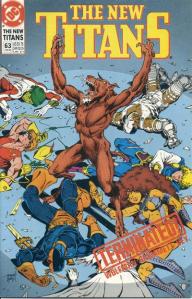
New Titans 63So sometimes there are storylines that are so huge that the issues that come after it are a bit lackluster. It’s kind of like a hangover–that there’s a letdown after a huge event.  After The Judas Contract, there was a series of stories that seemed a bit rushed as well as phoned in (with the exception of the Donna Troy-Terry Long wedding issue) mainly because Wolfman and Perez were working on two books at the same time as well as Crisis on Infinite Earths.  Perez would leave the book soon after, but then returned with issue 50 of New Titans and drew the Who is Wonder Girl? storyline as well as several subsequent issues before slowly going off pencils (handing them off to Tom Grummett) and then going off co-plotting after a while as well.  At the time, he was also working with Wolfman on the Games graphic novel, but this would mark a time when George Perez was more or less burning out and wound up leaving both DC and Marvel for a good deal of the early 1990s.  Wolfman would,  of course, fly solo on New Titans until the title was cancelled in the mid-1990s.

“A Lonely Place of Dying” was one of the biggest and best-selling Titans storylines of its time, mainly because of the tie-in to Batman, who was DC’s hottest property in 1989-1990 due to the Tim Burton film.  Plus, this storyline featured Robin, who had been killed off a year or so earlier.  So, you’d think that the boost in sales to New Titans would have been enough to keep that book going for a while.  However, that wasn’t the case and I think part of it is due to the storylines that came afterward because the title was near cancellation as it headed toward issue 71, but was saved by Jon Peterson, who had been made editor by his former boss, Mike Carlin.

I’m not going to go into great detail as to what happened between issues #62 and #69 of New Titans.  They are issues that I own and my favorite of the bunch is #65 because of the scenes between Dick Grayson and Tim Drake, which I felt really contributed to the latter’s character.  In fact, the next parts of “Taking Flight” will take a look at Tim’s final steps toward becoming Robin.  They are issues that I consider to be placeholders at best.  The art is gorgeous–Tom Grummett took over full pencils on the title and he was a great replacement for Perez.  In fact, with all due respect to Eduardo Barretto, who did a wonderful job as penciller for years, Grummett is my second-favorite Titans artist, even though the latter part of his tenure was a little sketchy (no pun intended) due to rushed deadlines, fill-in artists, and his own jobs on Adventures of Superman (and later Superboy) and Robin.  But the stories were pedestrian at best. (more…)

Memories of Concrete and Asphalt

8088965584_cef7870c35Back in October, my parents came down from Long island to take my son to Kings Dominion, an amusement park just outside of Richmond.  Being that he’s only five years old, he was interested in the animatronic dinosaurs and kiddie rides, one of which was the Peanuts tie-in called “Joe Cool’s Driving School.”  He sat in a little car and drove around a mock streetscape that came complete with traffic lights, road signs, and street lamps, one of which looks exactly like the crooked-style street lamp that I remember being attached to jersey barriers on the Wantagh Parkway.

In case you are unfamiliar with the Wantagh Parkway or any of the other parkways on Long Island, this is one of a network of roads that shuttles passengers around Long Island, especially to and from New York City.  I won’t name and describe all of them, but will say that the two most well-known are the Southern State and Northern State, which run on the south and north shores, respectively, with parkways like the Meadowbrook, Wantagh, and Sagtikos connecting them from north to south.  The parkways were designed in the earlier decades of the 20th Century by Robert Moses (who was parks commissioner at the time and has a state park and causeway named after him) and are passenger car-only roadways with stone-façade bridges, and even some hiking and walking trails.

A satellite view of the Wantagh Parkway, courtesy of Google Maps.

A satellite view of the Wantagh Parkway, courtesy of Google Maps.

But important to me and my childhood on Long Island, these parkways were the way my family traveled from our house in Sayville to my grandmother’s house in New Hyde Park.  She and my grandfather (who passed away when I was in high school) lived in a  typical post-war suburban home that they had moved into back in the late 1940s or early 1950s when my grandfather had returned from the Second World War, living in Brooklyn became tougher, and these homes were becoming more readily available.  My family drove this route more times than I can count, and it wasn’t until I attended Joe Cool’s Driving School that I realized that every trip to my grandmother’s was a history lesson.  I honestly don’t know what prompted it—probably because I have always associated Peanuts with the suburban 1960s of its television specials—and I honestly don’t know why I hadn’t noticed it before.  After all, I have always been interested in the modern history of my homeland (although I have only read Robert Caro’s infamous New Yorker article on Robert Moses and not The Power Broker, which I swear I will one day pick up and read) so you think I would have realized that Long Island has an element of “living history” to it.

Exit W3 in 2009 with the parkway's crooked lamp posts, courtesy of street view on Google Maps ...

Exit W3 in 2009 with the parkway’s crooked lamp posts, courtesy of street view on Google Maps …

Then again, you rarely notice these things when you live among them and the history of suburban Long Island is not designated with historical markers the way the Revolutionary and Civil War landmarks are near my current home in Virginia.  It’s more geologic, in a sense.  When you look at a rock formation or a canyon, you see striations in the rocks and any geologist can tell you how that determines the age as well as what can clue you into that area’s history (for example, the presence of certain elements can suggest that, say, an asteroid hit the Earth at some point).  When you look at the suburbs of Long island, you see that their history is layered.  Sure, Levitt bulldozed farmland and build houses at one point and Moses did the same for the parkways, but that was more than half a century ago and since then, one thing has been built on top of one another, or the old has been repurposed, perhaps several times over.

... and the same exit taken in 2011, accessed on Google Maps.

… and the same exit taken in 2011, accessed on Google Maps.

Starting my trip in my parents’ house in Sayville is perfect for this sort of examination.  My hometown is a good 200 years old and while it has had its fair share of changes over the years (read: something was knocked down in order to put up another bank), there are still vestiges of its former life as a seaside gateway for the turn-of-the-century upper class as well as century-old main street buildings that are more suited to its life a s pre-suburban small town, as are the towns of West Sayville and Oakdale, which we would snake through on our way to the three parkways that would eventually take us to New Hyde Park.

Each seems to have its own personality.  The Southern State, which when I was a little kid still had a few timber post street lamps lining its shoulders, has the feel of what I can imagine was truly considered a “parkway”—a sprawling, twisting, turning road with stone-façade bridges that reminds you that you are, in fact, driving along the south shore.  Even when it becomes the Belt Parkway (the bane of any New York-area traveler), you still feel like you are on a coastal highway.  Contrast that with the Northern State, witch seems to choke its way along the north shore before it becomes the Grand Central Parkway and heads straight for Fitzgerald’s Valley of Ashes, and you have a look at various shades of the past.  On approach to New Hyde Park via the Northern State, there are the North Shore Towers, which is a high rise luxury condo but always seemed like a reminder that we were near New York City.

But not the New York City of the time; a New York City of another era, or the type of city I remembered from years of educational films.  And the Wantagh provided the transition between the more open, even rural Suffolk County and the increasingly urban Nassau County.  Whereas the Southern and Northern States both saw their looks change from years past—lanes were expanded and timber post lights were modernized—for years, the Wantagh still had the same crooked lamp post that were installed in the 1970s and it skirted by towns that at a glance looked like they hadn’t changed in years.  It’s not an extraordinary stretch of road by any means and we were only on the parkway for a few miles, but between those towns and those lights, I always felt as if I were going back in time. (more…)

Pop Culture Affidavit Episode 3 — Nothin’ Lasts Forever, Even Cold November Rain

In the third episode of Pop Culture Affidavit, I take a look at “November Rain,” a song from Guns n’ Roses’ 1991 album Use Your Illusion I that was released as a single and had an award-winning video that dominated MTV’s heavy rotation in 1992.

Along with talking about the song, I do a commentary for the music video and actually play it on my keyboard (although to be honest, I play it pretty badly).  You’ll laugh, you’ll cry, you’ll want to wear Slash’s hat.

You can listen here:

iTunes:  Pop Culture Affidavit

Direct Download 

Pop Culture Affidavit podcast page

To supplement the episode, here are a few things that I talked about on the podcast.

First, the ever-famous music video (note:  you’ll probably have to watch an ad before you play the video so adjust your commentary track accordingly — and start playing the video about a second after I say “play.”  Listening back, I realized that I was off a little.  It’s my first commentary, go easy on me.):

Next, here’s a link to the short story “Without You” by Del James, upon which the video was based:  “Without You”

(more…)

Black and White

Final still from “Black & White” courtesy of degrassi.ca

Degrassi Junior High (and later Degrassi High) was known for a few long-running storylines, and I’d venture to say that the fact that these long-running storylines were organic in a sense was the show’s hallmark. In other words, characters whose stories we had been following for what seemed like forever would come and go and the next time we saw them, there would have been some progress in their lives.

Spike is the best example. Her pregnancy, which is quite possibly the thing that people remember the most about Degrassi Junior High, progressed throughout the second season of the show, even though not every episode was about her being pregnant. Other stories included the death of Wheels’s parents and constant fighting with his grandparents, the relationship between Joey Jeremiah and Caitlyn Ryan, and the interracial couple, Michelle and BLT.

This couple is the center of “Black and White,” a later episode in the last season of junior high. It is an episode that, quite frankly, I don’t remember really paying much attention to when I was watching Degrassi as a kid. I’m pretty sure I remember seeing it, but for the most part the reason I decided to cover it in this scattered discussion of the series is because there are episodes about Michelle and BLT from Degrassi High that I remember pretty vividly, so I figured that if you’re following along with this particular feature (ah, who am I kidding, nobody is), it’s probably best to cover their “origin story.”

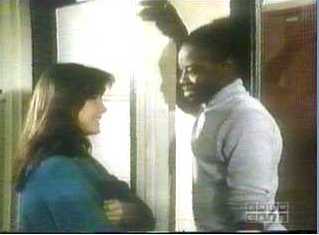
So the issue here, as I mentioned, is racism, and right off the bat we see BLT confronting it when he bumps into a student who calls him the n-word, which incites a fight. Michelle happens to witness this, and we find out that she likes him–not because he’s fighting with someone, just because she likes him. The feeling is mutual, as Joey, Wheels, and Snake note when they tease him about Michelle being the reason that he joined the yearbook staff. About halfway through the episode, he asks her to the graduation dance.

Unfortunately, there is a complication–Michelle’s parents, who claim that she’s too young to date anyone, even though they have the reaction of “You didn’t tell us the boy you liked was black” when they meet him. When she finally has a heart-to-heart with her mother, her mom gives her the undeniably horseshit excuse of, “We’re not racist but other people are and we don’t want you to get hurt,” before piling on futher with “People like to be with their own kind.” Michelle sees through this and tells BLT she’ll go to the dance with him anyway, which is where the story ends.

In the subplot, Spike is having problems with daycare because her current daycare provider is moving to Vancouver. So, she decides that to pay to put Emma in a daycare center, she’s going to try and get a part-time job. Unfortunately, when she goes to interview for a job at a diner, the manager spends the entire time making fun of her hair and dismisses her as a punk kid.

And there’s some C plot with Bartholomew Bond and Scooter taking yearbook photos. Or whatever. (more…)

We’re #1 on This Demonstration

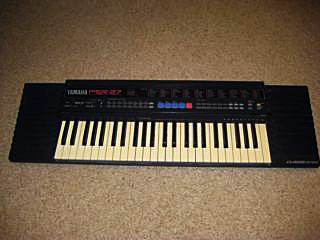
The Yamaha PSR-27 keyboard.

I have been playing the piano since I was about seven years old, and since I was in junior high, I have also owned an electronic keyboard. Keyboards were big-ticket items when I was a kid because they not only cost a decent amount of money, but also were pretty amazing. The better keyboards could synthesize a ton of instruments and had several present rhythms and one-touch chords.

My first keyboard was a small Casio PT-180, which I remember bringing into school to work on a project, but the first keyboard that I remember really being important to me was myu second one, a Yamaha PSR-27. In terms of keyboardness, it wasn’t much (compared to some of the more high end models), but it had way more instruments than that Casio, plus came with its own stand so instead of taking it out of the box, setting it up, and plugging it in whenever I wanted to use it, I simply set it up and plugged it in in the basement.

The coolest thing on the keyboard was a yellow button that said “demo.” This was pretty much exactly what you’d think it was–a demonstration of what the keyboard was capable of, done through a 90-second song that used several instruments, rhythms, and effects, including the orchestra hit, which was popular to almost an annoying degree in the late 1980s and early 1990s.

My sister and I played that keyboard endlessly, fooling around with the different instruments, playing our weekly piano pieces on the “distortion guitar” or “church organ” settings, and even adding the one-touch chords and disco beat to songs like the Star Wars theme. But the most fun we had was with the demonstration because it was a crazy tune that used just about everything the keyboard offered and even if we figured out how to play it, we would never be that good because we were not very quick at changing instruments.

But more importantly, this was around the time when the two fo us were really into playing with her stuffed animals. Yes, I know that it seems weird that a twelve year old would play with stuffed animals, but Nancy was still nine and there were many days when the two fo us were stuck in the house together. By this time, stuffed animal play had evolved to the action-adventure stage. Each animal that was among our “main players” had a distinct character and we were even working on a semblance of continuity when it came to our stories.

That is, of course, when we weren’t playing Battle of the Stuffed Animal Bands. This was a regular contest that featured four of the most hard-rocking groups of animals: two frogs named Felix and Fred, otherwise known as “Fe and Fred;” the guitar-laden novelty animal Rockasaurus; the beaver-rabbit-raccoon combo known as the Woodland Creatures; and two dogs that we called the Nas. (more…)

Pop Culture Affidavit Episode 2 — We All Float Down Here (or, Why I Hate Clowns)

In the second episode of the Pop Culture Affidavit podcast, I take a look at Stephen King’s It, both the 1986 novel as well as the 1990 TV movie starring Tim Curry as the evil Pennywise The Clown.  It’s a Halloween treat that will remind you why demonic clowns dwelling in sewers will make you swear off the circus forever.

You can listen here:

iTunes:  Pop Culture Affidavit

Direct Download 

Pop Culture Affidavit podcast page

And, for your viewing enjoyment, here is a scene from the TV movie version of It: