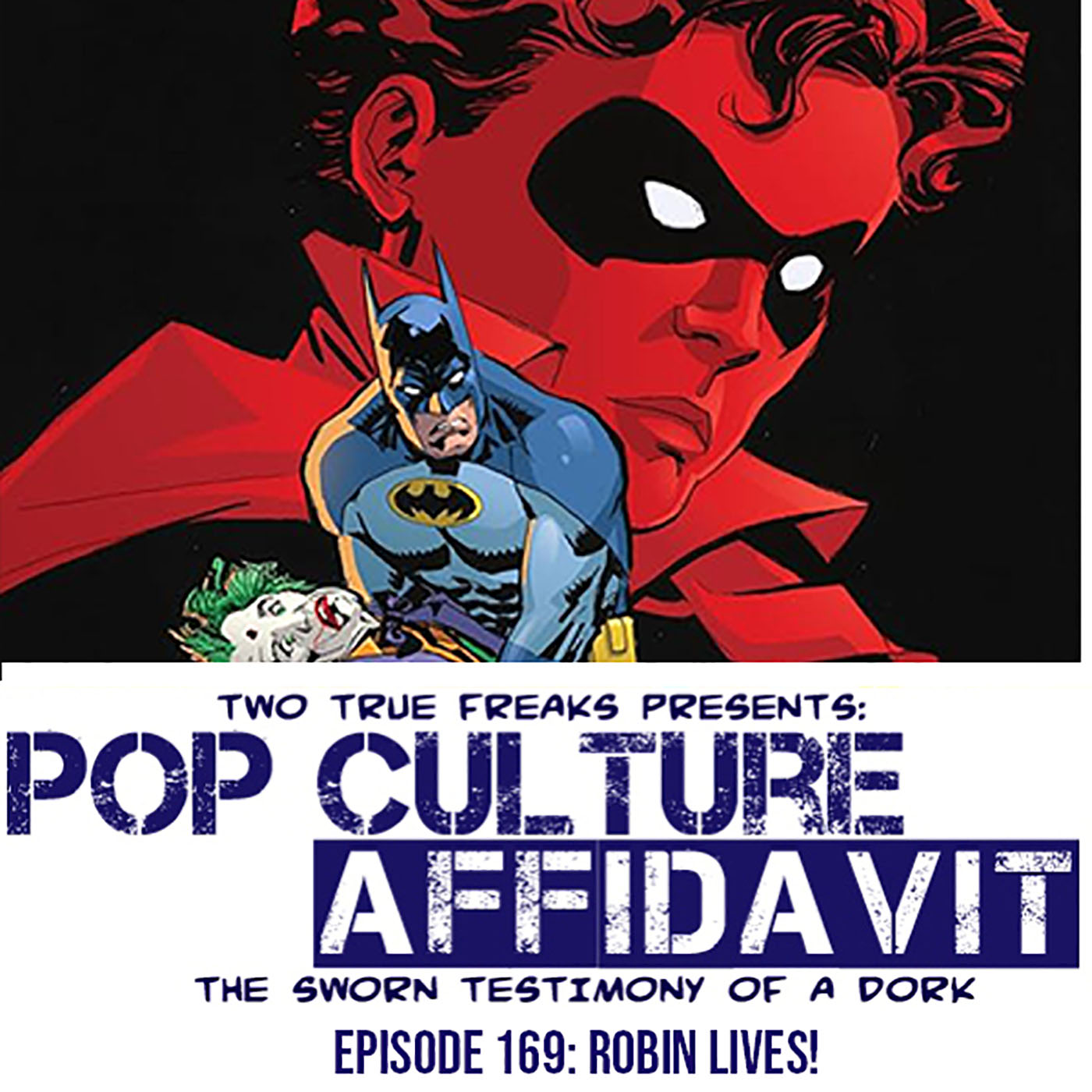
From the DC Vault, it’s the “What If” story that Batman fans had wondered about for years (even though What If is a Marvel book): What if Jason Todd had lived? Join me as I take a look at the alternate version of Batman #428 by Jim Starlin, Jim Aparo, and Mike DeCarlo, and then dive into the miniseries A Death in the Family: Robin Lives! by J.M. DeMatteis and Rick Leonardi.
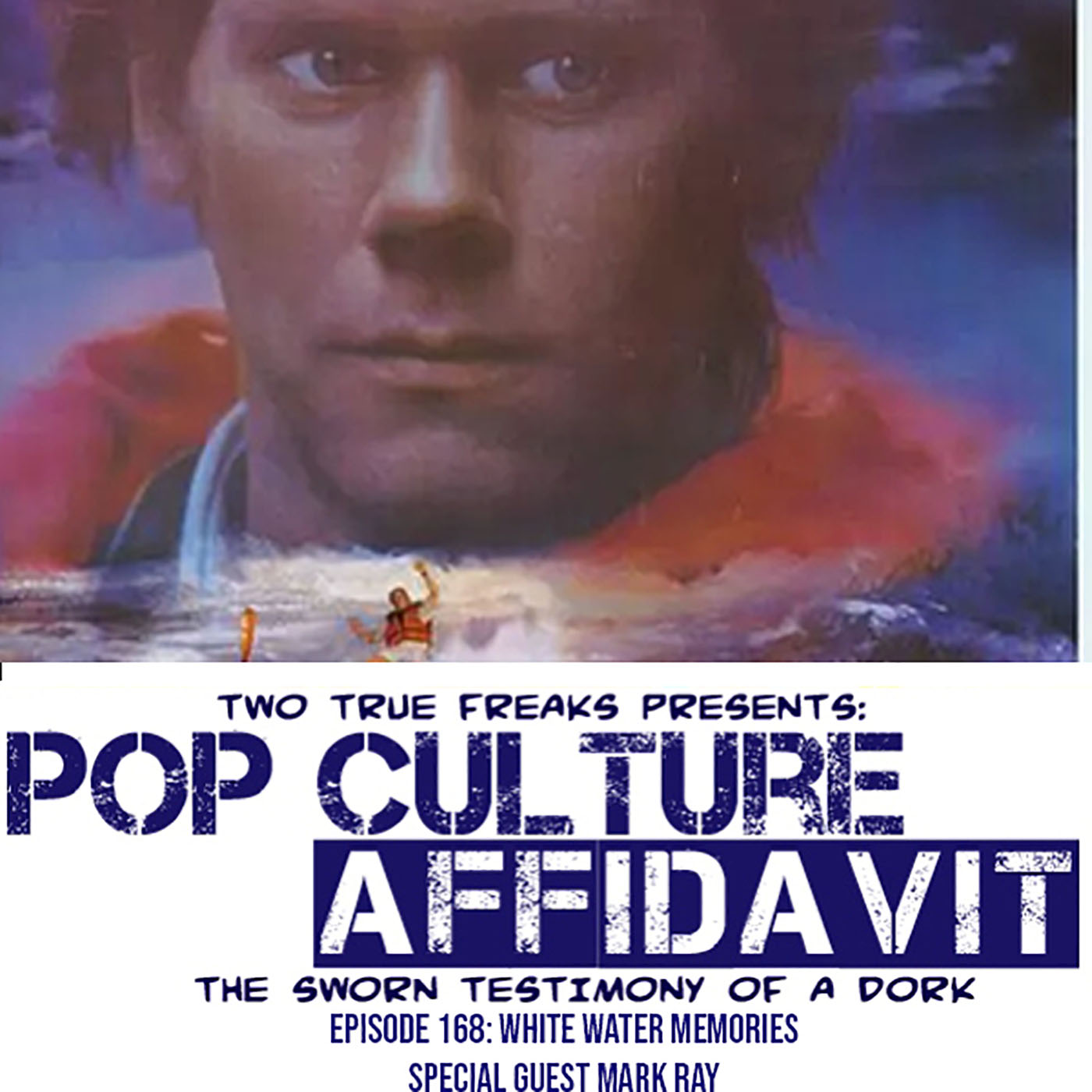
In 1987, White Water Summer, starring Kevin Bacon and Sean Astin, was released. The movie did poorly in theaters but gained a following on cable and video, becoming a coming-of-age cult classic. This episode, I’m joined by Mark Ray, one of the film’s stuntmen. He talks to me about the movie and his experience filming it.
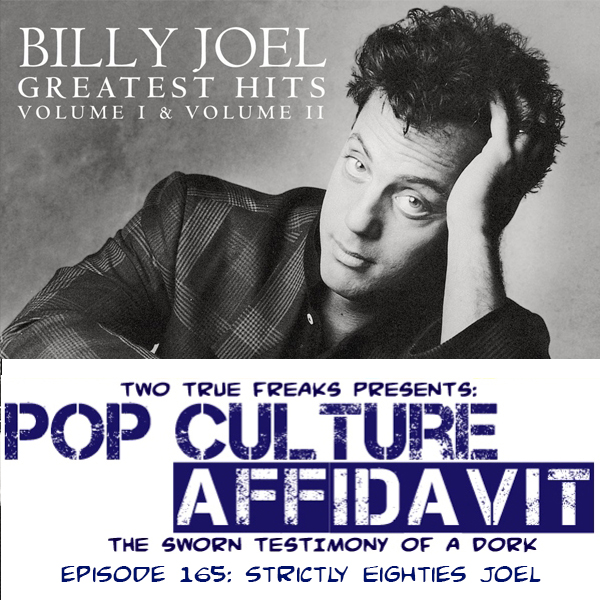
“You May Be Right,” “Allentown,” “Tell Her About It” … all of these are found on the seminal compilation album Billy Joel Greatest Hits Vol 1 and 2, which came out 40 years ago. Join me as I take a look at the Piano Man’s music throughout the decade of the Eighties.
For my 18th birthday, I got a $25 gift certificate to Tape World.
It was 1995 and I hadn’t bought a cassette in at least a few years. But in The Smith Haven Mall, there was still a store called Tape World. I’d never set foot inside of it and I don’t think anyone I knew had either. Sam Goody was right around the corner, sitting in prime position across from Aeropostale and The Gap, beckoning music lovers with its neon entrance and posters advertising the latest albums. Tape World was a blocky ‘80s-lettering sign above a thin store that was tucked between 5-7-9 and The Bombay Company. I actually had to check the mall directory to find it.
The Eighties didn’t so much end in 1990; rather, they slowly faded into obscurity, and that has me thinking about where they eventually went. Tape World, for instance, has its place in our cultural examination of the decade, as one of Michael Galinsky’s photos for The Decline of Mall Civilization shows a blonde girl with quintessential mall hair walking by the store and its wood paneling facade. A look through my memories of the malls near me (and yes, malls, plural–it was Long island) shows a number of places where time seemed to stand still well after the decade had changed over while simultaneously trying to keep up with the times. Gardiner Manor Mall had an ancient Sears, an Orange Julius, and a bridge to Stern’s. The South Shore Mall had Captree Corners, a late-1970s mini mart of small shops and a fountain I loved to throw pennies into when I was six. The Sun Vet Mall was where 1981 went to die.
Smith Haven, started out as a mid-century mall of the late 1960s with fountains, Alexander Calder sculptures, and the low-lit atmosphere that I associate with the era. It was a twenty-minute drive from Sayville and when I was little, I loved going to “the mall with the fountains.” However, it underwent a massive renovation in 1987 and emerged with a brighter neon-tinged and mauve-tiled palette that has come to typify the Eighties.
The renovation was hyped even as it was going on. When the mall was getting its makeover, there were radio commercials that sang “We’re building the place of your dreams … Smith Haven Mall!” Later, the commercials changed to “Your wildest dreams will come true … Smith Haven Mall!” I don’t know what “wildest dreams” can come true at Jean Country or Casual Corner, but I will take their word for it. The mall was also the home to a local news special on WLIG 55, “At the Mall With Drew Scott.” It remains one of the more amazing artifacts of 1980s Long Island as did the mall itself until it underwent another renovation in the mid-2000s.
That’s probably why it’s always stayed alive while so many shopping malls have died. A hot place in the Eighties, Smith Haven was also a destination for Nineties mall-ness because it had a Gap, Aeropostale, Structure, Express, Limited, Eddie Bauer, Bath and Body Works, Victoria’s Secret, Disney Store, and Warner Brothers Studio Store. But it was still Eighties building that held onto that part of its identity with stores like Tape World; Sssassy, which was a real-life version of Over Our Heads, the store from the last few seasons of The Facts of Life; and the cutlery store Hoffritz. Because honestly, nothing is more Eighties than a store devoted entirely to cutlery.
Sssassy in Smith Haven Mall, probably in the late 1980s or early 1990s. Photo was taken from siteride on Flickr.
The faded Eighties aesthetic in the era of grunge was simultaneously out of place and in line with those who have come to be known as “Xennials”. Stuck between our cool older Generation X and annoying little Millennial siblings, the Xennial microgeneration is the middle child–ignored because mom and dad had already done everything for those older siblings and the younger ones were showing much more promise. We were raised by people going through the motions, wearing hand-me-downs and finding ourselves too old for anything new. I don’t think it was spurred on by anything other than bad timing. We had our peak teenage mall years during the first Bush recession where the economy and the housing market both bottomed out, especially on Long Island, so that meant that development and progress were put on pause and we did our best to use our fading institutions of commerce.
Ironically–appropriate for the Nineties, I know–this made parts of Long Island feel like a museum exhibit. In recent years, there has been a ton of McMansioning and townhome development. But in the late 1990s, there was still a lot left over from decades past. My grandmother’s neighborhood in New Hyde Park had houses that had remained unchanged since the 1950s. Downtown spaces in Patchogue, Amityville, and Huntington still resembled their 1950s and 1960s selves. Sayville Pizza looked like it hadn’t been updated since 1975. Even as a kid, I wondered what ghosts were sending echoes through their halls and walls, and whatever patina or grime covered the Island led me to associate authentic with “worn.”
Of course, such things do not always last, especially when the economy improves and developers can give yet another facelift to a mall or neighborhood. The candy-colored late 90s and the housing boom of the 2000s meant knocking down the useless buildings to put up Target (as they did with the Gardiner Manor Mall) or turning a shopping center property into a housing development. In some cases, the limited space provided by an area in Queens or Nassau County meant a creative way to drop a Barnes & Noble into a strip mall. In other, like in Suffolk County, you could bulldoze acres of woods to create an outlet mall. I’m sure nobody really noticed when Rickel and Pergament gave way to Lowes and Home Depot unless someone prompted them. It’s such a suburban aesthetic to embrace whatever is new. “They’re putting in a Whole Foods.”
Yeah, they give us a lot.
Image taken from one of those baitclick T-shirt ads that uses really bad photoshopping. You know the ones.
They’ve even given us the past, preserving the Eighties in places that are comfortable and happy–movies, marathon weekends on radio stations, your kids’ spirit week costumes. But it’s all cosplay and manufactured nostalgia put forward by those who stand to earn money or cache off of our memories: memes, influencers who pretend they “are Eighties”, bad TikToks of someone bobbing their head and pointing out that random items existed or making lists of cartoons “nobody heard of” yet every single commenter remembers. Yet, that’s the product of our culture, which is one that has been manufactured for generations.
Tons of ink has been spilled about suburbia, stripping down its vinyl siding to show the flaws underneath andI want to make some pretentious point about how because the Eighties were actually stripped of all substance and repackaged, we are stuck in a cultural Allegory of the Cave and the people who sold us the American Dream are making money off of that, but I’ll just look for where the past has receded and the decade truly remains. Because it’s not a place everyone goes. It’s in a paragraph of the last chapters of a U.S. history textbook. It’s documentaries buried underneath a pile of true crime exposés on second-tier streaming services. It’s in a bin in the attic, the back of a closet, or on the shelves and racks of thrift stores.
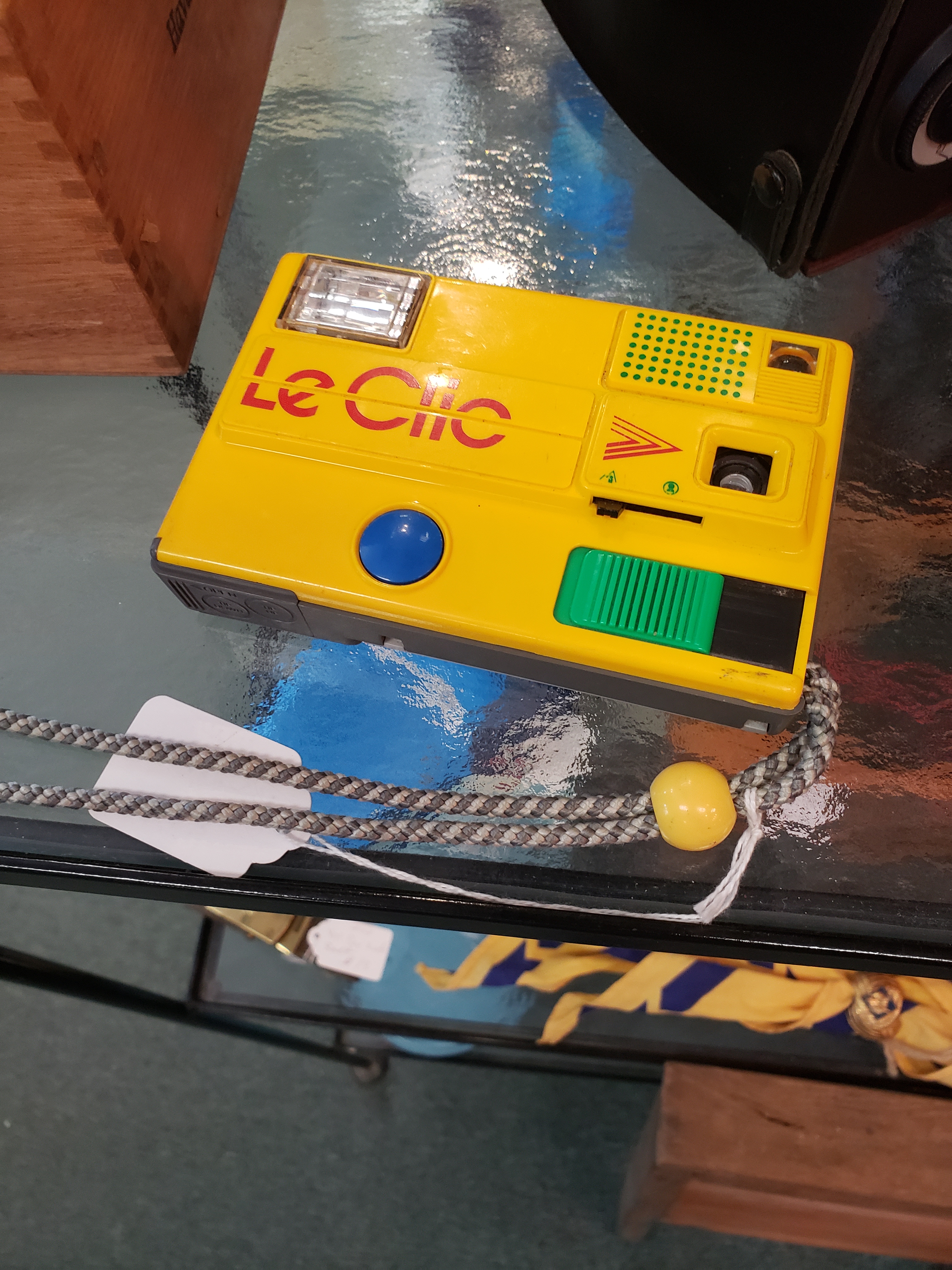
A few months ago, I was in one of those antique malls where people offload things that don’t qualify for an appearance on Antiques Roadshow but still think are worth more than a couple of bucks at a yard sale. Among stacks of old Corningware, old country albums, military ephemera, and old guitars were a number of video games, baseball cards, toys, and other things I recognized, like a Le Clic, a disk film camera that came in an assortment of colors, all of which screamed Eighties. These were more comforting than any meme or slapped-together neon wardrobe I’ve seen on a high schooler. They felt lived in and I could picture some kid with a questionable haircut wearing an Ocean Pacific T-shirt once collecting and playing with all of them.
picture taken from eBay.
In the ten or fifteen minutes I spent in Tape World thirty years ago, I stuck to Eighties music. I’d like to say that a store called Tape World demanded an Eighties music purchase, it was because CDs were expensive and I wanted to get the most out of my $25. The Fast Times at Ridgemont High soundtrack on CD was just enough to allow me to dive into a bargain bin and fish out The 80s Rock + On, a K-Tel produced 80s compilation cassette that would live in my Walkman or the tape deck of my Hyundai Excel until I offloaded my cassettes in the mid 2000s. So yes, I did buy a tape at Tape World.
The cover to the NES Game Atlas, one of the specials that Nintendo published.
A while back, I wrote about the games series that Nintendo created as part of their initial years of the NES and the first wave of available games. Of course, I ownd a few of them and played a number of others, but I have to onfess that so many of them passed me by because I didn’t get my NES until 1988. That was the “Action Set”–with the still-gray Zapper and Super Mario Bros./Duck Hunt cartridge–and it was a huge birthday present, completely changing how I spent my free time.
Along with that set was a chance to join what was then called “The Nintendo Fun Club,” which had a thin magazine that came out every so often and featured stories about upcoming games and tips for taking on certain levels or bosses. My one and only issue of tha tmagazine was its very last and it featured Ice Hockey on the cover (a game I played endlessly and wrote about a while back). But I wasn’t cheated out fo whtever money my parents psnt on a Fun Club memership because in the fall of 1988, Nintendo put out the first issue of Nintendo Power.
I don’t need to explain Nintendo Power to most people my age because it’s the single most important magazine published for my generation. In fact, I am sure that I am not the only person who can close his eyes and see that first cover with Mario jumping, telling us taht inside the issue was an exclusive look at Super Mario Bros. 2. That first issue, with its coverage of the Mario sequel, also profiled three baseball games we could choose from (including Bases Loaded) and previewed upcoming games, including one announced or in development (something that magazines like Wizard would do for comics and movies about comics for years afterward).
My well-worn and taped back together copy of the map for the second quest of The Legend of Zelda, which you could find in the very first issue of Nintendo Power.
Most importantly, the first issue of Nintendo Power featured a pull-out centerfold that on one side was a baseball video game-themed poster and on the other was a map. And it wasn’t just any map; no sir, it was the map for the second quest of The Legend of Zelda.
I cannot express how important this was. Zelda was the premier game for the NES and beating that gold cartridge was a badge of honor. Okay, maybe I considered it a badge of honor because I suck at video games and to this day have never actually completed The Legend of Zelda by myself–both times I had quests that had gotten deep into the game, one of my friends proceeded to “help” me and did a speed run of the remaining boards. At least I got the second quest–as did my sister, who took advantage of naming a game “Zelda” so she would automatically get the second quest. That map, therefore, proved invaluable and was used so many times. I still have it and it’s held together with Scotch tape and a prayer.
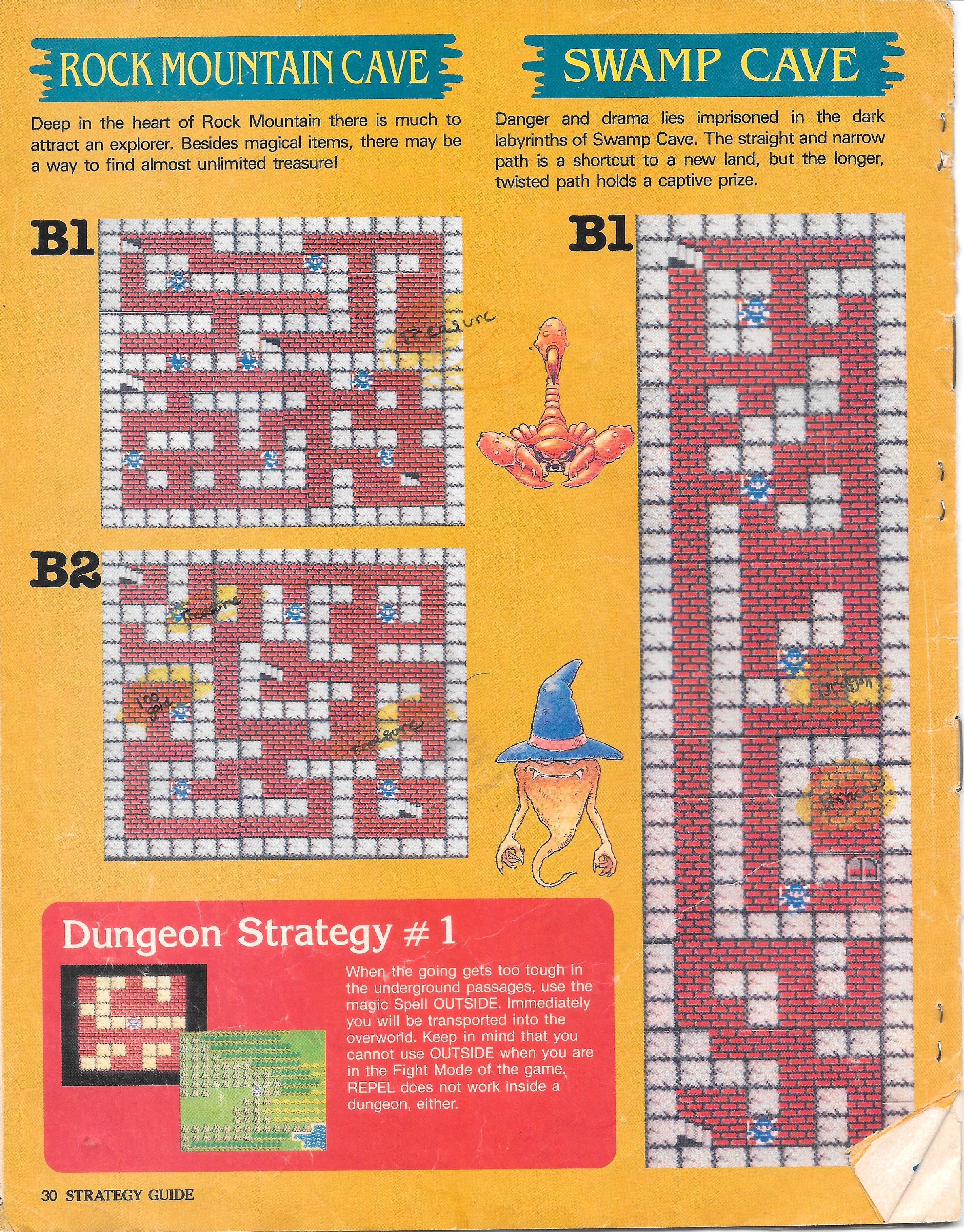
Nintendo Power published this guide to Dragon Warrior. You can see where I wrote down where to find treasure in the caves.
The same can be said for a couple of other things Nintendo Power published, such as their mini magazine insert about Dragon Warrior, the role-playing game that I know some of my friends found boring as hell, but I was obsessed with (along with its first sequel, and would have kept going in that series if I ever found III and IV but they were hard to come by). I marked that up with notes about where to find certain things or what direction to go in at certain points; I also saved one of the advice columns where someone wrote in to ask about the network of caves that would get you to the island where the final boss–The Dragon Lord–lived. And to their credit, Nintendo knew exactly what they had because eventually, they got into publishing player’s guides like The NES Game Atlas.
A book composed entirely of screenshots of each level from various games, the Game Atlas was a special book that you bought separately or came with a subscription renewal–which I’m pretty sure is how I got mine. It was printed to stand out as well, with a stiffer cover and size akin to what we’d eventually see in comic book trade paperbacks. The graphics on the page, while real, were microscopic and it took some real effort to actually see the images. I’m pretty sure I didn’t care, though, because this was a treasure trove, especailly for games like Zelda and Metroid.
Not that helped me win anything or get any further in a game, mind you.
I guess, though, that was the other appeal, because I was able to see later stages of Teenage Mutant Ninja Turtles that I never, ever saw due to dying in that damned underwater stage every time I played the game. Seriously, it was rage-inducing.
Anyway, the Game Atlas was the frist of a series of Players Guides of which Nintendo would publish three more before choosing a different format. The other three were Game Boy, Mario Mania, and Super NES. That last one is on our house and I’m pretty sure it’s because my wife owns a Super Nintendo. It is similar to the Game Atlas in that it does contain some maps, but it’s more like a set of fairly in-depth profiles of just about every SNES game available at the time. Nintendo was competing with Sega Genesis at the time.
Most of my Nintendo Power issues were thrown away years ago. I still have the one with Teenage Mutant Ninja Turtles on the cover as well as issue #41, which was Super Castlevania IV. I’m pretty sure the latter issue was toward the end of my subscription because they were covering NES games less and less. And that made sense considering that they would phase out the system by 1994. I never did own a Super Nintendo or a Game Boy, so I decided to drop my subscription and read Sports Illustrated.
But I get such a rush of nostalgia whenever I flip through one of these books or magazines. They are such an encapsulation of my early teen years.
He-Man and the forces of good fight Skeletor for the freedom of Eternia! Cannon Films presents … MASTERS OF THE UNIVERSE! This time around, I’m going to take a look at the 1987 live-action adaptation of the popular toy line, Masters of the Universe, which starred Dolph Lundgern as He-Man, Frank Langella as Skeletor, and Courteney Cox as Julie. I’ll give my review as well as my history with the entire Masters of the Universe franchise. Plus, listener feedback!
Note: I have a new Apple Podcasts feed and am on Spotify! Just search for Pop Culture Affidavit!
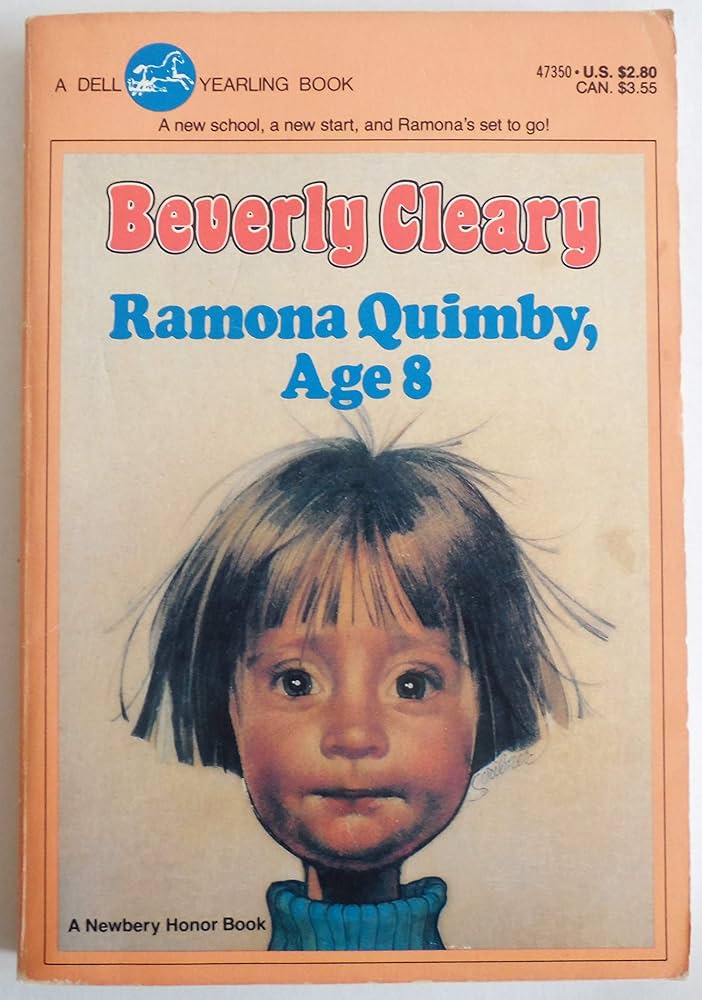
Ramona Quimby, Age 8. The paperback edition from the 1980s. That Dell Books border was a mainstay for kids’ paperbacks. Image from Amazon.
I have had so many discussions with Stella about the literature we read in our formative yearrs. While I realize that pointing out the difference in ages (she’s nine years younger than I am) is a running joke, it applies here because what was “Young Adult” literature was different for eachof us. I am sure that there was some overlap of titles we’d find on the Scholastic Book Club flyer, but I also can say that YA lit was at the beginning of its boom years when she was in middle and high school and barely existed when I was a tween (in fact, the word “tween” didn’t exist when I was a tween).
I realize that’s a bit of an exaggeration. There certainly were books aimed at a middle or junior high school audience, but the great ones were few and far between and I found my refuge in Star Trek, Star Wars, and Robotech novels as well as more adult works by Stephen King. But I didn’t get there right away because while I am sure that my fandom for a franchise like Star Wars would definitely motivate me to read at least one novel, something before all of that made me want to read.
Looking back, I always had books in my home. My parents had a good stack of novels and when I was little, I owned a ton of Golden Books and Curious George books. I can’t remember when I graduated from those to works that were more complicated, but I want to say that it probably started sometime in the first grade. I have done an entry about the McGraw-Hill readers and also have a memory of grabbing these Reader’s Digest collections in the back of Mrs. Hickman’s room and reading through them one by one. I cannot tell you what any of them were about, of course, but I did understand them, and by the time I was in the second grade, I (and a number of my friends) had children’s novels and textbooks to read or read to us.
But that, of course, is probably the case for so many of us, and there has to be some specific books that I can set apart from the rest as truly formative. And of course, I have a list.
My generation’s weekends always began with The Smurfs.
Or maybe it was The Snorks? The Shirt Tales? The Super Friends?
No matter what the show was, we all share a common memory of sitting in our parents’ TV room every Saturday morning watching cartoons. I’m not sure when this particular tradition started–children’s programming had been part of Saturday morning television since Captain Kangaroo and The Howdy Doody Show in the 1950s–and I knew that it died out in the Nineties and 2000s as cable networks started becoming the place to go for endless hours of cartoons. But Generation X can lay a significant claim to sitting ont he floor in your PJs–possibly while eating some sugary cereal–and watching nearly four hours of cartoons. I mean, they’re such a part of our childhood that we remember even the more random ones that didn’t have a toy line, like Camp Candy or Kidd Video.
But when I think about my Saturday mornings, the often began a little earlier that 8:00. Sometimes by a couple of hours.
Maybe it’s just me because I have never been able to sleep in on Saturdays (well, with the exception of when I was in high school and college), so for much of my childhood, I would be up way before the ffirst cartoon started and because nobody else was awake, I had to fend for myself. Sometimes, that meant making myself breakfast or cleaning my room (for some strange reason I remember emptying out my dresser, folding all my clothes, and then putting everything back). Sometimes, I played with my toys. Very often, though, there was television.
Look at Wikipedia’s listings for daytime television int eh 1980s, and pre-cartoon Saturday mornings are listed as “local programming.” I didn’t have the luxury of cable as a kid, so I made do with seven channels: the three networks, WNEW (which would become WYNW, the Fox affiliate), WWOR 9, WPIX 11, and PBS (WNET 13). WPIX was usually the best bet for early morning cartoons because they’d run shows that had falled out of their afternoon lineups, so you’d catch Voltron or later seasons of Transformers a couple of years after they’d faded away. On the networks, though, the programming was completely random.
The Crimson Avenger’s first cover appearance was Detective Comics #22.
#JSApril has been a blast, and if you’ve been following long, you’ve heard people talk about 85 years’ worth of comics, including my own episode about the Justice Society’s battles against the villain Extant. I hadn’t scheduled anything else for this month, but then I fell down a Crimson Avenger rabbit hole.
Now, if you want to be pedantic about it, The Crimson Avenger was technically a member of The Seven Soldiers of ictory and I believe showed up in All-Star Squadron (but don’t quote me on that), but I figure that makes him a JSA-er once remoed or something. What’s most important is that he was DC Comics’ first masked hero. Debuting in Detective Comics #20, he predates Batman by roughtly half a year (although he is not the first super hero because thats still Superman, who debuted a few months prior). And he’s not the most original character, either, borrowing a concept from The Green Hornet and a costume from The Shadow.
By the way, I’m saying that more or les to get it out of the way because I don’t feel to harp on it.
Anyway, I came by the hero via Secret Origins and then the four-issue miniseries that spun out of that Secret Origins issue, both of which were written by Roy Thomas. THese were both part of Thomas’ post-Crisi efforts to make sure that the Golden Age heroes had a firm place in DC continuity and their stories could continue to be told. In fact, many of the first year or so of issues featured Golden Age characters, something I believe that was back-door piloted in the last couple of issues of All-Star Squadron.
I’m not one for countdown list, but since the NES was released in the U.S. 40 years ago and because it wwould become the hot thing for several years and ubiquitous in our lives by the end of the decade, I have been thinking about what my favorite games were. But come on, I’ve already blogged about Bases Loaded and Ice Hockey and do you really need to see me gush about The Legend of Zelda, saying things that have already been said a million times?
The flap to the Deluxe Set box, which my wife still owns.
Besides, not everyone got the marquee games all the times and there were always those random games that we loved even if they weren’t top tier. I got my NES–the Action Set with the gray zapper that I received for my 11th birthday–I got a few games with it aside from the Super Mario Bros./Duck Hunt cartridge (which I played all the time). Some of them were marquee games like Zelda, but there were others that people bought for me because they might have looked interesting (or maybe I did ask for them). What I always found cool ws that Ninetndo did publish its own line of games and they all had different categories. My wife still has her old Nintendo–she had the Deluxe Set with R.O.B.–and one of the box flaps had info that detailed all of the games series that Nintendo offered. In case you want to know, they were:
Action (Balloon Fight, Clu Clu Land, Ice Climber, Kung Fu, Pinball, Super Mario Bros. Urban Champion)
Adventure (Kid Icarus, Metroid)
Arcade Classics (Donkey Kong, Donkey Kong 3, DonkeyKong Jr., Mario Bros., Popeye)
Programmable Series (Excitebike, Mach Rider, Wrecking Crew)
Robot Series (Gyromite, Stack Up)
Sports Series (10-Yard Fight, Baseball, Golf, Ice Hockey, Pro Wrestling, R.C. Pro-Am, Rad Racer, Slalom, Soccer, Tennis, Volleyball)
Now, I am not sure if this list is comprehensive (and I’m pretty sure there was a poster with all the games listed that was included with the NES but it wasn’t in the box). I also didn’t play all of these games and even among the ones I played, I didn’t own all of them. But one of the great things about the NES and your friends all having it was that you were always borrowing one another’s game cartridges, and by the end of the 1980s, you could rent them from the video store. So I got a lot of exposure to some of the more random games, and I thought I would do a rundown of my favorite Nintendo-produced games from the early, pre-Zelda NES days. I’ve got eight altogether and I’m going to count them down.






 Pop Culture Affidavit