“Sounds of Silence” is the title of issue #35 of The ‘Nam and here we see the start of an important subplot involving racial tension between some of the boys of the 23rd. We also catch up with Ed Marks as he has a short conversation about My Lai right before heading home for Christmas break. It’s December 1968 and it’s all brought to you by Doug Murray, Wayne Vansant, and Geof Isherwood. As always, in addition to the summary and review of the issue I’ll be taking a look at the letters, ‘Nam Notes, and ads.
In “Phoenix,” the 23rd encounters some unsavory goings-on in a village and we get a little clue into Ice’s past. It’s The ‘Nam #38, brought to you by Doug Murray, Wayne Vansant, and Geof Isherwood. As always, in addition to the summary and review of the issue I’ll be taking a look at the letters, ‘Nam Notes, and ads.
WARNING: The episode has an explicit tag due to graphic description of torture.
It’s the summer of 1968 and back home in Chicago, Pig’s brother Teddy joins a group of protesters outside of the Democratic National Convention while Pig is in Vietnam fighting off the latest VC attack. Join us for The ‘Nam #32, “Land of the Free,” brought to you by Doug Murray, Wayne Vansant, and Geof Isherwood. As always, in addition to the summary and review of the issue Ill be taking a look at the letters, ‘Nam Notes, and ads.
Issue #31 brings closure to the subplot involving the 23rd’s resident comic geek, Aeder. “Fire and Ice” is brought to you by Doug Murray, Wayne Vansant, and Geof Isherwood. As always, in addition to the summary and review of the issue Ill be taking a look at the letters, ‘Nam Notes, and ads.
We take a look at “Bunker Line” and July 1968 in issue #30 of The ‘Nam, a story that introduces Lt. Biggs and shows Ice and Pig’s return to action. It’s brought to us by Murray, Vansant and Isherwood. As always, in addition to the summary and review of the issue Ill be taking a look at the letters, ‘Nam Notes, and ads.
“War and Peace” is the title of issue #29 of The ‘Nam and what we’ve got here is a look at the rest of the world while the guys from the 23rd take a little R&R. This episode is full of historical context including events that are important and notable from June 1968. As always, in addition to the summary and review of the issue Ill be taking a look at the letters, ‘Nam Notes, and ads.
This weekend marks the bicentennial of Francis Scott Key’s writing “The Star-Spangled Banner.” To mark the occasion, Baltimore had a large celebration in its harbor, especially near Fort McHenry, which is where Key was being held prisoner during the Battle of Baltimore. The history of our national anthem goes beyond that one battle of the War of 1812 and The Washington Post has a really great article that discusses that history (“5 Myths About the National Anthem”). I actually knew a majority of the truths the writer discusses because of a filmstrip I saw in music class when I was in the fifth or sixth grade. Don’t ask me how I actually retained that information and not, say, trigonometry, because it’s one of the great mysteries of life.
But I didn’t want to write this short post about the history of “The Star-Spangled Banner” or discuss its significance in our everyday lives as Americans. No, this blog is about popular culture and when I, and quite a number of people older than myself, think of the national anthem’s place in popular culture, they might think of this:
If you’re under a certain age, you may not know what the significance of the clip I just posted because you might also not be familiar with the concept of a station signing off. In the days before hundreds of channels and all-night infomercials, local television stations and network affiliates signed off for the night, concluding their broadcast day with a pre-packaged video montage and then going to some sort of test pattern with a constant high-pitched tone:
One of the most common sign-offs was the playing of “The Star-Spangled Banner” (something so common it opens Billy Joel’s song “Sleeping With the Television On”). There were quite a number of different versions of the national anthem sign-off, but this one always stuck out to me as one of the more memorable, probably because it was one of the few I actually saw–although if I’m being truthful, it may have been used as an early morning sign-on as well.
The montage I posted was created by the New York-based firm Saxton Graphics Associates, Ltd., probably in the early 1970s (since it closes with the moon landing) but I couldn’t find much else in the way of history of the montage beyond this paragraph on the Wikipedia page for “Performances of ‘The Star-Spangled Banner'”:
Over the early years of U.S. television broadcasts it became common practice by many stations to close their broadcast day, usually late at night or early in the mornings, by airing the Star Spangled Banner accompanied by some visual image of the flag or some patriotic theme. One audio-visual arrangement in particular, entitled “National Anthem,” [5] was produced by a New York-based graphics firm, Saxton Graphic Associates, Ltd. The uncommonly complex and interesting orchestral arrangement of the Star Spangled Banner commences with a trumpet fanfare then the anthem is accompanied by images that illustrate several of the highlights of the history of the United States of America, culminating with an image from 1969 of an Apollo 11 astronaut standing on the Moon by the US flag. Several television stations aired this including WNEW-TV in New York (through 1978), and Washington DC WDVM-TV channel 9. There is no reference to whom arranged the music, nor to what orchestra performed it though numerous sites on the Internet host messages inquiring about this and where the original music might be found today.
I don’t have a long, drawn-out nostalgic story for this one. It does remind me of the times when I had to stay at my grandmother’s house and we’d get to stay up late for, say, New Year’s Eve or something, and it kind of reminds me of flipping around the channels in the very early hours of the morning when I had my first job of putting Sunday papers together at a local stationery store. But when I watch it now, it actually is a little moving. I’ve always loved how the montage takes us through all of American history and reminds us just how much has happened in the last 200-300 years; furthermore, the bombastic arrangement of the song is enough to get even the most cold-hearted cynic (read: me) feeling at least slightly patriotic. And it’s a memento of an earlier time in our country’s media history, a piece of ephemera that makes some wistful for an earlier time and others curious.
The 23rd is officially deployed near the Cambodian border in “The Border Line” and we’re introduced to several new characters who we’ll see quite a bit of in the next year’s worth of comics. It’s The ‘Nam #28, brought to you by Doug Murray, Wayne Vansant, and Geof Isherwood. As always, in addition to the summary and review of the issue Ill be taking a look at the letters, ‘Nam Notes, and ads.
“Like A Candle in the Wind” is the title of issue #27 of The ‘Nam and is a “fill-in” story where Clark hears the story of a wounded soldier he is helping. It’s a harrowing, sad tale brought to us by Doug Murray and guest artist Sam Glanzman. As always, in addition to the summary and review of the issue Ill be taking a look at the letters, ‘Nam Notes, and ads.
It’s Christmas time in the ‘Nam and we see the boys of the 23rd treated to some genuine USO entertainment, even if it is a “Blue Christmas” for some of them. It’sThe ‘Nam #23, presented to you by Doug Murray, Wayne Vansant, and Frank Springer. As always, in addition to the summary and review of the issue Ill be talking about the storys historical context as well as taking a look at the letters, ‘Nam Notes, and ads.
 “Sounds of Silence” is the title of issue #35 of The ‘Nam and here we see the start of an important subplot involving racial tension between some of the boys of the 23rd. We also catch up with Ed Marks as he has a short conversation about My Lai right before heading home for Christmas break. It’s December 1968 and it’s all brought to you by Doug Murray, Wayne Vansant, and Geof Isherwood. As always, in addition to the summary and review of the issue I’ll be taking a look at the letters, ‘Nam Notes, and ads.
 In “Phoenix,” the 23rd encounters some unsavory goings-on in a village and we get a little clue into Ice’s past. It’s The ‘Nam #38, brought to you by Doug Murray, Wayne Vansant, and Geof Isherwood. As always, in addition to the summary and review of the issue I’ll be taking a look at the letters, ‘Nam Notes, and ads.
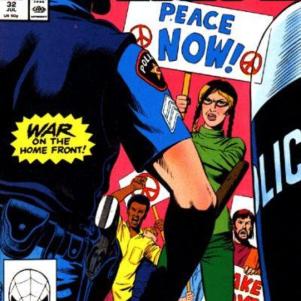 It’s the summer of 1968 and back home in Chicago, Pig’s brother Teddy joins a group of protesters outside of the Democratic National Convention while Pig is in Vietnam fighting off the latest VC attack. Join us for The ‘Nam #32, “Land of the Free,” brought to you by Doug Murray, Wayne Vansant, and Geof Isherwood. As always, in addition to the summary and review of the issue Ill be taking a look at the letters, ‘Nam Notes, and ads.
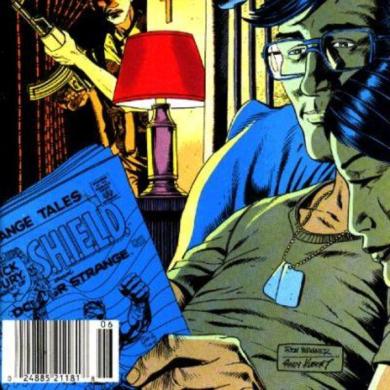 Issue #31 brings closure to the subplot involving the 23rd’s resident comic geek, Aeder. “Fire and Ice” is brought to you by Doug Murray, Wayne Vansant, and Geof Isherwood. As always, in addition to the summary and review of the issue Ill be taking a look at the letters, ‘Nam Notes, and ads.
 We take a look at “Bunker Line” and July 1968 in issue #30 of The ‘Nam, a story that introduces Lt. Biggs and shows Ice and Pig’s return to action. It’s brought to us by Murray, Vansant and Isherwood. As always, in addition to the summary and review of the issue Ill be taking a look at the letters, ‘Nam Notes, and ads.
 “War and Peace” is the title of issue #29 of The ‘Nam and what we’ve got here is a look at the rest of the world while the guys from the 23rd take a little R&R. This episode is full of historical context including events that are important and notable from June 1968. As always, in addition to the summary and review of the issue Ill be taking a look at the letters, ‘Nam Notes, and ads.
 The 23rd is officially deployed near the Cambodian border in “The Border Line” and we’re introduced to several new characters who we’ll see quite a bit of in the next year’s worth of comics. It’s The ‘Nam #28, brought to you by Doug Murray, Wayne Vansant, and Geof Isherwood. As always, in addition to the summary and review of the issue Ill be taking a look at the letters, ‘Nam Notes, and ads.
 “Like A Candle in the Wind” is the title of issue #27 of The ‘Nam and is a “fill-in” story where Clark hears the story of a wounded soldier he is helping. It’s a harrowing, sad tale brought to us by Doug Murray and guest artist Sam Glanzman. As always, in addition to the summary and review of the issue Ill be taking a look at the letters, ‘Nam Notes, and ads.
 It’s Christmas time in the ‘Nam and we see the boys of the 23rd treated to some genuine USO entertainment, even if it is a “Blue Christmas” for some of them. It’sThe ‘Nam #23, presented to you by Doug Murray, Wayne Vansant, and Frank Springer. As always, in addition to the summary and review of the issue Ill be talking about the storys historical context as well as taking a look at the letters, ‘Nam Notes, and ads.
 Pop Culture Affidavit