nostalgia

Pop Culture Affidavit Episode 22 — 1994: The Most Important Year of the Nineties

Episode 22 CoverHappy New Year and welcome to the first in a series of posts for this year, “1994: The Most Important Year of the Nineties.” All this year, I’m going to sit down and take a look at what was going on twenty years ago. That means movies, comics, music and all sorts of other stuff all this year! To kick off, it’s an “intro” episode where I talk a little bit about last year and also relate why I think 1994 is such an important year in the decade of the 1990s.

You can listen here:

iTunes:  Pop Culture Affidavit

Direct Download 

Pop Culture Affidavit podcast page

Classic College Memes: You Know You’re in College When ….

The Internet is full of memes–lists, gifs, videos, and other things that often go viral–and that’s been the case since, well, since the Internet was invented.  A couple of weeks ago while cleaning out some old files, I found a few things and decided to spend a few weeks talking about memes that I first encountered in 1995.

Beatty Hall at Loyola University Maryland (formerly Loyola College in Maryland).  I took quite a number of political science classes in this building.

Beatty Hall at Loyola University Maryland (formerly Loyola College in Maryland). I took quite a number of political science classes in this building.

First up: You Know You’re in College When …

So the fall of 1995 was a particularly weird point in my life.  It was my first semester in college and I wasn’t used to being on my own (few are when they’re freshmen), I wasn’t used to sharing a bedroom with someone for an entire school year and I hadn’t made a clean break from back home (read: I was still with my girlfriend, who was still in high school).  Plus, starting college in 1995 meant that Facebook was simply the book of senior portraits that you received at freshman orientation and most of us got our very first email accounts.

And since email was such a novelty, we’d be excited when what we referred to as “forwards” made their way around our social circles.  Most of them were chain letters–forward this to five people and receive good luck–but some of the more memorable ones were in list form.  This particular list got forwarded around early and employs a common trope of forwards, which is the “You know you’re _____ if/when …”  During my four years of college, I’d encounter “You know you’re a Loyola student when …,” “You know you’re from Long Island when …” and would actually create a “You know you’re from Sayville when …” list (that at one point actually was forwarded back to me), but this particular list was the very first one of these I received.

“You know you’re in college when …” is perfect for the type of person who has spent two or three months in a place that beforehand was only spied in 1980s comedies or admissions office brochures.  And while it seems weird to make it seem like “college” is a foreign land that I’ve been sent off to, when you think of the life you lead when you’re away at school and the place you came from, a lot of this makes sense.

I do not know the identity of the original author of this list, just that a friend sent it to me during the fall semester of my freshman year and at one point I decided to copy and paste it into MS Word and save it to a floppy disk.  Somehow it made it onto my current hard drive with the rest of my college stuff.

YOU KNOW YOU’RE IN COLLEGE WHEN. . . (more…)

1993, The Most Nineties Year of the Nineties

I don’t know if it’s because it’s been twenty years or because I’ve been seeing so many books from the Nineties sitting in my local comic store’s back issue bins but I have been in a mood to read some Nineties comics lately.  Okay, let me clarify:  I have been in the mood to read some Nineties comics lately.

We’re closing out 2013 today and I’d say that this was as weird a year as any when it came to comics and trying to come up with something to post on New Year’s Eve that was a sort of “year in review” type of post, I took a look at my current pull list and realized that I’m definitely not the type of person to be doing a “year in review” for 2013 because I have only read a handful of titles from the Big Two comics publishers and even those aren’t the Big Main from the Big Two.  For instance, I have not been reading Batman or its associated titles since the New 52 relaunch.  Yes, I have been checking out the Year Zero storyline digitally but for the most part I don’t feel like I connect with this version of Batman so I haven’t been reading him.  In fact, I got so tired of DC this year that I dropped Nightwing and Batwoman within a month or two of one another and the only New 52 titles that I’m still holding onto with a tenuous grip are Earth 2Wonder Woman, and World’s Finest.  My Marvel reading is even slimmer with the upcoming reprints of Miracleman and the Ultimate Spider-Man all-ages title being the only books on my pull list (though for the record I have picked up an issue or two of Hawkeye and may grab a few more before deciding if I want to add it to my pull list).  I have been reading more independent titles as of late, and while I don’t know what that says about me, I can at least say that they’re entertaining and worth the money (seriously, buy Rachel Rising and Herobear and the Kid.  Do it now!), but an expert at “what’s current” in comics I am not.

What this year has made me think about, if you haven’t gleaned yet from the introduction to this piece is, 1993, because it felt so much like that.  I started off this year with quite a number of DC books on my pull list and it dwindled down to what I just stated, mainly because I’ve been getting sick of the story-light, gimmick-heavy stuff that’s been going on.  Oh a crossover that spins into a billion books … again and look … variant covers and 3-D covers and all sorts of covery coverness!  You guys grab and fight over that, I’ll be over here with Scooby-Doo Team-Up.  And a quick scan of Mike’s Amazing World in January 1993 and December 1993 shows kind of a similar path.  At the beginning of 1993 I was buying all of the Batman, Superman, and X-Men titles.  By the end of 1993 I was down to Batman and the Titans.

So … what was the reason for the drop in interest twenty years ago?  I’d say money more than likely, but I remember that 1993 was the year that I became more discerning as a comics reader and collector.  I had started collecting three years prior and looking at the end of 1990 I was reading the Batman titles, New Titans, and would pick and choose from whatever Superman and Green Lantern were doing.  By the end of 1992 I was grabbing the latest HOT Image books and stuff like Venom: Lethal Protector #1.  Because I liked Venom?  Not really.  Because that was what people were buying?  Probably.

Oh God, I owned this at one point.

Plus 1993, when it comes to comics, was one of those years that was important because by the end of the year the bloom had definitely come off the rose as far as the comics speculation market was concerned with 1994-1995 being the time of the rather infamous market crash (I may be misremembering things and the market crashed in 1993 but things were still going strong at least at the beginning of the year).  I remember that my loyalties, which were already to DC anyway, strengthened as a result of feeling burned by various crossover events and big number one comics, and by the time I started my senior year of high school in September 1994, I was eschewing most gimmicky books and sticking to my guns, even if I still bought crap like R.E.B.E.L.S. ’94 (and as to why I was buying that title, well, some things are better left unexplained).

But aside from my becoming more finicky, what makes 1993 so important?  Why not choose 1992 (the birth year of Image, the Death of Superman) or 1996 (Kingdom Come, Marvel vs. DC) as the most Nineties year of the Nineties?  Well, here are fifteen reasons based on what I was reading (so even though “Emerald Twilight” started in the Green Lantern books in 1993 I never bought the issues–in fact, I have never actually read the story–and I never got my free copy of Turok: Dinosaur Hunter #1).  I’ve placed them in a particular order with the first item being something that is pretty awesome and still holds up well to the last one being best described as something I am embarrassed to actually have paid cash money for. (more…)

Pop Culture Affidavit Episode 21 — A Child’s Christmas in Wales

Episode 21 CoverThis time out, I present to you Dylan Thomas’s “A Child’s Christmas in Wales,” a literary selection appropriate to the season.

You can listen here:

iTunes:  Pop Culture Affidavit

Direct Download 

Pop Culture Affidavit podcast page

And for your convenience, I have included the raw audio of Dylan Thomas’s reading:  “A Child’s Christmas in Wales”

Merry Christmas!

Bowling, Burgers, and Birthdays

Sayville Bowl Interior

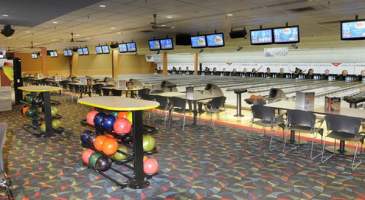
The interior of Sayville Bowl.  Image courtesy of MapQuest.  Year unknown.

I went to a kid’s birthday party a few weeks ago.  Normally, these are held at one of those huge playland places that have ball pits, inflatables, kiddie habitrails, and that have names like Bounce and Play or Adventure Central.  This party, however, was at the local bowling alley, and as I watched my son bowl (well, more like drop the ball in the lane and rush back to the chair so he could see the computer animation), I couldn’t help but think of the number of bowling birthday parties I attended as a kid.

My birthday parties–and most of my friends’ birthday parties–were pretty standard back in the 1980s.  We’d go to the birthday kid’s house, play a few games, eat pizza or hamburgers and hot dogs, drink way too much soda, and finish off with Carvel cake.  Then everyone would go home with goody bags that matched the decorations–cups, plates, paper tablecloths, etc–for Star Wars, He-Man, or whatever the party’s theme was.  Sometimes, the party would be a sleepover and we would put the parents through hell because hours of fun and hours of soda and candy equals no actual sleeping at the sleepover.  The parties were straightforward and always fun.

But bowling parties were a reality and we considered them some of the most memorable at the time, even if they don’t measure up to the standards of today’s epic theme parties and play apparatus.  Bowling at a birthday party in the early 1980s was some of the most fun you could have as a kid for a few hours, and Sayville Bowl was the typical AMF bowling center whose decor would remain so unchanged for years that when I was in high school and college it seemed like 1979-1983 were being preserved for posterity.  I don’t remember being a particularly good bowler–it was a lot of gutterballs and not enough Superman III–but I remember having an enormous amount of fun anyway.

Sigh … it’s never Superman III. (more…)

Show Me That Panarese Smile

The portrait studio section of an unknown Sears.

The portrait studio section of an unknown Sears.

My sister and I cannot smile.

Okay, that’s not entirely true–we have the muscle function that is necessary to smile, but if you ask us to sit for a picture and smile for the camera, it’s likely you won’t get a genuine smile out of either of us.  Instead, you’ll get what we refer to as “The Panarese Smile.”

A smile that is not so much an expression of happiness or delight as it is a grimace of discomfort or pain, The Panarese Smile has been a constant presence in family pictures since around the time the two of us were teenagers.  Any time we got together with our extended family–usually a holiday like Christmas or Easter–all of the cousins would be corralled into one area of the house and have to sit for pictures.  And when those pictures came out, you’d see that nancy and I looked like having our pictures taken was the absolutely last thing we wanted to do.  In fact, in some of the pictures taken when I was in high school or college, I not only look like I’m in pain but my expression is downright hostile, as if I were saying, “You dragged my ass all the way out here and now you want me to pose for a picture?  How dare you!”

I have no explanation as to why I was such a bitchy teenager.  My life wasn’t hard and I had no reason to truly rebel.  But I was just moody and bitchy half the time, and it would be especially so among my family during picture time.  More than likely, I was annoyed that taking pictures meant that I had to put my book down or that I had to stop watching whatever game or movie I’d parked myself in front of to endure what seemed like endless torture at the hands of my mother and aunts.

Until I had to endure the portrait sessions of weddings, I had no idea how painful a photography session could be, but at fifteen or sixteen I wasn’t there yet so there was nothing more annoying than being asked to sit on the front porch of my grandmother’s house with the sun shining directly in my eyes while people with cameras yelled “Over here!  Tommy!  Look over here!  Now over here!”

Actually, that’s a lie.  There was one thing worse than several of those sessions put together.  The Sears Portrait Studio. (more…)

Pop Culture Affidavit Episode 20 — Eddie Lives!

Episode 20 CoverThe latest episode is a little late but I promise you it’s well worth it.  This time around I take a look at one of my absolute favorite rock and roll stories, Eddie and the Cruisers.  I delve into P.F. Kluge’s original novel; talk about the 1983 feature film starring Michael Paré as Eddie Wilson, along with Tom Berenger and Ellen Barkin; and I even cover the sequel, Eddie and the Cruisers II: Eddie Lives!  So come along for a rock and roll ghost story for the ages!

You can listen here:

iTunes:  Pop Culture Affidavit

Direct Download 

Pop Culture Affidavit podcast page

Here is the trailer for Eddie and the Cruisers:

Here is the trailer for Eddie and the Cruisers II: Eddie Lives!: 

And just because it’s so cool, here’s the full Eddie and the Cruisers poster:

Eddie and the Cruisers Poster

Two Liters With a Pie

DSCN4205[1]

The flat remains of a two-liter bottle of Diet Pepsi. Yes, that’s my kitchen in the background.

A couple of months ago, I was at a work function where food was being served.  We had a few tables of fried chicken and some sides as well as a table of two-liter soda bottles.   As I poured myself a cup of Diet Pepsi, I couldn’t help but think of how ubiquitous the two-liter is—it’s a party and holiday industry standard and has been ever since I was a kid.

I suppose that is  not something to get really nostalgic about, especially since it’s a plastic bottle.  It’s not the iconic 6.5-ounce contour shaped glass Coke bottle that is the “nostalgic” Coke bottle and it doesn’t have the personality of the 20-ounce bottle, which is easily accessible and personal, plus it’s shaped like an old classic glass Coke bottle so it calls back to images where people from the 1950s or so pop a top of a glass Coke bottle.  The two-liter has never had that.  When you buy one of those, you twist off the metal or a plastic cap, and don’t think twice about it.

Which is indicative of the area and time period that constitutes my youth.  Having been born in 1977,  I have this attraction to the shopping mall, the multiplex, and everything else in the suburbs.  It is an era that is by and large disposable and I think on some level, even though nostalgia has turned its eye a little more toward my formative years, that nostalgia is selective at best—it’s the music, the movies, the fashion.  Nobody is going to look at suburban life in the 1970s and 1980s with the same rose-colored glasses our culture uses for the 1950s.  Because the decades of my childhood are the rose-colored 1950s’ unfortunate afterbirth:  Levitt homes and small towns gave way to shopping malls, gated communities, and McMansions, especially where I grew up.  You cannot go anywhere on Long Island without seeing shopping malls or multiplexes.

But then, there’s the pizza parlor. (more…)

Memories of Concrete and Asphalt

8088965584_cef7870c35Back in October, my parents came down from Long island to take my son to Kings Dominion, an amusement park just outside of Richmond.  Being that he’s only five years old, he was interested in the animatronic dinosaurs and kiddie rides, one of which was the Peanuts tie-in called “Joe Cool’s Driving School.”  He sat in a little car and drove around a mock streetscape that came complete with traffic lights, road signs, and street lamps, one of which looks exactly like the crooked-style street lamp that I remember being attached to jersey barriers on the Wantagh Parkway.

In case you are unfamiliar with the Wantagh Parkway or any of the other parkways on Long Island, this is one of a network of roads that shuttles passengers around Long Island, especially to and from New York City.  I won’t name and describe all of them, but will say that the two most well-known are the Southern State and Northern State, which run on the south and north shores, respectively, with parkways like the Meadowbrook, Wantagh, and Sagtikos connecting them from north to south.  The parkways were designed in the earlier decades of the 20th Century by Robert Moses (who was parks commissioner at the time and has a state park and causeway named after him) and are passenger car-only roadways with stone-façade bridges, and even some hiking and walking trails.

A satellite view of the Wantagh Parkway, courtesy of Google Maps.

A satellite view of the Wantagh Parkway, courtesy of Google Maps.

But important to me and my childhood on Long Island, these parkways were the way my family traveled from our house in Sayville to my grandmother’s house in New Hyde Park.  She and my grandfather (who passed away when I was in high school) lived in a  typical post-war suburban home that they had moved into back in the late 1940s or early 1950s when my grandfather had returned from the Second World War, living in Brooklyn became tougher, and these homes were becoming more readily available.  My family drove this route more times than I can count, and it wasn’t until I attended Joe Cool’s Driving School that I realized that every trip to my grandmother’s was a history lesson.  I honestly don’t know what prompted it—probably because I have always associated Peanuts with the suburban 1960s of its television specials—and I honestly don’t know why I hadn’t noticed it before.  After all, I have always been interested in the modern history of my homeland (although I have only read Robert Caro’s infamous New Yorker article on Robert Moses and not The Power Broker, which I swear I will one day pick up and read) so you think I would have realized that Long Island has an element of “living history” to it.

Exit W3 in 2009 with the parkway's crooked lamp posts, courtesy of street view on Google Maps ...

Exit W3 in 2009 with the parkway’s crooked lamp posts, courtesy of street view on Google Maps …

Then again, you rarely notice these things when you live among them and the history of suburban Long Island is not designated with historical markers the way the Revolutionary and Civil War landmarks are near my current home in Virginia.  It’s more geologic, in a sense.  When you look at a rock formation or a canyon, you see striations in the rocks and any geologist can tell you how that determines the age as well as what can clue you into that area’s history (for example, the presence of certain elements can suggest that, say, an asteroid hit the Earth at some point).  When you look at the suburbs of Long island, you see that their history is layered.  Sure, Levitt bulldozed farmland and build houses at one point and Moses did the same for the parkways, but that was more than half a century ago and since then, one thing has been built on top of one another, or the old has been repurposed, perhaps several times over.

... and the same exit taken in 2011, accessed on Google Maps.

… and the same exit taken in 2011, accessed on Google Maps.

Starting my trip in my parents’ house in Sayville is perfect for this sort of examination.  My hometown is a good 200 years old and while it has had its fair share of changes over the years (read: something was knocked down in order to put up another bank), there are still vestiges of its former life as a seaside gateway for the turn-of-the-century upper class as well as century-old main street buildings that are more suited to its life a s pre-suburban small town, as are the towns of West Sayville and Oakdale, which we would snake through on our way to the three parkways that would eventually take us to New Hyde Park.

Each seems to have its own personality.  The Southern State, which when I was a little kid still had a few timber post street lamps lining its shoulders, has the feel of what I can imagine was truly considered a “parkway”—a sprawling, twisting, turning road with stone-façade bridges that reminds you that you are, in fact, driving along the south shore.  Even when it becomes the Belt Parkway (the bane of any New York-area traveler), you still feel like you are on a coastal highway.  Contrast that with the Northern State, witch seems to choke its way along the north shore before it becomes the Grand Central Parkway and heads straight for Fitzgerald’s Valley of Ashes, and you have a look at various shades of the past.  On approach to New Hyde Park via the Northern State, there are the North Shore Towers, which is a high rise luxury condo but always seemed like a reminder that we were near New York City.

But not the New York City of the time; a New York City of another era, or the type of city I remembered from years of educational films.  And the Wantagh provided the transition between the more open, even rural Suffolk County and the increasingly urban Nassau County.  Whereas the Southern and Northern States both saw their looks change from years past—lanes were expanded and timber post lights were modernized—for years, the Wantagh still had the same crooked lamp post that were installed in the 1970s and it skirted by towns that at a glance looked like they hadn’t changed in years.  It’s not an extraordinary stretch of road by any means and we were only on the parkway for a few miles, but between those towns and those lights, I always felt as if I were going back in time. (more…)

Fuzzy memories of summer camp

On Monday, my son started summer camp.  Beng that he is a four-year-old rising kindergartener, this was a pretty big deal because it is his first “summer break” after a year of school (whereas up until last August he was simply in daycare).  The camp is run out of his school, so there really is no difference in our morning and afternoon routines of dropping him off or picking him up, even though he is going to spend most of his days going to the pool or making crafts or playing games as opposed to sitting in class and learning letters and numbers.

Apparently, camp around here is kind of a big thing, to the point where every spring, there is not only a huge advertising supplement in the local newspapers about the various summer camp programs offered throughout the greater Charlottesville area, but there is a “summer camp expo” held at a local hotel where parents can stop by, pick up literature, sign up for camps, and meet local newscasters (I don’t know what the appeal is in meeting local newscasters, but there you go).  Where I grew up on Long Island, I don’t remember the ramp-up to summer break being a huge rush to get kids “signed up for something,” because quite a number of my summers were spent sitting around and doing very little.  I know that I sound like an old fart when I say that I was a kid in the days when kids could be left home alone and there was no danger in that, but it is actually true.  Most of the friends I had in later elementary school were kids whose parents weren’t always home and as long as I could ride my bike to their houses and as long as I was home before dinner time and wasn’t committing any criminal acts (and seriously, I grew up in freaking Sayville … the most “illegal” thing I ever did was cut through an abandoned lot and buy smoke bombs from the ice cream man), everything was fine.  Granted, there were days where my friend Tom and I spent time jumping out of trees and body slamming his little brother and I’m amazed that nobody got seriously injured, but we wound up fine.

But for those kids whose parents: a) were sick of their children doing nothing except watch TV all day; b) didn’t want their children unsupervised; or c) had the money, there was “camp.”  I didn’t know many kids who went to a “sleepaway” camp like the type portrayed in Meatballs or Wet Hot American Summer, probably because by the time I was old enough to do a sleepaway camp, those places had become synonymous with machete-wielding, hockey-mask-wearing killers.

Okay, that probably wasn’t the reason–it was probably more like sleepaway camp was a pain in the ass and parents preferred something more local, of which there were plenty of opportunities, some of which were almost like a sleepaway camp but were called “day camps.”  Every spring during my childhood, when I would be home in the afternoon watching G.I. Joe or He-Man and the Masters and the Universe, the local syndicated stations (like WPIX and WNEW/WNYW) would air a commercial for Young People’s Day Camp:

Now I am sure that this commercial ran well into the late 1980s and maybe even the early 1990s because I remember seeing it for years and I am sure that most of the kids in the commercial were in college by the time I was watching it.  I’d say that Young People’s Day Camp is the Mount Airy Lodge of children’s camps–the type of place that if you visited it now, it would be mired in bankruptcy and one skinned knee from being shut down by either the board of health or child protective services–but they are still up and running throughout the New York and New Jersey area, even if they’re not airing the same commercials. (more…)