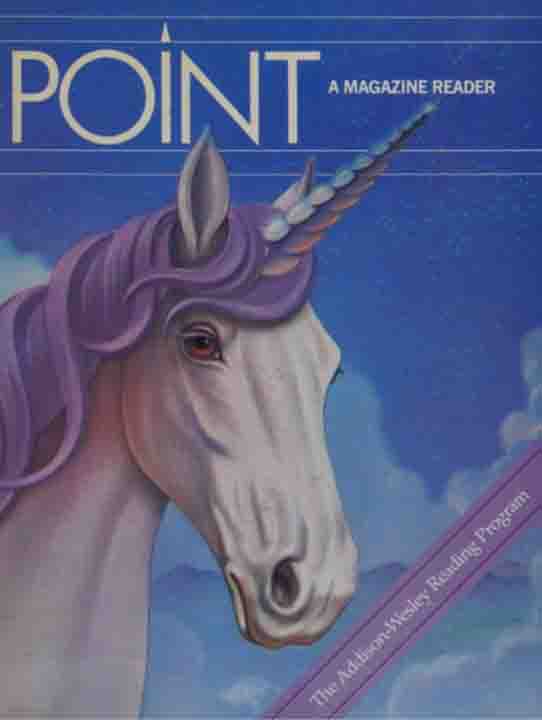
I wish I could have some profound way of starting this essay or even something or someone to tie it together, but the truth is that last week, I fell down one of hte more random Internet rabbit holes. Although I don’t know if this was a rabbit hole beacuse I was actually finding the answer to something and had some serendipity come along with it. Either way I think I am probably the only person in the world who does a fist pump the moment he discovers his sixth grade reading textbook on the Internet Archive.
The timing of my search for it does make sense, though. It was my last week of summer break and I didn’t have much to do on the day when it was pouring out, so I decided to look into some of the topics on the very large list of topics for possible blog posts and then remembered that years ago, I’d purchased a copy of The Mine of Lost Days by Marc Brandel. It’s a children’s/young adult novel published in 1975 that’s about a kid visiting relatives in Ireland and finding a group of children in a mine who are actually from more than 100 years ago. I remembered liking the book when I was a kid and had bought it because I had been looking for an answer to my very specific question: “What was that novel that was in Point?”
Point was a book published in 1982 as part of the Addison-Wesley Reading Program and at Lincoln Avenue Elementary was considered the highest level of reading book that you could hit. I was a high-achieving reader through all of elementary school, so I was pretty sure that as I was working my way through Green Salad Seasons in the fifth grade, I would wind up being one of those cool kids in sixth grade carrying around the elite reading book–and nothing says elite like a textbook with a unicorn on the cover. I probably had to cover it with a brown paper bag anyway.
Point‘s elite status lost a little bit of its luster when my sixth grade teacher, Ms. Frei, told us that everyone in the class was reading from it. Modern pedagogy says that this is probalby not a good idea (although to be fair, modern pedagogy gives you conflicting information on everything from instructional approach to whether or not you should put a poster on the wall), although now that I have been teaching for about 20 years, I see the case of having everyone read the same thing at the same time. Besides, she had us do a lot beyond simply trudge our way through a reading book story by story–there were book reports, research projects, and the occasional short story from a 1970 reading book called To Turn a Stone, which sounds like the most 1970 title for a reading book ever. I remember one story from that collection called “The Cave” where this kid who is in a gang befriends a homeless guy who lives in a cave and then his gang runs the guy off so they can use the cave for their new hideout. He winds up fighting the gang leader and getting kicked out, then makes a vow to join the other gang and get revenge. Between this and The Outsiders in the eighth grade, no wonder my generation was largely feral.
(more…)

 Pop Culture Affidavit