I’ve said before that Saved By the Bell is one of the most influential shows in the history of television, as Millennials and Gen Z were able to spend much of their formative years watching sitcoms that were targeted directly at them instead of having to settle for simply graduating from the world of Saturday morning and weekday afternoon cartoons like Generation X had. This was obviously helped along by Nickelodeon and The Disney Channel, as the former increased its tween programming int he early ’90s with Clarissa Explains it All and similar shows while the latter became part of basic cable packages between 1991 and 1996.
That is, if you had cable.
But unlike all the times networks were chasing cable trends two seasons too late, NBC wound up being right on or slightly ahead of the curve for the 1992-1993 television season. This was the year that they completely replaced their Saturday morning cartoons with live action programming, giving birth to TNBC.
If you look at the Saturday morning lineup from the previous season, you see shows like Space Cats, Captain N and the New Super Mario World, and Wish Kid, and while I know a few people who watched Captain N, I can’t imagine that this lineup was doing much against the other networks, which were airing cartoons starring more well-known characters such as Bugs Bunny, Winnie the Pooh, Garfield, Darkwing Duck, and the Teenage Mutant Ninja Turtles. Plus, Saved By the Bell was popular at the time and so NBC saw the opportunity to double down on that success, not only giving us an extra half hour of the show (which led to the Tori episodes) and padded out the day with the TNBC lineup.
I started my sophomore year of high school in the fall of 1992 and by the time I shrugged off any Saturday morning programming whatsoever sometime during the 1993-94 television season (in favor of sleeping until 11:00 every Saturday), I was a junior and definitely a year or so older than the target demographic. NBC was clearly going for the kids who were in middle and the early part of high school, because the sitcom fantasy world of Zack Morris and company was not exactly anything cool when you were neck deep in your own high school drama. Still, I was “grandfathered in” to the original TNBC lineup because I had already been watching Saved By the Bell.
If you’ve followed me over the years, you have heard me talk about my relationship with Saved By the Bell more than once. I’m not so much a super fan of it as I am one of the many people who got sucked into the show during its run because it was just on television and there was nothing better to watch on a weekday afternoon between The Disney Afternoon and Full House, or on a Saturday morning when I’d gotten home from my job at a stationary store. That meant that I would be on the ground floor for the new lineup, especially since the Bayside gang was set to graduate that first season; I would keep going for some of the following season because I had a crush on one of the actresses on California Dreams.
The original two years of TNBC would be a mix of sitcoms, game shows, and early teen reality programming. While Saved By the Bell would shift to its “The New Class” series in the fall of 1993 (and I can tell you that that first “New Class” season is the Coy and Vance of SBTB) in hopes of keeping the original audience coming back and California Dreams would go on to be another mainstay of the lineup, the network would take a “throw it against the all and see if it will stick” and that meant that some of the shows that premiered in 1992, like Name Your Adventure and Double Up, would only be around for a little while.
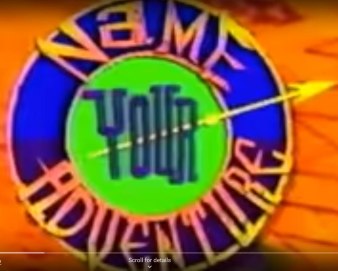 Name Your Adventure was a reality show wherein a teenager would get the opportunity to do something they’d always dreamed of doing, a formula that would get reused in the early 2000s with the MTV series Made. Hosted by Mario Lopez, Jordan Brady, and Tatyana Ali, the show was a slightly slicker version of classic PBS shows like 3-2-1 Contact because it was less about the spectacle of nerd rehabilitation (which was 99% of Made) and more like someone being given an internship. I found one story on YouTube that featured teenager Jon Steinberg who was interested in becoming a sports broadcaster, so he was paired up with Bob Miller who at the time was the play-by-play guy for the Los Angeles Kings. The segment was definitely more educational than flashy, as Miller fed Steinberg a lot of information as well as gave him real-time feedback as he tried his hand at calling part of an Angels/Yankees game.

Broadcaster Bob Miller gives Jon Steinberg some tips on how to call a basketball game on an episode of Name Your Adventure.
I would have found this interesting in 1992 and found it interesting even now because of how Miller pointed out all of the intricacies of describing a game’s action while it happened. Of course, this doesn’t have the appeal of a teenager crying on camera because they just can’t seem to get anything to work correctly, so I understand why this show would have not had staying power. And it didn’t have a ton of staying power for Steinberg because this isn’t the career he chose–he is the former head of Buzzfeed. But the show did last for a few seasons (and I suspect it’s because it helped fulfill an educational mandate for NBC), so there’s a decent amount of footage available on YouTube.
YouTube, by the way, wound up being my avenue of choice to see if I could find any footage from this early TNBC era and ran into one of the common problems with tracking down the early 1990s on the Internet, which is that if it was never rereleased on a digital platform, it’s very hard to find. Steinberg happened to upload his segments from Name Your Adventure to YouTube (so I guess he had fond memories of the experience), but unless you have someone who still has a pile of VHS tapes and the means to rip them to a streaming format, then you’re pretty out of luck. And who would have taped and then uploaded an episode of Double Up was probably hoarding VHS tapes.
Double Up was an attempt at a teen dating show, one that was obviously trying to capitalize on the popularity of Studs, which in itself was a slightly raunchier version of Love Connection. Hosted by J.D. Roth (the host of the afternoon Double Dare rip-off Fun House), the premise is that brothers and sisters set one another up on dates and we see how things went. Complete with a M.C. Skat Cat-type rap theme and in in-studio deejay, this is very much a show that was developed by an adult who was working off a “1991 Teen” checklist and it’s no wonder it only lasted seven episodes.*
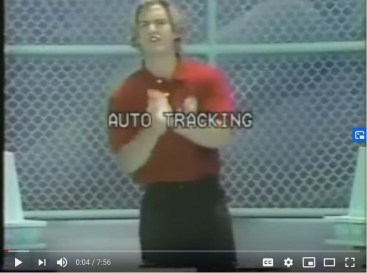
Mark-Paul Gosselaar hosted Brains and Brawn around the same time he was shooting SBTB:TCY. I captured this image because of the way the “auto tracking” from someone’s VCR was preserved for all of YouTube to see.
Brains and Brawn, on the other hand, was a slightly better attempt at a game show and this lasted a little longer. Having obviously struck out with “Studs for Teens”, NBC decided to go with a more “Take the Physical Challenge” route and created a show that combined trivia, sporting events, and teen celebrities. Hosted by Mark-Paul Gosselaar with assists from Tatyana Ali and Danielle Harris, it was shot on the Universal Studios backlot in front of the clock tower from Back to the Future and had a live audience, probably comprised of tourists. Honestly, though, if I were a teenager visiting Hollywood in 1992, I would have totally gone to a taping of this.
Wait, I did go to Hollywood in 1992 and visited Universal Studios. Why didn’t I get a chance to see this tape? Shit.
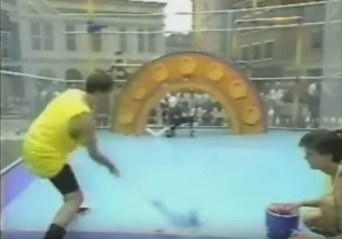
Jay Anthony Franke of “California Dreams” fame competes in the hockey physical challenge part of “Brains and Brawn.”
Anyway, on Brains and Brawn, teenagers were put in teams and worked with a celebrity “captain”–usually someone from another teen television show–and they would answer trivia questions before competing in a sporting event like shooting baskets or trying to get their slap shot past a goalie. The final challenge was an obstacle course, and while I was watching an eight-minute clip that featured the cast of California Dreams, I have to say that it really comes off as if your gym teacher had tried to do Double Dare in middle or high school. I probably would have found it fun and there are moments where the celebrities do look like they’re having fun, but there’s also this air of contractual obligation, hoping the check clears, and hoping that the kids watching this show would watch whatever the celebrities were promoting.
I can’t imagine that the budget on this was particularly huge–the winning team received a Bushnell telescope instead of a vacation or cash***, and for all we know, the money that NBC had earmarked for its teen shows mostly went to its sitcoms–Saved By the Bell, California Dreams, and the one-season wonder Running the Halls.

Three characters from “Running the Halls” react to a guy wearing a gorilla suit. From l-r: Trevor Lissauer, Senta Moses-Mikan, and Richard Hillman Jr.
Running the Halls was an attempt at a single-camera sitcom, which was something you would have seen if you were watching Fox at the time, which had the short-lived Tobey Maguire show Great Scott! and the underrated classic Parker Lewis Can’t Lose. However, unlike those two shows, NBC decided to throw a laugh track over the action and did very little except repeat the Saved By the Bell formula. Our main character here was a Zack Morris clone named Andy McBain (played by Richard Hillman Jr.) who is trying to be the big man on campus at a private school, getting into the same sort of trouble Zack would get into on both the original and College Years seasons of Saved By the Bell. There are even romantic interests and a Screech-like character. I watched a clip where Andy choked at a basketball game and saw characters that looked like they were dressed from the pages of the most recent issue of Seventeen. I can see why this was forgotten, although I remember enjoying it at the time. Maybe that’s because there wasn’t anything else on that filled the void left by Degrassi and the other two sitcoms were just way too technicolor for me, or maybe I thought that the girls on the show were hot at the time****. At any rate, when Senta Moses showed up on My So-Called Life the following year as Delia Fisher, I immediately recognized her from Running the Halls.
While California Dreams would go off the air in 1997 and Saved By the Bell: The New Class would last all the way until 2000, the other shows would all be off the air by the time I headed to college in 1995. TNBC itself would last until the early 2000s and feature shows like City Guys and Hang Time, but would then get replaced by the Discovery Kids on NBC programming block. NBC’s current Saturday morning lineup currently consists of the weekend edition of the Today Show and then travel and information shows that seem more like cheaply purchased time-fillers than anything else. In fact, they could probably run infomercials here but I think the networks have to run some sort of educational programming at some point in the week and this is probably their way to shove all of that in.
My age prevents me from saying what the Saturday morning viewing habits of the average American teenager was like after I left my time with these shows behind. For all I know, those last few years of TNBC were less of a network on the pulse of its audience and more of an attempt to hold on to the audience that once watched cartoons but were now pulled away by Disney, Nick, and MTV. And though I did watch a number of these shows, even I knew that they were time fillers. Then again, that’s what most Saturday morning television was to my generation–something to keep us occupied before your parents finally stepped in and made you go outside.
* I’m not doing this show’s bizzareness justice and I think that I’ll write a longer entry about it next week.
** Danielle Harris, who has been in a number of horror movies throughout her career, was at that point playing the teenage neighbor of the Connors on Roseanne. I had a major crush on her.
*** Although if I’m being honest, a Bushnell telescope isn’t exactly cheap. After all, Ronald Miller paid a grand to go out with Cindy Mancini and that money was originally going to go toward the purchase of a telescope.
**** Probably.

 So I’m watching Lucas last night …
 It’s the third chapter in a podcast miniseries that looks at the fall of the Iron Curtain and the popular culture of the Cold War. To start us off, I look at what happened in Eastern Europe from March to May 1990 with a special focus on the revolution in Poland. Then, I dive into educational/propaganda films of the 1950s and early 1960s by looking at “Duck and Cover” and “Red Nightmare.”
 In 2004, DC Comics released ‘Countdown to Infinite Crisis,” and set in motion a six-month buildup to what would be the most monumental crossover in recent DC history, Infinite Crisis. This May, that ‘countdown” and buildup to Infinite Crisis is the topic for the annual JLMay crossover. It is “The Event Before The Event.”
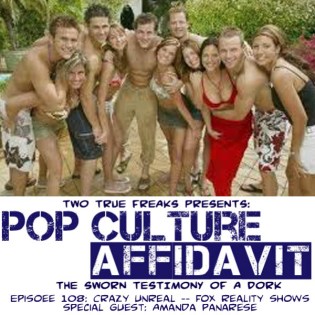 What happens when you take two people who have repeatedly watched what happens when you take a group of hot singles and put them in a mid-level resort in Cabo San Lucas? You get a conversation about reality shows on the Fox Network! Amanda joins me to talk about everything from the early days of Totally Hidden Video, COPS, and America’s Most Wanted, to the high point of trashy Fox reality of Temptation Island and Paradise Hotel. Along the way, there’s American Idols and Gordon Ramsey calling someone an idiot sandwich.
 So right now, we’re in a massive societal lockdown, which means that all of us are sitting at home and trying to find things to do. It also means that our usual spring distractions and entertainment have been canceled or altered. There’s no NCAA Championship, and no professional sports. Now, I’m bummed that I wasn’t able to fill out a March Madness bracket and watch tournament games during the day, but I didn’t realize how much I would be missing baseball.


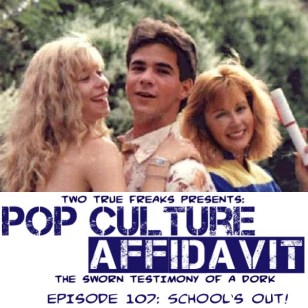 High School is over and for the students who went to Degrassi High, that means parties, college, jobs, and sex with Tessa Campinelli. That’s right, it’s time to look back at the wildest summer in Degrassi history, the 1992 movie finale, School’s Out! Over the course of this episode, I take a look at the movie that ended the Canadian teen television show and also spend time recapping my Degrassi origin story as well as what it was like to be an American fan of the show during its PBS run in the late Eighties and early Nineties.