1980s

Bottom of the Inning: Taking Baseball Personally (Baseball, Part Two)

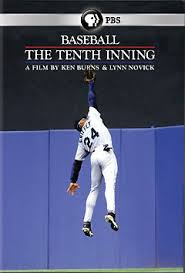
Baseball 10thIn my last post, I mentioned that watching all of Baseball made me feel like I was in an introductory, or “101” class on the game.  As well-researched and well-crafted as Ken Burns’s documentary was, there were times where I felt like I was getting the history textbook version of the baseball story:  hit the high points, go selectively in-depth, and completely skip over quite a bit.

While that’s a valid criticism, leaving it at that would be giving the work short shrift, especially since it’s a full day’s worth of a documentary.  Furthermore, I spent much of that first part of my look at Baseball on summary and critique and didn’t give much of my personal “story” as it is, or at least my personal reactions while I was watching it.  Which is kind of the whole purpose of this blog, right?

So that’s what I’m going to do.  Inning by inning.

First Inning (“Our Game” 1850s-1900):  This isn’t Baseball, this is seventh grade social studies with Mr. Kerkhof.  We’re talking about the Antebellum period and …  man, the 1800s are boring.  But this?  This isn’t so much because it’s an origin story, the kind I’m fixated on whenever we begin looking at an important event.  What were the first shots fired in the Revolutionary War and how did it progress from there?  Who actually founded the Roman Empire?  When did the  Middle Ages officially begin?  Who played that first game of baseball and what was it like in what seems like the Dark Ages to me–before Ruth, Gehrig, Mays, Mantle, and every other name I know?

Second Inning (“Something Like a War” 1900-1910):  I’m ten years old and my parents have given me a “Baseball’s All-Time Greats” baseball card set, the one I spotted in the Sears catalogue.  There’s Ty Cobb, and there’s Honus Wagner, who has the most expensive baseball card in existence, something I learned on a feature I saw on 20/20 the previous year.  I begin looking at the all-time stats for the old players and am amazed and even though many of their records have been broken, they still are in the top five for many of their most notable categories.  The card set is worth original retail price (and even today it’s not worth much), but what it lacks in monetary value it more than makes up for in facts.

Third Inning (“The Faith of Fifty Million People” 1910-1920):  To me, it’s not the Black Sox scandal; it’s Eight Men Out and Field of Dreams.  It’s “Say it ain’t so, Joe,” and the last scene of that softball episode of Married … With Children that parodies the last scene of Eight Men Out.  It’s also the idea that even something as pure as a game I play on Saturday mornings in Little League can be corrupted by outside influences (yunno, beyond the opposing team’s coach being friends with the umpire).

Fourth Inning (“A National Heirloom” 1920-1930):  I’m in the fifth grade and we’re asked to take a biography out of the library for our latest book report/conference with the teacher.  I grab one about Babe Ruth.  He competes with Gehrig.  He is supposedly “stranger than fiction,” which is what one of the chapter titles says.  Despite my being an excellent reader, I have trouble getting through the entire book.  I don’t know if it’s because the book’s badly written or because I don’t find the subject matter as interesting as I thought I would.  In fact, I can’t remember if I ever finished that book.  I do know that when I had my conference with Mr. Schafer about it, I did fine.

Fifth Inning (“Shadow Ball” 1930-1940):  I have no personal context for this.  In fact, if there is any episode that I found myself glued to, it’s this one.  Growing up, my knowledge of the struggle of African-Americans was limited to slavery, Plessy v. Ferguson, Brown v. Board of Education, and Martin Luther King Jr.  I was not exactly a scholar.  I knew the Negro Leagues existed but I don’t think that what little I read about them in books clued me in to what extent.  If anything, I’m grateful for what I gained from this episode.

Sixth Inning (“The National Pastime” 1940-1950):  It’s 2012 and I’m in a used bookstore on the Downtown Mall.  I’m looking for a copy of As You Like It but am also perusing the small graphic novel section.  On my way to the counter, I pass sports and Roger Kahn’s The Boys of Summer.  It sits on my shelf until the start of the 2013 season rolls around.  While Kahn’s biographical retelling of his time becoming a sportswriter is interesting, it’s his visits with former Dodger greats and the retelling of Jackie Robinson’s history that pulls me in.  For years, I knew three things about Robinson:  he played for the Dodgers, he broke the color barrier, and he stole home once in the World Series.  This tells me so much more.

Seventh Inning (“The Capital of Baseball” 1950-1960): I’m twelve years old and my family is throwing one of those big barbecues where everyone–from my mom’s side and dad’s side–is there.  My Uncle Brian, a die-hard Yankees fan, spends a good hour talking to Grandpa Panarese about baseball in the 1950’s.  They talk about the Yankees, the Giants, and the Dodgers.  I don’t interject; I just listen.  It’s one of the best memories I have of these two men and one of the most informative conversations upon which I ever eavesdrop.

Eighth Inning (“A Whole New Ballgame” 1960-1970):  To me, this is where baseball begins; specifically, in 1962, when the New York Mets go 40-120 and set an all-time single-season loss record that still stands.  I cut my baseball history teeth on An Amazin’ Era in 1986 and to me, “baseball history” has always involved Seaver, Koosman, Swoboda, Clendenon, Agee, Grote, Garrett, and McGraw.  Yes, there are more important figures in baseball history and more important events.  But it’s the lovable losers’ transformation into the Miracle Mets that I always remember.

Ninth Inning (“Home” 1970-1993):  It’s fascinating to see Bob Costas tell the story of being in the Red Sox locker room during the Buckner play and watching the champagne get wheeled out as quickly as possible.  It’s also fascinating to see testimony from Red Sox fans who were wounded by the play.  After all, I rooted for “the enemy” in 1986.  My nine-year-old dreams came true when Jesse Orosco threw the last pitch to Marty Barrett (I have a poster on the wall of my classroom), so it never occurred to me that someone might be upset by that night’s events.  Beyond that, there are so many recognizable faces here and I wish he was taking more time on them; I wish he was reminiscing with me the way he was reminiscing with my parents through the seventh inning.

When it ends with a talk about how baseball endures I realize that this isn’t a documentary; it’s a eulogy.  The season was cancelled due to a strike the month before the first episode aired and it doesn’t seem like we’ll get the game back.  Furthermore, it’s hard to pick a side because everyone seems greedy; everyone seems like a villain.  And here, at the funeral, we’re all trying to remember why we came.

Tenth Inning (1994-2010):  I was there.  I remember that.  I watched that.

I will never tire of watching Barry Bonds fail to throw out Sid Bream.  I always loved how much fun Ken Griffey Jr. seemed to be having–and always wished I had that swing.  I was cheering for McGwire the whole time and have to admit I was disappointed when the PED charges came to light.  I never cheered for Bonds unless he struck out looking.  I want to buy Steve Bartman a beer and talk baseball with the guy–not that game, just baseball.  No, the 2004 ALCS is not overrated and yes, I’ll watch the Yankees choke like that any time, day or night.  My heart was in my throat when Endy Chavez made that catch, only to have the Cardinals rip it out and crush it a few innings later.  You’re really using that Springsteen song, Ken?  Don’t you realize it’s about looking back and realizing how middle-aged you are?

“But then time slips away and leaves you with nothing mister but boring stories of glory days.”

You know what?  That’s exactly what this is, isn’t it?  Good job, sir.

Pop Culture Affidavit Episode 25 — Thirty Years of Neo Maxi Zoom Dweebies

Episode 25 Cover“Dear Mr. Vernon …”  On March 24, 1984, five students sat through detention in the Shermer High School library.  Now, I take a look at my favorite movie of all time, The Breakfast Club.  I break down the movie’s plot and give my review, sharing what makes it so special.

You can listen here:

iTunes:  Pop Culture Affidavit

Direct Download 

Pop Culture Affidavit podcast page

In the episode, I mention a piece I wrote and posted last year about my changing feelings about Mr. Vernon.  Here it is:  Sympathy for Richard Vernon

In Country: Marvel Comics’ “The ‘Nam” — Episode 15

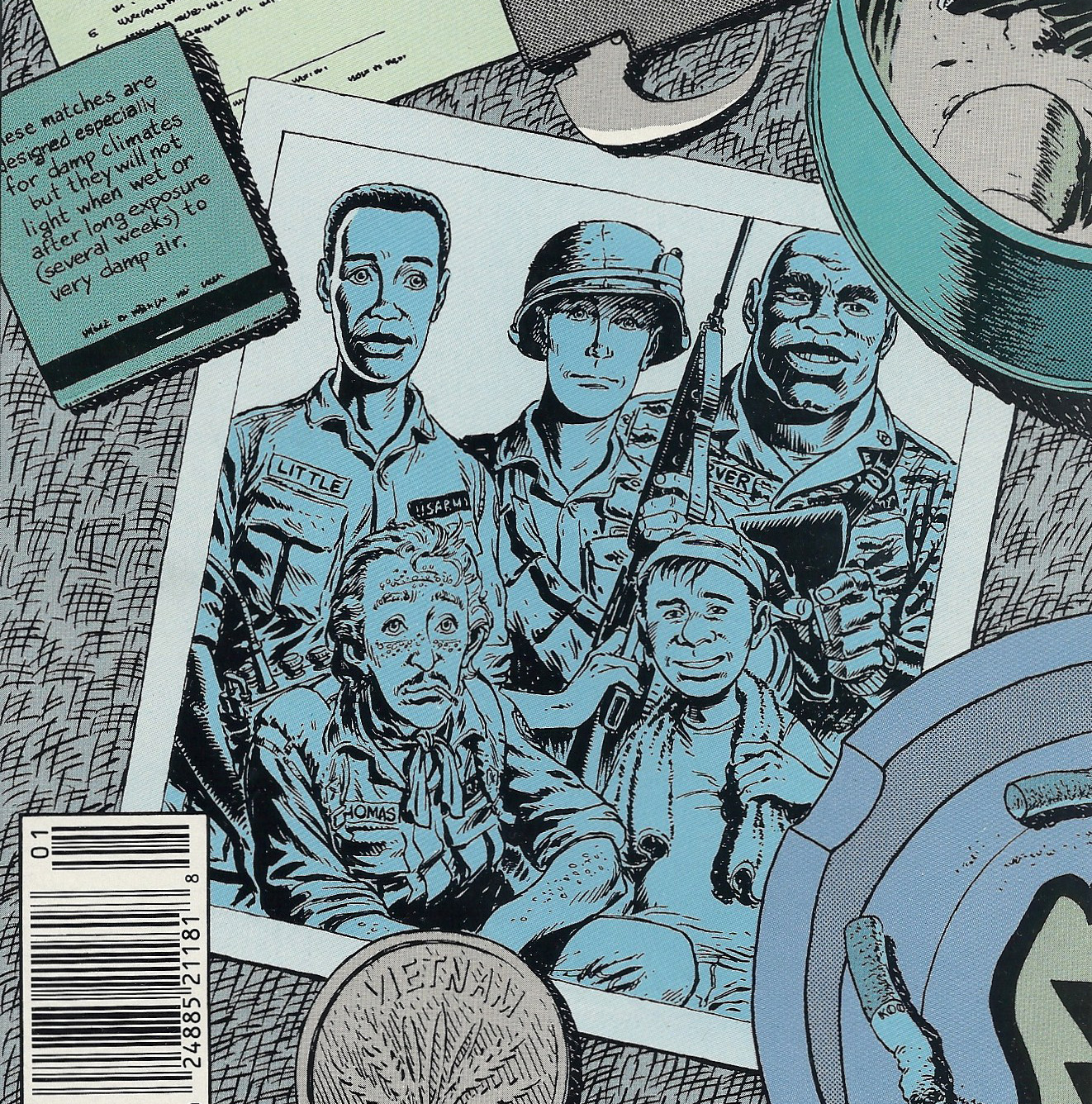
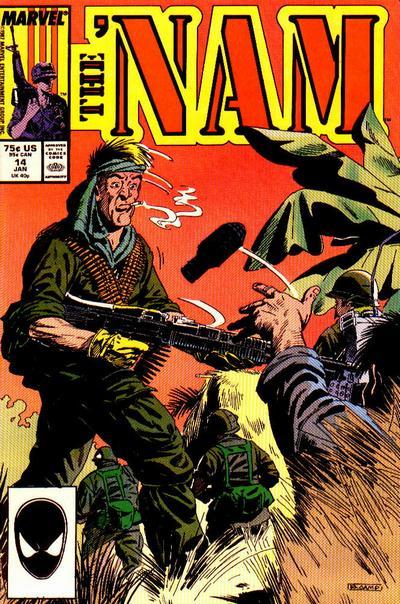
Nam 14After taking a look at The Things They Carried, it’s time to return to The ‘Nam with issue #14, “Fatigue Duty.”  We spend our first issue after Ed Marks’s departure getting to know some of the other boys of the 23rd courtesy of Doug Murray and Wayne VanSant.  As always, in addition to the summary and review of the issue I’ll be talking about the story’s historical context as well as taking a look at the letters, ‘Nam Notes, and ads.

You can download the episode via iTunes or listen directly at the Two True Freaks website

In Country iTunes feed

In Country Episode 15 direct link

Also, here is a link to The History Place, which is one of the resources I have been using for some of the historical notes in this episode:  The History Place

In Country: Marvel Comics’ “The ‘Nam” — Episode 14

The Things They CarriedAfter a year in The ‘Nam, I take a break to review and discuss Tim O’Brien’s 1990 novel, The Things They Carried, which is a seminal work in Vietnam War literature.

You can download the episode via iTunes or listen directly at the Two True Freaks website

In Country iTunes feed

In Country Episode 14 direct link

Furthermore, here is a link to the New York Times article I reference at one point:  “A Storyteller for the War That Won’t End”

And here is the YouTube video that I referenced in the episode, which is part of a series of interviews with O’Brien …

In Country: Marvel Comics’ “The ‘Nam” — Episode 13

The_'Nam_Vol_1_13Ed Marks’ tour in Vietnam ends in this issue as does Michael Golden’s tenure as the book’s penciller. Join me as I take a look at “… And a Wakeup,” the end of the first year of “The ‘Nam” courtesy of Doug Murray, Michael Golden, and Bob Camp. As always, in addition to the summary and review of the issue I’ll be talking about the story’s historical context as well as taking a look at the letters, ‘Nam Notes, and ads.

You can download the episode via iTunes or listen directly at the Two True Freaks website

In Country iTunes feed

In Country Episode 13 direct link

In Country: Marvel Comics’ “The ‘Nam” — Episode 12

Nam 12John Severin does a fill-in issue on art and Doug Murray gives us a letter home from Ed Marks as the boys of the 23rd take part in Operation: Cedar Falls. It’s “From Cedar Falls, With Love” in “The ‘Nam” #12. Plus: Meatloaf, Humongous Rock Star of the Universe!

As always, in addition to the summary and review of the issue I’ll be talking about the story’s historical context as well as taking a look at the letters, ‘Nam Notes, and ads.

You can download the episode via iTunes or listen directly at the Two True Freaks website

In Country iTunes feed

In Country Episode 12 direct link

Bowling, Burgers, and Birthdays

Sayville Bowl Interior

The interior of Sayville Bowl.  Image courtesy of MapQuest.  Year unknown.

I went to a kid’s birthday party a few weeks ago.  Normally, these are held at one of those huge playland places that have ball pits, inflatables, kiddie habitrails, and that have names like Bounce and Play or Adventure Central.  This party, however, was at the local bowling alley, and as I watched my son bowl (well, more like drop the ball in the lane and rush back to the chair so he could see the computer animation), I couldn’t help but think of the number of bowling birthday parties I attended as a kid.

My birthday parties–and most of my friends’ birthday parties–were pretty standard back in the 1980s.  We’d go to the birthday kid’s house, play a few games, eat pizza or hamburgers and hot dogs, drink way too much soda, and finish off with Carvel cake.  Then everyone would go home with goody bags that matched the decorations–cups, plates, paper tablecloths, etc–for Star Wars, He-Man, or whatever the party’s theme was.  Sometimes, the party would be a sleepover and we would put the parents through hell because hours of fun and hours of soda and candy equals no actual sleeping at the sleepover.  The parties were straightforward and always fun.

But bowling parties were a reality and we considered them some of the most memorable at the time, even if they don’t measure up to the standards of today’s epic theme parties and play apparatus.  Bowling at a birthday party in the early 1980s was some of the most fun you could have as a kid for a few hours, and Sayville Bowl was the typical AMF bowling center whose decor would remain so unchanged for years that when I was in high school and college it seemed like 1979-1983 were being preserved for posterity.  I don’t remember being a particularly good bowler–it was a lot of gutterballs and not enough Superman III–but I remember having an enormous amount of fun anyway.

Sigh … it’s never Superman III. (more…)

Show Me That Panarese Smile

The portrait studio section of an unknown Sears.

The portrait studio section of an unknown Sears.

My sister and I cannot smile.

Okay, that’s not entirely true–we have the muscle function that is necessary to smile, but if you ask us to sit for a picture and smile for the camera, it’s likely you won’t get a genuine smile out of either of us.  Instead, you’ll get what we refer to as “The Panarese Smile.”

A smile that is not so much an expression of happiness or delight as it is a grimace of discomfort or pain, The Panarese Smile has been a constant presence in family pictures since around the time the two of us were teenagers.  Any time we got together with our extended family–usually a holiday like Christmas or Easter–all of the cousins would be corralled into one area of the house and have to sit for pictures.  And when those pictures came out, you’d see that nancy and I looked like having our pictures taken was the absolutely last thing we wanted to do.  In fact, in some of the pictures taken when I was in high school or college, I not only look like I’m in pain but my expression is downright hostile, as if I were saying, “You dragged my ass all the way out here and now you want me to pose for a picture?  How dare you!”

I have no explanation as to why I was such a bitchy teenager.  My life wasn’t hard and I had no reason to truly rebel.  But I was just moody and bitchy half the time, and it would be especially so among my family during picture time.  More than likely, I was annoyed that taking pictures meant that I had to put my book down or that I had to stop watching whatever game or movie I’d parked myself in front of to endure what seemed like endless torture at the hands of my mother and aunts.

Until I had to endure the portrait sessions of weddings, I had no idea how painful a photography session could be, but at fifteen or sixteen I wasn’t there yet so there was nothing more annoying than being asked to sit on the front porch of my grandmother’s house with the sun shining directly in my eyes while people with cameras yelled “Over here!  Tommy!  Look over here!  Now over here!”

Actually, that’s a lie.  There was one thing worse than several of those sessions put together.  The Sears Portrait Studio. (more…)

In Country: Marvel Comics’ “The ‘Nam” — Episode 11

Nam 111966 draws to a close as Doug Murray and Michael Golden bring us Christmas in the ‘Nam with issue #11 and “‘Tis the Season,” a story that shows that sometimes your favorite holidays can get interrupted by Charlie when you don’t really want them to. As always, in addition to the summary and review of the issue I’ll be talking about the story’s historical context as well as taking a look at the letters, ‘Nam Notes, and ads.

You can download the episode via iTunes or listen directly at the Two True Freaks website

In Country iTunes feed

In Country Episode 11 direct link

In Country: Marvel Comics’ “The ‘Nam” — Episode 10

Nam 10Episode 10 of “In Country” covers issue 10 of The ‘Nam, where Ed Marks copes with the death of Mike Albergo from the previous issue while on patrol in the city. Plus, we get a little more insight into the character of Ramnarain in “Guerilla Action” by Doug Murray, Michael Golden, and John Beatty. As always, in addition to the summary and review of the issue I’ll be talking about the story’s historical context as well as taking a look at the letters, ‘Nam Notes, and ads.

You can download the episode via iTunes or listen directly at the Two True Freaks website

In Country iTunes feed

In Country Episode 10 direct link

Also, here is a link to 11th Cav ‘Nam, the site I used for some of the research in this episode:  11thcavnam.com