High school reunion month concludes with my all-time favorite reunion movies and one of my all-time favorite John Cusack movies, Grosse Pointe Blank. For this look at the high school reunion of Martin Blank, professional killer, I’m joined by Michael Bailey (From Crisis to Crisis, Tales of the JSA, Views from the Longbox) and we talk about the movie, its characters, its music, and how well it holds up nearly 20 years after its release.
It’s the 50th episode of Pop Culture Affidavit! For this special episode, I take a look back twenty years to the year I graduated from high school. Along the way, I look at how senior year of high school is represented in movies. It includes stops at, among other things, American Pie, Fast Times at Ridgemont High, Can’t Buy Me Love, and Paper Towns as well as a host of personal memories about my own senior year of high school (which ended on June 25, 1995). Was high school the best time of my life? Was it a waking nightmare? Was it a little bit of both? You’ll have to listen to find out.
My look at non-superhero comics throughout DC’s 80-year history continues with the crime-drama genre and to represent that, I’ve chosen the 1988 miniseries Cinder and Ashe, which was written by Gerry Conway and drawn by Jose Luis Garcia-Lopez (praise be his name). It’s a story about two private investigators looking for a missing girl and getting drawn into a political conspiracy that involves a man from their past they both thought dead.
This episode is part of the #ConwayXover, a crossover among several podcasts that will be celebrating the work of Gerry Conway as well as putting a spotlight on issues concerning creator equity in comics. Special thanks to Michael Bradley for inviting me on board!
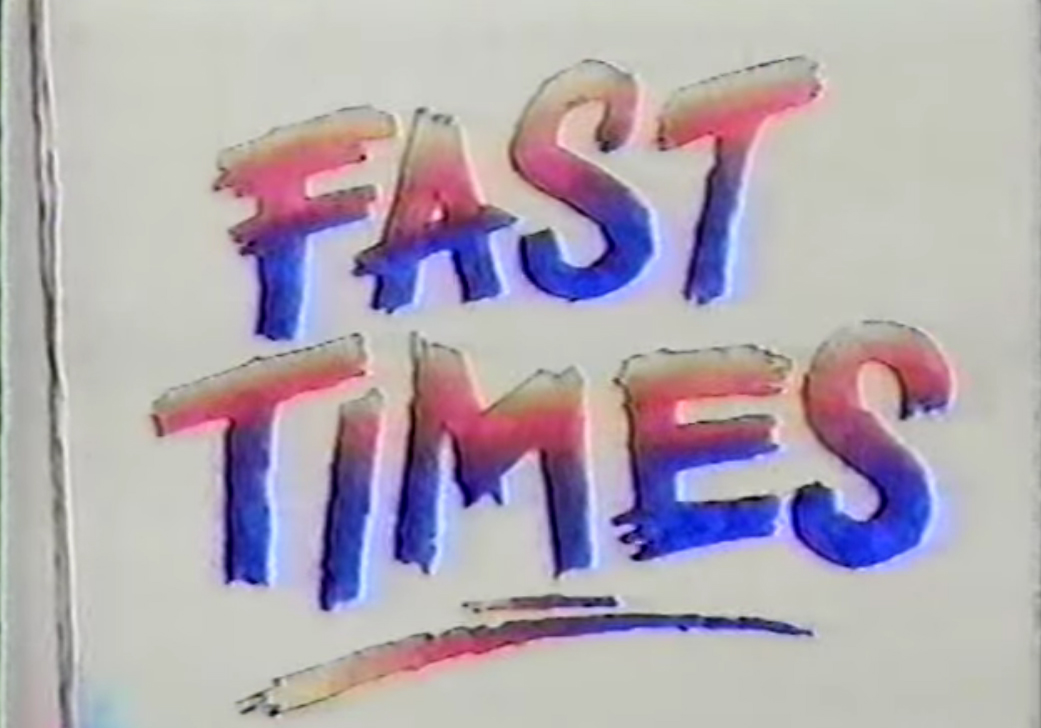
It here’s a Newton’s Law of Moviemaking, it has to be: “For every great movie, there is a much lesser sequel, spin-off, or knock-off.” In the case of Fast Times at Ridgemont High, it’s the second in the form of a blink-and-you’ll miss-it sitcom from 1986 called Fast Times.
Prior to my episode about the movie, I had only known of Fast Times as a piece of trivia that accompanied articles about the film or the television series’ stars (usually Courtney Thorne-Smith), and it never saw life in reruns or on video. In fact, if not for the grace of YouTube, the seven-episode run of Fast Times would have remained that way, lost to television trivia history forever. But as I wound up doing my research about the movie, I found the pilot episode (which has 23,000 views).
With Ray Walston and Vincent Schiavelli reprising their roles as Mr. Hand and Mr. Vargas, respectively, Fast Times attempted and failed to re-create the “slice of life in high school” the movie had given us in 1982. I don’t know why the producers waited until 1986 to option this and put it on the air, but int he very least, it was at a time when teen flicks were big at the box office and shows like Fame had proven that you could take a teen movie and spin it off to a television show.
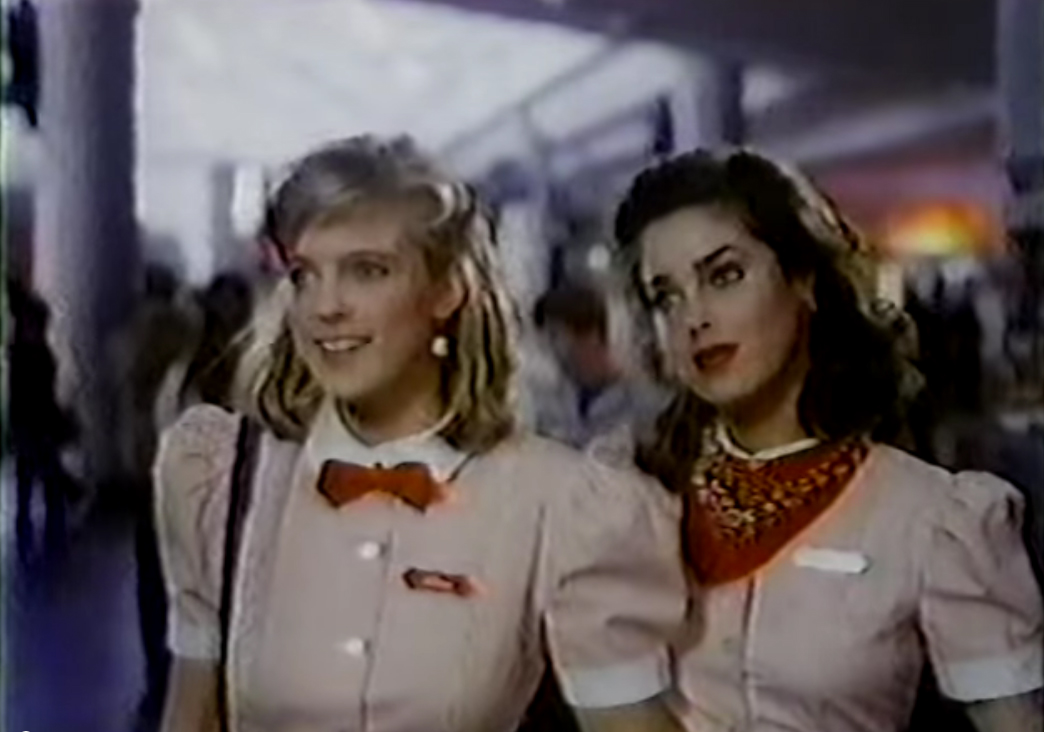
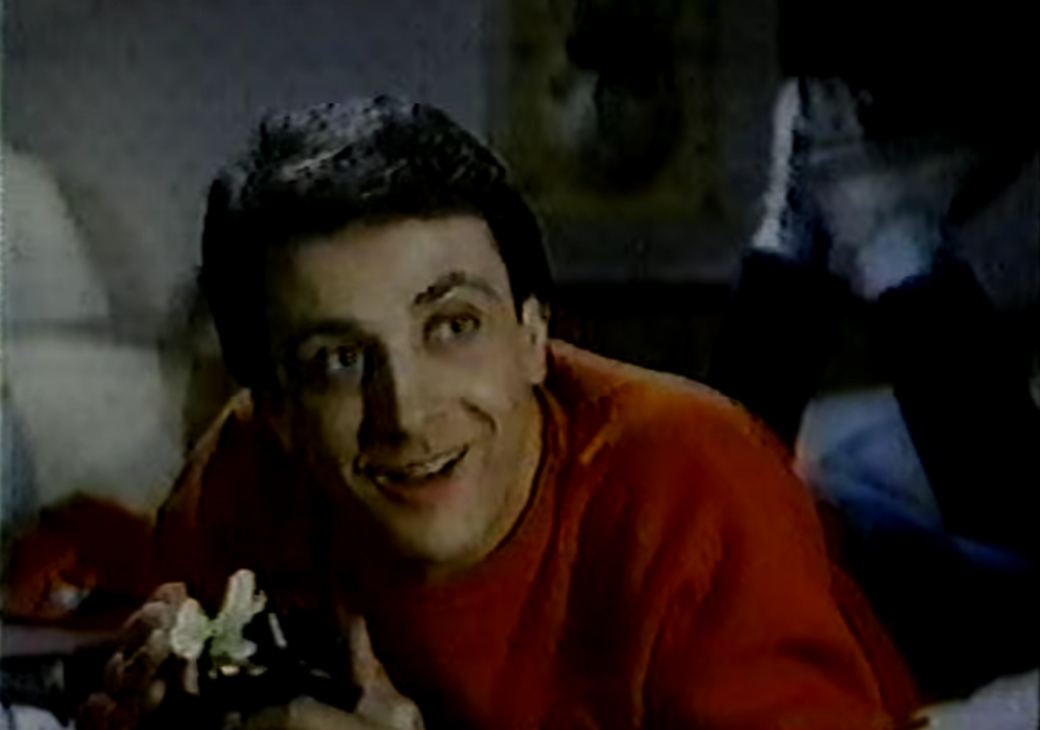
Our teen characters are the same as they were in the film but the actors are different, which makes sense considering that many of the stars of Fast Times at Ridgemont High were enjoying successful movie careers in 1986 (Judge Reinhold had already appeared in Beverly Hills Cop, Phoebe Cates had been in Gremlins, and Sean Penn had married Madonna) and were probably too old to play teenagers anymore (although that never stopped Gabrielle Cartheris). Stacey (Jennifer Jason Leigh in the film) is played by a pre-Summer School Courtney Thorne-Smith, and Claudia Wells (who still had the smolder from her role as Jennifer in Back to the Future) stepped into Phoebe Cates’s role as Linda. Brad was played by James Nardini; Rat, who is reduced to a couple of “walking through the mall” scenes is played by Wally Ward; Damone, who Robert Romanus embodied so well in the film, is played by Patrick Dempsey; and Dean Cameron (“Chainsaw” from Summer School) plays Jeff Spicoli.
The 26-minute pilot episode begins with a cold open shot from the point of view of Mr. Hand, who is making his way through the halls of the school and then walks into his class. Spicoli skaeboards in to say he’s on time but is dismayed that someone is in his seat
Mr. Hand then points out to Spicoli that his class was last period and Spicoli says, “That’s cool, you can just mark me early for tomorrow.”
We then get a very late 1980s animated title sequence and a song by Oingo Boingo followed by an opening mall montage that should look familiar because it is recycled footage from the film (in fact it’s the opening of the film where “We Got the Beat” played over several mall scenes). The movie footage is of such better quality that it seems completely out of place with everything else.
The episode, by the way, is directed by Amy Heckerling herself (who was also credited as a “supervising producer”), so I don’t know if she had a hand in this or was called in on a favor. We pick up with our characters as we see Damone walking and talking with Rat and giving him typical Damone dating advice.
They approach Stacy and Linda, who are cuddling puppies outside a pet store and flirt with them, although at one point Damone stops talking and starts staring at Stacy’s breasts. Linda tells him that “They don’t speak English” and the girls walk off.
We then switch to Cattle Burger, which is in the mall and which I guess was a way to have Stacy and Brad work in the same general area so that there could be interaction at times (All-American Burger in the film was a free-standing fast food joint away from the mall, where Stacy worked at Perry’s Pizza) and Brad wonders aloud if Linda would ever go out for him. Brad’s boss (who is played by Paul Wilson, who would be a semi-regular on the later seasons of Cheers) reassures him that she definitely would and later on, we see him talking to Stacy about it in her room.
School starts the next day (set to the same “Be Cruel to your School” song by Twisted Sister that was used in One Crazy Summer). The teachers commiserate in the faculty lounge. Leslie (Kit McDonough), who teaches a life skills class, seems to believe in Jeff Spicoli, which directly contrasts Mr. Hand’s assertions that Spicoli is a complete waste of space. Hand bets Leslie that Spicoli won’t pull through on his presentation later in the week and it seems he may be right when Jeff bursts into the faculty lounge and says, “They didn’t move the bathroom in here.”
Brad, meanwhile, wants Stacy to work on Linda for him and Stacy does, telling Linda that Brad likes her. Linda says she would consider dating Brad but she is engaged to a guy in Chicago, after all. But you can tell that she is more than just considering this when her face lights up at the thought of Brad liking her.
The Spicoli-Hand storyline gets the other majority of the plot, as there is a scene in the cafeteria (set to “Kids Wanna Rock” by Bryan Adams) that showcases his cafeteria food creation skills, and Hand is his usual stickler self, lecturing students on behavior and almost reveling in Spicoli’s inevitable failure.
In Home Ec (whose teacher is played by Twink Caplan, who is a regular in Heckerling’s films and most famously plays Miss Geist in Clueless), Linda agrees to a date as long as nobody knows about it. Of course, as Brad walks through the mall later that day, he’s congratulated by everyone.
Leslie goes to the beach to talk to Spicoli, who is out surfing and asks if he’s ready for his presentation. He gives some metaphor about waves but is all, “Sure. But you can fail me if I suck.” She says she wants him to do a good job for her.
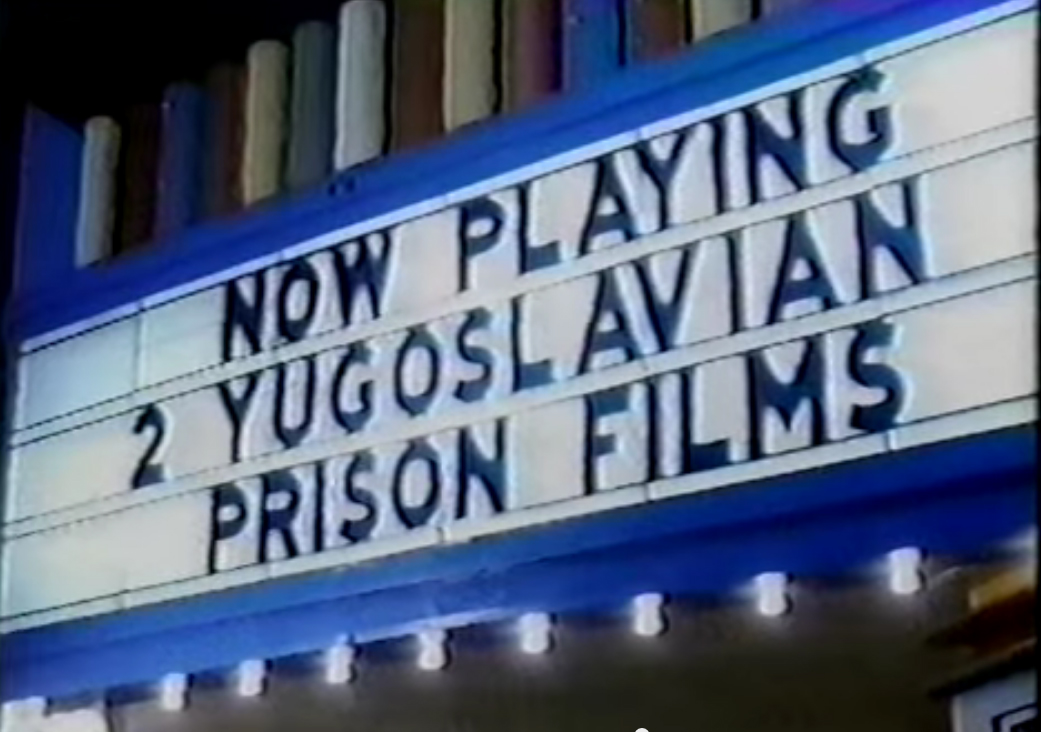
Linda wants to back out of the date, wondering what they’re going to do now that everyone knows, and Stacy says she’ll figure it out. Figure it out, she does, taking Brad to the one event nobody at Ridgemont will be going to:
They also head to Burger Chalet, where the guy working the drive-thru recognizes Brad and Linda simply has Brad take her home. She expresses her frustration over everyone knowing about the date and even goes as far as to insult Brad’s cruising vessel. When she tries to end the date there, Brad gets upset that she insulted the car and asks her to apologize, which she does and then spends a few minutes listening to Bryan Adams’ “Straight From the Heart” on the radio. Does this lead to them kissing? We’re not sure, because the screen fades to black.
Back in school, Hand and Leslie wait for Spicoli, who shows up late and then gives a presentation about how teenage boys are scary, starring his younger brother Curtis (played by Jason Hervey).
Spicoli aces the presentation, and even Mr. Hand has to admit that it was good, paying up on his bet.
Now, if there’s a spiritual successor to Fast Times at Ridgemont High, it’s probably the Sara Jessica Parker sitcom Square Pegs (something that is worth its own episode) and not this. Had this show not used the same characters as the film, it actually might have had more of a shot, but being such a fan of the film, it seems so lesser.
I give Ray Walston credit for trying to reprise his role as Mr. Hand the way he does. I can tell that on some level, he wants to give him a little more depth and make him a little less harsh than he was in the movie (where he was a one-note character), but he doesn’t have the same chemistry with Dean Cameron as he had with Sean Penn. Then again, Dean Cameron–who is absolutely awesome a year later in Summer School–has incredibly big shoes to fill and does what he can with it, although sometimes it seems like he’s doing a bad impersonation. Dempsey, on the other hand, doesn’t even attempt Robert Romanus’ Jersey accent and plays Damone the same way he would play Ronnie Miller at the height of his popularity in Can’t Buy Me Love. I’ll give Claudia Wells credit, though. She’s always been one of those gorgeous 1980s actresses you wish you could have seen more of (see also: Mia Sara, Amanda Peterson), and she makes Linda very likeable.
Brad and Stacy, though, are just badly mischaracterized. I like Courtney Thorne-Smith, mind you, but Jennifer Jason Leigh portrayed Stacy in a way that embodied the “Fast Times” of the film’s title, and Thorne-Smith is just a little too innocent. Plus, the two of them didn’t have a very close relationship in the film. Yes, Brad picks up Stacy after the abortion, but as I mentioned in the podcast episode, that’s a big brother move. Otherwise, they were always separate, intersecting when it was necessary, which is something that two siblings of those ages would definitely do (I speak from experience). Brad hanging out in his little sister’s room asking her for flirting advice? Sorry, no.
I said at the beginning of this post that Fast Times is a little piece of trivia associated with the movie and that’s pretty much accurate. You’re not going to fall in love with this sitcom and wish it had a longer life. It’s not horrible by any means; instead, it’s simply forgettable and you’re better off renting the film.
Some clips are available on YouTube from time to time along with partial or full episodes. Unfortunately, the pilot is not. But here is the opening credits sequence:
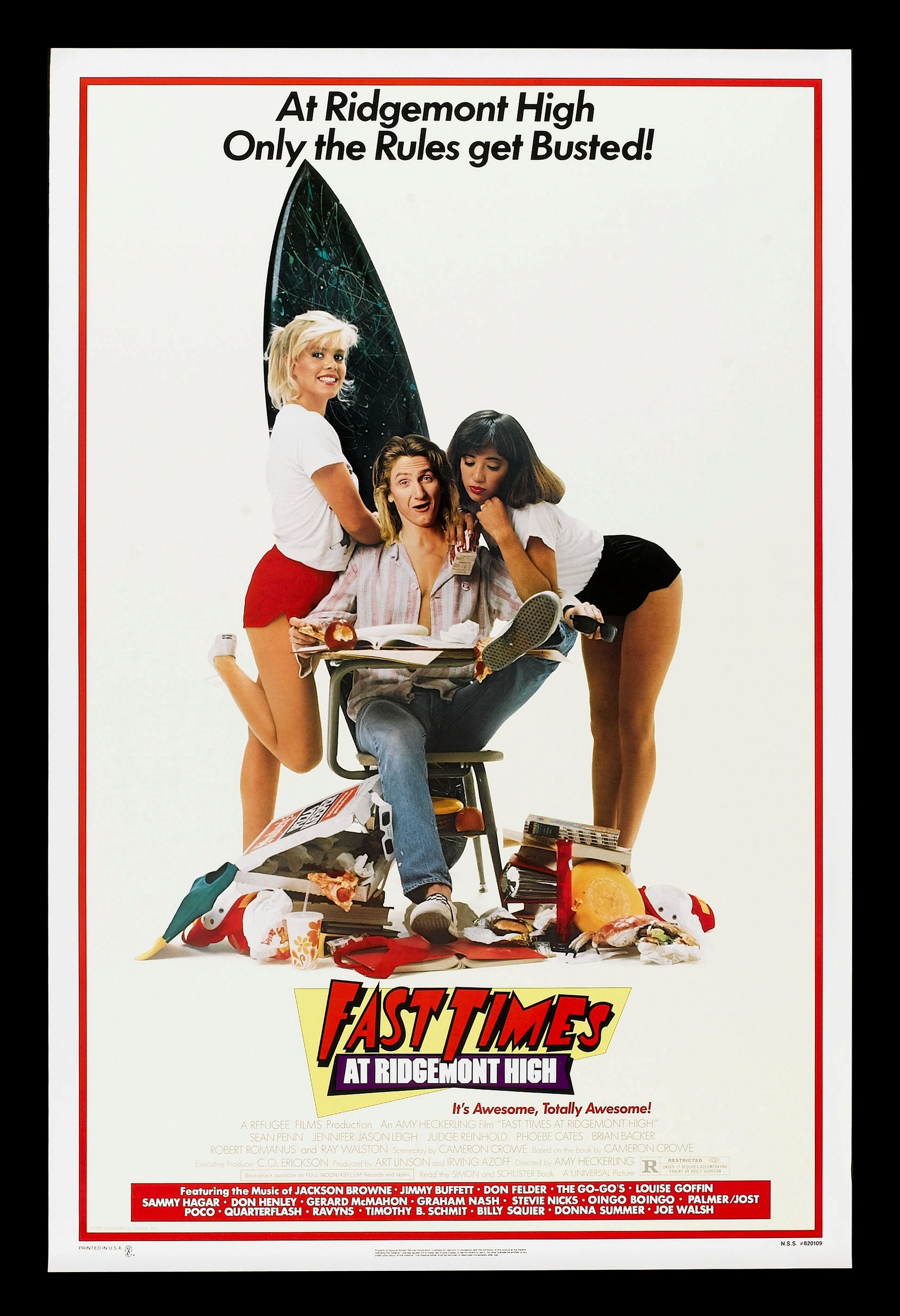
It’s time for another look back at a classic teen movie and this time I’ve pulled out all the stops for one of the quintessential 1980s teen flicks, Fast Times at Ridgemont High. I’m joined by Todd Liebenow of The Forgotten Filmcast to talk about the film, and its influence. We cover all the bases, including an iconic performance by Sean Penn and an iconic moment that comes courtesy of Phoebe Cates.
I may have neglected to mention the last time that I covered anything regarding Degrassi, which was about a year and a half ago, that I initially missed the finale of Degrassi Junior High. For years, I knew that in the final episode of that season–“Bye Bye Junior High”–the school caught on fire during a dance, but I never actually saw the episode until someone sent me a video tape full of Degrassi episodes sometime in the early 2000s. So back in 1990, I had no idea what happened and really no sense of the show’s continuity. Sure, I knew who the characters were, but if a random DJH episode came on, I really couldn’t tell you what season it was from.
That changed when I tuned into watch Degrassi one day and saw a new title sequence, one for Degrassi High. The characters were the same (for the most part) but they were older and at a new school. The whole thing would end just like DJH had–with a dance after everyone learned the school was about to close–but that’s a few years off. The episode that started DH was a two-parter, “A New Start.”
One of the things that can be the most heavy-handed part of old episodes of Degrassi is its educational aspects. There was, to some degree, a mandate that the show had to teach and sometimes that issue was handled in an “issue of the day” sort of way. That kind of happens in “A New Start,” even though the episode does its best to toe the line between a solid piece of teen drama and a very special episode.
While the cast is forced to adjust to its new surroundings and we get some great subplots, involving Joey, Wheels, and Snake getting hazed by older students, including Duane (who would become a key character later in the show’s run) as well as the introduction of new characters like Claude (more about him in future episodes), this one revolved around the twins: Heather and Erica. It seems that over the summer, they held the time-honored teen jobs of camp counselors and while working at the camp, Erica met and lost her virginity to one of the other counselors, a guy named Jason. It wasn’t out of character completely–Erica was always more boy-crazy than Heather–but the complication that arose was that by the end of the first part of “A New Start,” Erica discovers that she’s pregnant.
So begins a story that even today would be considered controversial: Erica gets an abortion. Most of the second part is devoted to her contemplating the abortion, seeking counseling, and arguing with her sister, and it ends with the two of them walking either up to or into the abortion clinic, depending on what version you saw. It’s a tough topic to approach and the writers do this deftly, as do the actresses.
One of the most important things to point out about Heather and Erica, which is highlighted in a pretty forced class discussion about abortion, is that the girls are a part of a very conservative Christian family, so when Erica brings up the topic as a way of working through her feelings (like I said, it comes off as a little forced) and gets a discussion going that properly highlights multiple sides of the issue. When Erica openly wonders if it could be the right choice for someone, Heather gets visibly upset and talks about how babies die every day in the “killing centers.”
Looking back at it, twenty-five years later with the perspective of someone who now has well-established views on the issue, this discussion and some of what Heather says comes off as almost satirical; however, when I was thirteen years old, I really didn’t know what an abortion was aside from it being an issue I heard about on the news. “A New Start” made an attempt at presenting abortion in a way that was straightforward, and Heather’s inner conflict is well done, too. Erica wants her support and Heather is so anti-abortion that she doesn’t know if she will give it, but eventually she puts her love for her sister above her political ideals and walks with her when she goes to the clinic.
The original ending freeze frame to “A New Start, Part Two.” This was only aired in Canada. The U.S. version, shown on PBS, ended a few moments earlier.
That last scene, by the way, caused a controversy, at least among those who were aware of it back in 1990. The episode originally ends with Heather and Erica making their way through a crowd of anti-abortion protesters and freeze frames on a woman holding a figurine of a fetus as they walk in the door. This was too much for PBS, who truncated the American version of the episodes by a few seconds and ended with a freeze-frame of their faces. The episode still aired, though, which is more than I can say for a similar episode of Degrassi: The Next Generation which aired in Canada but was initially not shown in the U.S. by the cable network The N (incidentally, neither was “A New Start” or a later episode that referenced the abortion).
I don’t know if this opener was a way for Degrassi High to make a statement that they weren’t going to shy away from heavier topics now that characters were older, but it certainly gripped me and up until the show seemed to vanish from my television, I never missed an episode.
Riding the coattails of The Palace of Glittering Delights, I’ve got my own TV theme song countdown. There’s comedy! There’s drama! There’s Canadians! There’s Hasselhoff! Join me as I count down twelve of my all-time favorite TV theme songs.
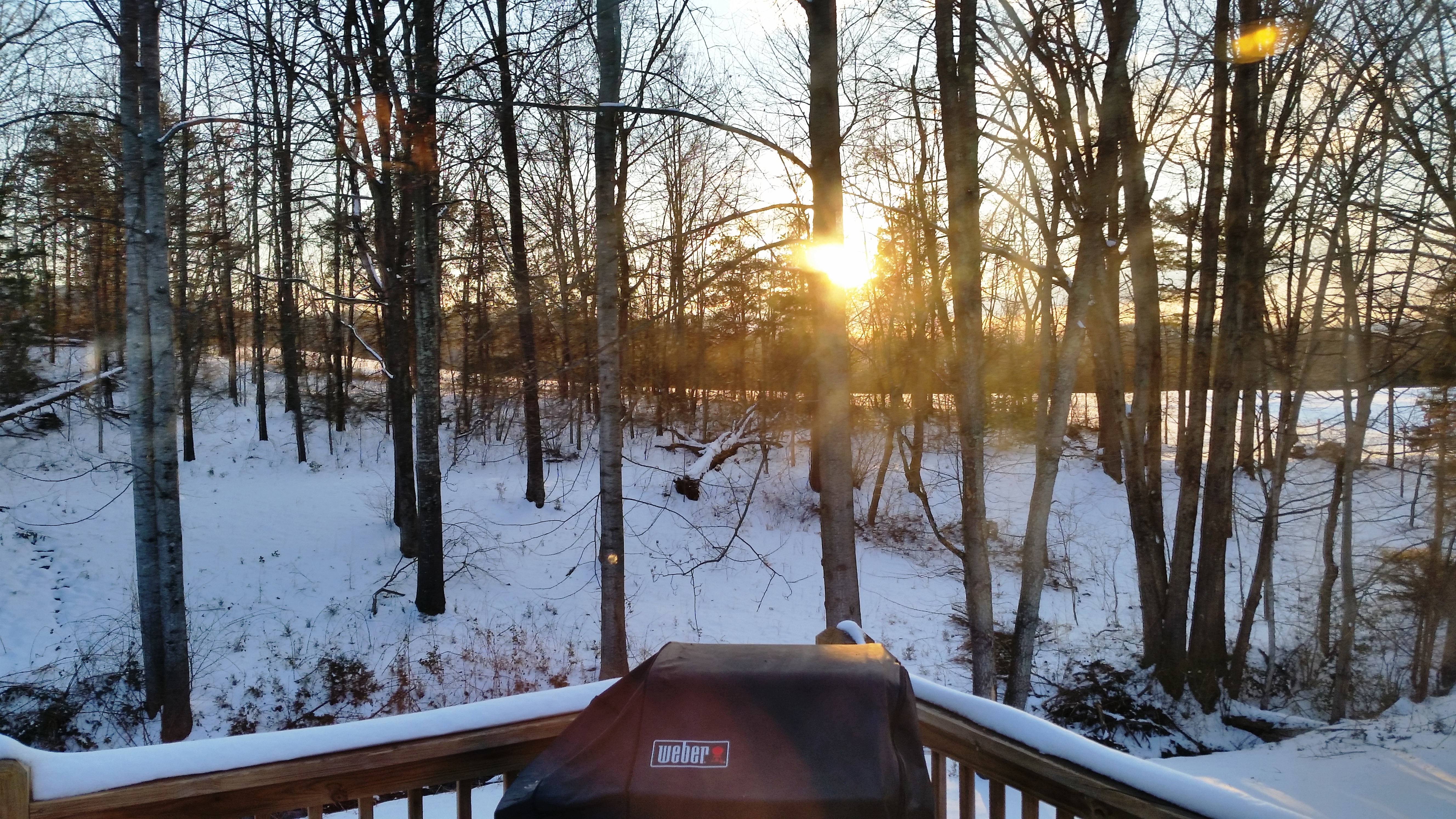
The view from my deck at sunset a couple of weeks ago. I probably should have zoomed in so the grill wasn’t in the frame.
I got the “schools are closed” call at 5:45 this morning and rolled back over, hoping I would get to sleep in. I kind of did for the next hour or so, as I drifted in and out of sleep until I finally got up. As I write this, it hasn’t started snowing yet–we’re expecting the rain to change over in a couple of hours–but there’s enough snow already on the ground for it to look dreary and dull. This is not the kind of winter that you are happy about in December when it’s almost Christmas; this is the kind of winter that you are absolutely sick of.
On a day like this, I have to listen to “A Hazy Shade of Winter”:
Time, time, time, see what’s become of me
While I looked around for my possibilities
I was so hard to please
But look around
Leaves are brown
And the sky is a hazy shade of winter
Hear the salvation army band
Down by the riverside’s, it’s bound to be a better ride
Than what you’ve got planned, carry your cup in your hand
And look around
Leaves are brown now
And the sky is a hazy shade of winter
Oh hang on to your hopes, my friend
That’s an easy thing to say but if your hopes should pass away
Simply pretend that you can build them again
Look around
The grass is high, the fields are ripe
It’s the springtime of my life
Oh seasons change with the scenery
Weaving time in a tapestry
Won’t you stop and remember me at any convenient time?
Funny how my memory skips
While looking over manuscripts
Of unpublished rhyme, drinking my vodka and lime
I look around
Leaves are brown now
And the sky is a hazy shade of winter
Look around
Leaves are brown
There’s a patch of snow on the ground
Look around
Leaves are brown
There’s a patch of snow on the ground
Look around
Leaves are brown
There’s a patch of snow on the ground
The song was written by Paul Simon, and according to the Wikipedia entry (I’m doing some serious research here), it follows a hopeless poet who is unsure of his achievements in life and describes the dour mood that you would find in the latter part of the year, especially as fall transitions to winter. But even in winter there’s a bleakness and for a group that is known for having a softer edge, Simon & Garfunkel give it a fair amount of angst and it’s probably harder than just about anything else they’re famous for.
In all sincerity, I’m surprised that this hasn’t been licensed by Pfizer or some other company as the theme song to an ad for Seasonal Affective Disorder medication or something because it just so much captures the anguish, frustration, and exhaustion of feeling like you’re trapped in the dead of winter, wondering if there is ever going to be a way out. And could a song be any better for this or the situation more worse?
Ladies and gentlemen, I give you The Bangles:
This was the first version of this song I ever heard, spotting the very Eighties video on MTV during one of the many occasions I was hanging out at my friend Tom’s house in 1987 and watching music videos because he had just gotten cable and I didn’t have it at all (1987 was a huge year in that way; I probably should do an episode about it) and to me it’s still the better version. Yes, synth intros like the one in this song can make the song seem instantly dated, but when those first guitar chords kick in, it’s such an ass-kicking moment that you cannot help but just getting sucked in. Plus, it’s off of the Less Than Zero movie soundtrack so it has a built-in sense of despair, although this despair comes with anger. It’s thrashy, sexy, and fun, and a reminder of why The Bangles are clearly one of the most underrated groups of the 1980s.
So as the rain turns to ice turns to snow turns to another day off from work turns to me shoveling the driveway turns to me really hoping that the warm weather arrives and is more consistent, at least I’ve got songs like this to be soundtracks to meandering blog posts.
It’s a coattails-riding self-indulgent trip down comedy memory lane as I spend 30 minutes talking about Saturday Night Live, which just had a huge 40th anniversary special this past Sunday. Here, I look back on another anniversary special from the show, its 15th anniversary special, which aired in the fall of 1989, and I also talk about how the show has had an effect on me since I’ve been watching it for the last 25 years.
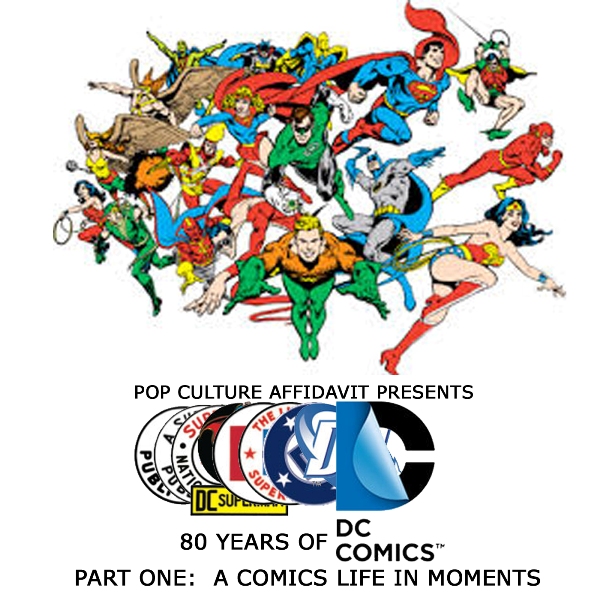
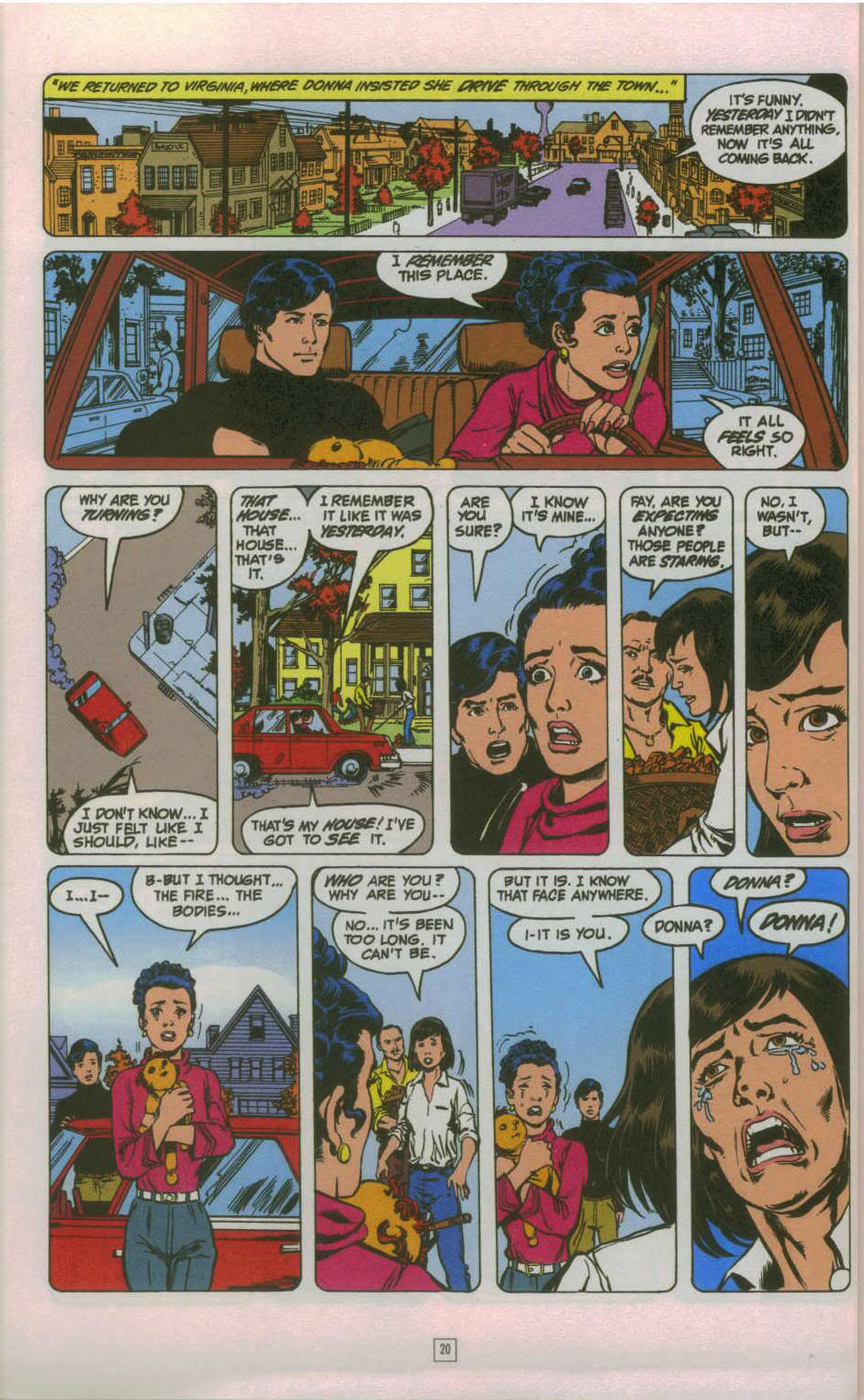
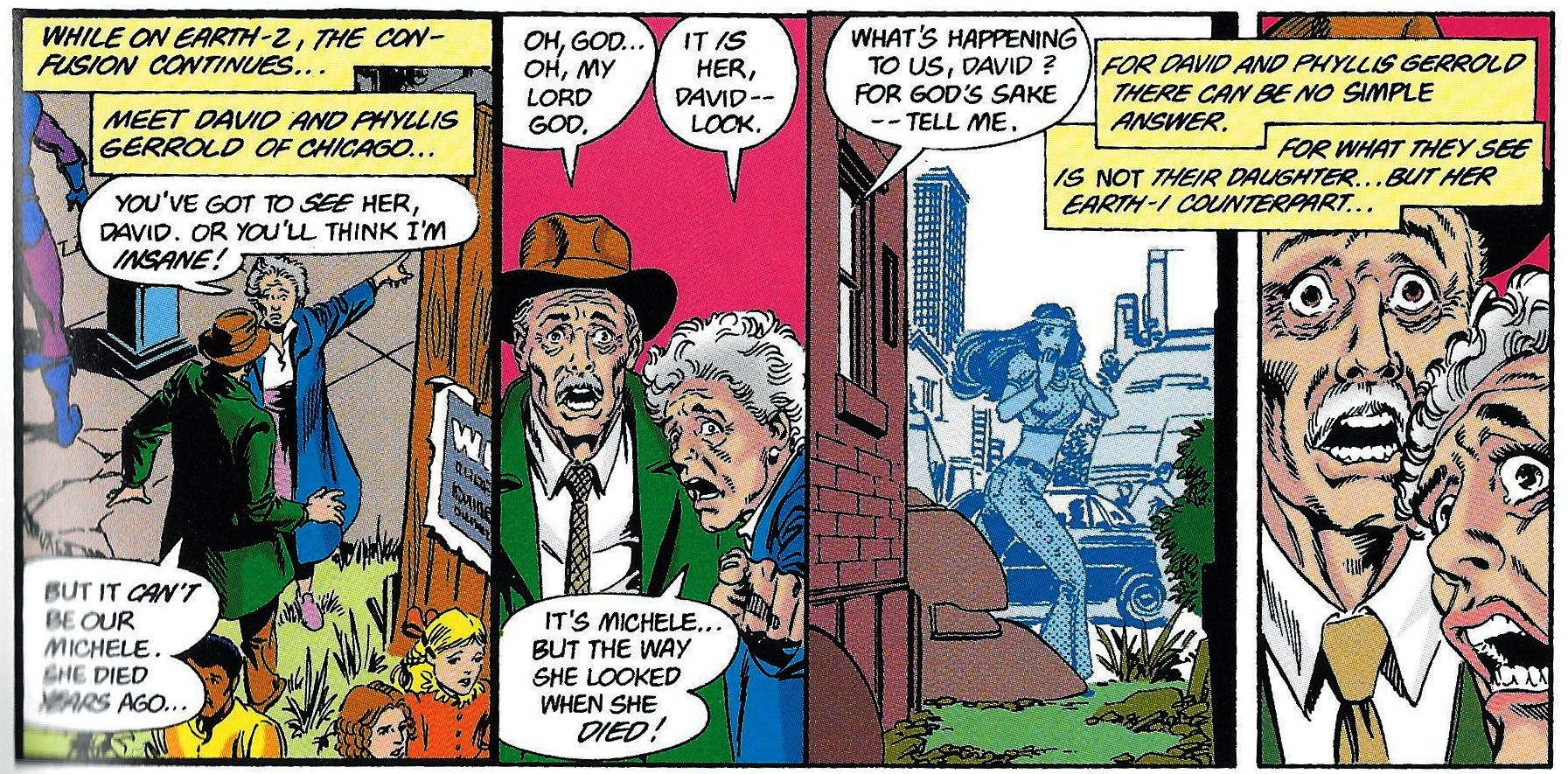
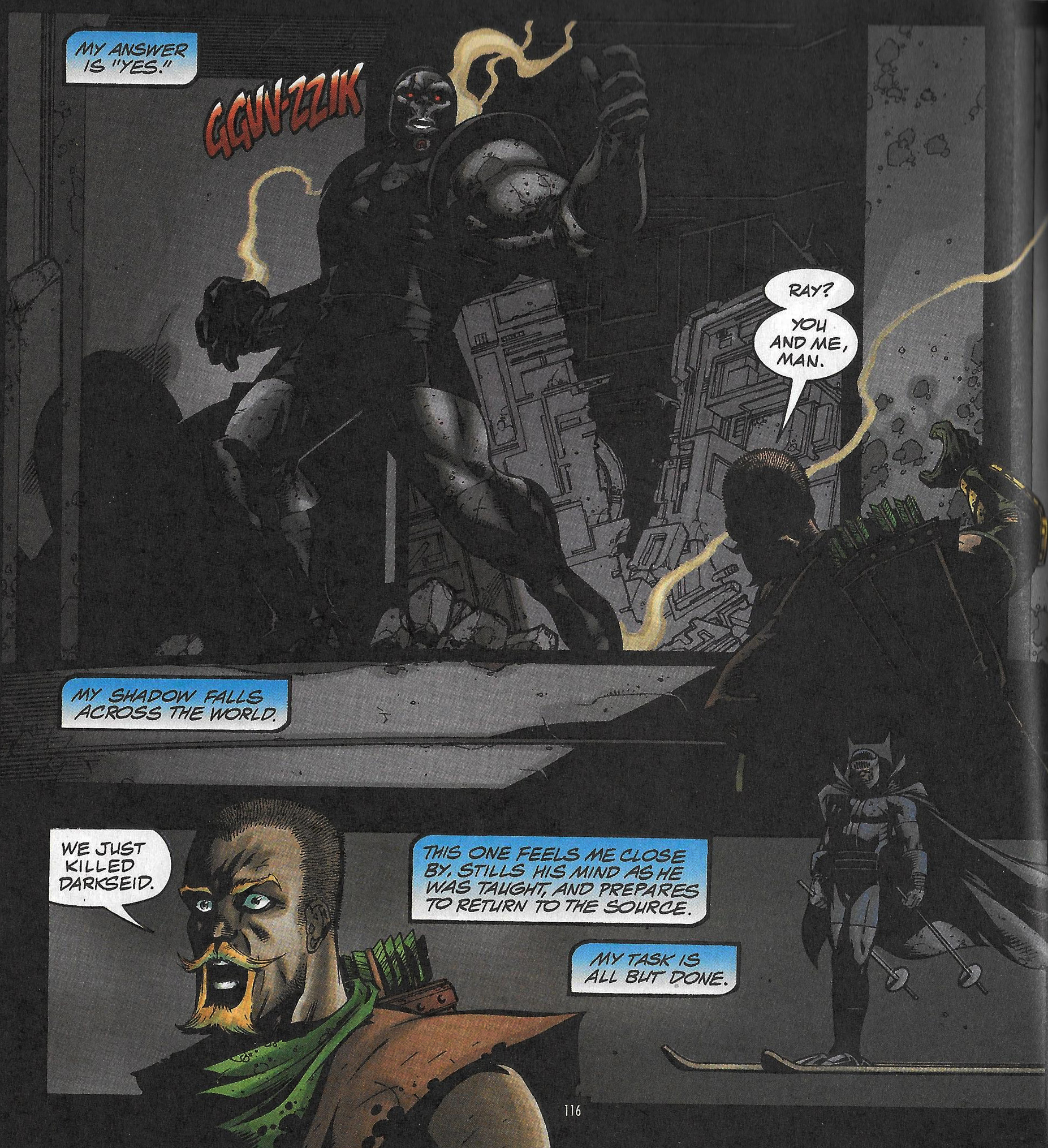
Presenting the first episode in an all-new podcast miniseries from Pop Culture Affidavit, 80 Years of DC Comics. Throughout these twelve episodes, I am going to be taking a look at the various genres of comic books that DC Comics has produced in its 80-year history. For my first episode, I start off easy by talking about superheroes. More specifically, I go through 10 moments in DC Comics published during my lifetime that have I’ve enjoyed or that have had some sort of impact on me. So while it doesn’t necessarily cover all 80 years of the company, it’s a personal look at DC, company I’ve been very loyal to since I started seriously collecting comics more than two decades ago.
 High school reunion month concludes with my all-time favorite reunion movies and one of my all-time favorite John Cusack movies, Grosse Pointe Blank. For this look at the high school reunion of Martin Blank, professional killer, I’m joined by Michael Bailey (From Crisis to Crisis, Tales of the JSA, Views from the Longbox) and we talk about the movie, its characters, its music, and how well it holds up nearly 20 years after its release.
 It’s the 50th episode of Pop Culture Affidavit! For this special episode, I take a look back twenty years to the year I graduated from high school. Along the way, I look at how senior year of high school is represented in movies. It includes stops at, among other things, American Pie, Fast Times at Ridgemont High, Can’t Buy Me Love, and Paper Towns as well as a host of personal memories about my own senior year of high school (which ended on June 25, 1995). Was high school the best time of my life? Was it a waking nightmare? Was it a little bit of both? You’ll have to listen to find out.




 I may have neglected to mention the last time that I covered anything regarding Degrassi, which was about a year and a half ago, that I initially missed the finale of Degrassi Junior High. For years, I knew that in the final episode of that season–“Bye Bye Junior High”–the school caught on fire during a dance, but I never actually saw the episode until someone sent me a video tape full of Degrassi episodes sometime in the early 2000s. So back in 1990, I had no idea what happened and really no sense of the show’s continuity. Sure, I knew who the characters were, but if a random DJH episode came on, I really couldn’t tell you what season it was from.

 It’s a coattails-riding self-indulgent trip down comedy memory lane as I spend 30 minutes talking about Saturday Night Live, which just had a huge 40th anniversary special this past Sunday. Here, I look back on another anniversary special from the show, its 15th anniversary special, which aired in the fall of 1989, and I also talk about how the show has had an effect on me since I’ve been watching it for the last 25 years.