 A pop star in a red jacket slowly morphs into a werewolf. A young woman writhes on the floor against an all-white background. A striking-looking woman with orange hair sings about how “Sweet dreams are made of these.” Or was it “this”? These are indelible images from the 1980s that I am sure most people can identify for me, they comprise my music video origin story.
My history with cable television is spotty (and my relationship with Comcast’s customer service is contentious), and I’ve beaten the “I didn’t have cable as a kid” horse enough but here it actually applies because during the late 1980s and early to mid 1990s, I didn’t have cable. So when my friends were getting their musical education through 120 Minutes and Headbangers Ball, I was finding other sources, mostly radio stations, which explains my musical tastes were way more mainstream than a number of my friends and tended to skew towards older music at times (I mean, was anyone else listening to The Stranger and Born to Run as much as I was in 1994?). But that is not to say that I was completely in the dark and didn’t see a music video until 1996 when my parents finally got cable. I had friends, they had cable, and when we had nothing better to do, we would watch MTV for hours. But prior to even that, I saw some of the vanguard of early 1980s videos because of syndication.

Madonna was one of the few artists I remember from the time I watched Hot!. “Lucky Star” was played quite a bit (even though I don’t think this still is from that video).
MTV launched on August 1, 1981 but was not available nationwide; in fact, it was not carried in New York City where segments were taped, so the veejays had to watch their debut in a bar in New Jersey that had the channel. And up until about 1983-1984, the channel would remain relatively obscure, slowly building an audience before rocketing to the forefront of popular culture because of the stars it was making (or that made it) and its famous “I want my MTV!” marketing blitz. By the time my friend Tom got cable in 1986-1987, MTV was pretty much the only source for videos (with VH-1 running adult contemporary videos right next to it) at any time of the day.
But in 1984, when the New York Times published the article “Music Video is Here With a Vengeance,” that wasn’t the case. MTV wasn’t as ubiquitous but some TV stations were picking up on the fact that the music video was becoming important for teenaged consumers of pop music. The article is clearly written for an older audience but makes an apt comparison to The Ed Sullivan Show, saying that this is this generation’s version of that. It mentions MTV but also mentions a slew of locally syndicated or network-produced video shows: Hot! on WNEW 5 at 4:30 p.m.; Great Record Album Collections on WOR 9 at 5:30 p.m.; Solid Gold Hits on WPIX at 6:00 p.m.; Friday Night Videos on NBC; and ABC Rocks, which also aired on Friday night.
Friday Night Videos is probably the most famous of these and wast he longest lasting, as it technically ran until 2002, even though its format had completely changed by the mid 1990s to a more traditional variety show. I never actually watched it because it was on way past my bedtime–although I know people who were either allowed to watch it or had older siblings who did (and in hindsight, I probably could have taped the show). In the very early 1990s, NBC would air a spinoff show called Saturday Morning Videos that was on right after Saved By the Bell and lasted until 1992 when the network decided to focus on mining the teen audience and began airing shows like California Dreams, which had its own “music videos” within the shwo. I did watch this when I got the chance and specifically remember it’s where I first saw the video to George Michael’s “Freedom ’90,” which remains one of my all-time favorites to this day.
But in 1984, I was seven years old and would rush home to watch He-Man and the Masters of the Universe on WNEW Channel 5 (which would later become WNYW Fox 5) and at some point, the video show Hot! began airing at 4:30 and for whatever reason, I didn’t change the channel. Hot! (which sounds like a title thought up by someone who was marketing neon-colored trinkets to teenage girls) was a bare bones production counting down the … well, the hottest videos of the week.
While this clip only shows bits and pieces of videos, there is enough from the introductions from Claude Mann to let you know what the show was like. And he was enough of a “generic 1980s white guy” to be the type of host of this show–all he had to do was give a little bit of information and then play the videos because that’s what the kids watching after school were there to see. There were a few segments with interviews from artists, such as the one with Ray Parker Jr. about the “Ghostbusters” video (a song that even I was hip to in 1984) in this clip:
One other aspect of the show was its viewer contributions. People could write in with their favorite videos and send a picture of themselves and the producers might put that picture on the air–I can imagine that seeing your picture and name was kind of like waiting around for the end of Romper Room when the host would hold up the magic mirror and you were dying to hear your first name (I rarely did). That took some effort, too, when you think about it, because people like Scott Womack of Burbank, California, had to take the time to figure out what Van Halen video he thought should be at number one, then write a letter, get his picture taken, take it to Fotomat, wait a few days, get the pictures from Fotomat, put everything in an envelope, take it to the post office, and hope that by the time Hot! got his letter, that Van Halen song was still cool. Oh, who am I kidding? Scott knew that Van Halen song was still cool.
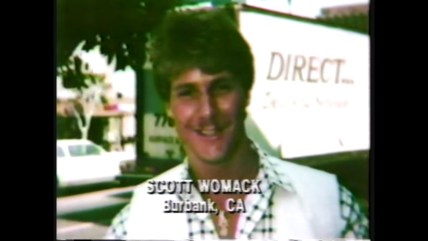
If you are attending an ’80s party anytime soon, Scott Womack of Burbank, California, has given you exactly what you need for your costume.
Anyway, MTV would perfect this viewer voting technique in 1986 with Dial MTV, their own daily countdown show, which had viewers call 1-800-DIAL-MTV to vote on their favorite videos. That number, of course, would be used to much bigger success in the late 1990s when Total Request Live took over the channel, and that particular show had its own huge impact on popular culture, which included the use of online voting in a huge way.
But in 1984, there was Hot! and whatever else kids could get their hands on, and with the exception of the “Thriller” video, which my parents taped off of Showtime before they cut the cord on that, this was the only place I saw music videos, at least for a few months. Hot! didn’t last very long on WNEW–another cartoon, probably Voltron or She-Ra, replaced the show and Channel 5 would air Diff’rent Strokes and The Facts of Life at 5:00 and 5:30 for most of the rest of the decade. So while I went back to my cartoons, toys, and other things that dominated the life of a second/third grader, the small amount of time I spent watching Hot! was enough of a glimpse into the culture of older kids, something I clearly wasn’t ready for at seven, but would be sooner than I realized.
 I dip my toes into the independent comics waters with Robotech: The Macross Saga #21. Join me as I spend time with Rick Hunter and Lisa Hayes as they get stuck in the depths of the SDF-1 for a few hours (bottle epsidoe, anyone?). Then, I talk about teaching podcasting and past summer enrichment program experiences.
 In the mid-1980s, one of the seminal anime series to ever cross over to American television was watched by children across the country. Combining mecha with a love story and an intergalactic war, Robotech was a sweeping saga that makes it one of the most memorable series of the decade. For this episode, I sit down with Donovan Morgan Grant (The Batman Universe, The Next Dimension, Questions No Answers) to talk about The Macross Saga, and then I come back and take a brief look at the Masters and New Generation sagas.
 After looking at another issue of G.I. Joe Special Missions where a few Joes pull off a perfect A-Team-esque caper, I begin what I consider one of the highlights of the summer of 1987 and that’s “Kraven’s Last Hunt,” which starts in Web of Spider-Man #31.

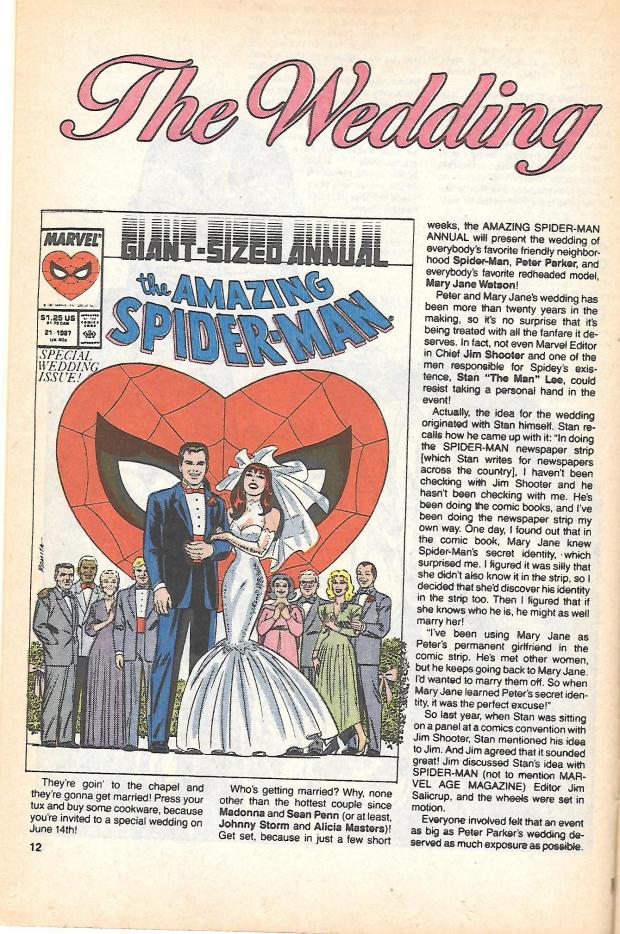
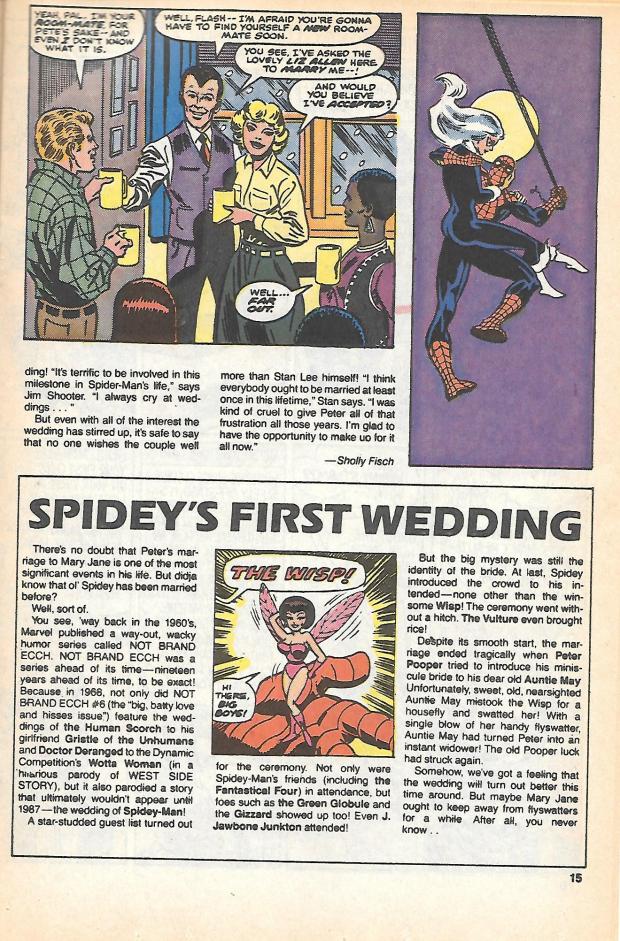
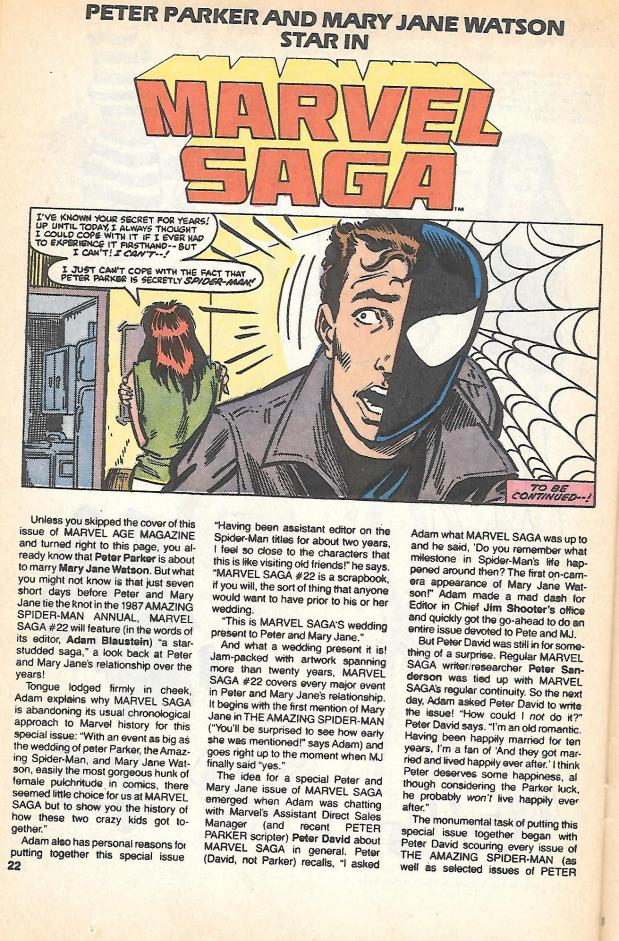
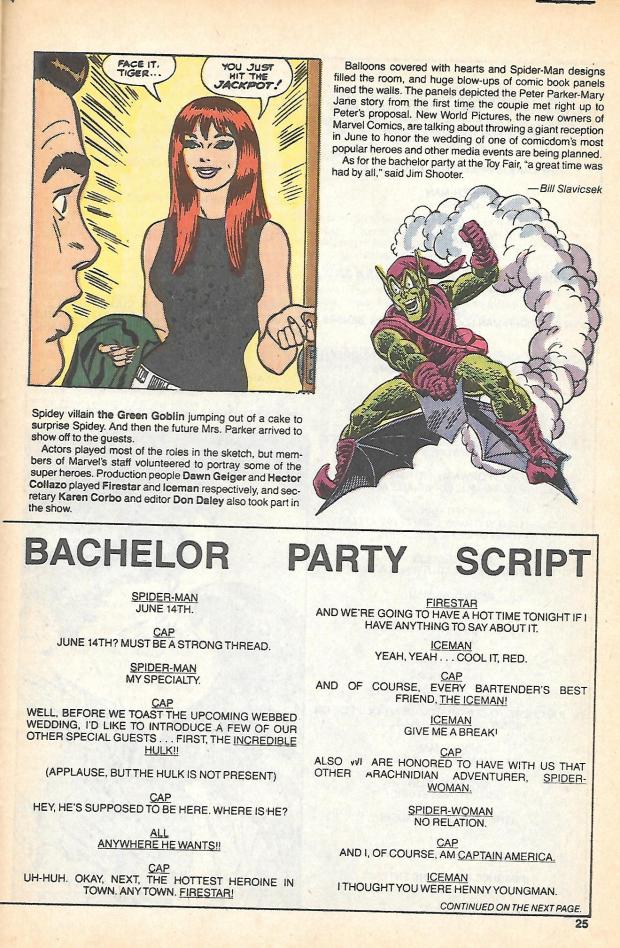
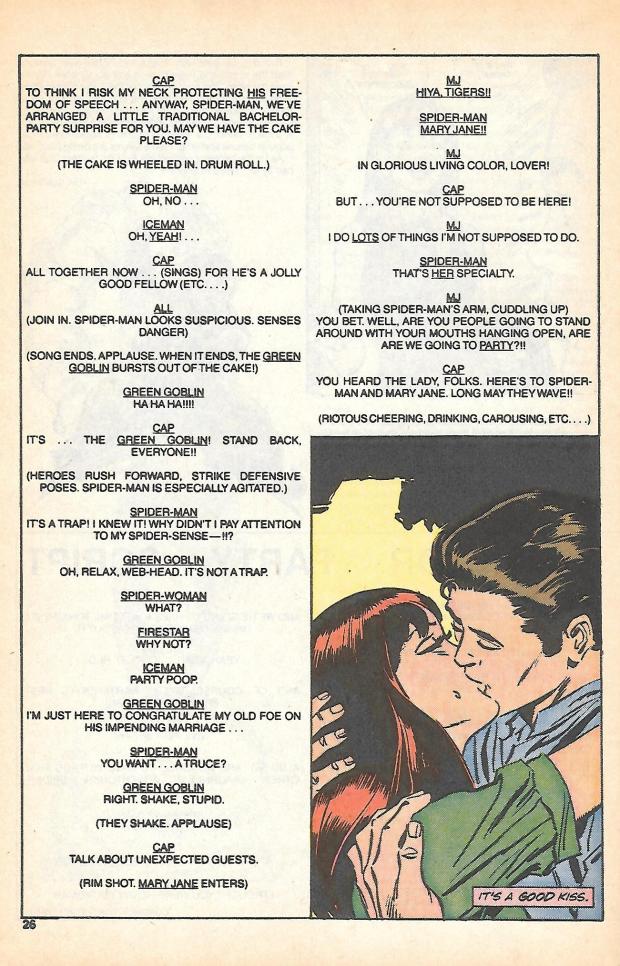
 Charles and Diana … Luke and Laura … Peter Parker and Mary Jane … all couples whose weddings were the must-see events of the 1980s. This episode, I’ll be taking a look at that last one, as I look at both The Amazing Spider-Man Annual #21 and Marvel Age #54. Plus, I’ll also be continuing my look at the “Joes in Captivity” storyline with G.I. Joe #63.










 Buster Witwicky fights off Ratbat in the Car Wash of Doom and The Punisher takes down a drug cartel in Bolivia! It’s the latest episode of Origin Story where I have a two-fer of Marvel Comics from 1987, starting with The Transformers #31 and ending with The Punisher #2.
 The “Joes captured behind the Iron Curtain” storyline continues as Outback, the one who got away, escapes and fights his way across the border in G.I. Joe Special Missions #6. As always, I take a look at the comic and give it a review. Then, I spend time talking about the Stephen King novels published in 1987, especially his fantasy story The Eyes of the Dragon.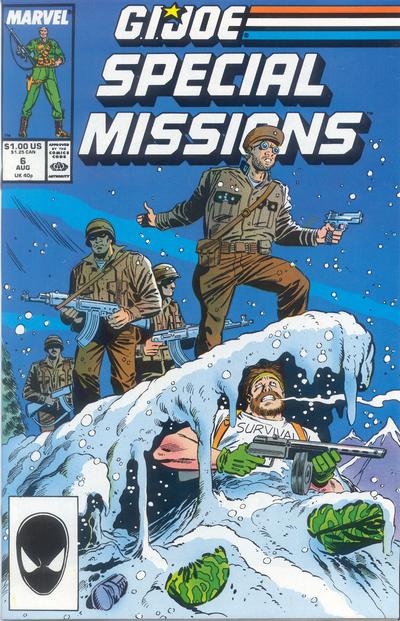
 Better Than Ezra. Credit for introducing this band goes to my friend Valerie, who was really into this band when we met in the fall of our freshman year of college. Deluxe had come out in February of 1995, so I was within about six months of its release when she introduced me to them, but during that February, I remember that I had just started going out with a girl whose favorite band was Live, so there was a lot of listening to songs that featured references to afterbirth (seriously … you couldn’t have thought of another lyric?). Better Than Ezra, and by extension bands like Gin Blossoms and Dishwalla (both of whom played Loyola at the end of our freshman year) were this lighter, radio-friendly rock-pop that washed up in the wake of the end of the earlier part of the decade and songs like “Good” and “In The Blood” found their way onto my car mix tapes. I personally prefer Friction, Baby, which was the 1996 follow-up to Deluxe, but I will say that these 3-4-minute pop/rock ditties were much more replayable than a seven minute-plus metal dirge.
 The Clash. Yes, even though I said that Dookie was my gateway to other punk music, I didn’t buy my first Clash CD until the very end of high school. I had been watching some documentary about the history of rock and roll (in fact, it may have actually been called The History of Rock and Roll) on channel 9 and saw the episode about punk, which covered the 1970s punk scene and went specifically in depth with The Ramones, The Sex Pistols, The Clash, and X. The last of those groups was never one I would get too attached to, but I had heard of the Ramones by that point and shortly thereafter (this would have been May or June of 1995), I took my hard earned money to Borders and picked up the U.S. version of the Clash’s first album (it was the only one available at the time and the only copy I ever owned, so I can’t even say I was doing punk right). I really loved it, especially their cover of “I Fought the Law” (which, like a dork, I will pair with Mellencamp’s “Authority Song” on playlists from time to time).
 The Cure. Now, I can’t say that I’m a huge fan of The Cure. I don’t own a single album, and I think I may have only ever downloaded four of their songs: “Just Like Heaven,” “Love Song,” “In Between Days,” and “Lovecats.” But I did have a friend in high school who absolutely loved The Cure and had I not been lured in by the siren call of “I Alone,” I would have probably let her get me into the band. Because I have found since that I really do enjoy quite a bit of the 1980s new wave/alternative sound than I was willing to admit to in high school (except Morrissey … sorry … I can’t …).
 Sarah McLachlan. So I’m in my freshman year of college and listening to, of all things, a CD put out by Loyola’s a cappella groups, The Chimes and The Belles. One of the tracks on the CD (and I own the CD … in fact, you can hear selections from it in the episode) is The Belles covering “Elsewhere,” a song I had never heard before and I think I might have had to ask someone where the song was from. At any rate, that was the first time I had heard anything off of Fumbling Towards Ecstasy and that was strange considering that the album had been out for easily a year and a half and was right in my 10,000 Maniacs/Cranberries/Lisa Loeb wheelhouse. But again, when you’re tracking down old Metallica albums or trying to find those rare Nine Inch Nails singles because that gets you cred with a group of guys who could barely get a girl to look at them, you tend to miss the siren call of Canadian singer-songwriters. In the years between that moment and the early 2000s, I’d buy most of the rest of her discography at the time, including Solace, which has two of my favorite songs of hers (“Path of Thorns (Terms)” and “I Will Not Forget You”) as well as a book of her sheet music. In fact, I remember downloading the guitar tab to “I Will Remember You,” printing it out, and figuring out how to play it on the piano (something I did for Green Day’s “Good Riddance (Time of Your Life)” as well). But the piano’s influence on my musical tastes is actually going to be the subject of another podcast episode, so I’ll move on.
 In the seventh episode of Origin Story, I delve into my first of several regular series Transformers comics from 1987, starting with issue #27, where in the recently departed Optimus Prime’s absence, Grimlock seizes command of the Autobots. Plus, I talk a little about my kind of sort of discovering music on the radio in January 1987, which means Bruce Hornsby and the Range.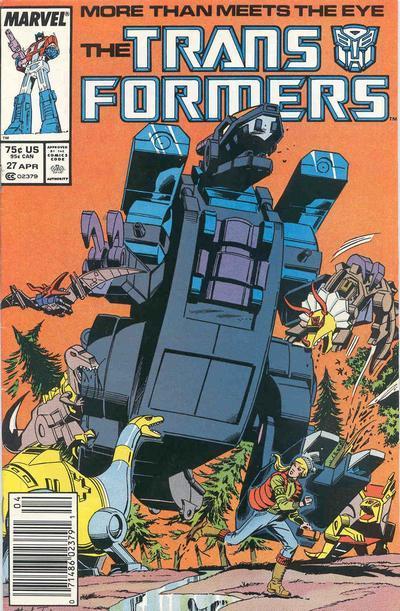
 Pop Culture Affidavit