1990s

Top of the Inning: The 101 Course (Baseball, Part One)

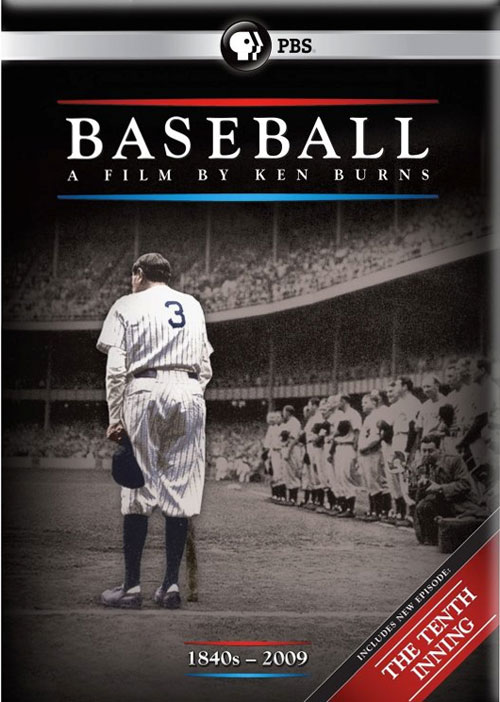
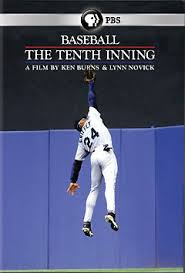
Baseball DVDThis post and the next post is part of the Big League Blog-a-thon, coordinated by Forgotten Films, home to one of the best film podcasts out there, The Forgotten Filmcast, which is about the movies that time forgot.

I discovered early on, after volunteering to sit down and watch Ken Burns’ documentary, Baseball, that one simply does not sit down and watch Ken Burns’ Baseball. No, it is something that taunts you from the screen of your Netflix queue, daring you to take it on like a pitcher who’s been throwing heat all night and has only just hit his stride.  And all you can do, really, is step up to the plate, bear down, and let him know that if he’s going to get you out, you’re going to have to work for it.

In other words, challenge accepted.

Bad metaphors and even worse Barney Stinson jokes aside, Baseball was something I had watched when it was originally on back in 1994 but didn’t remember much about except that Burns spent the segment about the 1986 Mets talking about the agony of the 1986 Red Sox and that he must have exhausted every available version of “Take Me Out to the Ballgame” over the course of the documentary.  That I remember the former should not be a surprise–my Mets fandom runs deep, even when they lose–and after re-watching all ten innings, the latter still rings true.

Baseball originally aired twenty years ago as a nine-part documentary, each part appropriately titled an “inning,” with a two-part “tenth inning” being added in 2010.  What this adds up to is a documentary that if one were to sit down and watch without a break, he would be on the couch for nearly a full twenty-four hours.  Burns begins with the  origins of baseball, both real and myth (an urban legend involving Abner Doubleday that has been disproven countless times yet still seems to have legs all these years later) and then moves chronologically through the beginnings of the game up until what at that point was the present.

Through the first five innings, Burns seems to have accomplished what he set out to do, which is given us a full history of the game.  Instead of blowing through the 19th Century, he spends all of the “First Inning” exploring baseball’s evolution and then only moves ten years ahead into the future with the second inning, bringing us only up to 1940 by the end of inning five.

This slow progression works to flesh out the characters of the first half of baseball’s history, men whose names are known and aren’t necessarily forgotten but are definitely overshadowed by the names revered in my parents’ youth.  Ty Cobb, Honus Wagner, Cy Young, Rogers Hornsby, and Grover Cleveland Alexander were long dead by the time I went to my first baseball game in 1985, existing only  in trivia books like Bill Mazer’s Amazin’ Baseball Book.  Here, there is footage and there are interviews by historians and some of the few people who were, at the time, left alive to talk about playing against or watching those old-timers.

Furthermore, throughout the first half of the documentary, Burns does not shy away from the racism that pervaded the game for decades, telling the story of the Negro League whose history to me when I was a kid growing up on Long Island was a footnote in the Cobbs, Ruths, DiMaggios, and Mantles of books about baseball.  With stories from Negro League players such as Buck O’Neil (who is a delight in every interview throughout the series), you learn more about the racial history of the early 20th Century than you do in most high school history classes, even when that history is overshadowed by a mammoth figure such as Babe Ruth, who gets almost an entire episode to himself.

As Burns moves through the 1940s and 1950s, into an era where baseball really exploded and where he should have his strongest stories–after all, many of the players of those eras were still alive at the time when he was filming–the cracks begin to show and while the documentary doesn’t exactly fall apart by the Ninth Inning, it definitely is a lot weaker than at its beginning.  He relies too much on the same seven or eight different interviewees and we don’t hear directly from very many players beyond Ted Williams and a few others.  I wasn’t expecting every single player or anything, but seeing at least one appearance by Nolan Ryan, Tom Seaver, or Johnny Bench.  Heck, 1994 was when Tim McCarver was still mildly tolerable.

Which, in a way, brings me to the second major problem with the documentary.  Burns, who is a Red Sox fan, is committing the cardinal sin of sports reporting and being a “homer,” reporting with an incredible Northeast bias.  Walk away from Baseball and you will think that the period between 1957 and 1994 was a complete wasteland (as if the Brooklyn Dodgers’ and New York Giants’ leaving for California stripped baseball of its virginity in a way that the Black Sox scandal or the systemic racism that preceded the Jackie Robinson era never could) and that the only baseball worth happening occurred in Boston and New York and mostly in 1975 and 1986.  And I’ll readily acknowledge that both of those World Series deserve their reputations, as does the career and legacy of George Steinbrenner.  But much like a high school history class where you cover the Vietnam War in a day because the teacher has run out of time, Burns gives short shrift to then-recent history, probably assuming that we were all there and we all remember.

He sort of remedies this in the added “Tenth Inning,” but even then there’s an ESPN-like whitewash, perpetuating the narrative of Mark McGwire and Sammy Sosa “saving” baseball in 1998, the Yankees “saving” New York City in the fall of 2001, the Red Sox “saving” the nation’s soul in 2004, and Barry Bonds’ role as some sort of supervillain in the whole thing.  All  of those storylines have legitimacy, but Burns’ coverage only serves to date the film a little–we’ve had so many highlight reels, specials, and shorter documentaries about those specific moments that one wonders if there was a need for him to come back and tell the stories at all.

That’s not to say that this behemoth isn’t worth watching.  Technically, Baseball is carefully made and serves as a perfect “101 Class,” an introduction to a topic that can’t possibly be contained to a single film, no matter how large it is.

In Part Two:  Taking Baseball Personally

The Siege of the Zi Charam (My Life as a Teen Titan, Part Thirty-Eight)

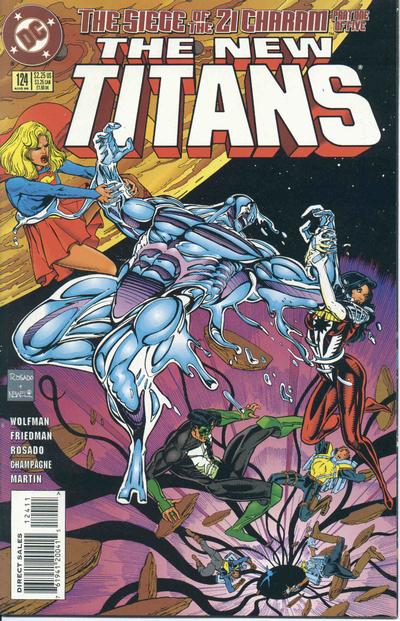
New Titans 124You ever see a movie and really like it the first time but then you go and rent it on video and you realize  that it’s actually not as good as you thought it was; in fact, it’s barely watchable?  That’s how I’ve been feeling about some of these New Titans comics, especially the five part storyline, “The Siege of the Zi Charam.”

Published in the summer of 1995, the storyline was sort of a last gasp on the part of the Titans editors to get people interested in buying the flagging book, which would be cancelled about six months after the storyline ended (in fact, the next storyline, “Meltdown,” was the book’s last), “The Siege of the Zi Charam” is a Titans In Space adventure where the team is transported halfway across the universe to aid various alien races in their fight against another group of aliens called the Protogenitors, and instead of taking place over several issues of New Titans, it goes from New Titans #124 to Green Lantern #65, Darkstars #34, Damage #16, before finally wrapping up in the double-sized New Titans #125.

When the book had changed its lineup after Zero Hour, the editors did their best to create a mini universe, tying in the titles of the individual members with the larger Titans book.  Green Lantern was selling well but the other books–Darkstars and Damage–were on the verge of cancellation as well, so crossing them over was probably a good idea to boost sales.  But if you’re going to do that, you have to actually produce a story that people are going to want to buy.

As I mentioned, “The Siege of the Zi Charam” is a we’re-caught-in-the-middle-of-a-war storyline and it begins with the Titans being sent by the government to investigate some sort of anomaly in space.  The anomaly winds up being some sort of interdimensional portal and the group (well, minus Impulse because he forgot to actually get on the spaceship) is warped halfway across the universe to the Zi Charam, a region that is currently under attack from The Protogenitors, who are a race of golden-skinned aliens with red hair.  They all look very much alike and it seems that their M.O. is to go around various planets and systems and wipe everyone out. (more…)

Pop Culture Affidavit Episode 24 — A Comedy About Love in the ’90s

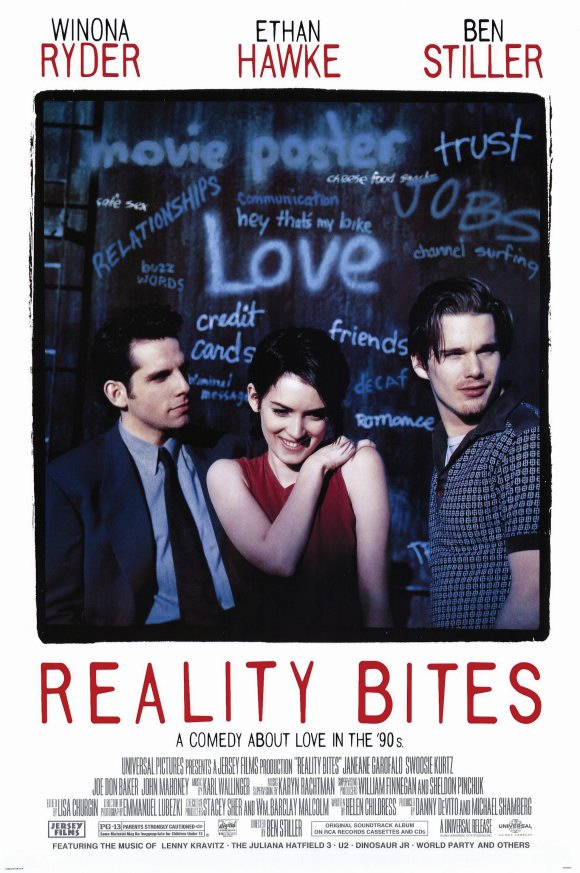
Episode 24 Cover1994: The Most Important Year of the Nineties continues with one of the most Nineties of Nineties movies, Reality Bites.  I take a look at the Winona Ryder/Ben Stiller/Ethan Hawke classic and also talk about its place in popular culture as well as talk about why it failed at the box office as did so many other attempts ot market to “Generation X.”

You can listen here:

iTunes:  Pop Culture Affidavit

Direct Download 

Pop Culture Affidavit podcast page

Here are some links to some recent pieces about the movie …

20 Years Later: An Oral History of Reality Bites

Hit Fix interviews the principal players from the movie’s cast and production and they talk about what it was like to make it in 1993-1994.

I Watched Reality Bites and it’s Bascially a Manual for Shitheads

A very funny Jezebel piece that waxes nostalgic about the film … with some perspective.

Reality Bites PosterHere’s also a link to two previous posts about the movie …

Generation X Is …

This post, actually my first column from my high school newspaper in the fall of 1994, is my seventeen-year-old self trying to make sense of my generation, especially after I watched Reality Bites on video.

Being Michael Grates

In this post, I take a look at Reality Bites nearly two decades later and discover how much I identify with Ben Stiller’s character, Michael Grates, the yuppie In Your Face TV executive who competes with Troy Dyer’s (Ethan Hawke) for Lelaina’s (Winona Ryder) affection.

Alllllllllllllrighty Then!

It’s not that I’m trying to figure out what made Jim Carrey funny in the mid-1990s, it’s just that in thinking about what was funny in the mid-1990s, I sometimes amazed that he was so huge.

Maybe I should rephrase that, or at least explain what the heck I’m talking about because that introduction is poor and it looks like I’m starting in the middle of things.  Next week’s post will be an episode of the podcast about Reality Bites, the Winona Ryder film about life after graduation.  It’s one of those films that has become … well, I don’t want to say seminal because that would be giving it too much credit, but it definitely is one of those films that stuck with much of my generation.  More on why next week, but I bring it up because around the same time that Reality Bites hit theaters, so did Ace Ventura: Pet Detective.  This film is up there with movies like Billy Madison or Dude, Where’s My Car? or Paul Blart: Mall Cop.  You look at them and say, “This is going to be ridiculous.”  In essence, you are right, but the ridiculousness of the movie is what nets them tens or even hundreds of millions of dollars at the box office.

Such were Jim Carrey movies in the mid-1990s, especially in 1994.  The man, who up until that point had been best known for being the white guy on In Living Color (and well, one day I’ll get to Doing Time on Maple Drive) starred in the aforementioned Ace Ventura flick as well as The Mask and Dumb and Dumber, each one of which was an enormous hit and rocketed him to superstardom.  I remember that I enjoyed two out of the three of them (I actually have never seen The Mask) because they are, at their core, pretty funny.  But as life went on and I got older, I remember that Carrey’s movies, at least to me, didn’t hold up the way that Caddyshack or Airplane! do.  So what is it?  Has my sense of humor faded or my heart shriveled up and died?  I’m not sure.

Let’s do a quick test and look at this scene from Ace Ventura: Pet Detective …

And this one from Dumb and Dumber … 

Now, at a glance this stuff is funny.  Carrey’s got one of those faces that looks ridiculous to begin with, so he’s not afraid to just act silly and really let loose.  And in both scenes, the director just lets him do his schtick.  But at the same time, even two watchings of either scene gets annoying after a little while–and this is coming from someone who can watch Chris Farley do the “I killed my sale” scene in Tommy Boy multiple times and thinks that never gets old.

I think perhaps it’s that these scenes are the type of stuff that your annoying younger brother or cousin would find hilarious and repeat over and over and over and over.  The tutu bit in the lobby with instant replay goes on way too long and is the type of thing that your hyperactive cousin would repeat out of nowhere in the middle of a conversation.

But hey, maybe that’s what we needed in the mid-1990s.  There’s a sense that maybe, after a few years of a crappy economy and serious “message” movies winning Oscars, audiences wanted something totally ridiculous and didn’t want to have to think when they went to the theater.  After all, the highest grossing film of the year was Forrest Gump, a feel-good nostalgia-fest and within the next few years we’d have Toy StoryBatman Forever, Independence Day, and Armageddon make huge amounts of money–not exactly thinking man’s movies.

But like I said, I just can’t find them funny anymore (and hey, maybe it’s just because I’m cranky), even though I know that Carrey can be …

(and yes, I know what you’re thinking … I don’t know how Courtney Love stayed in that dress either).

Fear the Future (My Life as a Teen Titan, Part Thirty-Seven)

Deathstroke 51If there is any one good thing that came out of Deathstroke having his own series in the 1990s, it’s that he had unknowingly fathered a daughter, Rose, who would eventually go on to become The Ravager during Geoff Johns’s run on Teen Titans.  But in 1995, Rose was still in her early teens and under the care of the latest version of the New Titans.  She’d just survived an ordeal where The Ravager (the Wade DeFarge version) killed her mother.  The climax of that storyline was earth-shattering, as most of Deathstroke’s supporting cast was dead and Adeline was revealed to not only have gone completely nuts but had also inherited some of Slade’s immortality.

So where do you go from there?  Well, apparently, you go into the future.

Deathstroke #51 and 52 are a two-part story where after she gets knocked out in a training exercise by Damage, Rose has a dream.  But it’s not a dream, it’s a vision of the future and one where her father’s immortality has  helped him achieve some sort of world domination, or at least be a Doctor Doom type of villain.  His main enemy is Hawkman, or the latest version of Hawkman, and Hawkman fights with Deathstroke in some sort of virtual reality world.  There’s  a hint that maybe somehow Steve Dayton as The Crimelord had somehow possessed Deathstroke but Rose wakes up from her vision before we can really see who he is in the future.

And then in the next issue, Deathstroke and Hawkman team up to stop a villain named Ebrax, even though the two of them spend most of their team-up time griping at one another.  There’s some implication that the possibility of Slade becoming some sort of huge villain and fighting with Hawkman will come to pass and perhaps they will become enemies as the series goes on.  But with only eight more issues to go in the series, Hawkman is never seen again and this doesn’t really go anywhere.  In fact, the only thing that does sort of go anywhere is Rose’s burgeoning precognitive powers, which are still around when she is The Ravager, although she’s not so much predicting the future in that role and simply has good anticipatory reflexes.

This two-parter, to me, has not only come to represent the beginning of the end of this series but its lowest point.  Two stories that feature Hawkman and set up one confusing, dangling plot thread were also two stories that I barely cared about in 1995 and kind of suffered through when I was rereading for this blog.  Looking at what’s ahead, there are a couple of issues that I barely remember reading, one issue that I didn’t actually own until years after the series had been cancelled, and while things slightly improve in the last few issues of the series, you can tell that unless Deathstroke is going to go back to its roots and become a series about a mercenary who is also an action hero, it’s going to wind up being cancelled.  The science fiction aspects are clunky, especially anything with “virtual reality,” which clearly dates these issues.

Next Up:  The Titans go into outer space and get involved in an intergalactic civil war.

Pop Culture Affidavit Episode 23 — The Album That Changed My Life

Episode 23 CoverDo you have the time to listen to me whine?  No?  Well, do you have the time to listen to me talk about Green Day’s Dookie, which was released twenty years ago and is one of the most important albums I ever purchased?  You do?  Great!  I’ll give some history on the album, go through it track by track and then explain exactly why, when I was 17 years old, this punk classic changed my life.

You can listen here:

iTunes:  Pop Culture Affidavit

Direct Download 

Pop Culture Affidavit podcast page

As a bonus, here is the CD cover …

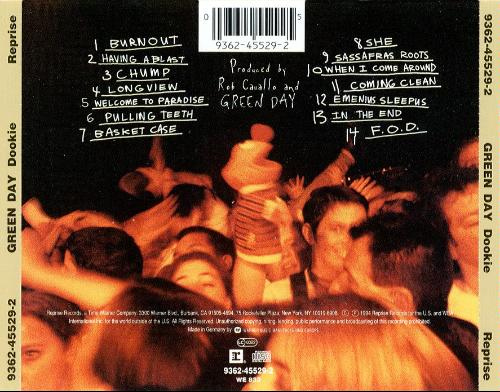
Dookie CD CoverHere is the orignal version of the CD’s back cover …

Dookie Back Cover


And here are links to articles and books mentioned the episode …

“Young, Loud, and Snotty”  (1994 Spin article)

Our Band Could Be Your Life by Michael Azzerad (Amazon.com)


Whoomp, There It Was!

Bill Clinton plays the sax (we're Animaniacs) on The Arsenio Hall Show in 1992, probably the most iconic moment in the show's history.

Bill Clinton plays the sax (“we’re Animaniacs”) on The Arsenio Hall Show in 1992, probably the most iconic moment in the show’s history.

While this will date this entry years hence, I guess it should be noted that I’m writing it the same week that Jimmy Fallon starts hosting NBC’s long-running late-night talk show, The Tonight Show.  In the last few weeks there have been all sorts of farewells to both him on Late Night (which is being taken over by SNL alum Seth Meyers) and Jay Leno.  Leno, in 1993, received his first stint as permanent host of The Tonight Show after the retirement of Johnny Carson and the fights behind the camera as well as resulting late night ratings wars between Leno and Letterman (who would go on to do his own show after being passed over for Carson’s) would be one of the more well-known (and notorious) television stories of the 1990s.

One of the biggest casualties of the late night wars of 1993 was The Arsenio Hall Show.  Since its debut in 1989, the syndicated talk show had garnered respectable ratings and was very popular among younger audiences, but when three other late-night shows debuted during that year and many of the CBS affiliates that were carrying Hall’s show picked up Letterman’s instead, the ratings started to take a turn for the worst.  On May 27, 1994, the final episode of the show aired.

Now, when Arsenio was at his height of popularity, I wasn’t a regular viewer of his show.  Staying up that late on a school night was not an option for me in those years, and while I was allowed much later nights in the summer, those were usually spent watching a baseball game.  But if I happened to be up and not watching a random movie and had a desire to watch a late night talk show, I would tune in to Arsenio because like a lot of people who were watching his show, I found Carson to be … old.

And that sounds so pedantic, especially considering that Johnny Carson was such a huge legend in comedy and also considering that I would occasionally tape Late Night With David Letterman and Letterman was Carson’s heir apparent.  But Hall was cool–he must have been since he hosted the VMAs four times in a row (still a record to this date)–and he had guests that I was familiar with.  Granted, I knew who most of the guests on your average Carson episode were, but people I actually might have a chance of watching/listening to with more frequency were on Arsenio.

When Hall’s show went off the air on May 27, I wasn’t watching.  However, I had a good reason not to:  Game 7 of the Eastern Conference Finals between the New York Rangers and New Jersey Devils (“MATTEAU!  MATTEAU!” … oh, sorry … that’ll be another post).

I found the final episode of the show on YouTube and while I’m not sure if it’s the entire show (it’s in three parts and a couple of things do seem to be missing), it’s enough to get a feel for what Arsenio was about for its brief life.  In what I’ve seen, the episode’s format is what you’d expect from a talk show–a monologue and guests (Arsenio wasn’t really one for comedic bits).  The two guests mentioned are Whoopi Goldberg and James Brown.  You don’t see much of Brown–I have a feeling that whomever posted the video missed his performance or it was trimmed down in the original broadcast–and Whoopi’s conversation with Arsenio is about how his show was successful and the cultural impact he had.  Being a horribly naive 17-year-old white kid from the suburbs in 1994, I wouldn’t have been able to say word one about the cultural impact of a talk show hosted by an African-American but with twenty years of life experience and perspective now behind me, I completely understand what she’s talking about.  Hall was not only the first but he was also successful.  No, he didn’t have the long runs that Carson and Letterman had, but five years in syndication and holding on to an oft-fickle youth audience is something to be commended.

(more…)

Classic College Memes: The Purity Test (slightly NSFW)

I am sure that Mr. Blutarsky's purity test score was in the negative numbers.

I am sure that Mr. Blutarsky’s purity test score was in the negative numbers.

The Internet is full of memes–lists, gifs, videos, and other things that often go viral–and that’s been the case since, well, since the Internet was invented.  A couple of weeks ago while cleaning out some old files, I found a few things and decided to spend a few weeks talking about memes that I first encountered in 1995.

My final entry is about The Purity Test.

A college dorm is some sort of primordial hormone soup, especially when you’re a freshmen.  Whereas you may have “hooked up” from time to time in high school, it was never to the extent that you do, or at least try to do, during your first year of college.  Okay, I should say “other” people do because when I started college I was at the first serious girlfriend stage that most guys are when they are freshmen in high school.  But my track record as a terribly late bloomer aside, it did seem like conversations about love and sex were everywhere and completely unavoidable.  In fact, sometimes they got intellectual, like the time a few people from one of my survey classes and I spent a Saturday night in a dorm room having our own version of Plato’s Symposium.  And that’s not a double entendre; we actually had an intellectual and philosophical discussion about love and sex … at least until it got interrupted by our gawking at the fire in Gardens A across the street.

Anyway, the quickest way to discussion about sex with the purity test.  Forwarded around at about the same time as the rest of the forwards I’ve looked at (for some reason, by spring semester and then in subsequent years, forwards would become less common, probably because the novelty wore off), this 100-question test was meme as group activity.  I remember printing copies out and taking it in a group of about ten people then comparing scores.  I think you were supposed to shoot for somewhere in the middle–a high score got you ridiculed as a virgin while a low score got you derided as a slut–although I don’t know why any score was ever a mark of distinction.  It’s not like “Hey, let’s lower that purity test score” was ever a successful pickup line, and there was more distinction in successfully completing the acrobatics necessary to have sex in an extra-long twin bed than a score on a test.

I haven’t looked at this list of questions in a good decade and a half, so I have no idea what my score would be (or honestly what it was at the time).  If you’re curious, you can take it yourself.

The Purity Test (more…)

Classic College Memes: Going to College is Easier Than it Looks

My freshman dorm, Wynnewood Towers of Loyola College in Maryland.  The building is now Newman Towers and the school is now Loyola University Maryland.

My freshman dorm, Wynnewood Towers of Loyola College in Maryland. The building is now Newman Towers and the school is now Loyola University Maryland.

The Internet is full of memes–lists, gifs, videos, and other things that often go viral–and that’s been the case since, well, since the Internet was invented.  A couple of weeks ago while cleaning out some old files, I found a few things and decided to spend a few weeks talking about memes that I first encountered in 1995.

This time around, it’s instant sentimentality and nostalgia for a few weeks gone by with “Going to College is Easier Than It Looks”

Your first semester of college is more thank likely one of the strangest three months of your life.  After all, if you’re like me, you go from living with mom and dad and having your own room to being shoved into what was once a one-bedroom apartment with four other guys who all have their own eating, sleeping, hygienic, and recreational drug habits.  Plus, unless you have a carry-over from high school to college (like friends or a girlfriend who came with you), you’re more or less figuring out both the social and academic landscape by yourself.  This is why those months–heck, the first few weeks–of college seem much longer than they actually are.

There was a point in mid-October where we were about a week away from my fall break and I had some sort of “you’ve changed” fight with my girlfriend.  Had I?  I’d been gone for all of five weeks and it’s not like I had dropped off the face of the earth for five years.  But at the same time, as I calculated the amount of stuff that had happened in those five weeks, I thought maybe I had.  A forward that landed in my inbox around the same time confirmed this.  Unlike the roommate lists, finals funnies, and other stupid crap we’d been passing around, this was especially popular among the girls and “romantic sensitive” doofuses like myself.

For years, the author of this particular piece was unknown.  But in digging around on the internet for it, I found a version attributed to Ashley Wilson of Carnegie Mellon University.  I don’t know how true that is, but it may have been a newspaper column or essay that got picked up and sent around, her name being dropped at one point or another along the way.


“Going to College is Easier Than it Looks”

By Ashley Wilson
Carnegie Mellon University (more…)

Classic College Memes: How to Mess With Your Roommate

The Internet is full of memes–lists, gifs, videos, and other things that often go viral–and that’s been the case since, well, since the Internet was invented.  A couple of weeks ago while cleaning out some old files, I found a few things and decided to spend a few weeks talking about memes that I first encountered in 1995.

Here, I take a look at a favorite of ours, which is several ways to mess with your roommate.

It sounds weirdly sentimental, but when looking at memes like the ones I have dug up for this series of posts, I can picture the dank room in Wynnewood Towers and smell whatever lingered in the air for most of my freshman year–a combination of pot smoke, stale beer, rancid pizza, and b.o.  It’s a memory that amazes me with its staying power, especially since to this day I’m amazed none of my roommates and I died inadvertently at the hands of our habits (or each other, for that matter).

This was one of the first email forwards that went around in the fall of 1995.  I think at that point I was getting along with my roommates, although some of their habits were starting to work my nerves, but that’s partially because I wasn’t used to sharing a bedroom with someone for an entire school year and I hadn’t made that clean break from back home, so I was kind of stuck in two worlds in a sense.

So it was almost a relief that lists about ways to mess with your roommate landed our collective inboxes in the fall.  And I think that since the novelty of email and forward lists hadn’t worn off, we found ways to bond over them, as absurd as they could be.  There were several versions of this that floated around with different numbers of things to do and at one point I took all of them and put them into one huge master list which had about 250 items.  Unfortunately, I lost that list years ago and had to hunt this one down on the Internet.  I found this on an old, not-yet-deleted Angelfire site that was probably from the late 1990s or early 2000s, and though I would love to give credit to the original author, his or her identity remains a mystery.

100 Ways to Mess With Your Roommate (more…)