Throughout history, we have been drawn to the great love stories, both triumphant and tragic. We cheered when Odysseus was finally reunited with Penelope and we cried when Romeo and Juliet met their fateful (though, I would argue, avoidable) ends. Yet none of those compare to the epic saga of the two lovers in a Wind Song commercial from the early 1990s.
Wind Song is an inexpensive perfume produced by Prince Matchabelli, which has been around since 1926 when its founder, Norina Machabelli fled the Soviet Union for the United States. It began making Wind Song in 1953 and the perfume has been available at drugstore counters ever since. I personally have never smelled it, so I will post the description provided by FragarenceX, where a bottle is currently on sale for $15.70:
A unique woody perfume, Wind Song was released in 1953 and has been enchanting consumers with its bright combination of flowers and spice ever since. The top notes include coriander, tarragon, orange leaf, and neroli, with gentle hints of mandarin, bergamot, and lemon. The heart opens with a flush of carnation and cloves, gently spreading to reveal touches of rose, ylang ylang, orris root, jasmine, and rosewood. The base slips in softly with the poignant scents of sandalwood and cedar, along with the faintest hints of vetiver, musk, benzoin, and amber. This refreshing fragrance is lovely for a day out in the spring or summer.
If I personally have smelled it, I don’t think I would know, which is not a knock against the perfume and more a testament to my inability to distinguish any one perfume from another (except maybe Axe Body Spray, but that’s because I teach high school). But I certainly remember the commercials that ran in the 1980s and 1990s and the famous jingle, “I can’t seem to forget you. Your Wind Song stays on my mind.”
There were a number of variants of this commercial over the years, but they more or less had the same premise. A woman wearing Wind Song perfume sprays a little bit on a letter or note and sends it a guy. He opens it, smells it, and … well, “I can’t seem to forget you. Your Wind Song stays on my mind.”
I’d imagine that if you aren’t familiar with the commercials, this description could provide you with a mental picture that is either very romantic or very awful. Wind Song could remind the guy of his lover, it could cause a terrible allergic reaction, it could trigger a PTSD flashback, or it could result in something much worse. For instance, in one of the commercials that ran during the 1980s, the woman spots her lover in a restaurant with a bunch of business colleagues and has a waiter send the note. It’s meant to be a reminder of romance, but it could also be the framing device for a flashback in a Skinemax movie, or the note could also read “I will not be ignored, DAN!”
Anyway, the commercial that I’m most familiar with, and which I mentioned briefly in my VHiStory episode, was from the 1990s and did not involve restaurants or possible Fatal Attraction scenarios.
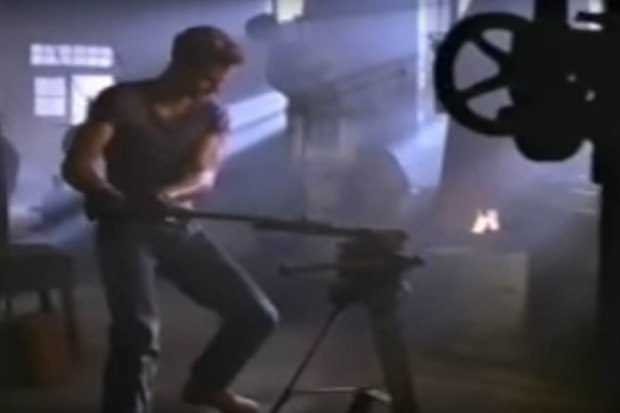
It is a simple plot, but one for the ages. We have Rick, whose biceps strategically sweat while he shapes metal into various shapes. He is just going about his day in whatever dusty shop this is, one that is run by Old Man Weatherby (a guy who has been trying to get at those meddling kids for years). But then, the shaping of various metals must stop because the mail comes.

And yes, the Maguffin has arrived. It’s so important, in fact, that we get an artfully done special effect that even George Lucas is envious of with the letter flying toward him. What could be in this letter? Is it his electric bill? A notice that his metal shaping tools are being repossessed? Could he have finally gotten into Harvard?
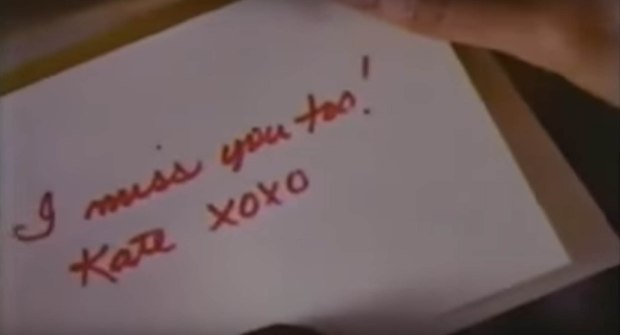
No, it’s from Kate. She misses him and she sealed the letter with a kiss. I guess the perfume is strong enough to cut through all of the manly sweat and metal shaping smells, because Rick is definitely interested. He takes a big whiff of that letter and we cut to Kate aimlessly riding her bike on a bridge.

And she’s thinking: “Did I forget to turn off the coffee maker? I think I did. Wait, that’s not a big deal because it has an automatic shut-off. The house isn’t going to burn down. But did I lock the house? I’m pretty sure I locked the house. I remember getting my bike out of the garage, shutting the garage door, putting my keys in the … yes, I locked the house.”
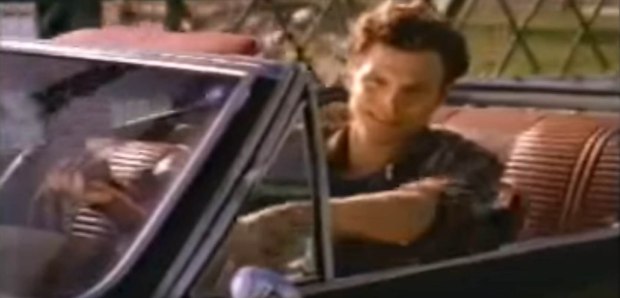
Rick is so ready that he gets into his classic car and peels out of work. He probably didn’t even put his tools away and left everything a mess. Old Man Weatherby is going to be pissed. But who cares? Kate misses him, too, and that means someone’s gonna get lucky. He then reaches the bridge where he just happens to know where Kate is riding her bike, and is all: “Hey, baby.”
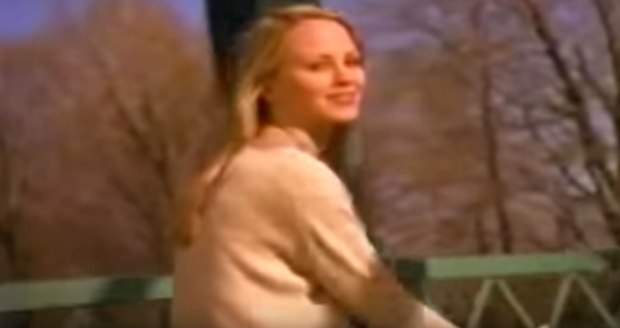
Kate: “Oh, it’s you.”
Seirously, that’s the expression. Like she’s the lady in Rupert Hine’s “Escape (The Pina Colada Song).”
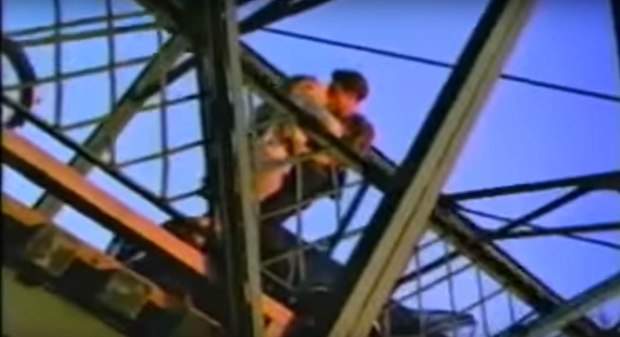
Well, at first, anyway, because he eventually pulls over, they have this moment where he picks her up and swings her around and they kiss and then we end with the two of them standing on the bridge and kissing. Totally blocking traffic, by the way. What if someone else was commuting home and got stuck because of these two? That’s really rude.
The commercial ends with a shot of the box and a voice-over and I have to say that I have a number of unanswered questions. What kind of force is guiding that letter? Is it supernatural? I mean, Old Man Weatherby can’t have that good of a wrist, right? And what is Kate really like? Is she the good girl and Rick is the guy they can’t stand? And where exactly are these two living where he can work in shaping metal all day and afford a classic car while she can spend her days riding her bike aimlessly across bridges?
There’s some untapped fanfiction potential in this entire 30-second ad, if you ask me. I can see entire books being written on the moments that inspired her to send the flying letter. I can see erotica depicting the ten minutes that follow these thirty seconds. Maybe there’s a literary masterpiece detailing their suburban ennui years later. Or maybe a fantasy trilogy where he actually wants to escape but she has him under the spell of her Wind Song.
The possibilities are as endless and unforgettable as their love.
 It’s the sixth episode of the seven-part miniseries IT CAME FROM SYNDICATION! This time around, I continue my look at syndicated television from the 1980s and 1990s with a look at the “drama” category, which encompasses action, science fiction, and horror. I’m joined by friend and fellow podcaster Michael Bailey (Views from the Longbox) to talk about everything from Friday the 13th: The Series to Highlander.
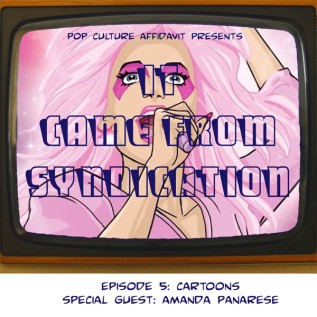 It’s the fifth episode of the seven-part miniseries IT CAME FROM SYNDICATION! This time around, I continue my look at syndicated television from the 1980s and 1990s with a look at cartoons. Join me and Amanda (for her final appearance on the miniseries) for a look back at our childhoods and classics like He-Man, G.I. Joe, TMNT, Voltron, Jem, My Little Pony, Thundercats, and many more!

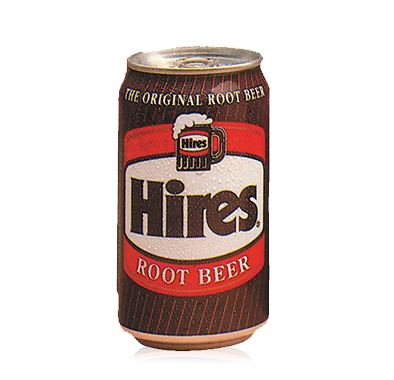 Hires Root Beer: Speaking of root beer, a brand that I drank a lot of when I was younger but I have specific memories of is Hires Root Beer. This, like RC Cola and Fanta, has a much longer history than I expected and is, in fact, the second-longest produced soft drink in the United States. It was originally created in Philadelphia but I actually always associate it with New England; specifically, I place it in New Hampshire and the years my family spent vacationing on Kezar Lake in North Sutton. And while I am sure that my time at the lake and time visiting Weirs Beach and Lake Winnepesaukee is a blog post and podcast episode to rival Rob Kelly’s “Mountain Comics,” I will say that Hires was a pretty popular brand of root beer up there and I think that we had at least one or two pieces of merchandise–trinkets, magnets, pencil holders–with the logo on it because we had cashed in a billion arcade tickets from playing hours upon hours of skee-ball.

 Better Than Ezra. Credit for introducing this band goes to my friend Valerie, who was really into this band when we met in the fall of our freshman year of college. Deluxe had come out in February of 1995, so I was within about six months of its release when she introduced me to them, but during that February, I remember that I had just started going out with a girl whose favorite band was Live, so there was a lot of listening to songs that featured references to afterbirth (seriously … you couldn’t have thought of another lyric?). Better Than Ezra, and by extension bands like Gin Blossoms and Dishwalla (both of whom played Loyola at the end of our freshman year) were this lighter, radio-friendly rock-pop that washed up in the wake of the end of the earlier part of the decade and songs like “Good” and “In The Blood” found their way onto my car mix tapes. I personally prefer Friction, Baby, which was the 1996 follow-up to Deluxe, but I will say that these 3-4-minute pop/rock ditties were much more replayable than a seven minute-plus metal dirge.
 The Clash. Yes, even though I said that Dookie was my gateway to other punk music, I didn’t buy my first Clash CD until the very end of high school. I had been watching some documentary about the history of rock and roll (in fact, it may have actually been called The History of Rock and Roll) on channel 9 and saw the episode about punk, which covered the 1970s punk scene and went specifically in depth with The Ramones, The Sex Pistols, The Clash, and X. The last of those groups was never one I would get too attached to, but I had heard of the Ramones by that point and shortly thereafter (this would have been May or June of 1995), I took my hard earned money to Borders and picked up the U.S. version of the Clash’s first album (it was the only one available at the time and the only copy I ever owned, so I can’t even say I was doing punk right). I really loved it, especially their cover of “I Fought the Law” (which, like a dork, I will pair with Mellencamp’s “Authority Song” on playlists from time to time).
 The Cure. Now, I can’t say that I’m a huge fan of The Cure. I don’t own a single album, and I think I may have only ever downloaded four of their songs: “Just Like Heaven,” “Love Song,” “In Between Days,” and “Lovecats.” But I did have a friend in high school who absolutely loved The Cure and had I not been lured in by the siren call of “I Alone,” I would have probably let her get me into the band. Because I have found since that I really do enjoy quite a bit of the 1980s new wave/alternative sound than I was willing to admit to in high school (except Morrissey … sorry … I can’t …).
 Sarah McLachlan. So I’m in my freshman year of college and listening to, of all things, a CD put out by Loyola’s a cappella groups, The Chimes and The Belles. One of the tracks on the CD (and I own the CD … in fact, you can hear selections from it in the episode) is The Belles covering “Elsewhere,” a song I had never heard before and I think I might have had to ask someone where the song was from. At any rate, that was the first time I had heard anything off of Fumbling Towards Ecstasy and that was strange considering that the album had been out for easily a year and a half and was right in my 10,000 Maniacs/Cranberries/Lisa Loeb wheelhouse. But again, when you’re tracking down old Metallica albums or trying to find those rare Nine Inch Nails singles because that gets you cred with a group of guys who could barely get a girl to look at them, you tend to miss the siren call of Canadian singer-songwriters. In the years between that moment and the early 2000s, I’d buy most of the rest of her discography at the time, including Solace, which has two of my favorite songs of hers (“Path of Thorns (Terms)” and “I Will Not Forget You”) as well as a book of her sheet music. In fact, I remember downloading the guitar tab to “I Will Remember You,” printing it out, and figuring out how to play it on the piano (something I did for Green Day’s “Good Riddance (Time of Your Life)” as well). But the piano’s influence on my musical tastes is actually going to be the subject of another podcast episode, so I’ll move on.
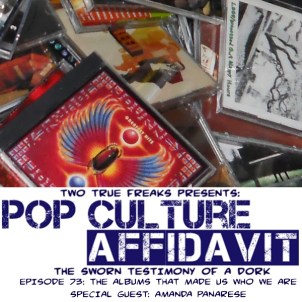 It’s time to return to the music of the early 1990s … and I’m bringing Amanda along for the ride as well! This time around, we take a look at ten albums that influenced us as teenagers. You’ll hear us talk about Seattle icons such as Nirvana and Pearl Jam; legendary Nineties recording artists like Dr. Dre and Snoop Dogg, Green Day, Stone Temple Pilots, and Mary J. Blige; as well as everyone from Madonna and Queen to the Dixie Chicks and Denis Leary.
 So no one told you this podcast was gonna be this way … although someone told me and Stella when we sat down to dinner to talk about the iconic 1990s sitcom Friends. We spend a couple of hours talking about the show, its characters, and our favorite moments. Plus, there are tons of clips for your ears and Stella sings “Smelly Cat.” Repeatedly. But don’t worry, dear listener, because we’ll be there for you when the rain starts to pour.
 Many Christmases ago, Frank Costanza, fed up with the commercialism of Christmas and upset at how it caused him to reign blows upon another man who also wanted the same doll he was about to buy for his son, decided to create a new holiday–a Festivus for the rest of us. In the spirit of Frank and this holiday, Michael Bailey joins me for a very special Festivus episode.
 Chuck Dixon and Kevin Kobasic bring us “Creep,” the story of an American sniper that is more legend than man, in The ‘Nam #66. As always, I’ll have a synopsis and review of the comic and this time around, my historical context section will be focusing on the second half of 1970 and January 1971.
 Pop Culture Affidavit