Talk Hard! Steal the air! In 1990, the cult film Pump Up the Volume was released and it proved to be a formative movie experience for many teenagers of the time. So, 31 years after it came out, I sat down with Michael Bailey to take apart the film and see if Hard Harry’s words of rebellion still hold up.
Thirty years ago, Douglas Coupland published Generation X: Tales for an Accelerated Culture, a novel that would name the generation that came of age in the 1980s and early 1990s. It told of disaffected, misanthropic, self-absorbed twentysomethings who didn’t seem to care about anything that was going on in the world. But was that really the case?
In this episode, I take a look at Coupland’s novel as well as Richard Linklater’s film Slacker; plus, I examine articles and books that attempted to define and explain Generation X and make some attempt to come to a conclusion about this group of people who are now middle aged.
In 1990, David Fincher directed one of the most iconic videos of all time, “Freedom ’90” by George Michael. The video featured five supermodels lip synching the song and was a literally explosive deconstruction of the image he had created in his 1987 solo debut, “Faith.” So, on the video’s thirtieth anniversary, Amanda and I sit down to talk about George Michael and his music, do a video commentary, and then segue into a discussion about fashion in the early Nineties.
It’s Halloween and that means it’s time for me to actually get seasonal … for once. I’m here and talking about some oddities of entertainment from the late 1980s and early 1990s. First up is Time-Life Books’ best-selling series Mysteries of the Unknown, whose commercials were some of the creepies of the time. Then, I move into the area of true crime (among other subjects) by looking at a classic Robert Stack-era episode of Unsolved Mysteries. Plus: listener feedback!
This time around, I’m back to looking at my history with music by going deep into the early 1990s and my early teens, recollecting those nights I spent in my room listening to the radio and rushing to hit record so that I wouldn’t have to wait for the station to play that Brian May song. I talk about the stations I grew up listening to, the tapes I made, my unfortunate music choices, and how I learned about what was popular (and what wasn’t) before I finally got my own CD player.
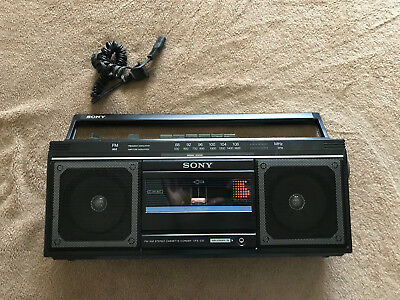
So the picture above isn’t of my exact radio, but it is the radio I owned and used to tape all of those songs. It’s the Sony CFS-230 cassette-corder boombox. I got this for either my birthday or Christmas sometime in the late 1980s and it was eventually replaced with a cassette/CD player that I received for my fifteenth birthday.
And here is the Spotify playlist that includes the songs I featured in the episode. Enjoy!
Cookies & Creme Twix are back. Well, they’ve been back for a few months now, but I recently had a chance to try them, which is something I was never able to do when they were available in the early 1990s. This shouldn’t be cause for celebration–after all, the last thing I need is more candy–but being able to just buy some when I see it at 7-Eleven is one of those aspects of adulthood that never gets old.
It’s not like I was completely deprived of dessert or candy when I was a kid–we had it from time to time but my parents didn’t keep it around the house–but while I sometimes did go down to the local drugstore to buy atomic fire balls, I usually chose to spend what little allowance I got on comic books and baseball cards. So I guess that’s why when I kept seeing commercials for Cookies and Creme Twix I was intrigued but didn’t make much of an effort to pursue them, which is ironic considering that it’s one of my favorite ice cream flavors. Or perhaps I actually did look for them on the candy racks but never found them and eventually gave up and forgot about them even if I never did forget about the commercials.
The candy made its debut in 1990 along with Chocolate Fudge Twix (at the time, peanut butter and caramel were the available flavors) and along with them came an ad campaign with the slogan “one of life’s great kicks.”
Now, there were a few commercials that were part of this overall ad campaign and while they different here and there, they share the same tone and have the same message: Twix knows what you, New Teen of the Nineties, are about. And I’m going to look at three of them because they so very well encapsulate that very early part of the Nineties where culture seemed to be half about looking for something new while also suffering from a major Eighties hangover.
So this is a very short commercial, but it gets its point across in its 16 seconds: Twix understands that it sucks to get friendzoned and it’s the cure for those relationship woes. Here, we see Rick, who is on the phone with his girlfriend. And Rick’s obviously a fun-lovin’ guy. He’s got that “I woke up like this” sufer/skater hair, the type that took considerably less effort than the Aqua Net-laden hair of your average Long Island mall rat but looked a lot cleaner than that of the Nirvana and Pearl Jam disciples that would populate his high school a couple of years later.
I’d say the shirt is probably a Quicksilver shirt because they were all over the place around this time, although the ones I owned weren’t striped but had random patterns. And speaking of random patterns, can we talk about the sheets here? These were pretty much the type of sheets that teenage boys were issued back in the Nineties–neutral, earth tone colors with some sort of innocuous geometric pattern that was chosen off a shelf at Linens n’ Things because it was the only non-pastel or flowered comforter and sheet set available.
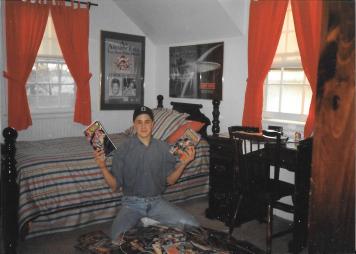
I’m serious about this. Here’s a picture of me when I was sixteen, showing off my comics collection (I don’t know why I took it, either, but it is one of only a few pictures of me as a teenager that survived). Behind me is a striped bed spread that I’m pretty sure I got when I was in junior high but really looks like I might have been sleeping in it when I was eight or nine. So the issue was not really finding bed linens that conformed to gender norms; it was more like it was hard to find bed linens that were mature because everything that was “mature” at Linens n’ Things was some floral Laura Ashley print.
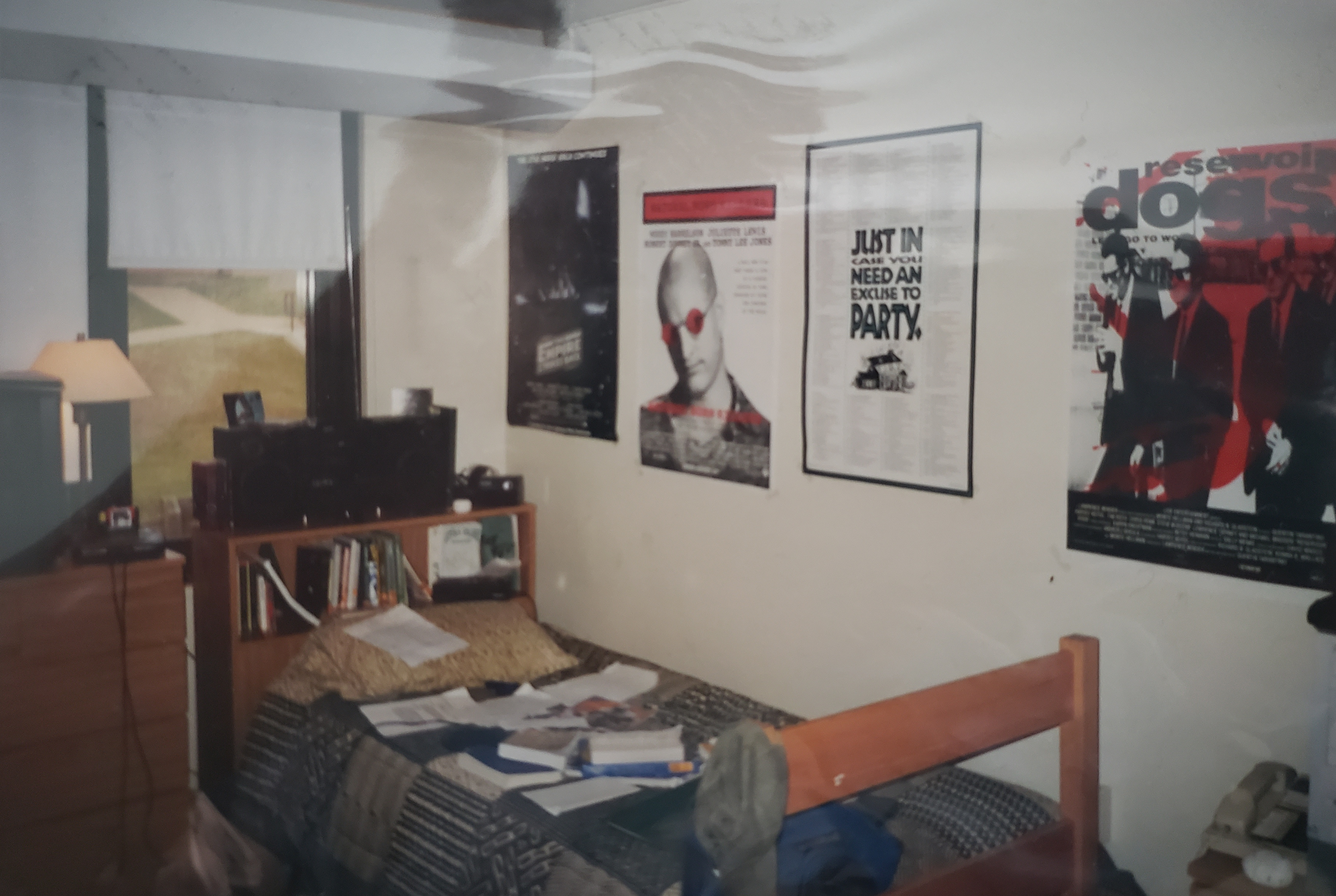
I mean, at least Rick had earth tones in 1991. I wouldn’t get earth tones until college, which you can see here in this shot of my dorm room circa September or October 1995. And I’m being completely honest when I say that this was the only comforter and sheet set that I could find at the store. I also can’t let this picture get posted without pointing out how it is, in itself, the epitome of the college experience in 1995. From the Sega Genesis on my roommate’s dresser to the ROLM phone under my Reservoir Dogs poster, there is so much I could talk about that it’s pretty much its own post*. But right now, I have to get back to Rick.
So, Rick’s friendzoned and breaks the fourth wall with a WTF that I swear I not only had but that I will admit to practicing.
Yes, I said it. Then again, I watched Ferris Bueller’s Day Off, Parker Lewis Can’t Lose, and Saved By the Bell all the time in the early 1990s and every guy was giving us an aside. How could I not raise an eyebrow or give a strange look to a camera that wasn’t there? No, I’m not insane.
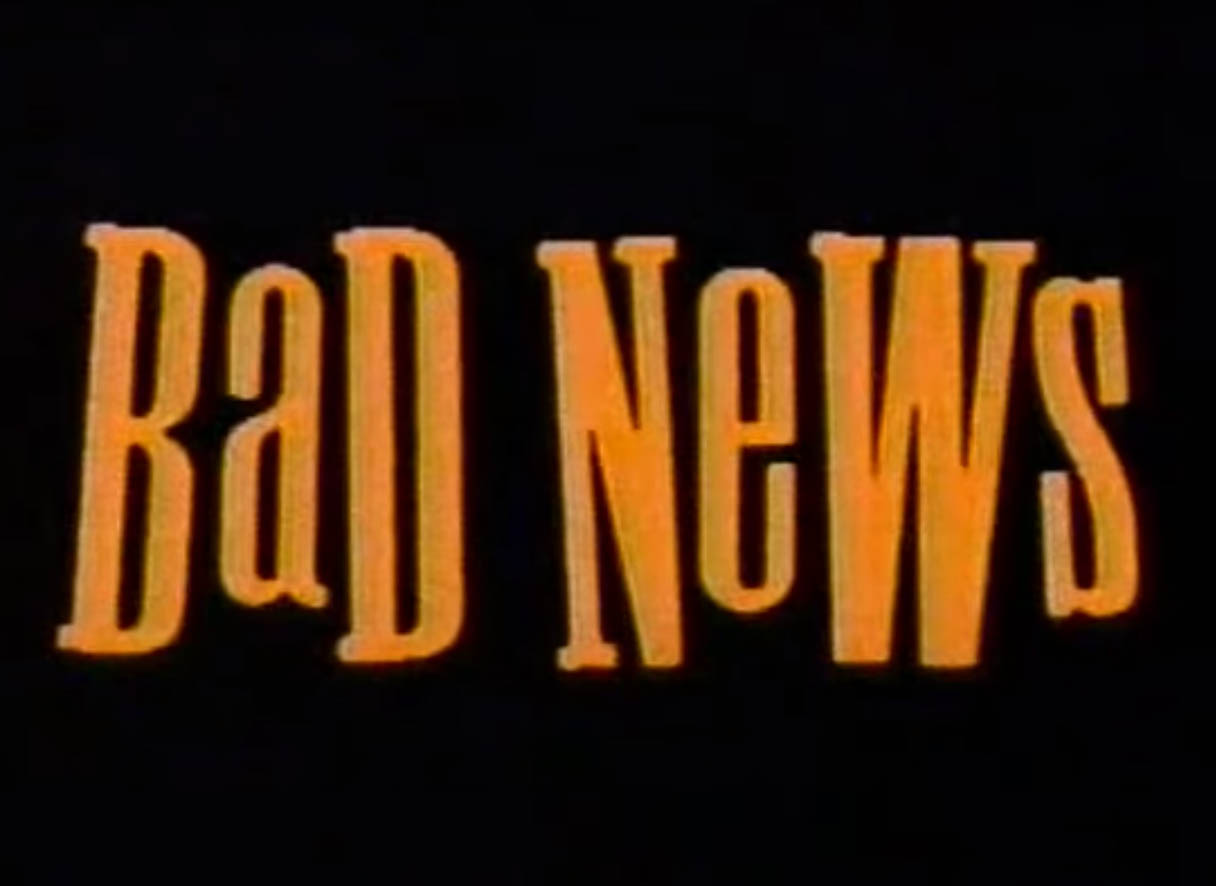
ANYWAY, two Bill and Ted type guys voice over the words “Bad News”, clearly showing the public that marketers either saw the Bill and Ted movies or had spun the “wheel of teenage cliches” and landed on … well, let’s just say this is very Poochie.
And let’s discuss this font and color scheme for a moment. We’ve clearly moved beyond the bright blues and pinks with scripted writing that we tend to associate with the Eighties (or at least that’s what shown to us in Eighties retro stuff) and have settled for a darker color palate, which is on trend for the Nineties. After all, you can look at just about any music video from around this time and will see that while they still maintained some sort of gloss, the tones were darker and deeper. So we’ve got a black background with kind of an orange-yellow “Bad News” that is written in a serif font with alternating uppercase and lowercase letters in a shaky setting. It’s very “cool”, right? Or at least what someone in marketing thinks the kids think is cool.
Which, by the way, is the inherent problem with most advertising directed at teenagers and twentysomethings in the early 1990s. Those of us who went to high school during 1990-1996 or so** were the very tail end of Generation X (a term that really only came to prominence at that time as it is) and whereas ads aimed at twentysomethings failed so spectacularly, people wrote all the think pieces, those aimed at high schoolers were a shit show, albeit a different kind of shit show where people slapped Nineties onto Eighties coolness complete with kids plucked from the same “cool kid” template that spawned Zack Morris.
Take this one, for example:
Now, this screams Eighties hangover, right down to the use of Yello’s “Oh Yeah”***. I didn’t screencap any images from this one because the resolution was pretty poor, but there are three dominant images: a girl partying at a huge house, a guy in sunglasses floating on an inner tube in a pool, and a guy with slinky-eyed glasses at a graduation ceremony. They all contrast with voice overs that are straight from the “Things Parents Say” block on the $100,000 Pyramid. And now, don’t get me wrong, I like some good teenage rebellion, but this really smacked of Poochie. Did whomever wrote this ad just rent a bunch of ’80s flicks from the video store to get the images they needed to tell teenagers “Hey, Twix knows life has to be fun.”
I guess I also need to bring up the Twix narrator’s voice, which is a guy with a generic “island” accent. It’s cringe-y in the same way Disney has the Castaway Key guy say “Cookies and Cookies Too”. However, I remember Bob Marley/Jamaica/the Bahamas being this thing in the early Nineties, especially after Cool Runnings came out and white people started thinking that saying “Jamaica, mon” wasn’t offensive at all. Between that; saying “Thank you, come again” in an Apu accent; and the Asian, Black, and Latinx “accents” us white people used back then (and in many cases still do), we’ve got a lot to think about and answer for.
Anyway, getting back to the accent, I believe the thought process here was that this was cool at the time. Plus, it was just foreshadowing that we were all going to one day own one of the millions of copies of the Legend Bob Marley greatest hits CD that were issued to college freshmen in the Nineties. All of this–and other Twix commercials–were there to show us how fun and cool we could be with chocolate-coated cookie crunch goodness.
To be fair, these worked. If you were a kid in 1990 or 1991, these were your beer commercials. Not that we didn’t see beer commercials, but I wasn’t walking into Grand Union in search of a sixer of Bud Dry when I was 13. But I could totally see Twix being good for what ails me, especially since after Rick’s bad news, we got a good five or six seconds of Twix porn.
I bought the candy and ate it, by the way, mainly because I didn’t get the chance to do so thirty years ago. And it was … well, disappointing. I was expecting a creamier cream with just enough sweetness, which is what you get when you bite into a Hershey’s cookies and creme bar (and I freaking love those). Instead, this was way too sugary and did not at all complement the cookie, which in itself was too dry. I think the mistake was layering the two ingredients instead of mixing them together. That’s cookies and creme; this is creme with cookie topping.
Not that I wouldn’t eat it again, though, because despite my disappointment, it still tasted like nostalgic promise. Somewhere in the back of my mind, there is the hope that the candy in the blue package in 2020 is going to not only be the candy in the gold and brown package in 1990 (and btw, I want chocolate fudge Twix because that’s my favorite color scheme of the four packages and while it probably would also taste too sweet, I can imagine it would be good), but will take me into the cool kid candy commercial life I dreamed about when I was younger.
*Oh, it’ll get its own post.
**It’s probably 1998, but that would mean my sister winds up being a Gen X-er, but we clearly sit on opposite sides of the Nirvana-Britney Spears generational divide, so … no.
***I owned this on cassette at one point, purchasing their album Stella at a Best Buy in Baltimore in 1998. Years later, this Best Buy would be featured on the first season of the podcast Serial. For the record, I don’t know if there was a payphone.
I can’t get the image of Eric Zala begging his boss for another day off out of my head. It happens about two-thirds of the way through 2015’s Raiders!: The Story of the Greatest Fan Film Ever Made, which chronicles his efforts to reunite his childhood friends–Chris Strompolos and Jayson Lamb–so they can recreate the aistrip scene from Raiders of the Lost Ark where Indiana Jones fights a Nazi brute and wins when said brute is chopped up by a plane’s propeller. It’s the only scene that he and his friends never filmed when they were teenagers and put together a shot-for-shot adaptation of the movie. At this point in the film, Eric is woefully behind schedule due to constant rain storms, and we hear his boss, Alex, berating him for wanting just one more day off and he sits in his trailer looking like a kid who is being chastized.
For a split second, my thoughts line up with the frustration that’s boiling over to anger coming from Alex–this guy is middle-aged, has a wife and kids, and his responsibilities to them should take priority over this project. Yeah, it’s cool that he got enough Kickstarter funding to put all of this together, but shouldn’t he just grow up already? But then Alex gives Eric the day off, and Eric’s wife comforts him by telling him that what is important is that he is doing something that makes him happy. It’s the moment in the film that puts me not only back on board with him but makes me actively root for him to finish because I’m thinking of myself, my friends, and my own abandoned cinematic efforts.
I was bitten by the “filmmaking bug” at an early age, evidenced by how I put down “movie director” as the answer to “What do you want to be when you grow up?” question on my first grade class survey. I’d been watching Star Wars on a loop for at least the past year, and while I played on the playground as Luke Skywalker, I wanted to be George Lucas. And while my interests when it came to play would travel through various iconic 1980s toy lines, the creative streak never left–I wrote short stories, thought of ideas for movies, and my friend Tom and I even conceived a Miami Vice-esque comic book series called Drugbust that got as far as a plot outline, a few cover sketches and a finished splash page. It was enough to keep my young imagination active and sated, at least until Christmas of 1987 when my dad bought the family a video camera.
A print ad for the Panisconic Omnimovie camcorder circa late 1987/early 1988.
Retailing for somewhere close to $1000 (based on crack research–I found an ad for a similar model that had a price of $898), the Panasonic Omimovie camcorder was not a small purchase by any means. It signaled that you had the money to blow on such an expensive toy, and was a literally hefty purchase, as this was a shoulder-mounted camcorder that took full-sized VHS tapes. I’d learned how to use one the previous summer as part of an enrichment class called “video volunteers” and I’d like to think that’s maybe why my dad let my friends and I use it almost right away–although he did tell us that it “had a drop ratio of zero” as a way to remind us to be careful. To this day, I have no idea if he was using any of that terminology correctly, but the message did get across.
At first, we made music videos, the best of which was a two-hour concert video by our fake band, The Terminators. Tom, my sister, and I would use G.I. Joe airplanes (specifically, the Sky Striker and the Cobra Night Raven) as guitars and a croquet mallet as a microphone with a stand while lip syncing to Bon Jovi, Whitesnake, and other hits of the mid-Eighties, getting the song onto the tape by placing the camera on the washing machine and putting my boom box next to it. That tape featured a lot of Tom playing guitar and looking cool in a denim jacket and spiked hair, me melodramatically singing while wearing military camo pants and a Naval Academy sweatshirt, my sister looking happy that she wasn’t chased out of the room, and several shots of someone running toward the camera to turn it off so that we could cue up the next song. We made a few more and then gave up fun with the video camera because the novelty wore off, until the eighth grade, which is when I attempted something more ambitious: a feature film called Kung Fool & Company.
I can’t recall where the title or the character name came from, although I’m pretty sure it is because we watched Big Trouble in Little China so many times, but between that and the number of hyper-violent action flicks we were renting on a regular basis, I had enough to write a full-length screenplay about our hero going on a full-fledged revenge spree after his best friend is killed by the mafia. It had roles for a number of my friends, and when I finished it, I roped them into helping me out, even though none of us had any idea of how we were going to shoot a gritty action flick in our quiet suburb. I guess we thought we’d figure that out later.
We shot an opening credits sequence and two scenes. The opening credits were handwritten on paper and filmed by placing them on a small easel, then zooming in to try and avoid getting my hand in the shot while I removed each page (and even then, you probably could have seen my fingers) while music I’d taped off of the Ninja Gaiden II video game played behind me on the same boom box used for our basement concert. That, by the way, put the budget at the $1.99 it cost for me to rent the video game, a cost that would not get any higher.
The two scenes were the first two scenes of the screenplay, because it wouldn’t be until a few years later that I learned that movies were shot out of sequence, and even if I did know that I didn’t have access to editing equipment. In scene one, my friend Rich played a mob boss who killed the best friend character, who was played by my friend John. We shot the scene at the desk in my bedroom during the day and created atmosphere by turning all of the lights off and letting the sunlight shine through the red curtains, something I think was Rich’s idea and that we were all proud of because it seemed really cinematic when we were watching it back. The second scene was not as cool–it was me as the future Kung Fool standing at my friend’s grave, which was really a cutting board placed in my parents’ backyard flower bed, and vowing vengeance. I remember that the music we were playing drowned me out so much you couldn’t hear my lines.
I think we were supposed to shoot a training scene that would have taken place in a foreign country like Japan or China, but how we figured that we would duplicate that at a place where we could go to on our bikes is lost on me because we never shot the scene and abandoned the project in favor of whatever was going on in the world of professional wrestling at the time. We would eventually get our first taste of shows like Saturday Night Live and In Living Color and shoot comedy sketches and return to actual attempts at music videos, and in between ninth and tenth grades, my friend Chris and I did complete a short film about cops busting drug dealers when I visited him in Florida for a week, this time with songs off of the Classic Queen compilation album providing the soundtrack.
At the heart of Raiders! is a story between three childhood friends, and shooting the airstrip scene is as much a reunion and patching up of a broken friendship as it is about getting the shot. Eric, Chris, Jayson have a lot of baggage between them, with Jayson feeling like he was pushed out of the project before it was finished, and the friendship between Eric and Chris deteriorating by the end of high school and beyond. As we see how they were able to not only finish the film but rent out a movie theater to show it (with local news coverage to boot), we see the tension between them grow and Eric’s social ineptitude along with Chris’s inner demons more or less destroy it.
I personally didn’t have any epic fallout with the friends involved in any of our movies–some of us stayed friends all the way through the end of high school while others just drifted to other groups. I’m sure I was a dick to a few of them or them to me at one point or another, but it was obviously not enough for me to recall how. It was just the drift that comes with getting older. Plus, as we went through high school, my interest in films shifted to Eighties movies and I pretty much spent the back half of my teen years setting George Lucas aside for Cameron Crowe, with Say Anything … as my Raiders. And I got my chance at that in the form of a humanities class project during the spring of my senior year.
I’d taken creative writing during the fall semester and that’s where I wrote a story about having the chance to kiss a girl but never actually taking it. While structured as fiction, it was based on a moment where, after hanging out with my next door neighbor Elizabeth (on whom I had a massive crush–and no, that’s not her real name), we were saying goodnight and there was one of those moments with a tension-filled pause. You know, the ones that have some sort of music swell or pop song in the background of the movie because the audience is being told to wait for a great kiss. Sadly, this was reality, no music was playing, and I simply said goodnight and walked home.
Now, reality says and would later confirm that I actually had no shot–she’d friendzoned me pretty much from the moment we met–and while I still pined, I managed to muster up what maturity I had to not pursue her, because it was cool to have a friend. But the moment became a great idea for a story and that got turned into a short film that I was not only able to shoot, but shoot out of sequence and edit using our high school’s video editing booth.
The premise of the story is that we see a couple on a date and it’s being narrated via the guy’s inner monologue, a monologue that starts off with the voice of a coach and then devolves into frustrated and angry yelling at our main character. In the film, I played both guy and narrator, with the date scenes being shot at a nearby park and the narration in my basement using the same washing machine-as-tripod setup that I employed for lip syncing several years prior. Originally, the girl in the story was going to be played by my then-girlfriend, but she didn’t want to be on camera (in retrospect, I don’t blame her) and my sister was supposed to be the cinematographer. They switched places and when I showed the completed film in class, this made one of the girls in my class incredibly uncomfortable–even though, you know, no on-screen kiss happened.
That was the last time I used the camera to shoot, unless you count my senior prom, when my friends and I managed to commandeer it and take it with us to the dance after my parents were done shooting the pre-prom stuff. I’d go on to make a college choice that was regrettable in some ways, as while I do think I learned how to be a better writer, I often found myself overreaching in my efforts to seem “literary” in class while the stuff I really wanted to write was relegated to my student newspaper column or short story and novel drafts that got tucked away on my hard drive and taken out only when I didn’t have schoolwork. I don’t have the tapes anymore, either–they were taped over or thrown away years ago (well, except for the prom video).
So I watched Raiders! and found myself surprised that I wasn’t filled with any sort of midlife crisis anger or regret about not standing my ground and pursuing the creative endeavors that anyone around me would have called distractions. If anything, I rooted for Eric and his friends, sharing in the hopeful glee that they managed to still have the sense of wonder that so many of us often lose to cynicism.
I’ve said before that Saved By the Bell is one of the most influential shows in the history of television, as Millennials and Gen Z were able to spend much of their formative years watching sitcoms that were targeted directly at them instead of having to settle for simply graduating from the world of Saturday morning and weekday afternoon cartoons like Generation X had. This was obviously helped along by Nickelodeon and The Disney Channel, as the former increased its tween programming int he early ’90s with Clarissa Explains it All and similar shows while the latter became part of basic cable packages between 1991 and 1996.
That is, if you had cable.
But unlike all the times networks were chasing cable trends two seasons too late, NBC wound up being right on or slightly ahead of the curve for the 1992-1993 television season. This was the year that they completely replaced their Saturday morning cartoons with live action programming, giving birth to TNBC.
If you look at the Saturday morning lineup from the previous season, you see shows like Space Cats, Captain N and the New Super Mario World, and Wish Kid, and while I know a few people who watched Captain N, I can’t imagine that this lineup was doing much against the other networks, which were airing cartoons starring more well-known characters such as Bugs Bunny, Winnie the Pooh, Garfield, Darkwing Duck, and the Teenage Mutant Ninja Turtles. Plus, Saved By the Bell was popular at the time and so NBC saw the opportunity to double down on that success, not only giving us an extra half hour of the show (which led to the Tori episodes) and padded out the day with the TNBC lineup.
I started my sophomore year of high school in the fall of 1992 and by the time I shrugged off any Saturday morning programming whatsoever sometime during the 1993-94 television season (in favor of sleeping until 11:00 every Saturday), I was a junior and definitely a year or so older than the target demographic. NBC was clearly going for the kids who were in middle and the early part of high school, because the sitcom fantasy world of Zack Morris and company was not exactly anything cool when you were neck deep in your own high school drama. Still, I was “grandfathered in” to the original TNBC lineup because I had already been watching Saved By the Bell.
If you’ve followed me over the years, you have heard me talk about my relationship with Saved By the Bell more than once. I’m not so much a super fan of it as I am one of the many people who got sucked into the show during its run because it was just on television and there was nothing better to watch on a weekday afternoon between The Disney Afternoon and Full House, or on a Saturday morning when I’d gotten home from my job at a stationary store. That meant that I would be on the ground floor for the new lineup, especially since the Bayside gang was set to graduate that first season; I would keep going for some of the following season because I had a crush on one of the actresses on California Dreams.
The original two years of TNBC would be a mix of sitcoms, game shows, and early teen reality programming. While Saved By the Bell would shift to its “The New Class” series in the fall of 1993 (and I can tell you that that first “New Class” season is the Coy and Vance of SBTB) in hopes of keeping the original audience coming back and California Dreams would go on to be another mainstay of the lineup, the network would take a “throw it against the all and see if it will stick” and that meant that some of the shows that premiered in 1992, like Name Your Adventure and Double Up, would only be around for a little while.
Name Your Adventure was a reality show wherein a teenager would get the opportunity to do something they’d always dreamed of doing, a formula that would get reused in the early 2000s with the MTV series Made. Hosted by Mario Lopez, Jordan Brady, and Tatyana Ali, the show was a slightly slicker version of classic PBS shows like 3-2-1 Contact because it was less about the spectacle of nerd rehabilitation (which was 99% of Made) and more like someone being given an internship. I found one story on YouTube that featured teenager Jon Steinberg who was interested in becoming a sports broadcaster, so he was paired up with Bob Miller who at the time was the play-by-play guy for the Los Angeles Kings. The segment was definitely more educational than flashy, as Miller fed Steinberg a lot of information as well as gave him real-time feedback as he tried his hand at calling part of an Angels/Yankees game.
Broadcaster Bob Miller gives Jon Steinberg some tips on how to call a basketball game on an episode of Name Your Adventure.
I would have found this interesting in 1992 and found it interesting even now because of how Miller pointed out all of the intricacies of describing a game’s action while it happened. Of course, this doesn’t have the appeal of a teenager crying on camera because they just can’t seem to get anything to work correctly, so I understand why this show would have not had staying power. And it didn’t have a ton of staying power for Steinberg because this isn’t the career he chose–he is the former head of Buzzfeed. But the show did last for a few seasons (and I suspect it’s because it helped fulfill an educational mandate for NBC), so there’s a decent amount of footage available on YouTube.
YouTube, by the way, wound up being my avenue of choice to see if I could find any footage from this early TNBC era and ran into one of the common problems with tracking down the early 1990s on the Internet, which is that if it was never rereleased on a digital platform, it’s very hard to find. Steinberg happened to upload his segments from Name Your Adventure to YouTube (so I guess he had fond memories of the experience), but unless you have someone who still has a pile of VHS tapes and the means to rip them to a streaming format, then you’re pretty out of luck. And who would have taped and then uploaded an episode of Double Up was probably hoarding VHS tapes.
Double Up was an attempt at a teen dating show, one that was obviously trying to capitalize on the popularity of Studs, which in itself was a slightly raunchier version of Love Connection. Hosted by J.D. Roth (the host of the afternoon Double Dare rip-off Fun House), the premise is that brothers and sisters set one another up on dates and we see how things went. Complete with a M.C. Skat Cat-type rap theme and in in-studio deejay, this is very much a show that was developed by an adult who was working off a “1991 Teen” checklist and it’s no wonder it only lasted seven episodes.*
Mark-Paul Gosselaar hosted Brains and Brawn around the same time he was shooting SBTB:TCY. I captured this image because of the way the “auto tracking” from someone’s VCR was preserved for all of YouTube to see.
Brains and Brawn, on the other hand, was a slightly better attempt at a game show and this lasted a little longer. Having obviously struck out with “Studs for Teens”, NBC decided to go with a more “Take the Physical Challenge” route and created a show that combined trivia, sporting events, and teen celebrities. Hosted by Mark-Paul Gosselaar with assists from Tatyana Ali and Danielle Harris, it was shot on the Universal Studios backlot in front of the clock tower from Back to the Future and had a live audience, probably comprised of tourists. Honestly, though, if I were a teenager visiting Hollywood in 1992, I would have totally gone to a taping of this.
Wait, I did go to Hollywood in 1992 and visited Universal Studios. Why didn’t I get a chance to see this tape? Shit.
Jay Anthony Franke of “California Dreams” fame competes in the hockey physical challenge part of “Brains and Brawn.”
Anyway, on Brains and Brawn, teenagers were put in teams and worked with a celebrity “captain”–usually someone from another teen television show–and they would answer trivia questions before competing in a sporting event like shooting baskets or trying to get their slap shot past a goalie. The final challenge was an obstacle course, and while I was watching an eight-minute clip that featured the cast of California Dreams, I have to say that it really comes off as if your gym teacher had tried to do Double Dare in middle or high school. I probably would have found it fun and there are moments where the celebrities do look like they’re having fun, but there’s also this air of contractual obligation, hoping the check clears, and hoping that the kids watching this show would watch whatever the celebrities were promoting.
I can’t imagine that the budget on this was particularly huge–the winning team received a Bushnell telescope instead of a vacation or cash***, and for all we know, the money that NBC had earmarked for its teen shows mostly went to its sitcoms–Saved By the Bell, California Dreams, and the one-season wonder Running the Halls.
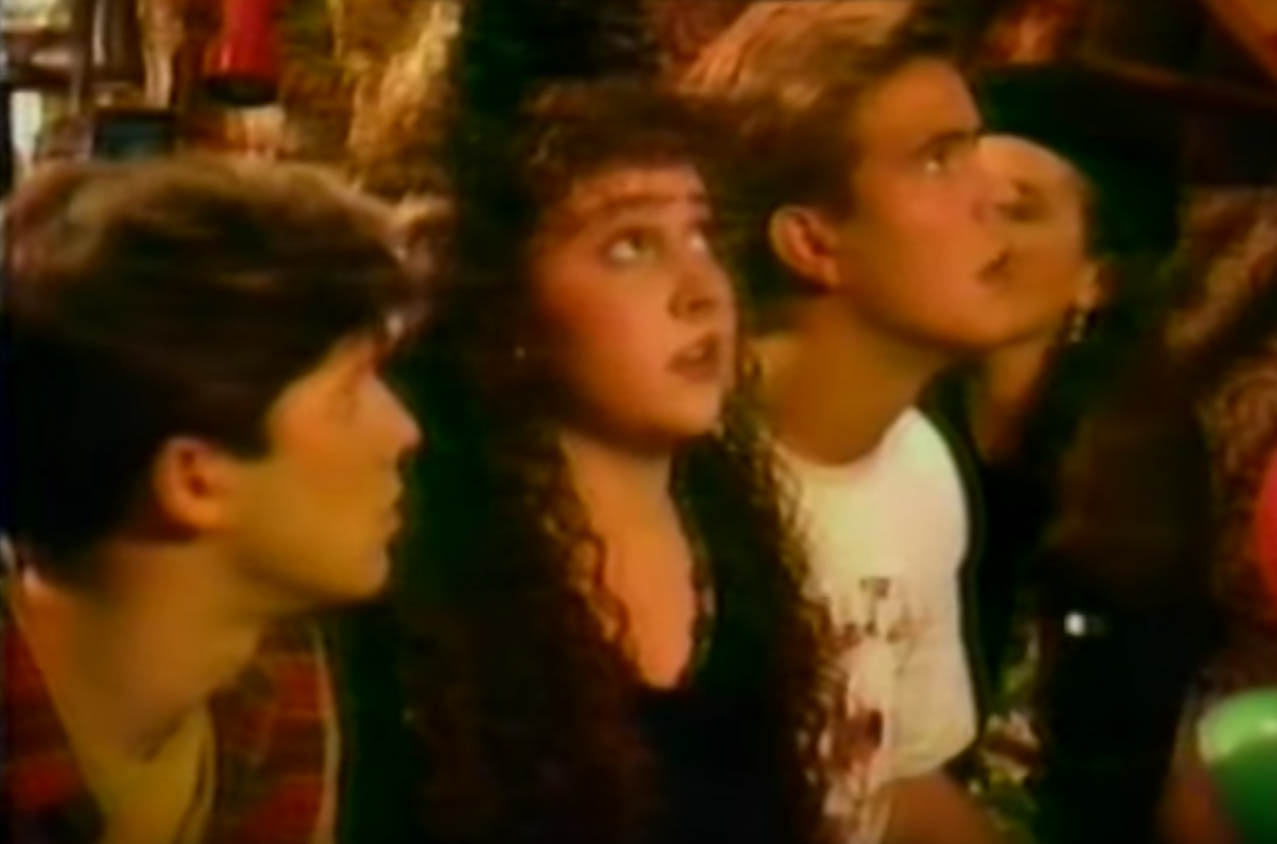
Three characters from “Running the Halls” react to a guy wearing a gorilla suit. From l-r: Trevor Lissauer, Senta Moses-Mikan, and Richard Hillman Jr.
Running the Halls was an attempt at a single-camera sitcom, which was something you would have seen if you were watching Fox at the time, which had the short-lived Tobey Maguire show Great Scott! and the underrated classic Parker Lewis Can’t Lose. However, unlike those two shows, NBC decided to throw a laugh track over the action and did very little except repeat the Saved By the Bell formula. Our main character here was a Zack Morris clone named Andy McBain (played by Richard Hillman Jr.) who is trying to be the big man on campus at a private school, getting into the same sort of trouble Zack would get into on both the original and College Years seasons of Saved By the Bell. There are even romantic interests and a Screech-like character. I watched a clip where Andy choked at a basketball game and saw characters that looked like they were dressed from the pages of the most recent issue of Seventeen. I can see why this was forgotten, although I remember enjoying it at the time. Maybe that’s because there wasn’t anything else on that filled the void left by Degrassi and the other two sitcoms were just way too technicolor for me, or maybe I thought that the girls on the show were hot at the time****. At any rate, when Senta Moses showed up on My So-Called Life the following year as Delia Fisher, I immediately recognized her from Running the Halls.
While California Dreams would go off the air in 1997 and Saved By the Bell: The New Class would last all the way until 2000, the other shows would all be off the air by the time I headed to college in 1995. TNBC itself would last until the early 2000s and feature shows like City Guys and Hang Time, but would then get replaced by the Discovery Kids on NBC programming block. NBC’s current Saturday morning lineup currently consists of the weekend edition of the Today Show and then travel and information shows that seem more like cheaply purchased time-fillers than anything else. In fact, they could probably run infomercials here but I think the networks have to run some sort of educational programming at some point in the week and this is probably their way to shove all of that in.
My age prevents me from saying what the Saturday morning viewing habits of the average American teenager was like after I left my time with these shows behind. For all I know, those last few years of TNBC were less of a network on the pulse of its audience and more of an attempt to hold on to the audience that once watched cartoons but were now pulled away by Disney, Nick, and MTV. And though I did watch a number of these shows, even I knew that they were time fillers. Then again, that’s what most Saturday morning television was to my generation–something to keep us occupied before your parents finally stepped in and made you go outside.
* I’m not doing this show’s bizzareness justice and I think that I’ll write a longer entry about it next week.
** Danielle Harris, who has been in a number of horror movies throughout her career, was at that point playing the teenage neighbor of the Connors on Roseanne. I had a major crush on her.
*** Although if I’m being honest, a Bushnell telescope isn’t exactly cheap. After all, Ronald Miller paid a grand to go out with Cindy Mancini and that money was originally going to go toward the purchase of a telescope.
**** Probably.
So I’m about thirteen or fourteen and my dad’s in the den watching a movie during the middle of the day, which he only did if he’d fallen asleep watching it the previous night and had to return the tape to the video store so he wouldn’t get charged a late fee. I walk into the room and he’s laughing at a scene where Shelley Long is serving Jamie Gertz some really disgusting-looking thing called “jellyfish salad.” He keeps laughing and talking about how hilarious Shelley Long is, something I agree with it because by that time I had seen the majority of the Diane episodes of Cheers, so I stick around and finish the film.
That is my Don’t Tell Her It’s Me origin story, and while I have no substantiated research to back up this claim, I bet that if you were to talk to a number of people, they would have a similar story because while this movie bombed at the box office in 1990, I’ve run into quite a number of people who have seen it. In fact, just as I finished streaming this on Amazon Prime, my wife asked what I had been watching and when I said “This movie with Steve Guttenberg and Shelley Long”, she replied, “Is that the one where he had cancer and became a buff dude? I’ve seen that!”
I don’t know if I could better sum up the premise of the film, but I will go slightly more in depth. Based on the novel The Boyfriend School (and currently streaming under that title), Guttenberg plays Gus Kubicek, a cartoonist who has just finished treatment for cancer. He’s bloated and bald as a result adn is wallowing in depression. His sister, Lizzie (Long), who is the alter ego of the best-selling romance novelist Vivian Leroux*, decides that she’s going to cheer him up by finding him a woman. Enter Emily Pear (Jami Gertz), a journalist, who after she interviews Lizzie at a romance fan convention (yes, there’s a rom-con in the rom-com) becomes the woman Lizzie’s going to set up with Gus. Emily kind of sort of has a fiance, Trout (Kyle MacLachlan), but Lizzie’s a professional at meddling in others’ lives as much as she is at writing romance.
The setup doesn’t go well. Emily vomits up the jellyfish salad I mentioned in my intro and while she thinks Gus is nice, she isn’t attracted to him at all. This causes Lizzie to take drastic measures. She helps Gus get in shape and then creates an alter ego for him–Lobo, a New Zealand biker who “hunts alone”. Lobo and Gertz meet at a gas station where the two of them accidentally wind up foiling an armed robbery.
Naturally, Emily falls for Gus’ bad boy alter ego and as it is with comedies like this, things get complicated. Gus is reluctant to keep things going because Emily has fallen for Lobo and she even breaks up with Trout (who was cheating on her anyway with their co-worker, Mandy, played by a twenty-year-old Madchen Amick). Eventually, the entire thing comes crashing down, but because this is a romantic comedy from 1990, Emily realizes that she actually was in love with Gus.
If I’m thinking with my modern sensibilities, I’m not supposed to like this movie. The entire plot centers around deceiving a woman for the sake of romance and/or sex. Even with my writer’s sensibilities, I’m not supposed to like this movie. The characters are pretty formulaic–Gertz is the typical “mess” woman character, Gus is the down-on-his-luck nice guy, Trout is a PG version of MacLachlan’s sleazy Showgirls character, and Long is kooky–and the plot resolves itself so quickly I had to rewind it in my head. Plus, this came out right around the time of When Harry Met Sally, a movie that is the golden standard for modern romantic comedies.
The movie, though, works because of the actors’ performances. Shelley Long dials up the kookiness but gives Lizzie depth. Guttenberg is surprisingly appealing and it reminded me why he was a pretty big star in the late 1980s. I mean, the guy was not just in the Police Academy movies and the first Short Circuit film, but had bona-fide box office hits in Cocoon and Three Men and a Baby (and their sequels). I’d even posit that his career at that point mirrors Tom Hanks’, but the Nineties would take both actors in very different directions. And while my favorite Jami Gertz film is The Lost Boys, she’s making a pretty good effort to step out of the teen flick role and into something a little more adult.
This is, at best, a piece of its time, and a reminder of the random movies you’d come across while flipping channels or at the video store when you’d watched everything else. And yet, even watching this for the first time in nearly 30 years, I found this charming and remembered why I liked it when I first saw it in junior high. Yes, the Lobo deception is cringeworthy, but it’s more As You Like It or Twelfth Night than it is Revenge of the Nerds, and when I was that age I spent a lot of time wondering if any girl was going to like me. Gus Kubicek is an adult Ronald Miller from Can’t Buy Me Love, the type of guy who I identified with and even rooted for even when he made boneheaded decisions**. And even if I never rode a motorcycle and got an epic mullet (seriously, the Guttenmullet is insane), I can still appreciate any movie that gives down-on-their-luck guys a chance no matter how crazy the idea.
*Btw, props to … uh, the props department on this movie. At one point, Lizzie gives Emily paperbacks of all of her books. I noticed that they were all “published” by Avon Books, which was a huge historical romance publisher–and incidentally, the publishing company I interned for in 1998.
**I guess I have to clarify that I don’t approve of what are now considered cringey or even gross storylines like this, but I will say that I understand the mentality of male characters like this, and a lot of pretty awful male behavior. In 2020, it’s grown into a “know the enemy” thing on my part, and I probably can write an essay about it but that’s not the type of thing anyone wants to read.
If you were a high-achieving teenager in the Eighties or early Nineties, there was only one way for you to get through feeling overwhelmed by all the pressure: amphetamines.
Or at least it seemed that way on television.
Over the course of this episode, I look at four episodes where teenagers turn to speed (okay, sometimes it’s caffeine pills) to help them get through midterms, finals, a geometry test, or a crazy workload, all from the 1980s and 1990s. It begins with Degrassi High, and then moves on to three classic NBC sitcoms: Family Ties, Saved By the Bell, and The Fresh Prince of Bel-Air. Are their messages effective? Are they as lame as they seemed back then? Or are they sending another message altogether?


 Cookies & Creme Twix are back. Well, they’ve been back for a few months now, but I recently had a chance to try them, which is something I was never able to do when they were available in the early 1990s. This shouldn’t be cause for celebration–after all, the last thing I need is more candy–but being able to just buy some when I see it at 7-Eleven is one of those aspects of adulthood that never gets old.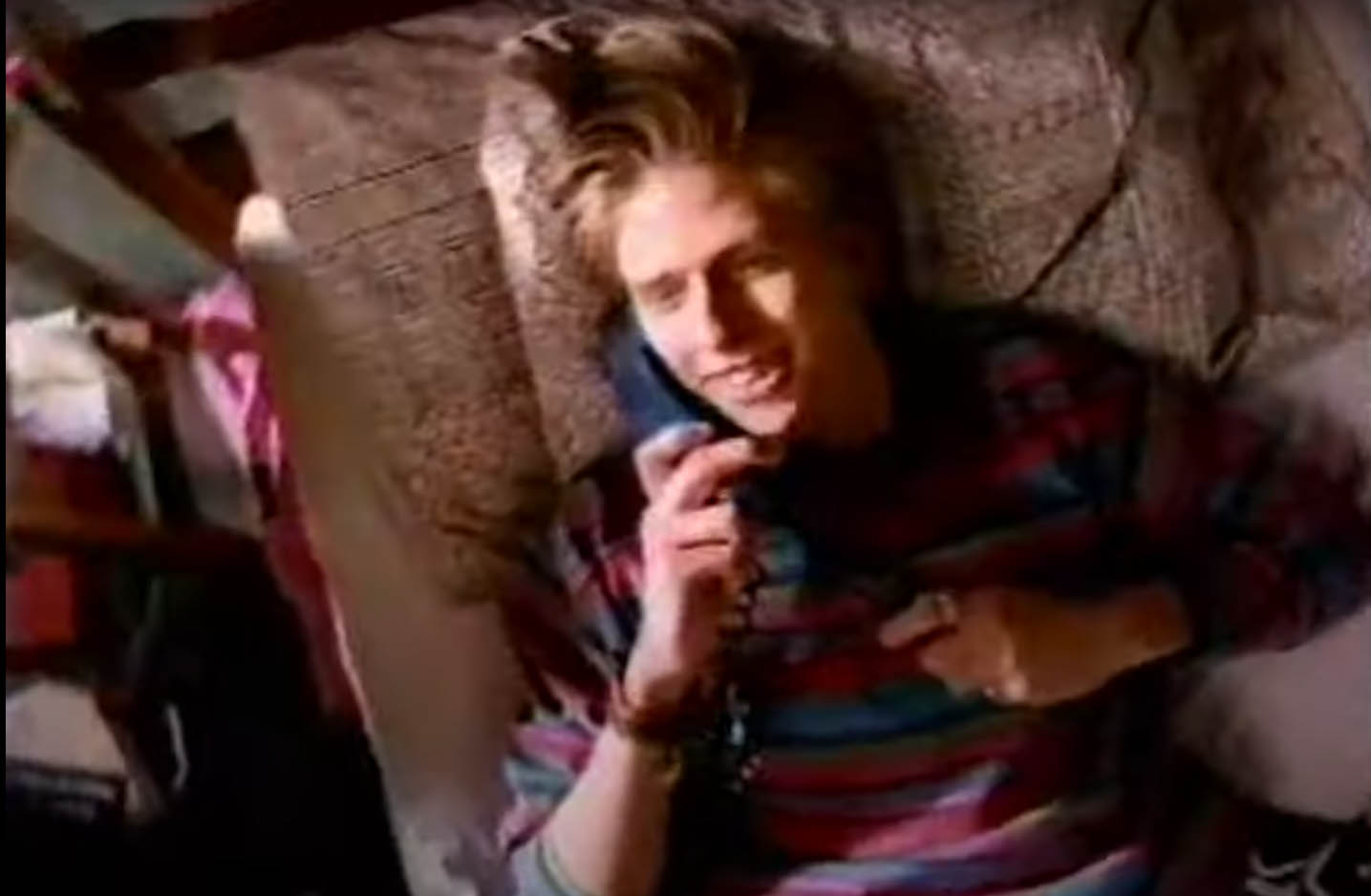
 I mean, at least Rick had earth tones in 1991. I wouldn’t get earth tones until college, which you can see here in this shot of my dorm room circa September or October 1995. And I’m being completely honest when I say that this was the only comforter and sheet set that I could find at the store. I also can’t let this picture get posted without pointing out how it is, in itself, the epitome of the college experience in 1995. From the Sega Genesis on my roommate’s dresser to the ROLM phone under my Reservoir Dogs poster, there is so much I could talk about that it’s pretty much its own post*. But right now, I have to get back to Rick.


 I can’t get the image of Eric Zala begging his boss for another day off out of my head. It happens about two-thirds of the way through 2015’s Raiders!: The Story of the Greatest Fan Film Ever Made, which chronicles his efforts to reunite his childhood friends–Chris Strompolos and Jayson Lamb–so they can recreate the aistrip scene from Raiders of the Lost Ark where Indiana Jones fights a Nazi brute and wins when said brute is chopped up by a plane’s propeller. It’s the only scene that he and his friends never filmed when they were teenagers and put together a shot-for-shot adaptation of the movie. At this point in the film, Eric is woefully behind schedule due to constant rain storms, and we hear his boss, Alex, berating him for wanting just one more day off and he sits in his trailer looking like a kid who is being chastized.
 I’ve said before that Saved By the Bell is one of the most influential shows in the history of television, as Millennials and Gen Z were able to spend much of their formative years watching sitcoms that were targeted directly at them instead of having to settle for simply graduating from the world of Saturday morning and weekday afternoon cartoons like Generation X had. This was obviously helped along by Nickelodeon and The Disney Channel, as the former increased its tween programming int he early ’90s with Clarissa Explains it All and similar shows while the latter became part of basic cable packages between 1991 and 1996.
 Name Your Adventure was a reality show wherein a teenager would get the opportunity to do something they’d always dreamed of doing, a formula that would get reused in the early 2000s with the MTV series Made. Hosted by Mario Lopez, Jordan Brady, and Tatyana Ali, the show was a slightly slicker version of classic PBS shows like 3-2-1 Contact because it was less about the spectacle of nerd rehabilitation (which was 99% of Made) and more like someone being given an internship. I found one story on YouTube that featured teenager Jon Steinberg who was interested in becoming a sports broadcaster, so he was paired up with Bob Miller who at the time was the play-by-play guy for the Los Angeles Kings. The segment was definitely more educational than flashy, as Miller fed Steinberg a lot of information as well as gave him real-time feedback as he tried his hand at calling part of an Angels/Yankees game.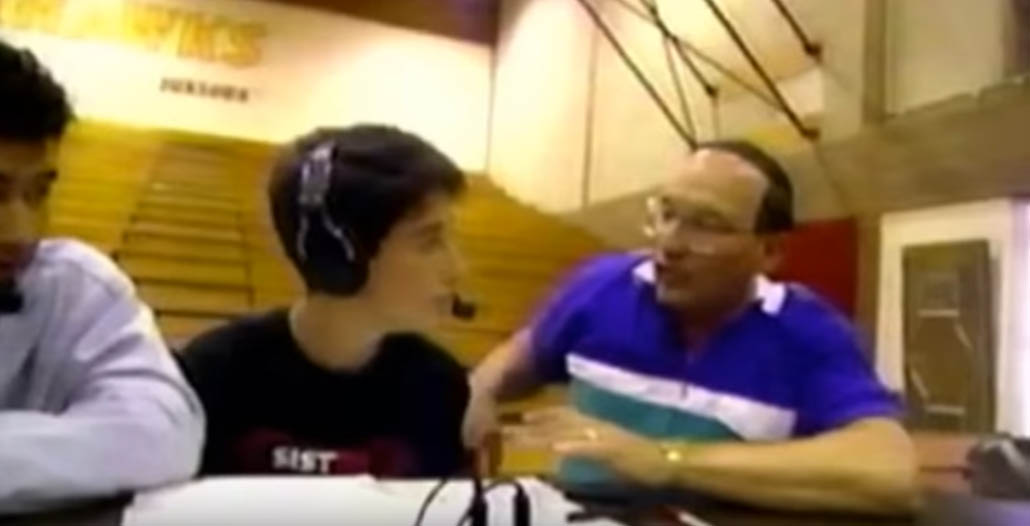


 So I’m about thirteen or fourteen and my dad’s in the den watching a movie during the middle of the day, which he only did if he’d fallen asleep watching it the previous night and had to return the tape to the video store so he wouldn’t get charged a late fee. I walk into the room and he’s laughing at a scene where Shelley Long is serving Jamie Gertz some really disgusting-looking thing called “jellyfish salad.” He keeps laughing and talking about how hilarious Shelley Long is, something I agree with it because by that time I had seen the majority of the Diane episodes of Cheers, so I stick around and finish the film.
 If you were a high-achieving teenager in the Eighties or early Nineties, there was only one way for you to get through feeling overwhelmed by all the pressure: amphetamines.
