 When I look at what my son likes to watch on television and what he likes to play with, I am amazed at how similar we are. Now, I don’t have a photographic memory from when I was 3-1/2–most memories from that age come in flashes and spurts–but right now he is really into superheroes and Curious George. I am sure that we’ll have years of superhero awesomeness in our house (and that’s a whole other entry), and Curious George is definitely another topic for another day as well, although I do remember that when I was young I had several of those books that I read and decorated with stickers that told everyone that it belonged to TOM.
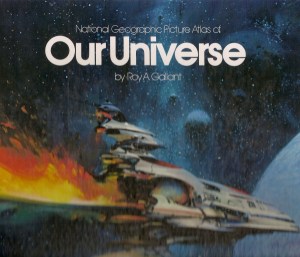
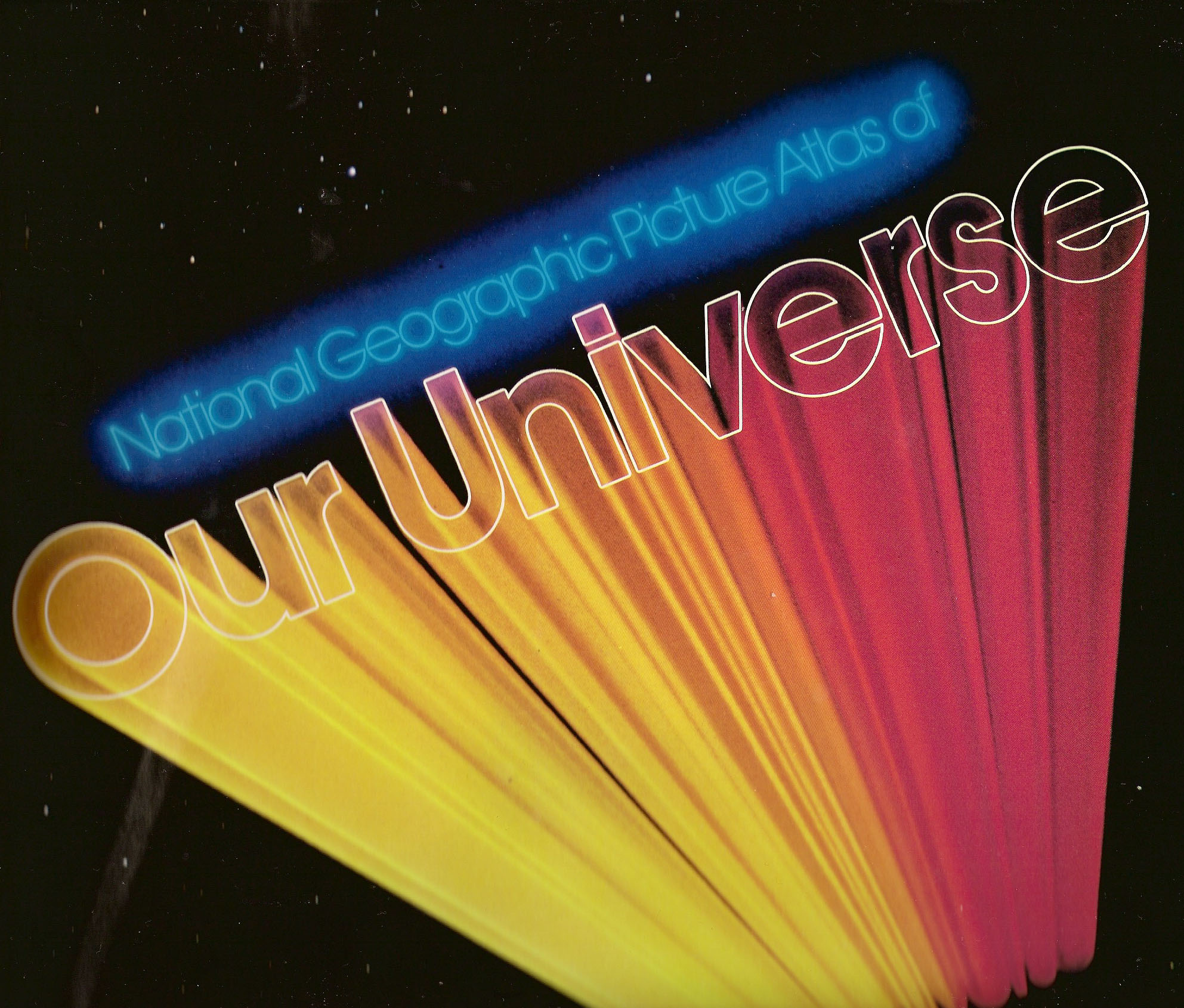
But he’s also really interested in space travel and when he first showed interest in it I was excited but I wasn’t sure exactly how to encourage that curiosity about space. You know, beyond watching space shuttle launches on YouTube and a set of space-themed flash cards my wife found in the dollar bin at Target. I mean, it’s a bit too early to get him into Star Wars because even that type of violence might be a little much for a kid who gets a little scared when watching Scooby-Doo (besides, I don’t remember seeing Star Wars for the first time until I was about four or five). And while I’m sure that I will get around to The Saga, I was hard-pressed to find something until I was hanging out in the library at work and came across National Geographic’s Picture Atlas of Our Universe.
With a futuristic-looking spaceship on the cover, Our Universe is one of those library books that when I was in junior high I would check out at least a few times a year in order to pore over its pages, taking in every artist’s rendition and satellite image. The edition I had in my hands on was from 1992, so it was later than the one I used to check out of the library but still accessible to even a very little kid and still awesome to me.
That space ship on the cover is sort of our guide through the universe, as the book’s narrative takes us on a tour through all of the planets of the solar system including Pluto (and I don’t buy that “Pluto’s not a planet” crap anyway), and beyond. The beyond includes stars, asteroids, comets, other galaxies and the history of space travel as well as the possibilities for the future.
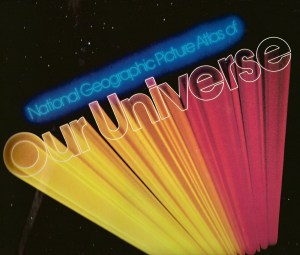
The title page, which leads to …
Open the book and the title flies at you kind of how the opening credits of Superman do. But what makes this even more awesome on some level than seeing “Richard Donner” streak across a screen is that Our Universe does the title flight over the course of two spreads with the words nearly off the page on the second spread. That, and it’s in Avant Garde and Avant Garde is just awesomeness in itself.
After an introduction, we learn about how ancient civilizations viewed the cosmos as well as how our modern scientific theories come to fruition through scientists such as Newton and Galileo. it’s an encyclopedia’s worth of information being written in a pretty tight narrative that your average and elementary and junior high kid would understand and probably enjoy. The examples rely on both scientific models and artist’s conceptions, something that’s carried throughout.
… a TWO-PAGE SPREAD OF AVANT GARDE GRANDEUR!!!
(more…)
 In the second episode of the Pop Culture Affidavit podcast, I take a look at Stephen King’s It, both the 1986 novel as well as the 1990 TV movie starring Tim Curry as the evil Pennywise The Clown. It’s a Halloween treat that will remind you why demonic clowns dwelling in sewers will make you swear off the circus forever.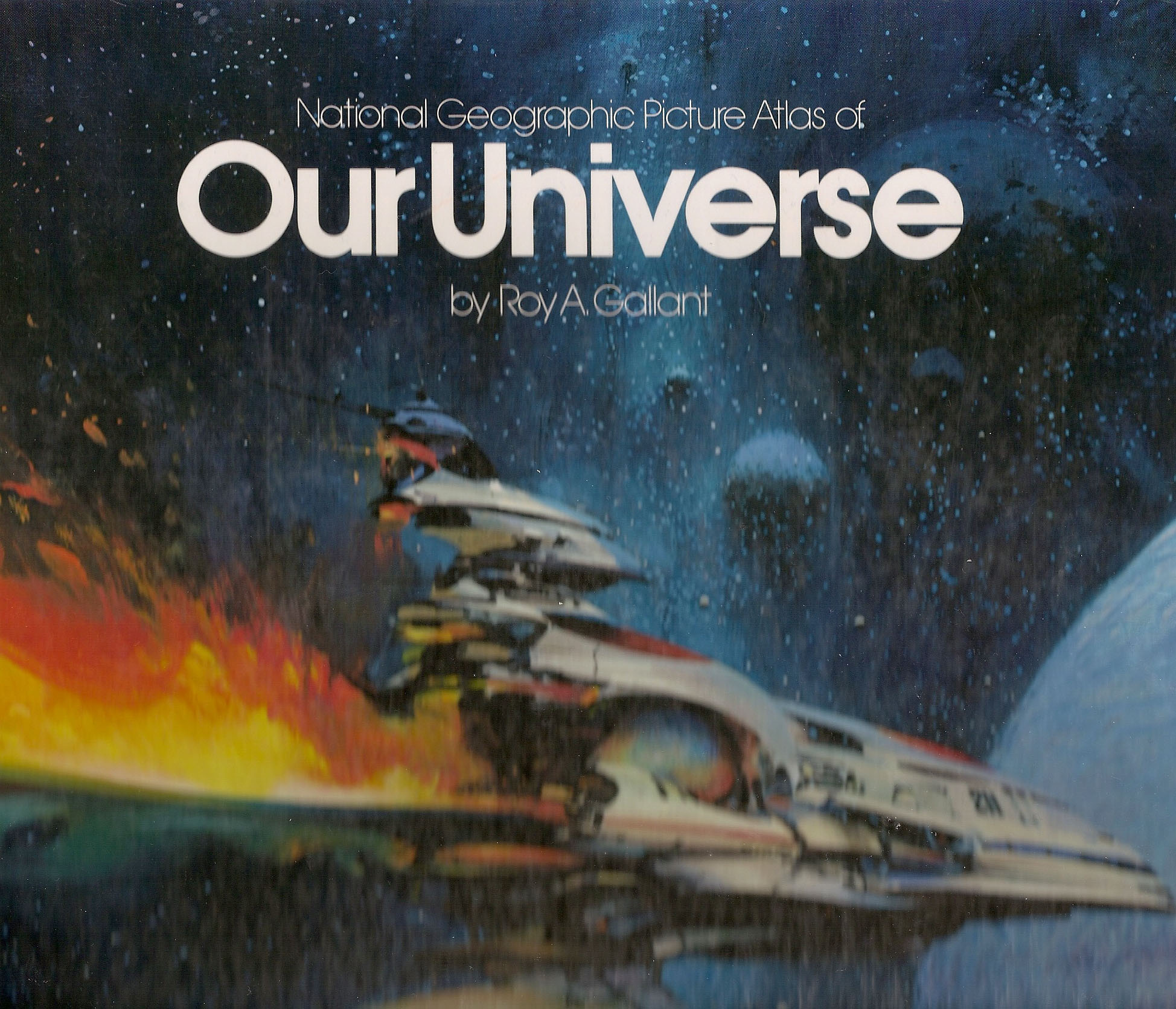

 Pop Culture Affidavit