High school reunion month concludes with my all-time favorite reunion movies and one of my all-time favorite John Cusack movies, Grosse Pointe Blank. For this look at the high school reunion of Martin Blank, professional killer, I’m joined by Michael Bailey (From Crisis to Crisis, Tales of the JSA, Views from the Longbox) and we talk about the movie, its characters, its music, and how well it holds up nearly 20 years after its release.
There is a scene toward the end of Romy and Michele’s High School Reunion where Toby (Camryn Manheim) tells Heather (Janeane Garofalo) that Heather’s constantly telling her to “fuck off” throughout high school really hurt her feelings. Heather, who at that point had come to the realization that Romy and Michele–whom she claims made her life hell in high school–went through hell because of the actions of the “A Crowd,” realizes that she made Toby’s life hell and says, “Tremendous!” While Garofalo plays Heather as the bitter and cynical one at the reunion, it’s a scene that is a lot more funny and perfect than the way I just described it. She’s just realized the truth about how bullying works within the high school social hierarchy: the kids on top picked on someone below them and that person found someone below them to torture and that person found someone below them, and so on.
It’s one of a few darker points made throughout a movie that is best known for its two ditzy main characters. Romy (Mira Sorvino) and Michele (Lisa Kudrow) are living in Los Angeles ten years after graduating from high school and leaving behind their lives in Tucson. While they clearly have fun, neither is particularly successful–Michelle is unemployed and Romy works the counter at a Jaguar dealership (where she is constantly hit on by Ramon in the service department)–and after Romy runs into Heather at the dealership (Heather got rich after inventing a quick burning paper that eventually was used in a special kind of cigarette), the two prepare for their high school reunion by flipping through their yearbook and it goes from happy and funny to a realization that they spent the better part of four years getting shit on by the “A Crowd,” which was led by Christy Masters (Jessica Campbell). Seeing that they’ve basically amounted to nothing and that they have to show up Christy and the A Crowd, they borrow a Jaguar from Ramon at the dealership, buy sophisticated-looking business suits and flip phones, and come up with a backstory about their having invented Post-Its.
This obviously falls apart, mostly due to Heather, who is unaware of the cover story and blows it right in front of Christy, who then take the opportunity to ridicule Romy and Michele for their lie in front of the entire class. It leads to Romy and Michele going back to their car, putting on custom-made dresses, and then marching back into the reunion where Romy walks right up to Christie and says:
What the hell is your problem, Christie? Why the hell are you always such a nasty bitch? I mean, okay, so Michele and I did make up some stupid lie! We only did it because we wanted you to treat us like human beings. But you know what I realized? I don’t care if you like us, ’cause we don’t like you. You’re a bad person with an ugly heart, and we don’t give a flying fuck what you think!
Christie and her minions laugh it off, making fun of their outfits, but Lisa Luder (Elaine Hendrix), who was once one of the A Group but lost touch with them over the years as she worked her way up the ladder at Vogue, compliments the outfits, to which Christie replies, “You’re just jealous. Because unlike a certain ball-busting dried up career woman, I might mention, we’re all HAPPILY MARRIED!”
“That’s right, Christie,” Lisa says “Keep telling yourself that.”
It’s one of my favorite exchanges throughout the entire movie because in a way it fulfills a fantasy that I’m sure quite a number of people who weren’t on top of the pecking order have had at least once. In fact, what writer Robin Schiff (who also wrote the play the film is based on, Ladies Room) and director David Mirkin (who was a longtime Simpsons writer and had worked on, among other series, the Chris Elliott show Get a Life) do is explore several scenarios that you’d expect from a movie that’s about a high school reunion:
The popular crowd still wants to act as if it’s on top
You want to see if your high school crush is still like you remember
There’s one-upsmanship to see who’s the most successful
You feel secure or insecure as to how his or her life has turned out
You come to realization that high school is not as important to your overall life as it seemed when you were there
There are all elements that could be taken seriously and even used for a drama, but Schiff and Mirkin turn what could be a middle-of-the-road movie into a weird, even crazy at times farce that is more of a “best friends” movie (I hesitate to use the word “chick flick”), and that’s what puts it above any run-of-the mill comedy of the time. It also capitalizes on what was then a growing nostalgia for the Eighties (The Wedding Singer would be released about 10 months later) with flashbacks to 1987 and a soundtrack that included Wang Chung, The Go-Go’s, Kenny Loggins, Belinda Carlisle, and Cyndi Lauper–in fact, what’s probably the most famous scene in the movie is a choreographed dance the ladies have with Alan Cumming to “Time After Time.”
Funny enough, nearly twenty years after Romy and Michele’s High School Reunion came out, it’s now a great movie to watch for Nineties nostalgia. The entire look of the movie just screams Nineties and I have to wonder if it was one of the things that the producers of Hindsight watched when they were planning their Nineties flashback series. And while I’ve skipped over quite a bit of the movie in favor of a couple of the themes it explores, it’s easily one of the best films about a high school reunion ever made.
Back when there were video stores, there were always moves that you rented because nothing else looked good. When I was in junior high, these were often produced by a studio like Cannon, but as I got older, and my film taste diversified from random ass, often crappy action movies to random-asse crappy comedies (I never said my taste improved as I got older). One of those movies was Since You’ve Been Gone. This one sat on a shelf at the Blockbuster in Bayport for what seemed like eons in 1999, staring at me, begging me to rent it, only to be disappointed when I decided that watching Jawbreaker was a better idea.
But one day, when I happened upon the film again, I picked up the box and read what seemed to be a good equation for the type of movie I could spend some time with on a Saturday night: Lara Flynn Boyle + David Schwimmer + Teri Hatcher + High School Reunion = Decent Time. Hey, picking up a video on an off chance worked for Clerks, so why not go for this?
Believe it or not, while Since You’ve Been Gone is not Clerks, it’s still an entertaining little flick that is worth it when you are scrolling through Netflix looking for something to watch. The most interesting piece of trivia about it is that it was directed by David Schwimmer, who at the time was at the high point of his Friends fame and it also has a fairly decent number of walk-ons and cameos by famous actors (or at least people that I can spot). While it is an ensemble, it basically follows three sets of friends through their high school reunion at a hotel in downtown Chicago (and props to the film’s writers for not setting the reunion at the actual high school).
Our first group is made up of Kevin (Philip Rayburn Smith), Molly (Joy Gregory), and Zane (Joey Slotnick), who are basically, I would say, the most ordinary of the entire cast. Kevin, a pediatrician, is the snarky cynic; Molly, his wife, is the outsider (she didn’t go to high school with Kevin); and Zane is their friend who achieved some marginal fame as a musician (although his most famous song is one that another artist sings). Kevin’s time at the reunion is an exploration of that cynicism–confronting an old rival, seeing an old flame, and receiving bad new from work make him increasingly bitter.
The second group is that of Holly (Heidi Stillman), Electra (Laura Eason), and Maria (Teri Hatcher). Holly survived a plane crash and is now a motivational speaker, while Electra is a walking calamity. Maria–whom they haven’t seen in years–is living in Europe and has become a “worldly” type, peppering her speech with snooty-sounding European phrases. So their plot is about the bullshit they create for themselves, although Electra’s is one of having more and more terrible things happening to her over the course of the night, including chipping her tooth on a nail that someone put in her slad and having her ass glued to a toilet seat.
Finally, there’s Duncan and Clay. Clay (Thom Cox) is and has been “crazy” and self-destructive and Duncan (David Catlin) is his best friend and de facto caretaker. Duncan is also the guy who is constantly shit upon by class president Rob, who is played by David Schwimmer in the douchiest way possible. Duncan, it’s discovered by the end of the film, is great at networking with people and Clay winds up hooking up with Grace (Lara Flynn Boyle), who is just as destructive as he is and spends the entire night playing brutal practical jokes on her former classmates.
Honestly, while the plots of the film are solid enough to carry the whole movie, the most memorable stuff is found int he various one-off jokes and random cameos (Jon Stewart, Jennifer Grey, and Molly Ringwald as “Claire,” to name a few). Years ago, I reviewed Since You’ve Been Gone for Bad Movie Night and noted that the film feels like it is the reunion of the graduating class that we see in Can’t Hardly Wait (which Since You’ve Been Gone actually predates by two months) and even though that review is more than a decade old, I still think that makes sense. Can’t Hardly Wait is very much like this–random characters with separate storylines that all exist within the same setting (Can’t Hardly Wait takes place at a massive graduation party). And while there are certainly better high school reunion movies than this one (Grosse Pointe Blank comes to mind), Since You’ve Been Gone is quite possibly one of the most realistic in its premise. After all, an event like a high school reunion doesn’t have a through storyline, and everyone brings their own lives–and often their own baggage–with them.
Schwimmer and writer Jeff Steinberg play that for laughs and serious where it needs to be but with the exception of Zane singing his song at the reunion (after Grace has destroyed all of the band’s instruments through a massive feedback), which provides background for a montage, they do a competent job of not laying any emotion on too thickly. Like I did a number of years ago, you’d probably only ever watch this if you happened to be browsing through Netflix and it caught your eye (it’s been available for streaming for years and I don’t think it’ll be gone anytime soon). But at least, I suspect, you’ll find it’s worth it.
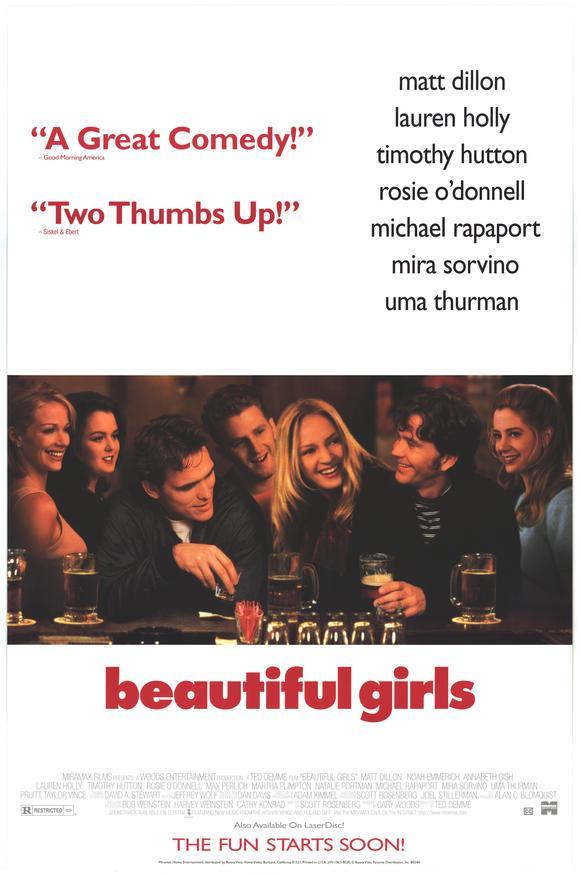
With this episode of the podcast, I’m kicking off “High School Reunion Month.” No, I won’t be attending my high school reunion (there are scheduling conflicts) but I am going to be doing two podcast episodes and two blog posts about high school reunion movies from the Nineties. First up? Beautiful Girls, a 1996 ensemble comedy directed by the late Ted Demme and starring Matt Dillon,Timothy Hutton, Rosie O’Donnell, Martha Plimpton, Natalie Portman, Michael Rappaport, Mira Sorvino, and Uma Thurman. I take a look at the movie and offer up my favorite moments as well as tackle some long-awaited listener feedback.
It’s the 50th episode of Pop Culture Affidavit! For this special episode, I take a look back twenty years to the year I graduated from high school. Along the way, I look at how senior year of high school is represented in movies. It includes stops at, among other things, American Pie, Fast Times at Ridgemont High, Can’t Buy Me Love, and Paper Towns as well as a host of personal memories about my own senior year of high school (which ended on June 25, 1995). Was high school the best time of my life? Was it a waking nightmare? Was it a little bit of both? You’ll have to listen to find out.
In the pilot episode of the late, lamented My So-Called Life, Angela Chase’s English teacher sits her down during lunch to talk about what’s been going on with her lately. Her appearance has changed and she quit yearbook (much to her teacher’s chagrin because she’s the yearbook adviser). Angela’s response in her typical half-engaged fashion, is:
It just seems like, you agree to have a certain personality or something. For no reason. Just to make things easier for everyone. But when you think about it, I mean, how do you know it’s even you? And, I mean, this whole thing with yearbook – it’s like, everybody’s in this big hurry to make this book, to supposedly remember what happened. Because if you made a book of what really happened, it’d be a really upsetting book. You know, in my humble opinion.
For the past ten years, I was a high school yearbook adviser and I had that quote on the wall of my classroom, partially because MSCL is one of my all-time favorite television shows and partially because I’ve always thought there was a certain amount of truth to it. While quite a number of high school yearbooks are afforded the chance to show the school, students and teachers for what they are, most are simply glorified PR pieces that students can have signed and eventually show off.
So I guess that begs the question: if you made a book of what really happened, would it be a really upsetting book?
Of course, I’m going to hedge here and say that it depends on what your reaction to such a book would be. Some people would find the reality of high school depressing while others might find it refreshing to get more than just the slickness and sheen of a yearbook. A number of people might find it boring. Still, what would it look like?
Well, while I’m sure there is more than one book out there (Queen Bees and Wannabees, the book that was the source for the film Mean Girls springs to mind), this has been answered more than once in television and film. Which shouldn’t sound weird to anyone who has seen any of the offerings from MTV in the last twenty years or so, from True Life, which premiered in 1998; to shows such as Made, 16 and Pregnant, and Teen Mom, which have all tried to present the lives of its subjects for what they were (although all but True Life stretched the concept of “reality” pretty far). But the idea of a film or television crew taking a group of teenagers and filming their lives, while having gained popularity since the turn of the century, is actually quite older.
While the concept of “reality television” has its genesis in the 1970s with shows such as An American Family but my first encounter with it was in the spring of 1991 when Fox aired a new show called Yearbook. Produced by Hank O’Karma, written by Louis H. Gorfain, and Directed by Charles Bagert and Hank O’Karma, a production team that worked on several similar productions throughout the Nineties, Yearbook followed the lives of several students at Glenbard West High School in the Chicago suburbs (a note of trivia: the show’s music was by Michael Bacon, brother of Kevin Bacon). The show only had nine episodes, all of which aired between March 7 and May 4, 1991, and fell into obscurity quickly thereafter while Fox discovered that it had a bona fide hit in another series about teenagers, Beverly Hills 90210, which by May 4, 1991 was pulling in about 10-15 million viewers per episode.
I was one of the few people who watched the show on a consistent basis, having been intrigued by both commercials I saw and by the description of the show provided by TV Guide. It was as it promised: a look at the lives of several students at the high school as they happened throughout the year.
This ten-minute clip is only one of two examples of what exists of Yearbook on the Internet (or at least as far as I could get while doing research). The other example is most of the episode “War and Peace,” or at least the parts of that episode that focus on Todd Myra, a student who was set to start with the Marines when he graduated in 1991.
If you’re watching Yearbook and it looks like something out of a John Hughes movie, it’s because it kind of is–after all, Hughes set most of his important teen movies in suburban Chicago–and this helped the students in the series look pretty familiar, especially if they had been watching those movies on video or if they had been watching another Fox show about teenagers, 21 Jump Street. Reality television’s evolution to the point where the audience is constantly questioning the veracity of what they see on the screen wouldn’t be fully realized for at least another decade. At the time this was something unique, as The Real World was at least a year away, and Yearbook was the closest thing we had to a documentary and I honestly wonder if the producers’ original intent was to make a documentary but Fox television provided the better deal.
Looking at these two quick glances for the first time in nearly 25 years, I was struck by how dated the series looked, but then reminded myself that it’s a slice of life piece from the early 1990s, so my amusement at the clothes and hair of the time as well as the title sequence at the narration (which is done by Ken Dashow, who was then a deejay at WNEW-FM in New York City, although he sounds like he’s narrating a video I would have watched in health class) got set aside for a look at the people and the situations for what they were as opposed to how ridiculous everyone looked. The show does become very after-school special at times, but with less of the melodrama from after-school specials, and that’s definitely one of its enduring strengths: we can see these people for who they are (or were at the time).
I was drawn to this because I was fourteen years old at the time and thought it was a great idea for a show–after all, I’d been ensconsed in Degrassi at that point–and while I don’t remember if I watched all nine episodes, some of the episodes I watched stuck with me as well as did some of their moments. Centering the first episode around hoemcoming seemed to be a pretty good idea since it’s a universal high school experience. Granted, not everyone gets all “rah rah” about homecoming, everyone in the audience could at least relate, and it also provides a nice bookend to the graduation that concludes the series. Of course, my biggest takeaway was the memory of watching the episode with my parents and when the Homecoming Queen is crowned, my father started bitching at the television that she’s going to have to get up in front of everyone with “all of that hat hair.” Because, you know, that’s the most important part.
But as you go past the first episode and get deeper and deeper into the lives of these people it becomes less like a show and more like the documentary that the creators will obviously go for, serving as a look at a particular sliver of our culture but also as a time capsule for both those involved and those watching. “war and Peace,” the episode about Todd Myra, is one of the best examples of that because Operation Desert Storm happens right in the middle of the episode and he worries about how his life will be affected by this moment in history (of course, being that this was Desert Storm in 1991, his life wasn’t really affected because the war was over incredibly quickly), a worry that is juxtaposed by the heartbreaking story of his foster brother having to possibly go live with his birth parents (seriously, even I was feeling sad when the kid started wailing in his mother’s arms about how he didn’t want to go away).
The gangs episode was also of its time. Not that gangs aren’t still a problem now, but back in 1991, there was this fear among people in America’s suburbs–especially those like mine that were overwhelmingly white–that gangs were this enormous threat to their children. It went along with the trepidation every parent had about rap music and “black” movies. If you paid attention to the news at any given time for a couple of years, the fact that Ice-T wrote a song called “Cop Killer,” there was a fight that broke out at a screening of New Jack City, and gangs existed, every white middle class teenager was walking into some sort of apocalyptic hell every time they went out on a Friday night. At the time, I never could truly figure out why adults seemed so up in arms about these things, although I eventually realized that it was part of an implicit racism that exists in many of those types of communities (and let’s face it, some of those communities have explicit racism) as well as worrying about “the big black rap and gang monster” provided a distraction from the drinking and sex kids were doing and adults could do something about.
But getting involved with gangs is a very serious thing, and though there isn’t very much in the clip, getting out of a gang is very dangerous, and the producers seemed to be doing there best to show it in a way that the audience could learn something from it, the same way that the episode “A Mother’s Story” focuses on the struggle that Mark Palicki deals with in his life because his mother has leukemia and is having a bone marrow transplant. This was one of the most memorable episodes when I first watched it, as my having been very sheltered up until that point hadn’t seen anyone as sick as his mom was in that episode. For what it was, this was intelligent and I find it ironic that Fox, of all networks, gave us not one, but two high-concept, very honest looks at teenagers, when they were responsible for some of the trashiest, lowbrow reality programming of the late 1990s and early 2000s: Temptation Island, Paradise Hotel, Who Wants to Marry A Millionaire?, and The Swan, to name a few.
The other high-concept reality program they released lasted even shorter than Yearbook’s nine episodes, and that was American High, which aired in August 2000 and lasted for only four episodes; however, PBS picked up the show and aired all thirteen of its episodes in 2000. Created by R.J. Cutler, who has also directed the acclaimed documentaries The War Room and The September Issue (which is a must-see), American High won an Emmy in 2001 for Outstanding Reality Program and uses the same concept as Yearbook, but with some modifications. Instead of claiming to follow the whole class of a high school, the intro tells us that the show is taking a look at fourteen students in Highland Park, Illinois, which is also a suburb of Chicago and not only were hours upon hours of documentary footage shot, but the students were given cameras themselves in order to keep video diaries. This makes sense, of course, as we were now nearly a decade into The Real World, which brought us the reality show confessional.
Much like Yearbook, not much of American High exists online. The website for the show that PBS set up in the early 2000s when it was running all thirteen episodes is still live, but the videos on the site use a Real Player plugin that I’m not sure actually exists. Thankfully, through the wonder of YouTube, I was able to watch one episode, “Boogie Nights,” which was the third episode overall.
The previouslies are important for the episode, as American High had overarching stories (as opposed to Yearbook whose stories were more self-contained) and in the previous episode, Brad, who is a major player in “Boogie Nights,” came out to his friends. Apparently, this went very well as Brad’s now being out at school is not the center of the episode, but rather his determination to put together an awesome dance routine for the school’s dance program. While I found myself impressed by–and admittedly jealous of–the school’s performing arts facilities as well as its openness to forms of dancing that the rather conservative community in which I teach would be utterly scandalized by, I also noticed that the producers had decided to focus on the type of problems that are definitely suburban high school problems yet can be easily understood by those outside of high school as well.
Brad, for instance, is dealing with the pressure he’s putting on himself for making the dancing perfect, which is very nicely juxtaposed to the pressure Suzy is putting on herself regarding her personal body image issues, and he has to deal with Morgan, who is the epitome of the late 1990s/early 2000s teenage boy that Frontline once called “the mook,” a perpetually immature boy whose behavior often gets in the way of his accomplishing anything. I found myself rolling my eyes when he talked about how he knew he could learn the moves for the routine was deliberately slacking off because there were hot girls and their having to constantly reteach him the moves meant that he got to dance with them longer. He’s so much like a number of students I’ve taught, but even though he annoyed me I didn’t see him as a villain in the episode, which is what tends to happen in current-day reality shows. Instead, I found myself mesmerized by the dance routine and whether or not they’d pull it off (or if there would be controversy as a result). The format was a little less clinical than Yearbook’s tended to be, as the students’ video diaries made the show feel more up to date.
Then again, by the time American High aired, the footage/confessional format was routine, so the students were obviously comfortable with all of it on the same level, and by then quite a number of studies, articles, and even television specials were being produced about how Generation Y (as it was known at the time) was one of the most marketed-to generations in history. Frontline’s piece on this, “The Merchants of Cool,” took a look at this through the various people who made a career out of trying to sell to teens and tweens and those people described all of the various “types” within that generation with astounding accuracy.
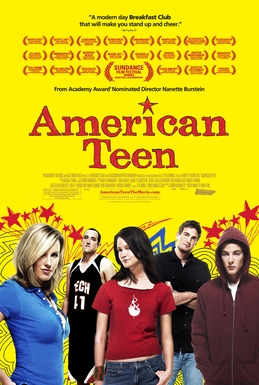
The follow up to “The Merchants of Cool,” “Generation Like,” did the same for the current generation of teenagers, a group of which (or at least the older end of that generation) comprises the cast of the 2008 documentary American Teen. Filmmaker Nanette Burstein takes a look at five teenagers at Warsaw High School in Warsaw, Indiana. Colin, a star basketball player, wants nothing more than to play college basketball. Megan is the queen bee, Jake is the dork who is shown constantly trying to find a girlfriend, Mitch is Colin’s friend and the attractive “heartthrob” guy, and Hannah is the artsy girl who wants nothing more than to get out of Warsaw and go to film school in San Francisco.
Out of the three depictions of teenage culture that I’m covering here, American Teen is the most accessible, as it’s been available on DVD since 2008 and while it purports to present a fairly accurate look at the senior year for these five students, there were some questions about its accuracy. I know that critics of the film as a documentary and not a docudrama were nitpicking Burstein’s ability to have both sides of a telephone conversation on screen, but I think that the criticisms come more from the fact that she edited the film to have a discernible plot for four of the five characters (honestly, Mitch is more of a supporting player, as he’s introduced later in the movie and his biggest story arc seems to be the fact that he starts to date Hannah and then winds up breaking up with her with a text message) and that there were good guys and bad guys in the film.
Megan, the queen bee, comes off as an obvious villain throughout much of the movie, especially when she gets a hold of topless pictures that her friend Erica sent to her friend Jake and then emails them to as many people in the school’s email directory that she can think of, and spray paints a penis and the word “FAG” on the junior class president’s window (while her friends teepee the house) because he changed the prom theme without her consent. The ensuing discipline meeting with the principal is very typical–since she hasn’t gotten into much trouble before (and let’s face it, is the queen bee), she gets off with a slap on the wrist of some community service hours and a revocation of some activities privileges.
Now, she could be a real-life Regina George or Heather Chandler if it wasn’t for the fact that Burstein allows us to see her as deeper than just the villain that she would have been portrayed as if this were a trashy reality show. At one point, Megan gets in a fight with her friend Ali and we later realize that it was not because of anything Ali particularly did, but because Megan is dealing with the stress of trying to get into Notre Dame as well as it being the anniversary of her older sister’s suicide.
On the flip side, Hannah, who is set up to be the free-spirited hero of the film, the girl who you want to see escape the trap of Warsaw that girls like Megan rule (after all, people hate the way Molly Ringwald made over Ally Sheedy in The Breakfast Club). But the free spirit hides a struggle with anxiety and depression that hits hard after her boyfriend Joel breaks up with her. Hannah crawls into herself and spends the next three weeks away from school, to the point where there are times that she has full-on panic attacks as she drives up to school and attempts to attend for the day. Her relationship with Mitch ends with that text, but we see growth, as she manages to finish out the school year and finds arguing with her parents over San Franscisco more important.
Colin’s story is that of the crushing reality that comes with being good at sports in a small pond like Warsaw but maybe not what the big pond wants. He struggles through his senior season to try and impress recruiters, so much that his performance suffers and the team’s record suffers. Of course, he turns it around by the end and he winds up going to Indiana Tech on a scholarship and gets the winning shot in the sectional championship.
Jake basically spends the entire movie being socially awkward and trying to get a girlfriend and it’s cute at times, uncomfortable at others, and the point is belabored quite a bit, if I’m being honest. But it fits right in with a lot of the other situations presented in the film in that while the kids may be mugging for the camera at times, there are other times where they’re being honest and you can tell that any statement they may have about how they didn’t notice the camera was there is probably true. The film, which I’ve now seen twice, doesn’t necessarily hold up to rewatches, but there are moments that sucked me in both times that I watched it. Hannah’s depression both times had me really hoping that she gets herself back together and I found myself siding with her at the end of the movie when she’s arguing with her parents about her wanting to go to San Francisco after high school because while her mom talked about how all of the rapes and murders that happen to girls like her in the scary city, I knew that moving to California was the only way that Hannah was ever going to get out and not wind up living a miserable life in Warsaw.
Conversely, I was hoping that Megan would get more consequences than she did, although I will say that by the end of the film, when she has gotten into Notre Dame and is showing signs of being sick of the town and the school herself (something I think we all do as seniors), I believe the note in the epilogue where she says that she’s matured a lot since starting college.
In a sense, when you take these three pieces as a whole, they represent a beginning, middle, and end of teen culture, with the first part being in 1991 with the tail end of Generation X and then the Generation Y in 1999 and then the Millennials in 2008. This is three generations of kids (mainly because at least two of these groups are on the cusp of the labels that were assigned to their respective generations. There is a sense of universality among all of these stories. It’s 2015 and when I look back on both shows and the film and see the same issues, the same problems, and even the same attitudes as students I currently teach, even as far back as 25 years ago before I even started high school, I see that while so much as changed yet so much has not.
The problem with American culture is that we have this weird collective ADD when it comes to popular culture and on some level I think that comes from the fact that pop culture is ephemeral and by its nature has a tendency to be ephemeral. So we don’t necessarily remember things as well or for as long as we should. Oh sure, there are things that have staying power, but there are those things that are gone in a blink and provide examples of why obscurity exists in the first place. For instance, Yearbook, American High, and American Teen. never made enough impact on our culture for us to not realize “this has been done before” when the latest iteration of the high school documentary came about.
Education can be the same way. The talking heads/thought leaders/pundits in education seem to constantly tout how the current generation of students is unlike no other, as if they are a new make or model of car that we’re going to have to learn how to drive. I’ve heard people wax on about how students learn differently these days and while that may be true, it’s also unnecessarily untrue because when you go back to shows such as Yearbook and see how people have looked at teenagers as an anthropological/sociological study (as opposed to the more common usage for in-depth looks at teenagers lately, which is marketing), it’s important to note the universality of that experience. Furthermore, if you can look at something for what it is as opposed to what’s in front of you, you’ll start to reach a more thorough understanding of what’s going on.
The cover I made for “Past Lives and Long-Lost Friends,” which I originally burned onto two CDs. The idea for the cover came from a timeline feature in my high school yearbooks.
I don’t know if I realized it at the time, but following up a song by The Weepies called “Can’t Go Back Now” with “Summer, Highland Falls” is kind of a definite statement. The latter’s first lines are, “They say these are not the best of times/they’re the only times I’ve ever known.” While I can’t confirm this, I am pretty sure I wrote that in a friend’s yearbook at the end of my senior year (or at least I was thinking of it). It has always been one of my favorite songs and at the time I graduated high school, it fully encapsulated what I was feeling.
I’m pretty sure that is why it wound up on a playlist I made back in 2010 called “Past Lives and Long Lost Friends.” Silly as it sounds, I put it together because at the time, I was fifteen years away from that day in late June of 1995 and the mix tape, at the time I was a teenager, was my preferred form of artistic expression. if you were a girl I was dating (or a friend on whom I was crushing), you more than likely wound up with a 120-minute Maxell normal bias cassette that may or may not have had a custom label created using Arts & Letters, an ancient Windows 3.0 graphic design program. Now, I’m not sure how many of those girls kept my tapes. My wife did, but I think that’s because she never emptied them out of her car (a car, by the way, that I now drive to work every day). But the old girlfriend whose relationship with me ended in utter disaster? She probably torched them all the moment after I gave her one final goodbye over the phone (not my idea, mind you; she forced my hand). And some of those other girls? Part of me hopes that a copy of “The Last Worthless Mix Tape” is floating out there, playing in the old tape deck of someone who is feeling sentimental.
Which brings me to this five-year-old playlist that’s still on my iPod. Like I said, I was hitting the fifteen-year mark and was feeling sentimental, so I began dragging and dropping songs into a playlist. The phrase “long-lost friend” had been bouncing around my head for a while as had the idea of my having led a past life, or everyone I know having led a past life. Because when you think about it, the people you are around on a daily basis have stories that are bigger than the one they have with you. Or maybe I just notice this because it’s the curse of the writer’s mentality. But the idea that everyone is interesting in a way, that there is always something to find out about them, is fascinating.
It seems completely pretentious to me try and encapsulate that in a mix, and looking at the song list, it probably could be at least five songs shorter. It still would fit on a 120-minute cassette, but there are too many anthemic songs of youthful defiance (“We’ll Inherit The Earth,” “Death or Glory”) or aging punk anthems (“Scattered,” “I Was a Teenage Anarchist”) and the middle drags on through some very slow and soft folk pieces that don’t hold up (“See You Later, See You Soon,” “This is Me”). But it was good enough to earn “permanent playlist” status. Either that, or I was just too lazy to delete it, which is probably the more likely explanation as to why it has spent five years on my iPod.
Mix tapes seem to be this thing that is a part of my youth, whereas playlists are something you throw together because you want to listen to a variety of songs, often with the same rhythm or tone. I make workout playlists (admittedly, I probably should start working out more often), Christmas music playlists, dinner music playlists, and even a breakfast playlist that is filled with French jazz and other brunchy music. It’s all very adult because it serves a practical purpose, an extension of the tapes called “Tom’s Crap” that I used to make so that I had something to listen to on my Walkman or in my car. Part of me shrugs at this, but part of me is saddened.
There was a point in my life where everything had meaning. If I gave you a tape, it was because I wanted to say something or introduce you to something. And no matter how crappy that tape was–and trust me, some of those tapes were crappy–I thought it was important. “Past Lives and Long Lost Friends” was an attempt at making something important like that and also an attempt to hold on to the self-importance that comes with “meaning,” as if I am attempting to dispute the statement that Ally Sheedy so boldly makes in The Breakfast Club: “When you grow up, your heart dies.”
At seventeen, I believed her; at 37, I’ve come to realize she’s wrong. You simply turn your focus elsewhere. Adulthood is priorities and responsibility. It’s not that I don’t want to sit and contemplate an entire album for an hour; it’s just that I don’t always have the time. My geeking out happens amidst a flurry of multitasking and when I do get those moments to contemplate, I usually fall asleep in front of the television.
I’ve heard Billy Joel explain the meaning of “Summer, Highland Falls” as hitting that point in his life where he was starting to see the world for what its complexities. Much of that playlist, if you look at several of the songs, is a similar contemplation but I don’t know if I was contemplating graduating high school as much as I was coming to terms with the onset of middle age. At seventeen, I would have never put “Late for the Sky” by Jackson Browne on a mix tape (granted, I’m pretty sure that “Running on Empty” and “Somebody’s Baby” were the only Jackson Browne songs I knew), nor would I have considered Paul Simon essential listening. If I was being contemplative or sentimental, I would have chosen 10,000 Maniacs, but mostly I would have gone for the bombast of Queen.
To be honest, I have thought about making a Twenty Years On mix. I can’t decide if I would go for nostalgia or reflection, though. Twenty years kind of dictates that I should throw together a collection of the Pearl Jam, Green Day, Guns N’ Roses, Metallica, Queen, Led Zeppelin, Bruce Springsteen, and Billy Joel that I listened to in a Big Chill soundtrack sort of way. Being reflective would be more of what I did five years ago, which might be belaboring the point.
“Summer, Highland Falls” ends with a few lines that have always stuck with me:
How thoughtlessly we dissipate our energies
Perhaps we don’t fulfill each other’s fantasies
And as we stand upon the ledges of our lives
With our respective similarities
It’s either sadness or euphoria
It’s a final statement worth a close examination. If it is, as he says, the a moment of realizing that you’re getting older, it’s a perfect expression of that realization. There’s no violent anger here, just acceptance and resignation. Perhaps, even, there’s a bit of maturity. Place this in the larger context of, say, looking at one’s own adulthood or having a moment of forced nostalgia like the anniversary of graduating high school, and the same ambiguity exists. The bloom comes off the rose pretty easily when you really start thinking about all of it; thankfully, there are mix tapes, CDs, and playlists to help guide the way.
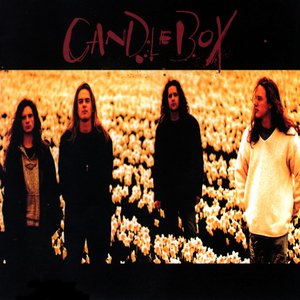
There’s a running joke that Michael Bailey (of Views From the Longbox fame) and I have going about us having “the same childhood”–being close in age and having grown up being able to watch a lot of the same TV channels, he and I have a lot of shared experiences when it comes to entertainment from the 1980s and 1990s. What makes this coincidence possibly more weird than funny, however, is that we both have the same mutant power. Both Mike and I have the ability to remember exactly where we were and what we were doing when we first saw a particular movie, heard a certain song, read a certain comic book, or encountered a number of other pieces of popular culture. I can take it one step further and tell you exactly where I was and what I was doing when my mutant power manifested itself. It was the day after Thanksgiving in 1994 and I was in my friend Vanessa’s kitchen. My girlfriend was breaking up with me over the phone and in the background of our conversation was Candlebox’s “Far Behind.”
Written as a tribute to Andrew Wood, the late singer of the seminal Seattle band Mother Love Bone, “Far Behind” is arguably the most well-known song off of Candlebox’s 1993 self-titled album. It was released on January 25, 1994 and peaked at #18 on the Billboard Hot 100, although it’s important to note that it was on the charts for most of the year and by the end of November 1994 was still in the top 40, having dropped to #35. But chart position for rock in 1994 wasn’t terribly important to those of us who were living on a steady diet of any band that we thought was quality in the wake of the coming of Nirvana and Pearl Jam during my freshman and sophomore years of high school, and since Candlebox sounded similar to Pearl Jam, Soundgarden, and Alice in Chains, I heard songs like “You” (their first single) and “Far Behind” and picked up the album.
I honestly had no idea that this was a tribute song. In fact, I had no idea who Andrew Wood was back in 1994 and my only experience with Mother Love Bone was the song “Chole Dancer/Crown of Thorns,” which was on the Singles soundtrack. I figured it was a typical-for-the-era breakup song/torch song, and to be honest, the events surrounding the day after Thanksgiving 1994 definitely contributed to that, especially since I took that moment very hard and it would take the better part of a year for she and I to get around to being friends without “We had once gone out and you broke up with me and I’m still pissed” being the elephant in the room. And that had more than anything to do with my immaturity–even though we only went out for a couple of weeks, she was the first girl I’d ever really dated and therefore this was my first real breakup. So “Far Behind” became its theme song and every time I heard it, I’d picture myself hanging out with Vanessa, who was home on break from college, calling up the girlfriend, and hearing her awkwardly ramble her way through a breakup that ended with “Well, I think we should just be friends.” It got to the point where it was like I was following some sort of masochistic ritual, and when I signed her yearbook that June I drove home the point by quoting the opening lines: “Well maybe I didn’t mean to treat you bad, but I did it anyway.” Because, you know, I was a senior in high school but when it came to girls I sometimes felt like I was still in junior high.
Despite all that, she and I are still friends and in a weird sort of way, this is a belated thank-you note to her because most importantly, that breakup was where memories of certain events or people in my life really began to be associated with something in popular culture and I began to think along the lines of “I remember when I first saw/heard this.” I hadn’t listened to “Far Behind” in nearly twenty years before watching the video on YouTube–a video I had, by the way, never seen before because I didn’t have cable in high school, and one that is so very Nineties (seriously, the empty pool, the color scheme, the guy walking around aimlessly, the outfits … this isn’t a music video, it’s an artifact in a Nineties museum)–and that’s not because of my memories but more because of my changing tastes in music (unlike Live’s Throwing Copper which I refused to listen to for years because of a girl and now refuse to listen to because Live simply sucks). Hearing it now, I can still see the wood paneling in Vanessa’s house and remember our conversations about David Letterman before picking up her phone and having that conversation and having my stomach drop, a moment that at the time was painful but eventually became almost bittersweet because of its normalcy and innocence.
Just because we’re both hideous doesn’t mean we’ll be compatible.
About five years ago, I was showing Mary Shelley’s Frankenstein to a room full of high school seniors. We got to the scene where the monster (Robert DeNiro), who is now at the point where he has Victor Frankenstein (Kenneth Branagh) by the throat and is forcing the good doctor to make him a bride from the tattered remains of Helena Bonham Carter. The Bride of Frankenstein, so to speak, emerges from the 19th-Century life-giving apparatus and Victor and the monster begin calling to her, telling her to come to each of them as if she’s a puppy trying to choose between two owners.
I went on to ask my students about how Hollywood is forever getting Frankenstein completely wrong as I thought about how I missed how bad this movie was back when I saw it in the theater in 1994. After all, by putting the name of the author above the title–a trend that eventually died out after William Shakespeare’s Romeo & Juliet because … Shakespeare Wrote Romeo & Juliet? Thanks for telling me, Baz–Kenneth Branagh’s film purported to be the definitive adaptation of Mary Shelley’s classic horror novel. And to a point, it actually works out pretty well–bride-dog moments aside, the basic structure of the plot is there–but in many areas it falls flat and that’s why I was wondering why I liked it when I was seventeen. Then I realized that like a few of my entertainment choices in the mid-1990s, this story begins with the phrase: “You see, there was this girl …”
While I know it shouldn’t, being on a date drastically changes your perspective on the film you’re watching. The night I went to see Mary Shelley’s Frankenstein, I was on my first official date with a girl I had been friends with for a couple of years, but we’d been hanging out a lot and that prompted me to do the math: our hanging out together + she knowing that I liked her = she might actually want to go out with me. This wouldn’t mean very much to your average seventeen-year-old boy, but I wasn’t exactly your average seventeen-year-old boy. I had spent the majority of my adolesence being painfully awkward around girls, acting immature and not knowing what to say. The more attracted I was to a girl, the worse that awkwardness was, and that is probably the reason I didn’t go on a single date until that night in November to see Mary Shelley’s Frankenstein. So I spent most of the movie not concentrating on the film but trying to figure out how to properly behave so that the date went well and by the end of the night I could … well, I guess the experession “get to first base” would apply. In the blur of Branagh, Bonham Carter, DeNiro and Aidan Quinn (I remember his part because she squeed when she saw him), I worked on trying to find the right moment to put my arm around her, followed by trying to figure out a tactful way of taking my arm away when it started to go numb. It was ten times tougher than the calculus class I had every first period.
Not to brag, but I was successful. Okay, it’s not much of a brag because we walked from the movie theater to the corner near both of our houses and I spent what might have only been two minutes but felt like ten awkwardly and nervously chuckling and making small talk until I finally made a move and kissed her good night. It wasn’t my first kiss–that had come the previous summer when I was away in Europe–but it was my first “date” kiss, the first kiss that had the potential to lead to something more than a goodbye and a half-assed attempt at writing letters to one another for the first month after I got home. Never in my life had so much depended on one very chaste kiss at the end of the night; never in my life had a moment been so charmingly small town that they don’t even write those types of moments anymore.
I haven’t watched Mary Shelley’s Frankenstein in its entirety since that moment in my classroom five years ago; I’ve been more or less permanently teaching sophomores since then and high-concept, high-budget horror from the 1990s isn’t as interesting to me as low-budget schlock from the 1980s. And I guess I’ll keep it that way because for once I don’t mind having a memory overshadow a movie.
A quick note: This piece originally appeared on an old blog of mine in July 2004. I’ve edited and updated it.
My only regret is that I did not stay longer. I would have loved to experience more, go deeper into some countries and learn more about other cultures. However, being a Student Ambassador has opened my mind even further, as I am forced to think on a global scale about my life, and the lives around me.
That is the final paragraph of the journal I kept during the summer of 1994, after I had spent 23 days touring France, Germany, Switzerland, and Spain as a People to People Student Ambassador. Written on a flight back from Paris after my fellow “ambassadors” and I had exhausted the plane’s supply of coffee and soda and had annoyed all of the other passengers, it’s a statement typical of a 17-year-old. At the time, I thought that the program changed my life. Of course, at 17, it had. Being on the verge of my senior year of high school, I was making earnest statements like that on a regular basis. Still, I cannot discount that those three weeks were a turning point in my adolescence, the result of a program whose educational experience was more well-rounded than intended.
Can You Really Get There From Here?
The mission of People to People International and its Student Ambassador program is: “to bridge cultural and political borders through education and exchange, creating global citizens and making the world a better place for future generations.” I received their brochure in the fall of my junior year, right around the time my guidance counselor was drilling into my head that I was in the most important year of my academic career, perhaps even my life. As a result, I went looking for the type of opportunities that would look good on what eventually became a rejected application to Dartmouth — Anchor Club historian, student journalist, and mock trial lawyer. “Student Ambassador to Europe” was something that college admissions officers were impressed with. Europe was where great art was born; where history took place; and where entire generations of disaffected young Americans fled to find themselves.
I convinced my parents that not only would I make it into the program, I would somehow come up with $1200 of the trip’s cost. Not that I knew how I was going to pull that off — this wasn’t exactly like the time I hoarded my $25/week from JillMatt Cards & Gifts so that I could save enough money to visit my friend Chris in Fort Lauderdale. But after some creative publicity, including a story in The Suffolk County News and a talk with the Kiwanis Club (where I made a never-fulfilled promise to come back and speak to them), I had my tuition. On June 24, I set off for Kennedy airport, where I met up with the rest of the Long Island delegation. We had our flight to Washington, D.C. canceled and were forced to cab it to LaGuardia where, in a move reminiscent of a bad Amazing Race moment, two of our group members were dropped off at the Delta terminal and not the Delta Shuttle terminal.
Don’t Smurf an International Incident
Ultimately, my People to People delegation arrived in Washington intact. The entire group of 28 hailed from Long Island, Connecticut, Virginia, Tennessee, and California, and was lorded over by three advisors — the LaMers of Connecticut and Mary Nolan, who had run the Long Island pre-trip meetings. They were all nearing senior citizenship (if they weren’t there already), and I have to admit that I admire anyone that age who is willing to travel for three weeks with a group of unruly teenagers. They had some help during those first few days while we stayed at George Washington University, where People to People’s representatives laid down all of the rules. Essentially, they wanted to avoid three things: the “ugly American” syndrome, an international incident, and a babysit-the-rich-kids summer camp. I mean, that’s why the Student Ambassador program director stood on the stage in a university lecture hall and told us that we weren’t allowed to drink, smoke, do drugs, have sex, or even form cliques.
I honestly thought that last one was insane. Not that I wanted cliques to form, but it seemed that with 28 teenagers in close quarters, cliquing up was inevitable. In fact, small groups of friends formed on the very first day and would get even more defined as the trip went on. But when up against Papa & Mrs. Smurf (named so for Mr. LaMers’ beard) and Punky (Mary Nolan wore a spiked femullet), we were a single group of 28 students who annoyed everyone on the National Mall, the Metro and in the Crystal Underground. I guess all the things that annoyed me about D.C. when I was living and working there, then, were come-uppance for my acting like an asshat at 17. But anyway, I wrote about our initial camaraderie: “We started as … two groups of people from different states. We left as a group of Americans wearing stupid shirts and name tags.” (more…)
 High school reunion month concludes with my all-time favorite reunion movies and one of my all-time favorite John Cusack movies, Grosse Pointe Blank. For this look at the high school reunion of Martin Blank, professional killer, I’m joined by Michael Bailey (From Crisis to Crisis, Tales of the JSA, Views from the Longbox) and we talk about the movie, its characters, its music, and how well it holds up nearly 20 years after its release.
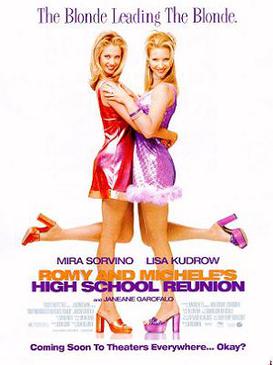 There is a scene toward the end of Romy and Michele’s High School Reunion where Toby (Camryn Manheim) tells Heather (Janeane Garofalo) that Heather’s constantly telling her to “fuck off” throughout high school really hurt her feelings. Heather, who at that point had come to the realization that Romy and Michele–whom she claims made her life hell in high school–went through hell because of the actions of the “A Crowd,” realizes that she made Toby’s life hell and says, “Tremendous!” While Garofalo plays Heather as the bitter and cynical one at the reunion, it’s a scene that is a lot more funny and perfect than the way I just described it. She’s just realized the truth about how bullying works within the high school social hierarchy: the kids on top picked on someone below them and that person found someone below them to torture and that person found someone below them, and so on.
 Back when there were video stores, there were always moves that you rented because nothing else looked good. When I was in junior high, these were often produced by a studio like Cannon, but as I got older, and my film taste diversified from random ass, often crappy action movies to random-asse crappy comedies (I never said my taste improved as I got older). One of those movies was Since You’ve Been Gone. This one sat on a shelf at the Blockbuster in Bayport for what seemed like eons in 1999, staring at me, begging me to rent it, only to be disappointed when I decided that watching Jawbreaker was a better idea.
 It’s the 50th episode of Pop Culture Affidavit! For this special episode, I take a look back twenty years to the year I graduated from high school. Along the way, I look at how senior year of high school is represented in movies. It includes stops at, among other things, American Pie, Fast Times at Ridgemont High, Can’t Buy Me Love, and Paper Towns as well as a host of personal memories about my own senior year of high school (which ended on June 25, 1995). Was high school the best time of my life? Was it a waking nightmare? Was it a little bit of both? You’ll have to listen to find out.
 The other high-concept reality program they released lasted even shorter than Yearbook’s nine episodes, and that was American High, which aired in August 2000 and lasted for only four episodes; however, PBS picked up the show and aired all thirteen of its episodes in 2000. Created by R.J. Cutler, who has also directed the acclaimed documentaries The War Room and The September Issue (which is a must-see), American High won an Emmy in 2001 for Outstanding Reality Program and uses the same concept as Yearbook, but with some modifications. Instead of claiming to follow the whole class of a high school, the intro tells us that the show is taking a look at fourteen students in Highland Park, Illinois, which is also a suburb of Chicago and not only were hours upon hours of documentary footage shot, but the students were given cameras themselves in order to keep video diaries. This makes sense, of course, as we were now nearly a decade into The Real World, which brought us the reality show confessional.
 Megan, the queen bee, comes off as an obvious villain throughout much of the movie, especially when she gets a hold of topless pictures that her friend Erica sent to her friend Jake and then emails them to as many people in the school’s email directory that she can think of, and spray paints a penis and the word “FAG” on the junior class president’s window (while her friends teepee the house) because he changed the prom theme without her consent. The ensuing discipline meeting with the principal is very typical–since she hasn’t gotten into much trouble before (and let’s face it, is the queen bee), she gets off with a slap on the wrist of some community service hours and a revocation of some activities privileges.
 There’s a running joke that Michael Bailey (of

 Pop Culture Affidavit