Long Island

Two Liters With a Pie

DSCN4205[1]

The flat remains of a two-liter bottle of Diet Pepsi. Yes, that’s my kitchen in the background.

A couple of months ago, I was at a work function where food was being served.  We had a few tables of fried chicken and some sides as well as a table of two-liter soda bottles.   As I poured myself a cup of Diet Pepsi, I couldn’t help but think of how ubiquitous the two-liter is—it’s a party and holiday industry standard and has been ever since I was a kid.

I suppose that is  not something to get really nostalgic about, especially since it’s a plastic bottle.  It’s not the iconic 6.5-ounce contour shaped glass Coke bottle that is the “nostalgic” Coke bottle and it doesn’t have the personality of the 20-ounce bottle, which is easily accessible and personal, plus it’s shaped like an old classic glass Coke bottle so it calls back to images where people from the 1950s or so pop a top of a glass Coke bottle.  The two-liter has never had that.  When you buy one of those, you twist off the metal or a plastic cap, and don’t think twice about it.

Which is indicative of the area and time period that constitutes my youth.  Having been born in 1977,  I have this attraction to the shopping mall, the multiplex, and everything else in the suburbs.  It is an era that is by and large disposable and I think on some level, even though nostalgia has turned its eye a little more toward my formative years, that nostalgia is selective at best—it’s the music, the movies, the fashion.  Nobody is going to look at suburban life in the 1970s and 1980s with the same rose-colored glasses our culture uses for the 1950s.  Because the decades of my childhood are the rose-colored 1950s’ unfortunate afterbirth:  Levitt homes and small towns gave way to shopping malls, gated communities, and McMansions, especially where I grew up.  You cannot go anywhere on Long Island without seeing shopping malls or multiplexes.

But then, there’s the pizza parlor. (more…)

Being Michael Grates

stillerrealitybitesAbout a week or two ago, I came across a few articles filled with emotional hand-wringing on the part of the generation often referred to as Millenials.  I read about how there is a generational conflict between this younger generation, which seems to be dismayed that the world doesn’t think they are entitled to anything; and older generations, who wish these kids would get over themselves.  It’s accompanied by talk about the uphill battle this generation faces as it enters a very touchy employment situation–the job market, after all, is terrible–and will have an enormous amount of student loan debt.  There is also the sentiment of “You created this mess and we inherited it.”

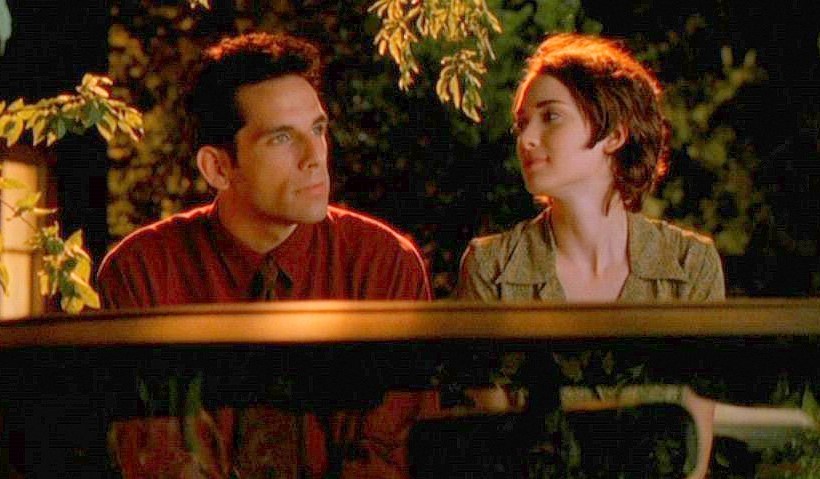
I found myself thinking about how Millennials need to get over themselves and how they’re all entitled brats, but then I couldn’t help but be reminded of two decades ago when Generation X seemed to be facing the same problems.  I am sure that your average Millennial will tell me otherwise, but it seems that there is something universal here:  the up-and-coming generation takes crap from the older generation. And I also couldn’t help but watch Reality Bites, the 1994 Winona Ryder-Ethan Hawke film that attempted to capture the struggle that particular group of twentysomethings was going through at the time.  Watching it again–and I watch it every once in a while–I knew that I would have a slightly different perspective and perhaps even view at least one of the characters a different way.  Not surprisingly, the character I seemed to sympathize with more than I did when I first saw the movie as a teenager was Michael Grates. (more…)

Amy + Joey 4eva

The_Amy_Fisher_Story_DVDSo I’m not the only person in my generation who is starting to feel a little older because quite a number of the things that I enjoyed when I was in high school are turning 20.  We’ve already passed the 20th anniversaries of Nirvana’s Nevermind and Pearl Jam’s Ten and are about a year or so away from the 20th anniversary of the release of Green Day’s Dookie, an album that I have always considered to be very significant in my personal music-listening history.

What we haven’t really noted is a moment that while it is really not much more than a blip in our culture’s history.  On December 28, 1992 and January 3, 1993, three movies about Amy Fisher aired on television.

Yeah, I know that sounded way more epic than it actually was, but you have to understand that I grew up on Long Island and for the last half of 1992 through at least the first half of 1993, and while there were plenty of other probably more important things going on in both the world and in the world of entertainment, this was the most important thing that was going on.  From the moment Amy did her perp walk to when she went to jail, you could not escape her story.

In case you’re unfamiliar with the story, in 1991, Amy Fisher began an affair with Joey Buttafuoco, the owner of the body shop where she had taken her car after wrecking it (and had supposedly enticed him into the affair so that her parents wouldn’t find out).  Fisher was sixteen years old at the time and would plead guilty to statutory rape in October 1992, eventually serving jail time.

But while the affair’s lurid details would capture Long Island’s (and eventually the nation’s) attention, nobody would have cared one bit about Amy Fisher if not for what had happened on May 19, 1992, when she knocked on the Buttafuocos’ door and confronted Joey’s wife, Mary Jo, about an affair her husband was having with one of Amy’s “friends.”  When Mary Jo blew her off, Fisher shot her in the head.  Fisher was arrested and charged three days later on May 22, and her perp walk was covered on the evening news:

Usually with stories like this, I don’t know much about what is going on until it makes such major headlines that it’s hard to ignore.  But believe it or not, I happened to be up late on May 22, 1992 (it was a Friday and being that I had no life I was probably home all night watching movies in my parents’ basement), and for whatever reason watched the 11:00 news and saw her being led away in handcuffs while the on-air reporter gave details about what she had been charged with. (more…)

Memories of Concrete and Asphalt

8088965584_cef7870c35Back in October, my parents came down from Long island to take my son to Kings Dominion, an amusement park just outside of Richmond.  Being that he’s only five years old, he was interested in the animatronic dinosaurs and kiddie rides, one of which was the Peanuts tie-in called “Joe Cool’s Driving School.”  He sat in a little car and drove around a mock streetscape that came complete with traffic lights, road signs, and street lamps, one of which looks exactly like the crooked-style street lamp that I remember being attached to jersey barriers on the Wantagh Parkway.

In case you are unfamiliar with the Wantagh Parkway or any of the other parkways on Long Island, this is one of a network of roads that shuttles passengers around Long Island, especially to and from New York City.  I won’t name and describe all of them, but will say that the two most well-known are the Southern State and Northern State, which run on the south and north shores, respectively, with parkways like the Meadowbrook, Wantagh, and Sagtikos connecting them from north to south.  The parkways were designed in the earlier decades of the 20th Century by Robert Moses (who was parks commissioner at the time and has a state park and causeway named after him) and are passenger car-only roadways with stone-façade bridges, and even some hiking and walking trails.

A satellite view of the Wantagh Parkway, courtesy of Google Maps.

A satellite view of the Wantagh Parkway, courtesy of Google Maps.

But important to me and my childhood on Long Island, these parkways were the way my family traveled from our house in Sayville to my grandmother’s house in New Hyde Park.  She and my grandfather (who passed away when I was in high school) lived in a  typical post-war suburban home that they had moved into back in the late 1940s or early 1950s when my grandfather had returned from the Second World War, living in Brooklyn became tougher, and these homes were becoming more readily available.  My family drove this route more times than I can count, and it wasn’t until I attended Joe Cool’s Driving School that I realized that every trip to my grandmother’s was a history lesson.  I honestly don’t know what prompted it—probably because I have always associated Peanuts with the suburban 1960s of its television specials—and I honestly don’t know why I hadn’t noticed it before.  After all, I have always been interested in the modern history of my homeland (although I have only read Robert Caro’s infamous New Yorker article on Robert Moses and not The Power Broker, which I swear I will one day pick up and read) so you think I would have realized that Long Island has an element of “living history” to it.

Exit W3 in 2009 with the parkway's crooked lamp posts, courtesy of street view on Google Maps ...

Exit W3 in 2009 with the parkway’s crooked lamp posts, courtesy of street view on Google Maps …

Then again, you rarely notice these things when you live among them and the history of suburban Long Island is not designated with historical markers the way the Revolutionary and Civil War landmarks are near my current home in Virginia.  It’s more geologic, in a sense.  When you look at a rock formation or a canyon, you see striations in the rocks and any geologist can tell you how that determines the age as well as what can clue you into that area’s history (for example, the presence of certain elements can suggest that, say, an asteroid hit the Earth at some point).  When you look at the suburbs of Long island, you see that their history is layered.  Sure, Levitt bulldozed farmland and build houses at one point and Moses did the same for the parkways, but that was more than half a century ago and since then, one thing has been built on top of one another, or the old has been repurposed, perhaps several times over.

... and the same exit taken in 2011, accessed on Google Maps.

… and the same exit taken in 2011, accessed on Google Maps.

Starting my trip in my parents’ house in Sayville is perfect for this sort of examination.  My hometown is a good 200 years old and while it has had its fair share of changes over the years (read: something was knocked down in order to put up another bank), there are still vestiges of its former life as a seaside gateway for the turn-of-the-century upper class as well as century-old main street buildings that are more suited to its life a s pre-suburban small town, as are the towns of West Sayville and Oakdale, which we would snake through on our way to the three parkways that would eventually take us to New Hyde Park.

Each seems to have its own personality.  The Southern State, which when I was a little kid still had a few timber post street lamps lining its shoulders, has the feel of what I can imagine was truly considered a “parkway”—a sprawling, twisting, turning road with stone-façade bridges that reminds you that you are, in fact, driving along the south shore.  Even when it becomes the Belt Parkway (the bane of any New York-area traveler), you still feel like you are on a coastal highway.  Contrast that with the Northern State, witch seems to choke its way along the north shore before it becomes the Grand Central Parkway and heads straight for Fitzgerald’s Valley of Ashes, and you have a look at various shades of the past.  On approach to New Hyde Park via the Northern State, there are the North Shore Towers, which is a high rise luxury condo but always seemed like a reminder that we were near New York City.

But not the New York City of the time; a New York City of another era, or the type of city I remembered from years of educational films.  And the Wantagh provided the transition between the more open, even rural Suffolk County and the increasingly urban Nassau County.  Whereas the Southern and Northern States both saw their looks change from years past—lanes were expanded and timber post lights were modernized—for years, the Wantagh still had the same crooked lamp post that were installed in the 1970s and it skirted by towns that at a glance looked like they hadn’t changed in years.  It’s not an extraordinary stretch of road by any means and we were only on the parkway for a few miles, but between those towns and those lights, I always felt as if I were going back in time. (more…)

Just ‘Round the Corner!

If you watch enough television where I live–Charlottesville, Virginia–you will probably see commercials for no less than four furniture stores.  There’s Kane Furniture (with a kicky cool-jazz-with-flute jingle: “At Kaaaaaaaaane furniture, you’ll have a home fashioned just for you”), Under the Roof (which is a montage of modern-looking furniture set to a ragin’ drum solo), Grand Furniture, and Schewels (who always is having a sale.  They had a Friday the 13th sale last month).  I swear they advertise more than car dealerships these days, although it is understandable because in a recession, buying furniture is one of the last purchases on a person’s mind.

The unfortunate thing about all this is that with the exception of Schewels’ Crazy Eddie-like tendencies (“WE’RE GIVING EVERYONE CREDIT!  WE’RE GIVING EVERYONE EMPLOYEE PRICES!  FOR GOD’S SAKE COME IN AND BUY AN ENDTABLE!”), the furniture store commercials in Charlottesville are kind of boring.  It’s like … yeah, there’s a couch with giant arms wider than most morbidly obese people.  Oh, and a glass table with a marble column for a pedestal just in case someone from New Jersey might shop here.  And a denim loveseat.  I’m so excited.

But hey, I consider myself spoiled when it comes to local television furniture store commercials (yes, you can be spoiled in this regard) because I grew up on Long Island and our local TV spots were nothing short of epic.

While I am sure that there were more stores advertising on television, when I think back to the late 1980s and early 1990s, I think of two stores:  Coronet and Room Plus

Coronet was a family owned baby furniture store located in Old Westbury, and probably did good business for quite a while when I was younger because those were the days before the baby superstores.  In fact, nowadays, I’m pretty sure that if you do not register yourself at Babies R Us or Buy Buy Baby, you get a visit from Child Protective Services.

Anyway, the commercials mostly starred the two owners–a couple of brothers with mustaches who looked like your uncle or older cousin–and they’d usually be doing some sort of gag while their mother (“The Coronet Mother”) did the pitch.  For instance, The Coronet Mother pitches with her two boys in cribs behind her:

(more…)

All You Have to Bring is Your Love of Everything

It’s been a mild winter, so skiing is the last thing on my mind (granted, I’ve only been skiing twice in my life, so it’s not on my mind very often), and based on what I have been seeing on the local news, it’s been the last thing on everyone’s mind because ski resorts are struggling.  In the same vein, I find myself wondering if any other vacation spots are struggling.  The economy isn’t exactly doing the best, and airfares are insane, so travel to anywhere for a period of time longer than a weekend seems to be costing a year’s tuition at Harvard.

Still, I keep seeing commercials for those ever-popular destinations for people who don’t find hitting the slopes and then curling up in a snowflake sweater appealing–the Caribbean.  Specifically, resorts like Sandals and Beaches.  My son loves the latest commercial for Beaches because Cookie Monster is in it (although I’m not sure that he realizes that Cookie Monster might not be at Virginia Beach when we go in July).  But the Sandals commercials always amuse me because they make a vacation to that resort seem like the most epic romantic time ever imagined.

https://www.youtube.com/watch?v=bxSv7HDxLM0

That’s the best example of a couple frolicking outside on an apparatus that’s not in a Cialis commercial.  And actually, it’s kind of appropriate that the ad agency used “(I’ve Had) The Time of My Life” by Bill Medley and Jennifer Warrens (but not the version sung by Bill Medley and Jennifer Warrens) in the commercial because the movie it comes from is Dirty Dancing, which takes place at a resort in the Catskills and mentions several times the decline of such resorts as popular family destinations.  Indeed Sandals and Beaches have sort of become the new Catskills or Poconos and the commercials are the perfect evidence of that because that Sandals commercial is very much like a commercial from my youth:

Ah, beautiful Mount Airy Lodge, which was, by the time this commercial was airing in the late 1980s and early 1990s, a deteriorating shell of its former self.  What was once a popular getaway for couples in the 1960s and 1970s was by this time (at least according to Wikipedia) hemorrhaging money and wound up going into foreclosure in 1999 before being bought by Harrah’s and turned into a casino.  But this commercial aired before the great decline and if you were watching one of the syndicated channels in the New York metropolitan area (WPIX or WWOR) during the day, you wound up seeing the Mount Airy Lodge commercial at least a few times, enough that you knew the “All you have to bring is your love of everything” slogan by heart. (more…)

Ho Ho Ho, Ha Ha Ha!

My car is quite possibly the most annoying place to be during the month of December.  That’s because I listen to Christmas music almost non-stop.  I have an entire CD wallet full of CDs that I bust out between Thanksgiving and Christmas, and a preset on Sirius for holiday music.  Now, this may seem like a far way to go to listen to the sounds of the season, especially when there is a regular radio station that plays non-stop Christmas music, but the station near me plays a pretty bad selection.  Everything on Z-95.1 is too inspirational or the same bad Sinatra (or Sinatra impersonator’s) rendition of an otherwise okay song.

Especially missing is the humor.  Oh sure, they’ll play “Grandma Got Run Over By a Reindeer” and some stay-at-home mom with the fashion sense of an elementary school art teacher will call in a request for “I Want a Hippopotamus for Christmas,” but those songs aren’t very good and even if I did like them, it’s not worth listening to Dan Fogelberg to get to them.

When I was younger, the local deejays would run the occasional Christmas song and not a 24-7 holiday barrage that we have now, and while they played their fair share of traditional Christmas tunes, some of the rock stations (I was particularly attached to WBAB, the classic rock station that was one of the very few my radio actually picked up) would find the time to play something out of the ordinary.  WBAB is the reason I’m so familiar with The Kinks’ “Father Christmas” and The Waitresses’ “Christmas Wrapping,” but it’s also the reason I am familiar with Bob Rivers’ Twisted Christmas tunes and other warped material.

So, if you are being forced to suffer through little brats singing about hippos, the Trans-Siberian Orchestra playing the caroling of bells as if it has explosions, or versions of “Do You Hear What I Hear” that are so epic you expect to hear Gandalf shout “You shall not pass!”, may I present five songs that will provide some relief. (more…)

Nails, Gary, and the Greatest Game Ever Played

Mike Scott, the bane of the Mets' existence in the 1986 NLCS

I always hated the Astrodome.

Granted, in my entire life, I have spent an hour in Houston and that was for a layover between Austin and Washington, D.C., so I don’t have any personal experience with the Astrodome, but ever since I sat down and watched the 1986 All-Star Game, which was broadcast from the Eighth Wonder of the World, I hated the stadium, and I still kind of do.  Part of the reason for that is my aversion to outdoor sports being played in domed stadiums, but part of it is that it seemed whenever I watched a Mets game in the Astrodome back when I was nine years old, they were bound to lose.

That certainly seemed the case when I turned on the sixth game of that year’s National League Championship Series in the seventh inning and saw that the Mets were down 3-0 and it looked like they weren’t going to be able to go to the World Series like I had hoped because Bob Knepper had been mowing them down left and right and the starting pitcher for game seven was scheduled to be Mike Scott, a name that I had become as familiar with and angry at as I had with Cardinals ace John Tudor the year before.  Prior to my turning on the game in the late innings, I had been at school, so I had missed the Astros’ three runs off of Bob Ojeda in the first, but I have to say I wasn’t surprised by the lackluster performance in the Astrodome because I’d watched the first few innings of game one, when Glenn Davis had hit a home run off of Dwight Gooden for the game’s only run and an Astros win.

In fact, I don’t think I can talk about that sixth game of the ’86 NLCS without going all the way back to that All-Star Game and my first experience with the Astrodome.  It was the first time I had ever seen a game inside a domed stadium and even though the Tigers’ Lou Whitaker homered pretty early in that game, I remember wondering how anyone ever hit a home run there.   It didn’t seem that visitors fared well offensively because during the next four days, I watched a sporadic amount of Mets-Astros games from Houston and the Mets dropped three out of four, plus three of the Mets were arrested in an infamous nightclub brawl.  Of course, I didn’t know that this particular Mets team was known for its debauchery (and many of the stories of said debauchery would go unknown until I read Jeff Perlman’s The Bad Guys Won! nearly twenty years later); all I knew was that I hated Houston, I hated the Astrodome, and I hated the Astros.

Mike Scott didn’t make things better.  A rather mediocre pitcher that the Mets had off-loaded a few years earlier (a fact I only knew from a baseball card as it was before I had started following them in 1985), Scott had emerged as a dominant pitching force in 1986 due to his split-fingered fastball, a pitch that destroyed hitters and led to accusations that he was scuffing the ball, something that the Mets seemed a little too obsessed with as he beat them twice in the series–in the aforementioned game one and then game four, which was the only night game in three games played at Shea.  So looking at a 3-0 Astros through seven, and then eight innings and Scott scheduled to pitch the next day, it was safe to say that it was over.  All over.

Or was it?  I certainly couldn’t believe that, even at the age of nine, not after I had watched two insane endings earlier that week. (more…)

Put on your Mystery Sneaker and Give Me a Clue Because it’s Time to Ride the Sunrise

Mystery Sneaker, which was the "Holy Grail" of vocabulary development in Mrs. Hickman's first grade class.

She was telling us the class rules, and every single one of us was at attention.  After all, she had attention as being the “strict” teacher and her tall stature, tightly wound red hair, and impeccable wardrobe reinforced that.  Every once in a while, though, I’d sneak a glance at the back of the room at the giant target, which took up the entire bulletin board with its eight multi-colored rings and brown bull’s-eye that read “Mystery Sneaker.”  I had no idea what “Mystery Sneaker” meant, but I knew that it was probably important to Mrs. Hickman, who was still talking but now looking straight at me.  I sat up, looked right at her and allowed her to continue.

It was my first day of first grade and I was scared out of my mind.

Now, when I was five years old, I really didn’t know what “strict” meant, let alone that a “strict” teacher could be a good teacher.  I just knew that “strict” equaled “mean” and that meant bad.  Such information concerning Mrs. Hickman was gleaned from conversations with older kids who had been through first grade at Lincoln Avenue Elementary and spoke from experience—but also spoke knowing that we had no b.s. filter and it was fun to scare younger kids, even though some of the stories were true.  We found out right away that if your desk was too messy, for instance, she would put a sign that said “Lincoln Avenue Garbage Dump” above it.  And on the bulletin board behind her desk was the paddle.

Brown and stamped with “RAH,” the paddle looked like something she had gotten from a sorority and was single-handedly the source of every rumor about Mrs. Hickman.  Students who never had her and never would know about the paddle and the more you heard about it, the worse it became.  It didn’t merely hang on the wall.  Oh no.  The word on the Lincoln Avenue playground and the homes of Sayville elementary school students was that if you got out of line in any way, you got hit.

Now, I know there are people who did receive beatings at the hands of teachers, administrators, or nuns at some time or another. But by the time I got to school in 1983, I am sure that if Mrs. Hickman had hauled off and beaten the crap out of me because I didn’t clean my desk, tenure or no tenure, she would have gotten into serious trouble.  In fact, there was one time you did get a paddling and that was on your birthday, and even then it was a light tap or two (though I’m sure that you couldn’t get away with that today).  But when you sat in the classroom and looked at her desk, there it was, hanging, taunting you, telling you that she meant business.
And she did, although she didn’t need a paddle on the wall to show us.  She marked up our work with a red pen and expected nothing less than what she knew were our best efforts.  I remember one night sitting at the top of the stairs crying because I had colored in the exercise in my phonics book using a green Whitman crayon and had colored it so thickly that it prompted her to write, “Messy!  You can do better!”  Maybe I was being hard on myself or had a need for approval from authority figures, but this feeling that I had let her down was a sign that she was effective.

But as we discovered, she was effective because despite the pressure of high expectations and perceived fear of the paddle, she wanted us to love being in her class.  I’m sure that’s why she turned learning to read into a game.  Because when you’re six you may have a natural curiosity but you don’t have the natural love of learning that makes you purposely want to delve into existential philosophy or debate the merits of socialism in regards to public policy.  No, you are still getting the shakes from naptime withdrawal and you’re still struggling with making a lowercase n not look like a lowercase h.  So, with our education at such a base level, she knew that she not only had the challenge of teaching us how to read but the opportunity to make us want to read and love words and love reading and that is why the very first thing you noticed when you walked into the classroom wasn’t her paddle, but the giant target. (more…)

Summertime has come and gone and everybody’s home again …

A 1970s-era Shasta advertisement, although my grandparents had a different model.

I suppose it’s only appropriate that on Labor Day weekend, I keep thinking of sunsets.  I have seen some gorgeous ones in my lifetime in all sorts of settings, but if I had to choose my all-time favorite sunset it would have to be the one I watched when I was seven years old and spent a couple of nights at the beach with my grandparents.

Now, if you’re my age and come from the south shore of Long Island, a summer at the beach means taking the ferry over to Fire Island for the day, and an overnight probably means that you are staying at someone’s house, either out in the Hamptons or as part of whatever share you have on Fire Island or somewhere else.  But Grandma and Grandpa Chopping were part of a different sort of beachgoing culture, one that doesn’t get as much attention as it used to back through the middle of the Twentieth Century.  Instead of a beach house or time share, they owned a camper; specifically, a 1978 Shasta Camper, which they used to take every summer to the RV camp site at Smith Point County Park, which makes up the easternmost part of Fire Island.

Shasta, along with, say, Winnebago, is often associated with the RV and camping subculture that still exists and I’m sure that people who still hitch a trailer to their cars or drive their camper to a park would say is still going strong.  After all, most national and state parks still have campsites and in my travels both up and down interstate highways on the eastern seaboard, I have seen my fair share of signs for campgrounds.  Although, to be honest, I associate Shasta campers and trailers more with ephemera from the 1950s than with the 1980s of my childhood.  I hear “trailer” or “camper” and I think of spage-age-looking silver trailers with check-pattern tablecloths on the fold-away table and a family of four very happy people using a campsite grill for that evening’s dinner. No, really, like something out of an old Dick & Jane book or an ad for the suburbs.

The bathroom of a 1970s-era Shasta, which had a very 1970s-era color scheme.

And for a while I think that it was.  The Shasta brand is pretty well-recognized and if you do a search for the campers and trailers you see those classic models (which sometimes come in the red and aqua you might associate with that era.  However, what my grandparents owned was manufactured after Shasta had been bought by a competitor, Coachman, in 1976 and it had less of the charm of the 1950s and more of the stifling interior design that you’d expect from the 1970s.  The floor on the inside was a deep brown carpet and every single surface was some other shade of brown, right down to the wood-looking laminate that covered the particle board composite counter.  Even the dashboard of the camper’s cab was a light mocha, as were the padded steps of the ladder that led up to the “Grandma’s Attic” where we could sleep.  This, of course, was in addition to the harvest gold and rust orange stripes that ran across the side and the front of the camper, which itself had the same sort of utilitarian design that so many cars of the late 1970s and 1980s did.  But it did take leaded gas (or “regular”), which I don’t think that many people born after 1990 are that familiar with because it’s been at least that many years since I saw a “regular” pump next to an “unleaded” pump at a gas station.  But back then, when they pulled out of the side yard of their house near the foot of Foster Avenue, my grandfather would lumber the camper down to what was then an Amoco station on the corner of Foster and Montauk Highway and pull up to the yellow regular pump to make sure he had enough to make it all the way out to Smith Point.
(more…)