Sayville

“Generation X” is … (a post from 1994)

Before I get to the meat of this, I should provide some preamble.  The post that will go up later in the week is titled “Being Michael Grates,” wherein I take a look at Ben Stiller’s character from Reality Bites from the perspective of someone who is in his mid-thirties and see, much like Mr. Vernon in The Breakfast Club and Lloyd Dobler in Say Anything … how much that perspective has changed.  As I was writing that piece, I thought of a piece I wrote in my high school newspaper where I referenced the movie in some screed about then-current stereotypes about teenagers and twenty-somethings of the day, who were labeled collectively as “Generation X” (taken from the Douglas Coupland novel of the same name).  I thought of quoting an excerpt from it in the post and then I decided, why don’t I just reprint it?

So, this is from the November 1994 (Volume 4, Issue 1) issue of Voices Inside, the then-student newspaper for Sayville High School.  I was seventeen years old, and it was the first in a regular “column” I had (read: gave to myself since I was made editor-in-chief) called “@#$&!”, which is an early precursor to this blog.  Perhaps one day I’ll write about that and “From the Nosebleeds,” the column I had in college.  But until then, enjoy this and come back later in the week for another all-new post as well as next week’s episode of the podcast, which also touches on Reality Bites.  Until then, here is the original column in its entirety (with a few punctuation errors fixed). (more…)

Self-Righteous

The watershed moments in your life rarely come with a script.  Oh sure, you have your major milestones and accomplishments but the moments of true epiphany are the most random, often happening when you least expect it.  One such moment in my life came before a club meeting during my senior year of high school.  I was helping pass out agendas and had left my backpack on my seat.  A friend of mine, Jim, was a fellow officer in the club happened to see my Walkman and out of curiosity, pulled it out of my bag and gave it a listen.  I returned to the table in time to see a look of complete confusion make its way across his face.

“Give me that,” I said, snatching the Walkman out of his hand.  Jim didn’t respond, and I put my headphones on to hear what had prompted such a strange look.  Playing near full blast was “You’ve Lost That Lovin’ Feelin’.”

Luckily, the meeting soon began and Jim didn’t care enough to mention it again or to anyone else, and needless to say that had me relieved because while I brushed the incident off, I felt the same sort of weird guilt you’d feel as if you’d been caught masturbating.  This was music I had been listening to when nobody was around, an act of musical self-pleasure that I kept hidden from the guys I talked heavy metal with at the lunch table where for all they knew, I was genuinely impressed that Jeff tracked down a Megadeth bootleg or that Brian finally acquired the studio version of “Breadfan” when he bought the Japanese import single for “One.” Had he mentioned it to the group of people we hung out with, I would have been mercilessly ridiculed, like the time they found my copy of Born in the U.S.A. and wrote “Nice ass!” on the cover.

I probably shouldn’t have cared, to be honest.  What’s wrong with having your own tastes?  Who cares what other people think, right?  But I was an individual with serious self-esteem problems and a need for approval that meant not only did I really want to seem like I was cool, but I was quite possibly the easiest target for ridicule.  I will spare you the vulgar nicknames, the perfume sprayings, and other jokes in my honor and say that though Bill Medley and Bobby Hatfield’s glory years were a good thirty years behind them at that point, my listening to the Righteous Brothers tape I’d borrowed from my mother, especially “You’ve Lost That Lovin’ Feelin'” had a perfectly reasonable explanation:  Top Gun. (more…)

Fuzzy memories of summer camp

On Monday, my son started summer camp.  Beng that he is a four-year-old rising kindergartener, this was a pretty big deal because it is his first “summer break” after a year of school (whereas up until last August he was simply in daycare).  The camp is run out of his school, so there really is no difference in our morning and afternoon routines of dropping him off or picking him up, even though he is going to spend most of his days going to the pool or making crafts or playing games as opposed to sitting in class and learning letters and numbers.

Apparently, camp around here is kind of a big thing, to the point where every spring, there is not only a huge advertising supplement in the local newspapers about the various summer camp programs offered throughout the greater Charlottesville area, but there is a “summer camp expo” held at a local hotel where parents can stop by, pick up literature, sign up for camps, and meet local newscasters (I don’t know what the appeal is in meeting local newscasters, but there you go).  Where I grew up on Long Island, I don’t remember the ramp-up to summer break being a huge rush to get kids “signed up for something,” because quite a number of my summers were spent sitting around and doing very little.  I know that I sound like an old fart when I say that I was a kid in the days when kids could be left home alone and there was no danger in that, but it is actually true.  Most of the friends I had in later elementary school were kids whose parents weren’t always home and as long as I could ride my bike to their houses and as long as I was home before dinner time and wasn’t committing any criminal acts (and seriously, I grew up in freaking Sayville … the most “illegal” thing I ever did was cut through an abandoned lot and buy smoke bombs from the ice cream man), everything was fine.  Granted, there were days where my friend Tom and I spent time jumping out of trees and body slamming his little brother and I’m amazed that nobody got seriously injured, but we wound up fine.

But for those kids whose parents: a) were sick of their children doing nothing except watch TV all day; b) didn’t want their children unsupervised; or c) had the money, there was “camp.”  I didn’t know many kids who went to a “sleepaway” camp like the type portrayed in Meatballs or Wet Hot American Summer, probably because by the time I was old enough to do a sleepaway camp, those places had become synonymous with machete-wielding, hockey-mask-wearing killers.

Okay, that probably wasn’t the reason–it was probably more like sleepaway camp was a pain in the ass and parents preferred something more local, of which there were plenty of opportunities, some of which were almost like a sleepaway camp but were called “day camps.”  Every spring during my childhood, when I would be home in the afternoon watching G.I. Joe or He-Man and the Masters and the Universe, the local syndicated stations (like WPIX and WNEW/WNYW) would air a commercial for Young People’s Day Camp:

Now I am sure that this commercial ran well into the late 1980s and maybe even the early 1990s because I remember seeing it for years and I am sure that most of the kids in the commercial were in college by the time I was watching it.  I’d say that Young People’s Day Camp is the Mount Airy Lodge of children’s camps–the type of place that if you visited it now, it would be mired in bankruptcy and one skinned knee from being shut down by either the board of health or child protective services–but they are still up and running throughout the New York and New Jersey area, even if they’re not airing the same commercials. (more…)

Mets Madness

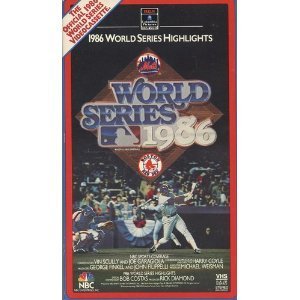
When I sat down to write about the afterglow of the 1986 World Series, I started to consider what it was like to be a fan of a championship-winning team and how that carried over into the 1987 season when I was sure that the Mets would “do it again” as the promos kept saying. But the 1987 Mets were a bit of a letdown (Thanks a LOT, Terry FUCKING Pendelton!) and the afterglow of the 1986 World Series is something that I don’t remember as well as my repeated viewings of 1986 Mets: A Year to Remember had made it seem.

Then, I began to sift through the massive amount of 1986 Mets crap that I own or have owned at one point during the past 25 years, and thought I would simply “catalogue” it.  Partially because I’m lazy and don’t feel like writing anything with an actual point, and partially because even I am amazed at how much stuff there is.

1986 Mets: A Year to Remember.  This is the official team highlight video, which my friends and I rented repeatedly from Video Empire, so much so that it was impossible for anyone to find it because one of us always seemed to have it out.  I do happen to have my own copy because sometime in the late 1990s I rented it one more time and hooked two VCRs together in order to dub the video.

The video itself starts with a highlight of Game Six and then goes month to month through the regular season, with a few montages thrown in, the most famous of which definitely has to be the Len Dykstra and Wally Backman “Wild Boys” video set to the Duran Duran song of the same name, as well as a great clip of Howard Johnson and Roger McDowell telling the audience how to pull the “hot foot” prank on a player.   The playoffs and series are covered as well, with most of the play calling coming from Bob Murphy, the radio voice of the Mets, which I have to say is awesome because as much as I like hearing Vin Scully, Bob Murphy’s voice calling the Mets is one of the best things you’ll ever hear. (more…)

1986

[A quick note:  I originally published this on my old website, Inane Crap, five years ago.  Since I have been writing about the 1986 Mets, I thought it would be appropriate to repost.  There will be another post tomorrow.]

I think that one of the biggest problems you face when you grow up normal is that you grow up being a good kid. Technically there is nothing wrong with parents instilling their children with a sense of morality, a work ethic, and awareness of the world around them. The problem is that normal kids do not make good criminals.

I mean, I am a terrible liar. I can embellish and exaggerate, but when it comes to fabrication, I flat-out suck. Luckily, I discovered this in the fourth grade when I tried to con my way out of getting in trouble for not doing my homework.

When I was nine years old, I began the fourth grade at Lincoln Avenue Elementary School in the fall of 1986. My teacher was a very nice woman named Mrs. Balcewicz, whom everyone called “Mrs. B.” Fourth grade was a huge year from anyone at Lincoln because it meant that you moved into the “big kid” hallway and got actual grades on your report cards instead of weird letters like “S,” “N,” and “U.” And not only was being in the 4-5-6 hallway exciting, I was poised to do very well because my third grade year had been stellar.

Unfortunately, this year of school was where I began my very slow descent into the social awkwardness that defined my adolescence. Like other years, I spent most of my days playing G.I. Joe and Top Gun and beating up on girls (not in the “future domestic violence case” way, though; more like in the “pulling pigtails” way). But most importantly, my brain was trying to tell me that it was time to start maturing, and that was by getting in trouble.

For the most part, this was not through any violent behavior, because I was a good kid. Nor was it through refusing to be clean, because I’d had a messy desk since I was in the first grade. The way I rebelled when I was nine years old was by not doing my homework. Mrs. B didn’t assign a lot of homework, but during one week in October 1986, thought a little homework was too much and refused to do it. What’s worse is that when she came to collect my homework and I didn’t have it, I used the excuse of going to see my ailing grandfather in the hospital. It was underhanded and mean, and my come-uppance was quick because on the Friday of that week, she handed out progress reports that had to be signed by our parents. Mine said that I was missing a couple of assignments, and had this comment: “Tommy has been telling me about going to see his grandfather in the hospital.”

Now when you’re in the fourth grade and you have never really done anything wrong in your life, you don’t’ have the smarts to know that the jig is up and you should come clean to your teacher about not doing your homework. I was a likable student, who would eventually be named “Teacher’s Pet” in my high school yearbook, so I probably would have gotten off with a warning. Instead, I hastily signed my mom’s name on the progress report and hid it in my desk at school until the day she collected it. Mrs. B was not stupid, and a few days later on October 28, 1986, she called my parents. (more…)

Nails, Gary, and the Greatest Game Ever Played

Mike Scott, the bane of the Mets' existence in the 1986 NLCS

I always hated the Astrodome.

Granted, in my entire life, I have spent an hour in Houston and that was for a layover between Austin and Washington, D.C., so I don’t have any personal experience with the Astrodome, but ever since I sat down and watched the 1986 All-Star Game, which was broadcast from the Eighth Wonder of the World, I hated the stadium, and I still kind of do.  Part of the reason for that is my aversion to outdoor sports being played in domed stadiums, but part of it is that it seemed whenever I watched a Mets game in the Astrodome back when I was nine years old, they were bound to lose.

That certainly seemed the case when I turned on the sixth game of that year’s National League Championship Series in the seventh inning and saw that the Mets were down 3-0 and it looked like they weren’t going to be able to go to the World Series like I had hoped because Bob Knepper had been mowing them down left and right and the starting pitcher for game seven was scheduled to be Mike Scott, a name that I had become as familiar with and angry at as I had with Cardinals ace John Tudor the year before.  Prior to my turning on the game in the late innings, I had been at school, so I had missed the Astros’ three runs off of Bob Ojeda in the first, but I have to say I wasn’t surprised by the lackluster performance in the Astrodome because I’d watched the first few innings of game one, when Glenn Davis had hit a home run off of Dwight Gooden for the game’s only run and an Astros win.

In fact, I don’t think I can talk about that sixth game of the ’86 NLCS without going all the way back to that All-Star Game and my first experience with the Astrodome.  It was the first time I had ever seen a game inside a domed stadium and even though the Tigers’ Lou Whitaker homered pretty early in that game, I remember wondering how anyone ever hit a home run there.   It didn’t seem that visitors fared well offensively because during the next four days, I watched a sporadic amount of Mets-Astros games from Houston and the Mets dropped three out of four, plus three of the Mets were arrested in an infamous nightclub brawl.  Of course, I didn’t know that this particular Mets team was known for its debauchery (and many of the stories of said debauchery would go unknown until I read Jeff Perlman’s The Bad Guys Won! nearly twenty years later); all I knew was that I hated Houston, I hated the Astrodome, and I hated the Astros.

Mike Scott didn’t make things better.  A rather mediocre pitcher that the Mets had off-loaded a few years earlier (a fact I only knew from a baseball card as it was before I had started following them in 1985), Scott had emerged as a dominant pitching force in 1986 due to his split-fingered fastball, a pitch that destroyed hitters and led to accusations that he was scuffing the ball, something that the Mets seemed a little too obsessed with as he beat them twice in the series–in the aforementioned game one and then game four, which was the only night game in three games played at Shea.  So looking at a 3-0 Astros through seven, and then eight innings and Scott scheduled to pitch the next day, it was safe to say that it was over.  All over.

Or was it?  I certainly couldn’t believe that, even at the age of nine, not after I had watched two insane endings earlier that week. (more…)

Put on your Mystery Sneaker and Give Me a Clue Because it’s Time to Ride the Sunrise

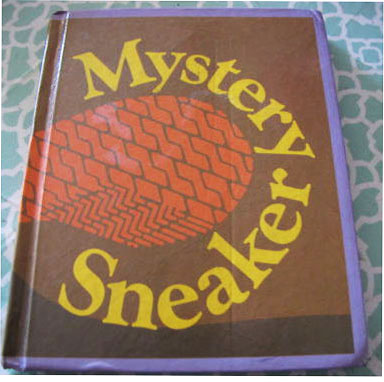
Mystery Sneaker, which was the "Holy Grail" of vocabulary development in Mrs. Hickman's first grade class.

She was telling us the class rules, and every single one of us was at attention.  After all, she had attention as being the “strict” teacher and her tall stature, tightly wound red hair, and impeccable wardrobe reinforced that.  Every once in a while, though, I’d sneak a glance at the back of the room at the giant target, which took up the entire bulletin board with its eight multi-colored rings and brown bull’s-eye that read “Mystery Sneaker.”  I had no idea what “Mystery Sneaker” meant, but I knew that it was probably important to Mrs. Hickman, who was still talking but now looking straight at me.  I sat up, looked right at her and allowed her to continue.

It was my first day of first grade and I was scared out of my mind.

Now, when I was five years old, I really didn’t know what “strict” meant, let alone that a “strict” teacher could be a good teacher.  I just knew that “strict” equaled “mean” and that meant bad.  Such information concerning Mrs. Hickman was gleaned from conversations with older kids who had been through first grade at Lincoln Avenue Elementary and spoke from experience—but also spoke knowing that we had no b.s. filter and it was fun to scare younger kids, even though some of the stories were true.  We found out right away that if your desk was too messy, for instance, she would put a sign that said “Lincoln Avenue Garbage Dump” above it.  And on the bulletin board behind her desk was the paddle.

Brown and stamped with “RAH,” the paddle looked like something she had gotten from a sorority and was single-handedly the source of every rumor about Mrs. Hickman.  Students who never had her and never would know about the paddle and the more you heard about it, the worse it became.  It didn’t merely hang on the wall.  Oh no.  The word on the Lincoln Avenue playground and the homes of Sayville elementary school students was that if you got out of line in any way, you got hit.

Now, I know there are people who did receive beatings at the hands of teachers, administrators, or nuns at some time or another. But by the time I got to school in 1983, I am sure that if Mrs. Hickman had hauled off and beaten the crap out of me because I didn’t clean my desk, tenure or no tenure, she would have gotten into serious trouble.  In fact, there was one time you did get a paddling and that was on your birthday, and even then it was a light tap or two (though I’m sure that you couldn’t get away with that today).  But when you sat in the classroom and looked at her desk, there it was, hanging, taunting you, telling you that she meant business.
And she did, although she didn’t need a paddle on the wall to show us.  She marked up our work with a red pen and expected nothing less than what she knew were our best efforts.  I remember one night sitting at the top of the stairs crying because I had colored in the exercise in my phonics book using a green Whitman crayon and had colored it so thickly that it prompted her to write, “Messy!  You can do better!”  Maybe I was being hard on myself or had a need for approval from authority figures, but this feeling that I had let her down was a sign that she was effective.

But as we discovered, she was effective because despite the pressure of high expectations and perceived fear of the paddle, she wanted us to love being in her class.  I’m sure that’s why she turned learning to read into a game.  Because when you’re six you may have a natural curiosity but you don’t have the natural love of learning that makes you purposely want to delve into existential philosophy or debate the merits of socialism in regards to public policy.  No, you are still getting the shakes from naptime withdrawal and you’re still struggling with making a lowercase n not look like a lowercase h.  So, with our education at such a base level, she knew that she not only had the challenge of teaching us how to read but the opportunity to make us want to read and love words and love reading and that is why the very first thing you noticed when you walked into the classroom wasn’t her paddle, but the giant target. (more…)

So no one told you life was gonna be this way

I just started participating in a Facebook “challenge” (meme?) called the “30 Day Song Challenge.”  For the next month, I have to post one song per day to my wall and each day has a different caveat.  For instance, Day One was “Your Favorite Song” (for the record: “Summer, Highland Falls” by Billy Joel) and Day Twenty-Seven is “Song You Wish You Could Play on an Instrument” (I have yet to share this one).  I got bored one night and wrote a list down in a notebook, although I’m sure those songs will change somewhat when I go to post them.  Day Seven’s song is “Song That Reminds You of an Event.”  Now, I would have used my wedding song but that is already being used for Day Twenty-Three, “Song For Your Wedding,” so I wound up being stuck trying to think about something else.  Strangely enough, the first song that popped into my head was “I’ll Be There For You” by The Rembrandts.

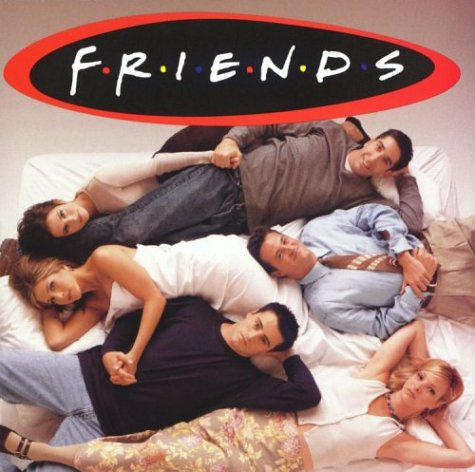
If you are unfamiliar with the song’s title, you’ll know exactly what I mean when I say, it’s the theme from FriendsFriends premiered in the fall of 1994, back when NBC’s Must See TV lineup consisted of Mad About You at 8:00, Seinfeld at 9:00, and ER at 10:00.  Friends took the 8:30 slot and a very short-lived and largely forgotten Dabney Coleman sitcom called Madman of the People premiered at 9:30.  The night for NBC was a powerhouse because CBS was premiering Due South and Chicago Hope and ABC had Matlock along with the culturally significant but ratings anemic My So-Called Life.  But the time winter and spring rolled around, Friends was the breakout hit and everything that had been new and in direct competition was basically scorched earth (I love MSCL but even the most ardent of fans will admit that Angela Chase and company got their asses handed to them).  Friends was one of the few Generation X-oriented shows/films that actually connected, so much so that by the time Ross got off of a plane at Kennedy Airport with Julie on his arm while Rachel waited unknowingly with flowers and new feelings, you couldn’t escape the show.  There were posters, T-shirts, magazines covers, a hairstyle, and that theme song.

It’s somehow ironic that “I’ll Be There For You” because so popular because at the previous fall’s Emmy Awards, Jason Alexander had done a song and dance number about TV theme songs because they were considered to be a dying breed, and kind of still are.  After all, the last TV theme song written specifically for television that charted I think was this very song.  In fact, I think this took most people by surprise because by the spring of 1995 when Friends-mania began gaining serious traction, the entire version of the song had yet to be released or even recorded.  The Rembrandts had recorded a one-minute TV version of “I’ll Be There For You” for the show’s opening credits and wound up rushing the full three-minute version of the song onto their album because there was serious demand by people for its radio airplay.

I was still listening to WBAB in the evenings while I did homework and the station had been receiving requests for the song.  Now, radio stations weren’t going to just play a one-minute television theme song, so some deejay decided to just loop it three times to create a three-minute song (according to Wikipedia, said deejay was in Nashville).  WBAB began playing this as a way to placate the listeners, even though I’m sure there were plenty of real rock and roll fans who wound up being disgusted.  As I sat in my bedroom doing my homework that May, I managed to catch a playing of the song and hit record on my stereo (having a tape in the cassette deck ready to record stuff was still a common practice of mine at the time).  Then I played it over and over and over, to the point where I nearly wore the tape out.  This, of course, was in the days before I would go and find out via the Internet who sang the song and could download it for about a buck, so I had to wait for the opportunity to take a weekend trip to the mall to see if it was on CD.

(more…)

Uncool as Ice

For a brief moment in the eighth grade, I thought this was cool.

When you’re unpopular in junior high, pop music can be as cruel as the people who seem to make it their mission to go out of their way to make your life a living hell.  I guess I should clarify that because music itself can’t be cruel–for the most part, anyway–but it, combined with the hormonal awkwardness that can only come from being an early adolescent can make you do pretty stupid things, like think you can dance.

The usual popular culture portrayal of a junior high dance is the image of an extremely awkward evening in a humid gym where girls spend most of their time as far away as possible from much shorter boys, who are too busy trying to gross one another out to notice those girls.  In those movies or television shows, two people eventually dance and it winds up being a rather chaste, sweet moment.

However, the dances I went to at Sayville Junior High between 1989 and 1991 were nothing like the ones we used to see on TV.  I may be exaggerating here, but I remember those dances feeling epic, as if each was one night in my young life when I was in the right place at the right time.  The student council and junior high staff certainly seemed to make it that way, at least by using the building’s architecture to its fullest advantage.  Our dances were never held in the junior high gymnasium; rather, the student council utilized the large commons area that rant the length of the building from the main entrance to the gym hallway.  The commons area floor was carpeted and the second floor was completely open save for a catwalk and a couple of balconies that looked over the rug.  Most importantly, the commons area had an extra-sized stairway that pivoted on a platform, which is where the deejay would set up.  When you break it down from the perspective of twenty years later, it’s a junior high dance, but to an awkward kid who didn’t get out much, turning off the lights in the commons area on a Friday night made the place a dance club.

Unfortunately, I wasn’t much of a dancer.  If you pressed me, I could probably move back and forth to the beat of whatever music was playing but I really didn’t know my way around a dance floor.  That wasn’t a problem in the seventh grade because I spent most of my time in the cafeteria, working the soda table with my friend Rich.  People would give us 50 cents and we would slide a cold C&C Cola to them.  We got a few breaks and were allowed to roam the dance floor, but the two of us were fiercely dedicated soda jockeys, so much so that when a girl whose name I think was Becky asked me to dance one time, I declined because I was going to be back on my soda-serving shift.

My social ineptitude wouldn’t improve much from twelve to thirteen.  I’d blame it on the terrible accident that I was in two days after my thirteenth birthday because it’s not easy to go through an entire year of junior high with two fake front teeth (that you could remove) and a scar under your nose that looked like a giant pimple, but I’d been walking the halls with comic books and once wore a Star Trek pin to school.  Scar or no scar, I wasn’t a superstar.

But I wanted to be, or at least I wanted a girlfriend, which meant that at some point I was going to have to talk to a girl and maybe even ask her out.  This wasn’t happening, though, because I spent most of the year (and pretty much half of high school as well) with a mind-numbing crush on a girl who was completely out of my league and while I am sure she’d engage me in conversation if I tried, I suffered from the typical thirteen-year-old boy issue of acting stupid whenever I was around her.

There was something different about dances, though.

(more…)

The Curious Case of Donna Troy (My Life as a Teen Titan, Part Eight)

The “origins” issue of New Teen Titans (baxter series), #47.

Open New Titans #85 to the letters page and tucked among the correspondence and editorial comments is a letter from two kids from Sayville, NY.  The contents of the letter are more or less forgettable–the two guys talk about how awesome they think the Teen Titans are, they ask why issue #80 had no letter column, and then make a prediction about the Vigilante coming back–but they sign off with something that seemed to get the editors’ attention:  PLEASE KILL DONNA TROY.  To drive home the point, they referred to themselves as the “PEOPLE FOR THE DEATH OF DONNA TROY.”

Yeah, I was a 14-year-old with a hit list.

I don’t honestly remember which one of us came up with the idea that Harris and I should write in clamoring for the death of Donna Troy, but I do know that we really didn’t want her dead and the true reason was that we thought that in order to have a letter published, we should come up with a gimmick.  Donna Troy became the target because she was going to be the focus of the next big storyline, and we figured that they’d already screwed with every other member of the Titans, so why not her?

I think that’s what the powers that be on the Titans were thinking at the time as well, because if you look at every issue since New Titans #71, Donna wasn’t really affected because for the most part she was shuttled off to an adventure with Wonder Woman and then War of the Gods before being around at at full strength to take on Jericho and the Wildebeests.  But, is the fact that she really didn’t have much to do during the Titans Hunt enough to warrant focusing an entire three-book crossover on her?

(more…)