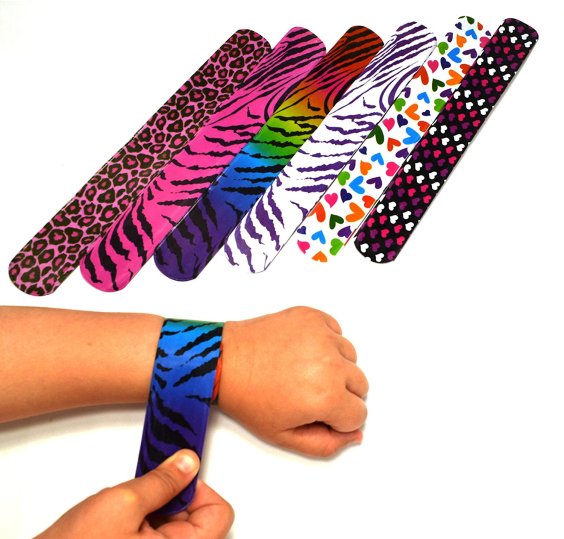
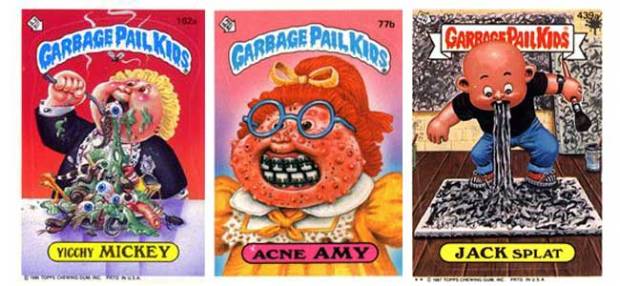
They were cool, they were hip, they were the “in” thing, and they lasted all of three months. They were fads.
Slap on a bracelet, flip a water bottle, hug your Beanie Babies tight and join me as I take a look at seven huge youth-driven fads (with some old people getting into it) from the mid-1980s until today. I examine the background behind each, some of its effects, why they were often banned from schools, and how they died out.
I’m back to a single issue and rambling on with an onion on my belt. This time around, I look at the conclusion to the two-part Scraplets story from Transformers in issue #30 of the series. Plus, I wax nostalgic about my VHS copy of the 1986 John Hughes classic Ferris Bueller’s Day Off.
So I was listening to episode 73 of the podcast, where Amanda and I were talking about the albums that influenced us as teenagers, and at one point I mentioned something that I have mentioned before on both the podcast and this blog, which is that I listened to my fair share of Metallica when I was a teenager. Not only that, but as I got older and essentially grew out of Metallica, I came to realize that I didn’t really genuinely like most of the band’s music. Oh sure, there are songs that I think are still really good–“Whiplash,” “For Whom the Bell Tolls,” “Master of Puppets,” “One,” “Nothing Else Matters,” and “Hero of the Day” are still ones that I will put on rotation every once in awhile–but I hit a point in my adult life where I realized that I listened to Metallica and some other metal bands when I was a teenager mainly because I wanted to fit in with the guys I was hanging out with.
And yes, I reread that sentence and it sounds utterly ridiculous, but at the same time is so true, and I think that my fellow nerds will understand it. When you are hanging around a group of people with similar interests and you’re … well, you’re a bit of an introvert who is unsure of himself … you want to fit in. So when the guy who’s kind of the alpha of the group declares that a particular band or album is required listening, you either borrow his copy and tape it or you procure a copy of it yourself (I still remember the odd look on my aunt’s face when she gave me Kill ‘Em All for Christmas and asked if “this was the one you wanted”).
Anyway, I was listening to the episode and the Metallica point came up, and as I went through the rest of the episode and really reveled in the differences between Amanda’s and my musical tastes, I started thinking about what I either listened to in secret or completely missed out on while spending the better part of four years chasing my friends’ musical tastes. I mean, there were bands or albums that I didn’t discover until I was in college, and there were also things I used to kind of sneak-listen, keep in my Walkman, and lie about when asked “What are you listening to?” (hence the time I got caught with a Righteous Brothers tape). And maybe if I’d had the balls, I wouldn’t have had to not tell my friends that I was checking out Goodbye Yellow Brick Road from the public library or that I had taped most of 10,000 Maniacs’ Our Time in Eden and found that more enjoyable at times than, say, Ride the Lightning. I liked Paul Simon and Van Morrison and had a pop-rock sensibility that I just took way too long to fully embrace or at least admit to embracing.
But regrets are really not worth it at my age and instead of lamenting my bad choices made in my formative years, I’m going to list five musical acts, albums, or songs that I almost missed out on but eventually caught up to after high school.
Better Than Ezra. Credit for introducing this band goes to my friend Valerie, who was really into this band when we met in the fall of our freshman year of college. Deluxe had come out in February of 1995, so I was within about six months of its release when she introduced me to them, but during that February, I remember that I had just started going out with a girl whose favorite band was Live, so there was a lot of listening to songs that featured references to afterbirth (seriously … you couldn’t have thought of another lyric?). Better Than Ezra, and by extension bands like Gin Blossoms and Dishwalla (both of whom played Loyola at the end of our freshman year) were this lighter, radio-friendly rock-pop that washed up in the wake of the end of the earlier part of the decade and songs like “Good” and “In The Blood” found their way onto my car mix tapes. I personally prefer Friction, Baby, which was the 1996 follow-up to Deluxe, but I will say that these 3-4-minute pop/rock ditties were much more replayable than a seven minute-plus metal dirge.
The Clash. Yes, even though I said that Dookie was my gateway to other punk music, I didn’t buy my first Clash CD until the very end of high school. I had been watching some documentary about the history of rock and roll (in fact, it may have actually been called The History of Rock and Roll) on channel 9 and saw the episode about punk, which covered the 1970s punk scene and went specifically in depth with The Ramones, The Sex Pistols, The Clash, and X. The last of those groups was never one I would get too attached to, but I had heard of the Ramones by that point and shortly thereafter (this would have been May or June of 1995), I took my hard earned money to Borders and picked up the U.S. version of the Clash’s first album (it was the only one available at the time and the only copy I ever owned, so I can’t even say I was doing punk right). I really loved it, especially their cover of “I Fought the Law” (which, like a dork, I will pair with Mellencamp’s “Authority Song” on playlists from time to time).
Where this actually gets a little funny is that I brought this CD to the house of one of my friends who was that “alpha” of the group and seemed to want to dictate everyone’s musical tastes and the reception he gave the album was pretty indifferent. A few years later, he was listening to London Calling and I remember standing there like, “Huh. So … you’re full of shit.” I mean, it took a while but I finally came to my senses.
The Cure. Now, I can’t say that I’m a huge fan of The Cure. I don’t own a single album, and I think I may have only ever downloaded four of their songs: “Just Like Heaven,” “Love Song,” “In Between Days,” and “Lovecats.” But I did have a friend in high school who absolutely loved The Cure and had I not been lured in by the siren call of “I Alone,” I would have probably let her get me into the band. Because I have found since that I really do enjoy quite a bit of the 1980s new wave/alternative sound than I was willing to admit to in high school (except Morrissey … sorry … I can’t …).
And if I had listened to The Cure, I would have actually fit in at my high school. There was a huge contingent of Cure fans who were pretty popular and had the type of musical tastes that one could get a real education out of. I just never gave it a shot and while I want to say that I don’t know why, I have to say that I think a lot of it had to do with the way that a group like The Cure was seen, among some of the guys I was hanging around, as “chick music” or even “gay.” And I will be the first to admit that it took getting out of my hometown and even going beyond the confines of my college to really understand how homophobic I was as a teenager–not that that was the complete reason I rejected The Cure, but since my musical tastes (at least the public ones) were so dictated by how I was perceived and I tended to be the butt of my friends’ jokes anyway, it’s not shocking that I allowed it to shape my view of what is a really solid band.
Sarah McLachlan. So I’m in my freshman year of college and listening to, of all things, a CD put out by Loyola’s a cappella groups, The Chimes and The Belles. One of the tracks on the CD (and I own the CD … in fact, you can hear selections from it in the episode) is The Belles covering “Elsewhere,” a song I had never heard before and I think I might have had to ask someone where the song was from. At any rate, that was the first time I had heard anything off of Fumbling Towards Ecstasy and that was strange considering that the album had been out for easily a year and a half and was right in my 10,000 Maniacs/Cranberries/Lisa Loeb wheelhouse. But again, when you’re tracking down old Metallica albums or trying to find those rare Nine Inch Nails singles because that gets you cred with a group of guys who could barely get a girl to look at them, you tend to miss the siren call of Canadian singer-songwriters. In the years between that moment and the early 2000s, I’d buy most of the rest of her discography at the time, including Solace, which has two of my favorite songs of hers (“Path of Thorns (Terms)” and “I Will Not Forget You”) as well as a book of her sheet music. In fact, I remember downloading the guitar tab to “I Will Remember You,” printing it out, and figuring out how to play it on the piano (something I did for Green Day’s “Good Riddance (Time of Your Life)” as well). But the piano’s influence on my musical tastes is actually going to be the subject of another podcast episode, so I’ll move on.
The Entire Decade of the 1980s. By the time I moved in with Amanda in the fall of 2000, I had an enormous Eighties music collection. When I was a teenager, I would rock the hell out whenever the Totally ’80s commercial would come on:
But beyond my well-worn copy of Born in the U.S.A. and a few random songs I’d taped off the radio here and there, my Eighties game was weak and I went right on ignoring it while I chased the latest alternative and metal trends. And honestly, that’s the biggest shame, because even back then, I thought that “Centerfold” by J. Geils Band had one of the best hooks ever recorded and I still remembered all of the words to “Everybody Have Fun Tonight.” So when, in the late 1990s, the Eighties retro thing went huge with movies like Romy and Michelle’s High School Reunion, Grosse Pointe Blank, and The Wedding Singer, I was all up in that.
I guess if there’s a conclusion to this it’s that you really shouldn’t give a shit what people think when it comes to your favorite music and I wish I had been more sure of myself, or at least sure enough to say that it’s okay to like what I liked. At least I eventually learned that.
Not that I don’t have musical regrets. But that’s another story for another time.
It’s time to return to the music of the early 1990s … and I’m bringing Amanda along for the ride as well! This time around, we take a look at ten albums that influenced us as teenagers. You’ll hear us talk about Seattle icons such as Nirvana and Pearl Jam; legendary Nineties recording artists like Dr. Dre and Snoop Dogg, Green Day, Stone Temple Pilots, and Mary J. Blige; as well as everyone from Madonna and Queen to the Dixie Chicks and Denis Leary.
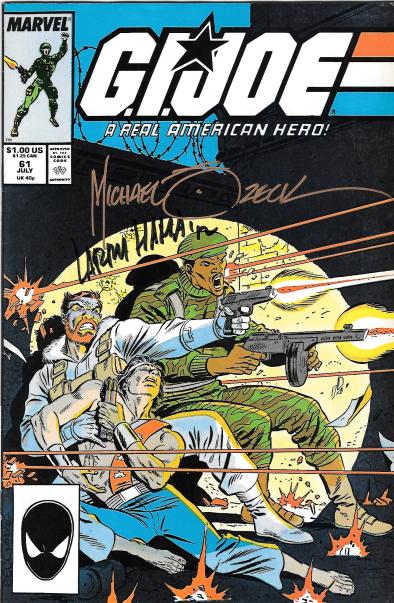
This time around, I have three … that’s right, THREE comics in ONE episode! I start off with the last of my FCTC-era Superman books for this show, which is Superman #7, then head over to Marvel for some military-grade violence! First, there’s the first issue in an UNLIMITED series with The Punisher #1 followed by the start of my all-time favorite G.I. Joe storyline with G.I. Joe #61.
Different distributors in the 1980s means different release dates for comics means that I’m putting this episode out two days before the last one. This time around, I take a look at The Adventures of Superman #429 by Marv Wolfman and Jerry Ordway, which puts the spotlight on Cat Grant in a sense, or at least gives us more insight into her relationship with her son Adam and his father. Plus, I walk down WWF memory lane by talking about Wrestlemania III and the legendary match between Randy “Macho Man” Savage and Ricky “The Dragon” Steamboat.
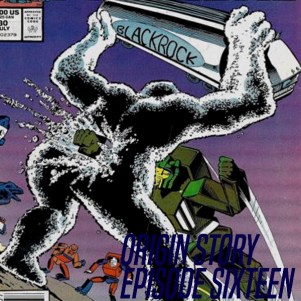
In this episode of Origin Story, Bumblebee and Blaster head to Arizona and wind up victims of The Scraplets. Plus, I manage to make an Office Space joke at the expense of the Decepticons! It’s all in Transformers #29. Plus, I ramble about Top Gun even more, complete with Diet Pepsi commercial!
The finale of the second three-part “Punisher Invades The ‘Nam” and Chuck Dixon’s last issue of the series takes us through the end of Iceman’s story about Frank Castle’s time in country, with plenty of action, as Frank defends a firebase and confronts the colonel who may or may not know about the shady things that have led to his fellow soldiers’ deaths. It’s “Down to the Ground” by Chuck Dixon, Kevin Kobasic, adn Jimmy Palmiotti in The ‘Nam #69.
I take a look at the issue and reflect on the overall Punisher storyline and also look at the historical background for January and February of 1972.
So no one told you this podcast was gonna be this way … although someone told me and Stella when we sat down to dinner to talk about the iconic 1990s sitcom Friends. We spend a couple of hours talking about the show, its characters, and our favorite moments. Plus, there are tons of clips for your ears and Stella sings “Smelly Cat.” Repeatedly. But don’t worry, dear listener, because we’ll be there for you when the rain starts to pour.
Okay, I’ll stop.
Every once in a while, as I scroll through my Facebook feed, among the badly punctuated inspirational quotes and article upon article of political garbage, I will see a meme or two about how the childhoods of the 1970s and 1980s were so much better than the childhoods of today. The idea, more or less, is that today’s children are coddled and overprotected or they never go outside and play and are instead glued to screens all day. There certainly is more access to things such as video games now than there was when I was a kid, but it’s not like knees stopped getting skinned or we’ve given up on telling our kids to simply be home by dusk. At the same time, the toys he and his friends are playing with certainly are made to be safer and are not the instruments of death that my generation and prior generations had hanging around in our suburban garages.
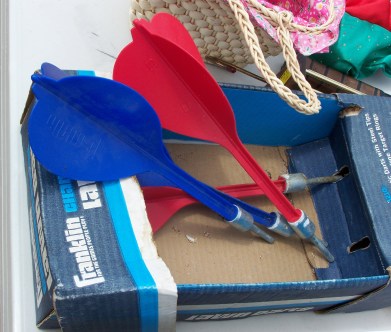
Now, the toys of the 1980s weren’t made to deliberately hurt anyone and for the most part, what I kept in my parents’ garage was pretty harmless–a croquet set, hockey sticks, aluminum baseball bats, wiffle ball bats, a skateboard–and while any of those items could be used as a weapon, that was not their intent and I don’t think any of them ran the risk of being outright banned by the government. But then there were lawn darts.
Based loosely on an ancient Roman game called plumbata, lawn darts–often called “Javelin Darts” or “jarts”–were huge darts that had plastic fins and a weighted metal tip. You used them as a game similar to horseshoes, where you held them by the plastic fins and threw them underhand at a target that you placed far away from you, possibly on the other end of the yard. Since the darts were metal-tipped, throwing the darts with any solid amount of arc would result in them landing spikes-down in the grass, the metal embedding itself in the lawn, much to the dismay of my father (although I’m sure the squirrels did as much damage to the lawn as we did).
Lawn darts probably predate the 1950s, but I’m pretty sure that’s the era that I and most other people would associate with the toy, when they were manufactured by companies such as Hasbro, and was really that first era of what we know as modern-day suburbia, as houses had been built en masse to accommodate the demand from G.I.s who were returning from the Second World War and wanted to put down roots. In fact, an old box for lawn darts depicts a 1950s-era “Dick and Jane”-type family pitching the darts and having a great time on the lawn.
We had a set in our own garage. I honestly don’t know where exactly they came from, since I don’t remember my parents actually buying them, so it’s possible that they were handed down from my grandmother or that my parents themselves had owned them as kids–after all, my parents are Baby Boomers and their parents were the first generation to go suburban. The darts themselves were the classic model and I remember thinking that they were probably pretty old because the color was a faded teal instead of a bright red or blue that you might find in a box at a sporting goods store. We played with them for part of a summer–as you do–tossing them in the yard and really not putting a target out but simply seeing who could throw the farthest. This lasted for probably one summer (maybe even less than that) before the darts were put back in the garage and then disappeared in a round of spring cleaning.
I imagine they went to Goodwill or another charity, but it’s very possible they were thrown out because around the time that we were playing with them, they were actually banned from sale (and more or less from use) because Michelle Snow, a seven-year-old girl in California, was killed by a falling lawn dart, a death that was entirely accidental as her brother and his friends had been tossing the darts in their backyard, one of the darts went over a fence into the front yard and struck her in the head. Her father, David Snow, led the successful effort to ban lawn darts, a story that’s detailed in a very thorough and worthwhile Mental Floss piece from 2012, which I highly recommend reading.
Anyway, what I find fascinating about that story was not just that Snow’s effort was successful, but that the story was actually true. There are what seems to be a plethora of cautionary tales about things kids like that really amount to nothing but urban legends–not a year goes by when you don’t hear about someone getting a razor blade in a candy bar or some toy breaking into pieces and maiming a child or someone choking on something small. In many cases, the story is half or partially true–there was an injury but nobody died, or the reason that the injury happened was due to improper use or malicious intent on someone’s part. Here, it was a genuine accident, although some people commenting on that Mental Floss article chalk it up to bad parenting/parental neglect with one commenter going as far as to suggesting that Darwinism was involved (which is, of course, lovely, and sets off an entire discussion of what Darwin actually said).
Which brings me back to what I was talking about at the beginning of the post. There’s this sense that “fun has been taken away,” a complaint by members of older generations that speak of some sort of “wussification” of America and insist that their childhoods were so much more hardcore in some way or another because instead of whatever Nerf the “kids these days” are being armed with, they used actual armament and were fully prepared to fire artillery shells by the time they entered junior high school. Or something like that. I mean, there are toys that I get nostalgic about and wish that my son had the chance to play with, but I’m not going to berate my son and call him a pussy because he has to wear a helmet when he rides his bike.
Furthermore, there’s an irony in the whining about “not being able to play with x,y,z anymore” or how a generation or two before me claims to have had a more rigorous childhood in some way than I did or my son does, considering that the generation or two before them actually did have it tough. If you were born after World War II, you reaped the benefits of the modern concept of adolesence as well as such advancements in society as child labor laws as well as a booming economy. Yes, things have ebbed and flowed over the years and there are certainly generations that have dealt with wars and other hardships as young adults, but I’m not sure that being able to chuck lawn darts is in the same league as being sent into a coal mine at ten years old.
 They were cool, they were hip, they were the “in” thing, and they lasted all of three months. They were fads.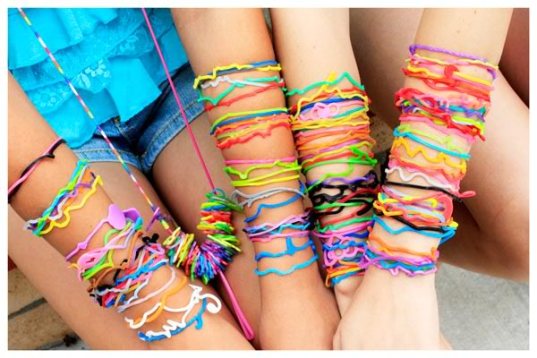
 I’m back to a single issue and rambling on with an onion on my belt. This time around, I look at the conclusion to the two-part Scraplets story from Transformers in issue #30 of the series. Plus, I wax nostalgic about my VHS copy of the 1986 John Hughes classic Ferris Bueller’s Day Off.
 Better Than Ezra. Credit for introducing this band goes to my friend Valerie, who was really into this band when we met in the fall of our freshman year of college. Deluxe had come out in February of 1995, so I was within about six months of its release when she introduced me to them, but during that February, I remember that I had just started going out with a girl whose favorite band was Live, so there was a lot of listening to songs that featured references to afterbirth (seriously … you couldn’t have thought of another lyric?). Better Than Ezra, and by extension bands like Gin Blossoms and Dishwalla (both of whom played Loyola at the end of our freshman year) were this lighter, radio-friendly rock-pop that washed up in the wake of the end of the earlier part of the decade and songs like “Good” and “In The Blood” found their way onto my car mix tapes. I personally prefer Friction, Baby, which was the 1996 follow-up to Deluxe, but I will say that these 3-4-minute pop/rock ditties were much more replayable than a seven minute-plus metal dirge.
 The Clash. Yes, even though I said that Dookie was my gateway to other punk music, I didn’t buy my first Clash CD until the very end of high school. I had been watching some documentary about the history of rock and roll (in fact, it may have actually been called The History of Rock and Roll) on channel 9 and saw the episode about punk, which covered the 1970s punk scene and went specifically in depth with The Ramones, The Sex Pistols, The Clash, and X. The last of those groups was never one I would get too attached to, but I had heard of the Ramones by that point and shortly thereafter (this would have been May or June of 1995), I took my hard earned money to Borders and picked up the U.S. version of the Clash’s first album (it was the only one available at the time and the only copy I ever owned, so I can’t even say I was doing punk right). I really loved it, especially their cover of “I Fought the Law” (which, like a dork, I will pair with Mellencamp’s “Authority Song” on playlists from time to time).
 The Cure. Now, I can’t say that I’m a huge fan of The Cure. I don’t own a single album, and I think I may have only ever downloaded four of their songs: “Just Like Heaven,” “Love Song,” “In Between Days,” and “Lovecats.” But I did have a friend in high school who absolutely loved The Cure and had I not been lured in by the siren call of “I Alone,” I would have probably let her get me into the band. Because I have found since that I really do enjoy quite a bit of the 1980s new wave/alternative sound than I was willing to admit to in high school (except Morrissey … sorry … I can’t …).
 Sarah McLachlan. So I’m in my freshman year of college and listening to, of all things, a CD put out by Loyola’s a cappella groups, The Chimes and The Belles. One of the tracks on the CD (and I own the CD … in fact, you can hear selections from it in the episode) is The Belles covering “Elsewhere,” a song I had never heard before and I think I might have had to ask someone where the song was from. At any rate, that was the first time I had heard anything off of Fumbling Towards Ecstasy and that was strange considering that the album had been out for easily a year and a half and was right in my 10,000 Maniacs/Cranberries/Lisa Loeb wheelhouse. But again, when you’re tracking down old Metallica albums or trying to find those rare Nine Inch Nails singles because that gets you cred with a group of guys who could barely get a girl to look at them, you tend to miss the siren call of Canadian singer-songwriters. In the years between that moment and the early 2000s, I’d buy most of the rest of her discography at the time, including Solace, which has two of my favorite songs of hers (“Path of Thorns (Terms)” and “I Will Not Forget You”) as well as a book of her sheet music. In fact, I remember downloading the guitar tab to “I Will Remember You,” printing it out, and figuring out how to play it on the piano (something I did for Green Day’s “Good Riddance (Time of Your Life)” as well). But the piano’s influence on my musical tastes is actually going to be the subject of another podcast episode, so I’ll move on.
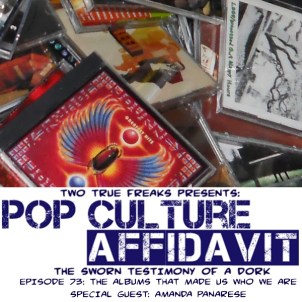 It’s time to return to the music of the early 1990s … and I’m bringing Amanda along for the ride as well! This time around, we take a look at ten albums that influenced us as teenagers. You’ll hear us talk about Seattle icons such as Nirvana and Pearl Jam; legendary Nineties recording artists like Dr. Dre and Snoop Dogg, Green Day, Stone Temple Pilots, and Mary J. Blige; as well as everyone from Madonna and Queen to the Dixie Chicks and Denis Leary.
 This time around, I have three … that’s right, THREE comics in ONE episode! I start off with the last of my FCTC-era Superman books for this show, which is Superman #7, then head over to Marvel for some military-grade violence! First, there’s the first issue in an UNLIMITED series with The Punisher #1 followed by the start of my all-time favorite G.I. Joe storyline with G.I. Joe #61.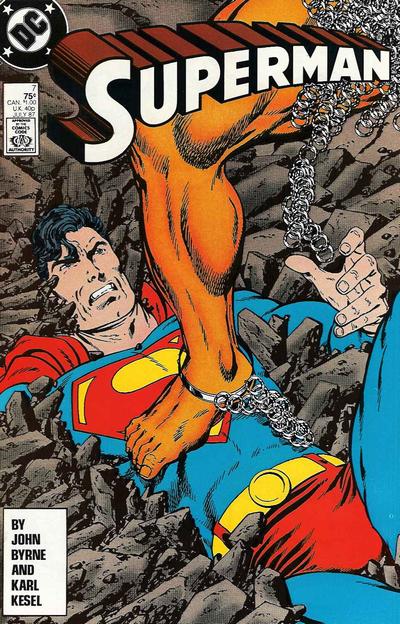
 Different distributors in the 1980s means different release dates for comics means that I’m putting this episode out two days before the last one. This time around, I take a look at The Adventures of Superman #429 by Marv Wolfman and Jerry Ordway, which puts the spotlight on Cat Grant in a sense, or at least gives us more insight into her relationship with her son Adam and his father. Plus, I walk down WWF memory lane by talking about Wrestlemania III and the legendary match between Randy “Macho Man” Savage and Ricky “The Dragon” Steamboat.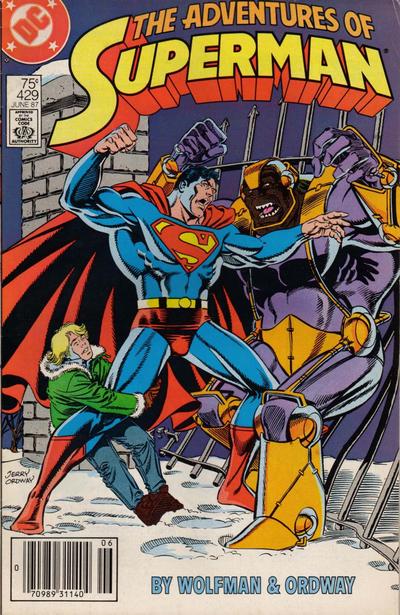
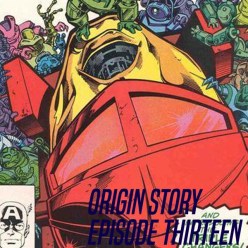 In this episode of Origin Story, Bumblebee and Blaster head to Arizona and wind up victims of The Scraplets. Plus, I manage to make an Office Space joke at the expense of the Decepticons! It’s all in Transformers #29. Plus, I ramble about Top Gun even more, complete with Diet Pepsi commercial!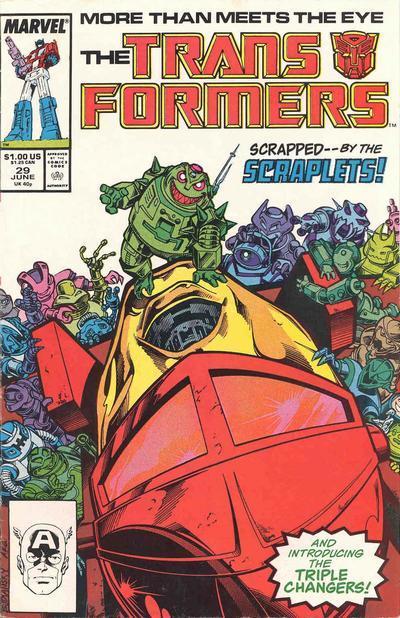
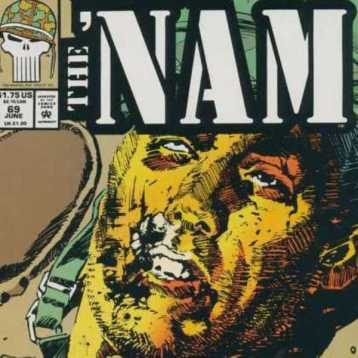 The finale of the second three-part “Punisher Invades The ‘Nam” and Chuck Dixon’s last issue of the series takes us through the end of Iceman’s story about Frank Castle’s time in country, with plenty of action, as Frank defends a firebase and confronts the colonel who may or may not know about the shady things that have led to his fellow soldiers’ deaths. It’s “Down to the Ground” by Chuck Dixon, Kevin Kobasic, adn Jimmy Palmiotti in The ‘Nam #69.
 So no one told you this podcast was gonna be this way … although someone told me and Stella when we sat down to dinner to talk about the iconic 1990s sitcom Friends. We spend a couple of hours talking about the show, its characters, and our favorite moments. Plus, there are tons of clips for your ears and Stella sings “Smelly Cat.” Repeatedly. But don’t worry, dear listener, because we’ll be there for you when the rain starts to pour.
 Pop Culture Affidavit