THIS IS IT! THE BIG FINALE! And oh what a good one we’ve got for you! I’m joined by The Irredeemable Shag to talk about a book that not only showcases a plethora of DC superheroes, but characters from just about every DC genre I’ve covered. It’s Showcase #100, a 36-page spectaculary by Paul Kupperberg, Paul Levitz, and Joe Staton!
We cover the issue, give our critique, and then wrap up by having a quick talk about new comics and finding your joy. So check it out as we take this miniseries home.
Thanks goes out to everyone who co-hosted on the show and everyone who listened and wrote in. It’s been a lot of fun. Let’s do it again sometime!
War comics legend Russ Heath joins regular writer Chuck Dixon for a story about Ice and Speed tracking a ruthless VC sniper known as The Ghost. It’s all in The ‘Nam #65, “The Gratitude of His People.” As always, I take a complete look at the issue and this time around I’ll be looking at June 1971.
It’s time to go back to class as I sit down with Professor Alan (The Relatively Geeky Network) to discuss documentaries. We take a look at the genre as a whole, talking about what makes a good documentary and the mistakes that documentarians often make (from our opinions as viewers) as well as go in depth with a few of our own choices, including King of Kong: A Fistful of Quarters, Room 237, and This Film is Not Yet Rated. There are a number of films mentioned and several recommendations as well.
As a bonus, below are the trailers for the documentaries that Professor Alan and I discuss with a little detail as well as a list of the documentaries mentioned in the episode:
My look at the history of DC Comics through its many genres reaches its penultimate episode with the last non-superhero genre but the very first it published (literally), which is Westerns. While giving an overview of the many cowboys and frontiersmen that DC published since 1935, I take a look at New Fun Comics #1, which featured a story starring cowboy Jack Woods on its cover before heading over to a 1950s Nighthawk story and then Jonah Hex #48.
It’s the conclusion of a three-part story featuring Iceman and Speed in “Duty Elsewhere” from The ‘Nam #64 by Chuck Dixon, Wayne Vansant, and Art Nichols. Plus, I take a look at the history of the Vietnam War in April and May 1971.
It’s an all-star “live” episode as I get the chance to sit down with Professor Alan and Stella and then Stella herself and talk about topics random and geeky! Enjoy such conversations as the novels of Thomas Hardy, DC Rebirth, the Human League, Bat-splaining, and Mad Men. Plus, LISTENER FEEDBACK!!!
Show notes and pictures are available at Pop Culture Affidavit, which is also where you can see regular weekly blog entries about the randomness that is pop culture.
After a brief hiatus, “In Country” is back and back in The ‘Nam with issue #63. We continue our three-parter featuring Iceman and Speed with a story by Chuck Dixon that features art by Wayne Vansant and Kim DeMulder. Plus, I look at events from March 1971 and read listener feedback!
You know, the phrase “It was all a big blur” is one that most people probably associate with a drunken night (or several, perhaps) in college, not to reading a comic book when you are eight years old. Then again, I may not be the only person who will say this about Secret Wars II.
Published in 1985 and 1986, Secret Wars II as the direct sequel to the blockbuster Marvel Super Heroes Secret Wars event that had come out in 1984. In that original series, an omnipotent being named The Beyonder swipes all of Earth’s heroes and villains and transports them to Battleworld, where they do an enormous amount of fighting (and Spider-Man gets the infamous alien costume). In the sequel, The Beyonder comes to Earth in human form and learns about being human.
I think?
I have to be honest–I only ever owned issue #6 and even then didn’t buy it voluntarily because it was another birthday party favor. And I don’t know if I read it thirty years ago when I first got it. Even if I did, I probably didn’t understand what was going on. I remember looking at the cover and thinking that the issue was probably important because it said that it was “#6 in a nine-issue limited series” (that and DC’s “miniseries,” “maxi-series,” or “Anniversary” banners were catnip to me back in the day … and still kind of are) and the cover showed this guy busting past a group of Earth’s mightiest heroes, saying, “Move over heroes, The Beyonder’s here!”
But really, up until I read this comic for this very blog post, I didn’t know what the comic was about. And quite frankly, I still have no idea what is going on. It seems that The Beyonder has come to Earth, closed on some property, built a huge house/headquarters, filled it with a ton of stuff like cars and planes, and then decides to help out Power Pack (which I assume plays out in greater detail in Power Pack #18, which is an official crossover issue). Meanwhile, Dave, a reporter from a local newspaper interviews him and The Beyonder tells the reporter all about who he is and how he came to be. But then he basically hires the guy as his PR man, they set up and organization, and The Beyonder decides he will “fight for life.” he doesn’t know what his role is or should be, and The Watcher along with superheroes think he might be dangerous. He then decides to eliminate Death and despite the objections every celestial being, succeeds. Then Molecule Man and Dave plead for him to bring Death back because it has completely upset the balance of the universe and then he makes Dave into Death and disassembles his new house.
And that’s the most succinct summary I could come up with.
Because honestly, the issue is almost what it would be like if a kid were given super powers and had free right. Think of Tom Hanks in Big. Plus, The Beyonder does kind of look like and eight-year-old dressed him. I don’tknow if that many grown men wore a curly mullet and that appears to be a vinyl jumpsuit (seriously, it’s like the guy saw a windbreaker and said, “No. I want the whole outfit to be that”), but then again, I have seen grown me in cropped muscle tees and acid-wash jeans. God, the Eighties were blindingly awful.
Anyway, if I am going to pick something positive out of the story that Jim Shooter wrote, it’s that it is kind of like a kid trying to “act bigger” than he is–like it’s his first day of high school or something–and the art by Al Milgrom is workmak-like. Otherwise, I can see why Secret Wars II was something I forgot as soon as I acquired it and why it’s more of a punchline than a fondly remembered story.
Next Up: We finish “Comics Prehistory” with G.I. Joe: A Real American Hero #48
As I make my way through these very early days of buying comics, I see more and more how my purchases were influenced by other media. The two issues of Transformers that I just looked at are prime examples. Superheroes are another, as much of my early knowledge of the spandex set came from seeing them on television shows such as Super-Friends or Spider-Man and His Amazing Friends. Another source was, occasionally, my dad, who liked Superman and was a fan of the Christopher Reeve films (at least Superman and Superman II). That, of course, led to my purchasing all four issues of Superman: The Secret Years, and it led to my buying Superman #410.
This was another trip to Amazing Comics, sometime around my birthday in 1985 because while this issue came out that May, I remember seeing this andSuperman #411 on the shelves at the same time, so it must have been right before Bob took the comic off of the main shelves and put it on the spinner rack near the door, which is what he did for all of “last month’s comics.” It was a practice that he held onto for years and while I do have fond memories of comic book spinner racks and would love to own one someday, they do have an odd associate in my mind with comic book leftovers.
Okay, tangent over–or at least point of tangent, which is that my dad took me to the local comic store and said that he thought the cover to Superman #410 looked cool, so I decided to buy it. Drawn by Klaus Janson, who at that point was known for his work with Frank Miller, the cover is certainly a dramatic one–Clark Kent is walking away from a screen where Superman is saying “I categorically deny the story Clark Kent wrote about in the Daily Planet–it is nothing but a pack of lies!” If I may criticize it briefly, I will say that Superman does have a bit of a fat face and Clark’s suit looks two sizes too big, but the drama of Superman’s pronouncement and then the cover of the paper saying “CLARK KENT FIRED” was enough to pull me in and still makes me want to read the issue.
Superman saves a satellite. Or does he?
What’s inside is the first of a really great three-part story arc that is one of those excellent late Bronze Age/pre-Crisis Superman stories. We open with Superman saving a nuclear-powered satellite from falling to earth and blowing up, and then cut to Clark writing about it for the paper. But the thing is, that satellite resuce never actually happened and once that is discovered, Superman finds himself being forced to deny the story, which gets Clark fired. Superman, of course, is confused because he knows what he saw and knows what he did, yet when he flies to the place where the satellite fell from orbit, it’s still there.
Is he going nuts? No. This is all the machinations of Lex Luthor, who is messing with Superman’s mind from the confines of his lair, and he will just copntinue to do so until the end of issue #413, where he gets away because Brainiac recruits him to join a team of villains in Crisis on Infinite Earths #6 (Superman #413, by the way, is an issue I bought years later because it was an unofficial Crisis crossover).
It is, essentially, everything I wanted a Superman story to be when I was a kid, and exactly what i expect out of this time in the Man of Steel’s career. Lex has an underground lair with henchmen and is planning supervillainy? Check. There’s romantic subplots with Lana and Lois? Check. Clark is secondary to Superman? Check. Granted, I would come to really love the FCTC-era Superman and I do consider that version to be my favorite iteration of the characters, but the “Oh, this would only happen on pre-Crisis Earth-1” feel of this particular issue is part of its charm. Plus, it’s just a great setup and doesn’t feel like Cary Bates or Julius Schwartz were burning off stories prior to Alan Moore and then John Byrne.
Even the Curt Swan artwork, which I will admit I am hot and cold on at times, works well here. Swan is inked by Al Williamson, whom I am most familiar with from Star Wars comics of the era, and his links, though pretty loose at times(although this may be due to the reproduction on the digital comic, which makes some of these old newsprint comics look like they are on baxter paper and it doesn’t always work), give Swan’s artwork more grace and fluidity than I’m used to seeing. Then again, I’m not the most accurate judge of Swan’s art, considering I don’t have a lot of issues he actually drew.
But honestly, this is one of thosecomics that makes me with I had started collecting earlier than 1987, and that i had been experiencing the ed of the Bronze Age and the beginning of the Modern Age as it happened. This was still a time when a little kid could pick up books and follow them even if he had little to no sense of continuity. Although even a sense of continuity could not have helped my next book.
Last week, a Facebook post as going around that recognized the 30th anniversary of the death of a naval aviator named Nick Bradshaw. As with many dead soldier post, its creator told us never to forget and dared us to re-post it, saying that he was sure that nobody would have the sense of patriotism or honor to do so.
In case you aren’t aware, Nick Bradshaw’s call sign was “Goose,” and his death actually didn’t happen because he was a fictional character–the witty sidekick to Tom Cruise’s Maverick in the 1986 movie Top Gun. His death comes about three quarters of the way through the film during a training exercise–while taking evasive action, Maverick is caught in another F-14’s jet wash (the technical term for which is “wake turbulence”) and both of his engines flame out, which results in his plane spinning out to sea. He and Goose manage to eject, but Goose launches into the roof of the cockpit and dies. His death winds up being a character moment for Maverick and becomes something he has to overcome, especially during the combat at the end (and the less said about how U.S. and Soviet diplomats magically managed to not have that incident result in a full scale war, the better).
Now, I think that if you polled people who were kids in 1986, the vast majority of them will tell you that they lost their pop culture innocence that year during Transformers: The Movie when Optimus Prime perished in battle. However, I contest that while Prime’s death was devastating, Goose’s death had a more long-term effect on my generation because whereas the former told us our favorite character could die, the latter told us that the average nice guy will not only never get his moment, but he might die, too.
This does not bode very well for people who look to identify with their favorite characters, and it does put truth to the cliche that “Nice guys finish last.” Maverick, after all, represents coolness to aspire to–he’s the best, dangerously the best pilot and he gets the girl–and Goose represents … well, he represents our reality. He is either who we are or who we will become. Let’s take a look at four reasons why.
1. He’s the class clown. When we’re introduced to Goose at the beginning of the film, it’s during the scene where Cougar and Merlin and Maverick and Goose enounter a couple of enemy MiG 28s and Cougar completely freezes up (this is the incident that eventually leads to both Maverick and Goose heading to Top Gun). While Merlin (played by a then-unknown and virtually unidentifiable Tim Robbins) is quite possibly one of the most neurotic characters in the film, Goose is making wisecracks and even takes a Polaroid of the MiG pilot when Maverick is “keeping up foreign relations … you know … giving him the bird?”
The wisecracks continue through most of the film and Goose is pretty much the guy who provides some levity through most of it and moreover has the confidence to do it. Take, for instance, the first day of instruction at Top Gun. Viper gives his introduction speech–and Tom Skerritt is incredibly intimidating in this movie–and Iceman says, “The plaque for the alternates is down in the ladies room.” Goose responds with an exaggerated laugh, one that says, “Yeah, you’re not very cool. Leave the jokes to me” but in a more subtle way than calling Iceman a loser (another great example of this in cinematic history is Charles DeMar’s reaction to Roy Stalin’s “You’d better shave her a little closer if you’re going to kiss her goodnight” at the New Year’s Eve dance in Better Off Dead). And that’s Goose’s role–to provide the humor and to be the nice guy that everyone likes (something Iceman awkwardly says in the locker room to Maverick following Goose’s death), whereas the rest of the co-pilots in the film seem to be variations on their pilots’ personalities (Slider’s just as arrogant as Iceman and Wolfman and Hollywood seem to have a thing going). He is, essentially, Robin to Maverick’s Batman and it shows.
2. He’s got his friend’s back. And in the same way that Batman needs Robin because he needs someone to help him out of a jam, Goose is always there to help his friend. Granted, Maverick doesn’t get into jams the way that Batman does, but when he needs help hitting on a woman in a bar because she’s lost that lovin’ feeling.
In fact, I’m pretty sure it’s this scene and this movie that gave rise to the term “Wingman” in dating parlance–the guy you’ve got with you to help you out.
And while I’m sure that there are a few people out there who are reading this post and thinking that they can fly solo and never need a wingman for “scoring with the ladies,” I say that … a) what are you, 17?; b) you’re also a complete liar; and c) the rest of us have all been the guy behind the guy.
[And a quick side note: this is the second movie in as many years where Anthony Edwards plays a guy who is trying to help get the main character laid and fails–the other is The Sure Thing starring John Cusack]
3. He’s a family man. Maverick is the ladies’ man. Goose, however, is married (to Meg Ryan) and has a kid, which is something that makes his death even more devastating, because this isn’t like Porkins dying during the Death Star attack because his Mountain Dew rolled under his seat and he had to reach down to get it. Here’s a guy who is trying to do right by his family and dies in a random accident, much like so many people. And I know that’s a completely macabre thought, but if you look at Top Gun as the story of Goose, it’s a sad and sometimes dark story that hopefully makes its audience really look at their own lives and feel grateful for what they have.
4. He plays volleyball with his shirt on. There are a lot of famous scenes in Top Gun, but I’m pretty sure that no other has been more inspiring or had a longer-lasting impact than the beach volleyball montage. It inspired an entire movie (Side Out, with C. Thomas Howell, Peter Horton, and Courtney Thorne-Smith) and probably had at least some influence on the montage-tastic syndicated television series Baywatch.
As you watch, you’ll probably notice three things: Tom Cruise, Val Kilmer, and Rick Rossovich are chisled; Cruise is playing beach volleyball in jeans; and Anthony Edwards is wearing a shirt.
This, in a sense, is my closing argument, because while I’m sure there are plenty of us out there who are in good shape as we approach 40 (I have to endure their goddamn Facebook posts about running on a constant basis, so there definitely are), there are many of us who are not and have come to accept our dad bod. Goose, therefore, is there for all of us. In fact, the way he gets upset when Maverick leaves to go on his date with Charlie (and we hear one of my faovrite lines in the movie: “MOTHER GOOSE YOU PUSSY!”) suggests that he’s that guy who really wants to win games like that and it means more to him than anyone else playing because it gives him more credibility among the cool kids.
I mean, I was totally like that in gym class in high school. I got competitive at times not because I was an insane jock, but because I had a long-standing reputation for being mediocre at most sports and I thought that gym class would be one of those places where I could prove that wrong, so when I lost or when other people weren’t taking it as seriously, I got more annoyed than I probably should have. While Goose gives as well as he takes, you can tell that he has to put up with a lot of bullshit “prove you’re a man” type of stuff from guys like Iceman and Slider, so any small victory is a victory.
There’s a goofy likeability to Goose that makes his character feel real and enduring and it’s why his death had such an impact. May we all fare better and get the chance to fly that cargo plane full of rubber dog shit out of Hong Kong.
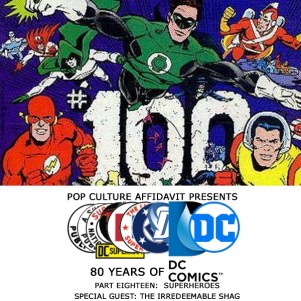 THIS IS IT! THE BIG FINALE! And oh what a good one we’ve got for you! I’m joined by The Irredeemable Shag to talk about a book that not only showcases a plethora of DC superheroes, but characters from just about every DC genre I’ve covered. It’s Showcase #100, a 36-page spectaculary by Paul Kupperberg, Paul Levitz, and Joe Staton!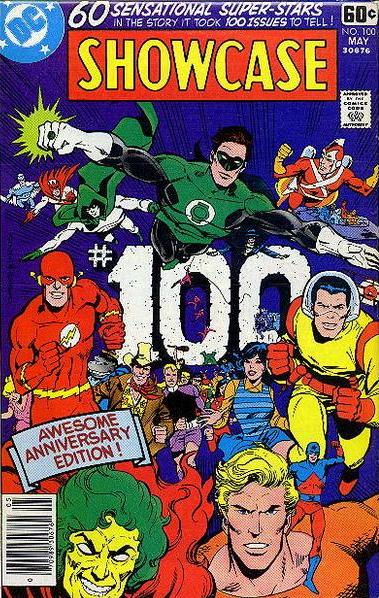
 War comics legend Russ Heath joins regular writer Chuck Dixon for a story about Ice and Speed tracking a ruthless VC sniper known as The Ghost. It’s all in The ‘Nam #65, “The Gratitude of His People.” As always, I take a complete look at the issue and this time around I’ll be looking at June 1971.
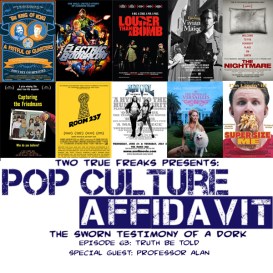 It’s time to go back to class as I sit down with Professor Alan (
 My look at the history of DC Comics through its many genres reaches its penultimate episode with the last non-superhero genre but the very first it published (literally), which is Westerns. While giving an overview of the many cowboys and frontiersmen that DC published since 1935, I take a look at New Fun Comics #1, which featured a story starring cowboy Jack Woods on its cover before heading over to a 1950s Nighthawk story and then Jonah Hex #48.
 It’s the conclusion of a three-part story featuring Iceman and Speed in “Duty Elsewhere” from The ‘Nam #64 by Chuck Dixon, Wayne Vansant, and Art Nichols. Plus, I take a look at the history of the Vietnam War in April and May 1971.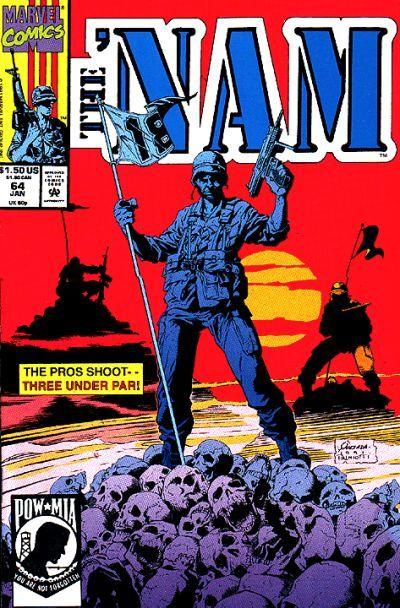
 It’s an all-star “live” episode as I get the chance to sit down with Professor Alan and Stella and then Stella herself and talk about topics random and geeky! Enjoy such conversations as the novels of Thomas Hardy, DC Rebirth, the Human League, Bat-splaining, and Mad Men. Plus, LISTENER FEEDBACK!!!
 After a brief hiatus, “In Country” is back and back in The ‘Nam with issue #63. We continue our three-parter featuring Iceman and Speed with a story by Chuck Dixon that features art by Wayne Vansant and Kim DeMulder. Plus, I look at events from March 1971 and read listener feedback!
 You know, the phrase “It was all a big blur” is one that most people probably associate with a drunken night (or several, perhaps) in college, not to reading a comic book when you are eight years old. Then again, I may not be the only person who will say this about Secret Wars II.
 As I make my way through these very early days of buying comics, I see more and more how my purchases were influenced by other media. The two issues of Transformers that I just looked at are prime examples. Superheroes are another, as much of my early knowledge of the spandex set came from seeing them on television shows such as Super-Friends or Spider-Man and His Amazing Friends. Another source was, occasionally, my dad, who liked Superman and was a fan of the Christopher Reeve films (at least Superman and Superman II). That, of course, led to my purchasing all four issues of Superman: The Secret Years, and it led to my buying Superman #410.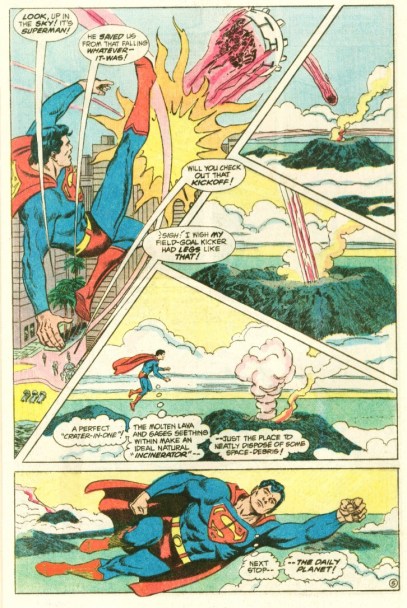
 Last week, a Facebook post as going around that recognized the 30th anniversary of the death of a naval aviator named Nick Bradshaw. As with many dead soldier post, its creator told us never to forget and dared us to re-post it, saying that he was sure that nobody would have the sense of patriotism or honor to do so.
 Pop Culture Affidavit