sports

Pop Culture Affidavit Episode 156: Faster, Higher, Stronger

As the 2024 Summer Olympics gets set to begin in Paris, I got together with Professor Alan to talk about our Olympics fandom. Join us as we discuss our love of the Games, my favorite moments, and what makes them so great.

Apple Podcasts:  Pop Culture Affidavit

Direct Download 

Pop Culture Affidavit podcast page

Here are a couple of extras …

(more…)

1993: The Year in Sports

As another year draws to a close, I’ve been reading a lot of list-based blog posts and articles, most of which are about books, movies, and music that I more than likely missed this year because I have no idea how to pay attention to any of it anymore. I miss the glory days of Entertainment Weekly because while I was a regular reader and subscriber, I at least knew what was out there even if I didn’t always see, read, or listen to it. And you could say the same for sports, which I have been watching more of lately but still have a problem following. I don’t know what it is, but since I don’t watch SportsCenter anymore, I can’t seem to remember to check standings or keep up with what’s going on in various leagues. Shit, I can barely tell you who the major players on a number of the teams I follow.

This was always kind of true, even when I was younger. My parents did not get the newspaper and we didn’t have cable, so the only way for me to keep up with scores was the local news; I often missed standings and stats, though. But I knew a lot of what was going on in the world of sports because I had a subscription to Sports Illustrated.

Of course, that’s nothing unique among teenage boys in America in the 1980s and 1990s. Sports Illustrated was one of the most subscribed to magazines in the country and so iconic that getting the cover could be a blessing in a “cover of the Rolling Stone sort of way” or a curse, depending on how your team was doing (Long before the “Madden Curse” was the “SI Cover Curse” where a team or player was on a hot streak, got themselves on the cover of the magazine and immediately started to slump). I can’t tell you how much of it I read on a weekly basis–although it’s not hard for you to guess that I spent a lot of time looking at the swimsuit issue every year–but I can say that it was a formative piece in my “sports education.”

(more…)

Fat Bats and Invisible Runners

Picture from Fixtures Close Up.

They were a sign of spring, popping up like tulips or daffodils out of their white pots, inviting every kid to grab one. The setting might have been different for each of us–a supermarket, a stationary store, a 7-Eleven–but we all saw the same skinny yellow stem with a red, white, and blue cardboard flower that read “Wiffle.”

I have no idea how many sets I owned as a kid but Wiffle ball had a constant presence my childhood, and was something that everyone wound up playing at some point or another. Very often, I’d be bored on a Saturday afternoon, get chased out of the house by my mom, and at some point, would rummage through my garage for the bat and ball with whichever friend happened to be around. Eventually, we’d get a game going with friends, neighbors, or even people we barely knew in whatever yard or empty street was available. Every game started the same way: we would plot out where the bases were using fence posts and bushes as bases and trees as foul poles, divide into teams, and play.

I never gave much thought to where Wiffle ball came from, and figured that it evolved from the games of stickball on the streets of Brooklyn that my parents’ generation played until they moved out to the suburbs in the 1950s, trading shadow of Ebbets Field to the shadow of a maple tree on the street of the same name. But it is a decidedly suburban game, created in the summer of 1953 in a Fairfield, Connecticut backyard. Two kids really wanted to play baseball, but the constraints—not enough people, not enough space, too much property damage—and made it impossible to get a good game going, so out of that, a new game was created. According to an account by David J. and Stephen A. Mullany on Wiffle ball’s official website, their father and his friend approached their grandfather—who himself played semi-pro ball—and:

He picked up some ball-shaped plastic parts from a nearby factory, cut various designs into them and sent Dad out to test them. They both agreed that the ball with eight oblong perforations worked best. That’s how the WIFFLE perforated plastic ball was invented. To this day, we don’t know exactly why it works… it just does!!

The ball they designed was easy to make curve and harder to hit, with lots of strikeouts. In our Dad’s neighborhood, a strike-out was called a “wiff”, which led to our brand name and federally registered trademark “WIFFLE”.

They also came up with a formal set of rules that designated distances for singles, doubles, triples and home runs, something I didn’t know about until recently because I don’t remember seeing any instructions with that sparsely packaged ball and bat. Plus, since there was no Internet, we just followed the rules of baseball when we played, putting as many people on the field as we could, and creating invisible runners when necessary.

Ah, the invisible runner, the universal placeholder for a small-sized team of kids, and the source of 99.9% of Wiffle ball arguments. I can’t count the number of times I hit the ball, rounded first, stepped safely on second and declared that another run had scored because I had invisible runners on second and third, only to have that disputed. Thankfully, most of those arguments were over quickly, but every so often I had to hear a sniveling “It’s not!” from That One Kid.

I don’t know how he always ended up in our group, but no matter the backyard or pickup game, That One Kid went 110%, pitching like he was Roger Clemens and swinging like he was Babe Ruth, although his only discernable skill was trash talking like the bear-drenched Yankees fan he was fated to become. I grew up hating this kid because it always seemed like he was out to make me feel terrible. Every remark he made had a snide tone of superiority, especially because of his athletic prowess or knowledge of the game. Plus, he didn’t seem to realize that we were playing for the fun of it. Wiffle ball allowed us to practice curve balls, sliders, and knuckleballs. Plus, if I really thought that we were playing the seventh game of the World Series, would I thrown so many eephus pitches (which we called “folly floaters”)?*

And by the way, since the ball was designed for better pitching, that made the game freaking hard. A good curve ball and an incredibly thin bat meant that we spent more time swinging and missing (with the occasional foul tip) instead of smacking the ball across the lawn. So when we got tired of sucking at the plate we would switch to “home run derby” mode, busting out the “illegal weapon”, which was a giant red fat bat left over from a preschool-aged baseball/softball set that had been in my garage next to the big wheels that were nearly destroyed and collecting dust. We’d ditch the rules and strand the invisible runners, designate a home run marker, and say “First to twenty wins.”

Well, that or whomever was winning when the ball got eaten by the huge tree in my parents’ yard. In those moments, I could step up to the plate and greet the underhanded pitch the way I wish I had been able to face the hardballs on the actual baseball diamond, hitting moon shot after moon shot and celebrating while my friends retrieved the ball from our neighbors’ lawn, not wanting it to end, even when it was getting dark and my parents were calling me in for dinner.

*Deep down, I knew that he wasn’t worth my aggravation, but the Little League years were hard for me and largely contributed to my insecurities in sports. In fact, years later, I would spend a lot of time in intramural and rec league softball hearing the voice of that one kid in my head as I tried desperately not to embarrass myself.

9/11 and Popular Culture Part Six

It’s the extra-sized sixth and final episode of a six-part miniseries that examines the books, movies, music, comics, and other popular culture that directly addresses or is about the attacks of September 11, 2001. This time, I look at an assortment of items, including “The Falling Man” (and an Esquire article written about the photo), an ominous PostSecret postcard, rumors and urban legends debunked by Snopes, Gordon Sinclair’s “The Americans” radio broadcast, the French documentary 9/11, comedy courtesy of SNL and The Onion, and the New York Mets’ return to Shea Stadium. Then, I close things out with listener feedback and final thoughts on the 20th anniversary.

A quick content warning: Though these events are now 20 years in the past, they are still traumatizing to many, and I also discuss some of my personal feelings and views, so listener discretion is advised.

And while I did answer feedback this episode, I still would love to hear from you, so feel free to leave leave comments on the Pop Culture Affidavit Facebook pagefollow me on Twitter, or email me at popcultureaffidavit@gmail.com. I’ll read your feedback on a future Pop Culture Affidavit episode.

Here’s where to listen:

Apple Podcasts:  Pop Culture Affidavit

Direct Download 

Pop Culture Affidavit podcast page

Some extras for you …

(more…)

Fallen Walls Open Curtains Episode 5

It’s the fifth chapter in a podcast miniseries that looks at the fall of the Iron Curtain and the popular culture of the Cold War. To start us off, I look at what happened in Eastern Europe from September to November 1990 with a special focus on the roles that corporate America and pop music played in the end of the Cold War. Then, the discussion turns to sports; specifically, the Olympics with a spotlight on the controversial 1972 men’s basketball final, The Miracle on Ice, and the 1984 Los Angeles Summer Olympics.

You can listen here:

Apple Podcasts:  Pop Culture Affidavit

Direct Download 

Pop Culture Affidavit podcast page

And here are a couple of extras for you …

(more…)

Origin Story Episode 31

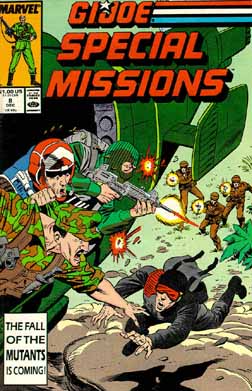
Origin Story Episode 31 Website CoverWhen an American computer engineer seems to have gone rogue and started working with the Soviets in Southeast Asia, a select team of Joes have to go in to take care of him.  It’s a kinda/sorta crossover with “In Country” in G.I. Joe Special Missions #8.  Plus, I … well, I not so much reminisce as complain about the 1987 Mets and Terry F—ing Pendelton.
iTunes:  Pop Culture Affidavit

Direct Download

Pop Culture Affidavit podcast page

G.I._Joe_Special_Missions_Vol_1_8

Pop Culture Affidavit Episode 68: Baseball Like It Oughta Be

1641713TH_ACRO17526022Thirty years ago, the New York Mets beat the Boston Red Sox in the 1986 World Series. For those of us who are die-hard Mets fans, it was an experience that we’ll never forget, and one that we have savored since then, as we patiently (and sometimes even painfully) wait for the Amazins to hoist the World Series trophy once more. Join me and my guest Paul Spataro as we look back on the 1986 season, NLCS, and World Series and share our memories of what it was like to be a kid (in my case) and be at some of the greatest games in Mets history (like Paul).
PLUS … stay through to the end of the show for an exciting announcement about a BRAND NEW PODCAST!!!

iTunes:  Pop Culture Affidavit

Direct Download

Pop Culture Affidavit podcast page

And here are some extras for you …

(more…)

June 17, 1994: The Most Important Day of the Nineties

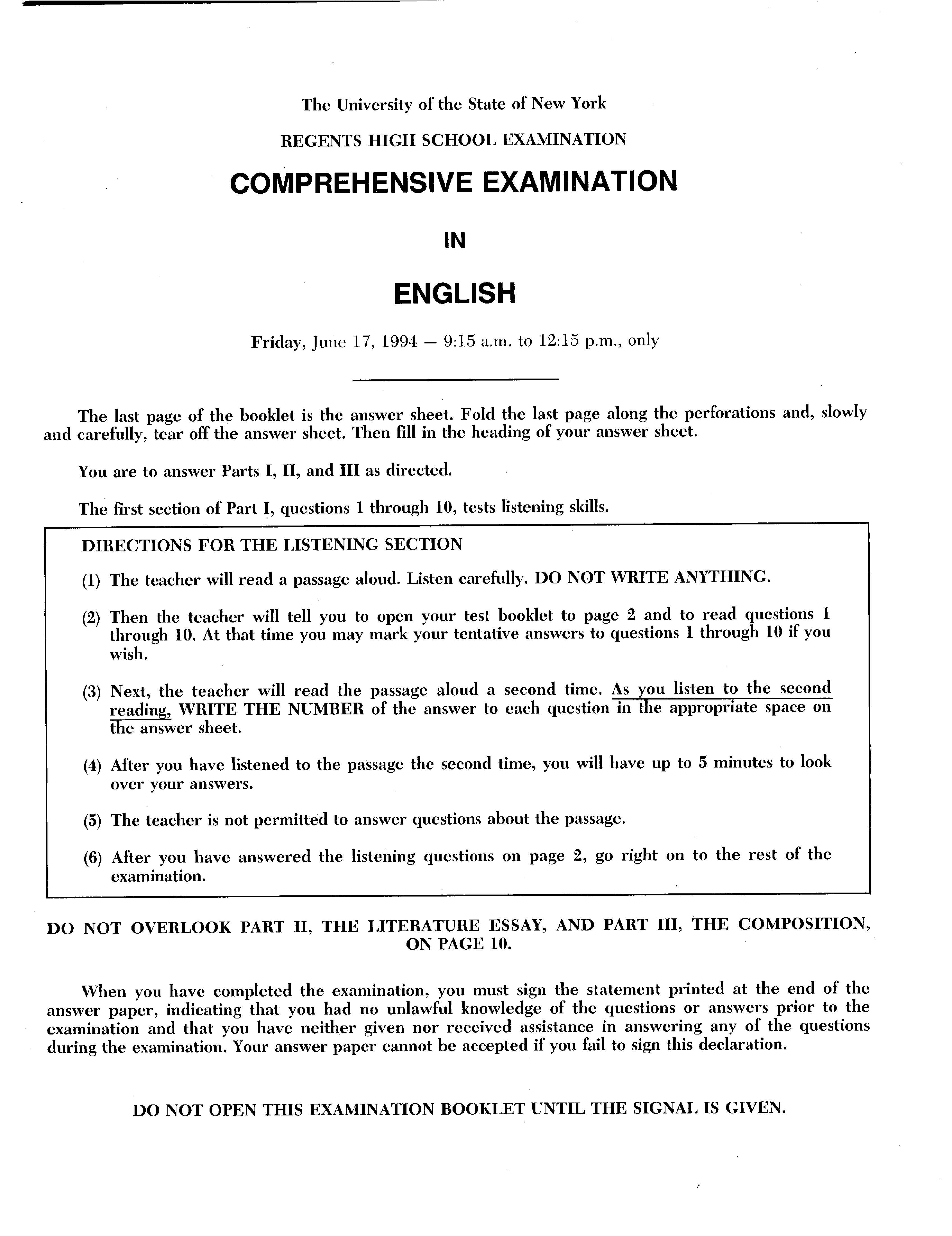
The cover to the 1994 Regents exam in English.

The cover to the 1994 Regents exam in English.

Had the events of the evening of June 17, 1994 not proceeded the way they did, i am sure that I would have remembered the day anyway.  It wouldn’t have had the national significance that it does; still, it’s not every year that the Rangers get a ticker tape parade because they won the Stanley Cup.  In fact, that day wound up marking the end of two significant periods of my life hours before O.J. and A.C. managed to take the Los Angeles Police Department and every television station in the country up the 405 for 50 miles and a few hours.

At 8:30 that morning in the Sayville High School gymnasium, I sat down to take my English Regents.  This was both the culmination of three years of novels, plays, literary essays, and compositions at the hands of my English teachers as well as the very last Regents I would have to take.  That may not seem like much, especially to people who did not grow up and attend public school in New York State, but those who did know exactly what I mean when I say that I considered the end of my Regents-taking career to be a cause for celebration, if however minor.

Regents were what kept us in school until late in June (well, that an starting after Labor Day and having a week off in February) and were a ritual for high school students since the New York State Department of Education started them way back in the 1930s (a quick look at the archives, shows tests on homemaking in the 1950s and 1960s).  Coming sealed in plastic and bearing titles like “The University of the State of New York Regents High School Examination Comprehensive Examination in English,” the tests were more than a rite of passage–they were one of the most important rituals of our academic careers.  Starting after Easter, our book bags were further weighed down with Red Barron’s books full of old tests, which we’d take and then pore over to see what we were doing right and what needed improvement.

A Barron's Regents review book, courtesy of Amazon.com

A Barron’s Regents review book, courtesy of Amazon.com

And English wasn’t particularly hard, although I’m sure my students would blanch at the sight of it.  Whereas current students in Virginia take SOL exams in reading and writing that are passage-based and have one simple five-paragraph prompt-based persuasive essay, my generation had to endure spelling,  definitions, two essays (a literary analysis piece and a composition), and a listening section.  That’s right–a portion of our test required us to sit and listen while our teachers read a passage and we had to answer multiple-choice questions based on what we heard.  I’m sure that such a concept would send today’s average anti-testing advocate/expert into a blood-vomiting rage.  Personally, I never thought twice about it, but then again I was one of those students they’d accuse of having Stockholm Syndrome or something because I dutifully took my Regents exams and did well in school.

Anyway, I remember chugging through the multiple choice, choosing one of the two literary essay prompts (which have both made their way onto my 10th grade advanced English final in recent years) and writing a composition that I think I titled “Notes From a Rest Stop on the Information Highway.”  It was my attempt at wit, I guess, and it seemed to work because I did well enough to continue on my path to graduating with honors a year later.

A page from the spelling section of the 1994 Regents English exam.

A page from the spelling section of the 1994 Regents English exam.

I wasn’t thinking of any of that while taking the test, of course, because the Rangers parade was going to be on television and the Regents exam was the only reason I hadn’t asked my parents if I could take the train to the city that morning (same could be said for my friends as well because we all had to take the Regents).  So like everyone else, I watched it on television.  To this day, the Rangers hoisting the Cup as they drove through the Canyon of Heroes followed by the presentations at City Hall seem surreal.  I wasn’t wearing my jersey–I had finally thrown that in the laundry after superstitiously refusing to wash it throughout the playoffs–but I was glued to my television set the way I was eight years earlier when my dad taped the 1986 Mets parade for me.

The Rangers hoist the cup on Broadway.

The Rangers hoist the cup on Broadway.

Of course, the television would be more important later that night.  But I didn’t know that; did anyone?

Stone Temple Pilots were supposed to appear on Letterman.  I don’t think that’s why I stayed home, but at some point in the afternoon, I made a mental note to stay up late and turn on The Late Show after I was done with whatever Friday night plans I had made–which, knowing my life in 1994 was probably renting videos and watching them in the basement–so I could see one of my favorite bands.  But of course, that didn’t happen.  Well, the STP performance actually did because Letterman taped his show in the afternoon, but it never aired.

At some point–I don’t remember when–I turned on the television and saw live footage of a white Ford Bronco speeding down a Los Angeles freeway followed by police.  The news reporters said that driving the Bronco was Al Cowlings and his passenger was O.J. Simpson. (more…)

Pop Culture Affidavit, Episode 29 — Now I Can Die in Peace

Episode 29 CoverTwenty years ago, the New York Rangers won their first Stanley Cup since 1940.  Join me as I reminisce about that amazing run and talk about my life as a Rangers fan as well as share the memories of some of my friends.

You can listen here:

iTunes:  Pop Culture Affidavit

Direct Download 

Pop Culture Affidavit podcast page

And in case you’d like to relive the entire season, here is “OH BABY!” the Rangers highlight video from 1994:

http://www.youtube.com/watch?v=anIxQbYGoAk


Bottom of the Inning: Taking Baseball Personally (Baseball, Part Two)

Baseball 10thIn my last post, I mentioned that watching all of Baseball made me feel like I was in an introductory, or “101” class on the game.  As well-researched and well-crafted as Ken Burns’s documentary was, there were times where I felt like I was getting the history textbook version of the baseball story:  hit the high points, go selectively in-depth, and completely skip over quite a bit.

While that’s a valid criticism, leaving it at that would be giving the work short shrift, especially since it’s a full day’s worth of a documentary.  Furthermore, I spent much of that first part of my look at Baseball on summary and critique and didn’t give much of my personal “story” as it is, or at least my personal reactions while I was watching it.  Which is kind of the whole purpose of this blog, right?

So that’s what I’m going to do.  Inning by inning.

First Inning (“Our Game” 1850s-1900):  This isn’t Baseball, this is seventh grade social studies with Mr. Kerkhof.  We’re talking about the Antebellum period and …  man, the 1800s are boring.  But this?  This isn’t so much because it’s an origin story, the kind I’m fixated on whenever we begin looking at an important event.  What were the first shots fired in the Revolutionary War and how did it progress from there?  Who actually founded the Roman Empire?  When did the  Middle Ages officially begin?  Who played that first game of baseball and what was it like in what seems like the Dark Ages to me–before Ruth, Gehrig, Mays, Mantle, and every other name I know?

Second Inning (“Something Like a War” 1900-1910):  I’m ten years old and my parents have given me a “Baseball’s All-Time Greats” baseball card set, the one I spotted in the Sears catalogue.  There’s Ty Cobb, and there’s Honus Wagner, who has the most expensive baseball card in existence, something I learned on a feature I saw on 20/20 the previous year.  I begin looking at the all-time stats for the old players and am amazed and even though many of their records have been broken, they still are in the top five for many of their most notable categories.  The card set is worth original retail price (and even today it’s not worth much), but what it lacks in monetary value it more than makes up for in facts.

Third Inning (“The Faith of Fifty Million People” 1910-1920):  To me, it’s not the Black Sox scandal; it’s Eight Men Out and Field of Dreams.  It’s “Say it ain’t so, Joe,” and the last scene of that softball episode of Married … With Children that parodies the last scene of Eight Men Out.  It’s also the idea that even something as pure as a game I play on Saturday mornings in Little League can be corrupted by outside influences (yunno, beyond the opposing team’s coach being friends with the umpire).

Fourth Inning (“A National Heirloom” 1920-1930):  I’m in the fifth grade and we’re asked to take a biography out of the library for our latest book report/conference with the teacher.  I grab one about Babe Ruth.  He competes with Gehrig.  He is supposedly “stranger than fiction,” which is what one of the chapter titles says.  Despite my being an excellent reader, I have trouble getting through the entire book.  I don’t know if it’s because the book’s badly written or because I don’t find the subject matter as interesting as I thought I would.  In fact, I can’t remember if I ever finished that book.  I do know that when I had my conference with Mr. Schafer about it, I did fine.

Fifth Inning (“Shadow Ball” 1930-1940):  I have no personal context for this.  In fact, if there is any episode that I found myself glued to, it’s this one.  Growing up, my knowledge of the struggle of African-Americans was limited to slavery, Plessy v. Ferguson, Brown v. Board of Education, and Martin Luther King Jr.  I was not exactly a scholar.  I knew the Negro Leagues existed but I don’t think that what little I read about them in books clued me in to what extent.  If anything, I’m grateful for what I gained from this episode.

Sixth Inning (“The National Pastime” 1940-1950):  It’s 2012 and I’m in a used bookstore on the Downtown Mall.  I’m looking for a copy of As You Like It but am also perusing the small graphic novel section.  On my way to the counter, I pass sports and Roger Kahn’s The Boys of Summer.  It sits on my shelf until the start of the 2013 season rolls around.  While Kahn’s biographical retelling of his time becoming a sportswriter is interesting, it’s his visits with former Dodger greats and the retelling of Jackie Robinson’s history that pulls me in.  For years, I knew three things about Robinson:  he played for the Dodgers, he broke the color barrier, and he stole home once in the World Series.  This tells me so much more.

Seventh Inning (“The Capital of Baseball” 1950-1960): I’m twelve years old and my family is throwing one of those big barbecues where everyone–from my mom’s side and dad’s side–is there.  My Uncle Brian, a die-hard Yankees fan, spends a good hour talking to Grandpa Panarese about baseball in the 1950’s.  They talk about the Yankees, the Giants, and the Dodgers.  I don’t interject; I just listen.  It’s one of the best memories I have of these two men and one of the most informative conversations upon which I ever eavesdrop.

Eighth Inning (“A Whole New Ballgame” 1960-1970):  To me, this is where baseball begins; specifically, in 1962, when the New York Mets go 40-120 and set an all-time single-season loss record that still stands.  I cut my baseball history teeth on An Amazin’ Era in 1986 and to me, “baseball history” has always involved Seaver, Koosman, Swoboda, Clendenon, Agee, Grote, Garrett, and McGraw.  Yes, there are more important figures in baseball history and more important events.  But it’s the lovable losers’ transformation into the Miracle Mets that I always remember.

Ninth Inning (“Home” 1970-1993):  It’s fascinating to see Bob Costas tell the story of being in the Red Sox locker room during the Buckner play and watching the champagne get wheeled out as quickly as possible.  It’s also fascinating to see testimony from Red Sox fans who were wounded by the play.  After all, I rooted for “the enemy” in 1986.  My nine-year-old dreams came true when Jesse Orosco threw the last pitch to Marty Barrett (I have a poster on the wall of my classroom), so it never occurred to me that someone might be upset by that night’s events.  Beyond that, there are so many recognizable faces here and I wish he was taking more time on them; I wish he was reminiscing with me the way he was reminiscing with my parents through the seventh inning.

When it ends with a talk about how baseball endures I realize that this isn’t a documentary; it’s a eulogy.  The season was cancelled due to a strike the month before the first episode aired and it doesn’t seem like we’ll get the game back.  Furthermore, it’s hard to pick a side because everyone seems greedy; everyone seems like a villain.  And here, at the funeral, we’re all trying to remember why we came.

Tenth Inning (1994-2010):  I was there.  I remember that.  I watched that.

I will never tire of watching Barry Bonds fail to throw out Sid Bream.  I always loved how much fun Ken Griffey Jr. seemed to be having–and always wished I had that swing.  I was cheering for McGwire the whole time and have to admit I was disappointed when the PED charges came to light.  I never cheered for Bonds unless he struck out looking.  I want to buy Steve Bartman a beer and talk baseball with the guy–not that game, just baseball.  No, the 2004 ALCS is not overrated and yes, I’ll watch the Yankees choke like that any time, day or night.  My heart was in my throat when Endy Chavez made that catch, only to have the Cardinals rip it out and crush it a few innings later.  You’re really using that Springsteen song, Ken?  Don’t you realize it’s about looking back and realizing how middle-aged you are?

“But then time slips away and leaves you with nothing mister but boring stories of glory days.”

You know what?  That’s exactly what this is, isn’t it?  Good job, sir.