For my 18th birthday, I got a $25 gift certificate to Tape World.
It was 1995 and I hadn’t bought a cassette in at least a few years. But in The Smith Haven Mall, there was still a store called Tape World. I’d never set foot inside of it and I don’t think anyone I knew had either. Sam Goody was right around the corner, sitting in prime position across from Aeropostale and The Gap, beckoning music lovers with its neon entrance and posters advertising the latest albums. Tape World was a blocky ‘80s-lettering sign above a thin store that was tucked between 5-7-9 and The Bombay Company. I actually had to check the mall directory to find it.
The Eighties didn’t so much end in 1990; rather, they slowly faded into obscurity, and that has me thinking about where they eventually went. Tape World, for instance, has its place in our cultural examination of the decade, as one of Michael Galinsky’s photos for The Decline of Mall Civilization shows a blonde girl with quintessential mall hair walking by the store and its wood paneling facade. A look through my memories of the malls near me (and yes, malls, plural–it was Long island) shows a number of places where time seemed to stand still well after the decade had changed over while simultaneously trying to keep up with the times. Gardiner Manor Mall had an ancient Sears, an Orange Julius, and a bridge to Stern’s. The South Shore Mall had Captree Corners, a late-1970s mini mart of small shops and a fountain I loved to throw pennies into when I was six. The Sun Vet Mall was where 1981 went to die.
Smith Haven, started out as a mid-century mall of the late 1960s with fountains, Alexander Calder sculptures, and the low-lit atmosphere that I associate with the era. It was a twenty-minute drive from Sayville and when I was little, I loved going to “the mall with the fountains.” However, it underwent a massive renovation in 1987 and emerged with a brighter neon-tinged and mauve-tiled palette that has come to typify the Eighties.
The renovation was hyped even as it was going on. When the mall was getting its makeover, there were radio commercials that sang “We’re building the place of your dreams … Smith Haven Mall!” Later, the commercials changed to “Your wildest dreams will come true … Smith Haven Mall!” I don’t know what “wildest dreams” can come true at Jean Country or Casual Corner, but I will take their word for it. The mall was also the home to a local news special on WLIG 55, “At the Mall With Drew Scott.” It remains one of the more amazing artifacts of 1980s Long Island as did the mall itself until it underwent another renovation in the mid-2000s.
That’s probably why it’s always stayed alive while so many shopping malls have died. A hot place in the Eighties, Smith Haven was also a destination for Nineties mall-ness because it had a Gap, Aeropostale, Structure, Express, Limited, Eddie Bauer, Bath and Body Works, Victoria’s Secret, Disney Store, and Warner Brothers Studio Store. But it was still Eighties building that held onto that part of its identity with stores like Tape World; Sssassy, which was a real-life version of Over Our Heads, the store from the last few seasons of The Facts of Life; and the cutlery store Hoffritz. Because honestly, nothing is more Eighties than a store devoted entirely to cutlery.

The faded Eighties aesthetic in the era of grunge was simultaneously out of place and in line with those who have come to be known as “Xennials”. Stuck between our cool older Generation X and annoying little Millennial siblings, the Xennial microgeneration is the middle child–ignored because mom and dad had already done everything for those older siblings and the younger ones were showing much more promise. We were raised by people going through the motions, wearing hand-me-downs and finding ourselves too old for anything new. I don’t think it was spurred on by anything other than bad timing. We had our peak teenage mall years during the first Bush recession where the economy and the housing market both bottomed out, especially on Long Island, so that meant that development and progress were put on pause and we did our best to use our fading institutions of commerce.
Ironically–appropriate for the Nineties, I know–this made parts of Long Island feel like a museum exhibit. In recent years, there has been a ton of McMansioning and townhome development. But in the late 1990s, there was still a lot left over from decades past. My grandmother’s neighborhood in New Hyde Park had houses that had remained unchanged since the 1950s. Downtown spaces in Patchogue, Amityville, and Huntington still resembled their 1950s and 1960s selves. Sayville Pizza looked like it hadn’t been updated since 1975. Even as a kid, I wondered what ghosts were sending echoes through their halls and walls, and whatever patina or grime covered the Island led me to associate authentic with “worn.”
Of course, such things do not always last, especially when the economy improves and developers can give yet another facelift to a mall or neighborhood. The candy-colored late 90s and the housing boom of the 2000s meant knocking down the useless buildings to put up Target (as they did with the Gardiner Manor Mall) or turning a shopping center property into a housing development. In some cases, the limited space provided by an area in Queens or Nassau County meant a creative way to drop a Barnes & Noble into a strip mall. In other, like in Suffolk County, you could bulldoze acres of woods to create an outlet mall. I’m sure nobody really noticed when Rickel and Pergament gave way to Lowes and Home Depot unless someone prompted them. It’s such a suburban aesthetic to embrace whatever is new. “They’re putting in a Whole Foods.”
Yeah, they give us a lot.
They’ve even given us the past, preserving the Eighties in places that are comfortable and happy–movies, marathon weekends on radio stations, your kids’ spirit week costumes. But it’s all cosplay and manufactured nostalgia put forward by those who stand to earn money or cache off of our memories: memes, influencers who pretend they “are Eighties”, bad TikToks of someone bobbing their head and pointing out that random items existed or making lists of cartoons “nobody heard of” yet every single commenter remembers. Yet, that’s the product of our culture, which is one that has been manufactured for generations.
Tons of ink has been spilled about suburbia, stripping down its vinyl siding to show the flaws underneath andI want to make some pretentious point about how because the Eighties were actually stripped of all substance and repackaged, we are stuck in a cultural Allegory of the Cave and the people who sold us the American Dream are making money off of that, but I’ll just look for where the past has receded and the decade truly remains. Because it’s not a place everyone goes. It’s in a paragraph of the last chapters of a U.S. history textbook. It’s documentaries buried underneath a pile of true crime exposés on second-tier streaming services. It’s in a bin in the attic, the back of a closet, or on the shelves and racks of thrift stores.
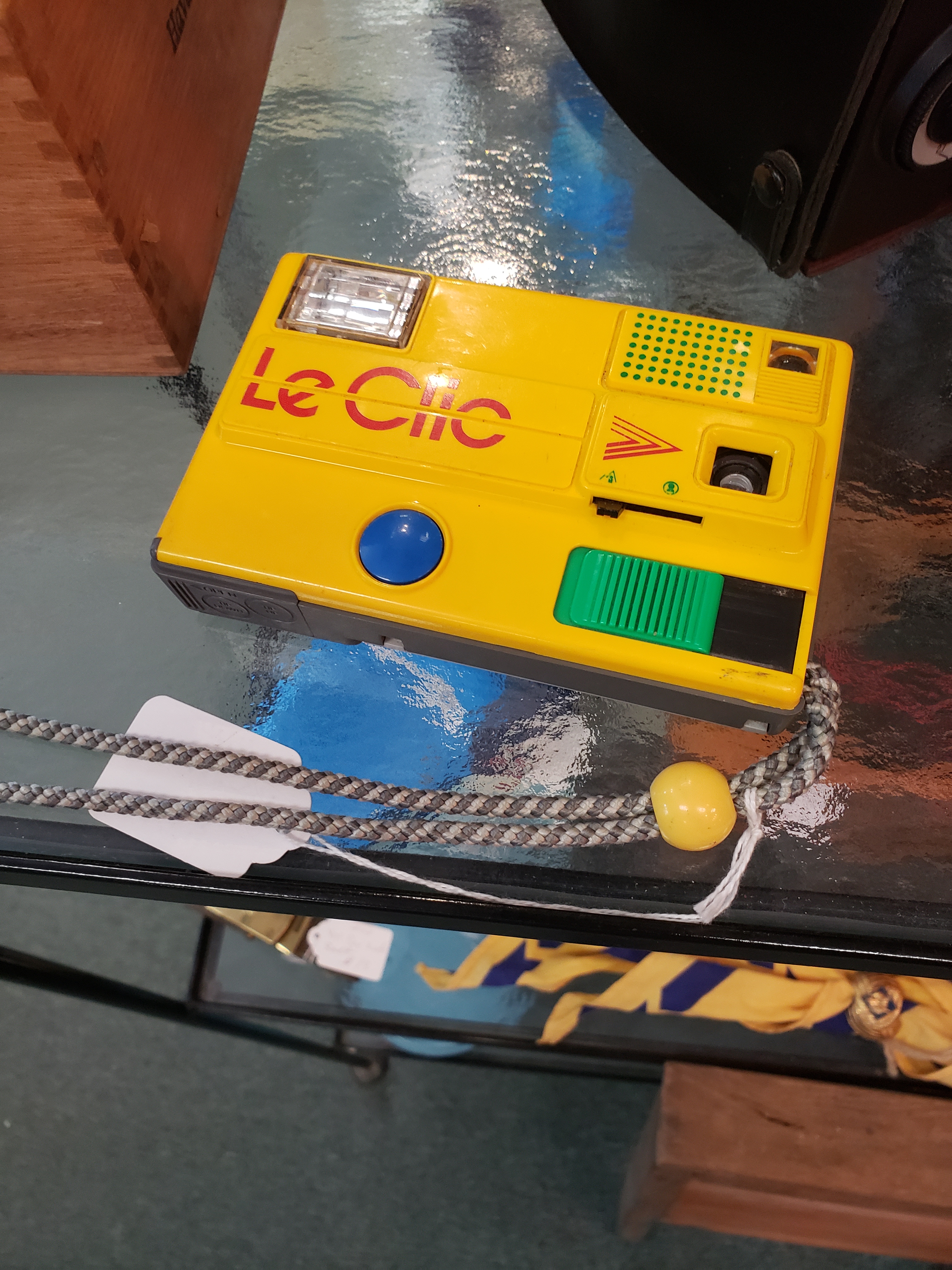
A few months ago, I was in one of those antique malls where people offload things that don’t qualify for an appearance on Antiques Roadshow but still think are worth more than a couple of bucks at a yard sale. Among stacks of old Corningware, old country albums, military ephemera, and old guitars were a number of video games, baseball cards, toys, and other things I recognized, like a Le Clic, a disk film camera that came in an assortment of colors, all of which screamed Eighties. These were more comforting than any meme or slapped-together neon wardrobe I’ve seen on a high schooler. They felt lived in and I could picture some kid with a questionable haircut wearing an Ocean Pacific T-shirt once collecting and playing with all of them.

In the ten or fifteen minutes I spent in Tape World thirty years ago, I stuck to Eighties music. I’d like to say that a store called Tape World demanded an Eighties music purchase, it was because CDs were expensive and I wanted to get the most out of my $25. The Fast Times at Ridgemont High soundtrack on CD was just enough to allow me to dive into a bargain bin and fish out The 80s Rock + On, a K-Tel produced 80s compilation cassette that would live in my Walkman or the tape deck of my Hyundai Excel until I offloaded my cassettes in the mid 2000s. So yes, I did buy a tape at Tape World.



 I can’t get the image of Eric Zala begging his boss for another day off out of my head. It happens about two-thirds of the way through 2015’s Raiders!: The Story of the Greatest Fan Film Ever Made, which chronicles his efforts to reunite his childhood friends–Chris Strompolos and Jayson Lamb–so they can recreate the aistrip scene from Raiders of the Lost Ark where Indiana Jones fights a Nazi brute and wins when said brute is chopped up by a plane’s propeller. It’s the only scene that he and his friends never filmed when they were teenagers and put together a shot-for-shot adaptation of the movie. At this point in the film, Eric is woefully behind schedule due to constant rain storms, and we hear his boss, Alex, berating him for wanting just one more day off and he sits in his trailer looking like a kid who is being chastized.
 It’s been derided as one of the worst Billy Joel songs ever written, maybe even one of the worst ever, and when
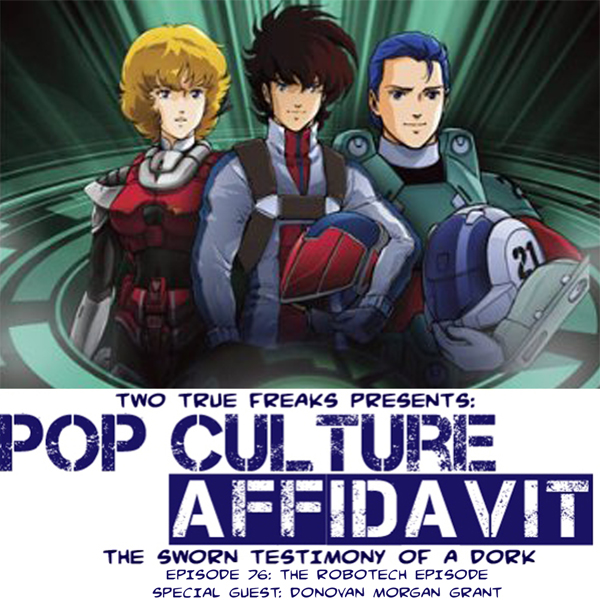 In the mid-1980s, one of the seminal anime series to ever cross over to American television was watched by children across the country. Combining mecha with a love story and an intergalactic war, Robotech was a sweeping saga that makes it one of the most memorable series of the decade. For this episode, I sit down with Donovan Morgan Grant (The Batman Universe, The Next Dimension, Questions No Answers) to talk about The Macross Saga, and then I come back and take a brief look at the Masters and New Generation sagas.
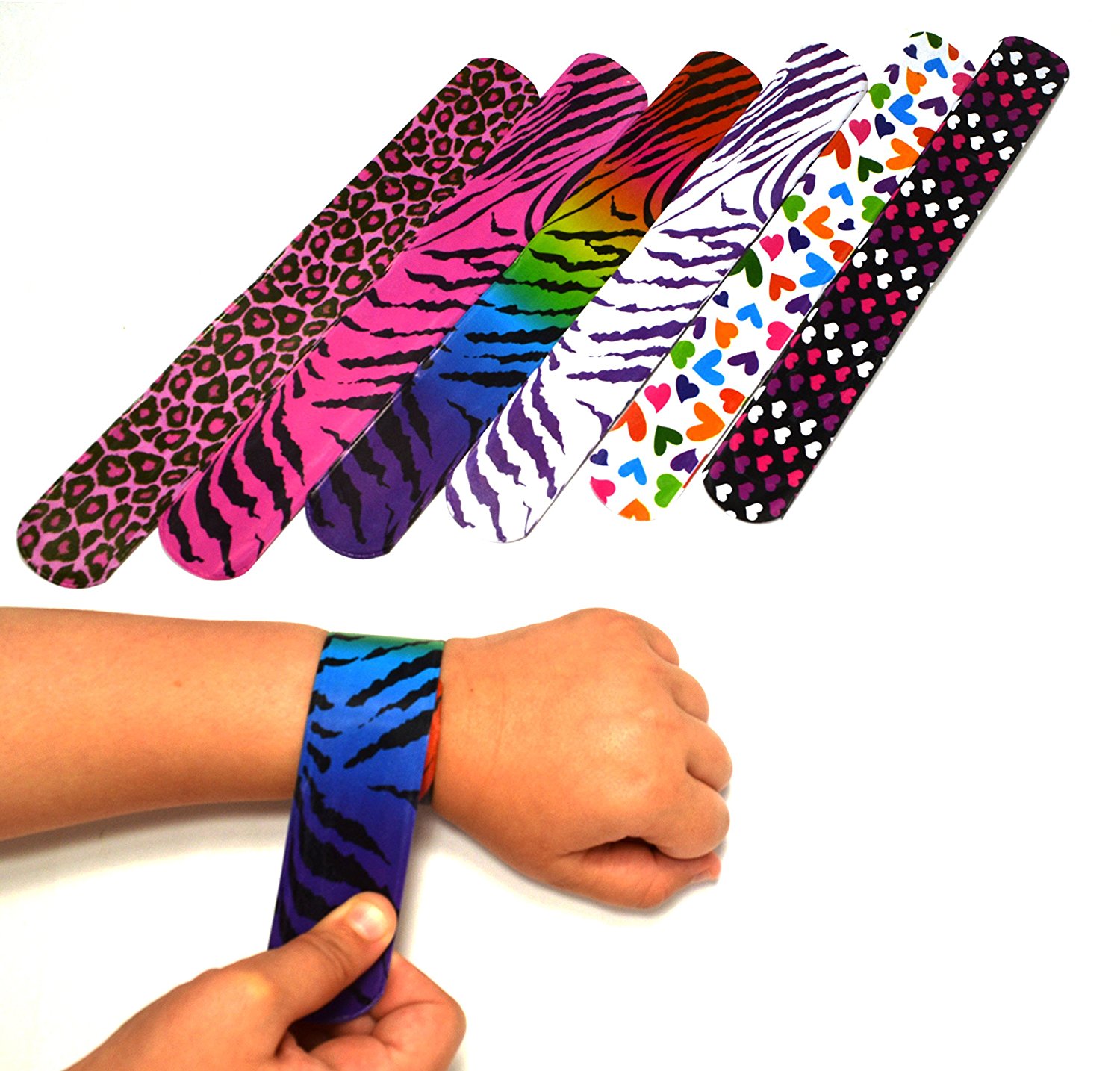
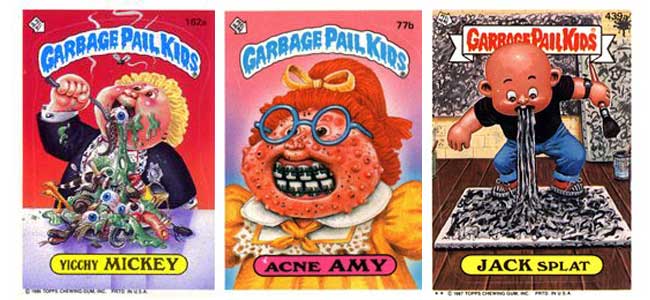
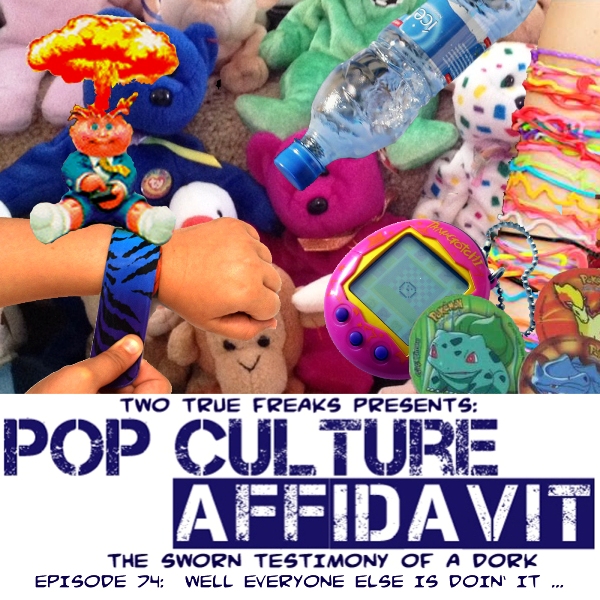 They were cool, they were hip, they were the “in” thing, and they lasted all of three months. They were fads.
 Pop Culture Affidavit