Author: Tom Panarese

Tribes

Tribes TitleI’ve written before about how my junior high school years were incredibly awkward and not the fondest when it comes to my social life, but when I think about it, my choices in after-school entertainment were just as awkward.  I was in on the verge of being a teenager, but I was still coming home to watch cartoons on television or playing NES; conversely, I was also watching sitcom reruns and Degrassi High.  Which is how, in March of 1990, I discovered Tribes.

To be honest, this wasn’t a huge moment in my life because the show is a footnote of a blip in popular culture and the only reason I watched it was because my local Fox affiliate had decided to drop reruns of The Facts of Life and start airing the teen soap opera after the daily rerun of Diff’rent Strokes was over.  In fact, I don’t think I even remember it being advertised.  One day, it was simply on and my sister and I were too lazy to look for the remote, so we watched it.

If you’re unfamiliar with the show, Tribes was a daily soap that focused on several teenagers in Southern California who wind up in precarious situations ranging from storylines I was familiar with from Degrassi to what you might see on The Young and the Restless.  In fact, the creator of the show, Leah Laiman, was a veteran soap-opera writer and the show was produced by longtime producers of shows like Y&R and The Bold and the Beautiful.

Airing from March 5, 1990 until July 13, 1990, Tribes failed to make much of a mark or at least have as many before-they-were-stars names as Swans Crossing, the teen soap that would run in syndication on WPIX in the summer of 1992 (and even had its own line of action figures), but whereas Swans Crossing seemed (at least to me) to be a more soapy version of Saved By the BellTribes was more like a harder-edged Degrassi.  Each episode followed the classic soap opera plot design of following multiple that were ongoing and got increasingly complicated as the series went on.

Thankfully, someone has uploaded most of the episodes of the show to YouTube, so you can see how it kicks off here:

To be honest, when I watched the show back in 1990, I didn’t really get beyond a week or two’s worth of shows and the only episode I remember was one where two characters, Melinda and Matt, got stuck in the school’s boiler room for an extended amount of time, which seeds a future romance for the two of them.  But one thing I will say is that I wanted to take some time to go through the first episode because it is so 1990 in a way that few things are.

(more…)

Comics Prehistory: Star Wars #81

Star Wars 81 CoverIn writing this series of blog posts about the comics I picked up before the period I’ll be covering in the “Origin Story” podcast miniseries later this year, I’ve been deliberately writing about them in publication order because with the exception of a few books, I barely, if ever, remember the exact circumstances of their purchase.  So that means while I’m covering things in order chronologically, I’m out of order autobiographically.  I have very little reason as to why I’m clarifying that except to be anal retentive or something.  Oh, and to say that while Star Wars #81 is to be read after Return of the Jedi, I’m fairly certain I got my copy before the Return of the Jedi adaptation miniseries I covered in the last entry.

While I’m not sure of the date, I vividly remember standing in Unique stationery, which would later become Sayville Card and Gift and looking through the magazine and comic book rack, probably on a night where we had ordered Chinese food and were killing time while the cooks at the Wai Wah Kitchen a few doors down cooked it.  Unique had the kids magazines and comics on the bottom racks where we could all reach them and the more adult (and truly adult) magazines were on shelves for much taller people.  Anyway, I flipped through all of the comics on the rack and when I saw the cover for Star Wars #81, immediately stopped and grabbed it, then asked for it.  The comic was 60 cents, so as was usually the case it didn’t take much convincing.

Besides, looking at the cover, how could you not want to buy it?  I’d seen Star Wars comics before, but for the most part was never interested in them, probably because at six years old, I was still too young to start being a full-fledged comics reader.  Plus, while I saw Return of the Jedi in the theater that summer and Star Wars #81 came out in December, I hadn’t seen The Empire Strikes Back yet, so the pre-Jedi adventures didn’t necessarily pique my interest.  But seeing this cover by Tom Palmer, where Han Solo and Princess Leia look exactly like they did on the screen, I thought to myself, “Wow, it’s really Star Wars! and once we had purchased it, I tore into it.

Star Wars 810001

Chewbacca snuggles with some Ewoks.

Like other comics of the time, this one would be lost among all of the other ephemera of my youth–coloring books, comic books, and magazines that would be thrown in my desk and then thrown away as part of a spring cleaning purge.  Also, like other comics of the time, I wouldn’t remember much about the story and would focus on the art–I could read very well at six years old, but there’s being able to understand the words and reading comprehension and my reading comprehension skills were not as fully developed as they would be down the line–and I remember moments like Chewbacca snuggling with some Ewoks and Han finding the dice he used to win the Falcon from Lando in a long-ago, still-untold story.  And it wasn’t until 30 years later, when I bought a copy of the “A Long Time Ago …” Volume 4 omnibus from Dark Horse that I was able to reread and fully appreciate “Jawas of Doom.”

Written by Jo Duffy, who would write the series all the way to its end (save for a few fill-in issues) and illustrated by Ron Frenz, Tom Palmer, and Tom Mandrake, the story is the first in the Star Wars series that takes place after the Battle of Endor.  The rebels are still on the planet, although it’s implied that this takes place just after Return of the Jedi, perhaps even the day after the big “Yub Nub” party.  Han needs money and he tries to borrow some from a rebel pilot, who not only refuses him but insults him in the process.  Leia suggests that she can loan him some money because she does come from a wealthy family, and that angers him even more, causing Han to stomp off with his pride hurt.  The rest of the main characters are wondering what’s wrong and Leia explains that everything has happened so quickly since they freed him from the carbonite that Han really hasn’t had the chance to process everything and probably needs time to adjust.

Star Wars 810002

Chewie gives Han a comforting hug aboard the Millennium Falcon.

Aboard the Millennium Falcon, which is shown having the radar dish that Lando knocked off while racing through the Death Star (something that I found awesome because my Millennium Falcon toy had lost its radar dish at one point, so I could just pretend it was post-Return of the Jedi), Han thinks about what his life is now life, especially since he spent so many years being a loner.  He finds the dice that he used to win the ship from Lando and then Chewie comes in to give him a comforting hug.

Han then takes off with Leia and Chewie to Tattooine where he had stashed money years before, and on Tattooine, we see Boba Fett escape the sarlaac pit and get picked up by Jawas who mistake him for a droid.  Han lands at Mos Eisley, Han has problems landing and then can’t get his money out of the bank because according to the bank the assets are frozen due to the customer being frozen.  We also hear that the death of Jabba the Hutt has thrown the planet into a bit of chaos with various factions vying for the power left behind by the former gangster.  Leia remembers that Artoo can probably talk with the bank computers to change the glitch in the system.  They return to the Falcon to find Artoo gone and figure out that he’s been snatched by some jawas.  Han and Leia borrow a couple of landspeeders and head after the sandcrawler, which has both Boba Fett and Artoo on board.

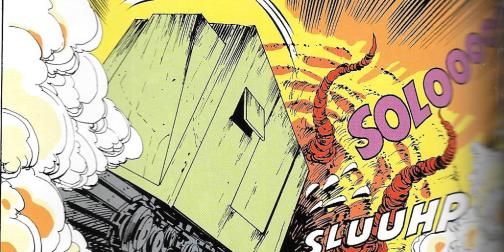
Star Wars 810003The Jawas begin attacking the landspeeders and we have a fight where our heroes attempt to get into the sandcrawler while Artoo tries to escape.  At one point, Han comes face to face with Boba Fett and Fett has no idea who Han Solo is.  Fett helps Han out of the sandcrawler with Artoo and Han decides that he is going to help the bounty hunter as well.  It’s only when Leia yells for Han that Fett gets his memory back and starts to shoot at Han, only to be foiled  when Han and Artoo jump off of the sandcrawler just as it crashes into the sarlaac.

Now, my judgment and memory here may be off, but I think this is one of the more well-known, and perhaps one of the more well-regarded issues of Star Wars from the Return of the Jedi era.  I’d say that its proximity to the film as well as its cover definitely have something to do with that; however, this isn’t a case where it’s just that because this is a great single-issue story.  Han Solo was woefully underused in Return of the Jedi and while there is an end to the story overall at the end of that film, something that could be a sort of question regarding Han would be what he is going to do with his old life.  Yes, the debt to Jabba has been “paid” (in that Jabba is dead so there’s probably no debt), but does that mean he settles down and doesn’t have adventures anymore or stays in the military?  Or does he return to his old life as a smuggler?
Star Wars 810004

After a big fight, Boba Fett and the sandcrawler head into the mouth of the sarlaac.

The Force Awakens has shown that both actually happen and examines how they are wrapped up in particular consequences of the post-Jedi galaxy.  “Jawas of Doom” is more of a hangover story–what happens when the party is over and you have to go back to work on Monday morning, in a manner of speaking.  And it’s a good character piece that manages to be both fun and serious while furthering those involved without needing to shout THIS HAS IMPORTANT RAMIFICATIONS FOR THE FUTURE.  And I know that one of the other notable features of the issue is the “return” of Boba Fett, or at least having Boba Fett “come back” and then be put right back where we found him, but to me that’s secondary to having Han go back to the exact place where he left off, which is Tattooine–the world he was on when he decided to take Ben Kenobi and Luke Skywalker to Alderaan.

There are a number of Star Wars stories that I go back to whenever I want to flip through the old Marvel series and this is one of them.  Not, mind you, because of the personal nostalgia of remembering how I picked this one out, but because it’s actually a great read.

Coming Next Month:  The Transformers #1.


In Country: Marvel Comics’ “The ‘Nam” — Episode 66

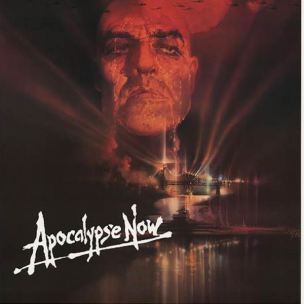
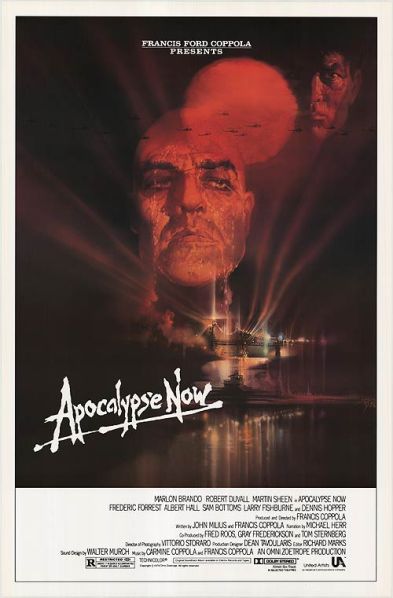
IC 66 Website CoverThis episode, I take time out from my regular coverage of The ‘Nam to continue my look at Vietnam War movies with Francis Ford Coppola’s Apocalypse Now. I give a full review of the movie as well as a look at Hearts of Darkness: A Filmmaker’s Apocalypse, the documentary that detailed the making of this infamously troubled production.
CONTENT WARNING: THIS EPISODE CONTAINS EXPLICIT LANGUAGE.

You can download the episode via iTunes or listen directly at the Two True Freaks website

In Country iTunes feed

In Country Episode 66 direct link

Apocalypse Now Poster

For your enjoyment, here are a few clips from the movie that were used in the show:


Pop Culture Affidavit Presents: 80 Years of DC Comics Episode 16 — War

80 Years Episode 16 Website LogoWith three episodes to go in the series, I’m joined by Luke Jaconetti from Earth Destruction Directive (among other podcasts) to talk about DC’s long history of war comics.  Over the course of our conversation, we take a look at a classic tale starring Sgt. Rock and Easy Company as well as the Creature Commandos and The War That Time Forgot in Weird War Tales #100.

Here’s where to listen:

iTunes:  Presents Pop Culture Affidavit

Direct Download

Pop Culture Affidavit podcast page

In Country: Marvel Comics’ “The ‘Nam” — Episode 65

IC 65 Website CoverWe reach the conclusion to “The Death of Joe Hallen” with “Down So Long …” in The ‘Nam #58, a story written by Chuck Dixon with art by Wayne Vansant and Tony DeZuniga as well as a cover with metallic silver ink by Andy Kubert (it’s about as Nineties as The ‘Nam will get, kids … at least as far as the covers go).  Also in this episode, I wrap up the historical context for the year 1969 with a look at December.
You can download the episode via iTunes or listen directly at the Two True Freaks website

Two True Freaks Presents: In Country iTunes feed

In Country Episode 65 direct link

Nam 58

Also for your reference, here is the New York Times article regarding the draft lottery controversy:

“Statisticians Charge Draft Lottery Was Not Random”

And here is the clip of the Stones at Altamont:


Pop Culture Affidavit Episode 58: Movie Songs!

Episode 58 Website CoverIt’s time for YET ANOTHER PLAYLIST EPISODE! Inspired by Andrew Leyland’s movie scores episode of “The Palace of Glittering Delights,” I’ve compiled a playlist of songs from movie soundtracks that are both classic and obscure but are in many ways spectacular. I’ve got Simon & Garfunkel, The Bee Gees, Queen, Irene Cara, and (of course) Kenny Loggins. So many movie memories! So many songs left off the list!

iTunes: Two True Freaks Presents Pop Culture Affidavit

Direct Download

Two True Freaks Presents: Pop Culture Affidavit podcast page


We Were Only Freshmen

thevervepipe-thefreshmanFor the life of me, I cannot remember why I ever liked “The Freshmen.”
Okay, that’s not true.  I just needed a way to start this post and thought I would try to be clever.  Obviously, that doesn’t always work.

Anyway, I have been on a Nineties music kick lately and in my listening came across The Verve Pipe’s only hit, a song my nostalgia for probably bears explaining.

Originally recorded in 1992 but rerecorded and released as a single in January 1997, “The Freshmen” peaked at number five on the Billboard Hot 100 in June of the same year and was a complete anomaly in the Top 40, which featured “Mmmm Bop” by Hanson and at least one song by The Spice Girls.  This was not the morose grunge-dominated early 1990s, this was the happy, dawn-of-The-Millennials late-1990s and there were few straightforward rock acts making any dent.  Even I had abandoned most of rock and roll for punk and ska at this point in my life and spent the better part of a summer annoying my girlfriend with The Mighty Mighty BossTones before moving on to a full-blown 1980s pop nostalgia trip.  But I happened to be headed to Charlottesville from Baltimore during spring break in March of ’97 and heard “The Freshmen” on WHFS and thought “This is a song that I need to listen to.”  In fact, I’m pretty sure that I went to The Wall in the Barracks Road shopping center that weekend and the paid full $2.99 or $3.99 for the cassette single.  That is how much I felt I needed “The Freshmen.”

If you’re unfamiliar with it, the song is basically a four-and-a-half-minute-long lament sung by the band’s lead singer, Brian Vander Ark, who wrote the lyrics.  In the song, he hints that something terrible has happened and he feels guilty, although he seems conflicted about whether or not he should be held responsible, especially since everyone involved was so young.  At least that’s what I understood in 1997 when I was playing the song in my Hyundai Excel’s tape deck and the video was being played and replayed on VH-1 as well as on the radio at work that summer where I remember one day we tried for the better part of an hour to figure out what the lyrics meant.  I seem to recall my boss, Joe, thinking that the song literally was about someone falling through ice on a lake and dying.  My guess was not as exact but I was pretty sure someone was dead.

Thanks to the Internet, I now know that Vander Ark wrote the song about feeling guilty over his ex-girlfriend’s suicide.  The lyrics also contain something fictional about an abortion, and listening to it nearly two decades later (I lost the cassette single years ago, however), I hear that.  I also hear why I liked it so much at the time–in 1997, it was a throwback to the bands I had been listening to when I was in high school, like Pearl Jam or Stone Temple Pilots.  Granted, The Verve Pipe was probably more on the level of Candlebox, but that’s how my mind worked.

Anyway, “The Freshmen” also reminds me of a time when I took myself way too seriously as a writer because I thought that is what writers did.  In fact, I don’t think I fully realized that angst just isn’t my style until after I graduated college because at the time the song was popular, I was still trying to write serious fiction … and was doing that pretty badly.  I mean, we’re talking attempts at drama from someone who had one of the most drama-free and “non-dark” lives in history.

But writing class will do that to you.  You are someone who loves to write and don’t have much to worry about in life, and the sappy crap you wrote about your pookie got old during freshman year (as well as extremely embarrassing), and everyone else in your workshop group has an eating disorder, an alcoholic parent, a dead friend, or an inspirational story about finding God.  Smart-assed commentary about Star Wars or short stories that were inspired by John Hughes movies just didn’t seem to hold up in my mind.

Which is kind of a shame, when you think about it, because that means I found my strengths in writing by demonstrating my weaknesses in writing class–thankfully, I was writing a column in the student newspaper at the time, so I could build on those strengths.  But when you think of it, I shouldn’t look fondly on a time when I wasn’t very good at something.  Then again, there’s something about that time in my life when I tried to be deep on purpose and nothing says that more than the forced earnestness of “The Freshmen.”

The Most Earnest Song of the Nineties

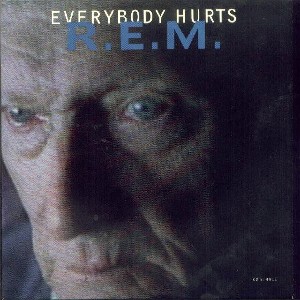
I was in my English 10 advanced class last week watching the pilot episode of My So-Called Life.  Toward the very end of the show, Angela gets home from Let’s Bolt (courtesy of a police officer) and as she’s talking to Brian Krakow, she spots her father, who was supposed to be shooting pool with his brother, talking to another woman.  It’s a gut punch of a moment and as she stumbles toward her house, “Everybody Hurts” by R.E.M. begins to play.

When I heard snide remarks from some people in the class, including, “I can’t take this song seriously,” I had to stop myself from blurting out what I was thinking–“Uh, you think making stupid noises is hilarious.  It’s kind of hard to take you seriously as well”–and eventually made the comment that very few things are more early ’90s than “Everybody Hurts” playing at the end of an episode of My So-Called Life.  And honestly, that fits Angela Chase and that moment because the song itself is incredibly earnest.  In fact, there’s probably no pop song more earnest than “Everybody Hurts.”  It hit at the right time and the right part of the decade and holds up way more than the bombastic seriousness of later Nineties acts such as Live, who got tired incredibly quickly.

I’m going to give my class a little more credit here, however, because there were a number of students who seemed to really enjoy the episode and understood what the scene was trying to convey, an “everything is just now way too real” moment where you, as a person, cannot possibly process everything and yet finding yourself having to figure out what’s going on and somehow react.  The song is there to reassure Angela, and probably the audience, and by the time we see Angela on Monday morning, she’s happier, and can even admit that … “We did.  We had a time.”

Now, if this were the only time anyone in the Nineties ever heard “Everybody Hurts” in any context, I could write a more thorough examination of this scene (Claire Danes’ reaction to seeing her father in the scene is perfect–she’s stunned in a way that is so real that it’s almost uncomfortable.  Later episodes would follow up on this moment), but by the time MSCL premiered in August 1994, R.E.M.’s song had already been a top 40 hit and took its place in the pantheon of 1990s songs, especially with its video that, won four awards at the 1994 MTV Video Music Awards and featured an almost surreal traffic jam*.

Subtle, the video is not.  But then again, subtlety was never the point of the song, either.  In fact, Peter Buck said of the lyrics, “the reason the lyrics are so atypically straightforward is because it was aimed at teenagers,” which is odd for a song that in 1993 was almost an anomaly on the pop charts.  In fact, a look at the Billboard Hot 100 for November 6, 1993 (the week it peaked at number 29) shows the top 40 full of R&B acts with a few exceptions such as “I Would Do Anything For Love (But I Won’t Do That),” which stood at number one and is nothing like this simple mid-tempo piece from an album that is filled with similar pieces (and is easily one of the best albums of the decade).

Then again, what was on the Billboard Hot 100 or playing on Top 40 radio was never exactly the measurement of what I liked when I was in high school, or what any of the cool kids liked, either.  Oh, people I went to school with surely had their nights listening to Z-100 but to my knowledge little or nothing by Nine Inch Nails was charting at the time and the guys I hung around definitely weren’t hearing “Master of Puppets” on the radio.  It was an age of discovering the difference between what was popular and what you liked, and that led me in a much more interesting path than listening to Ace of Base on repeat (I could have, btw … my sister had the CD).

r-e-m-_-_everybody_hurtsI will take a moment to admit here that I wasn’t really listening to R.E.M. that often in 1993.  I didn’t own any of the albums and while I may have checked the CD out of the library at one point, I wasn’t what you could call a huge fan.  I honestly have no reasonable explanation for this except that my musical tastes were way too geared toward what my friends were listening to at that moment and I already took enough shit for listening to Queen that I didn’t want to attract anymore negative attention (I’m serious–I was very insecure in my musical likes).  College wound up being different and in time, I compiled a small collection of R.E.M. songs, including “Everybody Hurts.”

I suppose a number of fans of “Everybody Hurts” would be offended by the student who said he couldn’t take the song seriously, but despite my snarky thoughts when I gave his comment more consideration I remember that I probably thought the same way at one point because the song serves as a reminder of how cool I wanted to be back then. There’s something about being a teenage boy and thinking that being cynical and sarcastic and acting as if you’re above it all comes off as mature when it really comes off as obnoxious.  Being earnest is not intelligent and is definitely weak.

10,000 Maniacs’ Our Time in Eden would be the album that helped change me in that particular way (and that is another story for another post), but I came to appreciate all of Automatic for the People and “Everybody Hurts” stands, at the moment, as a beautiful piece of nostalgia and a reminder of those moments of my teenage years when I was a raw nerve who had no idea where he was going or what he was doing.  Because when the strings swell at the end and Michael Stipe starts singing “Hold on,” I honestly can’t help but smile.


*A footnote here because I couldn’t find anywhere to put it into the main text, but there is a moment on an episode of Daria entitled “Road Worriers” that parodies the “Everybody Hurts” video perfectly.  I tried to find a YouTube clip but couldn’t.

Comics Prehistory: Return of the Jedi

ROTJ1In my previous post, I wrote about the first comic I technically owned, although I only remember finding it years after I actually had “bought” it as a kid and it wound up feeling way more important later on, especially when I became an avid Batman collector and a fan of DC continuity, especially the continuity that centered around or was associated with Crisis on Infinite Earths.  Here, looking at the second set of comics, is something that was purchased because it was associated with the most important thing in my life when I was six years old and that was Star Wars.

To this day, Return of the Jedi remains the Star Wars film I saw the most in theaters and is the only film from the original trilogy that I saw upon its original release.  My father took me and my friend Chris to see the film at the Patchogue Indoor/Outdoor drive-in theater (the one that eventually became the UA Patchogue 13, which I wrote about in 2010: “Let’s Go to the Movies”) in 1983, would take me again to see it at the Sayville triplex when it was rereleased in 1985, and Amanda and I would go and see the special edition during spring break in 1997.  I will always have a soft spot in my heart for the film because of it being the one I saw in the theater (as opposed to Star Wars, which was on television and video and I had watched numerous times before seeing Jedi; or The Empire Strikes Back, which I saw via bootleg copy before it finally came out on video in 1984), and also because of how its merchandising shaped that part of my childhood.

Return of the Jedi StorybookYou could not escape Return of the Jedi in 1983 and 1984.  You may have not gone and seen the film (although I don’t know that many people my age who hadn’t seen it), but that didn’t matter because no matter what store you walked into, it seemed that there was something with a return of the Jedi logo on it.  Lucasfilm licensed Jedi to the hilt and when I was a the height of my kid fandom, I had a ton of merchandise that went beyond the toys:  sheets; cookies;  Dixie cups; a calendar; and my most prized non-toy possessions, which were the records, tapes and books that told the story of the film.  For myself and a number of other kids my age, owning these pieces of merchandise allowed me to relive the movie for at least a few years before I saw it again or owned my own copy on VHS (a copy I still actually have).

Star Wars merchandise

A two-page spread of Star Wars merchandise, most of it from Jedi, as featured in “George Lucas: The Creative Impulse” by Charles Champlin

The comics, however, I have to admit, were not really a part of that.  My comic book buying as a little kid was incredibly sporadic–if I saw something I liked and my dad had enough pocket change, I would buy it, but there were rarely return trips to the store to get the next issue or anything like that.  But I did own the entire Marvel Comics film adaptation and that is because of something that is an integral part of the 1980s childhood nostalgia, which is the comic book multipack.

Return of the Jedi ComicsIf you’re unfamiliar with comic book multipacks, these were polybagged packs of three or four comic books that were stocked on the shelves of K-Mart, Toys R Us, and similar stores (for those local to Long Island, you’ll recognize the name TSS).  Sometimes they were entire collections of limited series, such as this, but other times they were three comics featuring the same character or characters.  I remember a number of times where  I would pick one of the multipacks off the shelf and try to see what the middle book was because you only could see the full covers of two of them.  Most of the comics multipacks were from Marvel, although DC produced them as well, and at some point in late 1983 or early 1984, the company bagged the entire four-issue series and put it on the shelves for the low, low price of $2.29, which was an 11-cent discount.

I really don’t need to get that much into the plot of the series because if you’re reading this, you’re probably familiar with the events of Return of the Jedi, and unlike, say, Marvel’s adaptation of Star Wars back in 1977, there aren’t major discrepancies between the comic and the movie such as deleted scenes left in or lines of dialogue significantly changed.  In fact, the thing that does make the Return of the Jedi adaptation unique is that it’s a separate miniseries from the then-ongoing Star Wars title that Marvel was publishing and it is only four issues long instead of the six that were given to tell the stories of Star Wars and Empire.  The creative team was the same as Empire‘s six-issue story arc, with Archie Goodwin handling the writing and Al Williamson and Carlos Garzon doing the art (the team on Star Wars back in 1977 had been Roy Thomas and Howard Chaykin).

ROTJ2In trying to remember how I got these comics, I seem to recall getting them from Toys R Us in Bay Shore, and it was one of those rare times when my parents took Nancy and I to the store and allowed us to pick something out because we didn’t get toys or anything like that at random very often–they were usually saved for Christmas or our birthdays.  Why we were at Toys R Us to begin with is beyond me, but I’m going to assume that either one of us was there to spend Christmas or birthday money or we were there to buy a gift for someone else, perhaps someone whose birthday party we were attending.  The comics and coloring books were all located on a newsstand rack that was at the end of the board games aisle at the back of the store (and honestly, the old-school Toys R Us layout is probably worth its own blog post, especially if I can find pictures), and what probably happened is that I saw the comics multipack, asked my parents to buy it for me, and since it was roughly the same price as an action figure (my usual go-to “can you buy me this” item because it was cheap and they knew it wouldn’t go to waste), they said yes.

I’d like to say that I read the covers off of the series, but quite honestly, I only remember one time where I read it in the car on the way to my grandmother’s house and what probably happened after that was that I shoved the comics in the desk where I kept all of my coloring books.  The storybook, which had bonafide photographs from the film was more important to me anyway.  And what that means was that I had vague memories of it beyond the covers–which, to be honest, are different characters striking simple poses in a way that can best be described as “serviceable” and nowhere near as dynamic as the adaptations of the other two films–so when I read the adaptation as part of the “A Long Time Ago …” Volume 4 omnibus that Dark Horse Comics released, I didn’t have any serious emotional attachment.

ROTJ3Still, I have to say that it is quite a disappointment.  Having to condense the entire movie into four issues means that Goodwin and Williamson are almost doing a retread of the photographic storybook, as it’s heavy on narration boxes and the panels look more like stills than dynamic depictions of action.  Granted, I know the story and knew the story when I first read it, so I didn’t and don’t need that feeling of “What’s going to happen next,” but this during an era of the Marvel Star Wars comics where David Micheline and Jo Duffy were writing some excellent stories and the work by artists such as Walt Simonson, Ron Frenz, and Tom Palmer was top-notch.  That’s not saying that Goodwin and Williamson were bad at their jobs, but reading Jedi as part of that omnibus package had me wondering what the series would have been like if those creators had taken on the task of adapting the film.

Instead, what we have is probably the very definition of a “disposable” comic book.  I mean, there are quite a number of comics out there that are ephemeral, but for something that had such a big impact on popular culture and the comics industry (especially Marvel) as Star Wars, the adaptation of Jedi reads as if it were to be consumed in the moment and then tossed aside to be put on a pile of coloring books, storybooks, and other things that would eventually make their way into a trash can at some point during a huge spring cleaning a few years later.

Coming next month:  Star Wars #81

Pop Culture Affidavit Presents: 80 Years of DC Comics Episode 15 — Christmas

80 Years Episode 15 Website LogoWell, it’s been a month since Christmas and you’ve all finally listened to all of the holiday-themed episodes that everyone else on the TTF network put out … so why not one more? That’s right, folks–we’ve kept the lights up and drinking egg nog way past its expiration date to bring you a look at FOUR Christmas-themed DC Comics. First up is a treasury-sized Rudolph the Red-Nosed Reindeer read by yours truly and Brett, complete with running commentary. I follow that up with Stella who discussed a Golden Age Batman story live at our local Starbucks. Then, it’s time to check in with the boy of steel and the Legion of Super-Heroes in a classic story that I reviewed with Michael Bailey. And finally, I fly solo for Team Titans #6. It’s festive! It’s jolly! It’s a month overdue!

Here’s where to listen:

iTunes: Two True Freaks Presents Pop Culture Affidavit

Direct Download

Two True Freaks Presents: Pop Culture Affidavit podcast page