video games

8-Bit Power

The cover to the NES Game Atlas, one of the specials that Nintendo published.

A while back, I wrote about the games series that Nintendo created as part of their initial years of the NES and the first wave of available games. Of course, I ownd a few of them and played a number of others, but I have to onfess that so many of them passed me by because I didn’t get my NES until 1988. That was the “Action Set”–with the still-gray Zapper and Super Mario Bros./Duck Hunt cartridge–and it was a huge birthday present, completely changing how I spent my free time.

Along with that set was a chance to join what was then called “The Nintendo Fun Club,” which had a thin magazine that came out every so often and featured stories about upcoming games and tips for taking on certain levels or bosses. My one and only issue of tha tmagazine was its very last and it featured Ice Hockey on the cover (a game I played endlessly and wrote about a while back). But I wasn’t cheated out fo whtever money my parents psnt on a Fun Club memership because in the fall of 1988, Nintendo put out the first issue of Nintendo Power.

I don’t need to explain Nintendo Power to most people my age because it’s the single most important magazine published for my generation. In fact, I am sure that I am not the only person who can close his eyes and see that first cover with Mario jumping, telling us taht inside the issue was an exclusive look at Super Mario Bros. 2. That first issue, with its coverage of the Mario sequel, also profiled three baseball games we could choose from (including Bases Loaded) and previewed upcoming games, including one announced or in development (something that magazines like Wizard would do for comics and movies about comics for years afterward).

My well-worn and taped back together copy of the map for the second quest of The Legend of Zelda, which you could find in the very first issue of Nintendo Power.

Most importantly, the first issue of Nintendo Power featured a pull-out centerfold that on one side was a baseball video game-themed poster and on the other was a map. And it wasn’t just any map; no sir, it was the map for the second quest of The Legend of Zelda.

I cannot express how important this was. Zelda was the premier game for the NES and beating that gold cartridge was a badge of honor. Okay, maybe I considered it a badge of honor because I suck at video games and to this day have never actually completed The Legend of Zelda by myself–both times I had quests that had gotten deep into the game, one of my friends proceeded to “help” me and did a speed run of the remaining boards. At least I got the second quest–as did my sister, who took advantage of naming a game “Zelda” so she would automatically get the second quest. That map, therefore, proved invaluable and was used so many times. I still have it and it’s held together with Scotch tape and a prayer.
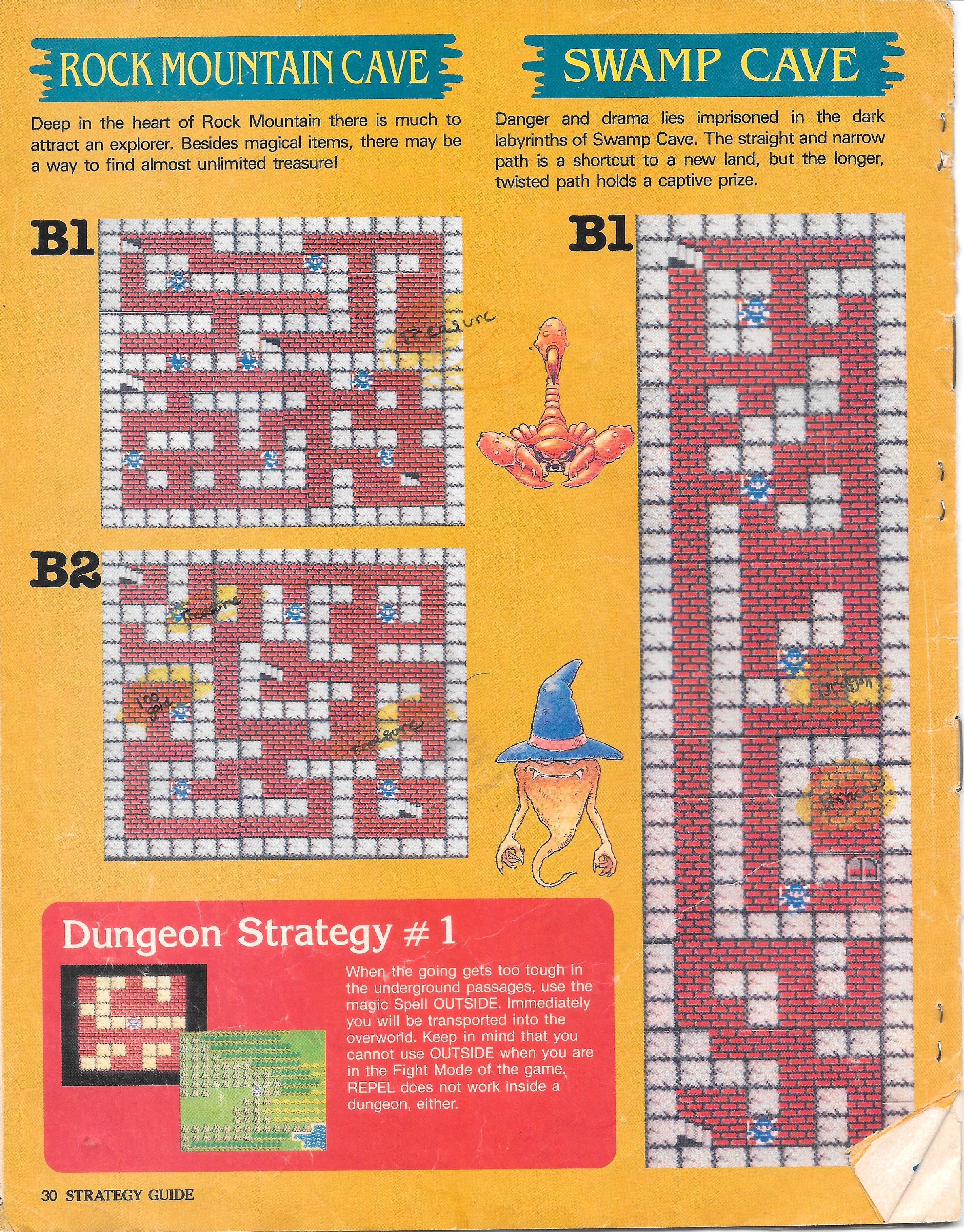
Nintendo Power published this guide to Dragon Warrior. You can see where I wrote down where to find treasure in the caves.

The same can be said for a couple of other things Nintendo Power published, such as their mini magazine insert about Dragon Warrior, the role-playing game that I know some of my friends found boring as hell, but I was obsessed with (along with its first sequel, and would have kept going in that series if I ever found III and IV but they were hard to come by). I marked that up with notes about where to find certain things or what direction to go in at certain points; I also saved one of the advice columns where someone wrote in to ask about the network of caves that would get you to the island where the final boss–The Dragon Lord–lived. And to their credit, Nintendo knew exactly what they had because eventually, they got into publishing player’s guides like The NES Game Atlas.

A book composed entirely of screenshots of each level from various games, the Game Atlas was a special book that you bought separately or came with a subscription renewal–which I’m pretty sure is how I got mine. It was printed to stand out as well, with a stiffer cover and size akin to what we’d eventually see in comic book trade paperbacks. The graphics on the page, while real, were microscopic and it took some real effort to actually see the images. I’m pretty sure I didn’t care, though, because this was a treasure trove, especailly for games like Zelda and Metroid.

Not that helped me win anything or get any further in a game, mind you.

I guess, though, that was the other appeal, because I was able to see later stages of Teenage Mutant Ninja Turtles that I never, ever saw due to dying in that damned underwater stage every time I played the game. Seriously, it was rage-inducing.

Anyway, the Game Atlas was the frist of a series of Players Guides of which Nintendo would publish three more before choosing a different format. The other three were Game Boy, Mario Mania, and Super NES. That last one is on our house and I’m pretty sure it’s because my wife owns a Super Nintendo. It is similar to the Game Atlas in that it does contain some maps, but it’s more like a set of fairly in-depth profiles of just about every SNES game available at the time. Nintendo was competing with Sega Genesis at the time.

Most of my Nintendo Power issues were thrown away years ago. I still have the one with Teenage Mutant Ninja Turtles on the cover as well as issue #41, which was Super Castlevania IV. I’m pretty sure the latter issue was toward the end of my subscription because they were covering NES games less and less. And that made sense considering that they would phase out the system by 1994. I never did own a Super Nintendo or a Game Boy, so I decided to drop my subscription and read Sports Illustrated.

But I get such a rush of nostalgia whenever I flip through one of these books or magazines. They are such an encapsulation of my early teen years.

8-Bit Joy

I’m not one for countdown list, but since the NES was released in the U.S. 40 years ago and because it wwould become the hot thing for several years and ubiquitous in our lives by the end of the decade, I have been thinking about what my favorite games were. But come on, I’ve already blogged about Bases Loaded and Ice Hockey and do you really need to see me gush about The Legend of Zelda, saying things that have already been said a million times?

The flap to the Deluxe Set box, which my wife still owns.

Besides, not everyone got the marquee games all the times and there were always those random games that we loved even if they weren’t top tier. I got my NES–the Action Set with the gray zapper that I received for my 11th birthday–I got a few games with it aside from the Super Mario Bros./Duck Hunt cartridge (which I played all the time). Some of them were marquee games like Zelda, but there were others that people bought for me because they might have looked interesting (or maybe I did ask for them). What I always found cool ws that Ninetndo did publish its own line of games and they all had different categories. My wife still has her old Nintendo–she had the Deluxe Set with R.O.B.–and one of the box flaps had info that detailed all of the games series that Nintendo offered. In case you want to know, they were:

  • Action (Balloon Fight, Clu Clu Land, Ice Climber, Kung Fu, Pinball, Super Mario Bros. Urban Champion)
  • Adventure (Kid Icarus, Metroid)
  • Arcade Classics (Donkey Kong, Donkey Kong 3, Donkey Kong Jr., Mario Bros., Popeye)
  • Education (Donkey Kong Jr. Math)
  • Light Gun (Duck Hunt, Gumshoe, Hogan’s Alley, Wild Gunman)
  • Programmable Series (Excitebike, Mach Rider, Wrecking Crew)
  • Robot Series (Gyromite, Stack Up)
  • Sports Series (10-Yard Fight, Baseball, Golf, Ice Hockey, Pro Wrestling, R.C. Pro-Am, Rad Racer, Slalom, Soccer, Tennis, Volleyball)

Now, I am not sure if this list is comprehensive (and I’m pretty sure there was a poster with all the games listed that was included with the NES but it wasn’t in the box). I also didn’t play all of these games and even among the ones I played, I didn’t own all of them. But one of the great things about the NES and your friends all having it was that you were always borrowing one another’s game cartridges, and by the end of the 1980s, you could rent them from the video store. So I got a lot of exposure to some of the more random games, and I thought I would do a rundown of my favorite Nintendo-produced games from the early, pre-Zelda NES days. I’ve got eight altogether and I’m going to count them down.

(more…)

The Force, Funspot, and my Forties

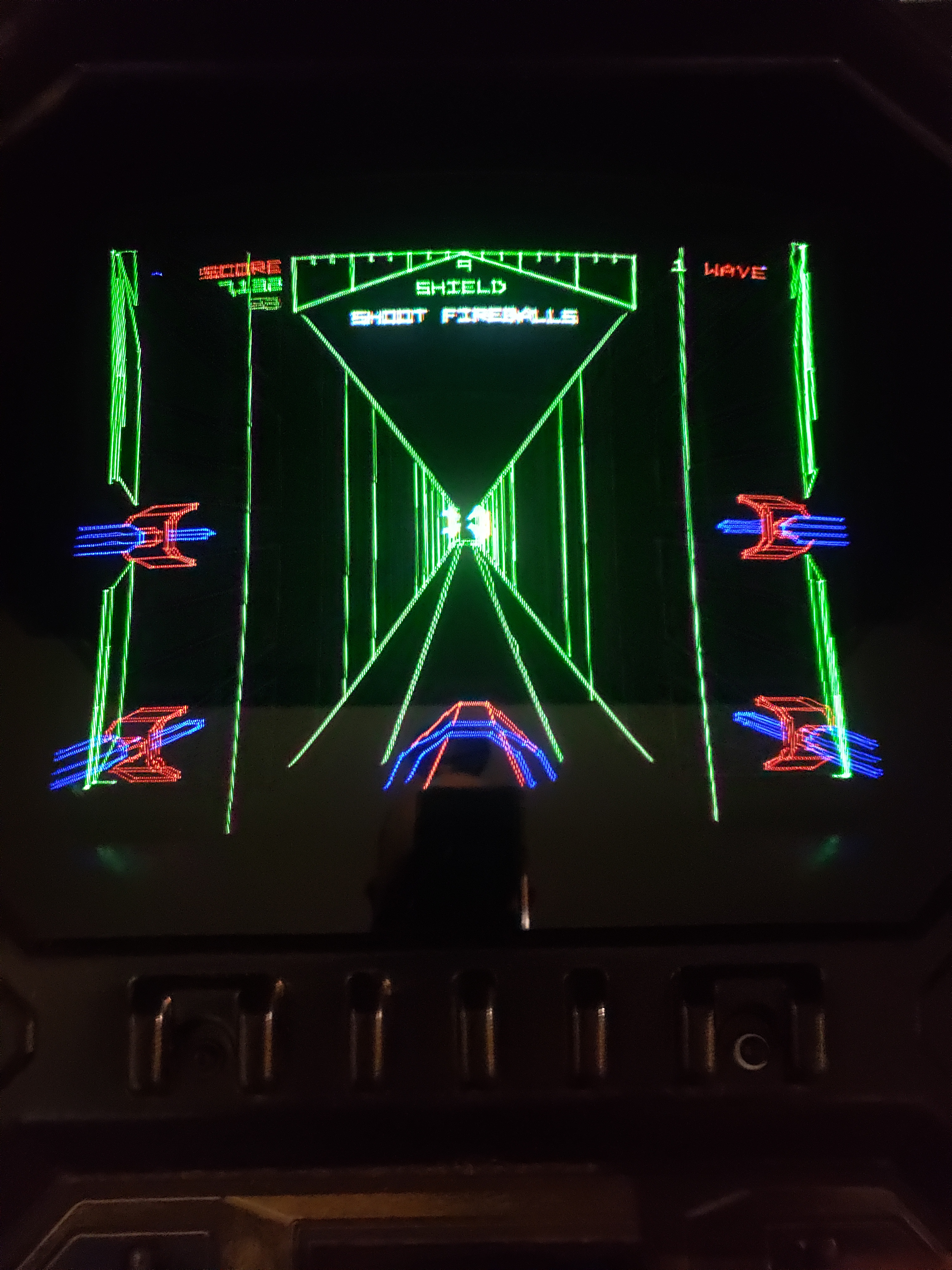
When my wife asked me what I wanted to do for my birthday, I replied like any soon-to-be 47-year-old would: I wanted to go to the arcade. In Charlottesville, that’s Decades Arcade, which is full of old (and some new) video games and pinball machines, some dating back to the early days of the video game era (and in the case of the pinball machines, the 1950s and 1960s). Upon arriving, I went right for what I think is one of the greatest games every put into an arcade: Star Wars, which was first released in 1983 and has you piloting Luke Skywalker’s X-Wing through three stages in order to destory the Death Star. It’s clearly blown out of the water by a billion other games that have come out since, but for my quarters, it’s the most fun you can have in an arcade.

Prior to that day a week ago, I had only played the Star Wars Arcade Game a few times in my life. I was six years old in 1983 and wouldn’t have the chance to frequent arcades until my late elementary school and junior high years, which was toward the end of that decade. By the late 1980s and early 1990s, the game had become a rare find in arcades that only had so much space and because the nostalgia for old games was a couple of decades away, often jettisoned older machines for whatever was new and popular. So I spent those years playing After Burner, X-Men, Teenage Mutant Ninja Turtles, Double Dragon, and Mortal Kombat. They had 16-bit graphics (which were the best in the early Nineties) and were way cooler than an old vector graphics game, although I’m pretty sure that if you put that machine in front of any 13-year-old in 1990, they’d get sucked in, especially if they spent any time standing around the Star Wars machine watching other kids play while they waited their turn like I used to do at Sayville Bowl. Come to think of it, I spent a lot of time in arcades watching other people play games or wandering around for a good hour or two because I blew all my money on sucking at Double Dragon. To this day, I’m more familiar with the demo screens of a number of games than the games themselves.

(more…)

Nintendo on Ice

The Stanely Cup Playoffs start this weekend. I’m a longtime hockey fan and I really can’t think of anything more exciting to watch than playoff hockey. And with the Rangers actually being good this year, I’m usually a bit more engaged. So I decided to celebrate this upcoming awesomeness by playing a game of Nintendo Ice Hockey.

That’s right, I said Ice Hockey.

To anyone who grew up playing the NES, Blades of Steel is the superior hockey game, and I’ll agree with that. But Ice Hockey, which came out in 1988, was one of the first games I ever got after I received my Nintendo for my eleventh birthday, and I think that it was probably one of the games I played the most. So as much as I did enjoy Konami’s entry into the hockey game category, I think my heart has always been with the original Nintendo game.

When Nintendo came out, it was a true cut above the Atari 2600 and while it had a number of iconic adventure and arcade-style games, the sports games were very solid even if they weren’t as popular as, say The Legend of Zelda or Metroid. Ten Yard Fight would be completely forgotten in the wake of Tecmo Bowl, but was still a good football game; Baseball earned the nickname “glitchball” among me and my friends, but we still played it endlessly; Pro Wrestling remains one of the best wrestling games for the NES; and when I was in college, my roommates and I played endless hours of Golf. Ice Hockey was as good, if not better than all of those.

(more…)

Paste Goes Yard

Bases Loaded Opening ScreenSo right now, we’re in a massive societal lockdown, which means that all of us are sitting at home and trying to find things to do. It also means that our usual spring distractions and entertainment have been canceled or altered. There’s no NCAA Championship, and no professional sports. Now, I’m bummed that I wasn’t able to fill out a March Madness bracket and watch tournament games during the day, but I didn’t realize how much I would be missing baseball.
I’ve written about my long-standing and oft-frustrating Mets fandom over the years, and that hasn’t changed. I remain loyal to the team even though there have been large chunks of time in the last two decades were I have checked out and stopped paying attention. And I can say with some confidence that there are enough highlight compilations on YouTube to keep me entertained and remind me of what I’m missing, but the thing that has reminded me of the joy of baseball the most has been Bases Loaded.

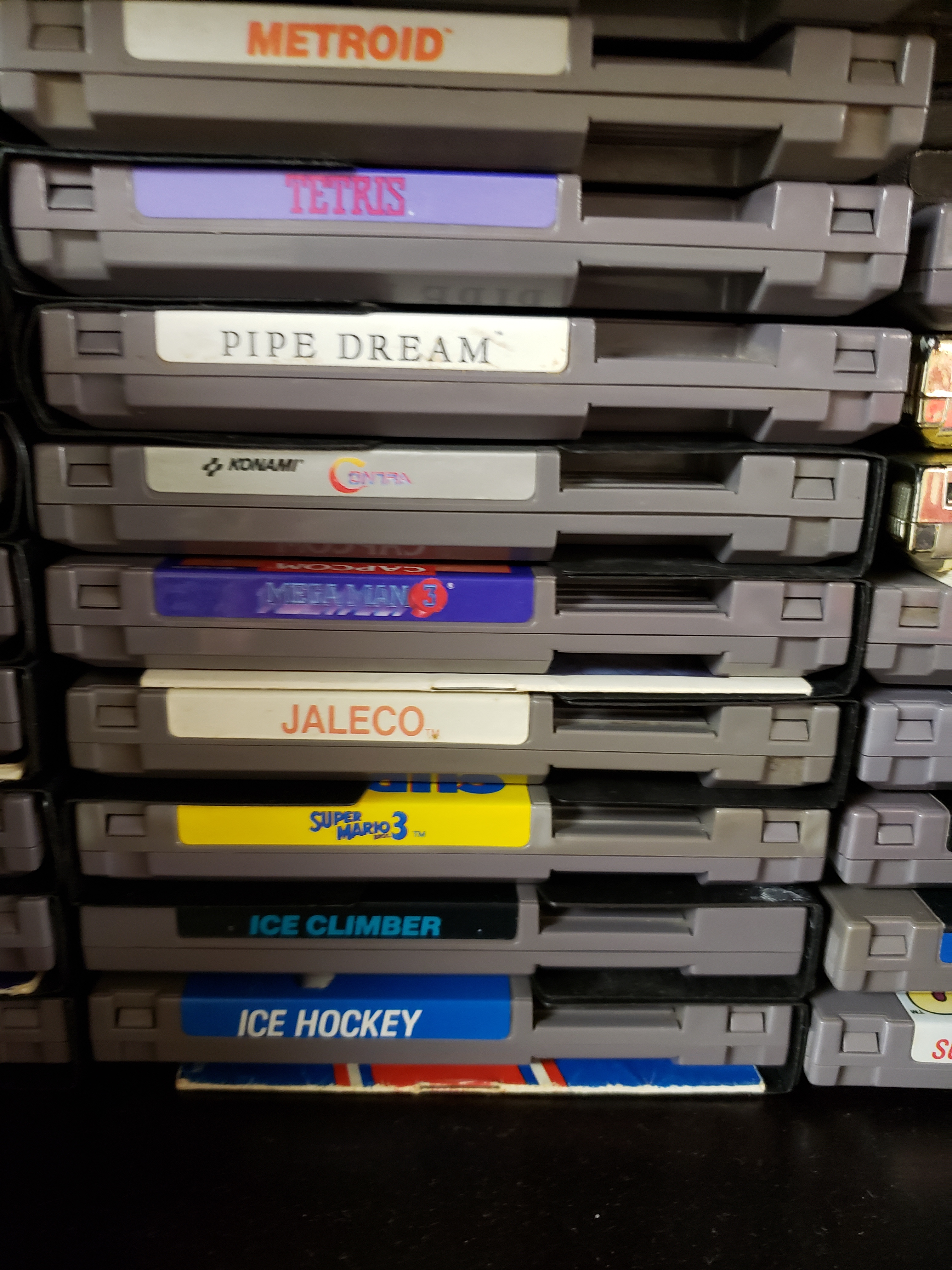
Released by Jaleco in 1988, Bases Loaded is a Nintendo game that was one of a few games that stepped up that year to take advantage of the dearth of quality NES sports games. Yes, the system had an entire sports category when it premiered a few years earlier, and those games were playable, but the overall quality left something to be desired. Golf and Ice Hockey were probably the better of the selection with the football game 10 Yard Fight at the bottom and Baseball somewhere between. I mean, we played the hell out of that game, but it was a glitchy mess–outs would not be recorded and players would walk off the field at random, so we called it “Gitchball”–but it was the only thing going.

But then I got the first issue of Nintendo Power and that proved to be a–no pun intended–game changer. Really, the whole magazine was, and I’m not alone in saying that it was a landmark moment in the 1980s. For baseball, it was important because that issue featured a preview of three new games: RBI Baseball, Major League Baseball, and Bases Loaded.

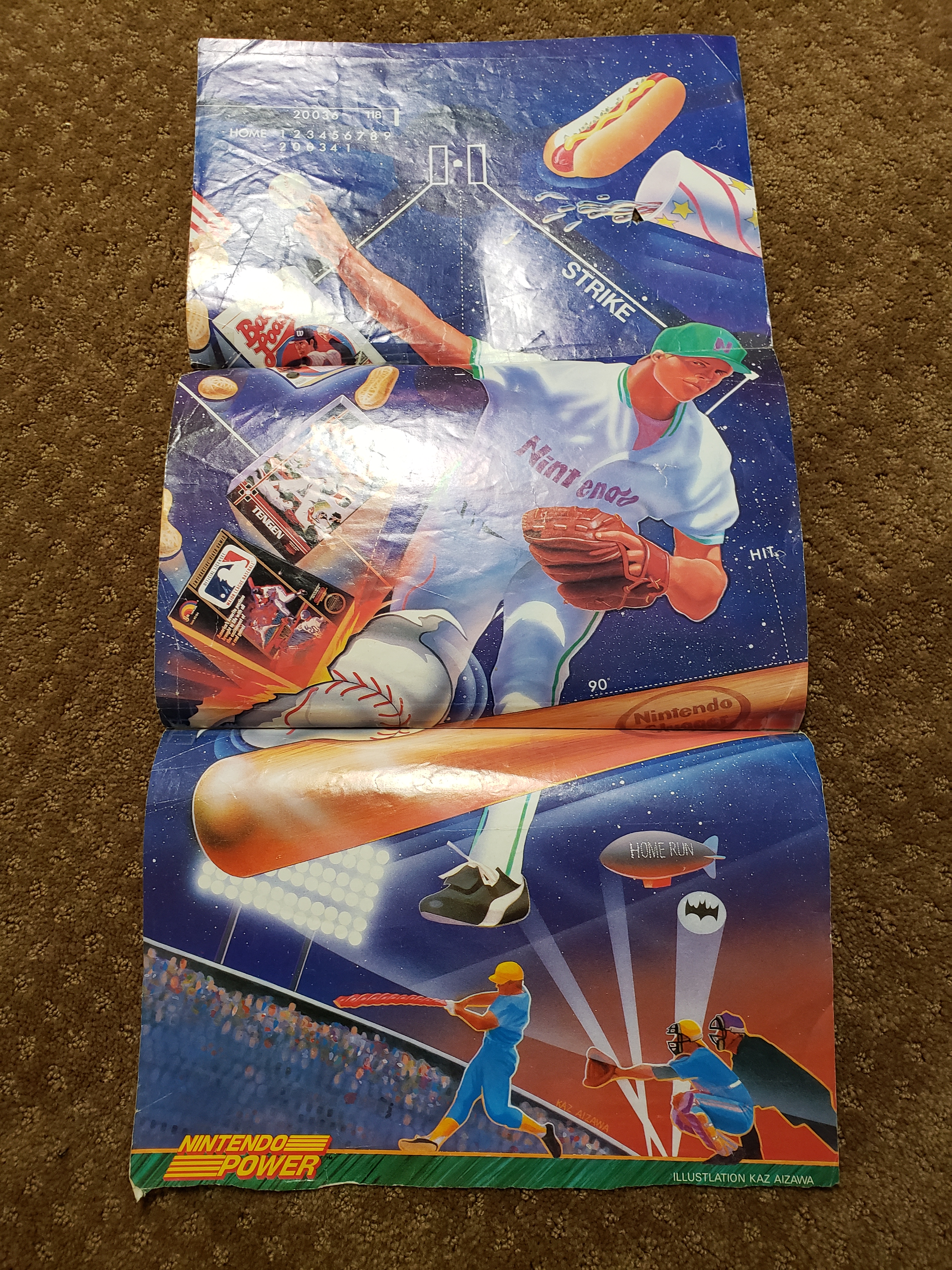
BL Poster

The baseball games poster from the very first issue of Nintendo Power.  Notice the Bat Signal in the corner.  This is my copy and it’s seen better days.

This article–which had an accompanying poster (it’s on the back of the overworld map for the second quest of The Legend of Zelda)–was easily the most important thing I read in 1988 because not only did it advertise three different baseball games, it analyzed and compared them. My friend Tom and I spent the entire summer watching the Mets cruise through the NL East and collecting a ton of Topps baseball cards, so finding out that there was not just one new baseball game but three out there was mind blowing and we knew that choosing which one to ask for was going to be incredibly important.

I can’t say much about either RBI Baseball or Major League Baseball except that I played the latter a few times and remember it being a better version of Glitchball and the lineups used actual player names. But Bases Loaded looked completely different, closer to the game Hardball that we had seen on the Commodore 64 (and if you’ve seen The Princess Bride, you have seen it as well), which meant slightly more realistic-looking players. When Tom got the cartridge, we saw that each team had been programmed with strengths and weaknesses, and instead of having to write down our team record if we were trying to play a season (something we’d done the previous year with Glitchball), there was a password after every game. Even at the start, this was awesome, and when we got to the actual game, we were completely blown away, so much so that we immediately sat down and chose teams to play for an entire season.

Now, if you actually know the game, you know that’s quite a task. Bases Loaded has a 132-game “pennant race” one-player function (and a one-off “vs mode” two-player function), although you can clinch the pennant early by winning 80 games. But the trials of life ha not taken over for us as fifth graders and neither had most of the trappings of adolescence, so in 1988 we were ready to go the distance. Tom chose Jersey, the team closest to use geographically; I chose D.C. because their uniform’s colors were blue and gray and therefore as close to the Mets as I would get. The D.C. team had solid pitching and one superstar hitter by the name of Fendy, whose stats on the game were a .356 average with 50 home runs. But Jersey was something else because they had Paste.

Paste Homer

Paste hit a walk-off three-run shot at the end of a recent game.  Here he is high-fiving teammates on the Jaleco Diamond Vision.

With an unreal .467 average and 60 home runs, Paste was the power-hitting first baseman whose shadow loomed like Babe Ruth any time you had to face Jersey in a game. The team’s pitching was marginal at best, but that didn’t matter because you could always count on Paste being able to smash the ball. Many a time, I watched Tom get a runner or two on the bases and then settle in for some sort of monster at bat from his team’s star player, a pixelated baseball god whose home runs were the type that you knew were out of the park the moment you heard the clink of the 8-bit bat. I mean, I could get Fendy to hit a homer or two, but nothing compared to a Paste home run.

That’s not to say that he carried the team. Jersey had a deep order, including Bay, who batted cleanup after Paste and sported 30 of his own home runs, and a bench that had more than just your average schmos. It wound up being a boon to Tom, as he won every game we played in the season, although I don’t think we got past the twenty game mark before our interest faded. I do remember one time he had found some passwords–where he got them from, I don’t know–for both Jersey and D.C. that put us at game 36 or 37 and while Jersey remained undefeated, D.C. had a losing record. I was pretty pissed off about that and vowed to continue playing on my own, eking out a few wins and a couple of losses before finally giving up and throwing in the Ice Hockey cartridge so my fat guy could score 30 goals against Sweden.

The reviews of Bases Loaded that I found online are not particularly kind to it. They mention the superiority of Hardball, how slow the game play is, and how the fielding is quite terrible. All of those are valid points, but I don’t think that matters to a generation who gets instantly nostalgic when they see the word “Jaleco” on the spine of a Nintendo cartridge. For many of us, Bases Loaded was the first time we felt that we were playing a real baseball video game.

20200325_155556

Even though the game’s title wasn’t on the cartridge, when you saw the word “Jaleco” told you knew exactly what it was.

Glitchball was a good afternoon distraction; Bases Loaded was a commitment. To win at that game, you had to manage your team and those of us who didn’t have the luxury of a Commodore 64 were excited and impress by the different stances and body types of the hitters (plus the different skin tones) and the throwing styles of the pitchers (I never really got the hang of those Dan Quisenberry-type underhand-style throwers). Plus, your pitchers got tired as the game went on, you could pinch hit, and the game would cut to the Diamond Vision when a home run was hit, showing the pitcher holding his head while the batter pumped his fist behind him. And there was also a bullpen car and when you hit a batter with a pitch, he might charge the mound and we’d see a fight play out on the scoreboard. I am sure that better games came along after or were available for other systems, but to us it was the crown jewel of NES baseball games.

It still has the magic, too. I sat down last week and began a season, this time as Jersey because Tom’s not here and I have my own cartridge, so I can pick whatever team I choose. I swept three games from Boston, the third of which climaxed with a three-run walk-off homer by Paste. Sure, Boston put up a bunch of hits on my pitchers and even 32 years later, I can’t field anything cleanly. But it doesn’t matter, because I’ve got endless time at home and a TV in the basement that I can use for 40 minutes a day until I see what’s at the end of the season, and know that Paste’s moon shots are going to be one thing getting me there.

Pop Culture Affidavit Episode 103: It Is Dangerous To Go Alone, Take This

Episode 103 Website CoverIt’s a tale as old as time that has become one of the greatest quests in the history of popular culture and now I’m taking some time to talk about it. This time around, Brett returns to talk about his favorite video game franchise, which happens to be one of mine, which is The Legend of Zelda. Join us as we sit down and talk about the classic NES games, our connections with the game series, and his favorite, Breath of the Wild.
You can listen here:

Apple Podcasts:  Pop Culture Affidavit

Direct Download 

Pop Culture Affidavit podcast page

I shared a few classic and contemporary commercials in this episode.  Here they are in a YouTube playlist: https://www.youtube.com/playlist?list=PLwKqKoe1ziydgcMDe8pFgEzQqsu2Mi8GK


A New Year’s Eve on the Brink

When you trade in nostalgia, the idea of a milestone anniversary for something you cherished in your formative years is constantly on your mind.  Since starting this blog, I have watched the 20th, 25th, 30th, and even 40th anniversaries of pieces of popular culture that were personal milestones come and go.  Some, I have celebrated; others, I have acknowledged but decided not to cover because the idea of constantly chasing such anniversaries sounds exhausting.

That being said, today marks 30 years since New Year’s Eve 1988.  Nothing significant happened exactly on this day, but when I was thinking about what to write for my annual New Year’s Eve post, the thought of the 1988-1989 school year kept popping into my head and the more and more I thought about it, I discovered that in hindsight, this was a year that was more important than I once thought, both personally and culturally.

Why?  Well, for a number of reasons (and not just mathematically), 1988 was the beginning of the end of what we commonly celebrate as the 1980s and as we moved into 1989, we would see our culture shift into that odd post-1980s hangover that was the pre-Nevermind early 1990s.  It was, as the title of this post suggests, a time when we were on the brink.  The Cold War was ending, we were heading toward a new decade, I was hitting puberty, and there were other societal shifts that we as a culture were both seeing and wouldn’t realize were there until they were over (or in my case, 30 years later).

So, to take us out of 2018, here is my list of … Eight Significant Things about 1988-1989. (more…)

The Karateka Kid

So my relationship with video games can be summed up in two words:  I suck.

No, seriously.  I suck.  On levels not known to normal men.  It took me fifteen years–yes, a DECADE AND A HALF–to beat Super Mario Brothers.  I don’t think I have ever won a single game of Madden.  Shit, I can barely beat two or three stages of Pac-Man without using all of my guys.

I blame my parents for this one, honestly.  If they had listened to my demands when I was a seven-year-old and bought me an Atari 2600, I would have had plenty of time to improve my dexterity and my hand-eye coordination, and also would have had more time to practice for when I had to be good at stuff for the Nintendo.  Instead, I got my NES system at the end of elementary school and what little exposure to video games I had before then came through being at friends’ houses or having a pocketful of quarters whenever I went to a birthday party at the local bowling alley (at a future date, I will write about my love of the Star Wars video game machine at the Sayville Bowl).

Granted, my crap record with video games a) isn’t all crap because I kill at Tetris; and b) isn’t all bad because I also love a good round of pinball.  So it’s not like I was deprived or anything.  I just wasn’t one of those kids who was exposed early on to home systems, either on an Atari or a personal computer.  Although during those first few years of my discovering entertainment for what it was, absorbing movies and television (and later music and comic books), my parents did at least give it a shot.

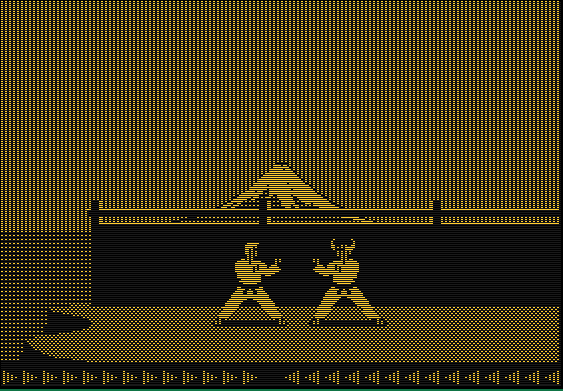
I think it was my father who wound up getting the computer when I was about seven or eight.  It was manufactured by the Franklin computer company, whose forte was creating clones of Apple computers.  I am not sure what the exact model of the computer we had was, but it was a clone of one of the Apple II series, so it was either an Ace 500 (the Apple IIc) or the Ace 2000 (Apple IIe).  The computer had a 5-1/4″ internal floppy drive and an orange and black monitor that turned on like a television, and when it was time to load the game, you had to make sure the floppy disk was in the drive and since the computer had been second-hand (I don’t think he purchased it so much as they were unloading it at work — my mom would do something similar with a computer late in high school, but that one had a green screen) it always didn’t  boot up when you wanted to.  You’d turn the computer on and wait … and wait … and wait …  Then you’d turn it off again.  And you’d turn it on again.  And wait … and wait … and wait …  Then you’d turn it on again.  If you hadn’t given up and left the computer alone, it might boot up on the third or fourth try.  Then you’d get the “Broderbund Presents” screen and you were off and running with the only game we had:  Karateka.

How Karateka appeared on my Franklin computer.

(more…)