It’s the first part of an EXTRA-SIZED CROSSOVER with Fire and Water Records! Ryan and Neil, The Brothers Daly, join me for a look at cover songs. What makes a good cover song? Which covers are iconic? What covers have surpassed the originals? Which ones do we personally love? Join us as we each go through a list of five cover songs and talk about what makes them stand out. Then, in May, go over to Fire and Water Records to listen to part two!
They were a sign of spring, popping up like tulips or daffodils out of their white pots, inviting every kid to grab one. The setting might have been different for each of us–a supermarket, a stationary store, a 7-Eleven–but we all saw the same skinny yellow stem with a red, white, and blue cardboard flower that read “Wiffle.”
I have no idea how many sets I owned as a kid but Wiffle ball had a constant presence my childhood, and was something that everyone wound up playing at some point or another. Very often, I’d be bored on a Saturday afternoon, get chased out of the house by my mom, and at some point, would rummage through my garage for the bat and ball with whichever friend happened to be around. Eventually, we’d get a game going with friends, neighbors, or even people we barely knew in whatever yard or empty street was available. Every game started the same way: we would plot out where the bases were using fence posts and bushes as bases and trees as foul poles, divide into teams, and play.
I never gave much thought to where Wiffle ball came from, and figured that it evolved from the games of stickball on the streets of Brooklyn that my parents’ generation played until they moved out to the suburbs in the 1950s, trading shadow of Ebbets Field to the shadow of a maple tree on the street of the same name. But it is a decidedly suburban game, created in the summer of 1953 in a Fairfield, Connecticut backyard. Two kids really wanted to play baseball, but the constraints—not enough people, not enough space, too much property damage—and made it impossible to get a good game going, so out of that, a new game was created. According to an account by David J. and Stephen A. Mullany on Wiffle ball’s official website, their father and his friend approached their grandfather—who himself played semi-pro ball—and:
He picked up some ball-shaped plastic parts from a nearby factory, cut various designs into them and sent Dad out to test them. They both agreed that the ball with eight oblong perforations worked best. That’s how the WIFFLE perforated plastic ball was invented. To this day, we don’t know exactly why it works… it just does!!
The ball they designed was easy to make curve and harder to hit, with lots of strikeouts. In our Dad’s neighborhood, a strike-out was called a “wiff”, which led to our brand name and federally registered trademark “WIFFLE”.
They also came up with a formal set of rules that designated distances for singles, doubles, triples and home runs, something I didn’t know about until recently because I don’t remember seeing any instructions with that sparsely packaged ball and bat. Plus, since there was no Internet, we just followed the rules of baseball when we played, putting as many people on the field as we could, and creating invisible runners when necessary.
Ah, the invisible runner, the universal placeholder for a small-sized team of kids, and the source of 99.9% of Wiffle ball arguments. I can’t count the number of times I hit the ball, rounded first, stepped safely on second and declared that another run had scored because I had invisible runners on second and third, only to have that disputed. Thankfully, most of those arguments were over quickly, but every so often I had to hear a sniveling “It’s not!” from That One Kid.
I don’t know how he always ended up in our group, but no matter the backyard or pickup game, That One Kid went 110%, pitching like he was Roger Clemens and swinging like he was Babe Ruth, although his only discernable skill was trash talking like the bear-drenched Yankees fan he was fated to become. I grew up hating this kid because it always seemed like he was out to make me feel terrible. Every remark he made had a snide tone of superiority, especially because of his athletic prowess or knowledge of the game. Plus, he didn’t seem to realize that we were playing for the fun of it. Wiffle ball allowed us to practice curve balls, sliders, and knuckleballs. Plus, if I really thought that we were playing the seventh game of the World Series, would I thrown so many eephus pitches (which we called “folly floaters”)?*
And by the way, since the ball was designed for better pitching, that made the game freaking hard. A good curve ball and an incredibly thin bat meant that we spent more time swinging and missing (with the occasional foul tip) instead of smacking the ball across the lawn. So when we got tired of sucking at the plate we would switch to “home run derby” mode, busting out the “illegal weapon”, which was a giant red fat bat left over from a preschool-aged baseball/softball set that had been in my garage next to the big wheels that were nearly destroyed and collecting dust. We’d ditch the rules and strand the invisible runners, designate a home run marker, and say “First to twenty wins.”
Well, that or whomever was winning when the ball got eaten by the huge tree in my parents’ yard. In those moments, I could step up to the plate and greet the underhanded pitch the way I wish I had been able to face the hardballs on the actual baseball diamond, hitting moon shot after moon shot and celebrating while my friends retrieved the ball from our neighbors’ lawn, not wanting it to end, even when it was getting dark and my parents were calling me in for dinner.
*Deep down, I knew that he wasn’t worth my aggravation, but the Little League years were hard for me and largely contributed to my insecurities in sports. In fact, years later, I would spend a lot of time in intramural and rec league softball hearing the voice of that one kid in my head as I tried desperately not to embarrass myself.
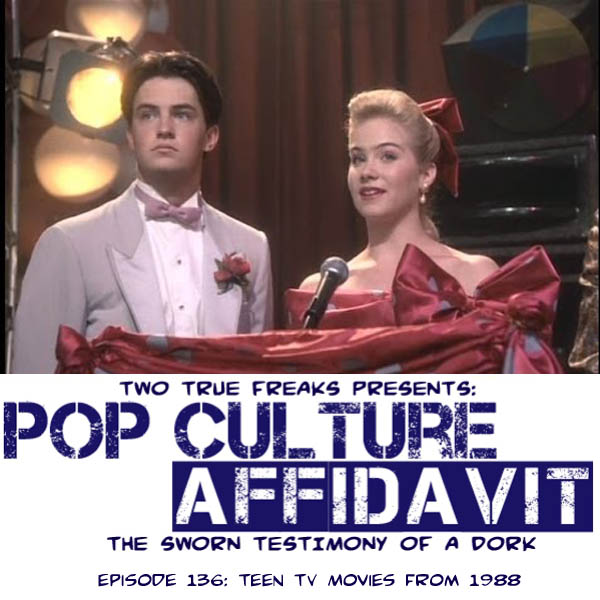
In 1988, NBC produced three television movies starring a gaggle of teenage stars from some of the most popular sitcoms of the day. And for this episode, I sit down and talk about them. So strap in for “Crash Course,” get on the floor for “Dance ’til Dawn” and set sail on a “Class Cruise!”
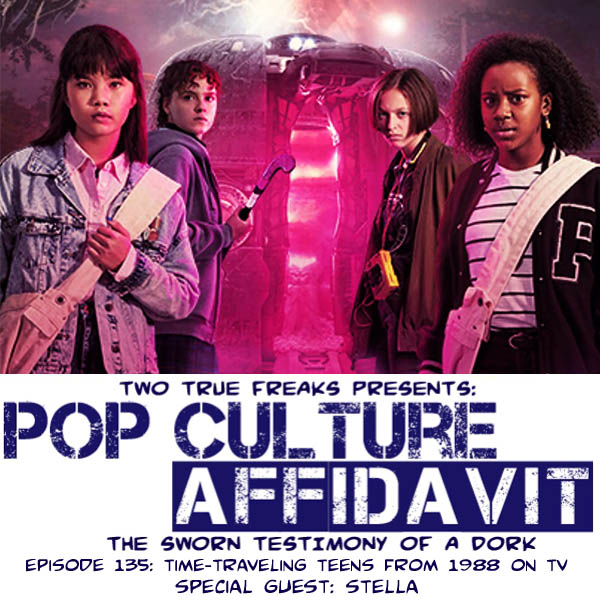
We’re back to the world of Paper Girls with the release of Amazon Prime’s new series. Once again, Stella joins me to talk about the show and we give our takes on the characters, the story, and its faithfulness to its source material.
While I am in no way an anthropologist nor an anthropology student (even if I did take a couple of intro classes in grad school), I am fascinated by the concept of culture. I don’t know where it comes from and this is not the moment I am going to explore it, but I enjoy looking through the windows of others’ societies to see how they live their lives in ways that are both unique to them and common to so many of us. As I have been reading about America and exploring our history and culture on my podcast, I have come to appreciate our differences and similarities even more. Due to to our vastness, the nuance that you can find in our people is amazing.
Vladivostok, 7:30 a.m.: Sunrise over Golden Horn Bay. Photo by Lev Sherstennikov.
Why, then, I often wonder, do we assign a monoculture to a group that’s not like us?
I know the answers to this question involve one’s ignorance, prejudices, or hate. It’s even to think of, say, Black Americans as acting or living a certain way when you’re a racist; it’s simple to assign characteristics or behaviors to Latinx people when you’re xenophobic; and when you don’t know much about another country, it’s easy to make assumptions based on what you see in the media. Thankfully, there is travel as a way to erase that ignorance, and if you don’t have the privilege or luxury to travel to France or Morocco or India or Japan or anywhere else, there are plenty of travelogues to read or shows to watch.
Sometimes, though, the monoculture is the result of politics, a way of seeing a supposed “enemy” in only one way so the government or a particular political party can gain or maintain power. That can be easily wrapped together with racism and xenophobia, as we have seen throughout our history when it comes to countries with predominantly non-white populations. In fact, we wrap entire continents into said views–I have lost count of the number people who act like Africa is a country or anyone who comes from a country south of the United States is a “Mexican.” But then there’s the Soviet Union.
I spent the better part of two years taking a look at how Americans viewed the Soviet Union during my Fallen Walls Open Curtains miniseries, and came across so much media that basically described the average Soviet citizen as a bloodthirsty commie zombie ready to destroy America on command. At least, that is, until Rocky Balboa defeated Ivan Drago … I mean, until the mid-1980s when Gorbachev came to power and enacted Perestroika and Glasnost. Then, the media turned toward building a bridge with the USSR. The Russians (never mind that there were multiple Soviet republics, they were all Russians) liked blue jeans and Coca-Cola and rock and roll just like us!
Of course, looking at the people of the Soviet Union through that lens is just as ignorant because you’re grafting your own cultural identity onto them and therefore dressing them up in your own monoculture. To truly remedy the ignorance we all had about the people of the Soviet Union, we would have had to actually go there and meet people from all over the place. But that wasn’t possible for the average American in the 1980s (and is still well out of reach these days). Thankfully, we got A Day in the Life of the Soviet Union, a project conducted by 100 photojournalists on May 15, 1987.
It’s second of a series of three episodes about America: its history, its people, and its culture. This time around, I am looking at A Day in the Life of America. My coverage includes a 1968 Department of Defense film called “A Day in America”, the 1986 photo book A Day in the Life of America, the 2003 photo book America 24/7, and the 2019 documentary A Day in the Life of America. What do they capture and tell us about ourselves? Listen and find out.
Content Warning: This episode includes me sharing my political views. Listener discretion is advised.
After four years and six films, John Hughes left the teen movie subgenre behind in 1987, but not before producing one last film, Some Kind of Wonderful. Join me as I take a look at the film, its novelization, the soundtrack, and evaluate its place in the teen movie canon and 1980s film history.
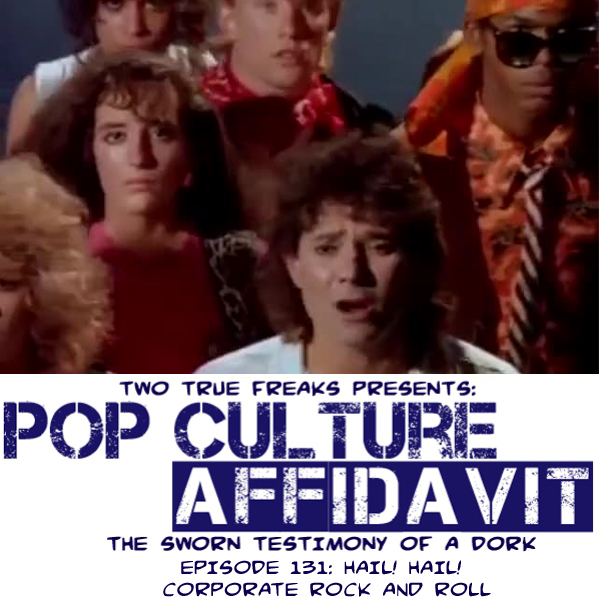
It was generic. It was kind of lame. And it was everywhere. From the late 1970s until the late 1980s, “Corporate Rock” ruled the airwaves. But what, exactly, was “Corporate Rock”? Join me as I plumb the depths of middling rock radio with a playlist of mid-tempo rockers, power ballads, and the ultimate Corporate Rock song.
When you start reading comic books decades into a character or even an entire publisher’s existence, how do you go back and find out all of the stories that got them to that point, especially when it’s 1991, you’re fourteen, and you don’t have money, a car, or the Internet at your disposal? Well, join me as I talk about how I learned about Marvel and DC’s histories through their “official” history accounts: The History of the DC Universe, Marvel Saga, The History of the Marvel Universe, and The Other History of the DC Universe. Plus: listener feedback!
So I’m sitting here on the second snow day of a week where I was supposed to return to teaching after a two-week winter break. I’m not exactly upset or stressed about any of that, to be honest, especially since I was lucky enough to not lose power and aside from two large branches that fell off of a tree, there’s been no huge damage to anything. Meanwhile in my closet sits the sweater I got for Christmas and was going to wear when we got back on Tuesday.
That was always a weird flex when we were in school, wasn’t it–showing off the new clothes you got for Christmas, as if you were reminding everyone of the prowess you displayed back in September when you rolled up to first period wearing what your parents had taken you to buy at the mall at the end of summer. At least, that is, if you were one of those kids who cared about such things that you had to make showing off a priority.
I’d say that this was at its worst when I was in junior high school. Oh sure, it was there in high school, college, and even during my time in the work force, but something about the insecurity everyone was feeling during those years combined with the Lord of the Flies-like pressure to come out on top (in what competition, I don’t know) meant that even when you didn’t realize it, you were constantly trying to be noticed. I’ve done enough of a post-mortem on those days to know that there were shirts I wore or stuff that I owned that I was hoping would help me score cool points (again, in what competition, I don’t know) but usually went unnoticed or got me laughed at.
So yeah, I wasn’t successful at showing off. But I was pretty observant about how people were successful at it, a combination of the right stuff, good timing, and nonchalant attitude. I could acquire the first, might learn the second, but would never have the third. Plus, they’d earned that attitude, emerging in fifth and sixth grade from the primordial sludge into the higher echelons of cliquedom while dorks like me were still completely clueless.
Sounds ridiculous? Well, you have to consider how they’d been practicing almost daily since we were kids. When I think back on my time in the public school system, especially in my hometown, Sayville, kids were always showing off, as my students used to say six or seven years ago, their swag. Let’s look at five of them.
The shirt of a “cool” brand with extra points if you were repping a “cool” local business. This started in late elementary school and wound its way through junior high school and may not have applied everywhere, but definitely was a big deal in a town like mine, which had a full-on Main Street and a number of successful local businesses that weren’t just gift shops and drug stores. Being that Sayville had one of the three large Fire Island Ferries terminals, we had shops that catered to the beachgoer. One was Summer Salt, which was a store that I guess you could call a “beachwear boutique” and that carried merchandise for just about everyone.
You’d see a few kids in the hall–usually girls–with pastel-colored Summer Salt T-shirts from time to time and they were enough to garner a momentary turn of the head, but I’d say that if you were walking around in a shirt you bought from Bunger–the skate and surf shop on Main Street–then you were a heck of a lot cooler. My hometown had a deep skateboarding and surfing community (that often overlapped) and I’m pretty sure that Bunger (or “Bunger’s” as we called it) was where they got their Vision Street Wear and Sex Wax T-shirts as well as the store’s own shirts, which at least a few people could be spotted in the hallways wearing. In fact, the store was so cool that I remember there was a painted mural on the wall of the purple side of the junior high cafeteria that showed a bunch of kids hanging out in front of the store’s entrance. That’s cache.
While Summer Salt went out of business years ago, Bunger is still in town, so for all I know there are kids walking the halls of Sayville Middle School (after 30 years, it’s still weird calling it that) in Bunger shirts, perhaps wearing their parents’ vintage ones from the early Nineties.
The plastic Gap bag. Image from The Guardian
A Gap bag for your gym or swim clothes. Keeping with clothing, Gap was ubiquitous by the time I started junior high school in the fall of 1989 and I don’t think I’d stop shopping there until maybe the early 2000s. And man, Gap antique washed jeans are still my favorite jeans of all time. ANYWAY, I’m not talking about Gap clothes here because tons of people went to the Sun Vet, South Shore, or Smith Haven malls for school clothes; I’m talking about the navy-colored plastic drawstring bag with “Gap” on the front. On the days when you had to bring a change of clothes to school–you were switching out the stank-nasty mess that was in your gym locker or your gym class was at the junior high pool that day (yes, we had a pool at the junior high and there was a swimming unit in gym class … it’s still too traumatic for me to write about)–you peacocked a little by bringing those clothes in one of these bags.
And by “little”, I mean that this was a minor flex, a reminder that you fit in, even though the reason you brought the bag with you was because your parents had the bag lying around the house and it was sturdy enough to endure being dragged from classroom to classroom while containing a damp bathing suit and a towel. Plus, you could tell that a person walking around school with a Gap bag was trying to show off by the way they carried it, making it incredibly obvious. And yet? That shit worked for some people (read: people who weren’t me).
A 1980s-era Friendly’s bag. The one on the left is the one that I remember the most.
A Friendly’s bag for your lunch. Speaking of bags that were flexes, this went as far back as elementary school in the Eighties. Sayville has a Friendly’s and that place has been in business for at least the 44 years I’ve been alive, and unless that company completely goes under, I can’t imagine it ever closing. Too many post-school function sundaes were eaten there in my lifetime and I’ve had more than a few fateful meals with friends and girlfriends there (when, that is, we weren’t at a diner). But back in the day before the chain’s ice cream was available in supermarket freezer sections, Friendly’s (which was still just “Friendly”) did a steady take-out business. You could walk in, grab a rectangular half gallon from the self-serve freezer, pay, and leave. Sometimes, your parents even sprung for hot fudge (which was freaking amazing). When they bought the ice cream, the person behind the counter put it in a thick paper bag with “Friendly” on front. And since that ice cream was going in the freezer when you returned home, you could ask your parents to pack your next day’s lunch in the Friendly’s bag and not your lunchbox. Oh sure, that Voltron lunchbox was mint, but a Friendly’s bag? People noticed.
The four step guide to drawing the “Cool S”. Image from Wikipedia.
Drawing the “S” correctly. You know the “S.” We all know the “S.” Believe it or not, even my students know the “S.” Now, it’s not really hard to draw the “S”, but you’d be surprised at how easy it was to screw up, so that meant the really cool people could draw it really well.
This drawing is an old graffiti-style S that was, at one point, incorrectly attributed to the Stussy brand (and some will tell you was a Stussy logo at one point, although I think that’s some sort of Berenstein/stain Bears Mandela Effect stuff), and was everywhere throughout the country’s schools back in the day. That’s pretty amazing considering that the Internet didn’t exist and it wasn’t something in a television show’s logo. It was just … all over the place.
That being said, it was really popular to draw on notebooks and binders where I grew up because the name of the town was Sayville and people would basically draw the “S” and “ayville” after it.
Because of course we did.
I think the “S” was passé by the time high school rolled around, and I saw more people writing the logos of bands they were into on notebooks, desks, or lockers than the ubiquitous character. But I’m sure that if you asked anyone from my generation to draw it from memory, they could do it in a heartbeat.
The Bic four-color pen. Need I say more? If you had this in elementary school, you were a god. Bic introduced this pen–a retractable pen where you could choose between blue, black, green, and red–in 1970 and it was still going strong through the Eighties (and still is–you can buy them on Amazon). These were especially powerful before the fourth grade when we were mostly using pencils to complete our work and hadn’t transitioned to pens.
The GOAT of pens. Hands down.
Someone having this in class was as if they’d brought a toy to school. Everyone wanted to try it. Furthermore, it brought a new dimension to pen fidgeting because you weren’t just clicking the pen on and off, you were clicking between four colors. And like I said, we were all still using pencils, so having a pen in, like, the third grade was so cool.
These may not exactly be Lacoste sweaters, Gucci bags or rolling up to the first day of your senior year in a brand-new BMW, but they definitely did their job, and if I remember, I’ll try and notice what my kids are doing.