1990s

Classic College Memes: Fun Things to do in a Final That Does Not Matter

Final exams at Ridgemont High, circa 1983.

Final exams at Ridgemont High, circa 1983.

The Internet is full of memes–lists, gifs, videos, and other things that often go viral–and that’s been the case since, well, since the Internet was invented.  A couple of weeks ago while cleaning out some old files, I found a few things and decided to spend a few weeks talking about memes that I first encountered in 1995.

This one is about 50 Fun Things to do in a Final That Does Not Matter

My academic record during my freshman year of college was less than stellar.  My first semester was a nightmare, as I earned a 2.5 GPA, the highlight of which was a D+ in Calculus II.  My second semester was significantly better, as I earned the 3.5 GPA needed to maintain the 3.0 for my academic scholarship.

I had two amusing moments happen during finals that year.  One was in the spring when I overslept my Politics in Literature final by 45 minutes.  I remember waking up, looking at the clock, and then jumping out of bed and grabbing whatever clothes and writing implements were available, all the while saying, “Oh shit, oh shit, oh shit, oh shit.”  I ran across campus, was admitted to my exam and was riding such an adrenaline high (I probably smelled horrible too) that I was the first one done.  It paid off, though–I got an A- in the class.

The other happened during the fall semester.  As I said, I wound up with a D+ in Calculus II.  Why was someone who would go on to major in writing taking Calculus II?  Well, I had scored a 3 on the AP Calculus exam in my senior year of high school and Loyola had told me that if I took Calculus II I would also get four credits for Calculus I.  Not having the wherewithal to see that I didn’t need this and also not having the common sense to drop the class the minute things got tough (especially since I knew it had nothing to do with my major), I toughed it out and flirted with academic disaster through December.

That final exam was the hardest test I would ever take in my life.  I knew this going in and did what I could to get help from my roommate, Rich, who was studying chemistry and understood this way more than I did.  I then holed myself up in a study lounge.  That is, until I ran into him during one of my study breaks and he told me that he ran the numbers and I could get a 0 on the final and pass the class.  That was good enough for me and I made sure I got a good night’s sleep.

To this day I don’t know what my grade was on that final exam.  That I passed the class was enough and I never took math again.  In honor of that final, I give you another popular forward from the fall of 1995.  The author is unknown but I wish I had followed his or her advice.

50 Fun Things to do in a Final that Does Not Matter
(i.e. you are going to fail the class completely no matter what you get on the final exam) (more…)

Pop Culture Affidavit Episode 22 — 1994: The Most Important Year of the Nineties

Episode 22 CoverHappy New Year and welcome to the first in a series of posts for this year, “1994: The Most Important Year of the Nineties.” All this year, I’m going to sit down and take a look at what was going on twenty years ago. That means movies, comics, music and all sorts of other stuff all this year! To kick off, it’s an “intro” episode where I talk a little bit about last year and also relate why I think 1994 is such an important year in the decade of the 1990s.

You can listen here:

iTunes:  Pop Culture Affidavit

Direct Download 

Pop Culture Affidavit podcast page

Classic College Memes: You Know You’re in College When ….

The Internet is full of memes–lists, gifs, videos, and other things that often go viral–and that’s been the case since, well, since the Internet was invented.  A couple of weeks ago while cleaning out some old files, I found a few things and decided to spend a few weeks talking about memes that I first encountered in 1995.

Beatty Hall at Loyola University Maryland (formerly Loyola College in Maryland).  I took quite a number of political science classes in this building.

Beatty Hall at Loyola University Maryland (formerly Loyola College in Maryland). I took quite a number of political science classes in this building.

First up: You Know You’re in College When …

So the fall of 1995 was a particularly weird point in my life.  It was my first semester in college and I wasn’t used to being on my own (few are when they’re freshmen), I wasn’t used to sharing a bedroom with someone for an entire school year and I hadn’t made a clean break from back home (read: I was still with my girlfriend, who was still in high school).  Plus, starting college in 1995 meant that Facebook was simply the book of senior portraits that you received at freshman orientation and most of us got our very first email accounts.

And since email was such a novelty, we’d be excited when what we referred to as “forwards” made their way around our social circles.  Most of them were chain letters–forward this to five people and receive good luck–but some of the more memorable ones were in list form.  This particular list got forwarded around early and employs a common trope of forwards, which is the “You know you’re _____ if/when …”  During my four years of college, I’d encounter “You know you’re a Loyola student when …,” “You know you’re from Long Island when …” and would actually create a “You know you’re from Sayville when …” list (that at one point actually was forwarded back to me), but this particular list was the very first one of these I received.

“You know you’re in college when …” is perfect for the type of person who has spent two or three months in a place that beforehand was only spied in 1980s comedies or admissions office brochures.  And while it seems weird to make it seem like “college” is a foreign land that I’ve been sent off to, when you think of the life you lead when you’re away at school and the place you came from, a lot of this makes sense.

I do not know the identity of the original author of this list, just that a friend sent it to me during the fall semester of my freshman year and at one point I decided to copy and paste it into MS Word and save it to a floppy disk.  Somehow it made it onto my current hard drive with the rest of my college stuff.

YOU KNOW YOU’RE IN COLLEGE WHEN. . . (more…)

Connections and Revelations (My Life as a Teen Titan, Part Thirty-Six)

1994 and 1995 were odd years for comics.  In hindsight, they were the death throes of what we often refer to as “The Nineties” because it was the middle of the market collapse (which explains why my comics shop has so many old IMage books in the quarter bins), but while I could point to crap like Brigade and Bloodstrike as everything that was wrong with comics in the 1990s, the books I was reading weren’t completely innocent.  As I mentioned the last time around, DC decided to beef up flagging titles like New Titans and Deathstroke by giving them new lineups, new attitudes, and even new titles.

The first half of the change in Deathstroke was “The Hunted” but once Slade is captured and no longer on the run, what do we do?  Well, we drop “The Hunted” and change the title of the book to Deathstroke, which would be the name of the book from issue #46 until it was cancelled with issue #60.

But a title change wasn’t just it.  In the issues that follow, we complete the change of Deathstroke’s statu quo, which goes along with the change in the Titans’ status quo.  By the end of Deathstroke Annual #4, our hero will have a new boss, Rose will have a new home, Adeline will have a new psychpathy, and the identities of both The Crimelord and The Ravager–who had been around since issue #0–would be revealed.

Marv Wolfman divides Deathstroke #46-50 into 35 “chapters” that focus on different characters and are indended to finish forever changing our main character.  In the first two, Slade is in a government holding cell and is eventually convinced to work for Sarge Steel and the government in the way the Titans are under their employ while the three villains of the story are reestablished.  There’s The Crimelord, of course; Adeline Wilson, who is now completely obsessed with destroying her ex-husband; and The Ravager, who survived the confrontation with Rose and Sweet Lili but whom we still don’t actually know, even though we see him unmasked.

He won’t be much of a player for a little while anyway because The Crimelord puts his plans into motion, revealing to our heroes that he has placed nuclear bombs throughout the world and they have twenty-four hours to find and disarm them.  If The Syndicate doesn’t get in the way first, that is. (more…)

1993, The Most Nineties Year of the Nineties

I don’t know if it’s because it’s been twenty years or because I’ve been seeing so many books from the Nineties sitting in my local comic store’s back issue bins but I have been in a mood to read some Nineties comics lately.  Okay, let me clarify:  I have been in the mood to read some Nineties comics lately.

We’re closing out 2013 today and I’d say that this was as weird a year as any when it came to comics and trying to come up with something to post on New Year’s Eve that was a sort of “year in review” type of post, I took a look at my current pull list and realized that I’m definitely not the type of person to be doing a “year in review” for 2013 because I have only read a handful of titles from the Big Two comics publishers and even those aren’t the Big Main from the Big Two.  For instance, I have not been reading Batman or its associated titles since the New 52 relaunch.  Yes, I have been checking out the Year Zero storyline digitally but for the most part I don’t feel like I connect with this version of Batman so I haven’t been reading him.  In fact, I got so tired of DC this year that I dropped Nightwing and Batwoman within a month or two of one another and the only New 52 titles that I’m still holding onto with a tenuous grip are Earth 2Wonder Woman, and World’s Finest.  My Marvel reading is even slimmer with the upcoming reprints of Miracleman and the Ultimate Spider-Man all-ages title being the only books on my pull list (though for the record I have picked up an issue or two of Hawkeye and may grab a few more before deciding if I want to add it to my pull list).  I have been reading more independent titles as of late, and while I don’t know what that says about me, I can at least say that they’re entertaining and worth the money (seriously, buy Rachel Rising and Herobear and the Kid.  Do it now!), but an expert at “what’s current” in comics I am not.

What this year has made me think about, if you haven’t gleaned yet from the introduction to this piece is, 1993, because it felt so much like that.  I started off this year with quite a number of DC books on my pull list and it dwindled down to what I just stated, mainly because I’ve been getting sick of the story-light, gimmick-heavy stuff that’s been going on.  Oh a crossover that spins into a billion books … again and look … variant covers and 3-D covers and all sorts of covery coverness!  You guys grab and fight over that, I’ll be over here with Scooby-Doo Team-Up.  And a quick scan of Mike’s Amazing World in January 1993 and December 1993 shows kind of a similar path.  At the beginning of 1993 I was buying all of the Batman, Superman, and X-Men titles.  By the end of 1993 I was down to Batman and the Titans.

So … what was the reason for the drop in interest twenty years ago?  I’d say money more than likely, but I remember that 1993 was the year that I became more discerning as a comics reader and collector.  I had started collecting three years prior and looking at the end of 1990 I was reading the Batman titles, New Titans, and would pick and choose from whatever Superman and Green Lantern were doing.  By the end of 1992 I was grabbing the latest HOT Image books and stuff like Venom: Lethal Protector #1.  Because I liked Venom?  Not really.  Because that was what people were buying?  Probably.

Oh God, I owned this at one point.

Plus 1993, when it comes to comics, was one of those years that was important because by the end of the year the bloom had definitely come off the rose as far as the comics speculation market was concerned with 1994-1995 being the time of the rather infamous market crash (I may be misremembering things and the market crashed in 1993 but things were still going strong at least at the beginning of the year).  I remember that my loyalties, which were already to DC anyway, strengthened as a result of feeling burned by various crossover events and big number one comics, and by the time I started my senior year of high school in September 1994, I was eschewing most gimmicky books and sticking to my guns, even if I still bought crap like R.E.B.E.L.S. ’94 (and as to why I was buying that title, well, some things are better left unexplained).

But aside from my becoming more finicky, what makes 1993 so important?  Why not choose 1992 (the birth year of Image, the Death of Superman) or 1996 (Kingdom Come, Marvel vs. DC) as the most Nineties year of the Nineties?  Well, here are fifteen reasons based on what I was reading (so even though “Emerald Twilight” started in the Green Lantern books in 1993 I never bought the issues–in fact, I have never actually read the story–and I never got my free copy of Turok: Dinosaur Hunter #1).  I’ve placed them in a particular order with the first item being something that is pretty awesome and still holds up well to the last one being best described as something I am embarrassed to actually have paid cash money for. (more…)

Show Me That Panarese Smile

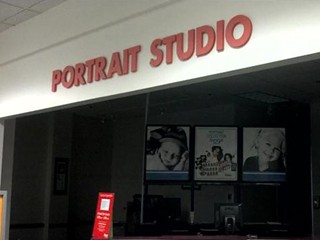
The portrait studio section of an unknown Sears.

The portrait studio section of an unknown Sears.

My sister and I cannot smile.

Okay, that’s not entirely true–we have the muscle function that is necessary to smile, but if you ask us to sit for a picture and smile for the camera, it’s likely you won’t get a genuine smile out of either of us.  Instead, you’ll get what we refer to as “The Panarese Smile.”

A smile that is not so much an expression of happiness or delight as it is a grimace of discomfort or pain, The Panarese Smile has been a constant presence in family pictures since around the time the two of us were teenagers.  Any time we got together with our extended family–usually a holiday like Christmas or Easter–all of the cousins would be corralled into one area of the house and have to sit for pictures.  And when those pictures came out, you’d see that nancy and I looked like having our pictures taken was the absolutely last thing we wanted to do.  In fact, in some of the pictures taken when I was in high school or college, I not only look like I’m in pain but my expression is downright hostile, as if I were saying, “You dragged my ass all the way out here and now you want me to pose for a picture?  How dare you!”

I have no explanation as to why I was such a bitchy teenager.  My life wasn’t hard and I had no reason to truly rebel.  But I was just moody and bitchy half the time, and it would be especially so among my family during picture time.  More than likely, I was annoyed that taking pictures meant that I had to put my book down or that I had to stop watching whatever game or movie I’d parked myself in front of to endure what seemed like endless torture at the hands of my mother and aunts.

Until I had to endure the portrait sessions of weddings, I had no idea how painful a photography session could be, but at fifteen or sixteen I wasn’t there yet so there was nothing more annoying than being asked to sit on the front porch of my grandmother’s house with the sun shining directly in my eyes while people with cameras yelled “Over here!  Tommy!  Look over here!  Now over here!”

Actually, that’s a lie.  There was one thing worse than several of those sessions put together.  The Sears Portrait Studio. (more…)

Deathstroke: The Hunted (My Life as a Teen Titan, Part Thirty-Five)

Deathstroke 0The 1990s take a lot of crap from comics fans and in all honesty a lot of that crap isn’t fair.  But there are times when the effects of the era’s attitude are clearly seen and seen for the worst, which is when an established character undergoes some sort of transformation to make him or her “edgier” or “extreme” or “more exciting.”  Post-Zero Hour, this happened to The New Titans, which had a new lineup and a whole slew of storyline and character changes that were mainly the result of interference from a new editor (though the title’s writer, Marv Wolfman, obviously shares some of the responsibility for how the book eventually crashed and burned) and this bled over into the other Titans-related comic of the time, Deathstroke: The Terminator.

Prior to the 1994 crossover event, Deathstroke had been chugging along and probably faced a fair amount of declining sales (I haven’t been able to find the actual sales figures) since its debut, or at least through most of the latter part of 1993 and into 1994, even though the title had been a pretty consistent read throughout its run.  But with Zero Hour came a new editor, Pat Garrahy, and therefore came a new direction because Garrahy, much to the chagrin of Wolfman and quite a number of fans (especially in hindsight) was obsessed with the idea of “shaking things up” to the point where he didn’t seem to care about getting anyone upset or completely contradicting that which had come before (read: the Terra origin).  In fact, I remember hearing a story about how he was once at a signing or convention and pointed out to a fan all of the characters he had killed … and seemed pretty proud of it.  Granted, this story was something I heard on a message board back in the early 2000s and is more than likely not true, but it is indicative of the attitude of many an editor and many a company in the early 1990s:  do something shocking or crazy so that your readers are sure to pick up the book.

Like I said, for The New Titans it was a lineup change; for Deathstroke: The Terminator, it was a new art team, a new direction, and a title change to Deathstroke: The Hunted.

Starting with issue 0, Sergio Cariello took over on pencils and stayed with the book for the better part of a year and a half as he and his brother Octavio took Slade to Hell and back and dismantled much of the book’s supporting cast in a drawn-out storyline that involved two mystery villains and several major deaths.  Garrahy had Wolfman writing in higher octane mode than he already had (read: now EVERYONE WAS YELLING ALL THE TIME BECAUSE THAT’S WHAT COMICS DIALOGUE WAS IN THE 1990s!  EVERYONE!  HAS! TO!  YELL!) and the Cariellos drew with a very fast-paced style that sometimes lent itself well to the storyline but other times seemed rushed, much like the issues that came out.

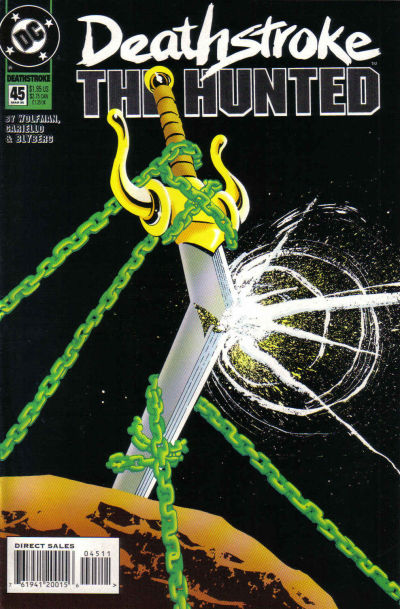
Deathstroke 45“The Hunted” is a Slade-on-the-run storyline that starts in the Zero Month issue with Deathstroke being chased by the United States government because he is wanted for the murder of a Senator, even though he knows that the person he killed was actually a terrorist disguised as the Senator who was going to blow himself up at a public appearance and the real Senator had been murdered by agents of the Crimelord, who is now in charge of the nation of Zandia, the former home of Brother Blood.  The Crimelord is a villain shrouded in mystery.  He talks to his operatives via video chat using avatars and sits in shadows smoking a cigar and petting an owl (because when you’re an international criminal supervillain you need to be petting some sort of animal), so we don’t know his identity and that is something that will be some sort of huge reveal at one point or another.

It takes a while to get to that point because the six issues that make up “The Hunted” are the “Deathstroke on the run” and “We’re going to destroy everything” part of all of this that is quite formulaic.  The Zero Month issue establishes the story and it’s kind of jarring because there’s very little connection between issue #0 and issue #40, which was a run-of-the-mill action yarn.

So, Slade is on the run from the government.  He gets captured.  He gets rescued.  The Crimelord acts behind the scenes and manipulates a lot of things.  There’s also a mystery villain who will come to be known as The Ravager (the third Deathstroke-related character with that name) and Slade’s ex-wife Adeline is completely insane and obsessed with killing her husband.

Wash, rinse, repeat. (more…)

Amazin’ Baseball

Mazer CoverUsually when I write posts for this blog, I’ve recently read, watched, or listened to whatever I am writing about; however, I haven’t done my homework this time, choosing instead to set aside the movie I was going to write about and take a few hundred words to talk about Bill Mazer, who passed away earlier today.

Mazer, if you are unfamiliar with him, was a longtime New York sports journalist and commentator, one of the early guard of sports radio hosts, and was a mainstay on WNEW (Channel 5, now WNYW, the New York City Fox affiliate) during the 1980s, kind of the same way that George Michael was a Washington, D.C. mainstay with his “Sports Machine” highlights.  The New York Times has an excellent obituary of Mazer that I highly recommend reading, as I was struck by the extent and longevity of his career.

To be honest, I wasn’t that familiar with Mazer or his career, as I was too young to watch him on television and have only had a passing interest in sports radio (and only then it’s to listen to the occasional game).  But for the last twenty-three years I have had a signed copy of Bill Mazer’s Amazin’ Baseball Book on my bookshelf, and when I saw the obituary in the Times, I immediately pulled it off the bookshelf and will be reading it again for the first time since my Uncle Michael and Aunt Clare gave it to me for my thirteenth birthday.

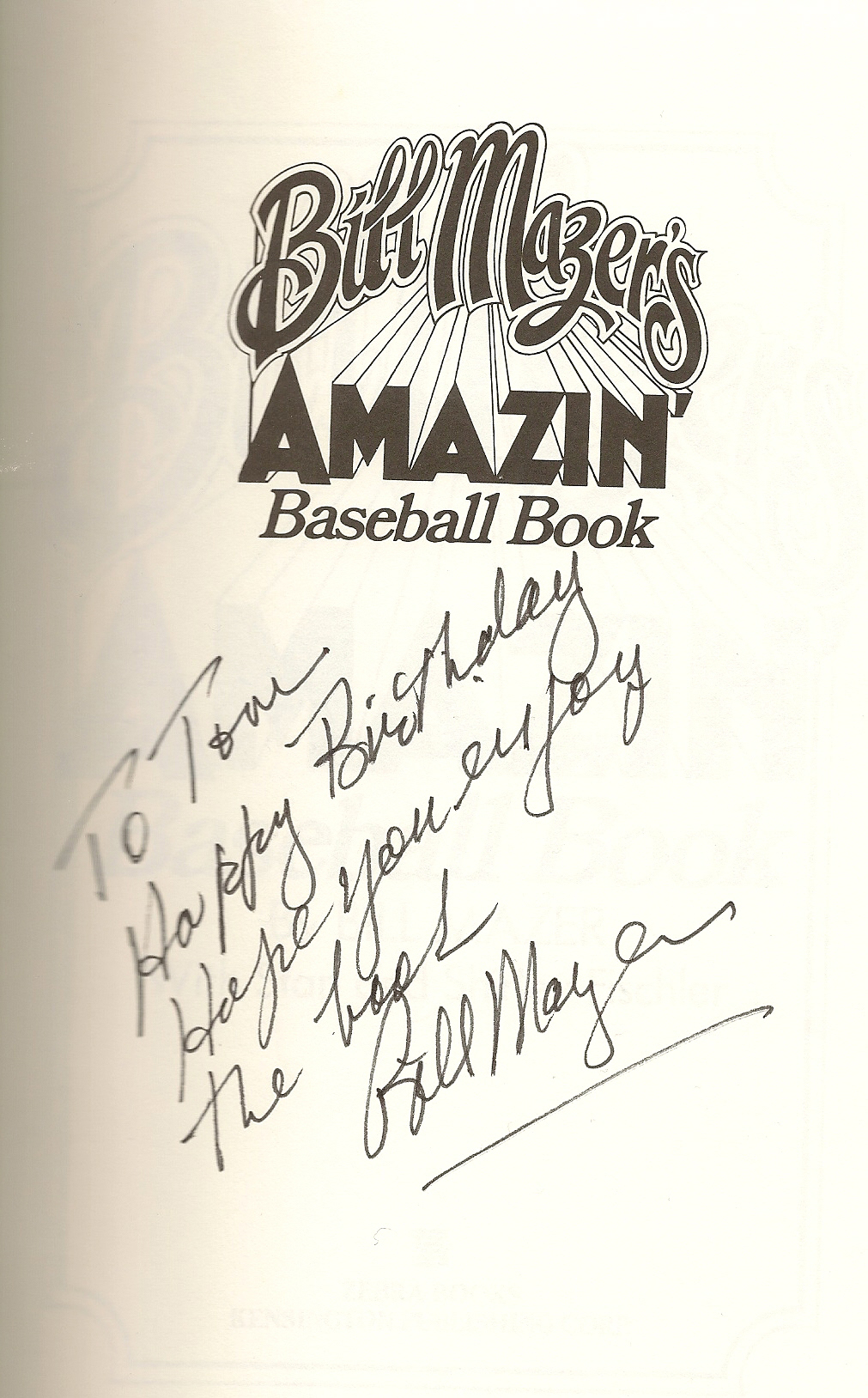
The title page of my copy of Bill Mazer's Amazin' Baseball Book, signed by the author for my thirteenth birthday.

The title page of my copy of Bill Mazer’s Amazin’ Baseball Book, signed by the author for my thirteenth birthday.

As noted in my post about the 1988 Mets, when I was in the latter part of elementary school and through most of junior high school, I was a rabid baseball fan.  I’m still a huge Mets fan, but this was a time in my life when I was the encyclopedic sort of fan, the type of kid who read or watched everything about baseball that he could get his hands on and who enjoyed the most minute, trivial details about the history of the game (ironically, however, I found Ken Burns’s Baseball boring but I may give that a re-watch at some point).  Bill Mazer’s Amazin’ Baseball Book was the perfect gift, as it is both a memoir of his life and career in relation to the game along with page upon page of facts and stories about the history of the game itself.  The facts are presented in Q&A format with all sorts of tidbits, such as:

WHICH FORMER LOS ANGELES DODGER PITCHER APPEARED IN SUCH TELEVISION SHOWS AS THE LAWMAN AND THE BRADY BUNCH?

Don Drysdale.

It was questions like these (and their answers) that had me flipping back and forth through the book and poring over every page with my friend Tom in the back of his mom’s Ford Taurus on the way to Shea Stadium, and I think what’s always drawn me to shows and books about sports history, especially baseball history, even if my interest in the subject has waned from time to time, replaced with film, comic books, or whatever other part of popular culture I was obsessing over.  Mazer himself, in the introduction to his book, talks about being a fact-o-phile, a proto-Schwab, the type of guy who could rarely, if ever, be stumped.   In fact, the Times obituary sums it up perfectly:

Mr. Mazer’s boyhood idol, Van Lingle Mungo, became the title of a song by the singer, pianist and songwriter Dave Frishberg, consisting entirely of old-time ballplayers’ names. Mungo, who died in 1985, won 120 games and lost 115 with the Dodgers and the Giants, and he led the National League in strikeouts with 238 in 1936. It’s a fair guess that the Amazin’ would have known those statistics without having to look them up.

I’m a fan of experts like that, guys who have extensive knowledge and are experts on topics.  I have always liked having an answer to almost every question and even though it’s becoming a bit passe for people in my field to want to be considered “experts” on anything, I still enjoy just knowing stuff.  I’m sure my fellow sports fans and comics podcasters know exactly how I feel.

But as interesting as all of the facts, figures, and stories contained in Bill Mazer’s Amazin’ Baseball Book are, his passing also reminds me of how many of those in his generation are passing away.  Mazer grew up in Brooklyn during the golden age of the Dodgers’ tenure at Ebbets Field, an era that I’ve only read about in books or heard about in stories that older relatives, like uncles and grandfathers would tell years ago at family functions.  For my money, if I could go back to any era of baseball, it would be the late 1960s so I could see the 1969 Mets, but I remember sitting at many an extended family barbecue listening to Grandpa Panarese talk to my Uncle Brian about the Giants, the Yankees, and whatever other sports stories they had.

While I think it’s out of print, you can find used copies of Bill Mazer’s Amazin’ Baseball Book on Amazon and I recommend picking it up.  It’s truly a trip back in time, one that I’m looking forward to taking again.

Pop Culture Affidavit Episode 19 — August and Everything After

Episode 19 CoverThis time around, I have yet another guest on the show and it’s an awesome special guest, my friend chelle who spends about 90 minutes with me talking about the 1993 Counting Crows debut album, “August and Everything After.” We talk about the album’s history and go through it song by song and bring up everything that we like about the album and the band, which has been around for 20 years now.

You can listen here:

iTunes:  Pop Culture Affidavit

Direct Download 

Pop Culture Affidavit podcast page

After the jump, a few extras … things that were mentioned in the podcast. (more…)

Pop Culture Affidavit, Episode 14 — Life is a game. Easy to start. Hard to finish.

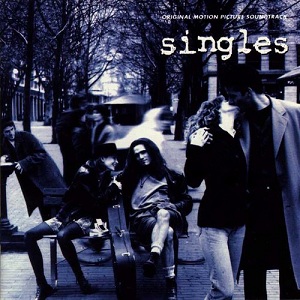
Singles PosterThis time around in the podcast I take a look at the 1992 Cameron Crowe-directed film Singles, a romantic comedy whose soundtrack became one of the definitive albums from the 1990s.  Starring Campbell Scott, Kyra Sedgwick, Bridget Fonda, and Matt Dillon and set in 1991 Seattle, Singles follows several characters in their twenties as they go through the complexities of trying to date and find love.

But of course, many people remember it for its music:  Pearl Jam, Alice in Chains, Soundgarden, Mudhoney, Smashing Pumpkins, and other bands important to the era make appearances on the soundtrack and even in the film, which is a great snapshot of a particular moment in our cultural history.

I spend the episode discussing the movie as well as my opinion of it and then spend a little bit of time on the soundtrack as well as a bit on its lasting legacy.

You can listen to the podcast via iTunes, or here:  Pop Culture Affidavit Episode 14

Also, if you’re interested, here is some extra reading–articles and blog posts that I used for research this episode …

Singles Soundtrack CoverSingles Turns 20: Who Would be on the Soundtrack in 2012?”  (Spin)

Singles: 25 Things You Didn’t Know About the Cameron Crowe Flick” (Moviefone)

“Where’s the Cast of Singles Now?” (NY Daily News)

Singles Soundtrack Turns 20″ (Stereogum)

Singles Production Notes (“The Uncool”: The Official Website for Everything Cameron Crowe)

“Mindhole Blowers: Cameron Crowe’s Singles Inspired NBC’s Friends and 14 Other Facts That Might Explode Your Head” (Pajiba.com)

“Five Ways Singles Ruined My Life” (Hello Giggles)


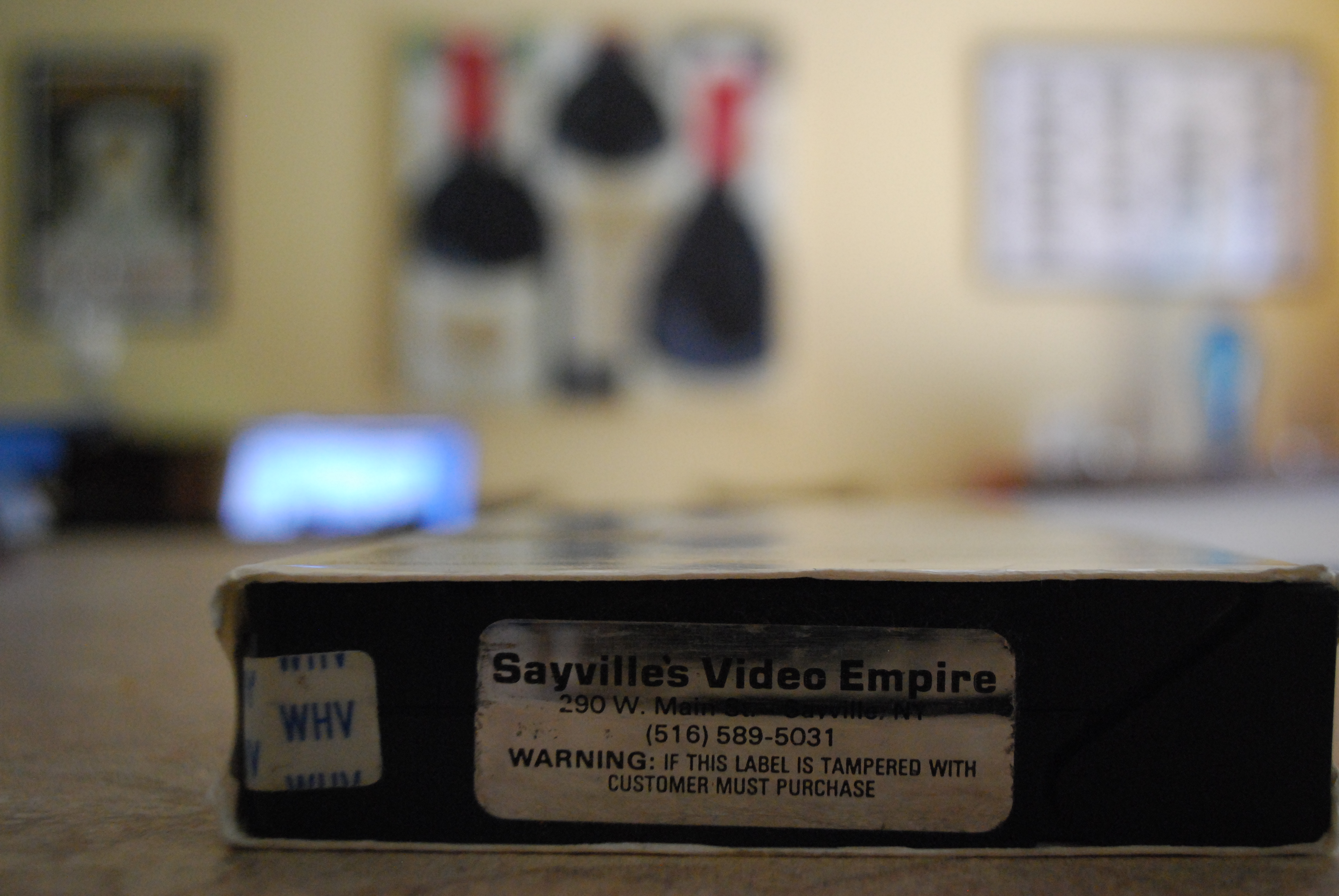
And as mentioned in the podcast, I have some pictures of my VHS copy, which was bought from the late, lamented Sayville’s Video Empire …

DSC_0073

DSC_0075

DSC_0072