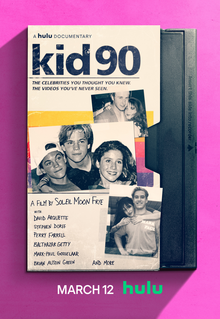
Toward the end of her documentary Kid 90, Soleil Moon Frye talks about how she watches video tapes that she made of her and her friends in the early and mid-1990s and considers how she never saw the warning signs regarding those friends who died by suicide or because of drug abuse. She also mentions that she is living a lot of those memories for the second time and (of course) with the perspective of a now middle-aged adult. It’s a moment that is predictable because of the way we naturally consider such things after a tragedy, but is sad nonetheless and tempers a very nostalgic documentary with a sadness, making it more than superficial fluff.
If you haven’t heard of Kid 90, it was born out of the fact that Frye spent much of her childhood and adolescence recording both audio and video of herself and her friends in their everyday live, intending it as a private keepsake*. A few years ago, she dug up the material and began going through it with the intention of making a documentary about being a child star and a teenager in Hollywood during the 1980s and early 1990s. She originally didn’t intend to put herself into the film (except for the aforementioned archival footage) but as she told Variety, she was editing one particular segment and realized that in order to give it full context, she needed to be interviewed. And that’s how we get the moment I just described.
I came to this film via Hulu’s recommendations and upon seeing the description, put it on my watch list. Plus, I’m a mark for any sort of late 1980s/early 19990s nostalgia, and am like every other person my age in that I immediately associate Fry with her iconic role as Punky Brewster. I also remember her showing up on a couple of random sitcom episodes–The Wonder Years and Friends, especially. What I didn’t know was that her circle of friends consisted of actors and actresses I was watching regularly during my early teen years and whom were also about my age (Frye is a year older than I am). So when people like Brian Austin Green, Mark Paul Gosselaar, and Jenny Lewis started showing up in both the footage and interviews, and also oddly connected to it beyond just recognizing those faces.
Over the past couple of years, I have spent time going trough my own personal teenage archive. Most of the stuff I have been looking at has been my teenage journal, along with various ephemera I’d thrown in a box or storage bin and held onto over the years. None of it is nearly as star-powered as Frye’s video and audio footage of hanging out with Danny Boy from House of Pain, but I could at least relate to it on the level of digging into what you had in the past. But as I watched Kid 90, I also had the passing thought:
This is what it must like like for the cool kids to reminisce.
Oh yeah, that is flat-out one of the most idiotic thoughts a middle-aged man could have about people from high school, but I couldn’t help it. As the movie rolled, my mind flashed to Facebook group threads filled with pictures of them at house parties, seventeen with 1990s haircuts, flannels over Gap jeans, with Budweiser cans everywhere. And really, that’s what Frye’s home movies look like–suburban keggers but with famous people. There’s a point she makes in the film that her mom tried her best to her and her brother (Meeno Replace, the star of the NBC show Voyagers!) as normal a life away from their jobs in Hollywood as possible and this is the proof. The rooms they’re in, the general silliness that they’re up to (especially when they’re 13 or 14) all looks s if it could be taking place in any number of my classmates’ houses, and a world that I never entered. I spent many Saturday nights playing video games with friends or renting whatever movie I could get my hands on and then watching Saturday Night Live.
And while I’d like to be nonchalant and say “Ah, who gives as shit about school popularity when you’re 44?”, I have to also admit that this lack of coolness dogged me for quite a long time. I wound up with more tan a few toxic “friendships” and a laundry list of embarrassing and awkward moments, which my anxiety loves to weaponize on occasion, just to remind me who I am … or at least who I was. The world of the cool kids in my immediate vicinity was as much a mystery to me as the world of these ultra-cool Hollywood kids in the film. Frye goes from hanging with the ‘tween and teen jet set of the early ’90s to heading across the country to attend college in New York and befriending cast members from Larry Clark’s Kids, showing that she always had a “crew” wherever she decided to live.
But in the midst of all of that, there’s a real darkness. At one point, we hear an audio recording of her talking to a friend and trying to figure out what happened the previous night because she woke up at home not knowing how she got there. At another point, she is discussing how a guy at a party clearly raped her when he kept going even though she told him she didn’t want to. You can’t dismiss those stories by saying that it’s some symptom of Hollywood excess or that it’s another sign of how former child stars often become cautionary tales. No, ask around and you are bound to meet a woman who has had one of both of those happen, maybe even more. And, to bring in Hollywood, add the way the film industry treated her because of her body (she had breast reduction surgery at 16, which was a People Magazine cover story) and you have a look at how monumentally screwed up our culture is.
Which brings me back to what I mentioned in the beginning of this piece–Frye’s perspective as a woman and parent in her forties. One of the reasons she began the project that would become Kid 90 is to see if how she remembered her teenage years was accurate, and I found myself relating to the honesty with which she approached everything as well as the bravery required to do it. You can always flip through an old yearbook and laugh at the silly or even heartfelt things people wrote to you, but there is a point where you have to decide if you want to cross the threshold into the uncomfortable and really meet the kid you were. As a parent, you want to see what you can learn from your younger self so that your kid doesn’t suffer the same fate. Sure, there are adolescent rites of passage that involve mistakes and regrettable moments and I know I can’t protect my kid from everything bad they might encounter, but I also know that part of my job as a father is to use the gift of hindsight to discern between true rites of passage and truly awful things that we are too scared to admit were wrong or even toxic.
Reopening old wounds, taking the blindfold off in the cave, digging into the past–whatever you want to call it–can suck, even when you know it’s going to be therapeutic and said therapy can last longer than intended. But it’s a testament to the fact that making it through any of it is a small miracle.
* A similar documentary from Val Kilmer is set to debut on Amazon Prime in August.





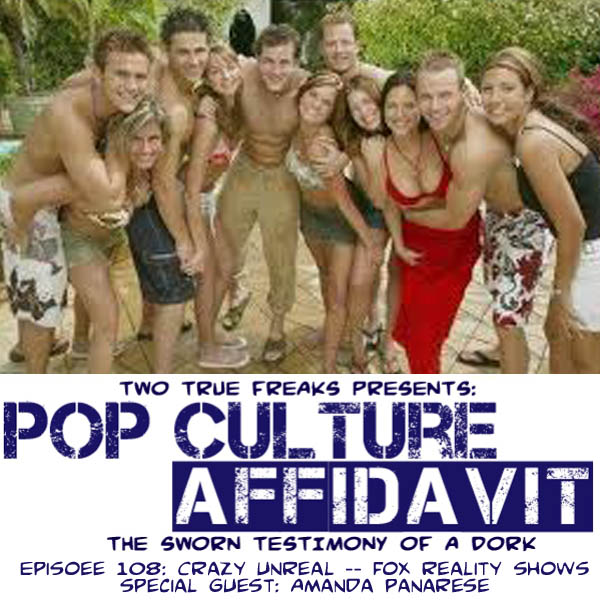 What happens when you take two people who have repeatedly watched what happens when you take a group of hot singles and put them in a mid-level resort in Cabo San Lucas? You get a conversation about reality shows on the Fox Network! Amanda joins me to talk about everything from the early days of Totally Hidden Video, COPS, and America’s Most Wanted, to the high point of trashy Fox reality of Temptation Island and Paradise Hotel. Along the way, there’s American Idols and Gordon Ramsey calling someone an idiot sandwich.
 I’ve said before that Saved By the Bell is one of the most influential shows in the history of television, as Millennials and Gen Z were able to spend much of their formative years watching sitcoms that were targeted directly at them instead of having to settle for simply graduating from the world of Saturday morning and weekday afternoon cartoons like Generation X had. This was obviously helped along by Nickelodeon and The Disney Channel, as the former increased its tween programming int he early ’90s with Clarissa Explains it All and similar shows while the latter became part of basic cable packages between 1991 and 1996.
 Name Your Adventure was a reality show wherein a teenager would get the opportunity to do something they’d always dreamed of doing, a formula that would get reused in the early 2000s with the MTV series Made. Hosted by Mario Lopez, Jordan Brady, and Tatyana Ali, the show was a slightly slicker version of classic PBS shows like 3-2-1 Contact because it was less about the spectacle of nerd rehabilitation (which was 99% of Made) and more like someone being given an internship. I found one story on YouTube that featured teenager Jon Steinberg who was interested in becoming a sports broadcaster, so he was paired up with Bob Miller who at the time was the play-by-play guy for the Los Angeles Kings. The segment was definitely more educational than flashy, as Miller fed Steinberg a lot of information as well as gave him real-time feedback as he tried his hand at calling part of an Angels/Yankees game.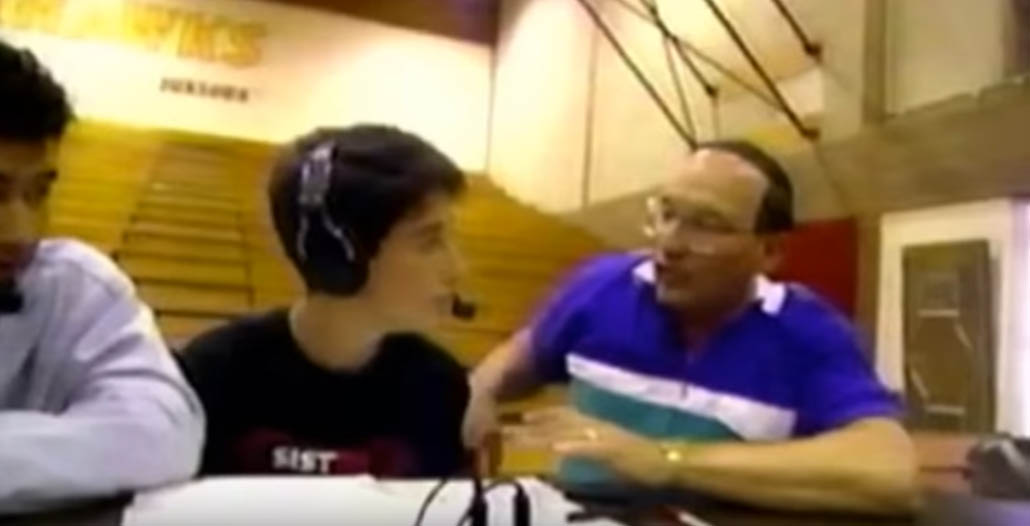


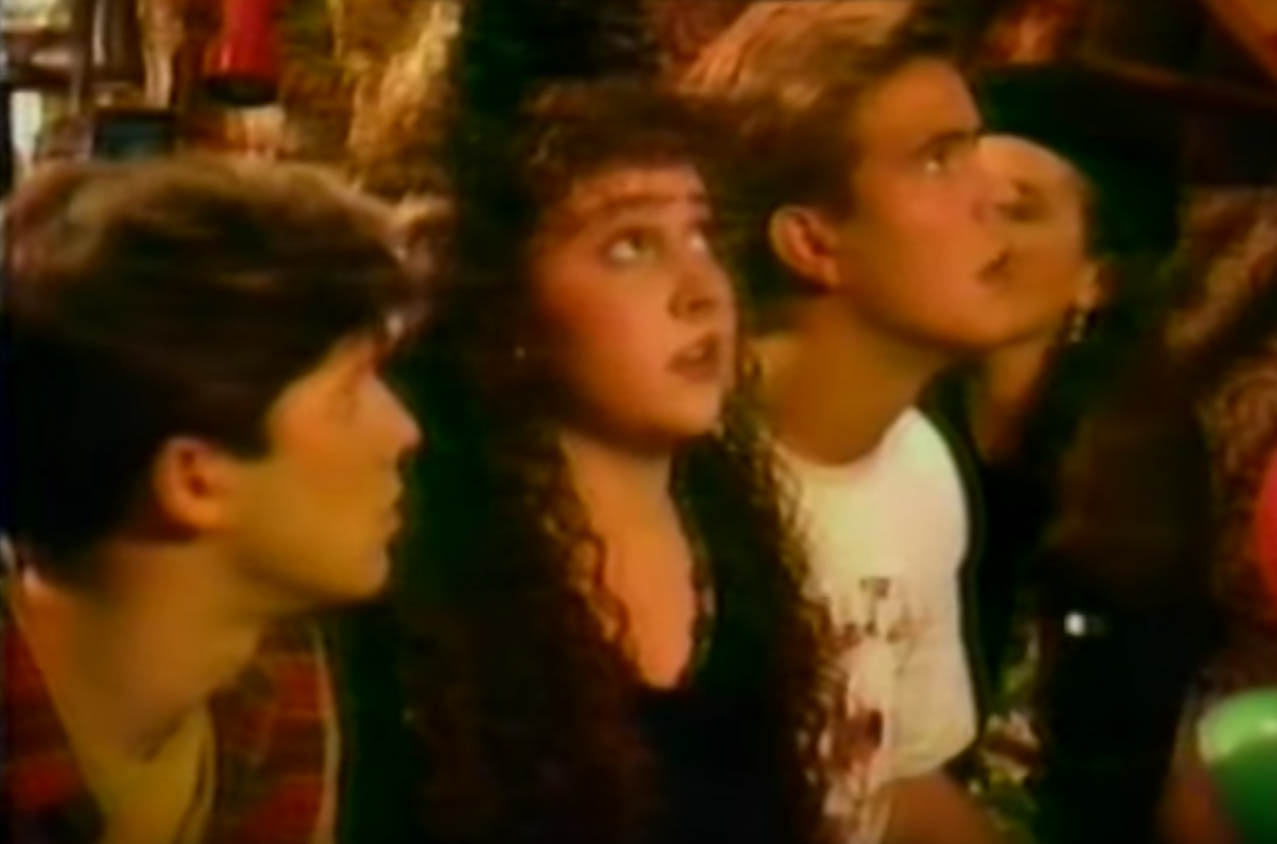
 High School is over and for the students who went to Degrassi High, that means parties, college, jobs, and sex with Tessa Campinelli. That’s right, it’s time to look back at the wildest summer in Degrassi history, the 1992 movie finale, School’s Out! Over the course of this episode, I take a look at the movie that ended the Canadian teen television show and also spend time recapping my Degrassi origin story as well as what it was like to be an American fan of the show during its PBS run in the late Eighties and early Nineties.
 Remember what I said last time about only catching a couple of episodes of the last Degrassi High season because they had been carted off to Sundays on channel 13? This was the last episode I would ever see, and therefore is my last episode recap*. It’s also one of the heavier episodes because this is the one where Claude (pronounced Clow-de) kills himself.
 So by the time the first Degrassi High season ended, I was either not watching PBS in the afternoons anymore, or they had changed their schedule. I think it’s alittle bit of both, because there came a point where channel 13 began running Ghost Writer and Wishbone in the weekday timeslot and showed Degrassi on Sunday mornings. Therefore, this is why I missed the entire second season of Degrassi High. Sure, I would eventually get the entire series on VHS (through someone making me a tape) and DVD (through legitimate means), but after “Stressed Out,” I would only see two more episodes, and that is why this is the penultimate Degrassi post.
