1980s

Pop Culture Affidavit Episode 45: Live From New York, it’s Saturday Night!

Episode 45 website coverIt’s a coattails-riding self-indulgent trip down comedy memory lane as I spend 30 minutes talking about Saturday Night Live, which just had a huge 40th anniversary special this past Sunday. Here, I look back on another anniversary special from the show, its 15th anniversary special, which aired in the fall of 1989, and I also talk about how the show has had an effect on me since I’ve been watching it for the last 25 years.
Here’s where to listen:

iTunes: Two True Freaks Presents Pop Culture Affidavit

Direct Download

Two True Freaks Presents: Pop Culture Affidavit podcast page

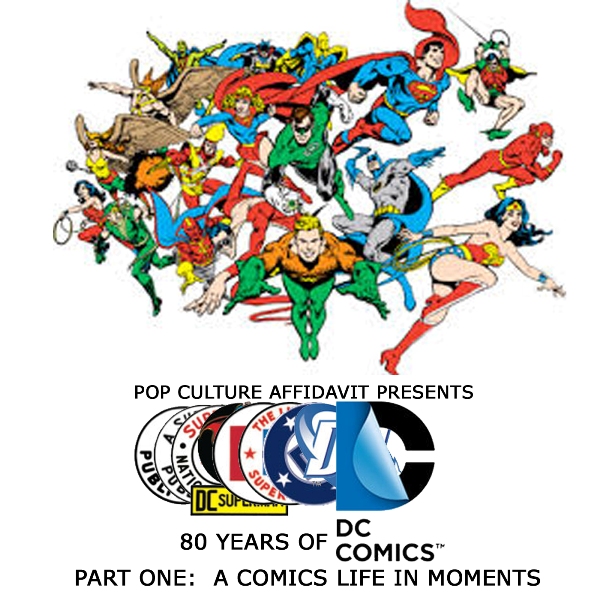
80 Years of DC Comics, Part One: A Comics Life in Moments

80 Years Episode 1 Website LogoPresenting the first episode in an all-new podcast miniseries from Pop Culture Affidavit, 80 Years of DC Comics. Throughout these twelve episodes, I am going to be taking a look at the various genres of comic books that DC Comics has produced in its 80-year history. For my first episode, I start off easy by talking about superheroes. More specifically, I go through 10 moments in DC Comics published during my lifetime that have I’ve enjoyed or that have had some sort of impact on me. So while it doesn’t necessarily cover all 80 years of the company, it’s a personal look at DC, company I’ve been very loyal to since I started seriously collecting comics more than two decades ago.

Of course, you can download the episode from the same iTunes feed used for every episode of Pop Culture Affidavit, or you can listen here:  Pop Culture Affidavit Presents 80 Years of DC Comics, Part One:  A Comics Life in Moments.

Below are scans of the ten moments I talk about, in brief, in the episode (btw, some of these are spoilers for the stories they are from).

1. Batman Confronts Silver St. Cloud (Detective Comics #475):

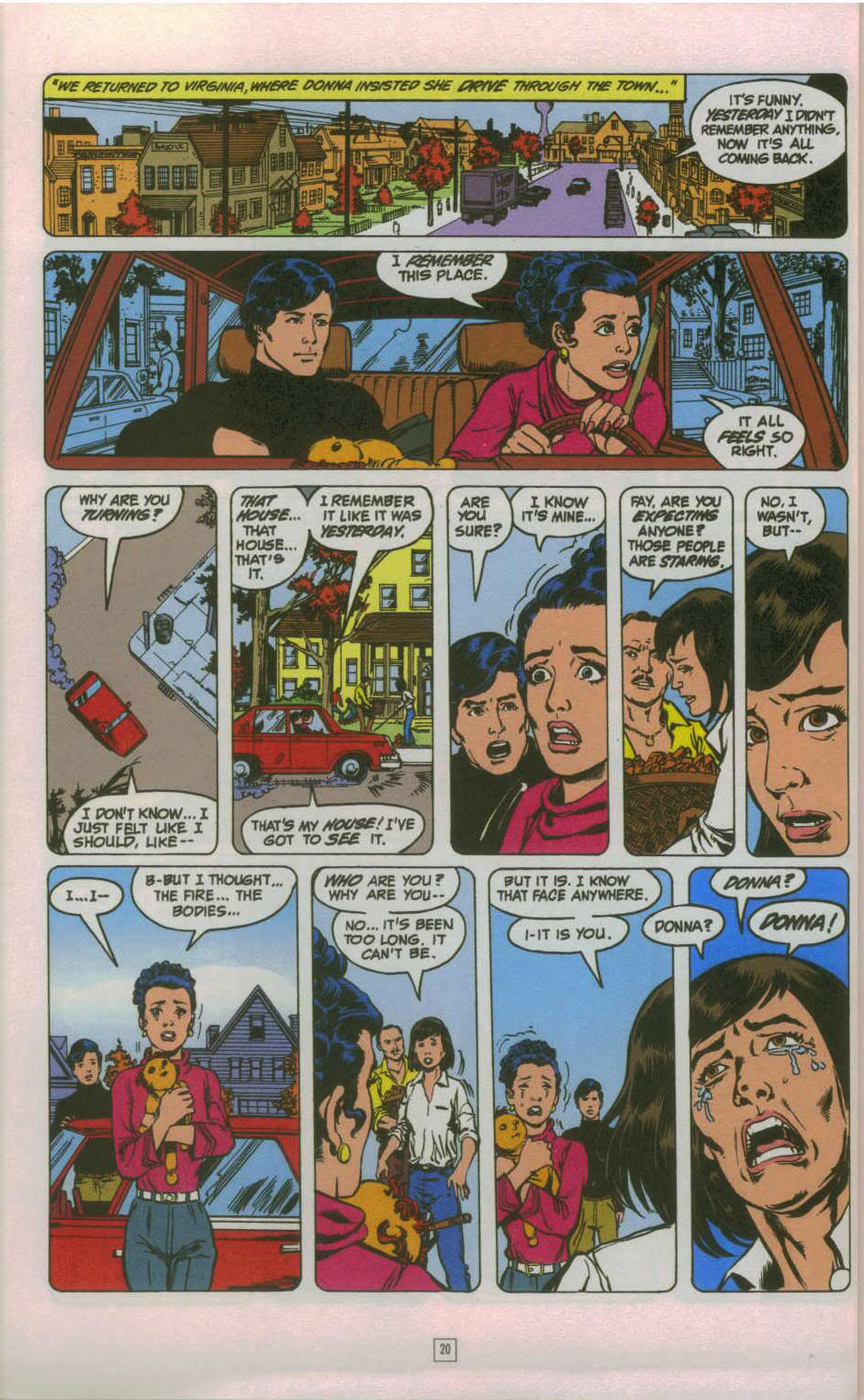
Silver St Cloud2. Donna Troy Reunites With Her Adopted Mother (The New Teen Titans [First Series] #38):

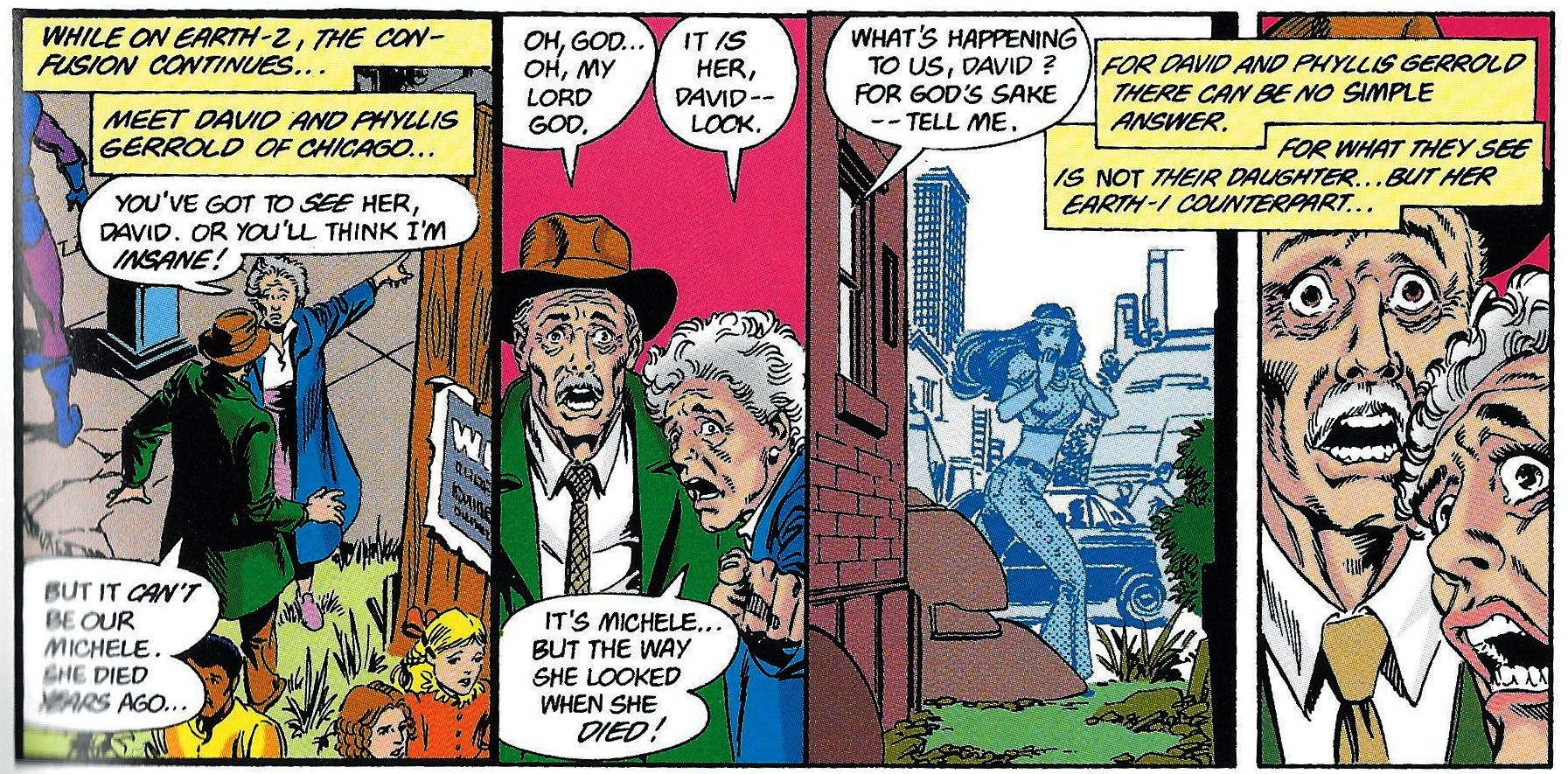
Donna Troy Reunion3. Ordinary Citizens Reacting to Merging Earths (Crisis on Infinite Earths #5):

Crisis 5 Old Couple4. Bruce Wayne Has Some Bad News (Detective Comics #620):

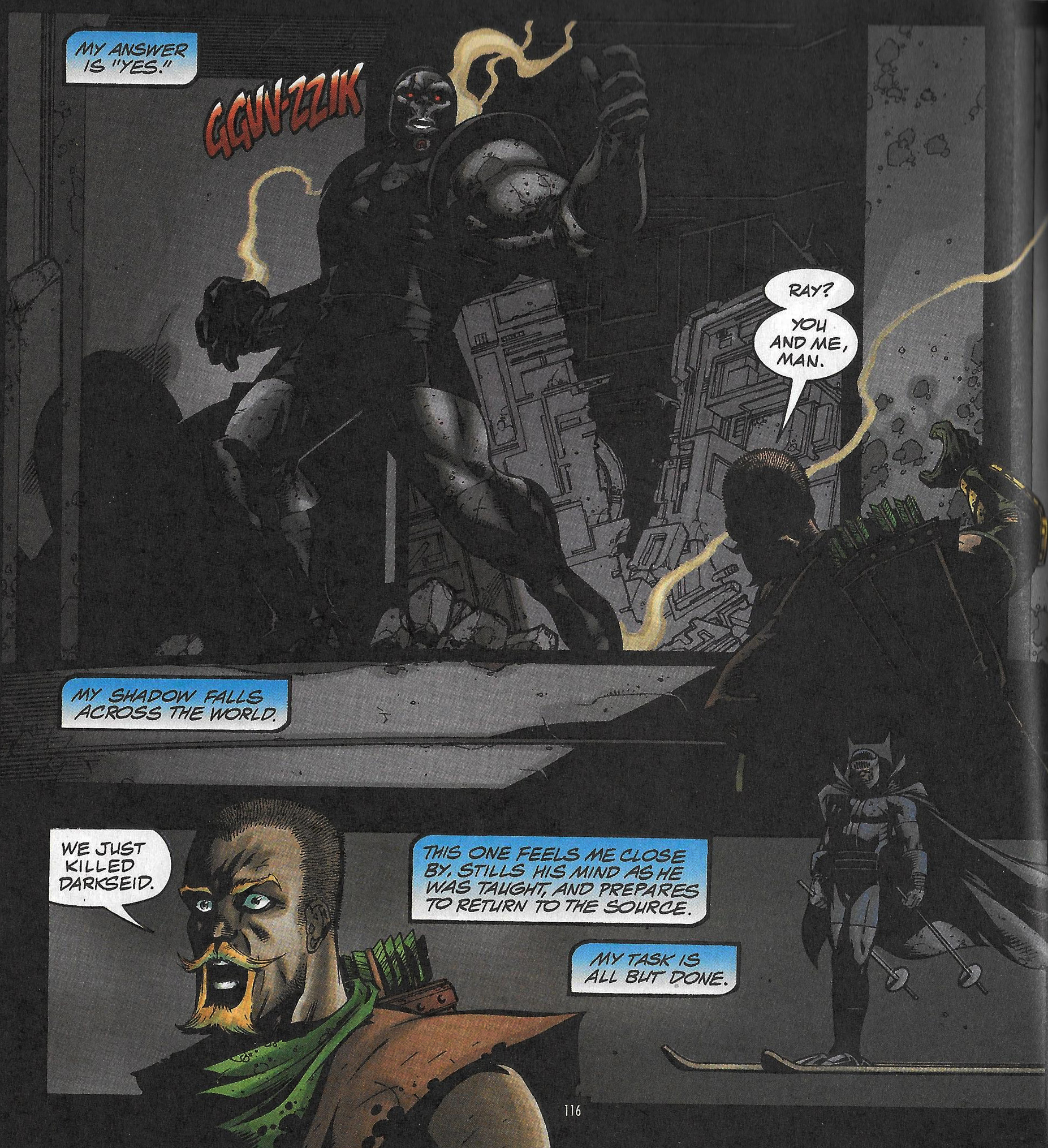
Detective 620 Last page5. The Atom and Green Arrow Kill Darkseid (JLA #14):

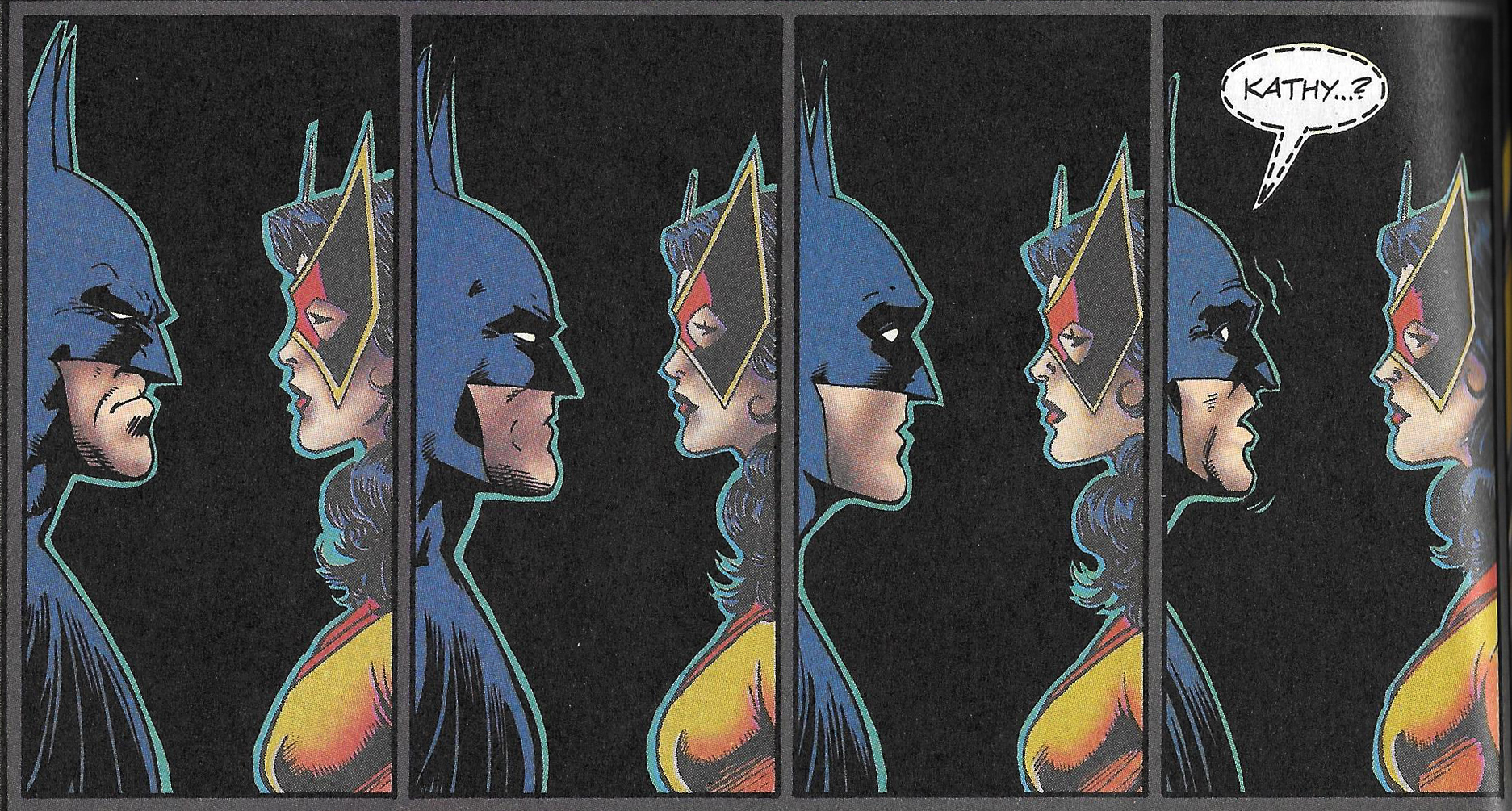
JLA Death of Darkseid6. Batman meets … Batwoman? (The Kingdom:  Planet Krypton):

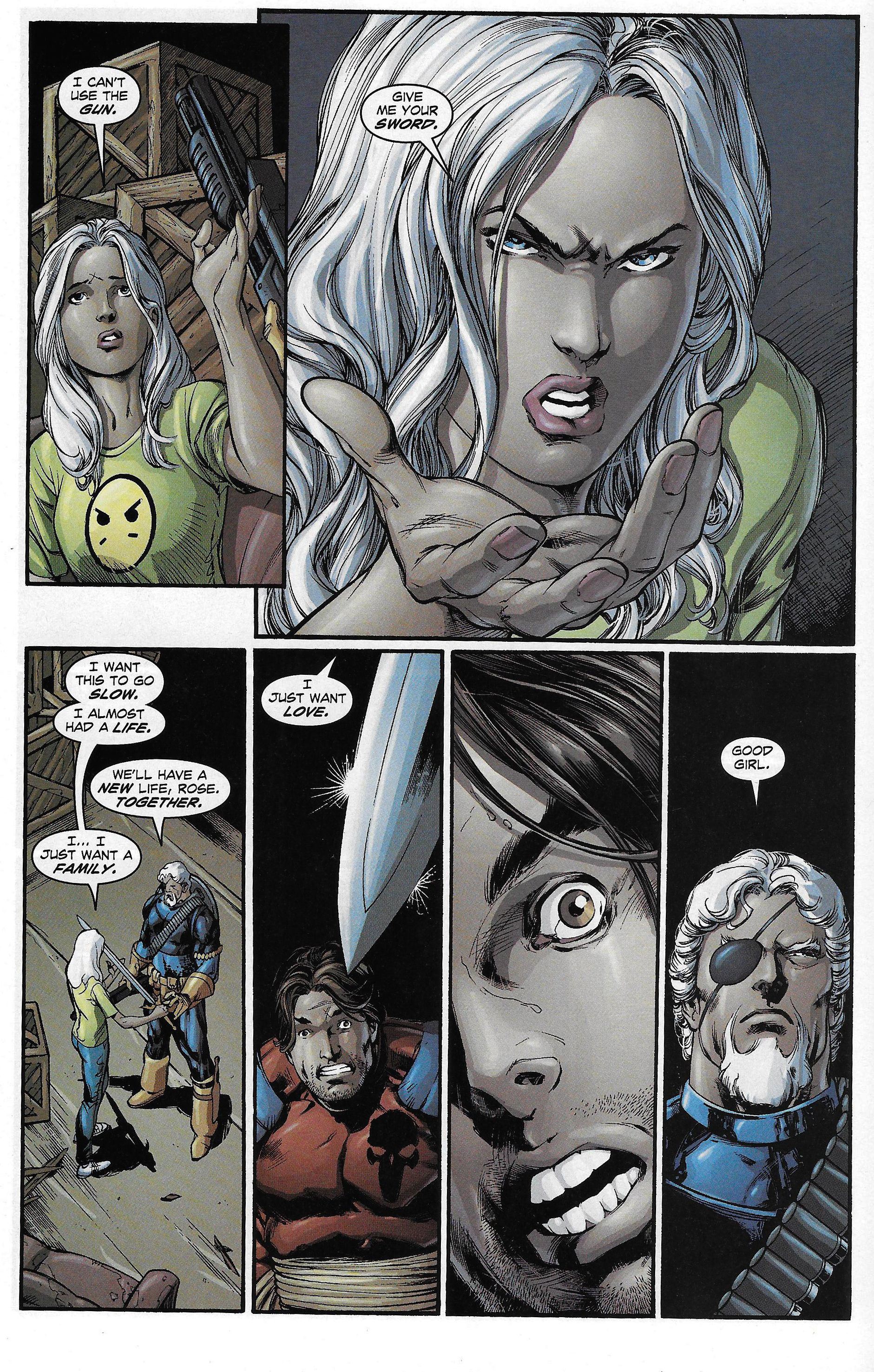
The Kingdom Batwoman7. Rose Wilson Chooses Her Family (Teen Titans #1/2):

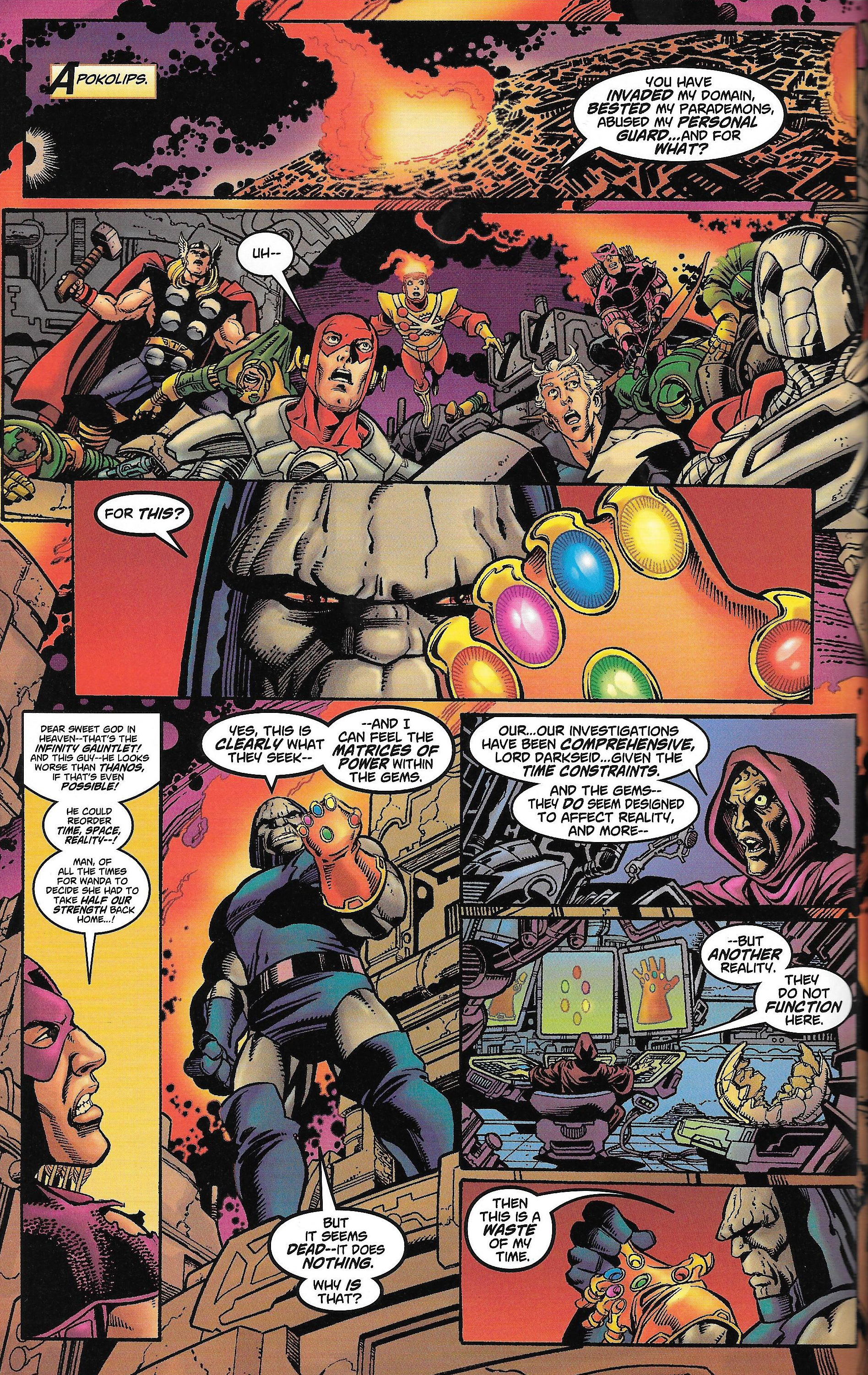
Rose Wilson Ravager8. Darkseid and The Infinity Gauntlet (JLA/Avengers #2):

Darkseid JLA Avengers9. “Superheroes.  Kill.”  (Final Crisis #3):

Final Crisis 3 final page10.  Danny Chase’s Sacrifice (The New Teen Titans: Games)

Teen Titans Games Danny Chase

We Wrote the Book on Savings

consumers catalog

The cover of the fall 1991-1992 Consumers catalog. The company stayed in business until the mid-1990s, although my local store was gone by then.

I think that I am at the point in my life where I don’t get upset if I go to the store and something is out of stock.  Oh sure, it’s a minor inconvenience and the solution usually leads to me getting in the car and driving to another, similar store down the road.  But when you are a kid, this is a hard lesson to learn.  You don’t have a car and you don’t know much about the stores in your area beyond what you have seen whenever your parents have taken you, so showing up to TSS only to find out that the action figure you wanted was completely sold out can be absolutely devastating, even if it provides you with much-needed lessons about how you’re not always able to get what you want instantly.  Now, I’m sure that if you ask a number of people in my generation how they learned this lesson, they’ll tell you a variation on the same story–they wanted a toy, they asked mom or dad to take them to the store to get it, it wasn’t there.  Or they may say one word:  “Consumers.”

Consumers was a catalog-based store that was founded in Canada as Consumers Distributing in 1957 and expanded over the course of a couple of decades, adding stores and then buying out other, similar retail outlets, something that helped them to pop up with more frequency during the 1980s.  The idea behind the store was similar to its main competitor, Service Merchandise:  the company published a catalog and then anyone who wanted to buy something from the catalog would head to the local retail outlet–usually at a mall–and pick it up.

That is, if they actually had anything.

The G.I. Joe page of a 1980s Consumers catalog. Photo courtesy of YoJoe.com

The arrival of the Consumers catalog twice a year was an event.  My friends and I would grab it out of the mail and skip right to the toys and games section.  Open before us was a display of everything we ever wanted, from G.I. Joe figures and vehicles to every Nintendo game that we’d ever seen advertised anywhere.  Plus, the prices were much better than what you would get at Toys R Us–not that Toys R Us was overpriced or anything, but any time you can say, “Hey Mom!  The Legend of Zelda is only $45 and not $60!  Can we get it?” you have a better shot at getting what you wanted.

That is, if your parents were completely gullible, which mine were not, but that didn’t stop me from trying.  Unfortunately for those who actually got this ploy to work, going to Consumers was usually a bust because they would head to the store, find the item on display, give the cashier a ticket and most of the time discover that said item was currently out of stock.  According to the Wikipedia page on the store, this led to the company creating what was then an innovative inventory checking system, where they were able to look up the item you wanted on the inventory of every store in the area, which is something that we take for granted in today’s retail world.

But the prevailing perception was that most of the merchandise at Consumers was non-existent and as much as the company tried to change that, I don’t think it really helped.  It also didn’t help that the Consumers store in the Sayville area was in the Sun Vet Mall, a mall that was closer than any of the malls in the area but was clearly third-tier, especially when compared to the South Shore Mall and Smith Haven Mall, which had big-name department stores.  Sure, Sun Vet had The Gap, which was convenient when I was in junior high and high school, but its anchors were a Rickel Home Center and a PathMark, so it didn’t exactly scream “Galleria” if you know what I mean.

The Consumers store was located in the corner of the mall near the Gap and McCrory, both of which have since left, and whereas the other malls always were bustling, Sun Vet always seemed half dead and while the mall’s pizzeria was excellent and Sun Vet Coin and Stamp always was good for a few back issues, you only went there if you absolutely had to or if you were like me and my friend Jeremy, who would ride there on our bikes when we were teenagers simply because we had very little else to do.  Whereas Service Merchandise would be a huge store that was part of a brand new shopping center down the road, Consumers was shoved into that corner and while the first few catalogs would get people there, the store was pretty dead within a year or two, especially as we’d taken to dragging our parents back to Toys R Us or anywhere else where we knew that would have what we wanted in stock.

So in a way, it was a learning experience about being more strategic in begging for toys and other stuff as well as being more patient, and perhaps that is why so many of us are more intelligent these days about where we shop.

O Say Does That Star-Spangled Banner Yet Wave; This Concludes Our Broadcast Day

JeffersonThis weekend marks the bicentennial of Francis Scott Key’s writing “The Star-Spangled Banner.”  To mark the occasion, Baltimore had a large celebration in its harbor, especially near Fort McHenry, which is where Key was being held prisoner during the Battle of Baltimore.  The history of our national anthem goes beyond that one battle of the War of 1812 and  The Washington Post has a really great article that discusses that history (“5 Myths About the National Anthem”).  I actually knew a majority of the truths the writer discusses because of a filmstrip I saw in music class when I was in the fifth or sixth grade.  Don’t ask me how I actually retained that information and not, say, trigonometry, because it’s one of the great mysteries of life.

But I didn’t want to write this short post about the history of “The Star-Spangled Banner” or discuss its significance in our everyday lives as Americans.  No, this blog is about popular culture and when I, and quite a number of people older than myself, think of the national anthem’s place in popular culture, they might think of this:

If you’re under a certain age, you may not know what the significance of the clip I just posted because you might also not be familiar with the concept of a station signing off.  In the days before hundreds of channels and all-night infomercials, local television stations and network affiliates signed off for the night, concluding their broadcast day with a pre-packaged video montage and then going to some sort of test pattern with a constant high-pitched tone:

One of the most common sign-offs was the playing of “The Star-Spangled Banner” (something so common it opens Billy Joel’s song “Sleeping With the Television On”). There were quite a number of different versions of the national anthem sign-off, but this one always stuck out to me as one of the more memorable, probably because it was one of the few I actually saw–although if I’m being truthful, it may have been used as an early morning sign-on as well.

The montage I posted was created by the New York-based firm Saxton Graphics Associates, Ltd., probably in the early 1970s (since it closes with the moon landing) but I couldn’t find much else in the way of history of the montage beyond this paragraph on the Wikipedia page for “Performances of ‘The Star-Spangled Banner'”:

Over the early years of U.S. television broadcasts it became common practice by many stations to close their broadcast day, usually late at night or early in the mornings, by airing the Star Spangled Banner accompanied by some visual image of the flag or some patriotic theme. One audio-visual arrangement in particular, entitled “National Anthem,” [5] was produced by a New York-based graphics firm, Saxton Graphic Associates, Ltd. The uncommonly complex and interesting orchestral arrangement of the Star Spangled Banner commences with a trumpet fanfare then the anthem is accompanied by images that illustrate several of the highlights of the history of the United States of America, culminating with an image from 1969 of an Apollo 11 astronaut standing on the Moon by the US flag. Several television stations aired this including WNEW-TV in New York (through 1978), and Washington DC WDVM-TV channel 9. There is no reference to whom arranged the music, nor to what orchestra performed it though numerous sites on the Internet host messages inquiring about this and where the original music might be found today.


I don’t have a long, drawn-out nostalgic story for this one.  It does remind me of the times when I had to stay at my grandmother’s house and we’d get to stay up late for, say, New Year’s Eve or something, and it kind of reminds me of flipping around the channels in the very early hours of the morning when I had my first job of putting Sunday papers together at a local stationery store.  But when I watch it now, it actually is a little moving.  I’ve always loved how the montage takes us through all of American history and reminds us just how much has happened in the last 200-300 years; furthermore, the bombastic arrangement of the song is enough to get even the most cold-hearted cynic (read: me) feeling at least slightly patriotic.  And it’s a memento of an earlier time in our country’s media history, a piece of ephemera that makes some wistful for an earlier time and others curious.

What an Institution!


This post is part of Forgotten Films’ 1984-a-Thon, a series of posts that celebrates the films of 1984. Check out more 1984-ness at The Forgotten Films Blog.

Whenever I sit down to review a movie, I inevitably find myself doing a mental, one-sentence review.  “It’s cute,” “Wow, this is really gory,” or “This could have been half an hour shorter” are common ones that come to mind.  When I finished watching Police Academy for the first time since the late 1980s, I thought, “This got six sequels?”

This got six sequels.

A comedy starring Steve Guttenberg, Eighties comedy hottie Kim Cattrall, and a cast of silly misfits, Police Academy actually made $81 million and was the sixth highest grossing film of 1984, which is amazing considering the top five were (in order): Beverly Hills Cop, Ghostbusters, Indiana Jones and the Temple of Doom, Gremlins, and The Karate Kid.  But unlike those other films, which all have a timelessness to them (even Beverly Hills Cop, which is clearly an Eighties movie), Police Academy has not aged well.  Or maybe that’s an inaccurate assessment and it simply hasn’t grown up with me.

For a movie that is rated R, Police Academy‘s humor seems to be more directed to the late elementary/middle school set, which makes sense because I loved this movie when I was about eleven or twelve years old (confession: I loved Police Academy 3: Back in Training because of the jetski chase at the end) and that was around the time when I discovered dirty jokes and sex humor but before the days where I really understood it.  The movie’s premise is simple:  the mayor of a large city (presumably Toronto Los Angeles) has opened up enrollment in the police academy to the average citizen, which means that every last klutz and moron now has the chance to become a cop.  Cary Mahoney (Guttenberg) is more or less sentenced to the academy after getting in trouble for the umpteenth time (a customer at the parking lot where he works insists on having his car parked despite the lot being full, so Mahoney turns it on its side and parks it that way) instead of going to jail because police captain Reed was friends with Mahoney’s father, who was also a cop.

We also meet our other potential defenders of the law:

  • Karen Thompson (Kim Cattrall):  Mahoney’s love interest and serious female police candidate.
  • Moses Hightower (Bubba Smith):  Exceptionally tall florist.
  • Leslie Barbara (Donovan Scott): Constantly bullied proprietor of a Fotomat-type store.
  • Doug Fackler (Bruce Mahler):  Complete klutz.
  • George Martín (Andrew Rubin): Resident lothario.
  • Laverne Hooks (Marion Ramsey):  Woman with soft, high, squeaky voice.
  • Larvell Jones (Michael Winslow):  Guy who can imitate any sound effect.
  • Eugene Tackleberry (David Graf):  Security guard and psychotic gun nut.
The theatrical release poster for Police Academy, which was drawn by famed poster artist Drew Struzman

The theatrical release poster for Police Academy, which was drawn by famed poster artist Drew Struzman

Oh, it’s a motley crew that’s destined to get into hijinks and that’s basically what happens, mainly because the police academy is run by Commandant Eric Lassard (George Gaynes), who is just about as absent minded as his recruits.  The conflict comes when the chief of police, who hates the mayor’s idea of open enrollment, asks Lieutenant Harris (F.W. Bailey) to ensure that none of the misfits actually graduate.  In order to do this, Harris recruits Copeland and Blankes (Scott Thomson and Brant van Hoffman) to sabotage Mahoney and his friends’ chances.

The rest of the film is more or less a series of gags until a final action/comedy sequence when the recruits are sent downtown to handle a riot and wind up saving the day.  Mahoney repeatedly tries to get himself kicked out of the academy until he falls for Karen and decides to stay.  Jones uses his sound effects mouth to fake everyone out.  George beds just about every woman until he finds his one true equal, the enormous-breasted Sgt. Callahan (Leslie Easterbrook).  Tackleberry wants to mow down everything in his path.  And we get the first appearance of one of the more famous gags from the Police Academy series:  Copeland and Blankes are given a fake address to the party that Mahoney is throwing and that address winds up being a gay bar named the Blue Oyster.  I didn’t find myself laughing very often, to be honest.  But I am not going to spend the next few paragraphs crapping all over the film because … well, that would be way too easy.  After all, Police Academy and its six sequels–Their First Assignment, which introduced series mainstay Bobcat Goldthwait; Back in Training; Citizens on Patrol, which was Guttenberg’s last film in the series and also starred Sharon Stone; Assignment Miami Beach, City Under Siege, and the direct-to-video Mission to Moscow–are kind of the standard-bearers of the badness found in Eighties comedies.  Instead, I’m going to give you five great things about Police Academy, even thirty years after its release …

1. The legacy of Steve Guttenberg.  This may be a stretch, but I have a feeling that without Carey Mahoney, we may not have gotten Zack Morris.  Okay, that’s just me projecting my Saved By the Bell fixation on a movie that came out a good four or five years earlier than the show and it’s clear that Ferris Bueller was more of a directly influence on the Zackster than Mahoney.  But Guttenberg’s portrayal of the smart-assed trickster is important because it proved the bankability of a relatable main character who was more attractive than some famous comedians out there but was not a matinee idol.  We’ve been getting those guys for years since.

2. F.W. Bailey as Captain Harris.  There’s so much about Police Academy that is derivative, with elements of National Lampoon’s Animal House and Private Benjamin, and Bailey’s Captain Harris character is definitely no exception.  I see a little bit of Dean Wormer in him and definitely bits of Ted Knight’s Judge Smails.  In fact, Bailey has the same sort of slow burn as Ted Knight, but brings a little bit more to it, with more of a pursed-lipped face than a descent into mania.  He plays the character as less of a villain and more of a comedic foil for someone like Mahoney and despite the film’s silliness and cheap jokes, they actually have some good chemistry.

3. Michael Winslow.  Now, the “Loud Mouth” Jones character gets real tired real quick but just like Bobcat Goldthwait in the sequels, I have to give Michael Winslow credit here because his character really is an icon of Eighties comedy.  He more or less is one of the main things anyone remembers about any of the Police Academy movies in the same way that most people will point to Curtis Armstrong’s Booger when they think of the Revenge of the Nerds films.  So even if you find his shtick annoying, props to him for making a career out of the character and his sound effects gags.

4. Eugene Tackleberry.  When I was a kid, Tackleberry was my favorite character.  Thirty years later, Tackleberry is still my favorite character.  The late David Graf plays the over-the-top gun nut with such sincerity that it’s one of the few things that still holds up (in fact, according to the film’s IMDb trivia page, “Tackleberry” is a term that private security firms often use to describe a person who is a little too enthusiastic about large firearms).  He’s perfectly intense and the other characters’ reactions to him (especially Harris, when Tackleberry produces what is quite possibly the largest handgun in the world on the firing range) are absolutely golden.  Dare I say, he makes this movie.

5. The Nostalgia Factor.  To this day, whenever I’m watching an old VHS tape and the Warner Home Video logo comes on the screen, I expect to hear the first few bars of the Police Academy theme song immediately afterwards.  This movie and its sequels hold a special place for me because they remind me of riding my bike to the video store on a regular basis and renting and re-renting all of my favorite flicks.  It was one of the first tastes of independence I had as a kid and really my first taste of comedy.  I’d eventually move on to Caddyshack, Airplane, and The Naked Gun movies, but this is where I started and I have to at least give it credit for that.

Police Academy is available on DVD and Blu-ray and can also be streamed on Amazon.

In Country: Marvel Comics’ “The ‘Nam” — Episode 30

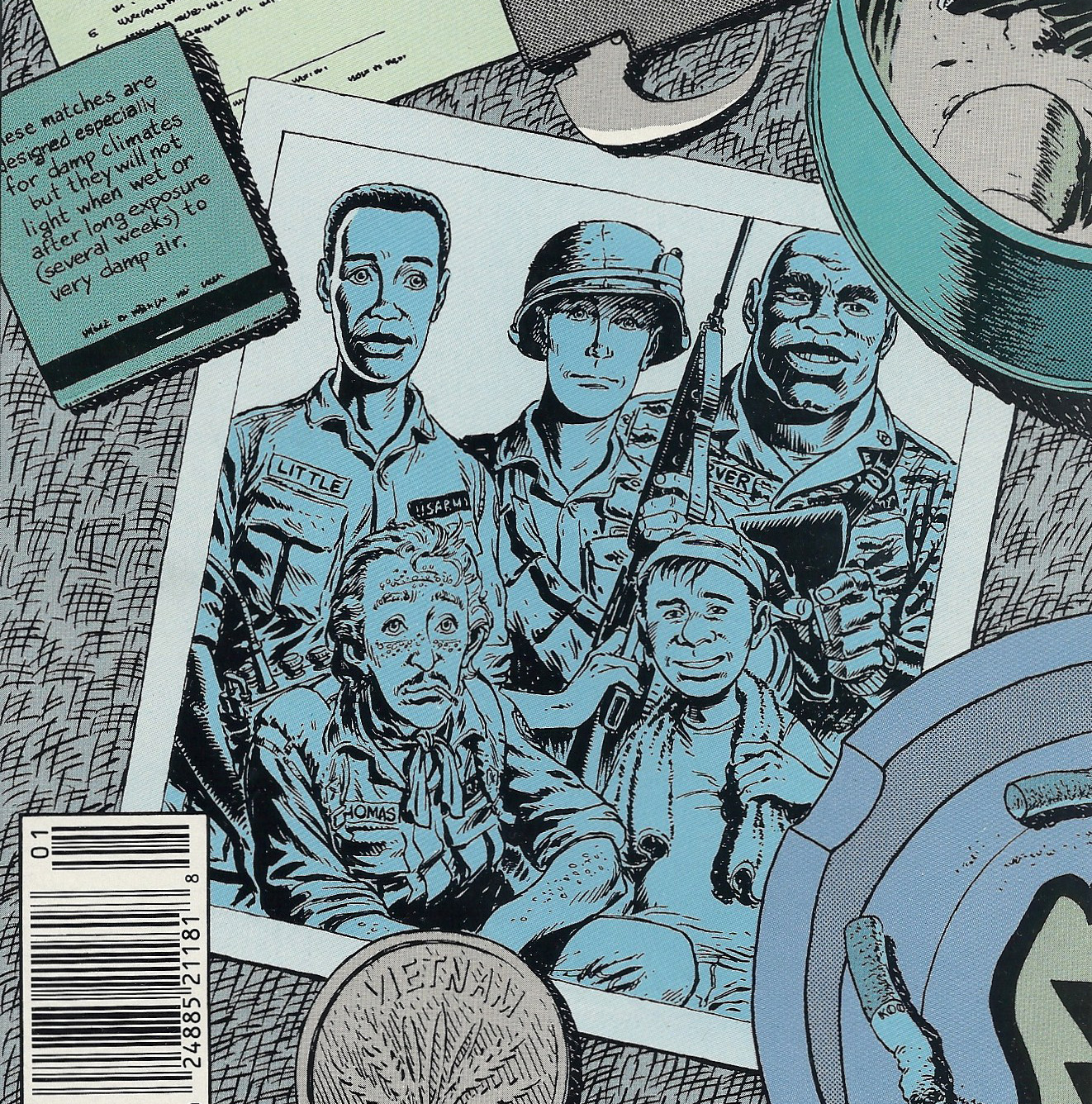
IC 30 CoverWe are back in The ‘Nam with a look at “Auld Acquaintance” from The ‘Nam #26, a story that takes a look at the current lives of characters from the original year of the issue: Ed, Sarge, Top, Rob, Thomas, and Frank.  Meanwhile, the 23rd moves from its current base of operations to Tay Ninh.  Brought to you by Doug Murray, Wayne Vansant, and Geof Isherwood.  As always, in addition to the summary and review of the issue I’ll be talking about the story’s historical context as well as taking a look at the letters, ‘Nam Notes, and ads.

You can download the episode via iTunes or listen directly at the Two True Freaks website

In Country iTunes feed

In Country Episode 30 direct link

Memories Can be Wafer-Thin

Necco Wafers

Image from Old Time Candy.

As I have gotten older, I have found that there are some things in my past that are actually better left there.  The quality of certain movies or television shows are the best examples of this, but it can apply to things like food.

From the time I was ten until I was sixteen, I spent a week every summer on Kezar Lake in the extremely small town of North Sutton, New Hampshire.  While it’s not too far away from the larger area of Lake Sunapee, North Sutton is basically comprised of the lake, a bed and breakfast, several homes, and a general store named the Vernondale Store.  When we weren’t swimming, riding our bikes around the lake, or being dragged to a glass factory by our parents, my sister and I as well as our friends would journey up to Vernondale with a couple of dollars to buy baseball cards, Mad Magazine, and candy.

Vernondale stocked a wide variety of candy, but one of our favorites was Necco Wafers.  Wrapped up like a roll of quarters, Necco Wafers are manufactured by the New England Candy Company, or Necco, and have been made sine 1847.  So it’s no wonder they were in such abundance in New Hampshire (another food item, Hires root beer, will definitely get its own post at some point as well).  I’d seen them outside of New Hampshire, but rarely south of the Mason-Dixon line.  There are eight flavors in a roll of Necco Wafers:  lemon (yellow), lime (green), orange (orange), clove (purple), cinnamon (white), wintergreen (pink), licorice (black), and chocolate (brown).

So I was recently at a convenience store and as I made my way from the soda cases to the front counter, I spotted Necco Wafers in the candy rack.  Usually, I would ignore such things, but I felt nostalgic and picked up a pack, then proceeded to write down my reaction to eating each of the eight flavors for the first time in twenty years.

Pink: Well, now I know why I’m able to tolerate the taste of Pepto Bismol.

White: Is this cinnamon?  I’m tasting a little heat here, and it kind of reminds me of when I was a kid and used to suck on cinnamon Certs until I torched the hell out of my tongue.

Black (which  looks more like dark blue): This is obviously licorice and I guess Necco was trying to get me ready for Jager shots later on in life.  It certainly has an aftertaste, so I was prepared for that effect of Jager.

Yellow: This was like alternately sucking on a wafer coated in lemon Pledge and like those old Archway lemon cookies that my dad used to buy in Waldbaum’s every weekend.

Green:  I’ve never eaten a fresh scent Clorox wipe, but I’m pretty sure this is what it tates like.

Brown:  This is obviously chocolate–in fact, they sell entire rolls of chocolate Necco Wafers–but at first it tastes like very little and the actual taste of chocolate sneaks up on you.

Orange: They did a good job here of replicating the flavor of a creamsicle.  In fact, this is probably the way creamsicles are eaten on The Jetsons.

Purple:  Did I just swallow potpourri?

They are, I guess, an acquired taste, and are truly made for a kid’s palate.  Still, my disgust at the flavor gauntlet I ran doesn’t take away from what are some fond memories of vacations gone by.

In Country: Marvel Comics’ “The ‘Nam” — Episode 21

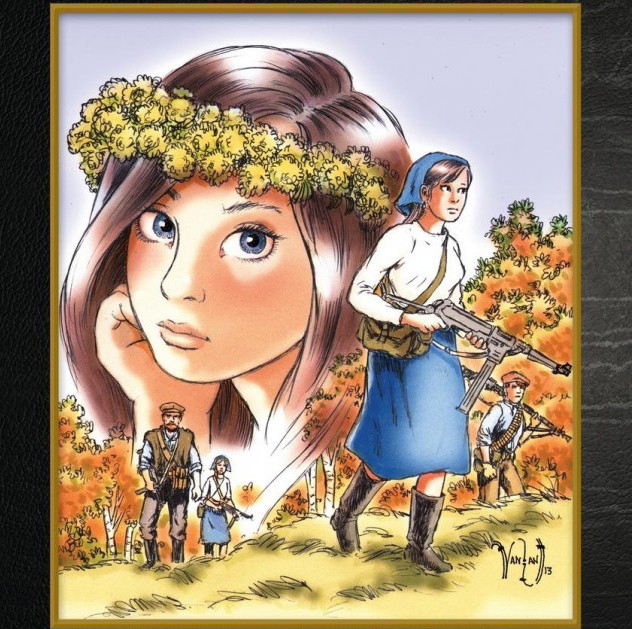
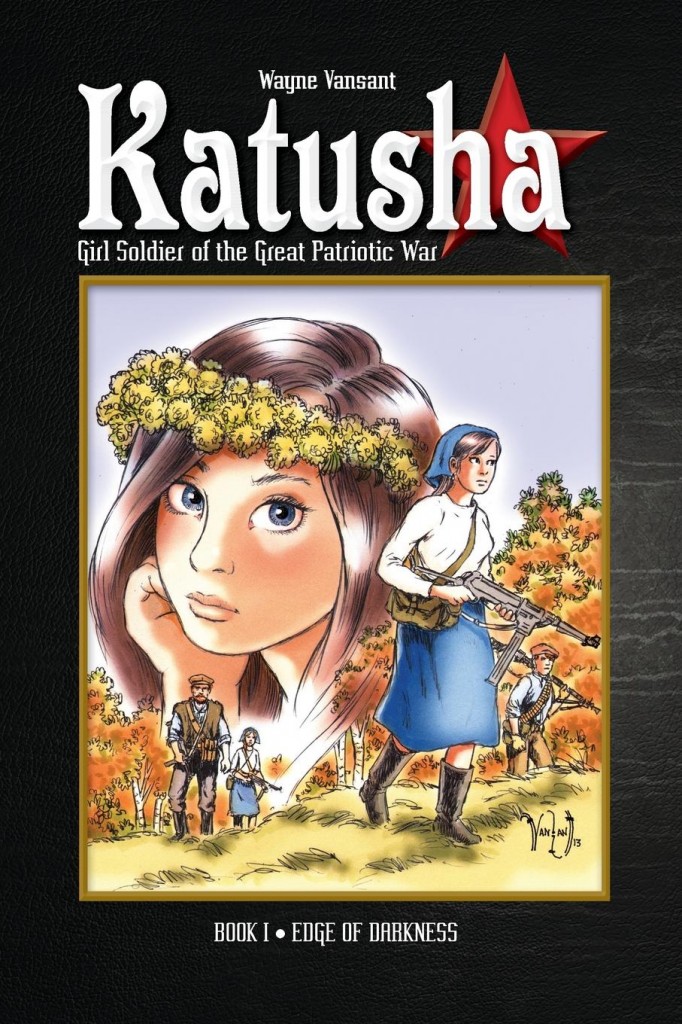
IC 21 CoverThis time around, I take another break from regular coverage of The ‘Nam for an extra-sized episode where I talk to Wayne Vansant, who was the penciller on The ‘Nam for more than 50 issues and has a long career writing and penciling comics and graphic novels of his own.  We discuss his career, his work on The ‘Nam, and his most recent work, Katusha, Girl Soldier of the Patriotic War, a story about the war between the Soviet Union and Nazi Germany during World War II.

You can download the episode via iTunes or listen directly at the Two True Freaks website

In Country iTunes feed

In Country Episode 21 direct link

Here’s the official Tumblr page for Katusha:  Katusha, Girl Soldier of the Great Patriotic War

The page also has links to digital and print editions, which I recommend picking up.  Books one and two are available now, and book three will be coming soon.  Thanks again to Mr. Vansant for the interview!

katusha_book_one_front_cover-682x1024

katusha-book-two-cover

In Country: Marvel Comics’ “The ‘Nam” — Episode 20

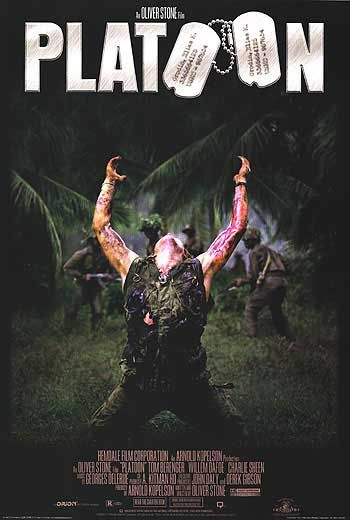
IC 20 CoverIn this special episode, I take a break from my regular coverage of The ‘Nam to present the first film in an occasional series of Vietnam War movies, Platoon.  Directed by Oliver Stone and winner of Best Picture for 1986, Platoon tells the story of Chris Taylor (Charlie Sheen) as he endures his tour in Vietnam.  I give some backstory on the film, a summary, and review.

You can download the episode via iTunes or listen directly at the Two True Freaks website

In Country iTunes feed

In Country Episode 20 direct link


Here is the trailer for the film (as featured in the episode):


Here’s the full poster:

platoon

And here is a picture of the poster that Scott Gardner of Two True Freaks sent my way (Thanks again, Scott!!!):

DSC_0003

Bottom of the Inning: Taking Baseball Personally (Baseball, Part Two)

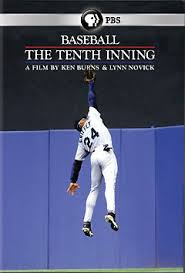
Baseball 10thIn my last post, I mentioned that watching all of Baseball made me feel like I was in an introductory, or “101” class on the game.  As well-researched and well-crafted as Ken Burns’s documentary was, there were times where I felt like I was getting the history textbook version of the baseball story:  hit the high points, go selectively in-depth, and completely skip over quite a bit.

While that’s a valid criticism, leaving it at that would be giving the work short shrift, especially since it’s a full day’s worth of a documentary.  Furthermore, I spent much of that first part of my look at Baseball on summary and critique and didn’t give much of my personal “story” as it is, or at least my personal reactions while I was watching it.  Which is kind of the whole purpose of this blog, right?

So that’s what I’m going to do.  Inning by inning.

First Inning (“Our Game” 1850s-1900):  This isn’t Baseball, this is seventh grade social studies with Mr. Kerkhof.  We’re talking about the Antebellum period and …  man, the 1800s are boring.  But this?  This isn’t so much because it’s an origin story, the kind I’m fixated on whenever we begin looking at an important event.  What were the first shots fired in the Revolutionary War and how did it progress from there?  Who actually founded the Roman Empire?  When did the  Middle Ages officially begin?  Who played that first game of baseball and what was it like in what seems like the Dark Ages to me–before Ruth, Gehrig, Mays, Mantle, and every other name I know?

Second Inning (“Something Like a War” 1900-1910):  I’m ten years old and my parents have given me a “Baseball’s All-Time Greats” baseball card set, the one I spotted in the Sears catalogue.  There’s Ty Cobb, and there’s Honus Wagner, who has the most expensive baseball card in existence, something I learned on a feature I saw on 20/20 the previous year.  I begin looking at the all-time stats for the old players and am amazed and even though many of their records have been broken, they still are in the top five for many of their most notable categories.  The card set is worth original retail price (and even today it’s not worth much), but what it lacks in monetary value it more than makes up for in facts.

Third Inning (“The Faith of Fifty Million People” 1910-1920):  To me, it’s not the Black Sox scandal; it’s Eight Men Out and Field of Dreams.  It’s “Say it ain’t so, Joe,” and the last scene of that softball episode of Married … With Children that parodies the last scene of Eight Men Out.  It’s also the idea that even something as pure as a game I play on Saturday mornings in Little League can be corrupted by outside influences (yunno, beyond the opposing team’s coach being friends with the umpire).

Fourth Inning (“A National Heirloom” 1920-1930):  I’m in the fifth grade and we’re asked to take a biography out of the library for our latest book report/conference with the teacher.  I grab one about Babe Ruth.  He competes with Gehrig.  He is supposedly “stranger than fiction,” which is what one of the chapter titles says.  Despite my being an excellent reader, I have trouble getting through the entire book.  I don’t know if it’s because the book’s badly written or because I don’t find the subject matter as interesting as I thought I would.  In fact, I can’t remember if I ever finished that book.  I do know that when I had my conference with Mr. Schafer about it, I did fine.

Fifth Inning (“Shadow Ball” 1930-1940):  I have no personal context for this.  In fact, if there is any episode that I found myself glued to, it’s this one.  Growing up, my knowledge of the struggle of African-Americans was limited to slavery, Plessy v. Ferguson, Brown v. Board of Education, and Martin Luther King Jr.  I was not exactly a scholar.  I knew the Negro Leagues existed but I don’t think that what little I read about them in books clued me in to what extent.  If anything, I’m grateful for what I gained from this episode.

Sixth Inning (“The National Pastime” 1940-1950):  It’s 2012 and I’m in a used bookstore on the Downtown Mall.  I’m looking for a copy of As You Like It but am also perusing the small graphic novel section.  On my way to the counter, I pass sports and Roger Kahn’s The Boys of Summer.  It sits on my shelf until the start of the 2013 season rolls around.  While Kahn’s biographical retelling of his time becoming a sportswriter is interesting, it’s his visits with former Dodger greats and the retelling of Jackie Robinson’s history that pulls me in.  For years, I knew three things about Robinson:  he played for the Dodgers, he broke the color barrier, and he stole home once in the World Series.  This tells me so much more.

Seventh Inning (“The Capital of Baseball” 1950-1960): I’m twelve years old and my family is throwing one of those big barbecues where everyone–from my mom’s side and dad’s side–is there.  My Uncle Brian, a die-hard Yankees fan, spends a good hour talking to Grandpa Panarese about baseball in the 1950’s.  They talk about the Yankees, the Giants, and the Dodgers.  I don’t interject; I just listen.  It’s one of the best memories I have of these two men and one of the most informative conversations upon which I ever eavesdrop.

Eighth Inning (“A Whole New Ballgame” 1960-1970):  To me, this is where baseball begins; specifically, in 1962, when the New York Mets go 40-120 and set an all-time single-season loss record that still stands.  I cut my baseball history teeth on An Amazin’ Era in 1986 and to me, “baseball history” has always involved Seaver, Koosman, Swoboda, Clendenon, Agee, Grote, Garrett, and McGraw.  Yes, there are more important figures in baseball history and more important events.  But it’s the lovable losers’ transformation into the Miracle Mets that I always remember.

Ninth Inning (“Home” 1970-1993):  It’s fascinating to see Bob Costas tell the story of being in the Red Sox locker room during the Buckner play and watching the champagne get wheeled out as quickly as possible.  It’s also fascinating to see testimony from Red Sox fans who were wounded by the play.  After all, I rooted for “the enemy” in 1986.  My nine-year-old dreams came true when Jesse Orosco threw the last pitch to Marty Barrett (I have a poster on the wall of my classroom), so it never occurred to me that someone might be upset by that night’s events.  Beyond that, there are so many recognizable faces here and I wish he was taking more time on them; I wish he was reminiscing with me the way he was reminiscing with my parents through the seventh inning.

When it ends with a talk about how baseball endures I realize that this isn’t a documentary; it’s a eulogy.  The season was cancelled due to a strike the month before the first episode aired and it doesn’t seem like we’ll get the game back.  Furthermore, it’s hard to pick a side because everyone seems greedy; everyone seems like a villain.  And here, at the funeral, we’re all trying to remember why we came.

Tenth Inning (1994-2010):  I was there.  I remember that.  I watched that.

I will never tire of watching Barry Bonds fail to throw out Sid Bream.  I always loved how much fun Ken Griffey Jr. seemed to be having–and always wished I had that swing.  I was cheering for McGwire the whole time and have to admit I was disappointed when the PED charges came to light.  I never cheered for Bonds unless he struck out looking.  I want to buy Steve Bartman a beer and talk baseball with the guy–not that game, just baseball.  No, the 2004 ALCS is not overrated and yes, I’ll watch the Yankees choke like that any time, day or night.  My heart was in my throat when Endy Chavez made that catch, only to have the Cardinals rip it out and crush it a few innings later.  You’re really using that Springsteen song, Ken?  Don’t you realize it’s about looking back and realizing how middle-aged you are?

“But then time slips away and leaves you with nothing mister but boring stories of glory days.”

You know what?  That’s exactly what this is, isn’t it?  Good job, sir.