High school reunion month concludes with my all-time favorite reunion movies and one of my all-time favorite John Cusack movies, Grosse Pointe Blank. For this look at the high school reunion of Martin Blank, professional killer, I’m joined by Michael Bailey (From Crisis to Crisis, Tales of the JSA, Views from the Longbox) and we talk about the movie, its characters, its music, and how well it holds up nearly 20 years after its release.
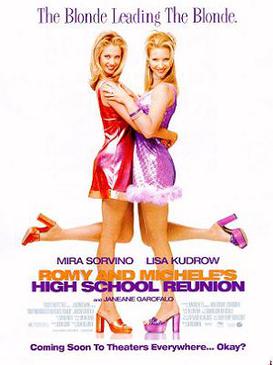
There is a scene toward the end of Romy and Michele’s High School Reunion where Toby (Camryn Manheim) tells Heather (Janeane Garofalo) that Heather’s constantly telling her to “fuck off” throughout high school really hurt her feelings. Heather, who at that point had come to the realization that Romy and Michele–whom she claims made her life hell in high school–went through hell because of the actions of the “A Crowd,” realizes that she made Toby’s life hell and says, “Tremendous!” While Garofalo plays Heather as the bitter and cynical one at the reunion, it’s a scene that is a lot more funny and perfect than the way I just described it. She’s just realized the truth about how bullying works within the high school social hierarchy: the kids on top picked on someone below them and that person found someone below them to torture and that person found someone below them, and so on.
It’s one of a few darker points made throughout a movie that is best known for its two ditzy main characters. Romy (Mira Sorvino) and Michele (Lisa Kudrow) are living in Los Angeles ten years after graduating from high school and leaving behind their lives in Tucson. While they clearly have fun, neither is particularly successful–Michelle is unemployed and Romy works the counter at a Jaguar dealership (where she is constantly hit on by Ramon in the service department)–and after Romy runs into Heather at the dealership (Heather got rich after inventing a quick burning paper that eventually was used in a special kind of cigarette), the two prepare for their high school reunion by flipping through their yearbook and it goes from happy and funny to a realization that they spent the better part of four years getting shit on by the “A Crowd,” which was led by Christy Masters (Jessica Campbell). Seeing that they’ve basically amounted to nothing and that they have to show up Christy and the A Crowd, they borrow a Jaguar from Ramon at the dealership, buy sophisticated-looking business suits and flip phones, and come up with a backstory about their having invented Post-Its.
This obviously falls apart, mostly due to Heather, who is unaware of the cover story and blows it right in front of Christy, who then take the opportunity to ridicule Romy and Michele for their lie in front of the entire class. It leads to Romy and Michele going back to their car, putting on custom-made dresses, and then marching back into the reunion where Romy walks right up to Christie and says:
What the hell is your problem, Christie? Why the hell are you always such a nasty bitch? I mean, okay, so Michele and I did make up some stupid lie! We only did it because we wanted you to treat us like human beings. But you know what I realized? I don’t care if you like us, ’cause we don’t like you. You’re a bad person with an ugly heart, and we don’t give a flying fuck what you think!
Christie and her minions laugh it off, making fun of their outfits, but Lisa Luder (Elaine Hendrix), who was once one of the A Group but lost touch with them over the years as she worked her way up the ladder at Vogue, compliments the outfits, to which Christie replies, “You’re just jealous. Because unlike a certain ball-busting dried up career woman, I might mention, we’re all HAPPILY MARRIED!”
“That’s right, Christie,” Lisa says “Keep telling yourself that.”
It’s one of my favorite exchanges throughout the entire movie because in a way it fulfills a fantasy that I’m sure quite a number of people who weren’t on top of the pecking order have had at least once. In fact, what writer Robin Schiff (who also wrote the play the film is based on, Ladies Room) and director David Mirkin (who was a longtime Simpsons writer and had worked on, among other series, the Chris Elliott show Get a Life) do is explore several scenarios that you’d expect from a movie that’s about a high school reunion:
The popular crowd still wants to act as if it’s on top
You want to see if your high school crush is still like you remember
There’s one-upsmanship to see who’s the most successful
You feel secure or insecure as to how his or her life has turned out
You come to realization that high school is not as important to your overall life as it seemed when you were there
There are all elements that could be taken seriously and even used for a drama, but Schiff and Mirkin turn what could be a middle-of-the-road movie into a weird, even crazy at times farce that is more of a “best friends” movie (I hesitate to use the word “chick flick”), and that’s what puts it above any run-of-the mill comedy of the time. It also capitalizes on what was then a growing nostalgia for the Eighties (The Wedding Singer would be released about 10 months later) with flashbacks to 1987 and a soundtrack that included Wang Chung, The Go-Go’s, Kenny Loggins, Belinda Carlisle, and Cyndi Lauper–in fact, what’s probably the most famous scene in the movie is a choreographed dance the ladies have with Alan Cumming to “Time After Time.”
Funny enough, nearly twenty years after Romy and Michele’s High School Reunion came out, it’s now a great movie to watch for Nineties nostalgia. The entire look of the movie just screams Nineties and I have to wonder if it was one of the things that the producers of Hindsight watched when they were planning their Nineties flashback series. And while I’ve skipped over quite a bit of the movie in favor of a couple of the themes it explores, it’s easily one of the best films about a high school reunion ever made.
Back when there were video stores, there were always moves that you rented because nothing else looked good. When I was in junior high, these were often produced by a studio like Cannon, but as I got older, and my film taste diversified from random ass, often crappy action movies to random-asse crappy comedies (I never said my taste improved as I got older). One of those movies was Since You’ve Been Gone. This one sat on a shelf at the Blockbuster in Bayport for what seemed like eons in 1999, staring at me, begging me to rent it, only to be disappointed when I decided that watching Jawbreaker was a better idea.
But one day, when I happened upon the film again, I picked up the box and read what seemed to be a good equation for the type of movie I could spend some time with on a Saturday night: Lara Flynn Boyle + David Schwimmer + Teri Hatcher + High School Reunion = Decent Time. Hey, picking up a video on an off chance worked for Clerks, so why not go for this?
Believe it or not, while Since You’ve Been Gone is not Clerks, it’s still an entertaining little flick that is worth it when you are scrolling through Netflix looking for something to watch. The most interesting piece of trivia about it is that it was directed by David Schwimmer, who at the time was at the high point of his Friends fame and it also has a fairly decent number of walk-ons and cameos by famous actors (or at least people that I can spot). While it is an ensemble, it basically follows three sets of friends through their high school reunion at a hotel in downtown Chicago (and props to the film’s writers for not setting the reunion at the actual high school).
Our first group is made up of Kevin (Philip Rayburn Smith), Molly (Joy Gregory), and Zane (Joey Slotnick), who are basically, I would say, the most ordinary of the entire cast. Kevin, a pediatrician, is the snarky cynic; Molly, his wife, is the outsider (she didn’t go to high school with Kevin); and Zane is their friend who achieved some marginal fame as a musician (although his most famous song is one that another artist sings). Kevin’s time at the reunion is an exploration of that cynicism–confronting an old rival, seeing an old flame, and receiving bad new from work make him increasingly bitter.
The second group is that of Holly (Heidi Stillman), Electra (Laura Eason), and Maria (Teri Hatcher). Holly survived a plane crash and is now a motivational speaker, while Electra is a walking calamity. Maria–whom they haven’t seen in years–is living in Europe and has become a “worldly” type, peppering her speech with snooty-sounding European phrases. So their plot is about the bullshit they create for themselves, although Electra’s is one of having more and more terrible things happening to her over the course of the night, including chipping her tooth on a nail that someone put in her slad and having her ass glued to a toilet seat.
Finally, there’s Duncan and Clay. Clay (Thom Cox) is and has been “crazy” and self-destructive and Duncan (David Catlin) is his best friend and de facto caretaker. Duncan is also the guy who is constantly shit upon by class president Rob, who is played by David Schwimmer in the douchiest way possible. Duncan, it’s discovered by the end of the film, is great at networking with people and Clay winds up hooking up with Grace (Lara Flynn Boyle), who is just as destructive as he is and spends the entire night playing brutal practical jokes on her former classmates.
Honestly, while the plots of the film are solid enough to carry the whole movie, the most memorable stuff is found int he various one-off jokes and random cameos (Jon Stewart, Jennifer Grey, and Molly Ringwald as “Claire,” to name a few). Years ago, I reviewed Since You’ve Been Gone for Bad Movie Night and noted that the film feels like it is the reunion of the graduating class that we see in Can’t Hardly Wait (which Since You’ve Been Gone actually predates by two months) and even though that review is more than a decade old, I still think that makes sense. Can’t Hardly Wait is very much like this–random characters with separate storylines that all exist within the same setting (Can’t Hardly Wait takes place at a massive graduation party). And while there are certainly better high school reunion movies than this one (Grosse Pointe Blank comes to mind), Since You’ve Been Gone is quite possibly one of the most realistic in its premise. After all, an event like a high school reunion doesn’t have a through storyline, and everyone brings their own lives–and often their own baggage–with them.
Schwimmer and writer Jeff Steinberg play that for laughs and serious where it needs to be but with the exception of Zane singing his song at the reunion (after Grace has destroyed all of the band’s instruments through a massive feedback), which provides background for a montage, they do a competent job of not laying any emotion on too thickly. Like I did a number of years ago, you’d probably only ever watch this if you happened to be browsing through Netflix and it caught your eye (it’s been available for streaming for years and I don’t think it’ll be gone anytime soon). But at least, I suspect, you’ll find it’s worth it.
With this episode of the podcast, I’m kicking off “High School Reunion Month.” No, I won’t be attending my high school reunion (there are scheduling conflicts) but I am going to be doing two podcast episodes and two blog posts about high school reunion movies from the Nineties. First up? Beautiful Girls, a 1996 ensemble comedy directed by the late Ted Demme and starring Matt Dillon,Timothy Hutton, Rosie O’Donnell, Martha Plimpton, Natalie Portman, Michael Rappaport, Mira Sorvino, and Uma Thurman. I take a look at the movie and offer up my favorite moments as well as tackle some long-awaited listener feedback.
It’s the 50th episode of Pop Culture Affidavit! For this special episode, I take a look back twenty years to the year I graduated from high school. Along the way, I look at how senior year of high school is represented in movies. It includes stops at, among other things, American Pie, Fast Times at Ridgemont High, Can’t Buy Me Love, and Paper Towns as well as a host of personal memories about my own senior year of high school (which ended on June 25, 1995). Was high school the best time of my life? Was it a waking nightmare? Was it a little bit of both? You’ll have to listen to find out.
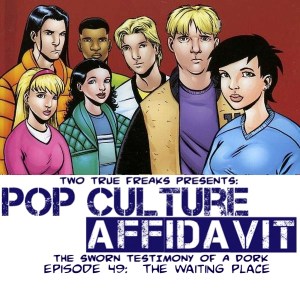
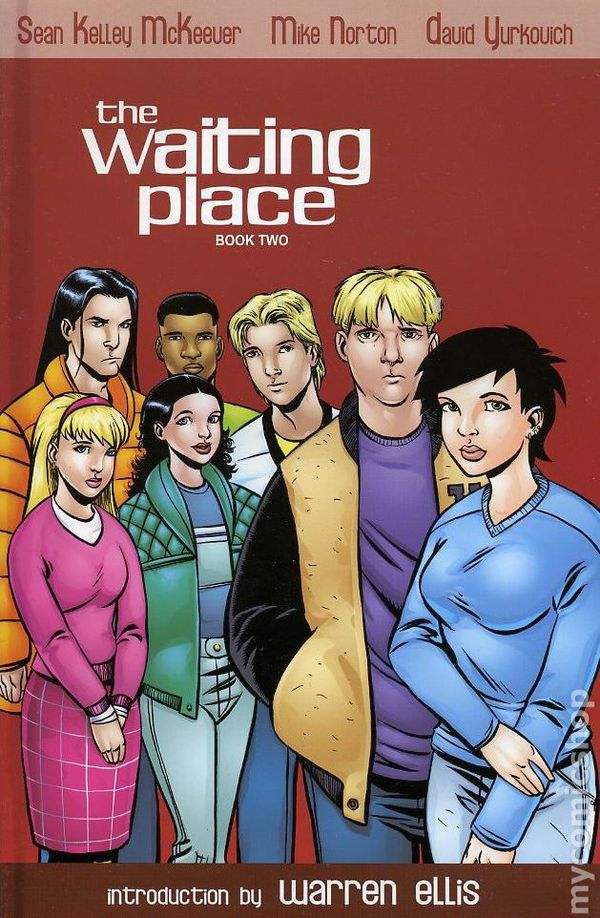
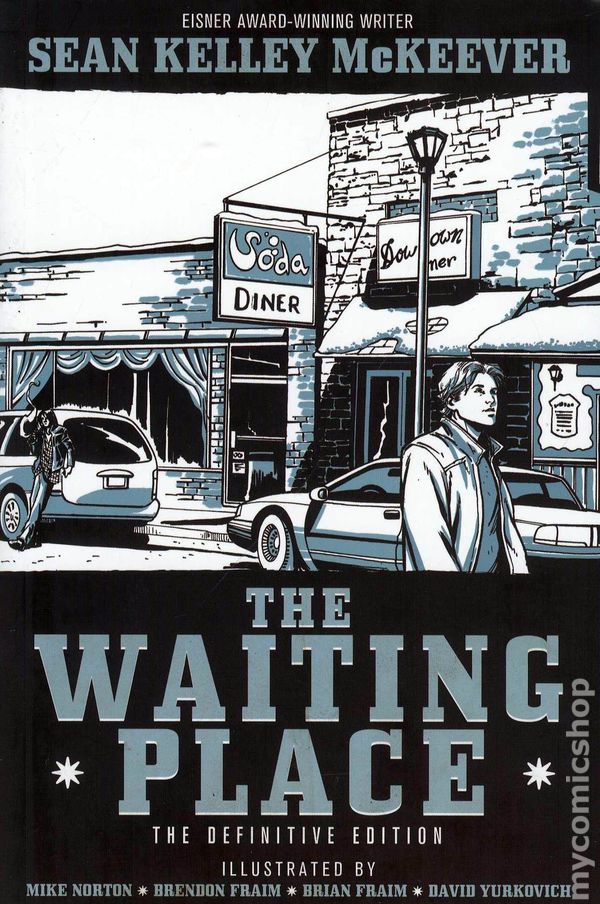
In 1997, Sean McKeever self-published his very first work, The Waiting Place, a story about the ennui that comes with being a young adult trapped in a town that doesn’t seem to be going anywhere. It was soon picked up by Slave Labor Graphics and McKeever along with Brendon and Brian Fraim and then Mike Norton finished the entire saga of the town of Northern Plains and its denizens in three volumes plus an epilogue.
I spend this episode taking a complete look at The Waiting Place, which has been one of my favorite comics coming-of-age stories since I bought the volume one trade in 2001. This includes a full synopsis as well as a review.
I may have neglected to mention the last time that I covered anything regarding Degrassi, which was about a year and a half ago, that I initially missed the finale of Degrassi Junior High. For years, I knew that in the final episode of that season–“Bye Bye Junior High”–the school caught on fire during a dance, but I never actually saw the episode until someone sent me a video tape full of Degrassi episodes sometime in the early 2000s. So back in 1990, I had no idea what happened and really no sense of the show’s continuity. Sure, I knew who the characters were, but if a random DJH episode came on, I really couldn’t tell you what season it was from.
That changed when I tuned into watch Degrassi one day and saw a new title sequence, one for Degrassi High. The characters were the same (for the most part) but they were older and at a new school. The whole thing would end just like DJH had–with a dance after everyone learned the school was about to close–but that’s a few years off. The episode that started DH was a two-parter, “A New Start.”
One of the things that can be the most heavy-handed part of old episodes of Degrassi is its educational aspects. There was, to some degree, a mandate that the show had to teach and sometimes that issue was handled in an “issue of the day” sort of way. That kind of happens in “A New Start,” even though the episode does its best to toe the line between a solid piece of teen drama and a very special episode.
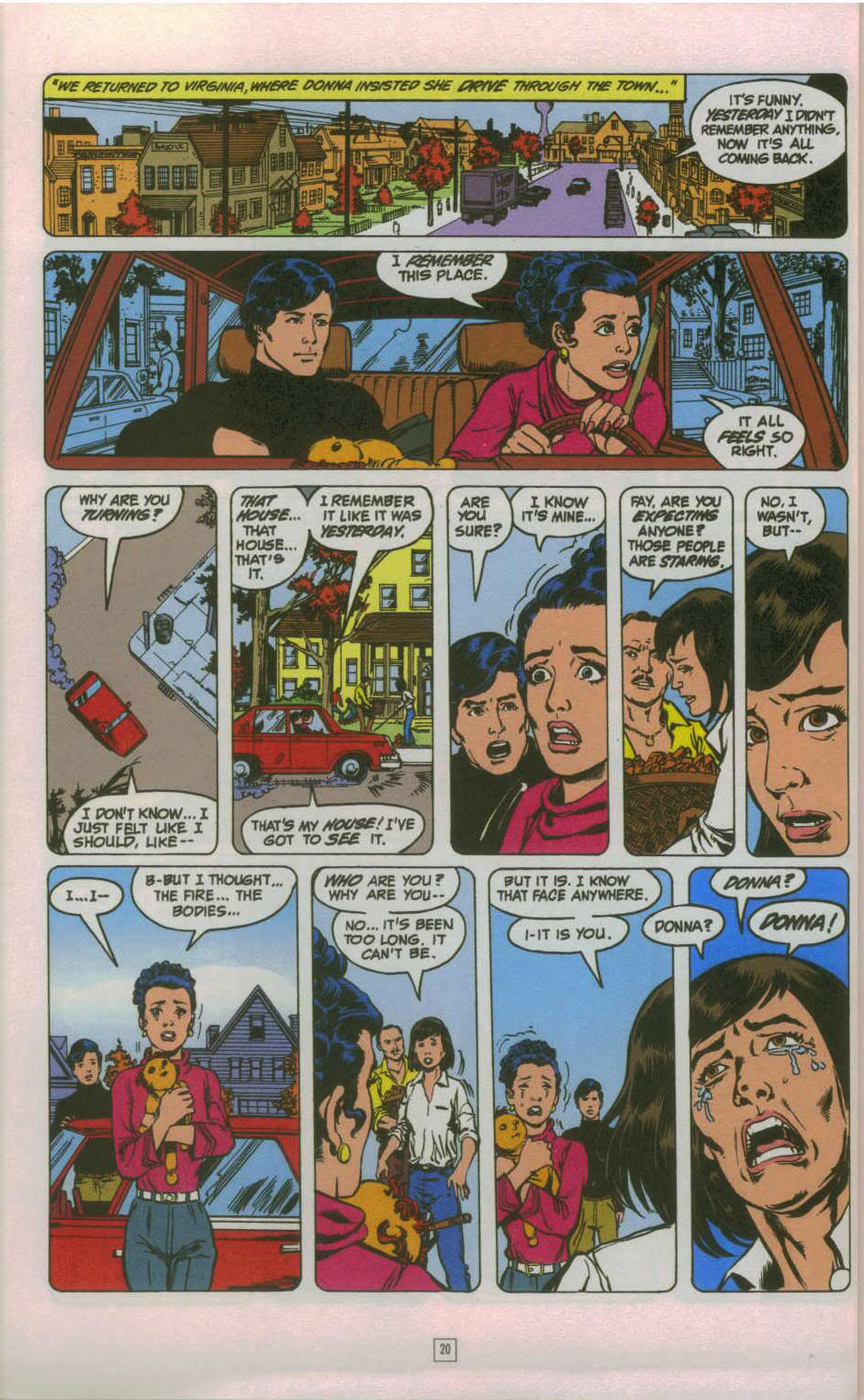
While the cast is forced to adjust to its new surroundings and we get some great subplots, involving Joey, Wheels, and Snake getting hazed by older students, including Duane (who would become a key character later in the show’s run) as well as the introduction of new characters like Claude (more about him in future episodes), this one revolved around the twins: Heather and Erica. It seems that over the summer, they held the time-honored teen jobs of camp counselors and while working at the camp, Erica met and lost her virginity to one of the other counselors, a guy named Jason. It wasn’t out of character completely–Erica was always more boy-crazy than Heather–but the complication that arose was that by the end of the first part of “A New Start,” Erica discovers that she’s pregnant.
So begins a story that even today would be considered controversial: Erica gets an abortion. Most of the second part is devoted to her contemplating the abortion, seeking counseling, and arguing with her sister, and it ends with the two of them walking either up to or into the abortion clinic, depending on what version you saw. It’s a tough topic to approach and the writers do this deftly, as do the actresses.
One of the most important things to point out about Heather and Erica, which is highlighted in a pretty forced class discussion about abortion, is that the girls are a part of a very conservative Christian family, so when Erica brings up the topic as a way of working through her feelings (like I said, it comes off as a little forced) and gets a discussion going that properly highlights multiple sides of the issue. When Erica openly wonders if it could be the right choice for someone, Heather gets visibly upset and talks about how babies die every day in the “killing centers.”
Looking back at it, twenty-five years later with the perspective of someone who now has well-established views on the issue, this discussion and some of what Heather says comes off as almost satirical; however, when I was thirteen years old, I really didn’t know what an abortion was aside from it being an issue I heard about on the news. “A New Start” made an attempt at presenting abortion in a way that was straightforward, and Heather’s inner conflict is well done, too. Erica wants her support and Heather is so anti-abortion that she doesn’t know if she will give it, but eventually she puts her love for her sister above her political ideals and walks with her when she goes to the clinic.
The original ending freeze frame to “A New Start, Part Two.” This was only aired in Canada. The U.S. version, shown on PBS, ended a few moments earlier.
That last scene, by the way, caused a controversy, at least among those who were aware of it back in 1990. The episode originally ends with Heather and Erica making their way through a crowd of anti-abortion protesters and freeze frames on a woman holding a figurine of a fetus as they walk in the door. This was too much for PBS, who truncated the American version of the episodes by a few seconds and ended with a freeze-frame of their faces. The episode still aired, though, which is more than I can say for a similar episode of Degrassi: The Next Generation which aired in Canada but was initially not shown in the U.S. by the cable network The N (incidentally, neither was “A New Start” or a later episode that referenced the abortion).
I don’t know if this opener was a way for Degrassi High to make a statement that they weren’t going to shy away from heavier topics now that characters were older, but it certainly gripped me and up until the show seemed to vanish from my television, I never missed an episode.
Riding the coattails of The Palace of Glittering Delights, I’ve got my own TV theme song countdown. There’s comedy! There’s drama! There’s Canadians! There’s Hasselhoff! Join me as I count down twelve of my all-time favorite TV theme songs.
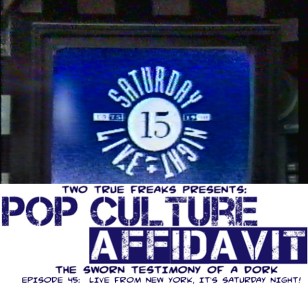
It’s a coattails-riding self-indulgent trip down comedy memory lane as I spend 30 minutes talking about Saturday Night Live, which just had a huge 40th anniversary special this past Sunday. Here, I look back on another anniversary special from the show, its 15th anniversary special, which aired in the fall of 1989, and I also talk about how the show has had an effect on me since I’ve been watching it for the last 25 years.
Presenting the first episode in an all-new podcast miniseries from Pop Culture Affidavit, 80 Years of DC Comics. Throughout these twelve episodes, I am going to be taking a look at the various genres of comic books that DC Comics has produced in its 80-year history. For my first episode, I start off easy by talking about superheroes. More specifically, I go through 10 moments in DC Comics published during my lifetime that have I’ve enjoyed or that have had some sort of impact on me. So while it doesn’t necessarily cover all 80 years of the company, it’s a personal look at DC, company I’ve been very loyal to since I started seriously collecting comics more than two decades ago.
 High school reunion month concludes with my all-time favorite reunion movies and one of my all-time favorite John Cusack movies, Grosse Pointe Blank. For this look at the high school reunion of Martin Blank, professional killer, I’m joined by Michael Bailey (From Crisis to Crisis, Tales of the JSA, Views from the Longbox) and we talk about the movie, its characters, its music, and how well it holds up nearly 20 years after its release.
 There is a scene toward the end of Romy and Michele’s High School Reunion where Toby (Camryn Manheim) tells Heather (Janeane Garofalo) that Heather’s constantly telling her to “fuck off” throughout high school really hurt her feelings. Heather, who at that point had come to the realization that Romy and Michele–whom she claims made her life hell in high school–went through hell because of the actions of the “A Crowd,” realizes that she made Toby’s life hell and says, “Tremendous!” While Garofalo plays Heather as the bitter and cynical one at the reunion, it’s a scene that is a lot more funny and perfect than the way I just described it. She’s just realized the truth about how bullying works within the high school social hierarchy: the kids on top picked on someone below them and that person found someone below them to torture and that person found someone below them, and so on.
 Back when there were video stores, there were always moves that you rented because nothing else looked good. When I was in junior high, these were often produced by a studio like Cannon, but as I got older, and my film taste diversified from random ass, often crappy action movies to random-asse crappy comedies (I never said my taste improved as I got older). One of those movies was Since You’ve Been Gone. This one sat on a shelf at the Blockbuster in Bayport for what seemed like eons in 1999, staring at me, begging me to rent it, only to be disappointed when I decided that watching Jawbreaker was a better idea.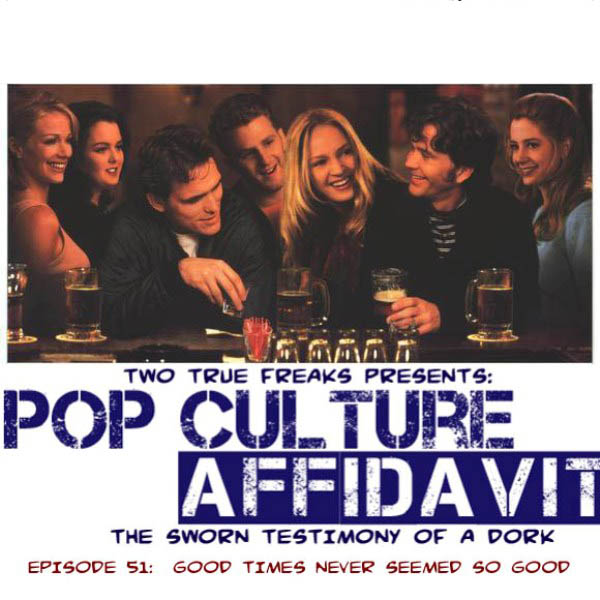

 It’s the 50th episode of Pop Culture Affidavit! For this special episode, I take a look back twenty years to the year I graduated from high school. Along the way, I look at how senior year of high school is represented in movies. It includes stops at, among other things, American Pie, Fast Times at Ridgemont High, Can’t Buy Me Love, and Paper Towns as well as a host of personal memories about my own senior year of high school (which ended on June 25, 1995). Was high school the best time of my life? Was it a waking nightmare? Was it a little bit of both? You’ll have to listen to find out.
 In 1997, Sean McKeever self-published his very first work, The Waiting Place, a story about the ennui that comes with being a young adult trapped in a town that doesn’t seem to be going anywhere. It was soon picked up by Slave Labor Graphics and McKeever along with Brendon and Brian Fraim and then Mike Norton finished the entire saga of the town of Northern Plains and its denizens in three volumes plus an epilogue.

 I may have neglected to mention the last time that I covered anything regarding Degrassi, which was about a year and a half ago, that I initially missed the finale of Degrassi Junior High. For years, I knew that in the final episode of that season–“Bye Bye Junior High”–the school caught on fire during a dance, but I never actually saw the episode until someone sent me a video tape full of Degrassi episodes sometime in the early 2000s. So back in 1990, I had no idea what happened and really no sense of the show’s continuity. Sure, I knew who the characters were, but if a random DJH episode came on, I really couldn’t tell you what season it was from.

 It’s a coattails-riding self-indulgent trip down comedy memory lane as I spend 30 minutes talking about Saturday Night Live, which just had a huge 40th anniversary special this past Sunday. Here, I look back on another anniversary special from the show, its 15th anniversary special, which aired in the fall of 1989, and I also talk about how the show has had an effect on me since I’ve been watching it for the last 25 years.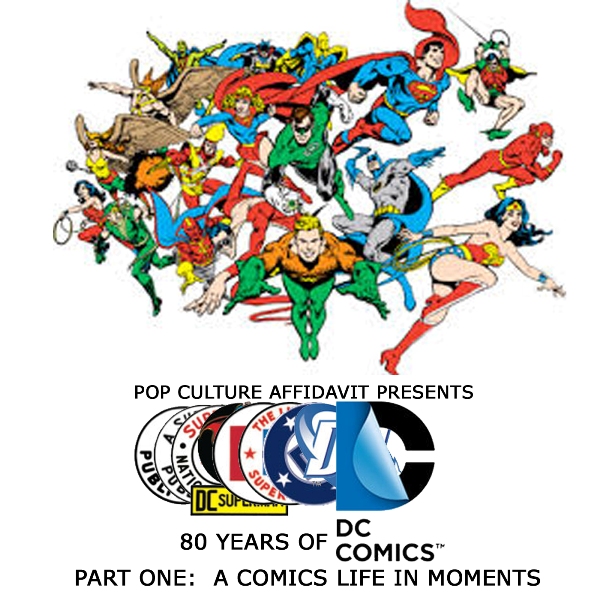




 Pop Culture Affidavit