Long Island

Surely Brenda and Eddie Still Survive

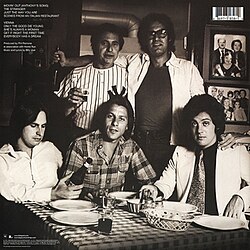
The back cover of The Stranger.

I was running errands this morning and listening to The Stranger (as one does) and as I wound through Charlottesville, I realized that the main characters inmy favorite song on the album, “Scenes from an Italian Restaurant” were married fifty years ago this month.

If you’re unfamiliar with the song, it’s seven minutes long and is a suite of sorts with a ballad at its center about two characters named Brenda and Eddie, who were the couple in high school, married at the end of July 1975, but the marriage crashed and burned quickly and they went their separate ways, though they remained friends. The premise of the song’s framing device is that Brenda and Eddie are meeting one another for dinner at an Italian restaurant, perhaps for the first time in years. While the “Ballad of Brenda and Eddie” section of the song is narrated in the third person, Eddie narrates the rest of the song, giving us one side of his conversation with Brenda (“Got a new wife, got a new life, and the family is fine”). As bittersweet as the song can be, it ends on a comfortable, warm tone with a return to a wine list from the opening (“bottle of red, bottle of white …”) and the sense that though the marriage never worked out, the friendship endures.

The sheet music as found in The Complete Billy Joel Volume 1. Note that I was playing it in September 1993.

I first encountered this song via sheet music, because I owned the book for Greatest Hits Vol 1 and II. Later, I’d buy The Complete Billy Joel books, which at the time covered everything from Piano Man to Storm Front in album order (and included songs from Cold Spring Harbor in the section devoted to Songs in the Attic). “Scenes from an Italian Restaurant” is in volume one of the two-book collection. My piano teacher, Mrs. Stein, would always let me pick a song to play every week or two in addition to whatever selection from the “course book” I was working through along with my scales and fingering exercises. For years, it was one-off sheet music for popular songs like “November Rain”, but I’d often go back to the Billy Joel books. At the time I got it, I had only heard three albums: An Innocent Man, Greatest Hits Vol. I & II, and Turnstiles. So my selections were mostly songs that were well known alongside tracks from Turnstiles like “Summer Highland Falls” (a song I never really mastered). But I’d often flip through the book to see what other songs were out there, which is how “Scenes from an Italian Restaurant” caught my eye.

How could it not? The title alone suggested something special. What it was and how it sounded, I had no idea, but I’d read through the lyrics look over the music whenever I was flipping through the book. I don’t know why I never decided to just try and play it; I either was worried I wasn’t going to play it right because I’d never heard of it, or that I would get in trouble for playing a song that hadn’t been assigned to me. Yes, that sounds ridiculous, but I have always been ridiculous.

Anyway, I didn’t have to wait too long after buying the sheet music book because I got a stereo for my fifteenth birthday and between my parents and my relatives, received six CDs, one of which was The Stranger (the others were Queen Live and Wembley ’86, Pocket Full of Kryptonite, … And Justice for All, Born to Run, and For Unlawful Carnal Knowlege). I already knew half of the album because those songs were on the Greatest Hits album, and while I can’t say if I went right for “Scenes from an Italian Restaurant” upon my first listen, I know I played it early and often. I think I may have made an attempt at it on the piano before Mrs. Stein assigned it to me, but I didn’t actually start playing it for real until September of 1993 (at least that’s what’s written in the book).
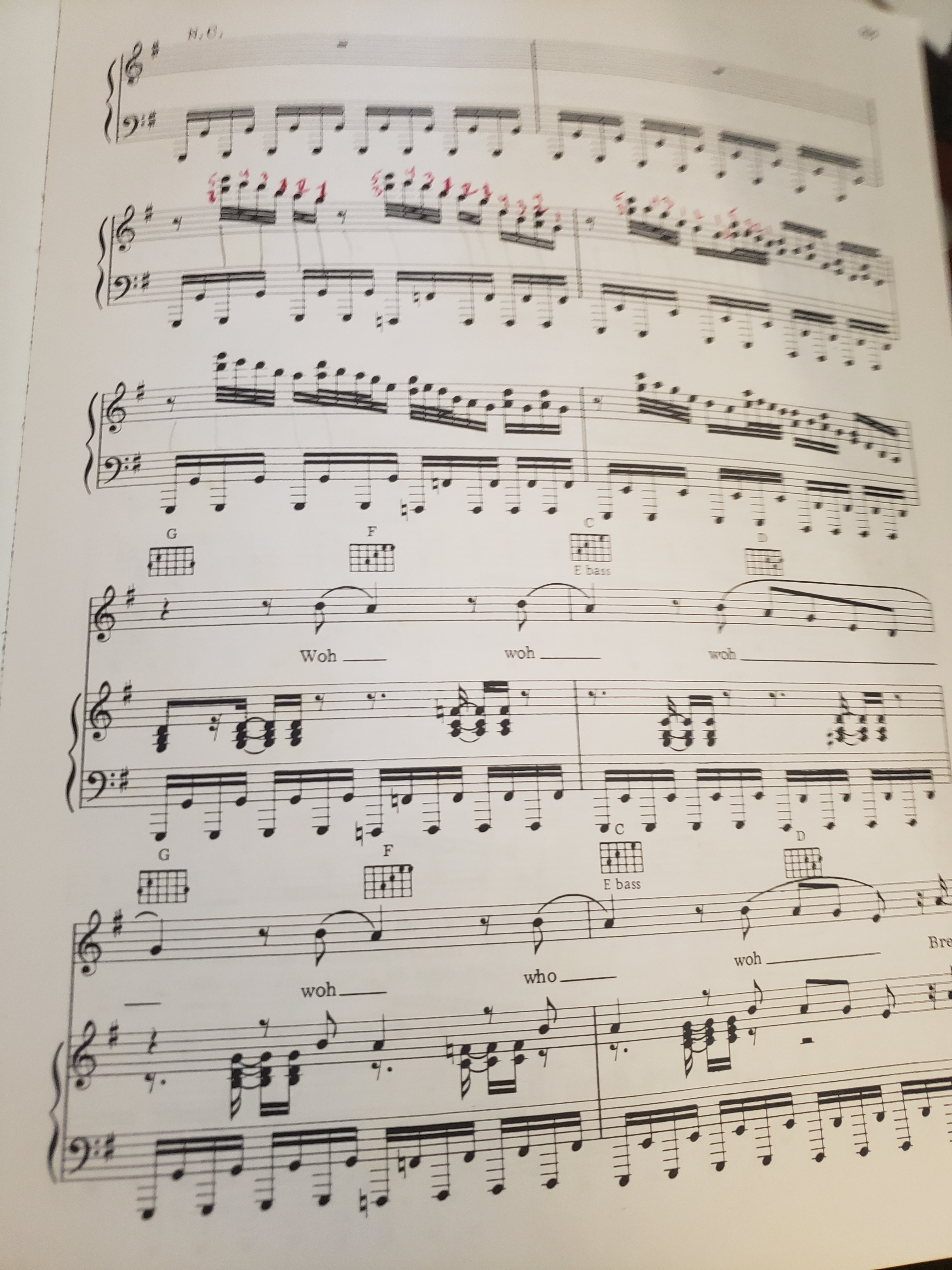
The intro to the “Ballad of Brenda and Eddie” section of the song. Note the continuous octaves in the bass and the fast movement in the treble.

I’ve mentioned this a couple of times on podcasts where I’ve discussed the song or The Stranger as a whole (Fire and Water Records, Long Play), but while the beginning and ending of the song are pretty easy to play, once you get to the beginning of the “Ballad of Brenda and Eddie” section, it becomes a bitch to play. The bass portion of the song, which you play with your left hand is a series of sixteenth notes, all of which are octaves. Now, that’s not hard to do in theory; it’s just that those sixteenth-note octaves go on for at least half the song, finally ending right before the final “bottle of red, bottle of white” lines. I’m neither left-handed nor did I ever master relaxing my wrists enough to have the endurance for those octaves, and that meant that at some point during the Brenda and Eddie verses, my left wrist would not only tense up, it would feel like it was burning. Add to that the way those verses open, where the right hand is playing four measures of what are mostly thirty-second notes before getting to the lyrics. I enjoyed playing the piano and got fairly good at it but despite my efforts, never mastered the song.

That didn’t stop it from becoming one of my favorite Billy Joel songs. I love it for its structure and how that changes throughout to fit the mood (see also: “Bohemian Rhapsody”), but moreover I love what it’s about. In my most recent podcast episode, I talked about his1980s output and I mentioned that while Springsteen wrote for the working class and Mellencamp wrote for the farmers, Billy Joel wrote for the middle-class suburbs. There are a number of songs that show this (the most on the nose being “The Great Suburban Showdown” off Streetlife Serenade), but this is one of the best because it encapsulates a certain feeling of suburban teenhood and is timeless in the way that movies like American Graffiti and Dazed and Confused are despite their very specific settings.

In fact, Brenda and Eddie come from American Graffiti, as they’re described as the “popular steadies and the king of the queen of the prom / ridin’ around with the car top down and the radio on.” I never ran with the Brenda and Eddie crowd, but in a town as small as Sayville, it wasn’t hard to spot the Brenda and Eddies of my high school. I knew the way people looked at the and referred to them, and definitely knew The Diner and how central that was (and to a degree still is) to Long Island culture, to the point where I’ve written stories that have diner scenes.

When Brenda and Eddie decide to get married toward the end of July 1975, Billy notes that “everyone said they were crazy / Brenda, you know that you’re much too lazy / and Eddie could never afford to live that kind of life.” But they go ahead with it anyway and while they find a place to live and buy a waterbed and paintings from Sears, they fight so much that they divorce quickly. It’s a pretty realistic picture and maybe even a caution tale about moving too fast when in love as a teenager (and thankfully, there’s no double suicide like some other stories about movie too fast when in love as a teenager). It’s also, as I realized many, many years after first hearing it, the flip side of a song that came out a decade earlier.

In 1964, Chuck Berry released “You Never Can Tell,” which most of my generation knows from the John Travolta/Uma Thurman dance scene in Pulp Fiction. The song is about two teenagers–Pierre and his girl, who is only referred to as “the Mademoiselle”–who get married as teenagers. In this song, Berry notes that “The old folks wished them well” and come to realize that it’s probably going to work, saying, “‘C’est la vie’ say the old folks / It goes to show you never can tell.”

The second verse is the most important to the context of “Scenes from an Italian Restaurant”:

They furnished off an apartment with a two room roebuck sale
The coolerator was crammed with TV dinners and ginger ale
But when Pierre found work, the little money comin’ worked out well
“C’est la vie” say the old folks
It goes to show you never can tell

Pierre and The Mademoiselle get an apartment and furnish it with things from Sears. Pierre gets a job and the money works out. And the old folks stand corrected because, you know, you never can tell.

As we know, Brenda and Eddie weren’t so lucky.

Maybe it was the optimism of the 1960s versus the harsh realities of the 1970s that are contrasted here; maybe it’s that Chuck Berry wrote upbeat rock and roll and Billy Joel wasn’t afraid to inject melancholy into a happy melody, but he’s telling us that the doubting old folks are probably right and it’s not going to work. But whereas Bruce Springsteen along with Jim Steinman and Meat Loaf would make their teen lovers feel trapped in “The River” and “Paradise by the Dashboard Light”, at least Brenda and Eddie are able to escape and get a second chance, even though they realize that their time as “The King and the Queen” has passed (“but you can never go back there again”).

That’s the most bittersweet moment of the whole song and a moment that I think most of us have had on some level as we’ve grown up and gotten older. I can’t tell you what my particular moment was, although it probably involved me going somewhere I used to go all the time and realizing that I wasn’t the center of anyone’s attention and I was just another customer or face in the crowd. Yes, I know how that sounds, but don’t forget that when you’re a teenager, you are often a walking ego and you often assume that everyone knows what’s going in your life and your world, as if they’ve been watching your movie this entire time. “Nobody cares who you were in high school” is truth because we all reach a point of emotional maturity where we understand that we are, yes, just going through life like everyone else. Some of us do it more quickly than others, and some don’t (read: influencer culture).

The sweetness with which Brenda and Eddie reunite years later is one of my favorite parts of “Scenes from an Italian Restaurant”, and one of the more optimistic parts of the song. Breakups don’t always go smoothly and relationships with exes are often fraught. By the time we’re in the Italian restaurant, they’re no longer “exes” in the sense that you or I would complain about our ex-girlfriends or ex-boyfriends. She’s an “old girlfriend” in the sense that the pain is behind him, and hopefully behind her as well. “Brenda and Eddie” survive in the sense that they can still be close and have something special between one another even though it’s much different than when they were eighteen.

As I get closer to fifty myself, I’ve come to realize how friendships that are fleeting or transient is just another part of life. There are people I was pretty close to in high school and college whom I only see via Instagram or Facebook posts; there are others whom I don’t talk to at all. And then there are the ones who are still there; maybe we take too long to get back to one another and aren’t embedded in one another’s lives like we were in our teens and twenties, but we’re still there and as cheesy as this concluding sentence is going to sound, will always save a seat at a bar, diner, or an Italian restaurant.
Pop Culture Affidavit Episode 165: Strictly Eighties Joel

“You May Be Right,” “Allentown,” “Tell Her About It” … all of these are found on the seminal compilation album Billy Joel Greatest Hits Vol 1 and 2, which came out 40 years ago. Join me as I take a look at the Piano Man’s music throughout the decade of the Eighties.

Apple Podcasts:  Pop Culture Affidavit

Spotify: Pop Culture Affidavit — Two True Freaks

Direct Download 

Pop Culture Affidavit podcast page

Some extras for you …

(more…)

The Remains of the Eighties

For my 18th birthday, I got a $25 gift certificate to Tape World.

It was 1995 and I hadn’t bought a cassette in at least a few years.  But in The Smith Haven Mall, there was still a store called Tape World.  I’d never set foot inside of it and I don’t think anyone I knew had either.  Sam Goody was right around the corner, sitting in prime position across from Aeropostale and The Gap, beckoning music lovers with its neon entrance and posters advertising the latest albums.  Tape World was a blocky ‘80s-lettering sign above a thin store that was tucked between 5-7-9 and The Bombay Company.  I actually had to check the mall directory to find it.

The Eighties didn’t so much end in 1990; rather, they slowly faded into obscurity, and that has me thinking about where they eventually went.  Tape World, for instance, has its place in our cultural examination of the decade, as one of Michael Galinsky’s photos for The Decline of Mall Civilization shows a blonde girl with quintessential mall hair walking by the store and its wood paneling facade.  A look through my memories of the malls near me (and yes, malls, plural–it was Long island) shows a number of places where time seemed to stand still well after the decade had changed over while simultaneously trying to keep up with the times.  Gardiner Manor Mall had an ancient Sears, an Orange Julius, and a bridge to Stern’s.  The South Shore Mall had Captree Corners, a late-1970s mini mart of small shops and a fountain I loved to throw pennies into when I was six.  The Sun Vet Mall was where 1981 went to die.  

Smith Haven, started out as a mid-century mall of the late 1960s with fountains, Alexander Calder sculptures, and the low-lit atmosphere that I associate with the era.  It was a twenty-minute drive from Sayville and when I was little, I loved going to “the mall with the fountains.”  However, it underwent a massive renovation in 1987 and emerged with a brighter neon-tinged and mauve-tiled palette that has come to typify the Eighties. 

The renovation was hyped even as it was going on.  When the mall was getting its makeover, there were radio commercials that sang “We’re building the place of your dreams … Smith Haven Mall!”  Later, the commercials changed to “Your wildest dreams will come true … Smith Haven Mall!”  I don’t know what “wildest dreams” can come true at Jean Country or Casual Corner, but I will take their word for it.  The mall was also the home to a local news special on WLIG 55, “At the Mall With Drew Scott.”  It remains one of the more amazing artifacts of 1980s Long Island as did the mall itself until it underwent another renovation in the mid-2000s.

That’s probably why it’s always stayed alive while so many shopping malls have died.  A hot place in the Eighties, Smith Haven was also a destination for Nineties mall-ness because it had a Gap, Aeropostale, Structure, Express, Limited, Eddie Bauer, Bath and Body Works, Victoria’s Secret, Disney Store, and Warner Brothers Studio Store.  But it was still Eighties building that held onto that part of its identity with stores like Tape World; Sssassy, which was a real-life version of Over Our Heads, the store from the last few seasons of The Facts of Life; and the cutlery store Hoffritz.  Because honestly, nothing is more Eighties than a store devoted entirely to cutlery.

Sssassy in Smith Haven Mall, probably in the late 1980s or early 1990s. Photo was taken from siteride on Flickr.

The faded Eighties aesthetic in the era of grunge was simultaneously out of place and in line with those who have come to be known as “Xennials”. Stuck between our cool older Generation X and annoying little Millennial siblings, the Xennial microgeneration is the middle child–ignored because mom and dad had already done everything for those older siblings and the younger ones were showing much more promise.  We were raised by people going through the motions, wearing hand-me-downs and finding ourselves too old for anything new.  I don’t think it was spurred on by anything other than bad timing.  We had our peak teenage mall years during the first Bush recession where the economy and the housing market both bottomed out, especially on Long Island, so that meant that development and progress were put on pause and we did our best to use our fading institutions of commerce.

Ironically–appropriate for the Nineties, I know–this made parts of Long Island feel like a museum exhibit.  In recent years, there has been a ton of McMansioning and townhome development.  But in the late 1990s, there was still a lot left over from decades past.  My grandmother’s neighborhood in New Hyde Park had houses that had remained unchanged since the 1950s.  Downtown spaces in Patchogue, Amityville, and Huntington still resembled their 1950s and 1960s selves.  Sayville Pizza looked like it hadn’t been updated since 1975.  Even as a kid, I wondered what ghosts were sending echoes through their halls and walls, and whatever patina or grime covered the Island led me to associate authentic with “worn.”

Of course, such things do not always last, especially when the economy improves and developers can give yet another facelift  to a mall or neighborhood.  The candy-colored late 90s and the housing boom of the 2000s meant knocking down the useless buildings to put up Target (as they did with the Gardiner Manor Mall) or turning a shopping center property into a housing development.  In some cases, the limited space provided by an area in Queens or Nassau County meant a creative way to drop a Barnes & Noble into a strip mall.  In other, like in Suffolk County, you could bulldoze acres of woods to create an outlet mall.  I’m sure nobody really noticed when Rickel and Pergament gave way to Lowes and Home Depot unless someone prompted them.  It’s such a suburban aesthetic to embrace whatever is new.  “They’re putting in a Whole Foods.”  

Yeah, they give us a lot.

Image taken from one of those baitclick T-shirt ads that uses really bad photoshopping. You know the ones.

They’ve even given us the past, preserving the Eighties in places that are comfortable and happy–movies, marathon weekends on radio stations, your kids’ spirit week costumes.  But it’s all cosplay and manufactured nostalgia put forward by those who stand to earn money or cache off of our memories: memes, influencers who pretend they “are Eighties”, bad TikToks of someone bobbing their head and pointing out that random items existed or making lists of cartoons “nobody heard of” yet every single commenter remembers.  Yet, that’s the product of our culture, which is one that has been manufactured for generations.

Tons of ink has been spilled about suburbia, stripping down its vinyl siding to show the flaws underneath andI want to make some pretentious point about how because the Eighties were actually stripped of all substance and repackaged, we are stuck in a cultural Allegory of the Cave and the people who sold us the American Dream are making money off of that, but I’ll just look for where the past has receded and the decade truly remains. Because it’s not a place everyone goes.  It’s in a paragraph of the last chapters of a U.S. history textbook.  It’s documentaries buried underneath a pile of true crime exposés on second-tier streaming services.  It’s in a bin in the attic, the back of a closet, or on the shelves and racks of thrift stores.  

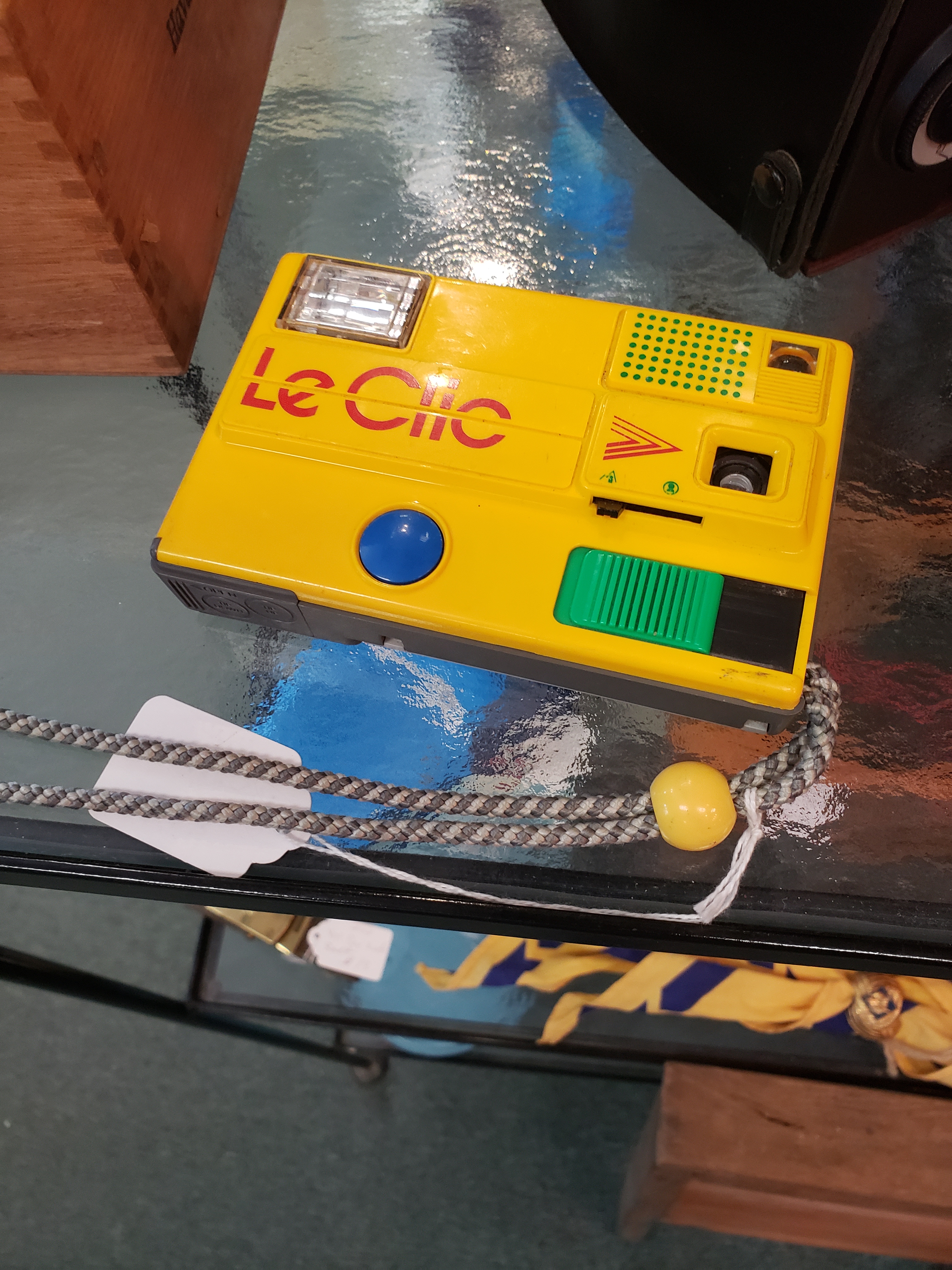
A few months ago, I was in one of those antique malls where people offload things that don’t qualify for an appearance on Antiques Roadshow but still think are worth more than a couple of bucks at a yard sale.  Among stacks of old Corningware, old country albums, military ephemera, and old guitars were a number of video games, baseball cards, toys, and other things I recognized, like a Le Clic, a disk film camera that came in an assortment of colors, all of which screamed Eighties.  These were more comforting than any meme or slapped-together neon wardrobe I’ve seen on a high schooler.  They felt lived in and I could picture some kid with a questionable haircut wearing an Ocean Pacific T-shirt once collecting and playing with all of them.

picture taken from eBay.

In the ten or fifteen minutes I spent in Tape World thirty years ago, I stuck to Eighties music. I’d like to say that a store called Tape World demanded an Eighties music purchase, it was because CDs were expensive and I wanted to get the most out of my $25.  The Fast Times at Ridgemont High soundtrack on CD was just enough to allow me to dive into a bargain bin and fish out The 80s Rock + On, a K-Tel produced 80s compilation cassette that would live in my Walkman or the tape deck of my Hyundai Excel until I offloaded my cassettes in the mid 2000s.  So yes, I did buy a tape at Tape World.

A Last Point in Elementary School

I wish I could have some profound way of starting this essay or even something or someone to tie it together, but the truth is that last week, I fell down one of hte more random Internet rabbit holes. Although I don’t know if this was a rabbit hole beacuse I was actually finding the answer to something and had some serendipity come along with it. Either way I think I am probably the only person in the world who does a fist pump the moment he discovers his sixth grade reading textbook on the Internet Archive.

The timing of my search for it does make sense, though. It was my last week of summer break and I didn’t have much to do on the day when it was pouring out, so I decided to look into some of the topics on the very large list of topics for possible blog posts and then remembered that years ago, I’d purchased a copy of The Mine of Lost Days by Marc Brandel. It’s a children’s/young adult novel published in 1975 that’s about a kid visiting relatives in Ireland and finding a group of children in a mine who are actually from more than 100 years ago. I remembered liking the book when I was a kid and had bought it because I had been looking for an answer to my very specific question: “What was that novel that was in Point?”

Point was a book published in 1982 as part of the Addison-Wesley Reading Program and at Lincoln Avenue Elementary was considered the highest level of reading book that you could hit. I was a high-achieving reader through all of elementary school, so I was pretty sure that as I was working my way through Green Salad Seasons in the fifth grade, I would wind up being one of those cool kids in sixth grade carrying around the elite reading book–and nothing says elite like a textbook with a unicorn on the cover. I probably had to cover it with a brown paper bag anyway.

Point‘s elite status lost a little bit of its luster when my sixth grade teacher, Ms. Frei, told us that everyone in the class was reading from it. Modern pedagogy says that this is probalby not a good idea (although to be fair, modern pedagogy gives you conflicting information on everything from instructional approach to whether or not you should put a poster on the wall), although now that I have been teaching for about 20 years, I see the case of having everyone read the same thing at the same time. Besides, she had us do a lot beyond simply trudge our way through a reading book story by story–there were book reports, research projects, and the occasional short story from a 1970 reading book called To Turn a Stone, which sounds like the most 1970 title for a reading book ever. I remember one story from that collection called “The Cave” where this kid who is in a gang befriends a homeless guy who lives in a cave and then his gang runs the guy off so they can use the cave for their new hideout. He winds up fighting the gang leader and getting kicked out, then makes a vow to join the other gang and get revenge. Between this and The Outsiders in the eighth grade, no wonder my generation was largely feral.

(more…)

Localized Earworms

So if you’ve been watching enough of the Paris Olympics, you’ve seen enough footage of Parisian life and culture and you’ve inevitably heard the “Can-Can.” I think it was used in the opening ceremonies, in fact. And we’re all familiar with it, right? We can even picture the dancers from a place like the Moulin Rouge doing their high kicks to the song. Well, unless you’re like me and every time you hear the tune, you hear: “Now, Shop Rite does the can can selling lots of brands of everything in … cans cans.”

Yes, I realize that I have a problem. But really, when you think of it, we all have commercials that get stuck in our heands, and I even talked about some of my most memorable ones back on episode 97 of the podcast. And on that episode, with the exception of Crazy Eddie and a Roy Rogers commercial, most of the commercials I talked about in that episode were for national brands. When it comes to this Shop Rite commercial, people in maybe five states in the Northeast/Mid-Atlantic part of the country are going to recognize that jingle, just like we also recognize character actor James Karen as “The PathMark guy”:

Again, who gets that except for people in the NY-NJ-CT Tri-State area?

(more…)

School-Aged Showoffs

So I’m sitting here on the second snow day of a week where I was supposed to return to teaching after a two-week winter break. I’m not exactly upset or stressed about any of that, to be honest, especially since I was lucky enough to not lose power and aside from two large branches that fell off of a tree, there’s been no huge damage to anything. Meanwhile in my closet sits the sweater I got for Christmas and was going to wear when we got back on Tuesday.

That was always a weird flex when we were in school, wasn’t it–showing off the new clothes you got for Christmas, as if you were reminding everyone of the prowess you displayed back in September when you rolled up to first period wearing what your parents had taken you to buy at the mall at the end of summer. At least, that is, if you were one of those kids who cared about such things that you had to make showing off a priority.

I’d say that this was at its worst when I was in junior high school. Oh sure, it was there in high school, college, and even during my time in the work force, but something about the insecurity everyone was feeling during those years combined with the Lord of the Flies-like pressure to come out on top (in what competition, I don’t know) meant that even when you didn’t realize it, you were constantly trying to be noticed. I’ve done enough of a post-mortem on those days to know that there were shirts I wore or stuff that I owned that I was hoping would help me score cool points (again, in what competition, I don’t know) but usually went unnoticed or got me laughed at.

So yeah, I wasn’t successful at showing off. But I was pretty observant about how people were successful at it, a combination of the right stuff, good timing, and nonchalant attitude. I could acquire the first, might learn the second, but would never have the third. Plus, they’d earned that attitude, emerging in fifth and sixth grade from the primordial sludge into the higher echelons of cliquedom while dorks like me were still completely clueless.

Sounds ridiculous? Well, you have to consider how they’d been practicing almost daily since we were kids. When I think back on my time in the public school system, especially in my hometown, Sayville, kids were always showing off, as my students used to say six or seven years ago, their swag. Let’s look at five of them.

The shirt of a “cool” brand with extra points if you were repping a “cool” local business. This started in late elementary school and wound its way through junior high school and may not have applied everywhere, but definitely was a big deal in a town like mine, which had a full-on Main Street and a number of successful local businesses that weren’t just gift shops and drug stores. Being that Sayville had one of the three large Fire Island Ferries terminals, we had shops that catered to the beachgoer. One was Summer Salt, which was a store that I guess you could call a “beachwear boutique” and that carried merchandise for just about everyone.

You’d see a few kids in the hall–usually girls–with pastel-colored Summer Salt T-shirts from time to time and they were enough to garner a momentary turn of the head, but I’d say that if you were walking around in a shirt you bought from Bunger–the skate and surf shop on Main Street–then you were a heck of a lot cooler. My hometown had a deep skateboarding and surfing community (that often overlapped) and I’m pretty sure that Bunger (or “Bunger’s” as we called it) was where they got their Vision Street Wear and Sex Wax T-shirts as well as the store’s own shirts, which at least a few people could be spotted in the hallways wearing. In fact, the store was so cool that I remember there was a painted mural on the wall of the purple side of the junior high cafeteria that showed a bunch of kids hanging out in front of the store’s entrance. That’s cache.

While Summer Salt went out of business years ago, Bunger is still in town, so for all I know there are kids walking the halls of Sayville Middle School (after 30 years, it’s still weird calling it that) in Bunger shirts, perhaps wearing their parents’ vintage ones from the early Nineties.

The plastic Gap bag. Image from The Guardian

A Gap bag for your gym or swim clothes. Keeping with clothing, Gap was ubiquitous by the time I started junior high school in the fall of 1989 and I don’t think I’d stop shopping there until maybe the early 2000s. And man, Gap antique washed jeans are still my favorite jeans of all time. ANYWAY, I’m not talking about Gap clothes here because tons of people went to the Sun Vet, South Shore, or Smith Haven malls for school clothes; I’m talking about the navy-colored plastic drawstring bag with “Gap” on the front. On the days when you had to bring a change of clothes to school–you were switching out the stank-nasty mess that was in your gym locker or your gym class was at the junior high pool that day (yes, we had a pool at the junior high and there was a swimming unit in gym class … it’s still too traumatic for me to write about)–you peacocked a little by bringing those clothes in one of these bags.

And by “little”, I mean that this was a minor flex, a reminder that you fit in, even though the reason you brought the bag with you was because your parents had the bag lying around the house and it was sturdy enough to endure being dragged from classroom to classroom while containing a damp bathing suit and a towel. Plus, you could tell that a person walking around school with a Gap bag was trying to show off by the way they carried it, making it incredibly obvious. And yet? That shit worked for some people (read: people who weren’t me).

A 1980s-era Friendly’s bag. The one on the left is the one that I remember the most.

A Friendly’s bag for your lunch. Speaking of bags that were flexes, this went as far back as elementary school in the Eighties. Sayville has a Friendly’s and that place has been in business for at least the 44 years I’ve been alive, and unless that company completely goes under, I can’t imagine it ever closing. Too many post-school function sundaes were eaten there in my lifetime and I’ve had more than a few fateful meals with friends and girlfriends there (when, that is, we weren’t at a diner). But back in the day before the chain’s ice cream was available in supermarket freezer sections, Friendly’s (which was still just “Friendly”) did a steady take-out business. You could walk in, grab a rectangular half gallon from the self-serve freezer, pay, and leave. Sometimes, your parents even sprung for hot fudge (which was freaking amazing). When they bought the ice cream, the person behind the counter put it in a thick paper bag with “Friendly” on front. And since that ice cream was going in the freezer when you returned home, you could ask your parents to pack your next day’s lunch in the Friendly’s bag and not your lunchbox. Oh sure, that Voltron lunchbox was mint, but a Friendly’s bag? People noticed.

The four step guide to drawing the “Cool S”. Image from Wikipedia.

Drawing the “S” correctly. You know the “S.” We all know the “S.” Believe it or not, even my students know the “S.” Now, it’s not really hard to draw the “S”, but you’d be surprised at how easy it was to screw up, so that meant the really cool people could draw it really well.

This drawing is an old graffiti-style S that was, at one point, incorrectly attributed to the Stussy brand (and some will tell you was a Stussy logo at one point, although I think that’s some sort of Berenstein/stain Bears Mandela Effect stuff), and was everywhere throughout the country’s schools back in the day. That’s pretty amazing considering that the Internet didn’t exist and it wasn’t something in a television show’s logo. It was just … all over the place.

That being said, it was really popular to draw on notebooks and binders where I grew up because the name of the town was Sayville and people would basically draw the “S” and “ayville” after it.

Because of course we did.

I think the “S” was passé by the time high school rolled around, and I saw more people writing the logos of bands they were into on notebooks, desks, or lockers than the ubiquitous character. But I’m sure that if you asked anyone from my generation to draw it from memory, they could do it in a heartbeat.

The Bic four-color pen. Need I say more? If you had this in elementary school, you were a god. Bic introduced this pen–a retractable pen where you could choose between blue, black, green, and red–in 1970 and it was still going strong through the Eighties (and still is–you can buy them on Amazon). These were especially powerful before the fourth grade when we were mostly using pencils to complete our work and hadn’t transitioned to pens.

The GOAT of pens. Hands down.

Someone having this in class was as if they’d brought a toy to school. Everyone wanted to try it. Furthermore, it brought a new dimension to pen fidgeting because you weren’t just clicking the pen on and off, you were clicking between four colors. And like I said, we were all still using pencils, so having a pen in, like, the third grade was so cool.

These may not exactly be Lacoste sweaters, Gucci bags or rolling up to the first day of your senior year in a brand-new BMW, but they definitely did their job, and if I remember, I’ll try and notice what my kids are doing.

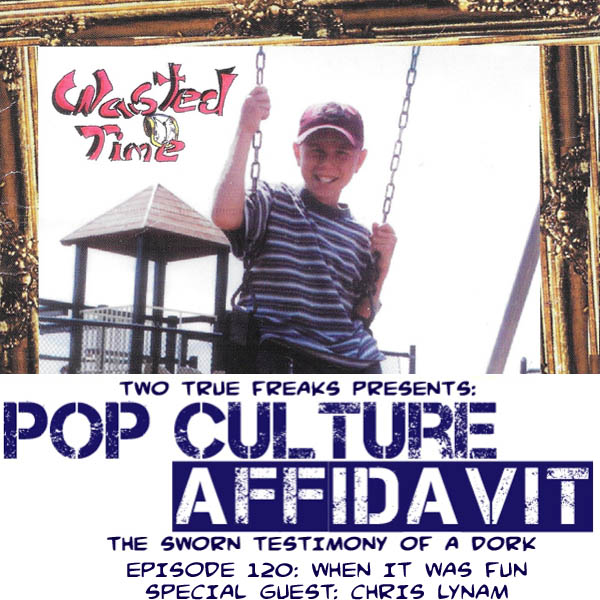
Pop Culture Affidavit Episode 120: When It Was Fun

In 1996, the Sayville, NY-based punk band Wasted Time released their only album, “When It Was Fun.” To celebrate the 25th anniversary of the CD’s release, I’m interviewing the lead singer (and one of my oldest friends), Chris Lynam. We talk about the Long Island music scene of the mid-’90s, what made him want to play music, the band’s history, and the music he’s making now.

You can listen here:

Apple Podcasts:  Pop Culture Affidavit

Direct Download 

Pop Culture Affidavit podcast page

Don’t forget that if you’d like to leave feedback, you can email me at popcultureaffidavit@gmail.com!

And here are some extras for you …

(more…)

Pop Culture Affidavit Episode 113: Taped Off the Radio

This time around, I’m back to looking at my history with music by going deep into the early 1990s and my early teens, recollecting those nights I spent in my room listening to the radio and rushing to hit record so that I wouldn’t have to wait for the station to play that Brian May song.  I talk about the stations I grew up listening to, the tapes I made, my unfortunate music choices, and how I learned about what was popular (and what wasn’t) before I finally got my own CD player.

You can listen here:

Apple Podcasts:  Pop Culture Affidavit

Direct Download 

Pop Culture Affidavit podcast page

So here’s some extras for you …

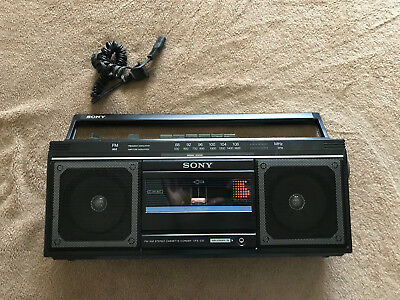
So the picture above isn’t of my exact radio, but it is the radio I owned and used to tape all of those songs. It’s the Sony CFS-230 cassette-corder boombox. I got this for either my birthday or Christmas sometime in the late 1980s and it was eventually replaced with a cassette/CD player that I received for my fifteenth birthday.

And here is the Spotify playlist that includes the songs I featured in the episode. Enjoy!

Raiders!, Teen Movie Dreams and The Legend of Kung Fool

Raiders posterI can’t get the image of Eric Zala begging his boss for another day off out of my head.  It happens about two-thirds of the way through 2015’s Raiders!: The Story of the Greatest Fan Film Ever Made, which chronicles his efforts to reunite his childhood friends–Chris Strompolos and Jayson Lamb–so they can recreate the aistrip scene from Raiders of the Lost Ark where Indiana Jones fights a Nazi brute and wins when said brute is chopped up by a plane’s propeller.  It’s the only scene that he and his friends never filmed when they were teenagers and put together a shot-for-shot adaptation of the movie.  At this point in the film, Eric is woefully behind schedule due to constant rain storms, and we hear his boss, Alex, berating him for wanting just one more day off and he sits in his trailer looking like a kid who is being chastized.

For a split second, my thoughts line up with the frustration that’s boiling over to anger coming from Alex–this guy is middle-aged, has a wife and kids, and his responsibilities to them should take priority over this project.  Yeah, it’s cool that he got enough Kickstarter funding to put all of this together, but shouldn’t he just grow up already?  But then Alex gives Eric the day off, and Eric’s wife comforts him by telling him that what is important is that he is doing something that makes him happy.  It’s the moment in the film that puts me not only back on board with him but makes me actively root for him to finish because I’m thinking of myself, my friends, and my own abandoned cinematic efforts.

I was bitten by the “filmmaking bug” at an early age, evidenced by how I put down “movie director” as the answer to “What do you want to be when you grow up?” question on my first grade class survey.  I’d been watching Star Wars on a loop for at least the past year, and while I played on the playground as Luke Skywalker, I wanted to be George Lucas.  And while my interests when it came to play would travel through various iconic 1980s toy lines, the creative streak never left–I wrote short stories, thought of ideas for movies, and my friend Tom and I even conceived a Miami Vice-esque comic book series called Drugbust that got as far as a plot outline, a few cover sketches and a finished splash page.  It was enough to keep my young imagination active and sated, at least until Christmas of 1987 when my dad bought the family a video camera.

panasonic omnimovie ad

A print ad for the Panisconic Omnimovie camcorder circa late 1987/early 1988.

Retailing for somewhere close to $1000 (based on crack research–I found an ad for a similar model that had a price of $898), the Panasonic Omimovie camcorder was not a small purchase by any means.  It signaled that you had the money to blow on such an expensive toy, and was a literally hefty purchase, as this was a shoulder-mounted camcorder that took full-sized VHS tapes.  I’d learned how to use one the previous summer as part of an enrichment class called “video volunteers” and I’d like to think that’s maybe why my dad let my friends and I use it almost right away–although he did tell us that it “had a drop ratio of zero” as a way to remind us to be careful.  To this day, I have no idea if he was using any of that terminology correctly, but the message did get across.

At first, we made music videos, the best of which was a two-hour concert video by our fake band, The Terminators. Tom, my sister, and I would use G.I. Joe airplanes (specifically, the Sky Striker and the Cobra Night Raven) as guitars and a croquet mallet as a microphone with a stand while lip syncing to Bon Jovi, Whitesnake, and other hits of the mid-Eighties, getting the song onto the tape by placing the camera on the washing machine and putting my boom box next to it.  That tape featured a lot of Tom playing guitar and looking cool in a denim jacket and spiked hair, me melodramatically singing while wearing military camo pants and a Naval Academy sweatshirt, my sister looking happy that she wasn’t chased out of the room, and several shots of someone running toward the camera to turn it off so that we could cue up the next song.  We made a few more and then gave up fun with the video camera because the novelty wore off, until the eighth grade, which is when I attempted something more ambitious:  a feature film called Kung Fool & Company.

I can’t recall where the title or the character name came from, although I’m pretty sure it is because we watched Big Trouble in Little China so many times, but between that and the number of hyper-violent action flicks we were renting on a regular basis, I had enough to write a full-length screenplay about our hero going on a full-fledged revenge spree after his best friend is killed by the mafia.  It had roles for a number of my friends, and when I finished it, I roped them into helping me out, even though none of us had any idea of how we were going to shoot a gritty action flick in our quiet suburb.  I guess we thought we’d figure that out later.

We shot an opening credits sequence and two scenes.  The opening credits were handwritten on paper and filmed by placing them on a small easel, then zooming in to try and avoid getting my hand in the shot while I removed each page (and even then, you probably could have seen my fingers) while music I’d taped off of the Ninja Gaiden II video game played behind me on the same boom box used for our basement concert.  That, by the way, put the budget at the $1.99 it cost for me to rent the video game, a cost that would not get any higher.

The two scenes were the first two scenes of the screenplay, because it wouldn’t be until a few years later that I learned that movies were shot out of sequence, and even if I did know that I didn’t have access to editing equipment.  In scene one, my friend Rich played a mob boss who killed the best friend character, who was played by my friend John.  We shot the scene at the desk in my bedroom during the day and created atmosphere by turning all of the lights off and letting the sunlight shine through the red curtains, something I think was Rich’s idea and that we were all proud of because it seemed really cinematic when we were watching it back.  The second scene was not as cool–it was me as the future Kung Fool standing at my friend’s grave, which was really a cutting board placed in my parents’ backyard flower bed, and vowing vengeance.  I remember that the music we were playing drowned me out so much you couldn’t hear my lines.

I think we were supposed to shoot a training scene that would have taken place in a foreign country like Japan or China, but how we figured that we would duplicate that at a place where we could go to on our bikes is lost on me because we never shot the scene and abandoned the project in favor of whatever was going on in the world of professional wrestling at the time.  We would eventually get our first taste of shows like Saturday Night Live and In Living Color and shoot comedy sketches and return to actual attempts at music videos, and in between ninth and tenth grades, my friend Chris and I did complete a short film about cops busting drug dealers when I visited him in Florida for a week, this time with songs off of the Classic Queen compilation album providing the soundtrack.

At the heart of Raiders! is a story between three childhood friends, and shooting the airstrip scene is as much a reunion and patching up of a broken friendship as it is about getting the shot.  Eric, Chris, Jayson have a lot of baggage between them, with Jayson feeling like he was pushed out of the project before it was finished, and the friendship between Eric and Chris deteriorating by the end of high school and beyond.  As we see how they were able to not only finish the film but rent out a movie theater to show it (with local news coverage to boot), we see the tension between them grow and Eric’s social ineptitude along with Chris’s inner demons more or less destroy it.

I personally didn’t have any epic fallout with the friends involved in any of our movies–some of us stayed friends all the way through the end of high school while others just drifted to other groups.  I’m sure I was a dick to a few of them or them to me at one point or another, but it was obviously not enough for me to recall how.  It was just the drift that comes with getting older.  Plus, as we went through high school, my interest in films shifted to Eighties movies and I pretty much spent the back half of my teen years setting George Lucas aside for Cameron Crowe, with Say Anything … as my Raiders.  And I got my chance at that in the form of a humanities class project during the spring of my senior year.

I’d taken creative writing during the fall semester and that’s where I wrote a story about having the chance to kiss a girl but never actually taking it.  While structured as fiction, it was based on a moment where, after hanging out with my next door neighbor Elizabeth (on whom I had a massive crush–and no, that’s not her real name), we were saying goodnight and there was one of those moments with a tension-filled pause.  You know, the ones that have some sort of music swell or pop song in the background of the movie because the audience is being told to wait for a great kiss.  Sadly, this was reality, no music was playing, and I simply said goodnight and walked home.

Now, reality says and would later confirm that I actually had no shot–she’d friendzoned me pretty much from the moment we met–and while I still pined, I managed to muster up what maturity I had to not pursue her, because it was cool to have a friend.  But the moment became a great idea for a story and that got turned into a short film that I was not only able to shoot, but shoot out of sequence and edit using our high school’s video editing booth.

The premise of the story is that we see a couple on a date and it’s being narrated via the guy’s inner monologue, a monologue that starts off with the voice of a coach and then devolves into frustrated and angry yelling at our main character.  In the film, I played both guy and narrator, with the date scenes being shot at a nearby park and the narration in my basement using the same washing machine-as-tripod setup that I employed for lip syncing several years prior.  Originally, the girl in the story was going to be played by my then-girlfriend, but she didn’t want to be on camera (in retrospect, I don’t blame her) and my sister was supposed to be the cinematographer.  They switched places and when I showed the completed film in class, this made one of the girls in my class incredibly uncomfortable–even though, you know, no on-screen kiss happened.

That was the last time I used the camera to shoot, unless you count my senior prom, when my friends and I managed to commandeer it and take it with us to the dance after my parents were done shooting the pre-prom stuff.  I’d go on to make a college choice that was regrettable in some ways, as while I do think I learned how to be a better writer, I often found myself overreaching in my efforts to seem “literary” in class while the stuff I really wanted to write was relegated to my student newspaper column or short story and novel drafts that got tucked away on my hard drive and taken out only when I didn’t have schoolwork.  I don’t have the tapes anymore, either–they were taped over or thrown away years ago (well, except for the prom video).

So I watched Raiders!  and found myself surprised that I wasn’t filled with any sort of midlife crisis anger or regret about not standing my ground and pursuing the creative endeavors that anyone around me would have called distractions.  If anything, I rooted for Eric and his friends, sharing in the hopeful glee that they managed to still have the sense of wonder that so many of us often lose to cynicism.

Somewhere Else: Roy Rogers

A quick note:  This was originally written in December 2002 on my old site “Inane Crap” as part of an occasional series called “Somewhere Else”, which detailed random road trips and travels.  Since I mentioned this essay on the latest episode of the podcast, I decided to reprint it here.  It hasn’t been changed except for some proofreading edits.

-Tom

royrogers

The interior of the Roy Rogers at the Indian Castle Service Plaza on the New York State Thruway.  Image courtesy of Wikipedia.

Soundtrack for this Trip:  Counting Crows, “Hard Candy” and Jimmy Eat World, “A Praise Chorus”

Somewhere else? Well yeah. The idea was that having a good part of the day to myself, I would take off for a while and journal my experience. I have spent a lot of time reading other people’s accounts of their travels and while I won’t be driving from one end of the country to the other any time soon, a day trip is just as good. Do you have an idea of somewhere I should go that’s not too far from where I am? Contact me.

Tuesday, December 24, 2002
11:00 a.m.: Sayville, New York

“I didn’t think that she returned it,
We left New York in a whirl …”

So I’ve promised that I would go to Best Buy with Nancy if she went on this little mini-road trip with me. After all, my parents are in need of a new universal remote, seeing that years of throwing the current one across the room at one another have caused it to stop working. Hey, I know I should have been less lazy throughout the years and maybe walked the remote over to the person on the other couch, but that’s a moot point now. Besides, shit happens.

Anyway, one of the great myths about Long Island is that there are no Roy Rogers restaurants, something anyone from the area will tell you with an authoritative tone, even though “Long Island” to them probably doesn’t extend east of Patchogue. I believed it myself for years, until last December when Amanda and I were driving to Smith Point and I passed the Roy Rogers in Shirley. It was kind of like a mirage, something I couldn’t believe was there, because I hadn’t been on William Floyd Parkway in Shirley for years, not since I used to go to the beach with my grandparents in their camper. The Roy Rogers was there then, and still is.

There used to be a lot more of these restaurants on Long Island, but I believe the corporate ownership of Roy Rogers’ changing hands over the last 10 or 15 years has led to their being eradicated throughout the northeast, with the exception of turnpike, thruway, and interstate rest stops, where the restaurant has taken on a very mythic role, at least for wayward Long Islanders like myself. In college, the highlight of driving home from Baltimore was stopping at a Roy’s and having a cheeseburger, fries, and two biscuits.

Of course, I’d end up stopping again further up the road because let’s face it–greasy buttermilk biscuits don’t necessarily make for good driving food. But that didn’t matter, because since the Roy’s at the corner of Johnson Avenue and Sunrise Highway closed and their burgers and biscuits became only available on the highway, the restaurant became a must-stop destination. I’m apt to say that Roy Rogers is the Howard Johnson’s of my generation–a fast fix, a good meal, and one that is slowly disappearing from our nation’s highways.

As we head down Sunrise Highway, I am also wondering if my first visit to a non-turnpike Roy Rogers in a few years isn’t going to be one of those bad nostalgia letdowns. I mean, I have great memories of Roy’s in Sayville from when I was in elementary school. Tom Hackett and I would get cheeseburgers and load them up with so many fixins that we could barely get our mouths around what we were calling “Buster Burgers.” We also once had a conversation about fried chicken–how we preferred breasts to legs–that probably could have been misinterpreted by anyone listening in if we weren’t 12 years old. So my question during this trip, of course, is will my memories of the place be soured by what is more than likely sub par fast food?

RoyRogers2

Foreground: my sister, eating a chicken sandwich.  Background:  my 1998 Honda Civic.

11:30 a.m., Shirley, New York

“Someone is going to ask you what it’s all about
Stick around, nostalgia won’t let you down.”

Of course, my sister finds it hilarious that I want to go to a Roy Rogers with her and take pictures of her eating a chicken sandwich. However, that’s because she’s one of maybe five people in this world who are as odd as I am. For the record, I get a cheeseburger but opted to take it plain because I am craving French fries more than I am craving burger. And I don’t go for the biscuits because being that this is the first fast food burger I’ve eaten since March of 2001, I don’t want to make myself too sick. Besides, I’m just here for the ambiance.

And what ambiance it is. The deep red and tan walls, the western-themed paintings, the garbage can with “Thanks” carved into its swinging door, the serve-yourself soda machine with Fanta root beer, and the fixins bar. Oh, the fixins bar. That’s what always made Roy Rogers so great, right? You could add as many pieces of lettuce, tomato, pickles, and onions as you wanted, as well as ketchup, mayo, mustard, and horseradish. You could very well make the ultimate burger out of something that was probably two steps above the late, lamented Marriott Burger of my alma mater.

Nancy and I finish our food and head for westbound Sunrise Highway so we can stand in line at Best Buy for 10 minutes and run into one of our neighbors on the way through the parking lot. We return to Sayville at around 12:30, and considering we’ve gone shopping on Christmas Eve, that’s not too bad a trip and I can rest happily. Well, at least until I have the desire to go somewhere else.

roys