Thirty years ago, the New York Mets beat the Boston Red Sox in the 1986 World Series. For those of us who are die-hard Mets fans, it was an experience that we’ll never forget, and one that we have savored since then, as we patiently (and sometimes even painfully) wait for the Amazins to hoist the World Series trophy once more. Join me and my guest Paul Spataro as we look back on the 1986 season, NLCS, and World Series and share our memories of what it was like to be a kid (in my case) and be at some of the greatest games in Mets history (like Paul).
PLUS … stay through to the end of the show for an exciting announcement about a BRAND NEW PODCAST!!!
It’s time to throw your Sublime CD into the stereo of your teal Mustang and then do the Macarena while downing some Molson Ice because we’re going back to the summer of 1996. Join me and my special guest–my wife, Amanda–as we take a look at the lineup from the 1996 HFStival and then discuss the music of that summer.
Rain falls to the sidewalk
beside a lonely crowded roadside diner,
where I’m wondering what it was about her
that could have stopped the world for so long.
The exact handwriting, shape of numbers–
lines a paper napkin
with her phone number
in faded gray pencil and that smudge
always a backdrop for conversation.
And smiling.
I remember smiling
and she did the same
even though the music stopped
and the words were erased
by the rain ticking off my umbrella
into the night.
I wrote that poem for a creative writing class. in the fall of 1997. It’s not a particularly great poem, nor is it based on anything that actually happened or anyone I know. I am pretty sure that the inspiration was more along the lines of an imaginary idea, a fictional story where two people enter a diner and one leaves heartbroken, the only thing left to show for it is something scribbled on a napkin–notes, a phone number, maybe something much deeper. It didn’t matter.
But the geographical inspiration was very real. Sitting on Main Street not too far from the intersection with Greene Avenue, the Sayville Modern Diner was just about everything you would expect from a restaurant with the word “diner” in its name–a greasy spoon filled with vinyl-covered booths, the sounds of silverware clanking on thick earthenware dishes, and the smells of a grill that had seen countless omelets and cheeseburgers. It was not haute cuisine by any means and even though the menu was pretty extensive, any time I was in there, I ordered one of two things: some sort of omelet with a toasted bagel, orange juice, and coffee; or a cheeseburger deluxe. Well, that’s not 100% accurate because there were those times when I was feeling extra fancy and got a hot open turkey sandwich, but really it was those two items, which are diner standards.
The Sayville Modern Diner circa 1996. Taken from a 1997 calendar. Photo by Pat Link.
While breakfast after midnight is something you can get in quite a number of places outside Long Island (I have a number of memories involving late-night runs to Denny’s outside of Baltimore), I have to say that there are few if any places without the word “diner” in their name that really know what a cheeseburger deluxe is. And yes, there are better hamburgers out there, burgers with higher quality ingredients and all sorts of creative sauces. I love those places, don’t get me wrong, but there is something about the simple perfection of a single patty on a bun served with fries, onion rings, and a pickle (with the option of topping it with lettuce, tomato, and onions). You don’t need anything else.
Of course, the food at a place like the Modern Diner is not the reason you go to a place like the Modern Diner. I’ve noticed that diner culture has been fetishized over the last few years because of the culinary hate crime that is Guy Fieri, but turn away from his shtick and walk into a diner and you find something incredibly genuine that cannot be mass-produced. Oh, it’s been tried–I’m sure there are still a few Silver Diner restaurants left at local shopping malls, but that place felt more like bad theme park kitsch as opposed to an actual diner.
That’s because a real diner feels worn in. It’s the type of place where you can go in, get a booth, and aside from getting food and refills, you can be ignored. You can allow yourself to disappear into that booth as long as possible. The Modern Diner, when I was a kid, had this brown and gold decor that clearly came from the 1970s and at some point in the Eighties, they remodeled with the same dull magenta color you’d find in your average doctor’s office waiting room. I’m trying to remember if they remodeled one more time and for some reason keep picturing a seafoam green motif, but I’m not sure. Decor aside, if I was with my friends, those booths were the entire world for an hour or two.
Sometimes, the conversations were memorable; most of the time they were complete mundane. Looking back, I feel that time spent there was our part of a ritual that had existed since time immemorial. You’d make plans to go out and no matter what you did that night, you’d wind up at the diner. Billy Joel put Brenda and Eddie there. Garry Marshall had The Fonz set up shop in the bathroom. George Lucas had Steve Bolander drown his sorrows in a vinyl-cushioned booth. Barry Levinson wrote an entire movie called Diner that remains one of the all-time great friendship films. Even when I (badly) wrote teenage characters, I’d have them hang out at the greasy spoon, giving them a moment of pause in a hectic plot or providing a place where moments of truth were had. They are moments of importance, or in the case of the poem above, moments that are fleeting. It’s something that is easy to recognize yet tough to capture in exactly the right way.
The Monday before this post went live, the Sayville Modern Diner served its last meal. The owner, a former classmate of mine, apparently decided to sell, leaving the diner to be turned into a sushi/Asian fusion restaurant. While I hadn’t been there in nearly a decade, I can definitely say I will miss it, even though there are other diners in town and other diners on Long Island, meaning that the idea of the diner will continue even though this one has closed its doors.
It’s the 50th episode of Pop Culture Affidavit! For this special episode, I take a look back twenty years to the year I graduated from high school. Along the way, I look at how senior year of high school is represented in movies. It includes stops at, among other things, American Pie, Fast Times at Ridgemont High, Can’t Buy Me Love, and Paper Towns as well as a host of personal memories about my own senior year of high school (which ended on June 25, 1995). Was high school the best time of my life? Was it a waking nightmare? Was it a little bit of both? You’ll have to listen to find out.
The cover I made for “Past Lives and Long-Lost Friends,” which I originally burned onto two CDs. The idea for the cover came from a timeline feature in my high school yearbooks.
I don’t know if I realized it at the time, but following up a song by The Weepies called “Can’t Go Back Now” with “Summer, Highland Falls” is kind of a definite statement. The latter’s first lines are, “They say these are not the best of times/they’re the only times I’ve ever known.” While I can’t confirm this, I am pretty sure I wrote that in a friend’s yearbook at the end of my senior year (or at least I was thinking of it). It has always been one of my favorite songs and at the time I graduated high school, it fully encapsulated what I was feeling.
I’m pretty sure that is why it wound up on a playlist I made back in 2010 called “Past Lives and Long Lost Friends.” Silly as it sounds, I put it together because at the time, I was fifteen years away from that day in late June of 1995 and the mix tape, at the time I was a teenager, was my preferred form of artistic expression. if you were a girl I was dating (or a friend on whom I was crushing), you more than likely wound up with a 120-minute Maxell normal bias cassette that may or may not have had a custom label created using Arts & Letters, an ancient Windows 3.0 graphic design program. Now, I’m not sure how many of those girls kept my tapes. My wife did, but I think that’s because she never emptied them out of her car (a car, by the way, that I now drive to work every day). But the old girlfriend whose relationship with me ended in utter disaster? She probably torched them all the moment after I gave her one final goodbye over the phone (not my idea, mind you; she forced my hand). And some of those other girls? Part of me hopes that a copy of “The Last Worthless Mix Tape” is floating out there, playing in the old tape deck of someone who is feeling sentimental.
Which brings me to this five-year-old playlist that’s still on my iPod. Like I said, I was hitting the fifteen-year mark and was feeling sentimental, so I began dragging and dropping songs into a playlist. The phrase “long-lost friend” had been bouncing around my head for a while as had the idea of my having led a past life, or everyone I know having led a past life. Because when you think about it, the people you are around on a daily basis have stories that are bigger than the one they have with you. Or maybe I just notice this because it’s the curse of the writer’s mentality. But the idea that everyone is interesting in a way, that there is always something to find out about them, is fascinating.
It seems completely pretentious to me try and encapsulate that in a mix, and looking at the song list, it probably could be at least five songs shorter. It still would fit on a 120-minute cassette, but there are too many anthemic songs of youthful defiance (“We’ll Inherit The Earth,” “Death or Glory”) or aging punk anthems (“Scattered,” “I Was a Teenage Anarchist”) and the middle drags on through some very slow and soft folk pieces that don’t hold up (“See You Later, See You Soon,” “This is Me”). But it was good enough to earn “permanent playlist” status. Either that, or I was just too lazy to delete it, which is probably the more likely explanation as to why it has spent five years on my iPod.
Mix tapes seem to be this thing that is a part of my youth, whereas playlists are something you throw together because you want to listen to a variety of songs, often with the same rhythm or tone. I make workout playlists (admittedly, I probably should start working out more often), Christmas music playlists, dinner music playlists, and even a breakfast playlist that is filled with French jazz and other brunchy music. It’s all very adult because it serves a practical purpose, an extension of the tapes called “Tom’s Crap” that I used to make so that I had something to listen to on my Walkman or in my car. Part of me shrugs at this, but part of me is saddened.
There was a point in my life where everything had meaning. If I gave you a tape, it was because I wanted to say something or introduce you to something. And no matter how crappy that tape was–and trust me, some of those tapes were crappy–I thought it was important. “Past Lives and Long Lost Friends” was an attempt at making something important like that and also an attempt to hold on to the self-importance that comes with “meaning,” as if I am attempting to dispute the statement that Ally Sheedy so boldly makes in The Breakfast Club: “When you grow up, your heart dies.”
At seventeen, I believed her; at 37, I’ve come to realize she’s wrong. You simply turn your focus elsewhere. Adulthood is priorities and responsibility. It’s not that I don’t want to sit and contemplate an entire album for an hour; it’s just that I don’t always have the time. My geeking out happens amidst a flurry of multitasking and when I do get those moments to contemplate, I usually fall asleep in front of the television.
I’ve heard Billy Joel explain the meaning of “Summer, Highland Falls” as hitting that point in his life where he was starting to see the world for what its complexities. Much of that playlist, if you look at several of the songs, is a similar contemplation but I don’t know if I was contemplating graduating high school as much as I was coming to terms with the onset of middle age. At seventeen, I would have never put “Late for the Sky” by Jackson Browne on a mix tape (granted, I’m pretty sure that “Running on Empty” and “Somebody’s Baby” were the only Jackson Browne songs I knew), nor would I have considered Paul Simon essential listening. If I was being contemplative or sentimental, I would have chosen 10,000 Maniacs, but mostly I would have gone for the bombast of Queen.
To be honest, I have thought about making a Twenty Years On mix. I can’t decide if I would go for nostalgia or reflection, though. Twenty years kind of dictates that I should throw together a collection of the Pearl Jam, Green Day, Guns N’ Roses, Metallica, Queen, Led Zeppelin, Bruce Springsteen, and Billy Joel that I listened to in a Big Chill soundtrack sort of way. Being reflective would be more of what I did five years ago, which might be belaboring the point.
“Summer, Highland Falls” ends with a few lines that have always stuck with me:
How thoughtlessly we dissipate our energies
Perhaps we don’t fulfill each other’s fantasies
And as we stand upon the ledges of our lives
With our respective similarities
It’s either sadness or euphoria
It’s a final statement worth a close examination. If it is, as he says, the a moment of realizing that you’re getting older, it’s a perfect expression of that realization. There’s no violent anger here, just acceptance and resignation. Perhaps, even, there’s a bit of maturity. Place this in the larger context of, say, looking at one’s own adulthood or having a moment of forced nostalgia like the anniversary of graduating high school, and the same ambiguity exists. The bloom comes off the rose pretty easily when you really start thinking about all of it; thankfully, there are mix tapes, CDs, and playlists to help guide the way.
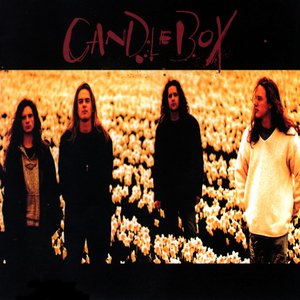
There’s a running joke that Michael Bailey (of Views From the Longbox fame) and I have going about us having “the same childhood”–being close in age and having grown up being able to watch a lot of the same TV channels, he and I have a lot of shared experiences when it comes to entertainment from the 1980s and 1990s. What makes this coincidence possibly more weird than funny, however, is that we both have the same mutant power. Both Mike and I have the ability to remember exactly where we were and what we were doing when we first saw a particular movie, heard a certain song, read a certain comic book, or encountered a number of other pieces of popular culture. I can take it one step further and tell you exactly where I was and what I was doing when my mutant power manifested itself. It was the day after Thanksgiving in 1994 and I was in my friend Vanessa’s kitchen. My girlfriend was breaking up with me over the phone and in the background of our conversation was Candlebox’s “Far Behind.”
Written as a tribute to Andrew Wood, the late singer of the seminal Seattle band Mother Love Bone, “Far Behind” is arguably the most well-known song off of Candlebox’s 1993 self-titled album. It was released on January 25, 1994 and peaked at #18 on the Billboard Hot 100, although it’s important to note that it was on the charts for most of the year and by the end of November 1994 was still in the top 40, having dropped to #35. But chart position for rock in 1994 wasn’t terribly important to those of us who were living on a steady diet of any band that we thought was quality in the wake of the coming of Nirvana and Pearl Jam during my freshman and sophomore years of high school, and since Candlebox sounded similar to Pearl Jam, Soundgarden, and Alice in Chains, I heard songs like “You” (their first single) and “Far Behind” and picked up the album.
I honestly had no idea that this was a tribute song. In fact, I had no idea who Andrew Wood was back in 1994 and my only experience with Mother Love Bone was the song “Chole Dancer/Crown of Thorns,” which was on the Singles soundtrack. I figured it was a typical-for-the-era breakup song/torch song, and to be honest, the events surrounding the day after Thanksgiving 1994 definitely contributed to that, especially since I took that moment very hard and it would take the better part of a year for she and I to get around to being friends without “We had once gone out and you broke up with me and I’m still pissed” being the elephant in the room. And that had more than anything to do with my immaturity–even though we only went out for a couple of weeks, she was the first girl I’d ever really dated and therefore this was my first real breakup. So “Far Behind” became its theme song and every time I heard it, I’d picture myself hanging out with Vanessa, who was home on break from college, calling up the girlfriend, and hearing her awkwardly ramble her way through a breakup that ended with “Well, I think we should just be friends.” It got to the point where it was like I was following some sort of masochistic ritual, and when I signed her yearbook that June I drove home the point by quoting the opening lines: “Well maybe I didn’t mean to treat you bad, but I did it anyway.” Because, you know, I was a senior in high school but when it came to girls I sometimes felt like I was still in junior high.
Despite all that, she and I are still friends and in a weird sort of way, this is a belated thank-you note to her because most importantly, that breakup was where memories of certain events or people in my life really began to be associated with something in popular culture and I began to think along the lines of “I remember when I first saw/heard this.” I hadn’t listened to “Far Behind” in nearly twenty years before watching the video on YouTube–a video I had, by the way, never seen before because I didn’t have cable in high school, and one that is so very Nineties (seriously, the empty pool, the color scheme, the guy walking around aimlessly, the outfits … this isn’t a music video, it’s an artifact in a Nineties museum)–and that’s not because of my memories but more because of my changing tastes in music (unlike Live’s Throwing Copper which I refused to listen to for years because of a girl and now refuse to listen to because Live simply sucks). Hearing it now, I can still see the wood paneling in Vanessa’s house and remember our conversations about David Letterman before picking up her phone and having that conversation and having my stomach drop, a moment that at the time was painful but eventually became almost bittersweet because of its normalcy and innocence.
I have to admit that I went in to re-watching With Honors with a feeling that I remember it being a lot better than it actually was. This tends to happen, I guess, when you don’t watch a movie for the better part of twenty years and you only wanted to see it because you had (and still kind of have) a thing for Moira Kelly. It’s honestly not that good. Okay, that makes it sounds worse than it is, but it’s not exactly The Big Chill or anything like that.
Released in April 1994, With Honors is the feature film directorial debut of Alex Kehishian, whose best-known work is one of the best rock documentaries of all time, the 1990 Madonna film Truth or Dare. It managed to gross a little bit more than $20 million at the box office and finished 69th overall for the year, which isn’t exactly flop material but isn’t a box-office success either. But quality of a movie is never really measured in receipts and my original attraction to the travails of Harvard student Montgomery “Monty” Kessler (Brendan Fraser) and his friends was similar to my attraction to the gang from St. Elmo’s Fire–a weird desire to watch people who were slightly older than me so I could possibly see if that’s what my life would be like.
Which sounds completely ridiculous, especially considering I saw this film in November 1994 when it had come out on video and I was seventeen years old at the time. Watching films about people older than in the hopes that you’ll get some sort of weird fantasy fulfillment out of it is something you do when you’re twelve or thirteen, not on the verge of graduating high school; then again, I was a late bloomer. But there is something about the setting of Harvard (even though quite a bit of the movie wasn’t filmed there) and the house that Monty shares with his friends that fills you with a wistful sort of feeling of either wanting to live in the place or wanting to go back to a time when you were a starving student.
But I’m getting ahead of myself and ahead of the plot, because With Honors isn’t St. Elmo’s Fire. Whereas that film is a look at how the relationships between a group of friends becomes incredibly complicated once they graduate from Georgetown and live on their own, With Honors is the story of how Monty meets a bum named Simon Wilder (Joe Pesci), who winds up touching all of them in some way or another and changing Monty’s life for the better. It starts with Monty’s hard drive getting completely fried (and if you’re up for getting really nostalgic, check out the MS-DOS command prompts and clickety-clack of an early 1990s IBM keyboard) and his insisting that he run out right that minute to get copies made even though it’s the middle of the night and it’s snowing. Naturally, he loses the thesis down a window grate and has to have Courtney (Moira Kelly) help him sneak into the library to get it from the boiler room. It’s not there when he arrives and instead has fallen into the hands of Simon, who begins making him all sorts of deals so that Monty can get the pages of his thesis back.
Simon winds up more or less invading Monty’s life and at first their relationship is contentious, but soon enough Simon is not only occupying much of Monty’s time and most of his thoughts but his philosophy as well, especially after his confrontation with Monty’s professor and mentor (who is played by Gore Vidal):
So what we get is one of those “he touched all of us” stories, especially after they discover that Simon is dying from a condition caused by having worked in a shipyard that constantly exposed him to asbestos. By the time that the gang takes a road trip so Simon can see the son he abandoned years before, he’s even won over Jeffrey, the mama’s boy roommate whose fastidiousness contributes to his initial hatred of Pesci’s lovable bum. But he, too, joins in the group hug.
If it sounds like the movie lays it on a little thick, it’s because it does. The characters are pretty much what you’d expect from a movie set at Harvard: the stressed-out students, the crazy artiste (Patrick Dempsey in Everett, who even has his own radio show and acts like Ronnie Miller amped up a few nothces), and the galpal. They live in an off-campus house that you would have killed to live in when you were in college (at least me, anyway, who spent four years in the dorm), and everything about the film says, “Stressed out smart college students finding something out about themselves.” Plus, the main plot isn’t at all subtle and if anything is subtle in With Honors, it’s the obvious romantic tension between Courtney and Monty, who on the surface appear to act like brother and sister but really have strong feelings for one another but are afraid to act on those feelings–that is, until Simon convinces Monty that it’s worth the risk and we get one of the better scenes in the film at a “pajama party”:
Okay, maybe it’s just my aforementioned crush on Moira Kelly that makes me think this is one of the better scenes in the film, but I do love that line, “I’m ending our friendship.” And looking at what I’ve written in the last few paragraphs, it seems like I didn’t like With Honors, but as uneven as it is, I did, although not as much as twenty years ago.
Then again, twenty years ago I was sitting on a couch with the girl I was dating and we ended out making out at the end of the night; when I watched this, I was streaming it on my Kindle and my wife was already asleep. In a way, it was indicative of how 1994 was ending for me personally–I’d gone from secretly renting movies at the video store and watching them alone on Friday night to picking out something that would be a good “Date Night” movie. And the movies themselves began to become more and more intertwined with where and when I was as well as who I was with.
Just because we’re both hideous doesn’t mean we’ll be compatible.
About five years ago, I was showing Mary Shelley’s Frankenstein to a room full of high school seniors. We got to the scene where the monster (Robert DeNiro), who is now at the point where he has Victor Frankenstein (Kenneth Branagh) by the throat and is forcing the good doctor to make him a bride from the tattered remains of Helena Bonham Carter. The Bride of Frankenstein, so to speak, emerges from the 19th-Century life-giving apparatus and Victor and the monster begin calling to her, telling her to come to each of them as if she’s a puppy trying to choose between two owners.
I went on to ask my students about how Hollywood is forever getting Frankenstein completely wrong as I thought about how I missed how bad this movie was back when I saw it in the theater in 1994. After all, by putting the name of the author above the title–a trend that eventually died out after William Shakespeare’s Romeo & Juliet because … Shakespeare Wrote Romeo & Juliet? Thanks for telling me, Baz–Kenneth Branagh’s film purported to be the definitive adaptation of Mary Shelley’s classic horror novel. And to a point, it actually works out pretty well–bride-dog moments aside, the basic structure of the plot is there–but in many areas it falls flat and that’s why I was wondering why I liked it when I was seventeen. Then I realized that like a few of my entertainment choices in the mid-1990s, this story begins with the phrase: “You see, there was this girl …”
While I know it shouldn’t, being on a date drastically changes your perspective on the film you’re watching. The night I went to see Mary Shelley’s Frankenstein, I was on my first official date with a girl I had been friends with for a couple of years, but we’d been hanging out a lot and that prompted me to do the math: our hanging out together + she knowing that I liked her = she might actually want to go out with me. This wouldn’t mean very much to your average seventeen-year-old boy, but I wasn’t exactly your average seventeen-year-old boy. I had spent the majority of my adolesence being painfully awkward around girls, acting immature and not knowing what to say. The more attracted I was to a girl, the worse that awkwardness was, and that is probably the reason I didn’t go on a single date until that night in November to see Mary Shelley’s Frankenstein. So I spent most of the movie not concentrating on the film but trying to figure out how to properly behave so that the date went well and by the end of the night I could … well, I guess the experession “get to first base” would apply. In the blur of Branagh, Bonham Carter, DeNiro and Aidan Quinn (I remember his part because she squeed when she saw him), I worked on trying to find the right moment to put my arm around her, followed by trying to figure out a tactful way of taking my arm away when it started to go numb. It was ten times tougher than the calculus class I had every first period.
Not to brag, but I was successful. Okay, it’s not much of a brag because we walked from the movie theater to the corner near both of our houses and I spent what might have only been two minutes but felt like ten awkwardly and nervously chuckling and making small talk until I finally made a move and kissed her good night. It wasn’t my first kiss–that had come the previous summer when I was away in Europe–but it was my first “date” kiss, the first kiss that had the potential to lead to something more than a goodbye and a half-assed attempt at writing letters to one another for the first month after I got home. Never in my life had so much depended on one very chaste kiss at the end of the night; never in my life had a moment been so charmingly small town that they don’t even write those types of moments anymore.
I haven’t watched Mary Shelley’s Frankenstein in its entirety since that moment in my classroom five years ago; I’ve been more or less permanently teaching sophomores since then and high-concept, high-budget horror from the 1990s isn’t as interesting to me as low-budget schlock from the 1980s. And I guess I’ll keep it that way because for once I don’t mind having a memory overshadow a movie.
This weekend marks the bicentennial of Francis Scott Key’s writing “The Star-Spangled Banner.” To mark the occasion, Baltimore had a large celebration in its harbor, especially near Fort McHenry, which is where Key was being held prisoner during the Battle of Baltimore. The history of our national anthem goes beyond that one battle of the War of 1812 and The Washington Post has a really great article that discusses that history (“5 Myths About the National Anthem”). I actually knew a majority of the truths the writer discusses because of a filmstrip I saw in music class when I was in the fifth or sixth grade. Don’t ask me how I actually retained that information and not, say, trigonometry, because it’s one of the great mysteries of life.
But I didn’t want to write this short post about the history of “The Star-Spangled Banner” or discuss its significance in our everyday lives as Americans. No, this blog is about popular culture and when I, and quite a number of people older than myself, think of the national anthem’s place in popular culture, they might think of this:
If you’re under a certain age, you may not know what the significance of the clip I just posted because you might also not be familiar with the concept of a station signing off. In the days before hundreds of channels and all-night infomercials, local television stations and network affiliates signed off for the night, concluding their broadcast day with a pre-packaged video montage and then going to some sort of test pattern with a constant high-pitched tone:
One of the most common sign-offs was the playing of “The Star-Spangled Banner” (something so common it opens Billy Joel’s song “Sleeping With the Television On”). There were quite a number of different versions of the national anthem sign-off, but this one always stuck out to me as one of the more memorable, probably because it was one of the few I actually saw–although if I’m being truthful, it may have been used as an early morning sign-on as well.
The montage I posted was created by the New York-based firm Saxton Graphics Associates, Ltd., probably in the early 1970s (since it closes with the moon landing) but I couldn’t find much else in the way of history of the montage beyond this paragraph on the Wikipedia page for “Performances of ‘The Star-Spangled Banner'”:
Over the early years of U.S. television broadcasts it became common practice by many stations to close their broadcast day, usually late at night or early in the mornings, by airing the Star Spangled Banner accompanied by some visual image of the flag or some patriotic theme. One audio-visual arrangement in particular, entitled “National Anthem,” [5] was produced by a New York-based graphics firm, Saxton Graphic Associates, Ltd. The uncommonly complex and interesting orchestral arrangement of the Star Spangled Banner commences with a trumpet fanfare then the anthem is accompanied by images that illustrate several of the highlights of the history of the United States of America, culminating with an image from 1969 of an Apollo 11 astronaut standing on the Moon by the US flag. Several television stations aired this including WNEW-TV in New York (through 1978), and Washington DC WDVM-TV channel 9. There is no reference to whom arranged the music, nor to what orchestra performed it though numerous sites on the Internet host messages inquiring about this and where the original music might be found today.
I don’t have a long, drawn-out nostalgic story for this one. It does remind me of the times when I had to stay at my grandmother’s house and we’d get to stay up late for, say, New Year’s Eve or something, and it kind of reminds me of flipping around the channels in the very early hours of the morning when I had my first job of putting Sunday papers together at a local stationery store. But when I watch it now, it actually is a little moving. I’ve always loved how the montage takes us through all of American history and reminds us just how much has happened in the last 200-300 years; furthermore, the bombastic arrangement of the song is enough to get even the most cold-hearted cynic (read: me) feeling at least slightly patriotic. And it’s a memento of an earlier time in our country’s media history, a piece of ephemera that makes some wistful for an earlier time and others curious.
My MSCL two-parter concludes with an extra-sized celebration through conversations with longtime fans of the show. Join me, Sarah Bunting (of TWoP and Previously.tv fame), Cory, Mark, Andrea, and chelle as we talk about MSCL, its impact on our lives, our history as fans, and the show’s legacy twenty years later.
 Thirty years ago, the New York Mets beat the Boston Red Sox in the 1986 World Series. For those of us who are die-hard Mets fans, it was an experience that we’ll never forget, and one that we have savored since then, as we patiently (and sometimes even painfully) wait for the Amazins to hoist the World Series trophy once more. Join me and my guest Paul Spataro as we look back on the 1986 season, NLCS, and World Series and share our memories of what it was like to be a kid (in my case) and be at some of the greatest games in Mets history (like Paul).
 It’s time to throw your Sublime CD into the stereo of your teal Mustang and then do the Macarena while downing some Molson Ice because we’re going back to the summer of 1996. Join me and my special guest–my wife, Amanda–as we take a look at the lineup from the 1996 HFStival and then discuss the music of that summer.
 It’s the 50th episode of Pop Culture Affidavit! For this special episode, I take a look back twenty years to the year I graduated from high school. Along the way, I look at how senior year of high school is represented in movies. It includes stops at, among other things, American Pie, Fast Times at Ridgemont High, Can’t Buy Me Love, and Paper Towns as well as a host of personal memories about my own senior year of high school (which ended on June 25, 1995). Was high school the best time of my life? Was it a waking nightmare? Was it a little bit of both? You’ll have to listen to find out.
 There’s a running joke that Michael Bailey (of
  I have to admit that I went in to re-watching With Honors with a feeling that I remember it being a lot better than it actually was. This tends to happen, I guess, when you don’t watch a movie for the better part of twenty years and you only wanted to see it because you had (and still kind of have) a thing for Moira Kelly. It’s honestly not that good. Okay, that makes it sounds worse than it is, but it’s not exactly The Big Chill or anything like that.


 Pop Culture Affidavit