movies

I am Lobo. I hunt alone.

mv5bztviztm2mzktyjllni00ntiwlwe5mzqtytzmodbjmzywy2q3xkeyxkfqcgdeqxvynjkwntg3ndy40._v1_So I’m about thirteen or fourteen and my dad’s in the den watching a movie during the middle of the day, which he only did if he’d fallen asleep watching it the previous night and had to return the tape to the video store so he wouldn’t get charged a late fee. I walk into the room and he’s laughing at a scene where Shelley Long is serving Jamie Gertz some really disgusting-looking thing called “jellyfish salad.” He keeps laughing and talking about how hilarious Shelley Long is, something I agree with it because by that time I had seen the majority of the Diane episodes of Cheers, so I stick around and finish the film.

That is my Don’t Tell Her It’s Me origin story, and while I have no substantiated research to back up this claim, I bet that if you were to talk to a number of people, they would have a similar story because while this movie bombed at the box office in 1990, I’ve run into quite a number of people who have seen it. In fact, just as I finished streaming this on Amazon Prime, my wife asked what I had been watching and when I said “This movie with Steve Guttenberg and Shelley Long”, she replied, “Is that the one where he had cancer and became a buff dude? I’ve seen that!”

I don’t know if I could better sum up the premise of the film, but I will go slightly more in depth. Based on the novel The Boyfriend School (and currently streaming under that title), Guttenberg plays Gus Kubicek, a cartoonist who has just finished treatment for cancer. He’s bloated and bald as a result adn is wallowing in depression. His sister, Lizzie (Long), who is the alter ego of the best-selling romance novelist Vivian Leroux*, decides that she’s going to cheer him up by finding him a woman. Enter Emily Pear (Jami Gertz), a journalist, who after she interviews Lizzie at a romance fan convention (yes, there’s a rom-con in the rom-com) becomes the woman Lizzie’s going to set up with Gus. Emily kind of sort of has a fiance, Trout (Kyle MacLachlan), but Lizzie’s a professional at meddling in others’ lives as much as she is at writing romance.

The setup doesn’t go well. Emily vomits up the jellyfish salad I mentioned in my intro and while she thinks Gus is nice, she isn’t attracted to him at all. This causes Lizzie to take drastic measures. She helps Gus get in shape and then creates an alter ego for him–Lobo, a New Zealand biker who “hunts alone”. Lobo and Gertz meet at a gas station where the two of them accidentally wind up foiling an armed robbery.

Naturally, Emily falls for Gus’ bad boy alter ego and as it is with comedies like this, things get complicated. Gus is reluctant to keep things going because Emily has fallen for Lobo and she even breaks up with Trout (who was cheating on her anyway with their co-worker, Mandy, played by a twenty-year-old Madchen Amick). Eventually, the entire thing comes crashing down, but because this is a romantic comedy from 1990, Emily realizes that she actually was in love with Gus.

If I’m thinking with my modern sensibilities, I’m not supposed to like this movie. The entire plot centers around deceiving a woman for the sake of romance and/or sex. Even with my writer’s sensibilities, I’m not supposed to like this movie. The characters are pretty formulaic–Gertz is the typical “mess” woman character, Gus is the down-on-his-luck nice guy, Trout is a PG version of MacLachlan’s sleazy Showgirls character, and Long is kooky–and the plot resolves itself so quickly I had to rewind it in my head. Plus, this came out right around the time of When Harry Met Sally, a movie that is the golden standard for modern romantic comedies.

The movie, though, works because of the actors’ performances. Shelley Long dials up the kookiness but gives Lizzie depth. Guttenberg is surprisingly appealing and it reminded me why he was a pretty big star in the late 1980s. I mean, the guy was not just in the Police Academy movies and the first Short Circuit film, but had bona-fide box office hits in Cocoon and Three Men and a Baby (and their sequels). I’d even posit that his career at that point mirrors Tom Hanks’, but the Nineties would take both actors in very different directions. And while my favorite Jami Gertz film is The Lost Boys, she’s making a pretty good effort to step out of the teen flick role and into something a little more adult.

This is, at best, a piece of its time, and a reminder of the random movies you’d come across while flipping channels or at the video store when you’d watched everything else. And yet, even watching this for the first time in nearly 30 years, I found this charming and remembered why I liked it when I first saw it in junior high. Yes, the Lobo deception is cringeworthy, but it’s more As You Like It or Twelfth Night than it is Revenge of the Nerds, and when I was that age I spent a lot of time wondering if any girl was going to like me. Gus Kubicek is an adult Ronald Miller from Can’t Buy Me Love, the type of guy who I identified with and even rooted for even when he made boneheaded decisions**. And even if I never rode a motorcycle and got an epic mullet (seriously, the Guttenmullet is insane), I can still appreciate any movie that gives down-on-their-luck guys a chance no matter how crazy the idea.

*Btw, props to … uh, the props department on this movie.  At one point, Lizzie gives Emily paperbacks of all of her books.  I noticed that they were all “published” by Avon Books, which was a huge historical romance publisher–and incidentally, the publishing company I interned for in 1998.

**I guess I have to clarify that I don’t approve of what are now considered cringey or even gross storylines like this, but I will say that I understand the mentality of male characters like this, and a lot of pretty awful male behavior.  In 2020, it’s grown into a “know the enemy” thing on my part, and I probably can write an essay about it but that’s not the type of thing anyone wants to read.

Pop Culture Affidavit 101: Retrospecticus

Episode 101 Website CoverIt’s the most self-indulgent, ultra-sized episode of Pop Culture Affidavit EVER!!!

Join me as I take a look back at the history of the blog and podcast; giving you its origin story; and respond to both emails and past blog comments on topics such movies, comics, music, and random stuff.  Then I share never-before-heard outtakes and conversations with Michael Bailey, Stella, Donovan Morgan Grant, and Andrew Leyland before Amanda joins me for a brand-new segment about music from 1997 and 1998.

Plus, I introduce and preview my newest miniseries, which premieres in November!

You can listen here:

Apple Podcasts:  Pop Culture Affidavit

Direct Download 

Pop Culture Affidavit podcast page

Here’s where you can find all of the guest spots …

0:17:40 Michael Bailey and I talk about cast members from How I Got Into College and Summer School and then talk about the syndicated show Super Force.

0:42:00 Stella and I discuss our initial reactions to Alien Covenant.

1:16:05 Donovan Morgan Grant and I talk about Roboetch (in footage that did not make the final cut of our episode).

1:43:00 Andrew Leyland and I talk about Nineties music.

1:52:05 Amanda and I disuss music from 1997 and 1998.

After the cut, you’ll find links to posts mentioned in the episode as well as some extras:

(more…)

In Country: Marvel Comics’ “The ‘Nam” — Episode 98

IC 98 Website CoverTwo episodes and a wake-up are left!

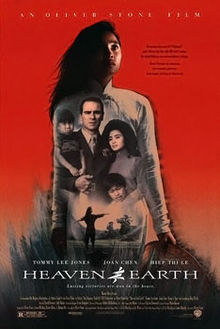
This time around, I take one last trip to Vietnam at the movies by looking at the final film in Oliver Stone’s Vietnam trilogy, 1993’s Heaven and Earth.  I review the film and also take a look at its source material, two memoirs by Le Ly Hayslip, When Heaven and Earth Changed Places and Child of War Woman of Peace.

You can download the episode via Apple Podcasts or listen directly at the Two True Freaks website

In Country iTunes feed

In Country Episode 98 direct link

Some extras for you.

First, a link to Thrive Networks, Le Ly Hayslip’s charitable organization that began as the East Meets West Foundation:  Thrivenetworks.org

The trailer for the film …

Heaven & Earth


Pop Culture Affidavit Episode 100: Deeds Not Words

Episode 100 Website CoverAfter nine years of blogging and 99 podcast episodes, it’s time to take another look at the movie that started it all:  MEGAFORCE!  In this episode, I take a look at the 1982 Hal Needham film, which stars Barry Bostwick as Ace Hunter, the commander of a super-elite international military unit.  I give a summary of the movie, talk about my Megaforce origin story and re-evaluate my opinion of it.

You can listen here:

Apple Podcasts:  Pop Culture Affidavit

Direct Download 

Pop Culture Affidavit podcast page

Some extras for you …

(more…)

Pop Culture Affidavit Episode 99: Livin’ Well in 1999

Episode 99 Website CoverIt’s the second of two “milestone year” episodes as Amanda sits down with me once again for a talk about 1999!

Over the course of our (much shorter this time) conversation, we talk music, movies, and television, but also delve into news, politics and culture.  We’ll look at the rise of and importance of Millennials, Woodstock ’99, teen pop, The Blair Witch Project and The Sixth Sense, Office Space, the dawn of the age of reality televisionWho Wants to Be A Millionaire?, the Food Network, and MTV’s Undressed, among other things.

Plus, we talk about what it was like to graduate from college in 1999 and how we somehow survived our early twenties, and we also talk about how the issues and serious events of 1999, such as Columbine and the Bill Clinton impeachment still affect our culture and politics today.

Apple Podcasts:  Pop Culture Affidavit

Direct Download 

Pop Culture Affidavit podcast page

In Country: Marvel Comics’ “The ‘Nam” — Episode 93

IC 93 Website CoverSeven episodes and a wake-up!

This time around, I take a break from my regular coverage of the comic to bring you one of the landmark films about the Vietnam War, 1978’s The Deer Hunter, which stars Robert DeNiro, Christopher Walken, and Meryl Streep.  For my look at the film, I’m joined by fellow TTF podcaster, Luke Jaconetti.  We talk about Michael Cimino’s Best Picture winner by looking at the plot and characters but also its symbolic/metaphorical meanings; and its reputation and resonance as a film about Vietnam, war, and America.

You can download the episode via iTunes or listen directly at the Two True Freaks website

In Country iTunes feed

In Country Episode 93 direct link

Some extras for you …

A trailer for the film:

The theme to The Deer Hunter, which was composed by John Williams:

Deer Hunter

Pop Culture Affidavit Episode 95: Stayin’ Alive in 1995

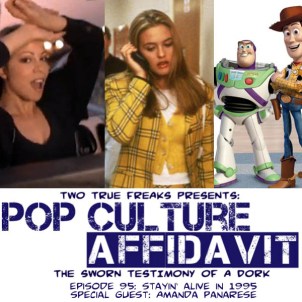
Episode 95 Website CoverIt’s the first of two “milestone year” episodes where Amanda and I sit down and take a pretty thorough look at what was going on in a particular year of the 1990s. First up, 1995. Join us as we talk about where we were in our lives in ’95 and then run through the television shows, movies, and music of that year.

You can listen here:

iTunes:  Pop Culture Affidavit

Direct Download 

Pop Culture Affidavit podcast page

In Country: Marvel Comics’ “The ‘Nam” — Episode 89

IC 89 Website Cover11 episodes and a wake-up are left!

This time around, I take a break from comic book coverage to look at another book and film about the Vietnam War, Born on the Fourth of July.  I start by looking at Ron Kovic’s autobiography about his time in Vietnam as well as his recovery from the injuries that paralyzed him and journey toward being an antiwar activist.  Then, I take a quick look at the first movie that was inspired by Kovic’s story, 1978’s Coming Home, which stars Jane Fonda, Jon Voight, and Bruce Dern.  Finally, I look at Oliver Stone’s 1989 adaptation of Born on the Fourth of July, which stars Tom Cruise.

You can download the episode via iTunes or listen directly at the Two True Freaks website

In Country iTunes feed

In Country Episode 89 direct link

Here are some extras for you …

The trailer for Coming Home:

The trailer for Born on the Fourth of July:

John Williams’ theme to Born on the Fourth of July:

The Bruce Springsteen song, “Shut Out the Light”:

Born on the Fourth of July Poster

I Spent My Adolescence Wandering the Teen Movie Desert

Heather Duke

Shannen Doherty as Heather Duke in the film that killed ’80s teen movies.  She’d later play the iconic Brenda Walsh on the ’90s teen soap Beverly Hills 90210.

I’m in the middle of prepping for my next episode, which is going to be about the 1995 film Clueless. It’s a movie that is culturally significant because it was one of a number of movies that started a teen movie boom in the mid- to late-1990s and early 200s after a period that didn’t see many successful films in the genre, at least on the level that we saw in the previous decade with the Brat Pack films. If we take what Jonathan Bernstein says in Pretty in Pink: The Golden Age of Teenage Movies and say that 1989 is a benchmark for the end of the movie genre’s initial success because, as he puts it, Heathers killed it “stone dead” and that 1995 was the beginning of what was looking like a revival, we have a period where teen movies of many genres–comedy, drama, and horror–saw very little success.


This period also happens to coincide with most of my adolescence. I began junior high in the fall of 1989 and graduated high school in June of 1995, which meant that I was the target audience for what wound up being a dearth of flicks. Now, I can tell you that I spent a lot of time going to the comic store and my adolescence also coincides with the boom and subsequent bust of that particular collector’s market, but not everyone I knew was into superheroes and comics on the level that I was, so this long intro and cultural context does beg the question: what were we doing if we weren’t going to the movies in the early 1990s? I’m going to try and plumb the depths of my fuzzy memories of this period to give you … some sort of explanation, and it starts with the very place we were supposedly avoiding.

Because we were going to the movies; we just weren’t seeing those movies. I remember seeing most of those classic teen flicks like The Breakfast Club and Pretty in Pink when I was in junior high and high school because they were rerun on television quite a bit and if what I saw seemed interesting enough, I’d hit up Video Empire so I could see the whole thing instead of the 45 minutes or so I caught on WPIX (or in the case of movies like Fast Times at Ridgemont High, the whole, uncensored thing). But trips to the theater were, at least for me, reserved for Batman movies, Terminator sequels, Van Damme and Seagal action flicks, and blockbusters like Jurassic Park. The closest that I think I ever got to seeing a movie aimed directly at me and people my age in the theater were the two Wayne’s World movies and even then, those were SNL-based.

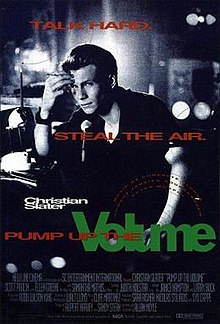
Pump up the Volume

Starring Christian Slater, Pump Up the Volume was one of the few movies of the early Nineties with an impact.

Not that we didn’t have stuff like Pump Up the Volume (an episode that I swear is coming at some point) and Reality Bites (which I covered back in 1994), but when looking at what came out during that time period, most of the movies had characters who were slightly older or younger than me. Pump Up the Volume and two Brendan Fraser movies–Encino Man and School Ties–were probably exceptions to this rule, as they did take place in a high school. But when I watched Singles or Reality Bites, I was watching movies aimed at the heart of Generation X, which was the core audience for most of the original wave of teen movies and whom by then had more or less grown tired or grown out of the genre. These two movies, while they did moderately well, did underperform and are more on the edge of the “cult classic” than bona fide cultural touchstones. And there was always a “looking at the older kids” aspect to them. Concurrently, there were a number of movies that were made for the early Millennial set–Now and Then, The Mighty Ducks, Man in the Moon, My Girl–and were a nice set-up for movies like Clueless, Scream, and I Know What You Did Last Summer. Even the few that did match right up appropriate with my age, such as PCU (again, I covered this in 1994) and Dazed & Confused (another episode I will eventually do) were box office bombs that got new life on video and cable.


Besides, we were watching ourselves more on television. While the WB, which began in 1994, would unlock the secret to the teen audience in the latter part of the decade with Buffy and Dawson’s Creek, credit where credit is due needs to go to Fox and MTV for what they did in the early 1990s. MTV had already been around for a decade by the time I was finishing junior high and was the default station for teenagers; Fox was just starting out and had realized that they could use what was then a more “edgy” tone to some of its programming to attract audiences that the big three networks were more or less ignoring. So, you have stuff like Parker Lewis Can’t Lose, 21 Jump Street, and Beverly Hills 90210 on Fox and MTV’s seminal reality show, The Real World. And while ABC would throw its hat in the ring with My So-Called Life in 1994, Fox and MTV had more of an impact–in fact, MSCL got a second life in reruns on MTV way into the later part of the decade.


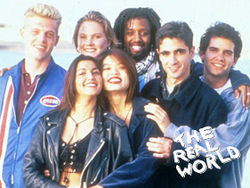
Real World Cast

The cast of season 3 (San Francisco) of The Real World, which premiered in 1994.

90210 and The Real World really are the shows to consider because to people my age they were aspirational in a sense–90210 was full of the glamorous life and The Real World showed teenagers how cool it was going to be when you finally left home. Yes, there was drama on The Real World and in those first few seasons, people were dealing with serious issues and problems, but we all wanted to live in that house at one point or another (at least until we hit our twenties and realized that the real world was a lot more boring). There also wasn’t much beyond that as far as programming was concerned. Outside of what I’ve listed, we were kind of stuck between Full House and Seinfeld and usually chose the latter, even if we didn’t get all of the jokes. That is, until Beavis and Butthead came along.


Now, I realize that I’m simplifying for the sake of argument here and probably could do an entire series of posts or a book on this teen entertainment desert (which isn’t that half bad of an idea, tbh), so there were other shows and movies out there, but I’d be remiss if I didn’t say that Beavis and Butthead was a seminal show. Like I said, there was an “older kid” aspiration to a lot of the leftovers from the Eighties or what was on screen in the early Nineties. Watching the Hughes flicks or any other movies from that era sometimes felt like you were rifling through the room of your older brother or sister who had gone away to college and left everything unguarded, or that you were Judy in American Graffiti or Mitch Kramer in Dazed & Confused hanging out with the older kids. But watching an episode of Beavis and Butthead was like looking around your own high school. No, I didn’t do nearly any of the crazy crap those two did, but I know plenty of people who were just as idiotic; furthermore, there was a lot of sitting around and watching random crap on TV at my house and my friends’ houses while making snarky comments at what was on television. Plus, they were often watching music videos and while MTV would taper off playing videos throughout the decade, this was around the time–at least in my life–that music seemed important.

Based on the content of my last episode, it’s not revelatory to say that music is important to teenagers–it has been since my parents’ generation–but after the latter part of the Eighties and its vapid pop-rock and hair metal, the pendulum swung back to music that took itself more seriously. Oh, there was plenty of vapid crap in the early 1990s (nobody is comparing “Baby Got Back” to The Beatles), but the messages (if there were any) in “Girls Girls Girls” and “Nothin’ But a Good Time” see seemed pretty empty considering how deep we were into a recession. The gloom of alternative and the anger of punk fit what many of us were going through or at least thought we were going through (in a Holden Caulfield sort of way) as opposed to songs about strippers and blow on the Sunset Strip. Plus, this was a time when you couldn’t access a song unless it was released as a single, so you had to make the conscious choice to buy an entire album on cassette or CD and that meant being smart about where exactly you put your disposable income and that also meant that the purchase held more weight and you sought out things that really did mean something.

rds0yxfd2dy7ah1ynn3f

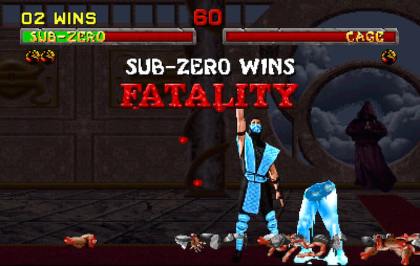
Mortal Kombat fatalities such as this one caused quite a bit of hand-wringing.

That is, if you weren’t bathing in the blood of Mortal Kombat opponents. If there’s one thing I have learned from being a late-period Gen-Xer (especially one with a tween of my own), it’s that video games are huge and can be all-consuming. The older part of my generation did play video games and they certainly had gaming systems in the house, but those of us who were tweens and teens in the late 1980s and early 1990s were really the first to take it to a level beyond novelty or something we would outgrow. Video games and systems were just as expensive in the early Nineties as they are now, and that meant an investment of money and time, and they began to reflect those costs. Games were become more complex and more adult–by 1994, they even had ratings on the packages to reflect that not all of them were for little kids–so fewer people were abandoning them as the novelty wore off or they got older. While I didn’t own my own system after playing on my NES, I spent countless hours at friends’ houses playing Street Fighter, F-Zero, Mortal Kombat, Madden, NHL, and a number of other games.


And in a few paragraphs, I just listed everything we were doing in lieu of watching the latest iteration of The Breakfast Club. And at the heart of it is that when I was a teenager, my friends and I were doing what we wanted and really didn’t care. We kind of shrugged at what was offered to us, which caused hand-wringing among a number of companies because teenagers and twentysomethings weren’t taking everything offered to them. The “Generation X” label tended to be a negative reaction to those groups’ unwillingness to part with all of their money after a decade of teenagers buying all of the shiny things corporations had to offer. It’s almost as if people forgot how adolescents tended to act.

As I look at my students and what they are into, I don’t know if things with teen movies have cycled back to the desert of the early Nineties or if things have diversified so much–after all, there are multiple platforms now on which to view or listen to things. I believe it’s somewhere in between, although my hitting middle age definitely doesn’t help.

A New Year’s Eve on the Brink

When you trade in nostalgia, the idea of a milestone anniversary for something you cherished in your formative years is constantly on your mind.  Since starting this blog, I have watched the 20th, 25th, 30th, and even 40th anniversaries of pieces of popular culture that were personal milestones come and go.  Some, I have celebrated; others, I have acknowledged but decided not to cover because the idea of constantly chasing such anniversaries sounds exhausting.

That being said, today marks 30 years since New Year’s Eve 1988.  Nothing significant happened exactly on this day, but when I was thinking about what to write for my annual New Year’s Eve post, the thought of the 1988-1989 school year kept popping into my head and the more and more I thought about it, I discovered that in hindsight, this was a year that was more important than I once thought, both personally and culturally.

Why?  Well, for a number of reasons (and not just mathematically), 1988 was the beginning of the end of what we commonly celebrate as the 1980s and as we moved into 1989, we would see our culture shift into that odd post-1980s hangover that was the pre-Nevermind early 1990s.  It was, as the title of this post suggests, a time when we were on the brink.  The Cold War was ending, we were heading toward a new decade, I was hitting puberty, and there were other societal shifts that we as a culture were both seeing and wouldn’t realize were there until they were over (or in my case, 30 years later).

So, to take us out of 2018, here is my list of … Eight Significant Things about 1988-1989. (more…)