It’s our 75th episode and that means it’s time for another look at another movie about the Vietnam War. This time around, I’m joined by fellow TTF podcaster Luke Jaconetti (Earth Destruction Directive) to talk about the 1982 Sylvester Stallone movie First Blood as well as its 1985 sequel, Rambo: First Blood Part II. We talk about each movie’s plot and characters as well as the novel First Blood by David Morell, and then talk about the pop culture phenomenon that was Rambo in the mid-1980s.
CONTENT WARNING: THIS EPISODE CONTAINS EXPLICIT LANGUAGE.
There is a saying that is cliche by now: “You can’t go home again.” Entire songs have been written based on this premise; hell, there’s an entire genre of movie that seems to center around the idea. And to be honest, even though the phrase is a cliche, it has a ring of truth to it–which really is the case with every cliche–and I guess it’s the raison d’etre of nostalgia.
I personally haven’t had a lot of “you can’t go home again” moments in my adult life. For the most part, I’m not as blind to the trappings of nostalgia and can even say that I very often go in to rewatching an old movie or TV series skeptical about whether or not it holds up after 20-30 years. But the one time I did have a moment like that was when I stepped into a Toys R Us.
Anyone over the age of 30 probably clicked on that video and went “Oh yeah, I remember this commercial.” I grabbed this specific one off of YouTube on purpose because this commercial, which first aired in 1982, was run and rerun endlessly throughout the decade and featured three kids who would grow up to become notable actors and actresses: Jaleel White (who played Urkel), Jenny Lewis (lead singer of Rilo Kiley), and Lindsay Price (who would be a regular on the later seasons of Beverly Hills 90210). In fact, that series of commercials was so famous that the now grown-up kids (except for Urkel) shot another one in the mid-’90s:
And having a Toys R Us near you was a big deal back in the 1980s because they weren’t as ubiquitous as, say, Target or Walmart stores are today. Sayville eventually got its own Toys R Us (though it was technically in Holbrook at the Sun Vet Mall) in the 1990s, but when I was growing up in the 1980s, my parents had to haul it about twenty minutes west to Bay Shore to go there, which meant that a trip to the store was a special trip and not just a part of some weekly shopping routine.
I’m pretty sure that store is still standing, but it has undergone the change that so many Toys R Us stores have undergone in recent decades: it is now two stores in one–a Toys R Us and a Babies R Us. This is the case with my local store, in Charlottesville, and when Brett was a baby, Amanda and I made a number of trips to the Babies R Us store. Occasionally, we would venture into the Toys R Us side of things and I have to say that I never got over the feeling of disappointment that I had upon seeing how much smaller Toys R Us was compared to the one in my memories.
Most Toys R Us Stores look like this nowadays.
Oh sure, nothing is as big as you remember it being when you were a kid–hell, parts of Disney World seemed smaller to me when I was an adult compared to my childhood memories–but the reality versus my memory of walking into a Toys R Us was a disappointment because this was a store that my sister and I practically worshiped as kids, to the point where I had most the layout of the store memorized to the point where I can still picture it.
Think I’m kidding? I drew the map below (on graph paper) from memory:
You’ll notice that according to the map I drew, most of what I remember clearly was on the left side of the store, and that’s because things like action figures and playsets were separated according to whether or not they were “for boys” and “for girls.” I don’t remember if the “boys” area was blue and the “girls” area was pink, to be honest–in fact, I’m pretty sure that the colors were neutral–but I do have to say that when I posted a picture of this map a few months ago to Twitter, someone tweeted at me, disappointed that the genders were separated in a toy store. Now, I’m the last person to reinforce traditional gender roles, but I have to say that … well, this was a toy store in the Eighties and not my own creation; and if you think of it, the way the toys were separated by gender probably had more to do with moving the actual merchandise than upholding gender norms. You could put She-Ra next to He-Man and she may have sold just as well; however, put a random “girl with a horse” doll next to G.I. Joe instead of next to She-Ra and Barbie and that toy will get overlooked.
Anyway, exploration into the sexual politics of Toys R Us in 1986 when viewed by Twitter in 2016 over, because even looking at this map a few months after I drew it (and then finally got around to writing this post), I can still vividly picture the aisles themselves, and what pictures I have found of the interiors at old Toys R Us stores on sites like Plaid Stallions shows that my memories aren’t too far off. When you walked into the store, you were greeted by seasonal things and party favors, and I remember this was the case for a number of similar toy stores of the era, such as Play World or Child World. This is where you got your tablecloths, napkins, cups, and whatever cheap crap that your mom was going to put in a favor bag for kids to take home–not all parents caught on to the idea of buying a few Marvel three-packs and calling it a day, which is still one of the better party favor ideas I’ve ever experienced (even if I did wind up with an issue of Secret Wars II). There’s a note here that said I once saw something related to Return of the Jedi in this aisle, which isn’t hard to believe because Return of the Jedi merchandise was everywhere back in the early 1980s, but I specifically remember seeing the ROTJ storybook in hardcover and kicking myself for getting the softcover version through the Scholastic book club. Not because the hardcover was cooler or anything, but because I had the storybooks for Star Wars and The Empire Strikes Back in hardcover and would have liked to have been consistent there.
Yes, even at the age of seven, I was anal-retentive about format.
Anyway, I don’t think I ever spent much time in the party favors section because the better stuff was just beyond the bathroom. And yes, I knew where the bathroom was because I was that kid who always needed to go to the bathroom, so I always knew where the bathroom was. Hell, I still do.
But after the bathroom was this corridor of board games and video games, with an enormous, seemingly never-ending wall of board games on your left and an alleyway of video games on your right. The board games wall is significant in its vastness as well as the fact that I remember that Toys R Us carried every single edition of Trivial Pursuit that was on the category card that came with the game, even the versions that you were pretty sure actually didn’t exist or were available in some mythical toy store that carried every obscure thing and was located in a small fishing village on the Atlantic coast of Canada.
Same with the video games, which had one of the more odd purchasing procedures, one that was more like a trip to the video store than it was to to the toy store. The actual games weren’t on display; instead, there were cards with the covers from the video game boxes and tickets attached to each of the cards. If the game was in stock, you would take a ticket and bring it to the register, where you would pay for it, and then you would go to another counter where an employee–who was behind glass–would go and get the video game for you.
I’m pretty sure that this was a shoplifting prevention tactic in the days before the scanner would be set off if you tried to leave the store without paying for the video game, and they did have high potential for shoplifting because the cost of the average video game was incredibly high (so high, in fact, that the New York State attorney general filed a lawsuit against game companies and won).
Of course, not every single video game was actually in stock, and Toys R Us certainly had its fair share of peg warmer video games, so if gramma was looking for the copy of Dragon Warrior III that you wanted, she could pick up Home Alone for $19.95 when Dragon Warrior III was sold out (and honestly, Dragon Warrior III was always sold out).
Speaking of pegwarmers, the two or three aisle of action figures were the heart of any journey through Toys R Us for me back in the 1980s. Of course, as the decade went on, the “spotlight” toys changed, but the setup was always the same–there was an endcap full of action figures and an aisle of vehicles and playsets. If I was with my mom or dad and was allowed to get one action figure (vehicles were for Christmas and birthday lists), the decision was usually easy because I had memorized which figures I had and which figures I wanted; however, nothing compares to the soul-crushing paralysis that came when you walked into Toys R Us with your $20-$30 worth of birthday money and were allowed to get whatever toy you wanted. Because that meant a vehicle was a possible purchase or you could get multiple action figures, and if you didn’t come into the store with a plan, you took longer to make a purchasing decision than the average jury takes to reach a verdict in a murder trial. That sounds pithy, but it was a major decision because you had to think of how much you were going to play with the toy and whether or not it would affect your standings in some sort of unofficial toy arms race that you were having with your friends.
Further complicating this decision was the Aisle of Forgotten Toys, which was where Toys R Us stocked all of the second-rate and more obscure toy lines, such as Remco’s Warlord figures and the line of Dungeons and Dragons figures that came out in 1983-1984, or my favorite “Did anyone buy these” toy line, which was the here-and-gone-in-a-flash-now-costing-an-arm-and-a-leg-on-eBay Matchbox Robotech line. I had the same desire to look at all of those toys back then as I do grabbing random war, romance, or horror comics from 50-cent bins today. And I suppose if I had some foresight back in 1986 or so, I would have bought more than one of those figures so that I could keep it mint in its packaging and make a few bucks now … but as with everything in that regard, I had absolutely foresight and those toys were lost to various purges.
I stopped visiting Toys R Us sometime in junior high, around the time when the NES was phasing out and it was becoming clear that I wasn’t going to be getting an upgrade to my video game system. But those times spent in the aisles of my childhood had lasting effects, from that feeling of paralysis when given money to spend on CDs to watching my son go through the same purchase paralysis with his own birthday money (accompanied by my own attempts to steer him away from purchasing worthless crap he’ll play with once and then let collect dust). Which brings up another cliche … “The more things change …”
An old-school Toys R Us store in Bloomington, Indiana. Image taken from Flickr.
Thirty years ago, the New York Mets beat the Boston Red Sox in the 1986 World Series. For those of us who are die-hard Mets fans, it was an experience that we’ll never forget, and one that we have savored since then, as we patiently (and sometimes even painfully) wait for the Amazins to hoist the World Series trophy once more. Join me and my guest Paul Spataro as we look back on the 1986 season, NLCS, and World Series and share our memories of what it was like to be a kid (in my case) and be at some of the greatest games in Mets history (like Paul).
PLUS … stay through to the end of the show for an exciting announcement about a BRAND NEW PODCAST!!!
Thirty years ago, I begn collecting comics for the first time. Now, I’m taking you back to those days with “Origin Story,” a comics podcasting miniseries where I will look at all of the comics I bought in 1986-1987 in “real time.”
This time, I step away from Marvel and head over to DC for The Adventures of Superman #424, which marks the beginning of that title in the post-Crisis era. Does it still hold up after 30 years? Will I be able to say anything that Michael Bailey and Jeffrey Taylor haven’t already said? Will I fill out the postcard in the middle of the comic and attempt to win a copy of the Man of Steel special edition hardcover 30 years after the contest expired? Well, you’ll just have to listen!
Please don’t forget to leave feedback at the Pop Culture Affidavit Facebook page and check out Pop Culture Affidavit for the show notes.
Thirty years ago, I began collecting comics for the first time. Now, I’m taking you back to those days with “Origin Story,” a comics podcasting miniseries where I will look at all of the comics I bought in 1986-1987 in “real time.”
In this first episode, I take a look at the book that started all of this, which is a crossover that every kid would have loved to see play out because they had already been playing the crossover in their basements and bedrooms with their toys. I’m talking about Marvel Comics’ miniseries G.I. Joe and The Transformers. This time around, I will summarize and review issue #1 of the series.
Thirty years ago, Rob Reiner directed the seminal coming-of-age film Stand By Me. To celebrate its anniversary, Michael Bailey and I take a look at the film as well as the Stephen King novella “The Body,” upon which it’s based; as well as the music on its soundtrack. We also discuss why it’s an essential movie for anyone who grew up in the 1980s.
While I don’t think that I can ascribe great personal significance to any of the comics I’ve covered in this series, I’d have to say that G.I. Joe: A Real American Hero #48 is probably one of the most important because this was the series that would become the most read and collected of my brief foray into comics in 1987. This was also a book that when I would read through the back and current issues that I had collected (and by the time my collecting fell off, there were quite a few) would have a cracked cover and rolled spine, showing the beating it had taken since I first got my hand on it at my friend Chris’s birthday party.
I’ll admit that when I got the book as a party favor, I wasn’t as excited as some of the other kids at the party because some of them got issue #47 (I assume that this issue was part of a Marvel Comics three-pack), and that comic book had an incredible Mike Zeck color of Wet Suit, Beachhead, and Hawk on the Devilfish (full disclosure: I had to look that up) firing weapons and yelling. Plus, issue #47 conclues with The Baroness shooting and killing Storm Shadown on a beach. Issue #48, on the other hand, features another Mike Zeck cover–one that is no less great–of Zartan holding Gung Ho in a choke hold with a sign behind them saying “G.I. Joe Headquarters: Level 3.”
That’s basically the main plot of the book, as it’s very much a “bottle episode” of a television show because it takes place mostly at The Pit, which was the nickname for the Joes’ HQ. Back in issue #46, Ripcord had infiltrated Cobra Island in search of his girlfriend Candy and was knocked out cold. Zartan decided that this was a great opportunity for him to infiltrate the Joe headquarters, so he disguised Ripcord as himself and then took Ripcord’s form using his morphing powers. While Ripcord wakes up in a hospital Springfield (a town in the United States that Cobra completely controls) and then proceeds to continue to search for Candy while fighting his way through Cobra operatives, Zartan is “treated” in The Pit’s infirmary, but his cover is quickly blown.
Ripcord’s story continues in the following issue (whose main focus is Destro aiding Dr. Mindbender in the creation of Serpentor), which means that the main focus here is Zartan, who is chased around The Pit and tries to elude capture by changing form several times and nearly gets away with it but is ultimately brought down by a brand new Joe, Sgt. Slaughter, who was a character I always had mixed feelings about because I knew him from the WWF (although in an interesting bit of trivia, Slaughter’s role in G.I. Joe is what led to him leaving the WWF in the mid-1980s, as Vince McMahon did not want to allow him to license himself to Hasbro; Slaughter would return in the early 1990s as an Iraqi-sympathizing heel), and therefore he was more like an “imported” character than one of the more “home grown” characters. And yes, I felt like this when I was nine years old. Plus, his solving the problem, while it definitely was meant to be slightly comedic (two Gung Hos come at Sarge and he punches one. When asked how he knew which one was Zartan, Sarge basically says, “I didn’t.”), also seems a little forced in that “look at how awesome this new character is” sort of way that didn’t always work on television shows, cartoons, or comic books. I haven’t read much beyond this issue recently, so I can’t really say how much of a role Sgt. Slaughter plays in future storylines, and I know that Larry Hama focused more on the ninja-type characters anyway (as we’ll see when I get into the actual “Origin Story” podcast).
The end of the issue is a meeting between Hawk and several of the U.S. military’s top brass, which carries on one of the running subplots of the time–Cobra has its own island and has managed to get “sovereign nation” status from the United Nations and the U.S. is hamstrung as to what to do. Cobra is a terrorist organization, so attacking Cobra Island would be considered an actual act of war, so the brass tell Hawk that the island is off-limits. This sets up what will be a huge story in issue #50, which is where the Joes invade Springfield and ultimately find nothing, something that leads to the team’s downfall (which includes Cobra invading The Pit around issue #53).
It’s a testament to Larry Hama’s writing that he could create such a continuity for an audience whose primary desire in picking up the comic was to see their action figures have adventures, although that’s not something I realized at the time, even though it would be soon enough.
And that’s it for my “Comics Prehistory.” Tune in on September 30, 2016 for the first episode of “Origin Story,” where I will cover G.I. Joe and The Transformers #1.
It’s an all-star “live” episode as I get the chance to sit down with Professor Alan and Stella and then Stella herself and talk about topics random and geeky! Enjoy such conversations as the novels of Thomas Hardy, DC Rebirth, the Human League, Bat-splaining, and Mad Men. Plus, LISTENER FEEDBACK!!!
Show notes and pictures are available at Pop Culture Affidavit, which is also where you can see regular weekly blog entries about the randomness that is pop culture.
You know, the phrase “It was all a big blur” is one that most people probably associate with a drunken night (or several, perhaps) in college, not to reading a comic book when you are eight years old. Then again, I may not be the only person who will say this about Secret Wars II.
Published in 1985 and 1986, Secret Wars II as the direct sequel to the blockbuster Marvel Super Heroes Secret Wars event that had come out in 1984. In that original series, an omnipotent being named The Beyonder swipes all of Earth’s heroes and villains and transports them to Battleworld, where they do an enormous amount of fighting (and Spider-Man gets the infamous alien costume). In the sequel, The Beyonder comes to Earth in human form and learns about being human.
I think?
I have to be honest–I only ever owned issue #6 and even then didn’t buy it voluntarily because it was another birthday party favor. And I don’t know if I read it thirty years ago when I first got it. Even if I did, I probably didn’t understand what was going on. I remember looking at the cover and thinking that the issue was probably important because it said that it was “#6 in a nine-issue limited series” (that and DC’s “miniseries,” “maxi-series,” or “Anniversary” banners were catnip to me back in the day … and still kind of are) and the cover showed this guy busting past a group of Earth’s mightiest heroes, saying, “Move over heroes, The Beyonder’s here!”
But really, up until I read this comic for this very blog post, I didn’t know what the comic was about. And quite frankly, I still have no idea what is going on. It seems that The Beyonder has come to Earth, closed on some property, built a huge house/headquarters, filled it with a ton of stuff like cars and planes, and then decides to help out Power Pack (which I assume plays out in greater detail in Power Pack #18, which is an official crossover issue). Meanwhile, Dave, a reporter from a local newspaper interviews him and The Beyonder tells the reporter all about who he is and how he came to be. But then he basically hires the guy as his PR man, they set up and organization, and The Beyonder decides he will “fight for life.” he doesn’t know what his role is or should be, and The Watcher along with superheroes think he might be dangerous. He then decides to eliminate Death and despite the objections every celestial being, succeeds. Then Molecule Man and Dave plead for him to bring Death back because it has completely upset the balance of the universe and then he makes Dave into Death and disassembles his new house.
And that’s the most succinct summary I could come up with.
Because honestly, the issue is almost what it would be like if a kid were given super powers and had free right. Think of Tom Hanks in Big. Plus, The Beyonder does kind of look like and eight-year-old dressed him. I don’tknow if that many grown men wore a curly mullet and that appears to be a vinyl jumpsuit (seriously, it’s like the guy saw a windbreaker and said, “No. I want the whole outfit to be that”), but then again, I have seen grown me in cropped muscle tees and acid-wash jeans. God, the Eighties were blindingly awful.
Anyway, if I am going to pick something positive out of the story that Jim Shooter wrote, it’s that it is kind of like a kid trying to “act bigger” than he is–like it’s his first day of high school or something–and the art by Al Milgrom is workmak-like. Otherwise, I can see why Secret Wars II was something I forgot as soon as I acquired it and why it’s more of a punchline than a fondly remembered story.
Next Up: We finish “Comics Prehistory” with G.I. Joe: A Real American Hero #48
As I make my way through these very early days of buying comics, I see more and more how my purchases were influenced by other media. The two issues of Transformers that I just looked at are prime examples. Superheroes are another, as much of my early knowledge of the spandex set came from seeing them on television shows such as Super-Friends or Spider-Man and His Amazing Friends. Another source was, occasionally, my dad, who liked Superman and was a fan of the Christopher Reeve films (at least Superman and Superman II). That, of course, led to my purchasing all four issues of Superman: The Secret Years, and it led to my buying Superman #410.
This was another trip to Amazing Comics, sometime around my birthday in 1985 because while this issue came out that May, I remember seeing this andSuperman #411 on the shelves at the same time, so it must have been right before Bob took the comic off of the main shelves and put it on the spinner rack near the door, which is what he did for all of “last month’s comics.” It was a practice that he held onto for years and while I do have fond memories of comic book spinner racks and would love to own one someday, they do have an odd associate in my mind with comic book leftovers.
Okay, tangent over–or at least point of tangent, which is that my dad took me to the local comic store and said that he thought the cover to Superman #410 looked cool, so I decided to buy it. Drawn by Klaus Janson, who at that point was known for his work with Frank Miller, the cover is certainly a dramatic one–Clark Kent is walking away from a screen where Superman is saying “I categorically deny the story Clark Kent wrote about in the Daily Planet–it is nothing but a pack of lies!” If I may criticize it briefly, I will say that Superman does have a bit of a fat face and Clark’s suit looks two sizes too big, but the drama of Superman’s pronouncement and then the cover of the paper saying “CLARK KENT FIRED” was enough to pull me in and still makes me want to read the issue.
Superman saves a satellite. Or does he?
What’s inside is the first of a really great three-part story arc that is one of those excellent late Bronze Age/pre-Crisis Superman stories. We open with Superman saving a nuclear-powered satellite from falling to earth and blowing up, and then cut to Clark writing about it for the paper. But the thing is, that satellite resuce never actually happened and once that is discovered, Superman finds himself being forced to deny the story, which gets Clark fired. Superman, of course, is confused because he knows what he saw and knows what he did, yet when he flies to the place where the satellite fell from orbit, it’s still there.
Is he going nuts? No. This is all the machinations of Lex Luthor, who is messing with Superman’s mind from the confines of his lair, and he will just copntinue to do so until the end of issue #413, where he gets away because Brainiac recruits him to join a team of villains in Crisis on Infinite Earths #6 (Superman #413, by the way, is an issue I bought years later because it was an unofficial Crisis crossover).
It is, essentially, everything I wanted a Superman story to be when I was a kid, and exactly what i expect out of this time in the Man of Steel’s career. Lex has an underground lair with henchmen and is planning supervillainy? Check. There’s romantic subplots with Lana and Lois? Check. Clark is secondary to Superman? Check. Granted, I would come to really love the FCTC-era Superman and I do consider that version to be my favorite iteration of the characters, but the “Oh, this would only happen on pre-Crisis Earth-1” feel of this particular issue is part of its charm. Plus, it’s just a great setup and doesn’t feel like Cary Bates or Julius Schwartz were burning off stories prior to Alan Moore and then John Byrne.
Even the Curt Swan artwork, which I will admit I am hot and cold on at times, works well here. Swan is inked by Al Williamson, whom I am most familiar with from Star Wars comics of the era, and his links, though pretty loose at times(although this may be due to the reproduction on the digital comic, which makes some of these old newsprint comics look like they are on baxter paper and it doesn’t always work), give Swan’s artwork more grace and fluidity than I’m used to seeing. Then again, I’m not the most accurate judge of Swan’s art, considering I don’t have a lot of issues he actually drew.
But honestly, this is one of thosecomics that makes me with I had started collecting earlier than 1987, and that i had been experiencing the ed of the Bronze Age and the beginning of the Modern Age as it happened. This was still a time when a little kid could pick up books and follow them even if he had little to no sense of continuity. Although even a sense of continuity could not have helped my next book.
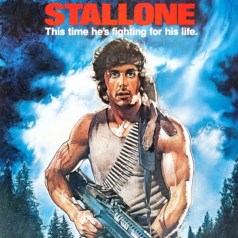 It’s our 75th episode and that means it’s time for another look at another movie about the Vietnam War. This time around, I’m joined by fellow TTF podcaster Luke Jaconetti (Earth Destruction Directive) to talk about the 1982 Sylvester Stallone movie First Blood as well as its 1985 sequel, Rambo: First Blood Part II. We talk about each movie’s plot and characters as well as the novel First Blood by David Morell, and then talk about the pop culture phenomenon that was Rambo in the mid-1980s.


 Thirty years ago, the New York Mets beat the Boston Red Sox in the 1986 World Series. For those of us who are die-hard Mets fans, it was an experience that we’ll never forget, and one that we have savored since then, as we patiently (and sometimes even painfully) wait for the Amazins to hoist the World Series trophy once more. Join me and my guest Paul Spataro as we look back on the 1986 season, NLCS, and World Series and share our memories of what it was like to be a kid (in my case) and be at some of the greatest games in Mets history (like Paul).
 Thirty years ago, I begn collecting comics for the first time. Now, I’m taking you back to those days with “Origin Story,” a comics podcasting miniseries where I will look at all of the comics I bought in 1986-1987 in “real time.”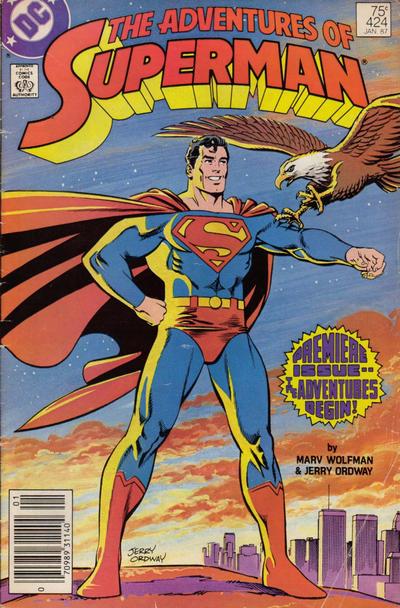
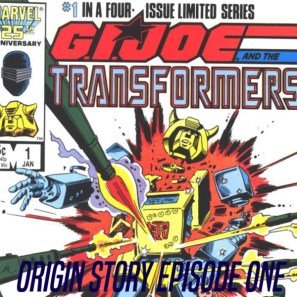
 Thirty years ago, Rob Reiner directed the seminal coming-of-age film Stand By Me. To celebrate its anniversary, Michael Bailey and I take a look at the film as well as the Stephen King novella “The Body,” upon which it’s based; as well as the music on its soundtrack. We also discuss why it’s an essential movie for anyone who grew up in the 1980s.
 While I don’t think that I can ascribe great personal significance to any of the comics I’ve covered in this series, I’d have to say that G.I. Joe: A Real American Hero #48 is probably one of the most important because this was the series that would become the most read and collected of my brief foray into comics in 1987. This was also a book that when I would read through the back and current issues that I had collected (and by the time my collecting fell off, there were quite a few) would have a cracked cover and rolled spine, showing the beating it had taken since I first got my hand on it at my friend Chris’s birthday party.
 It’s an all-star “live” episode as I get the chance to sit down with Professor Alan and Stella and then Stella herself and talk about topics random and geeky! Enjoy such conversations as the novels of Thomas Hardy, DC Rebirth, the Human League, Bat-splaining, and Mad Men. Plus, LISTENER FEEDBACK!!!
 You know, the phrase “It was all a big blur” is one that most people probably associate with a drunken night (or several, perhaps) in college, not to reading a comic book when you are eight years old. Then again, I may not be the only person who will say this about Secret Wars II.
 As I make my way through these very early days of buying comics, I see more and more how my purchases were influenced by other media. The two issues of Transformers that I just looked at are prime examples. Superheroes are another, as much of my early knowledge of the spandex set came from seeing them on television shows such as Super-Friends or Spider-Man and His Amazing Friends. Another source was, occasionally, my dad, who liked Superman and was a fan of the Christopher Reeve films (at least Superman and Superman II). That, of course, led to my purchasing all four issues of Superman: The Secret Years, and it led to my buying Superman #410.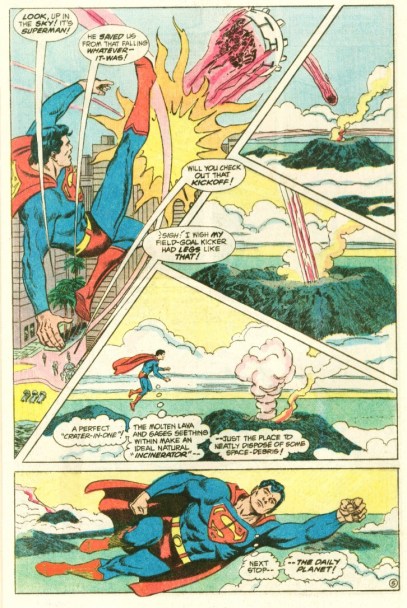
 Pop Culture Affidavit